
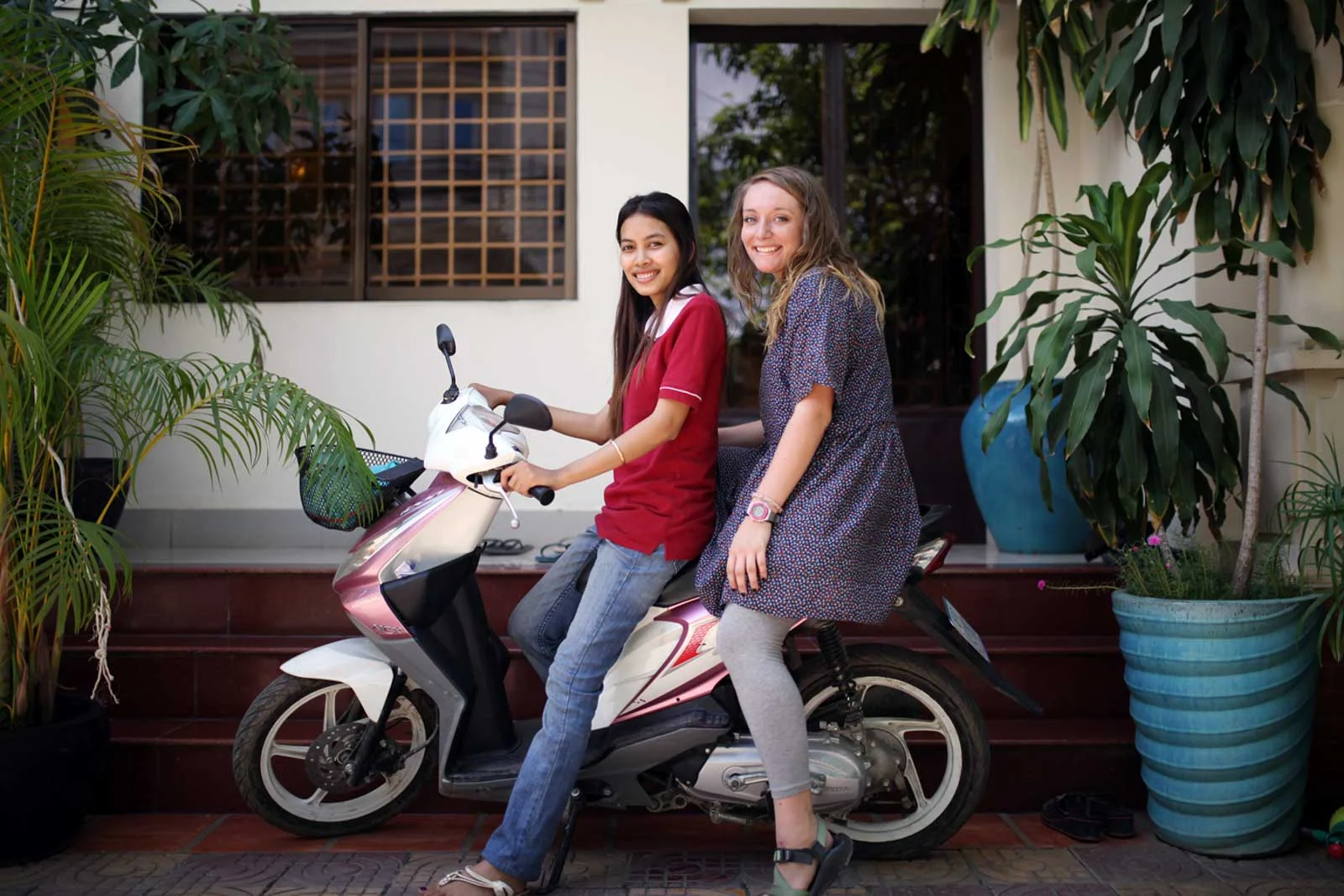
The story of an intern, an Alongsider and a bowl of rice
This is what happens when two young women step out of their comfort zones.
“Charity is simply giving someone crumbs off your table. Justice is giving someone a seat at your table.”
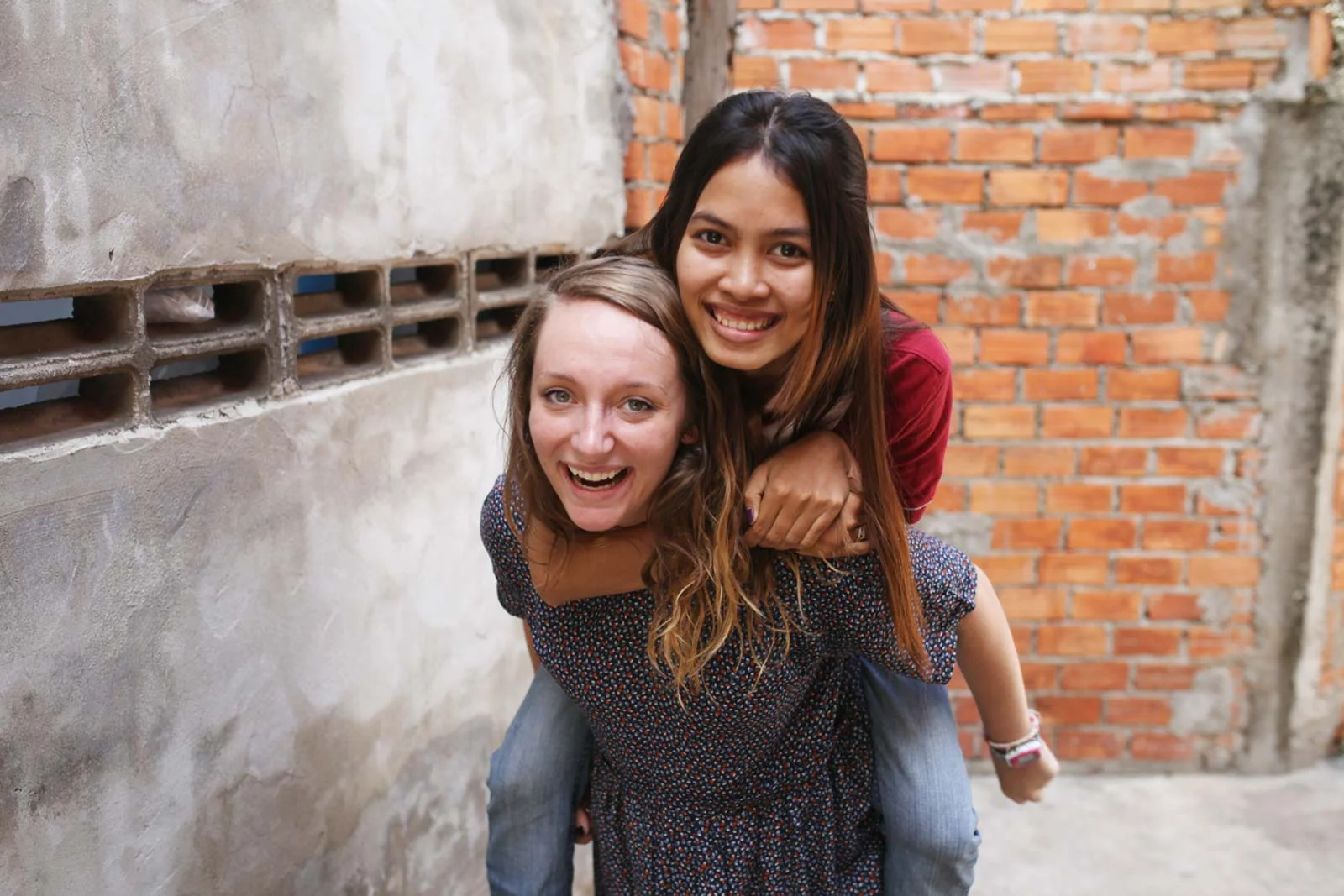
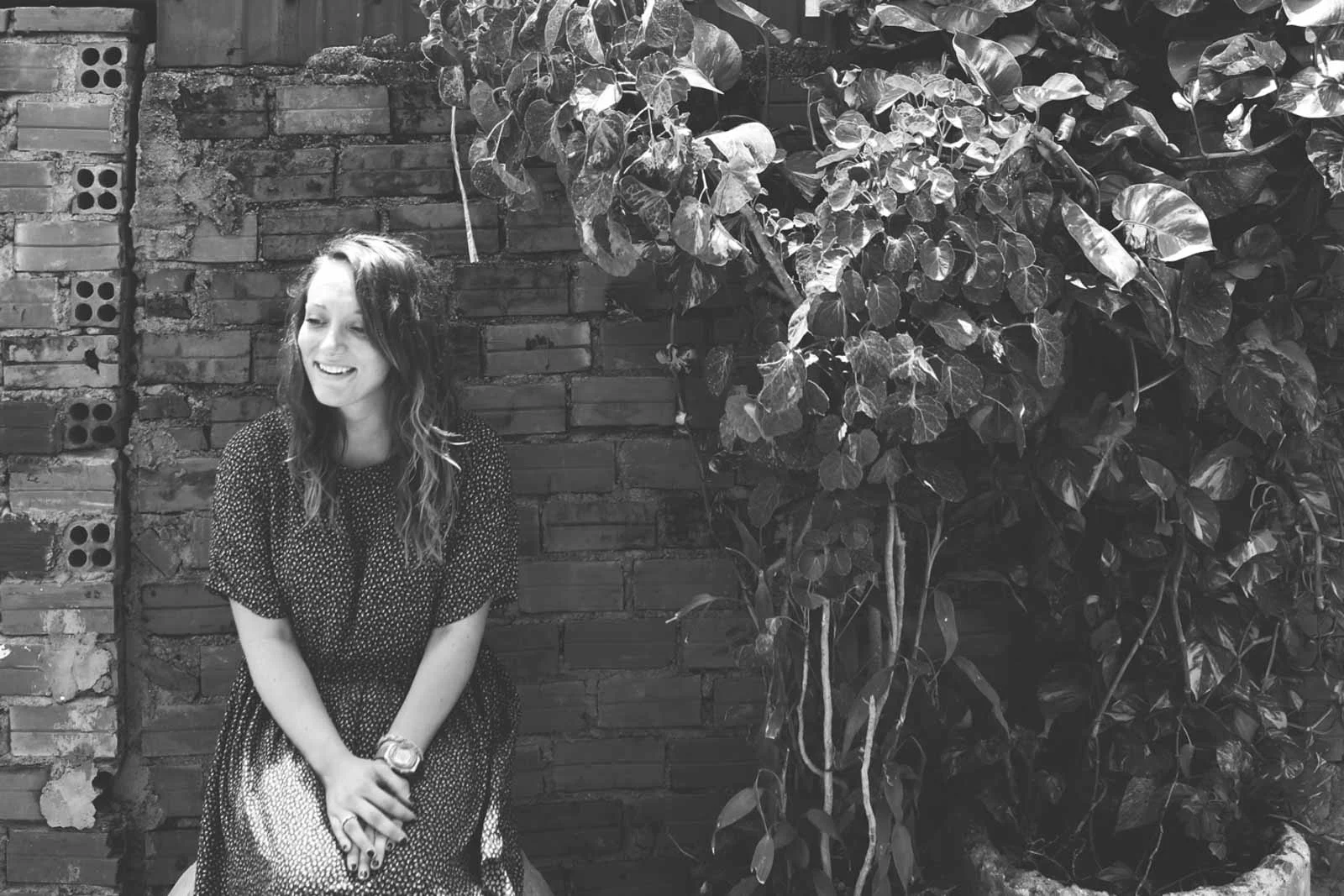
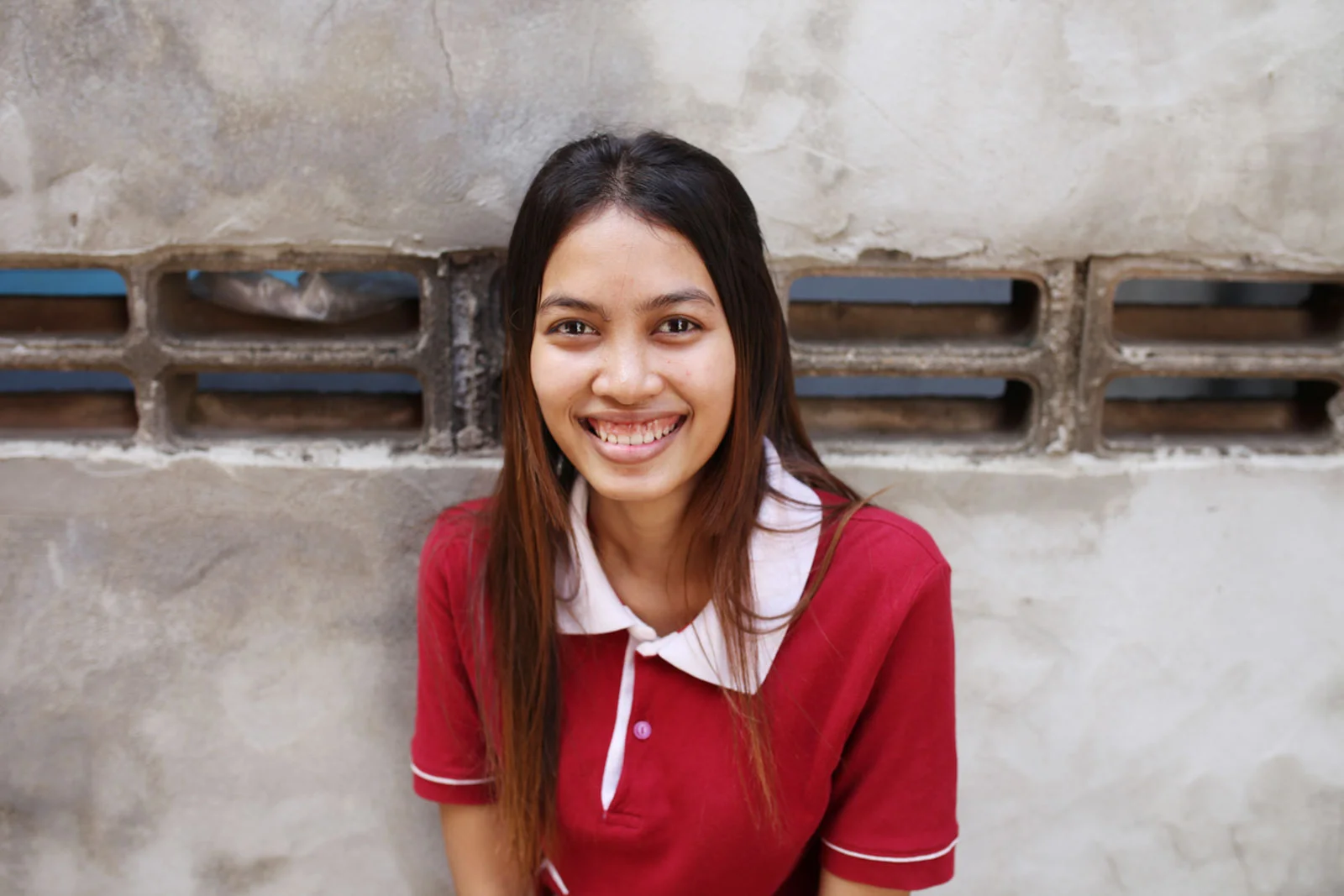
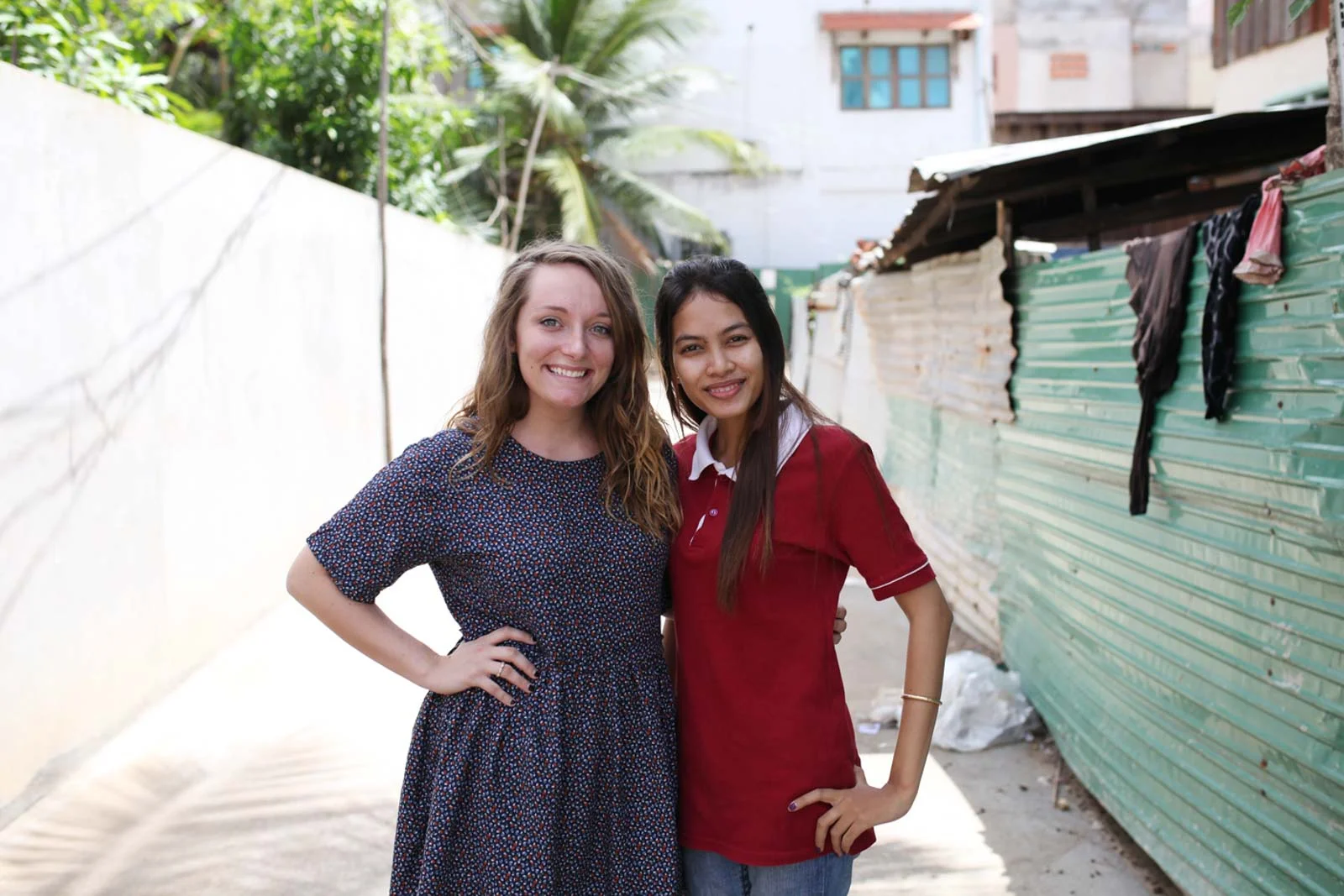
For Karuna Seng and Brooke Hill, it's been an unforgettable summer. Both twenty-one year olds have had the opportunity to travel to a different country through their work with Alongsiders International. Along the way, they've been learning what it means to serve people as their equals.
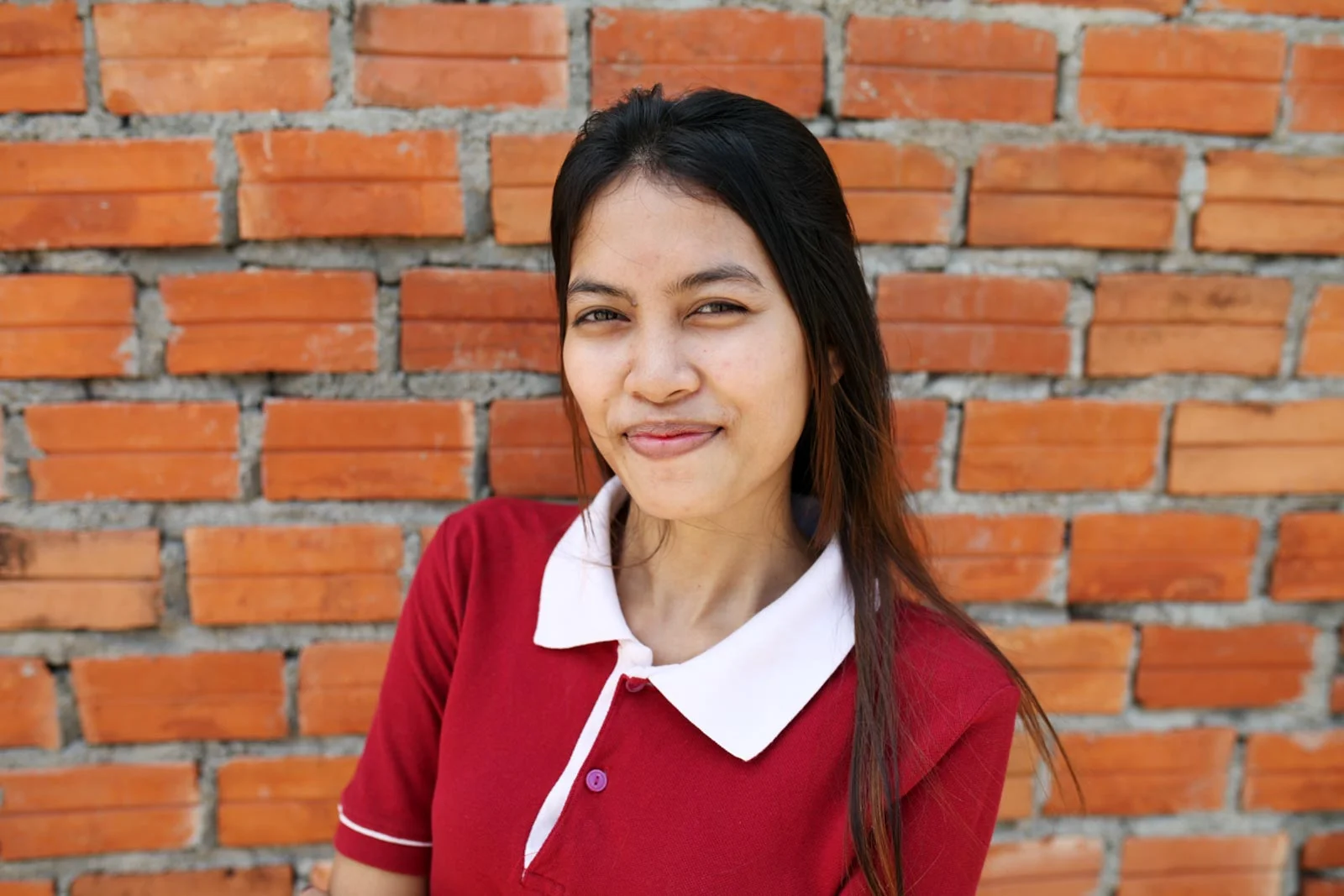
Karuna Seng grew up in the Chak Angre Leu, a slum community in Phnom Penh. Her father died in an accident when she was ten, leaving her, her mother, and sisters living with their grandmother. After his death, a woman in her community invited her family to worship at a local church.
Karuna didn't understand the service, but she was warmly greeted and welcomed by everyone there. Her heart filled with happiness as they shared some cake together.
Shortly afterwards, a woman in the youth group invited Karuna to become her little sister in the Alongsiders movement.
Karuna didn't understand what Alongsiders even was, but she was so excited to be invited by Somaly that she quickly agreed. Somaly took Karuna to Sunday school each week, and eventually Karuna became a Christian. Somaly taught her many important lessons, including how to clean herself and how to study hard so that she could get a good job later.
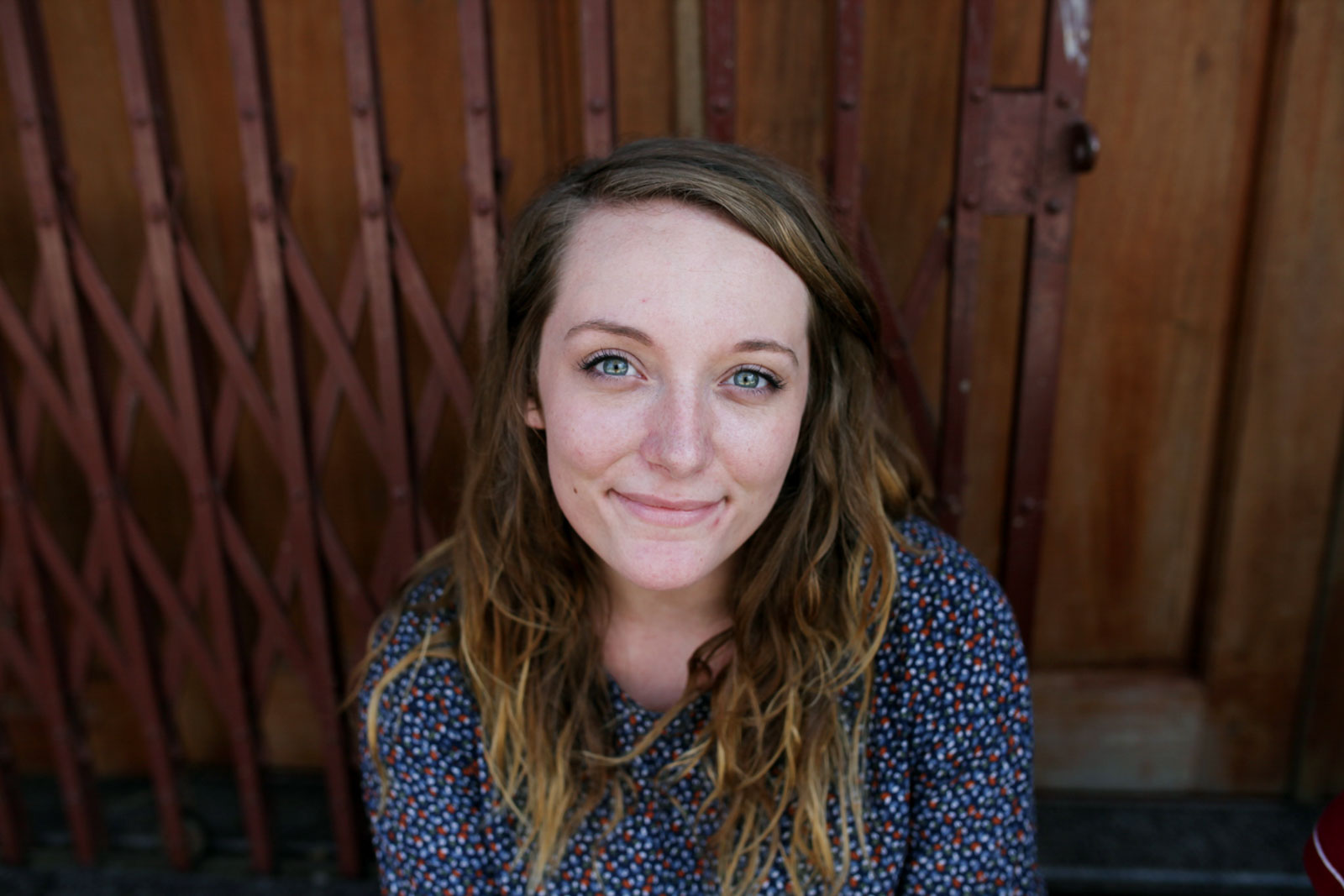
On the other side of the world, Brooke Hill was growing up in a small agrarian town in Missouri, USA. Growing up in a broken home, Brooke did not understand the depth offered in community.
Like Karuna, Brooke lived with her mom, and often missed her dad. As a representation of many American families, Brooke's family usually did not eat dinner together.
Also, like Karuna, Brooke discovered fellowship with local Christians. When she was at her friend's house, at age twelve, she saw a picture of kids at Christian camp. She thought it looked like a lot of fun, so she asked her mom if she could go. During an incredible week being welcomed by many loving people at the camp, she became a Christian. At the age of 16, she heard about missions at a Christian conference and was fascinated by the thought that some people spend their lives helping other people.
After a few shorter mission trips, Brooke decided to combine her love for the Lord, her heart for people, and her skill at photography in a summer internship with Alongsiders. In May 2015, she moved into Chak Angre Leu, right down the alleyway from Karuna.
For the past two months, Brooke has slept under a mosquito net, taken bucket showers, and eaten lots and lots of rice. Through laughter and language learning, Brooke has built relationships with her host mother and new neighborhood.
One of the first things Brooke noticed is the way everyone in the community looks out for each other. The most commonly asked question is "Have you eaten rice yet?" Her host mother feeds everyone who answers no. Many elderly women without steady income stop by regularly for meals. Meals are a time of fellowship and unity for Brooke and her community.
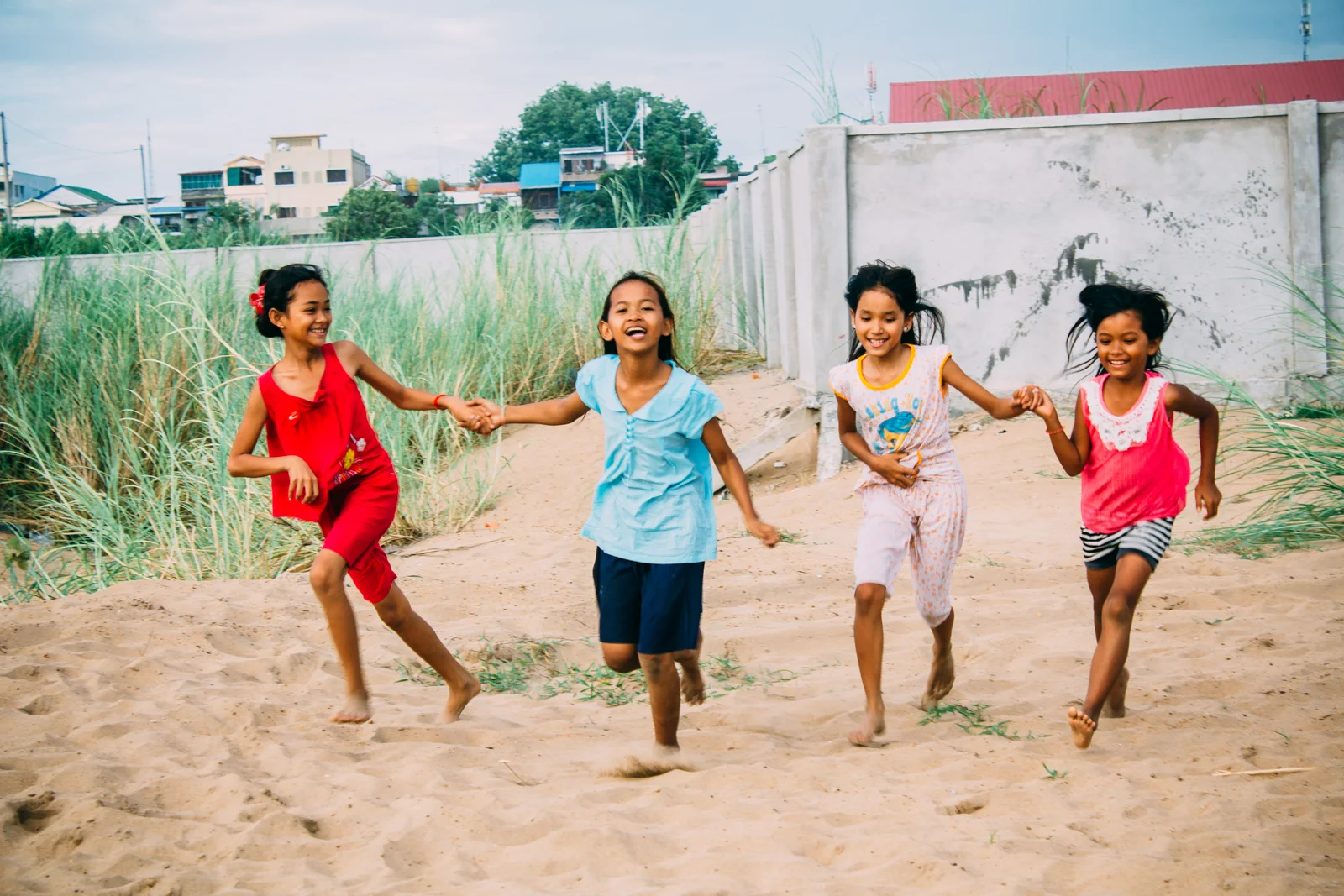
When Brooke first arrived in Cambodia, a little girl named Dali came over to the house and asked her name. Since then, Dali has come over every day to play with Brooke.
Every evening she walks in asking, "Hello Brooke, how are you?" Brooke loves to listen to Dali sing "Open the Eyes of My Heart."
Brooke reflects: "Dali has the purest form of faith I have ever witnessed. [She teaches me] that life is much bigger than myself. Dali has reminded me of the importance of praising God regardless of circumstances. When I return back to the States and my heart is aching for the people I have met in Cambodia, I pray that I will ask God to open the eyes of my own heart, that I may be open to sharing this same love and faith with those I encounter, just as Dali has done for me."
When she's not spending time with Dali or others in her community, Brooke works as an intern photographer for Alongsiders. She rides with Karuna on her moto to the Alongsiders office, where Karuna works as the receptionist.
Karuna is now an Alongsider herself, walking beside her little sister Vegegar in Chak Angre Leu. Karuna recently traveled to Singapore to share her story at an Alongsiders fundraising banquet. It was her first time outside of the country, and what she saw changed her.
Singapore was clean, beautiful, and organized. Cars obeyed the traffic laws and people waited in lines. Karuna couldn't believe that there was such a thing as a bus timetable, as she was used to waiting for the bus until it eventually showed up at an unspecified time. "When I saw that, I was so proud of their wisdom," she reflected. Her time in Singapore gave her a vision for her own country.
One of the most poignant moments was the prayer time at a Singaporean church they visited.
Karuna and the other Alongsiders present were intercessors at the end of the service for anyone who wanted to ask for prayer.
As an older man came forward to ask Karuna to pray for him, she hesitated. "He was rich and older than I, so why did he want me to pray for him?" Karuna asked herself. In that moment, God spoke to her heart that He had lifted her up to pray for these people. Tears streamed down her face as she prayed from her heart in Khmer for the Singaporean man.
Next she prayed for a woman who cried with her. It was a moment Karuna will never forget. "I hope God was working through me then," she said earnestly.
Back in Cambodia, Karuna shared about her experience in Singapore during the Alongsiders' Office devotional time. "May God open the eyes of my generation so that we can transform our country," she prayed. In the future, Karuna hopes to see three changes in her country.
- Justice for the poor
- An end to government corruption
- Respect for all people
"Someday, I want everyone to have rice together," Karuna dreamed. "No one will hold onto their position and use their power to set themselves above each other. We will all have rice together."
It's been a summer of learning to walk alongside those who are richer or poorer than themselves as equals. For Karuna, it's meant sharing her story and offering prayer for the people in Singapore. For Brooke, it's meant building friendships with people in her slum community. But for both of them, it's meant eating lots and lots of rice.
“My soul magnifies the Lord,
and my spirit rejoices in God my Savior....
He has shown strength with his arm;
he has scattered the proud in the thoughts of their hearts;
he has brought down the mighty from their thrones
and exalted those of humble estate;
he has filled the hungry with good things,
and the rich he has sent away empty.”
Rewriting Cinderella: how we tell the story matters
Why Alongsiders is telling narratives of poverty differently.
Recently, I met some short term missionaries who were handing out fashion sandals to rural villagers. After Sally, one of the women on the team, fastened the flimsy sandals onto the feet of a local woman, she took a selfie with her. “I hope she feels like Cinderella, with this new pair of shoes!” she squealed.
For Sally, helping people in poverty meant acting as a fairy godmother, handing out the metaphorical glass slipper.
And largely, that’s become the poverty narrative told by the West. Give your money or your sandals, donate your gently used clothing, volunteer for a week at an orphanage, and you will change someone’s life.
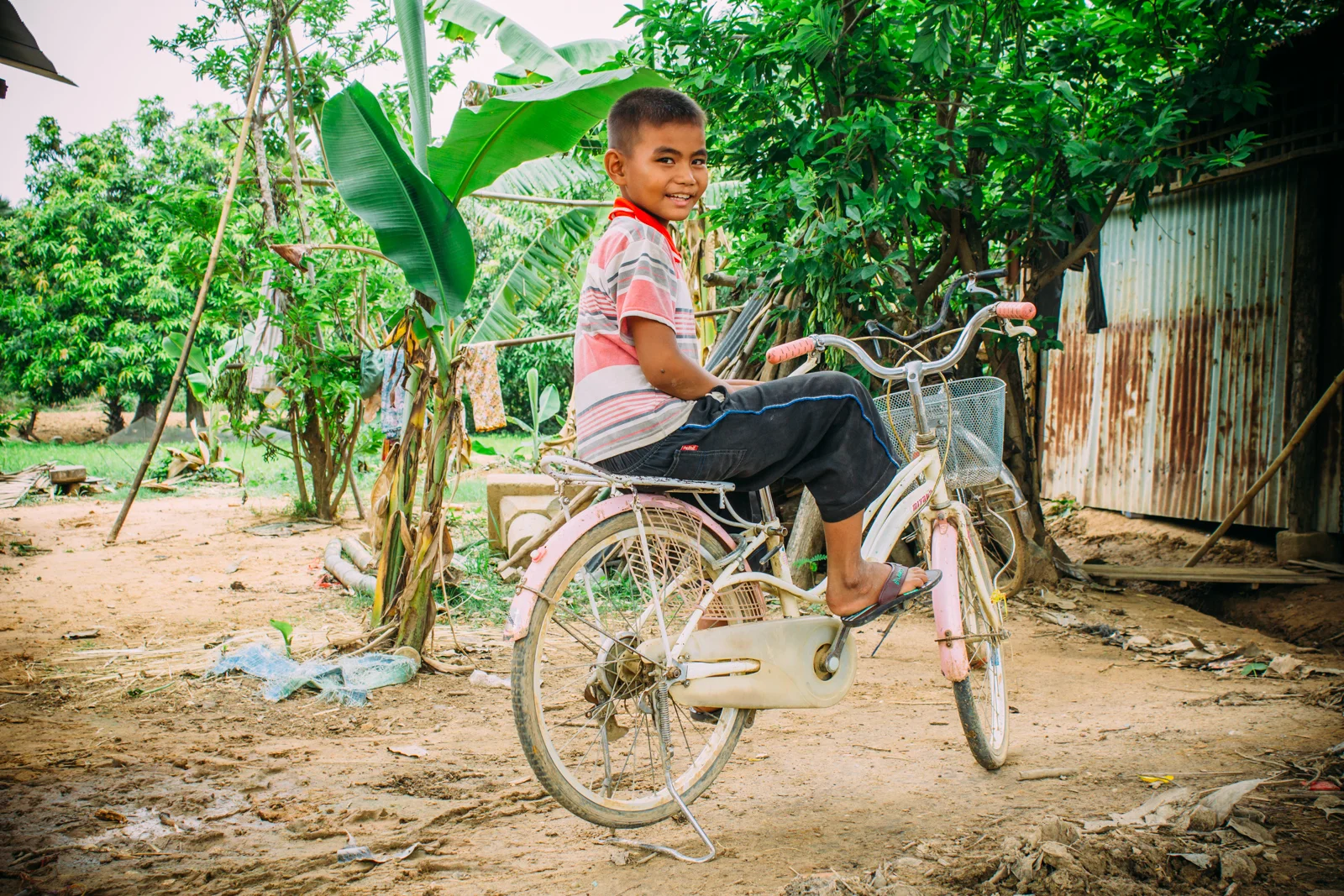
But the West is not the savior, and villagers in the developing world are not Cinderella. It's time to get the story right.
Consider the story’s characters. Research demonstrates that the words we use to describe people influence how we treat them. If we define them as Cinderellas, then we’ll characterize them as dependent, helpless, and in need. Accordingly, our response will be to pity and patronize, giving financial gifts and instruction. We'll place ourselves on a plane above them, as the fairy godmother was more powerful than Cinderella.
Or, if on our quest to serve the poor we encounter youth who seem harder to serve, we will label them as deviant, dysfunctional, and disobedient. And based on these labels, we will either punish or ignore them.
In Reclaiming Youth At Risk, authors Brendtro, Brokenleg, and Van Bockern encourage readers to consider another solution: the "Reclaiming Environment".
The foundation of the Reclaiming Environment is a relationship. It's not about handing out shoes to people you’ll never see again. Reclaiming Youth at Risk is retelling flawed narratives of poverty and "troubled" youth. It's a book that gets the story right.
The Reclaiming Environment begins when we give empathizing labels. Rather than characterize youth as disobedient and deviant, we place ourselves in their shoes and ask “How did they end up in this place?” This mindset will help us characterize at-risk youth as rejected or discouraged, and feel concern and sympathy for them. The corresponding reaction will be to befriend and encourage them.
“He drew a circle to shut me out.
Heretic, rebel, a thing to flout.
But love and I had wit to win.
We drew a circle that took him in.”
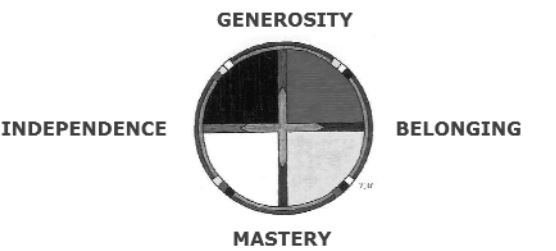
The idea of a Reclaiming Environment stems from a Native American philosophy of child development. The authors draw from this rich legacy, integrating contemporary research in the field of psychology. The goal of the reclaiming environment is to welcome children into a circle of courage, with four main values: belonging, generosity, independence, and mastery. Youth who are connected to others in strong, stable relationships learn to live selflessly, succeed at new skills, and develop a healthy sense of autonomy. These four items encourage youth at risk--hence creating a circle of courage.
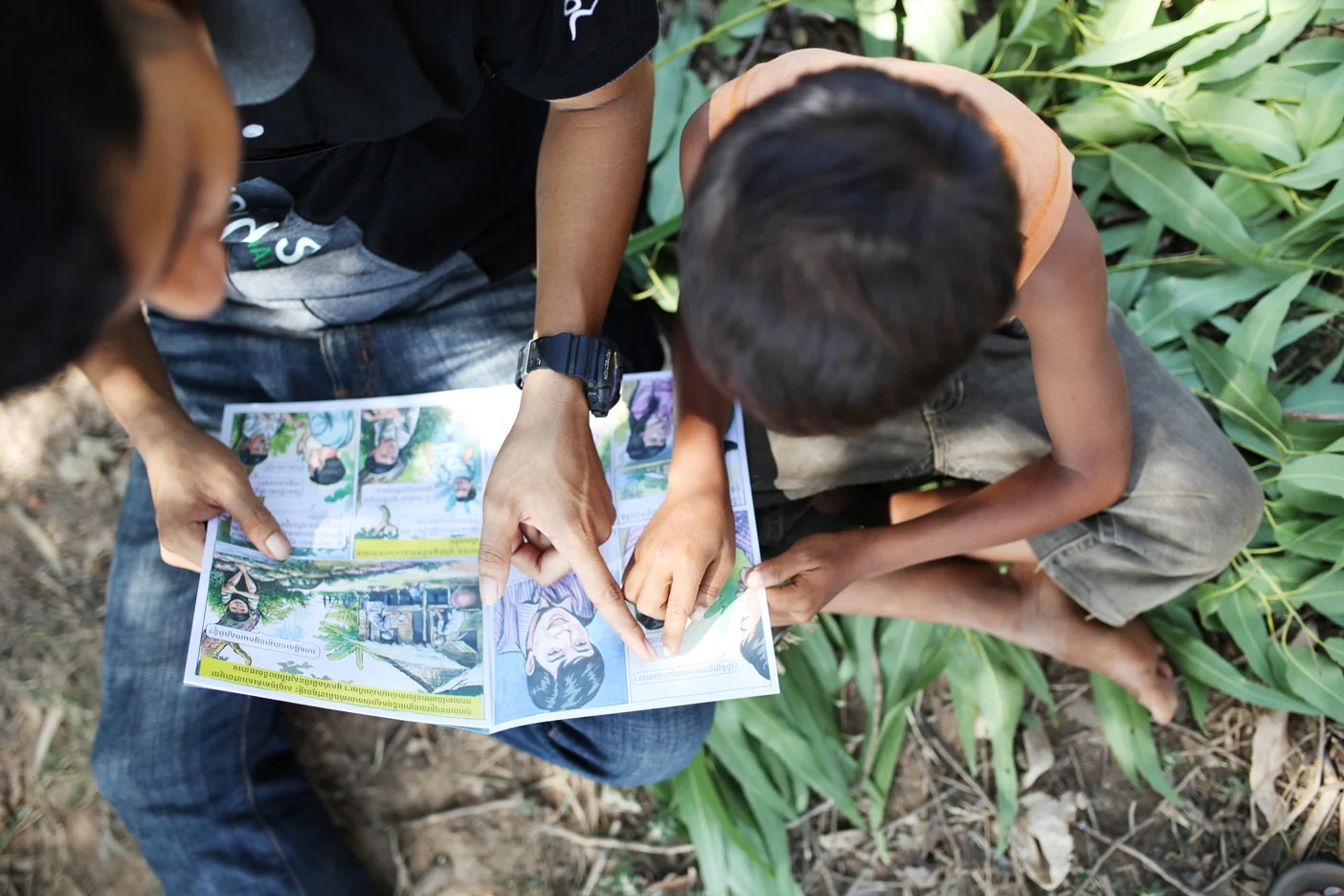
The Reclaiming Environment involves walking alongside at-risk youth and investing in their lives long-term. The time and love involved make it a far more costly gift than a pair of fashion sandals. But it's a gift that is far more likely to transform a life.
Because that's the real moral of Cinderella: that relationships can transform us. Flawed as the story is, we still cheer when Cinderella is with the prince that she loves.The true beauty of the story is the relationship, not the pretty dress or glass slippers from the fairy godmother.
At Alongsiders, that's the ending we're looking for. We're committed to empathizing with and walking beside those who are alone. We can't be the savior, but we'll be agents of love.
It's time to get the story right.
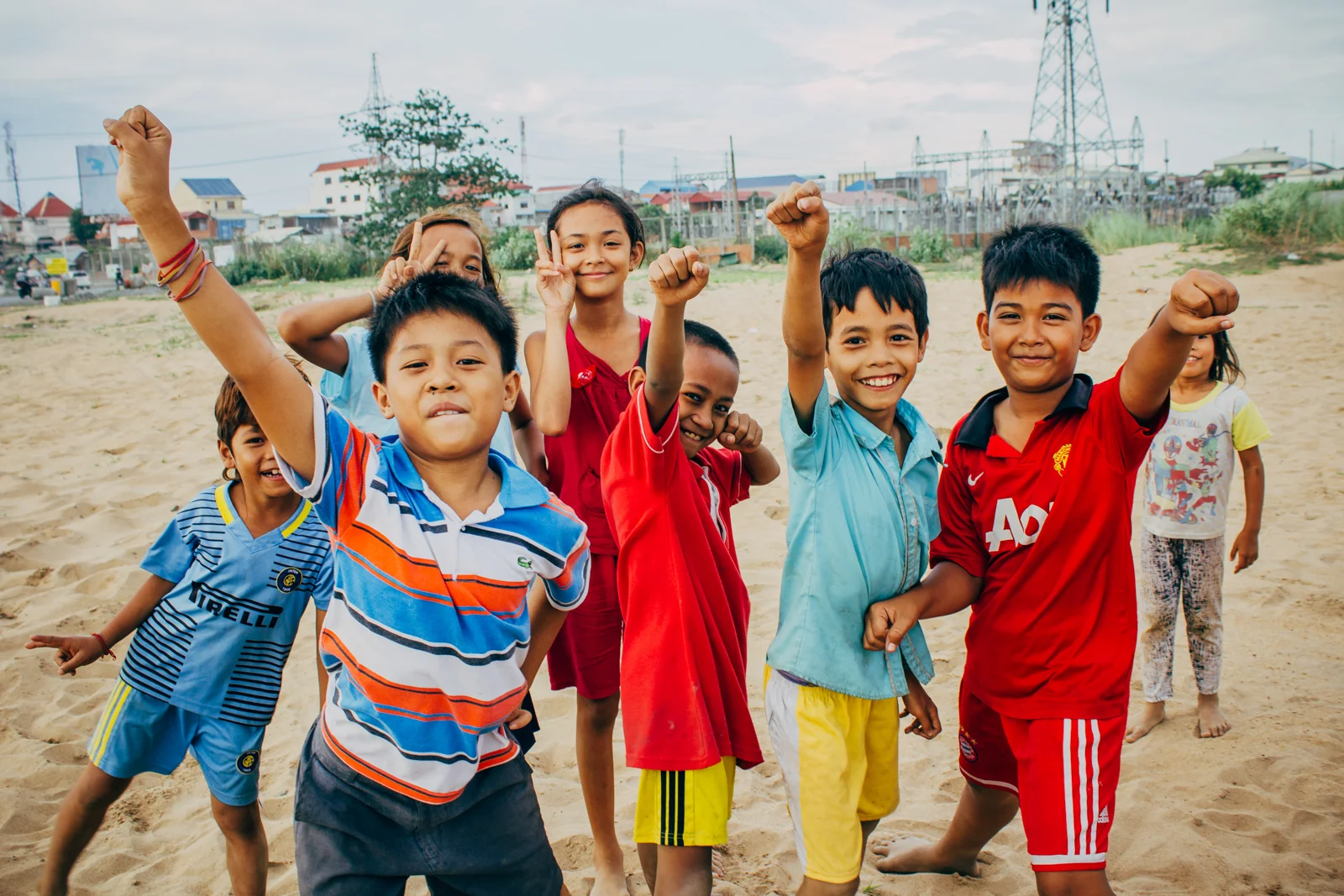
For further reading: Brendtro, Larry K., Martin Brokenleg, and Steve Van Bockern. Reclaiming Youth at Risk: Our Hope for the Future. Bloomington, Ind.: National Educational Service, 2002. Print.
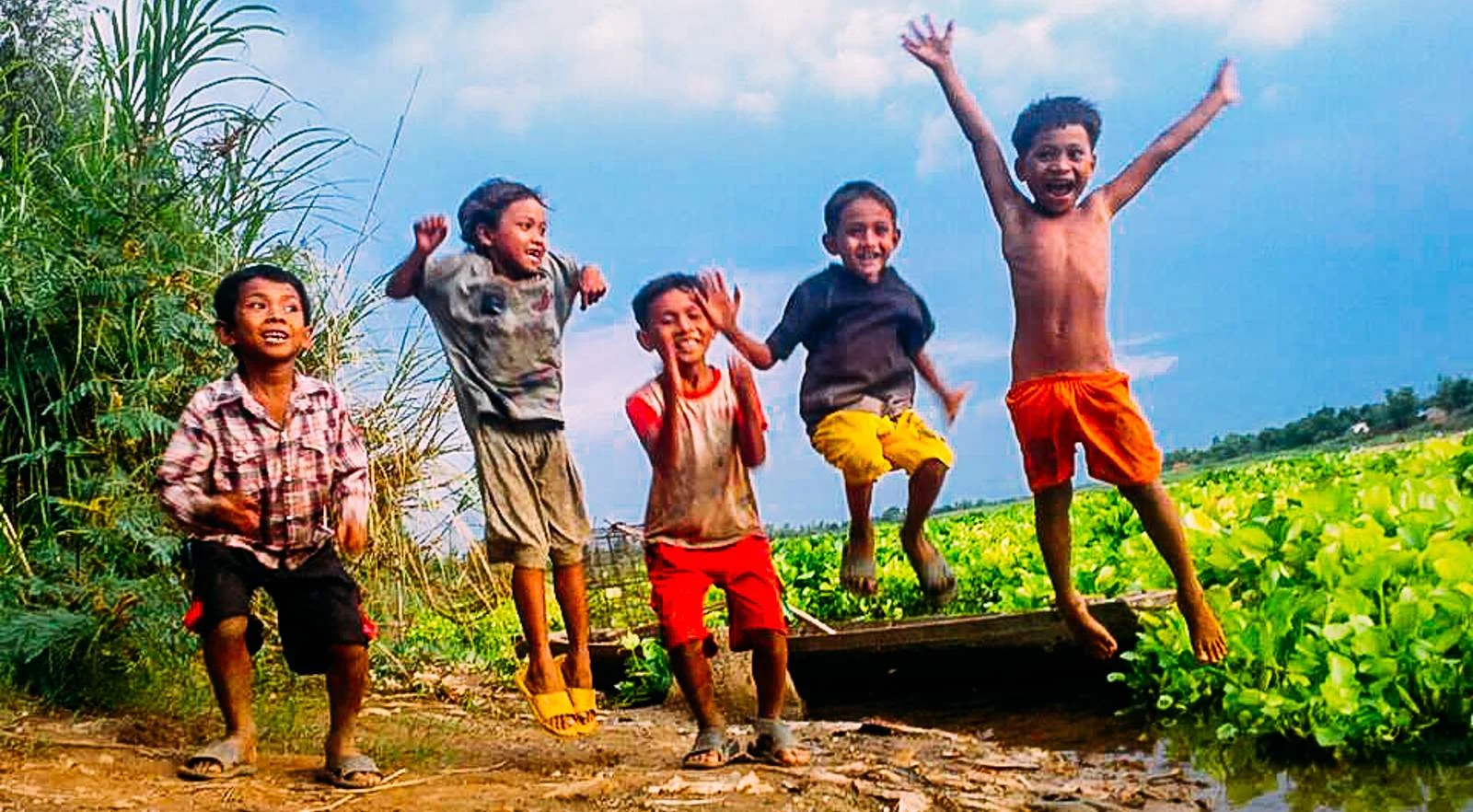
How to transform suffering: one young man's inspiring story
Believe, when you are most unhappy, that there is something for you to do in the world.
“We belong to the largest company in all the world, the company of those who have known suffering. When it seems that our sorrow is too great to be borne, let us think of the great family of the heavy-hearted into which our grief has given us entrance, and inevitably, we will feel about us their arms, their sympathy, their understanding.”
As a Christian living in a predominantly Buddhist culture, Darath was marginalized by many in his family and community.
When he refused to offer sacrifices to his ancestors, his relatives treated him as a traitor to his culture, saying that to be Cambodian is to be Buddhist. Darath began to feel that he was not a true Cambodian. “It was a difficult, painful, broken time,” he reflects.
In the midst of suffering, Darath learned the power of forgiveness and patience through two relationships. His pastor talked about Jesus' forgiveness on the cross when he said “Father, forgive them.” And his friend Phearom encouraged him to have patience. From Phearom’s example, and the experience of daily persecution, Darath learned to be patient and show love to his family.
Darath forgave his family, saying “they did not know what they were doing when they were angry with me." Darath found peace when he forgave them.
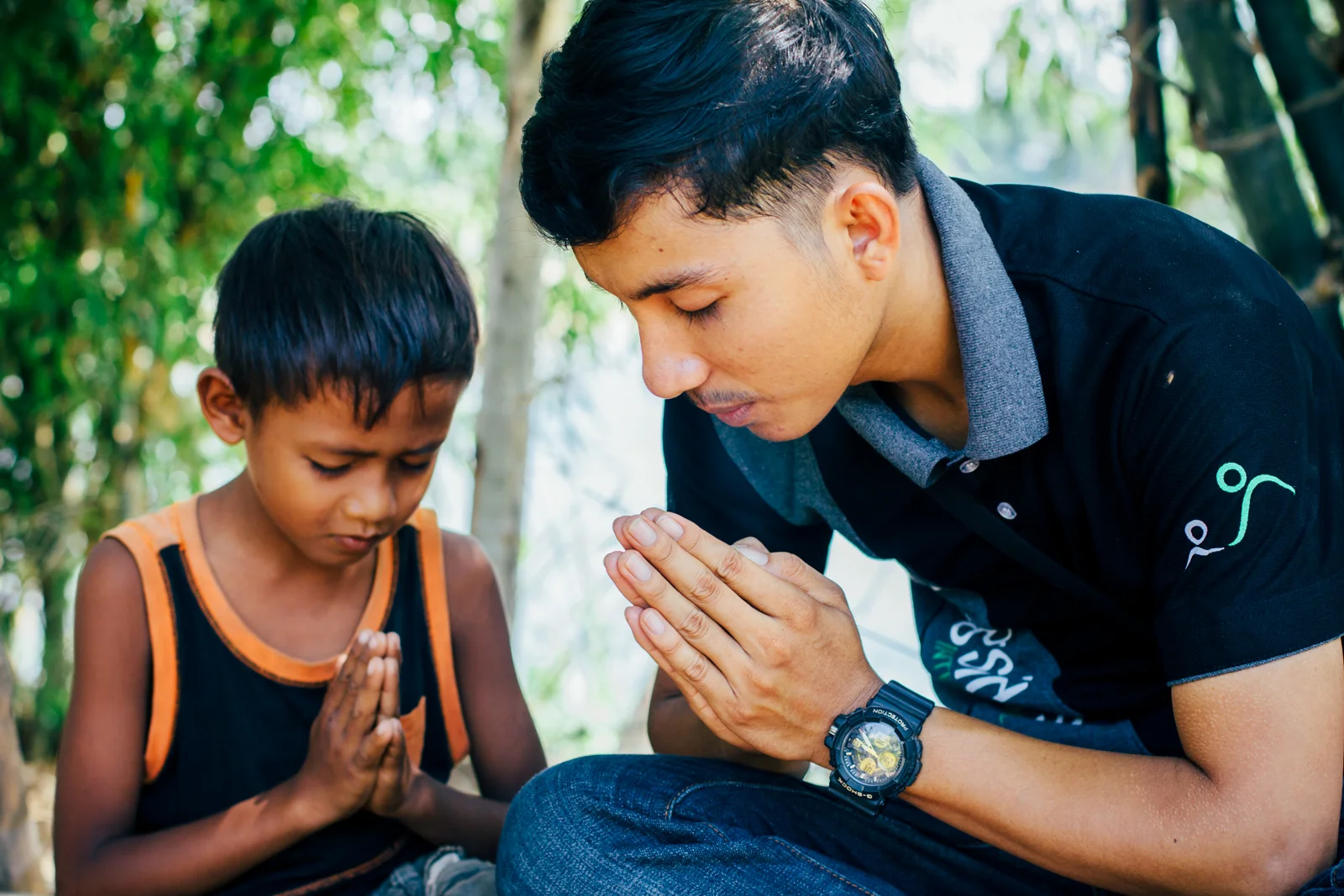
Darath praying with his "little brother" Suey Kong
Darath didn't realize at the time, but his experience with persecution had welcomed him into what Helen Keller called, "the largest company in all the world." He learned to see the people around him with eyes of compassionate understanding. This empathy prepared him to choose a little brother through Alongsiders International several years later.
“Believe, when you are most unhappy, that there is something for you to do in the world.
So long as you can sweeten another’s pain, life is not in vain.”
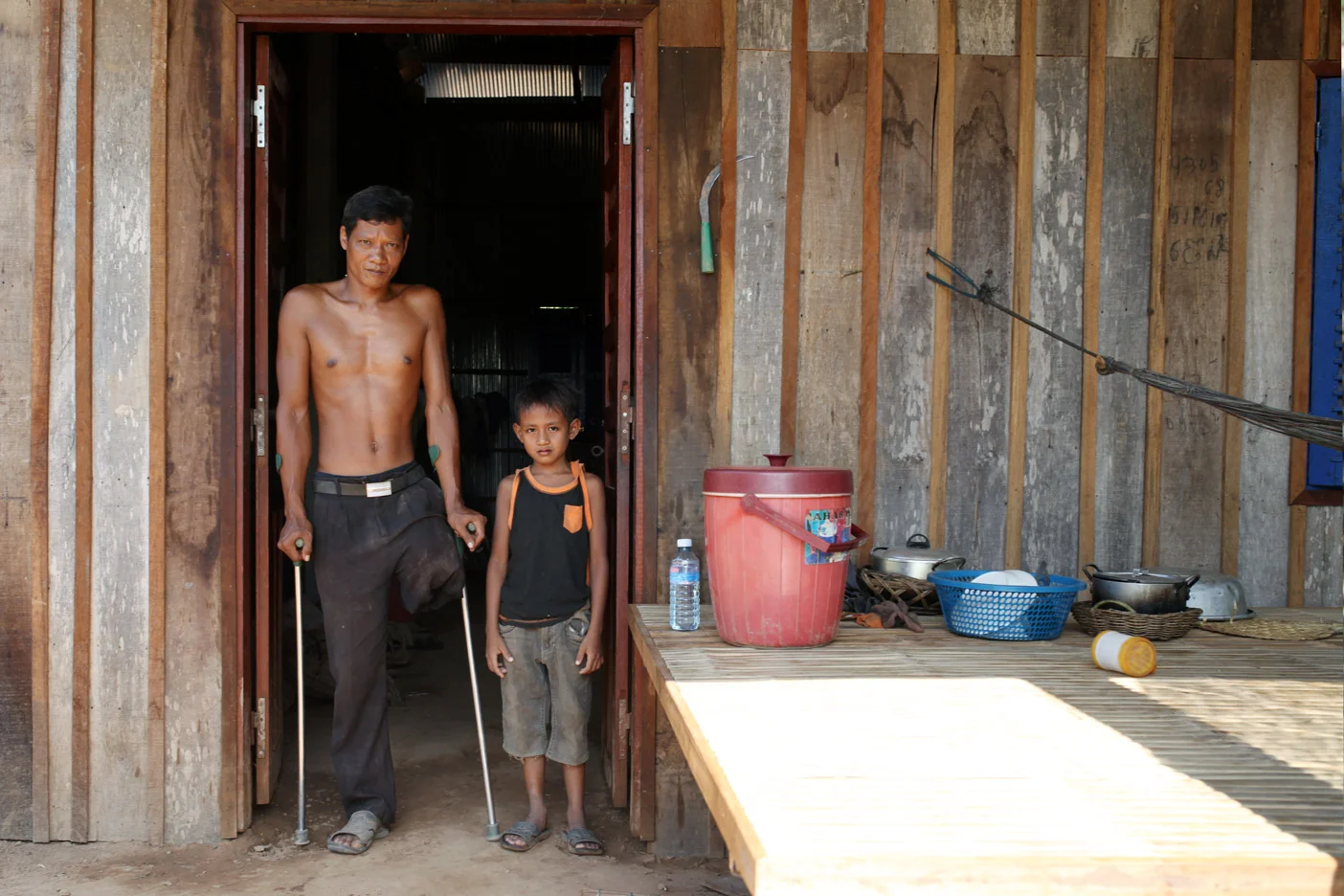
Suey Kong and his father
While serving with a mission team in his home village, Darath met a little boy named Suey Kong, who lived with his father and sister in a rickety house. Suey Kong’s father only had one leg, which prevented him from working. His mother, tired of having to be the bread winner, had left the family. Unable to afford books for school, Suey Kong wrote out his lesson on scraps of paper he found in the rubbish. Suey Kong longed to make friends and be part of his school and community, but he was isolated and lonely.
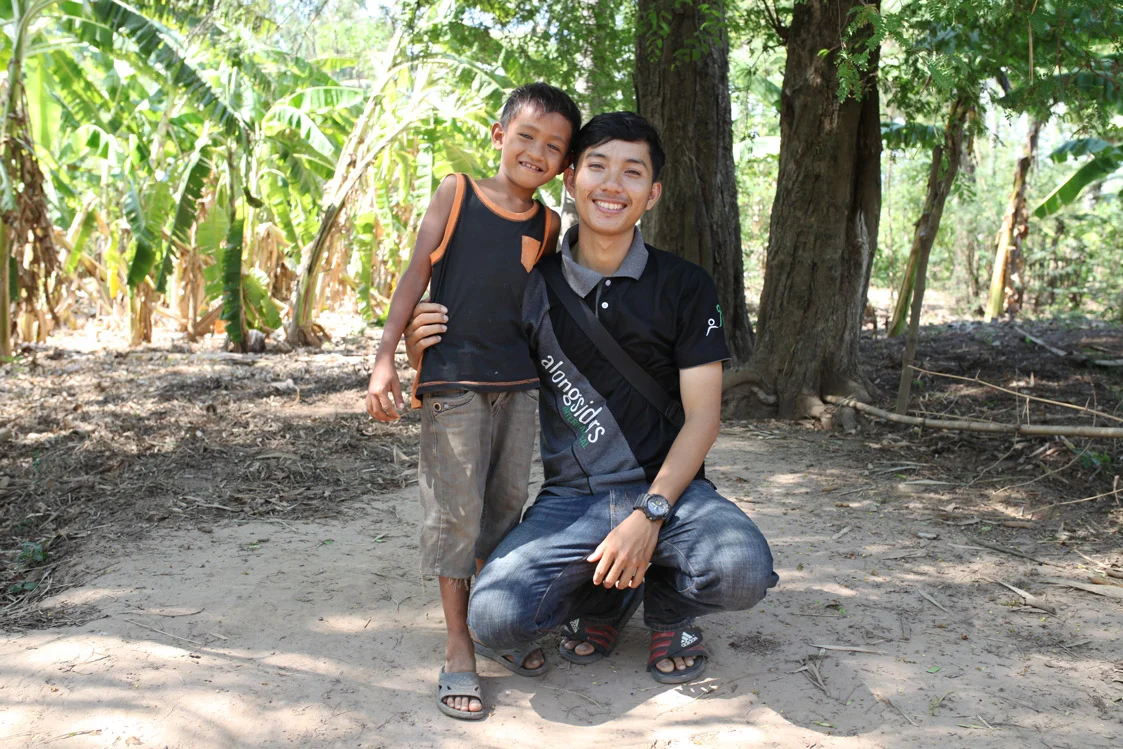
Darath and Suey Kong in their village
Since Darath understood the pain of loneliness from his experience as a poor Christian in a Buddhist village, he knew in his heart that Suey Kong should be his little brother. After he asked the father for permission, he invited Suey Kong to be his little brother. Suey Kong was thrilled.
So Darath welcomed Suey Kong into his life, also inviting him into a family with a loving Heavenly Father who longs to gather us under His wings.
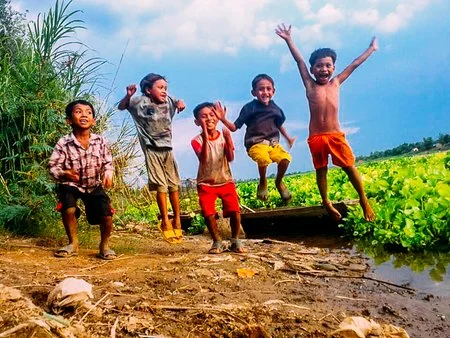
Suey Kong playing with friends
Suey Kong is thriving in the company of this new family. He's been surrounded by new friends and mentors at Darath's church. His health has improved and he's excelling in school, one of the top four in his class.
Today Darath’s dream is that someday his little brother will become an Alongsider too.
As Christians, we are called to share in Christ's sufferings. Our model is this High Priest who teaches us to empathize with weakness. Jesus was a man of sorrows, acquainted with grief. How can we hide behind strength and power when our Lord walked alongside the heavy-hearted?
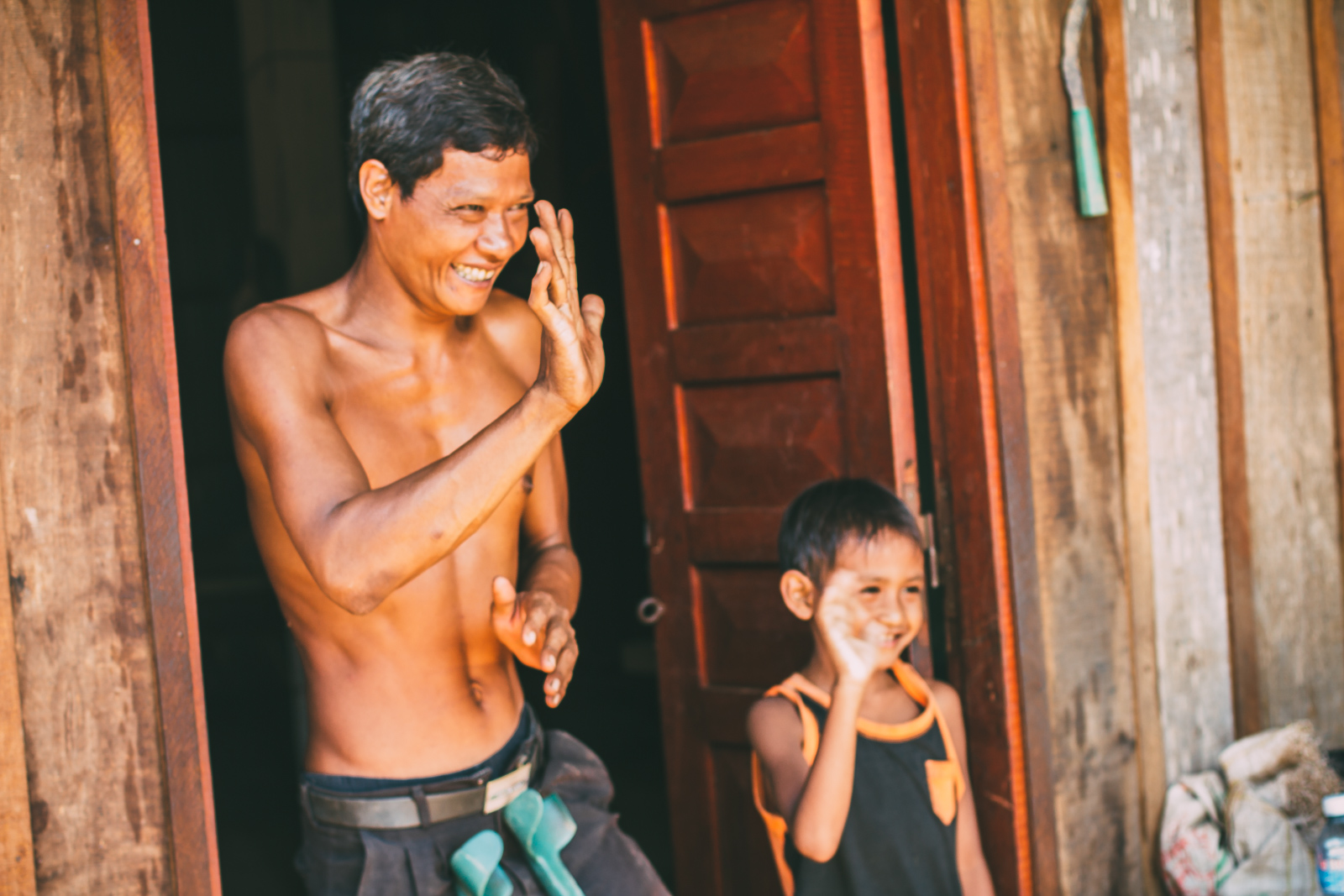
Suey Kong and his father waving goodbye to Darath
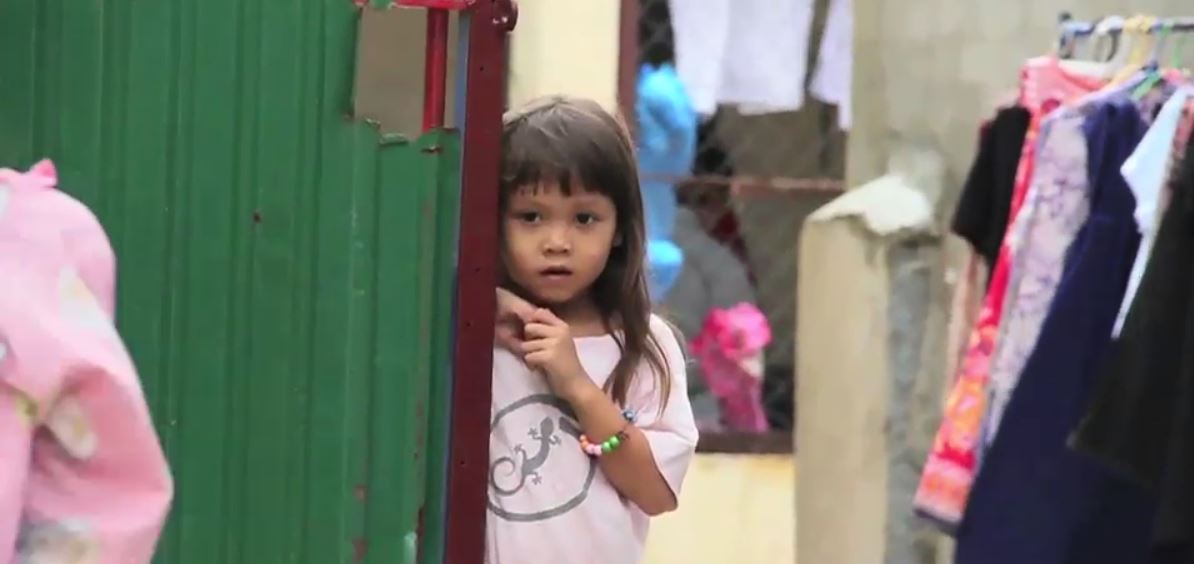
The sting of being excluded - and how to address it
Opening gates for excluded children...
Everyone needs to be part of a community: to be accepted, to belong, to contribute. And we all know what it feels like to be excluded and marginalized, how it threatens our well-being to the core.
Consider this story told by a Cambodian friend (in her words as I remember them).
Growing up I was very poor. One of the poorest children in a poor village. Everyone looked down on me. The other children called me names, and I felt dirty and ashamed. When I got older, I had to drop out of school and work. Someday my dream is to drive into my old village in a big, expensive car. They'll all see me and say, "She made it." The poorest children will think, "If she could do it, I can do it." I want to open a school there and use my money to help others, because that's the responsibility you have if you are rich.
Like many children in the developing world, my friend's community of origin was a rural village. It's a place where everyone knows everyone else. Despite its shortcomings, it still helped to shape and guide her. Years later, having finally gotten her high school degree, she still wanted to return and be validated by the people there.
Her home community was not just important to her for emotional reasons. Besides family, local community relationships play an important role in shaping our lives as we grow up. Here are some examples of what children need to learn while growing up in a Cambodian village:
- Culturally appropriate manners in various relationships
- Verbal and non-verbal communication abilities
- Work habits and credibility
- Respect for community values and traditions
- How to navigate vital customs like courtship, marriage, and property ownership
Of course, communities (and families) don't always function as well as we wish they would.
My friend's story demonstrates a sad truth: that even in poor villages the poorest and most vulnerable children and families are often treated badly and further marginalized.
How can they benefit from growing up in the village community if they are excluded?
There's a moment in our Alongsiders video (see below at 0:53) in which a little girl is watching a group of children play. She is standing outside a gate, looking in with longing in her eyes to join in. Then her Alongsider comes and takes her by the hand. She helps her little sister join the group and they all play together. In a moment this little sister moves from excluded to included. She is no longer on the outside looking in: she has been chosen and loved.
My friend from the opening story wanted to be included, wanted to be seen differently, but it didn't stop there. She wanted - and still wants - to contribute. To be part of a community and respected within a community is not just about receiving benefits, it's also about participating and giving.
So here's another side to that moment in the video. The Alongsider was once a little sister herself. She was once the one outside the gate; now she is opening the gate for someone else.
Perhaps other gatekeepers in her community - or readers here - will see her example and begin to change.
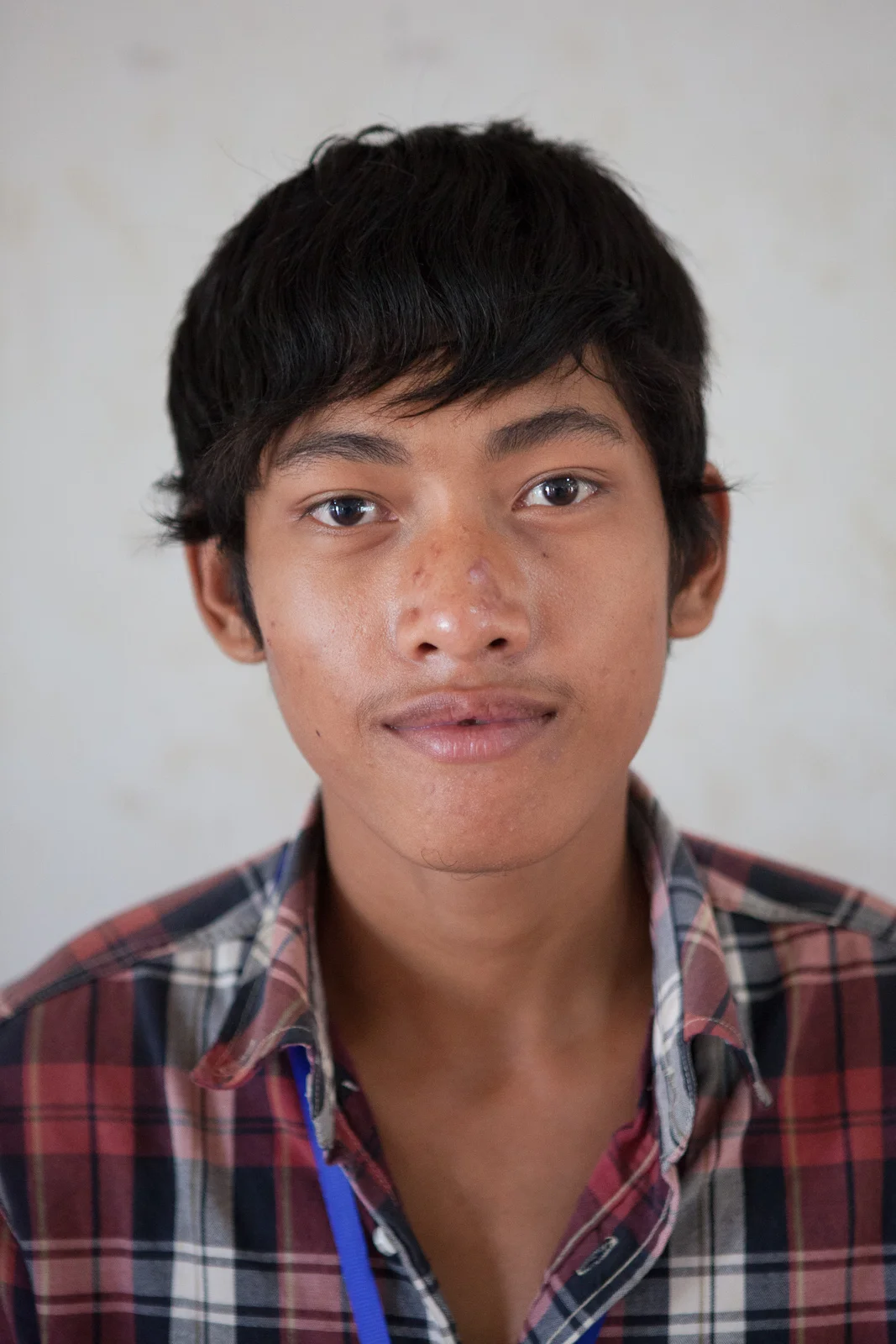
"My Alongsider showed love to me, and now I want to show my love to my own little brother." (Narith, Age 17)
Many Alongsiders have been at the bottom and felt the sting of being excluded. To be sure, many are still struggling to find a way forward economically.
But as Alongsiders they are no longer mere victims or numbers, they are servant leaders and agents of change.
In another vocabulary, they are disciples of Jesus - who himself was marginalized, who identified with people outside the gates.
The community in which the little sister in the video lives isn't perfect, but it has so much to offer. She needs to be included in it for her own learning and development. And it needs her and what she can give. The same is true for many thousands of boys and girls in Cambodia (and in whatever country you may name).
Fortunately, there are many thousands of potential Alongsiders in Cambodia (and in India, Indonesia, China, and a growing list of countries), and they already make their homes in countless rural villages and urban slums where the most vulnerable children live.
Alongsiders see the excluded ones, bring them inside the gates, and walk with them until they can do the same for others.
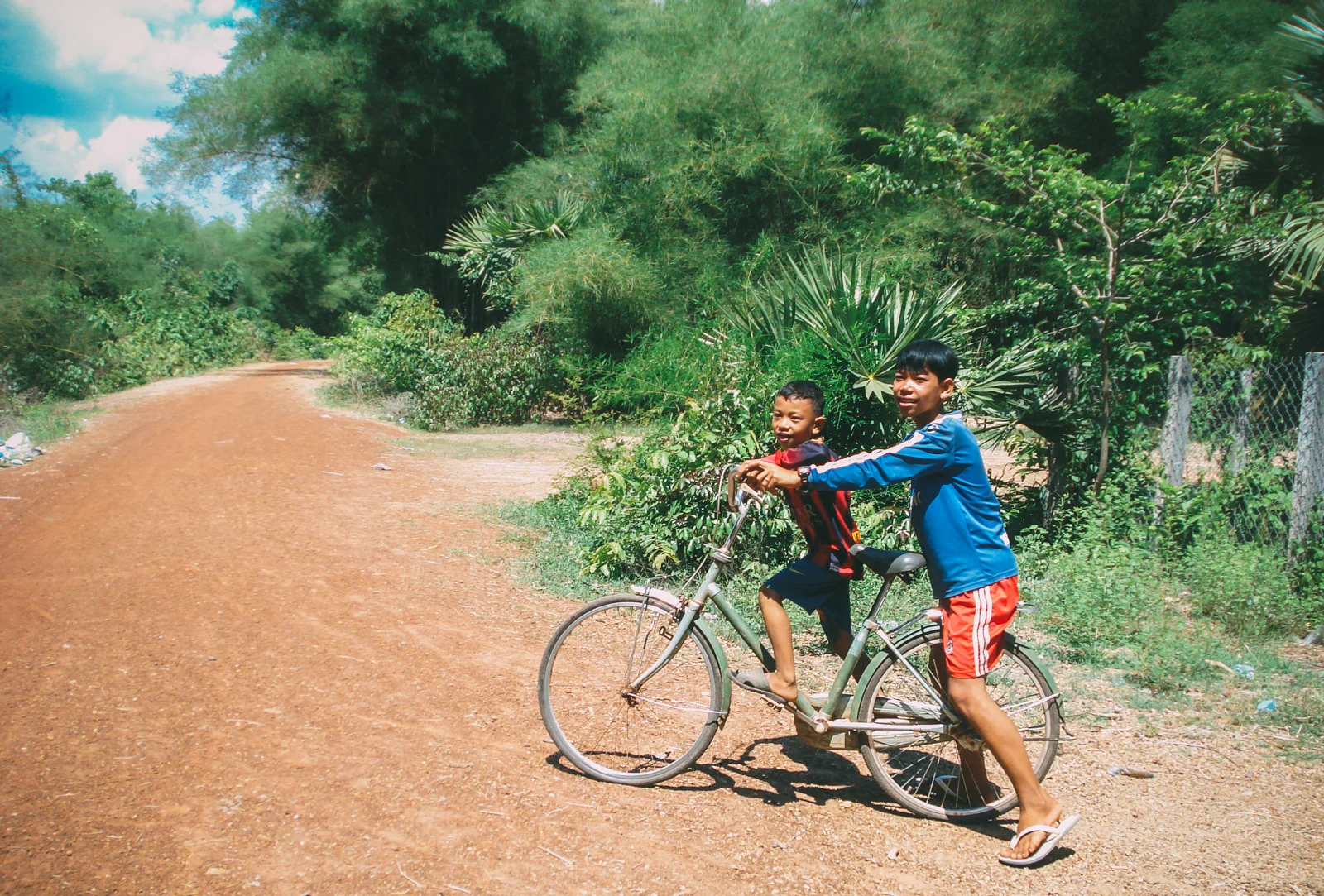
How This Khmer Word Shapes The Alongsiders Movement
Encouragement starts with a relationship.
“He understands my heart,” Somnang explained with a huge smile as he looked at his new Alongsider, “and he always encourages me.”
Somnang and his Alongsider Chantrea are some of Kampong Leng’s newest Alongsiders. Alongsiders began in this part of Cambodia a little over a year ago, and last week a dozen new pairs registered, excited to begin a mentor relationship. When asked why they wanted to be Alongsiders, the older brothers and sisters replied that they wanted to encourage their younger brothers and sisters.
In Khmer, the word for encourage is leuk tuk chet—three smaller words put together which literally translate to lift, water, and heart. To encourage another person in Khmer culture means to lift up and refresh their heart.
Many of the children where Alongsiders works are downtrodden and downcast. Society has marginalized them, leaving them vulnerable and discouraged.
That's why leuktukchet is at the heart of the Alongsiders movement. Encouragement is the blessing that poor communities can offer their orphans and vulnerable children. It doesn’t require money, expertise, or a particularly winning personality. It’s the choice to build another person up (1 Thessalonians 5:11).
From the start, Chantrea has lifted his little brother’s spirits. They met when he found Somnang crying outside the village. “What’s wrong?” he asked.
Somnang shyly explained that he was angry with his mother, who had beaten him. Chantrea sat with Somnang, advising and encouraging him. Somnang was comforted by Chantrea’s understanding presence, and was thrilled when Chantrea gave him a ride home on his bicycle. It was the first of many bicycle rides for these new friends.
Chantrea hasn’t rescued Somnang from the situation, but he’s given him the confidence to cope with it by walking alongside him even when he is downcast. Somnang can count on Chantrea’s support to lift him up and refresh his heart, and that changes everything.
Another little brother in Kampong Leng, Udom, also shared how encouraging his older brother was. “My favorite thing about Buntern is his kindness and gentleness,” Udom said.
Like the other Alongsiders in Kampong Leng, Buntern encourages his little brother to stay in school. Many families rely on their children to tend the cows and help in the rice fields. Udom’s family complains when he goes to school, since education will not put food on their table that night.
But Buntern makes sure that Udom attends school whenever possible, because he knows that education will bear fruit in the long run. He answers Udom’s questions and helps him study his lessons. It’s good practice for the future, when Buntern hopes to be a teacher.
Chantrea & Somnang
Other days Buntern and Udom help their families plant rice. The rice is planted as a seed in a dry place until it reaches about thirty centimeters. Then it is transplanted to the rice paddies to reach its final height of about one meter. Buntern waits for the end of the rainy season, when his family will harvest the rice.
As he watches the rice grow strong in the watery paddy, he hopes that he can likewise nourish his little brother. Buntern repeats the word leuktukchet. “I want to encourage Udom.” The middle word, tuk, means water, life-blood in the oppressive June heat.
The rice will be ready around October, but Udom’s education will take many more years. Buntern takes it one day at a time, walking beside his little brother as they tend their cows and study their lessons.
For encouragement isn’t about one miracle or intervention. Encouragement starts with an uplifting relationship: Buntern and Chantrea walking beside their little brothers from the village to the rice fields, and refreshing their hearts.
How the Alongsiders movement emerged from an orphan crisis...
An ancient Chinese proverb teaches us that, “A crisis is an opportunity riding the dangerous wind.”
An ancient Chinese proverb teaches us that, “A crisis is an opportunity riding the dangerous wind.”
This is the story of how the first Alongsiders movement grew out of the orphan crisis in Cambodia...
It was 2001.
An estimated 220,000 Cambodians were "living" with HIV/AIDS. Since no treatment was available in Cambodia at the time, they were dying at an estimated rate of 15,000 people per year. More than 150,000 had died since the epidemic began in 1991, and they would continue to die at high rates for another five years.
Many Cambodian children lost one or both parents to AIDS, and worldwide there was a mad scramble to open new orphanages, urged on by statistics predicting millions of AIDS orphans. (An orphan in most countries, including Cambodia, is defined as a child who has lost at least one parent.)
Even so the vast majority of AIDS orphans were cared for by surviving parents and relatives.
At that time, Craig Greenfield was overseeing a community-based health program in a Phnom Penh slum. As the number of orphans grew, rather than starting an orphanage, the program came alongside surviving family members and relatives to help them care for the orphaned children themselves. (You can read about this story, including why they didn't start an orphanage, in Craig's book, The Urban Halo.)
The community-based care program was successful, but there was a noticeable gap. As Craig saw it, the children and families needed "love, discipleship, coaching and mentoring - but only a movement of people would meet that need."
One day while wrestling with this challenge he had an "a-ha" moment. The local churches, he thought, had many young people who could do the work - they just needed to be mobilized.
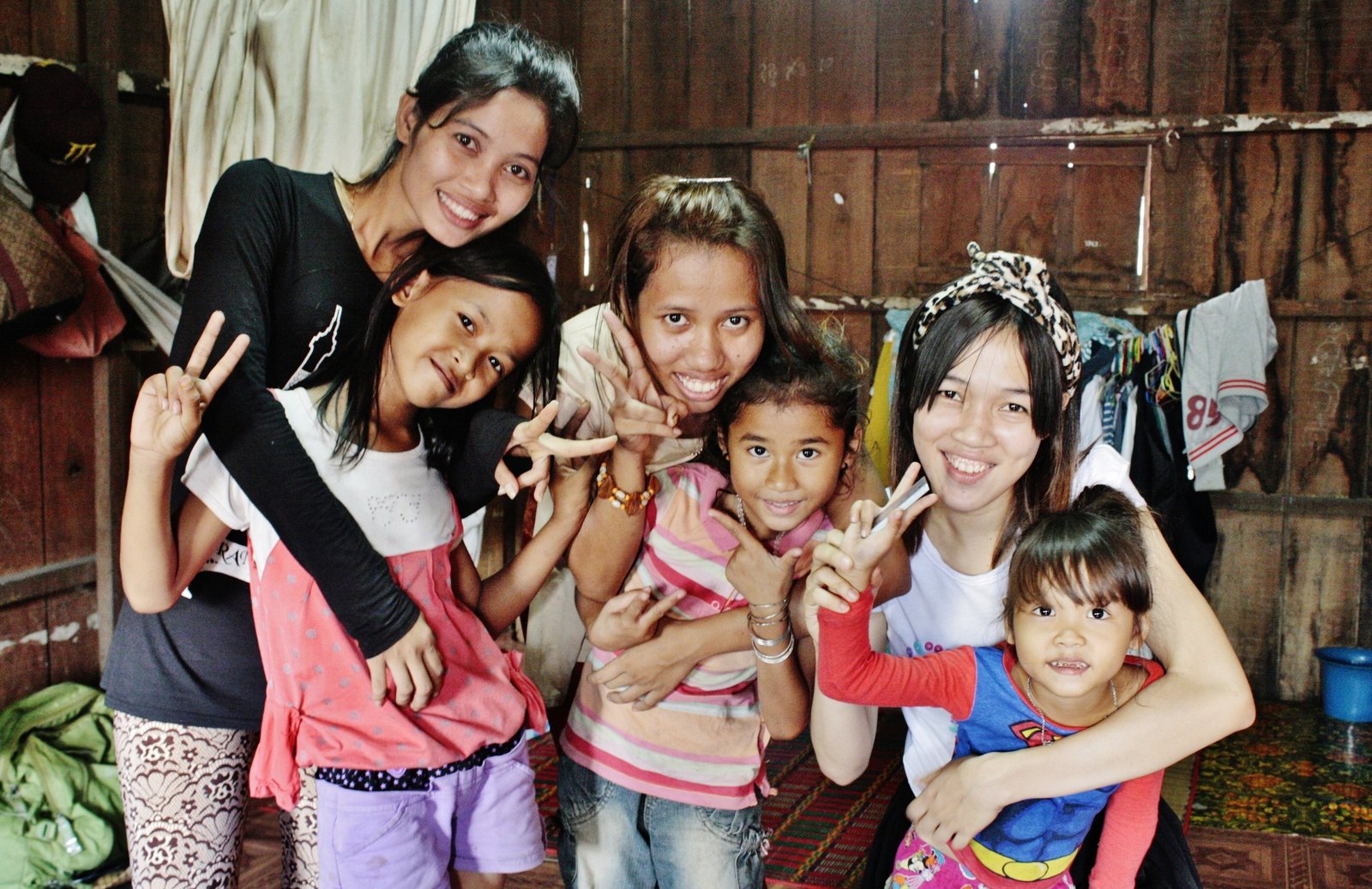
The first Alongsiders were young adults recruited from relatively well-off churches and communities in Phnom Penh and assigned as big brothers and big sisters for slum children orphaned by AIDS (or at risk of being orphaned).
It worked to a degree, but some changes had to be made. Two of the most important changes were:
1) the decision to recruit Alongsiders from churches located WITHIN slums and marginalized communities, and
2) giving Alongsiders the responsibility to prayerfully choose little brothers and sisters themselves from the most vulnerable children in their own neighborhoods. The result has been a growing movement of young people at the margins.
Now it's 2015 and we continue to hear about the orphan crisis in Cambodia, even though the number of orphans has dramatically decreased. What we don't hear enough is:
- that 90 - 95 percent of orphans are being cared for by their surviving parents and relatives
- that studies have shown poverty, not a lack of parents or any other single issue, is the most significant indicator for whether a child will be put in an orphanage.
The good news - perhaps surprising - is that so many orphans and vulnerable children are being cared for by parents and relatives.
The challenge is that many single parents and grandparents in economically poor communities need support.
It's often a very tenuous thread that prevents orphans and the most vulnerable children from being sent to orphanages or put at risk in other ways (ranging from abuse and neglect to human trafficking). What breaks the thread? A crisis without any means to fall back on, the ongoing stresses of poverty, the burdens of discouragement and isolation, and a lack of resources to provide for a child's education.
That's where Alongsiders comes in.
Alongsiders is an orphan care movement, but not in any "top-down" sense that orphan care may imply. Alongsiders, as an organization, empowers young Cambodians, via local churches, to provide practical support for orphans in their own communities. Simple as their actions may be, this helps parents and relatives, who are often stretched to the extremes, care for their own orphaned and vulnerable children.
Forty-one percent of the little brothers and sisters in Alongsiders Cambodia are orphans. Many of the remaining fifty-nine percent have parents, but they are in the care of their grandparents or relatives for various reasons.
Here is how one Alongsider (himself orphaned) describes the impact Alongsiders can have on orphans who become their little brothers and sisters:
“I think the most important thing is that they see someone cares for them and that they’re not alone... Sometimes the Alongsider was an orphan too and understands... When you don’t have family you’re so hurting inside, and scared...
When they see they’re not alone they have happiness, and they aren’t as angry. Maybe they help around the house more... They know their own value and so they become stronger.
If they start to know Jesus they are even more happy because they have more friends at church. They are not alone any more.”
The Alongsiders movement grew out of a major crisis facing the nation of Cambodia - the crisis of neglected and impoverished children. It is the same crisis that so many developing nations face in the world today.
The seeds of hope and faith are always there. But sometimes it takes a crisis to nourish and encourage their growth.
Join us in praying for life to come from death, good to emerge from tragedy, and young Christians to rise up all over the world in response to the crisis facing their orphaned children.
The incredible lightness of being small
Can we put aside the burden and distraction of being big and living large?
We're obsessed with size, scale and numbers. On Facebook we connect with hundreds or even thousands. We count our likes and comments. We share pictures; we discuss global problems with friends and Tweet them to our followers. We get round-the-clock news via television and Internet: another earthquake in Nepal, more Saudi airstrikes, an ISIS leader killed, another bizarre story from North Korea, murders and mysteries, crashes and corruption, and it's election season again.
Need a distraction? How about the summer movie everyone is talking about: The Avengers: Age of Ultron. (Say it in a loud voice.) In this movie, humanity is saved from near certain annihilation.

Sounds familiar, and it's BIG!
Think about it though. A band of heroes with special powers and abilities face an evil menace. These heroes do all the best thinking and fighting while the rest of humanity and their inept leaders blunder about helplessly. Meanwhile, off-screen regular people (like us) are dying by the tens of thousands.
So how is that a relief?
We watch these movies and let our minds drift through feelings approximating courage, fear, relief, and hope. Maybe even love. Of course, we identify with the heroes, not with the nameless masses dodging falling buildings far below.
Then we walk out of the theater feeling bigger, a little lighter in the step and ready for action. But soon, like Walter Mitty (a character in another kind of movie), we get mired in the ordinary again.
What can we do?
Seriously, here's a thought. We can, each of us, embrace being small and let go of the illusion that we could (or should) be in control despite all the information and tools we seem to have.
And then we can release the burden of making ourselves any more significant than we already are.
Truth is, you will never in your life be more significant than you are right now. The life of God has breathed in you; the God who fills the universe has loved you and died for you. What could you possibly to do to make yourself more significant than that?
Jesus had a huge vision that would change the world, but it belonged to the Father. Jesus' burden was light; it was not to be in control. He did what the Father was doing here and now with the people in front of him.
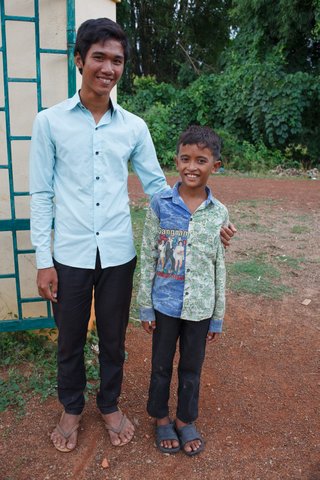
Talking or writing about Alongsiders International as a movement comes perilously close to a line we don't want to cross. It's not our job to make ourselves big. People are inspired by movements, no doubt, but here is the movement that thrills us most.
Today, an Alongsider rode his bicycle to the home of his little brother, a boy hardly anyone deems significant, and helped him with his homework.
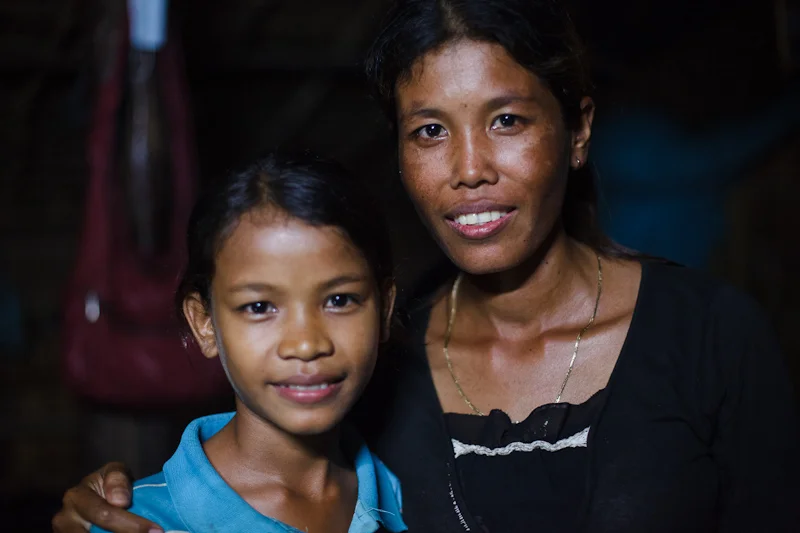
Today, another Alongsider visited her little sister's house and helped her wash herself and wash her clothes.
They know the most important thing: what the Father is doing.
What they do in step with the Father, though hardly anyone may notice, changes the world.
Can we put aside the burden and distraction of being big and living large - of size, scale and numbers - and just see the love of the Father and do the same?
Why you might need to think smaller
We all love the part where Jesus says, "Let the children come to me." It's a comforting line, and a good passage for a devotional, but do you ever wonder what it has to do with getting things done in mission/ministry?
We all love the part where Jesus says, "Let the children come to me."
It's a comforting line, and a good passage for a devotional, but do you ever wonder what it has to do with getting things done in mission/ministry?
Because we're busy with many things, and one of them (the most important, said Jesus) is seeking the Kingdom of God.
When we talk about the Kingdom of God, we're talking about the world changing: every relationship set right, broken people healed, and a new community born in Christ - way beyond what words like justice, healing, and morality individually express.
It's a lot to hope for, and work for, given the state of the world.
What does Jesus allowing kids to sit on his lap have to do with that?
Jesus often let himself to be interrupted while doing "more important" things. He stopped an entire procession for a blind beggar crying out to him, who his own disciples tried to quiet down. When he was on the way to save the life of a little girl (with a very well-connected father), he inexplicably stopped for an anonymous woman who had a chronic menstrual disorder. While having dinner with prominent religious leaders, he paused while a prostitute "washed his feet with her tears." And once when crowds of people had turned out to see him enter their town, he saw that a tax collector had climbed a tree to see him. In front of all those people, who must have despised the man, Jesus stopped and invited himself to dinner at his house.
These are just a few recorded moments that made it into the gospels. Judging by the number and pattern of them, we have to conclude that Jesus acted this way all the time!
And it wasn't just a case of Jesus relaxing after hours, or taking some time out on the side. This was Jesus when he was focused.
Think about it. When Jesus was most focused he saw the child being turned away, the beggar at the side of the road, the quietly desperate woman trying not to be noticed, and the hated man.
So people tried to help him refocus: Peter, the pharisees, the crowds. They prompted him for a vision promising success, for signs and assurances, or a movement of change.
But Jesus held onto the "foolish" vision of the Cross, where he sealed his fate alongside the least and the rejected.
And back to that moment when Jesus let the children interrupt him, he didn't leave it there. He said, "The Kingdom of God belongs to such as these" and "anyone who will not receive the Kingdom of God like a little child will never enter it." And...
We have to think small.
We can't be distracted so much by the big things.
This is, after all, the same Jesus who said the greatest in the Kingdom of God will be the servant of all. Who said those who know him will give attention to people who are marginalized: hungry and thirsty people, strangers, people without clothes, and prisoners.
Jesus had a huge vision set before him, but it belonged to the Father. He was neither anxious about it nor obsessed by it. He did what he saw his Father doing.
And it led him down, down, down.
Last week I wrote about how Alongsiders can change thousands of lives and impact societies. That vision and movement are in the Father's hands. We take a risk each time we TALK about VISION.
What we can best serve and celebrate right now is each individual Alongsider who will stop what he or she is doing this week to love and spend time with a boy or girl who others deem unimportant.
That is focus worthy of the Kingdom.
When we talk of vision and movement we would well learn from them and do the same.
If young people are changing the world, here's how the young people need to change
Change starts with this generation. But here's what we need to know when there are set-backs.
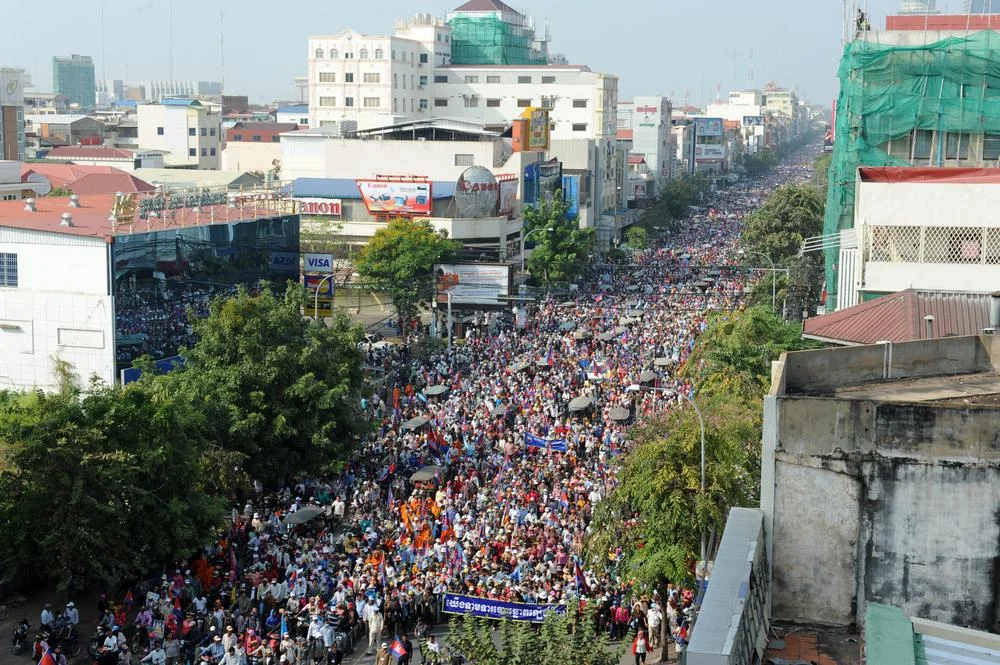
More than seventy-thousand Cambodians turned out to watch exiled politician, Sam Rainsy, return home. They were said to line the streets from the airport to the river side.
It was ten days before the national election in 2013. Sam Rainsy was the leader of the unified opposition party. He had just received a royal pardon from politically motivated charges that had kept him out of the country and away from campaigning for four years. But over the ensuing week tens of thousands flocked to see him as he made a circuit of the major cities. There was a palpable buzz in the air.
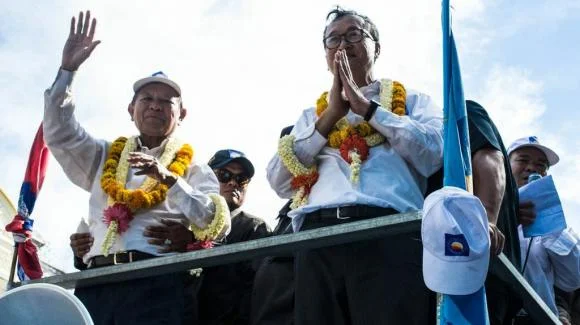
Sam Rainsy, right, and Kem Sokha - the leaders of the Cambodian National Rescue Party (CNRP) greet crowds as they roll through Phnom Penh atop a customized tuk-tuk.
The election was held, and in the following days the government went silent as the opposition party claimed victory. After a ten day delay, the official results finally (some would say inevitably) gave the ruling party a majority of the vote.
The Economist called it "the humbling of Hun Sen" and added "Cambodia's strongman gets a shock at the polls." It was the worst showing for the ruling party in its history - but it was not over yet.
The opposition declared they would march every week until election irregularities were properly investigated. Huge numbers of Cambodians joined marches through the streets of Phnom Penh and camped out in "Freedom Park" (the designated area for peaceful protest). The government brought soldiers into the capital to provide "security." Razor wire barricades blocked the streets to prevent people from easily joining the demonstrations and marches, and checkpoints on the roads surrounding Phnom Penh turned busloads of people away.
The largest march, in December 2013, drew hundreds of thousands of people (the highest estimates say close to 500,000 joined).
What happened?
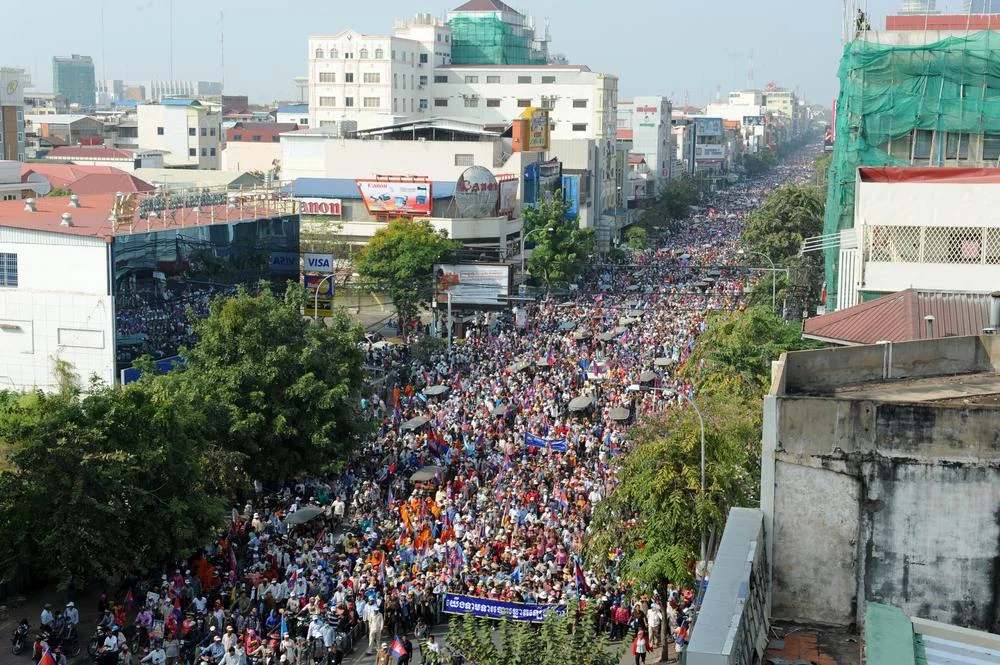
December 29, 2013, marchers stretch out for kilometers through the city of Phnom Penh
More than half of the registered voters in Cambodia are under 30 years old, and a third are under 24 years old. This young Cambodian majority does not rely as much as the older generation on television news, which they know is controlled by the ruling party, but more and more read news online and connect on Facebook.
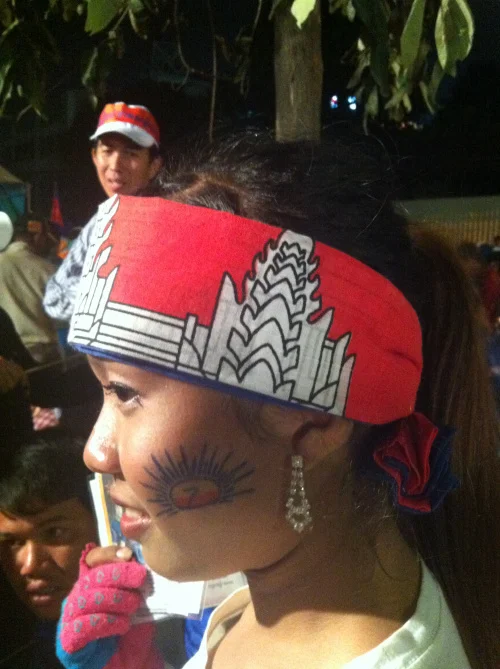
The official news media ignored or downplayed the marches and demonstrations. There were also veiled threats and increasing numbers of soldiers in the streets. Parents told their children not to get involved. But many young Cambodians saw a ray of hope and reached for it.
As one Cambodian blogger wrote:
“These young people are hungry for change in their [own] lives and... [for] the next generation.”
This is the generation we want to reach as Alongsiders. They are the future of broken nations like Cambodia, even if their time is delayed. We're not content to reach hundreds, we want to reach thousands of them in a way that prepares them to serve and lead for change.
In all the countries where Alongsiders is expanding, including India and Indonesia, and in other countries where Alongsiders is breaking ground, young people are the majority. In Indonesia, half the population is under the age of 28, and in India half the population is under the age of 25!
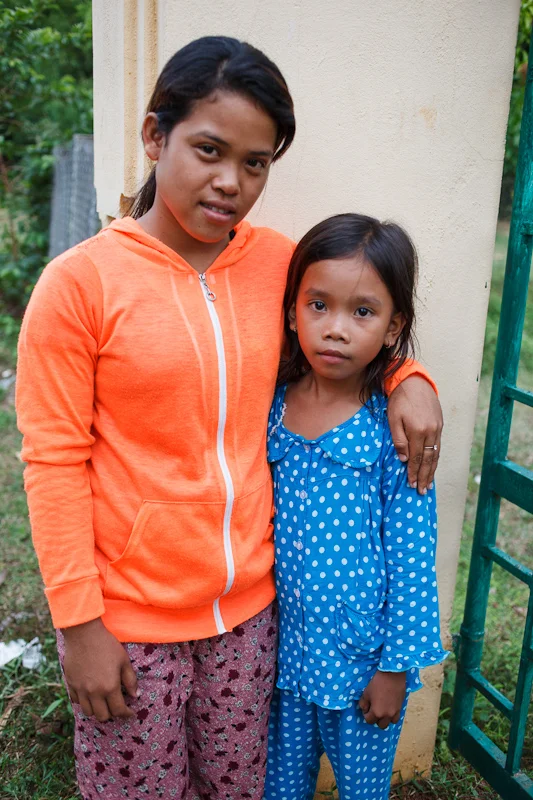
Alongsiders as a movement is raising up young people to be Godly leaders who know that following Jesus means putting love in action over time, starting with loving and serving their own young neighbors who are marginalized.
They are getting to know by experience the Grace that can transform the world without being overcome by the world's values.
And here's a reality check.
Those were heady days two years ago. I remember the feeling of being stopped in traffic at an intersection as an interminable line of people passed by waving flags and cheering. Bystanders stood by their cars and motorcycles taking pictures and calling out support. I walked into the street and stood a few feet away as Sam Rainsy and Kem Sokha rolled by on a customized tuk-tuk with a platform installed so they could wave to the crowds.
I remember talking with young Cambodians at that time who had never expressed interest in politics before, who had actively joined the movement in one way or another.
But those days are a memory now.
- The demonstrations stopped when the government cleared "Freedom Park" and surrounded it with razor wire barricades, then began to unleash violence on protesters.
- Sam Rainsy and the opposition party were quieted when eleven prominent party leaders and activists were arrested on trumped up charges of insurrection. Their case has since been held in limbo, improving or looking grim depending on how well the CNRP cooperates with the ruling CPP.
- The unity of the opposition has begun to crack under the strains of time and forced compromises. Sam Rainsy himself was accused, fairly or not, of corruption by a party insider.
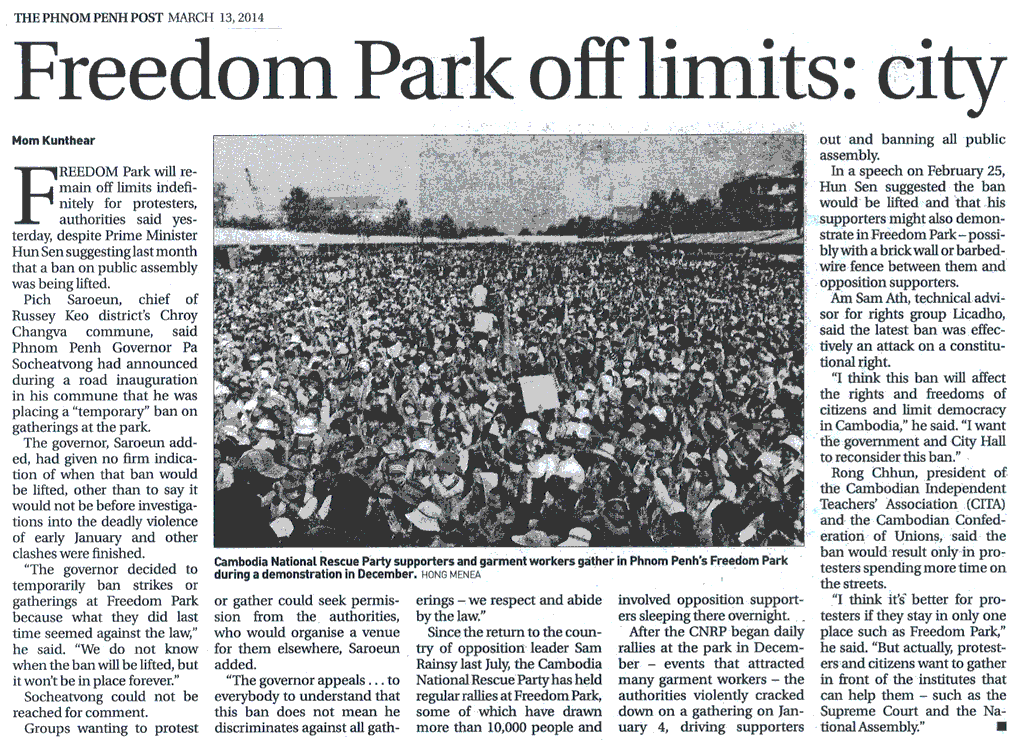
Image in March, 2014, from the Phnom Penh Post
Change isn't easy, even with overwhelming popular support. The "Arab Spring" is proof enough of that.
The young generation, like the generation before it, has never been empowered. They have received, at best, a poor education, and they have suffered a sore lack of quality leaders.
What if they had won and toppled the government? Some say it would have been a disaster.
The youth are the future of Cambodia, but will they be ready for it?
Many Alongsiders joined the demonstrations. They are hungry for change, too. They see that change is slow, and full of set-backs. But their faith is in God, not a political party, politicians or even a system of government. It is founded on their hope in the Reign of God with real peace and justice.
Do you want to help change the world? It may sound trite, but we must begin with ourselves - BE the change you want to see. Live it out in your own sphere of influence, starting with the most vulnerable. Faith in God is faith that is lived out in love. It endures, suffers, and celebrates. And it bears fruit in life.
How to avoid the pitfalls of money in missions
Too often foreign organizations use money to move their agendas forward. Here's why that's a problem.
There is one province in Cambodia where Alongsiders is growing faster than in all the other provinces. Most of the credit goes to one local pastor who keeps telling other leaders about Alongsiders.
“Wherever he goes, whatever he does, he talks about Alongsiders whether people are listening or not. He just shares about the impact Alongsiders has had on him. I’m surprised. I haven’t gone out to share with pastors in that province, but I keep getting calls to sign-up new Alongsiders.”
Alongsiders grows naturally and quickly when local church leaders are this passionate and focused on what God is doing, but it's rarely so easy.
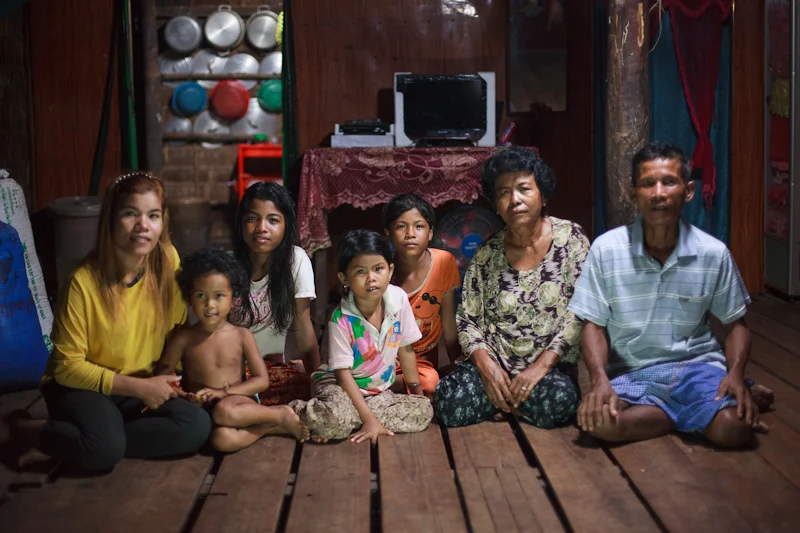
A village family in the province where Alongsiders is growing fastest.
Pastors often ask Phearom, directly or indirectly, what Alongsiders can do for their churches. They may say, "We need funds for a building" or "We need money to feed the children." Often they are probing to see what Alongsiders has to offer financially.
Local churches everywhere tend to have an eye on budgets, salaries, and the building - not just in Cambodia.
But the way money is used in Cambodia, by Christian and secular organizations and missions alike, has fed a culture of following the funding. Every day foreign organizations pay (in cash, salaries, and projects) in order to move their agendas forward. To pick an example, every year a large mission team comes from an unnamed country for an extended trip, and local Christian leaders across the country drop everything to coordinate, translate, and do whatever the group asks. That's because this group pays very well and dispenses money for projects wherever they go (a well here, a building there, etc.). Even after they leave an area, the money keeps flowing for the projects they have initiated. "Some people they hire do the work," says one local leader, "and others just take the money and write reports."
When this happens, local initiatives suffer for lack of attention and funding, the wrong leaders may be elevated, and future development and mission workers are too often greeted as if they have dollar signs on their foreheads.
Alongsiders Cambodia seeks partnership with local pastors in this climate, but aside from occasionally sharing a meal with a pastor and bringing participants to our annual camp, Alongsiders does not dispense money or fund projects.
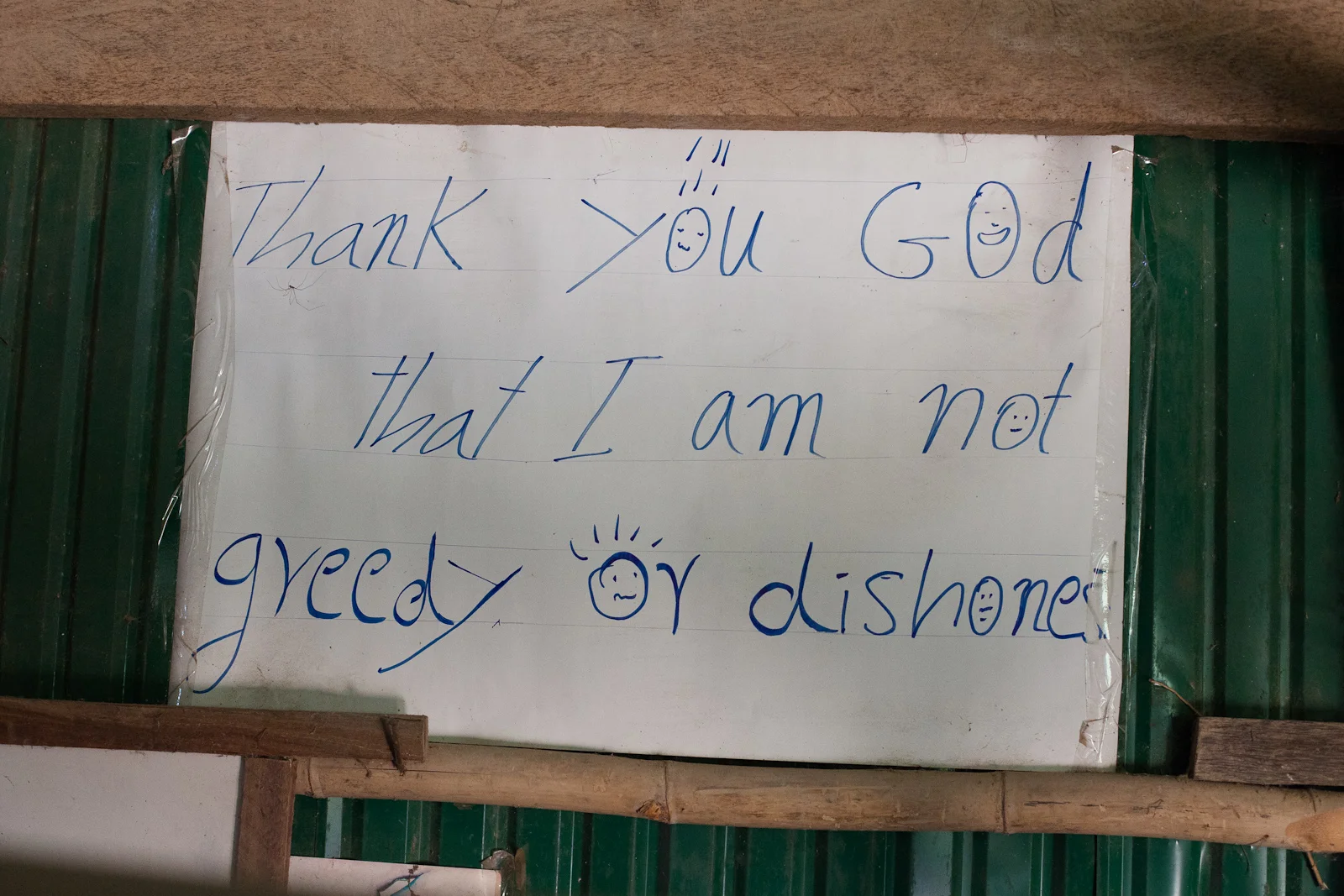
We can't agree with everything local churches are doing or saying, but there are people in them seeking the Kingdom of God for their communities. We want to help them find it.
Phearom encourages pastors by explaining that the Alongsiders movement will help the church grow. "Five to ten years from now," he says, "the little brothers and sisters will grow up and become members of the church."
But what we want is for local church leaders and members to seek the Kingdom of God, not just security and results.
So we come inviting people to serve without being paid for it. We honor people by recognizing that they are not merely "poor" people, but they are children of God who have so much to give.
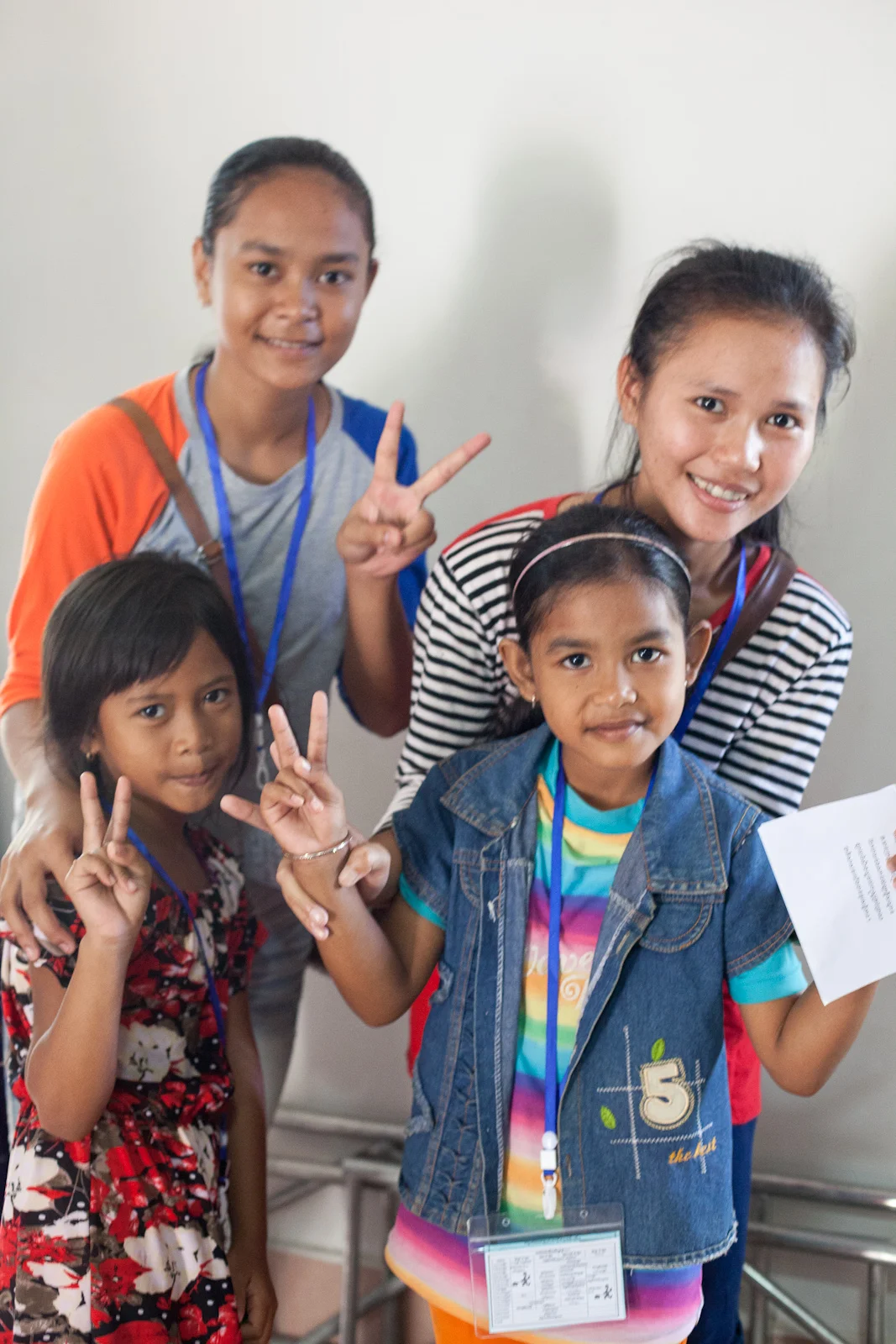
And when people get it, like the local pastor telling everyone he meets about Alongsiders, they come alive.
Here's a lesson to take away from this, one that we are still learning. It's easy to say but not as easy to apply.
Don't substitute money for relationship. Don't substitute salaries for genuine service and love. Don't substitute control for local initiative. Don't substitute speed and results for lasting transformation.
Seek the Kingdom of God - the Reign and Leadership of God - through people and relationships, and all the rest will fall into place.
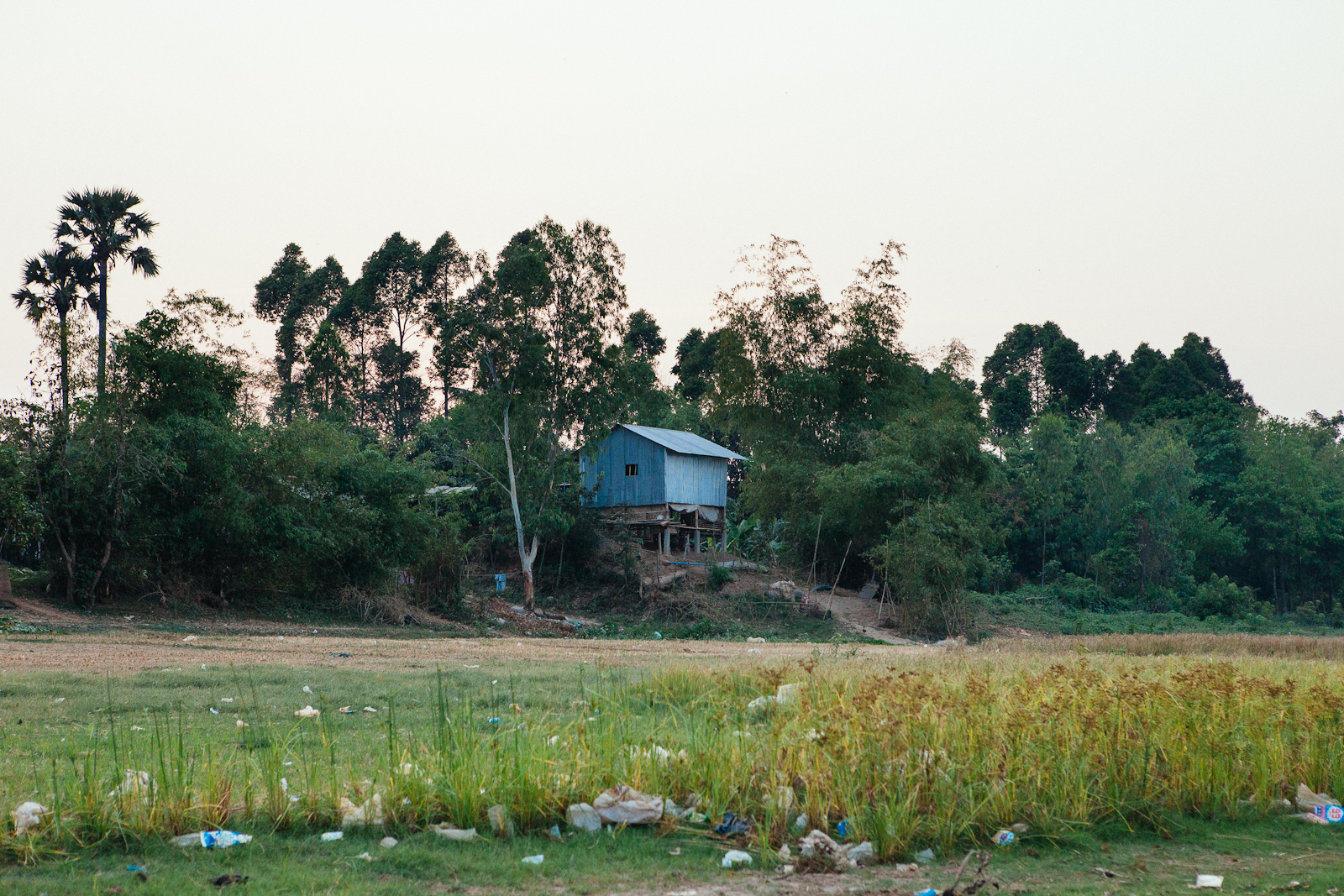
Why work with local churches?
I went to a rural church to follow-up with a group of Alongsiders, and I asked them how they chose their little brothers and sisters from all the children in the community. One of the young women started to cry as she answered...
I went to a rural church to follow-up with a group of Alongsiders, and I asked them how they chose their little brothers and sisters out of all the children in the community. One of the young women started to cry as she answered, and she said:
“I saw that one of the families in our community was suffering. The mother died, and the father went to Thailand to work and save money. Now the grandmother is raising all six children. I really wanted to help them, but I didn’t know what to do. After I heard about Alongsiders, I went and talked to the grandmother. I told her that I wanted to choose one of the girls to be my little sister, and she immediately said, ‘Yes!’”
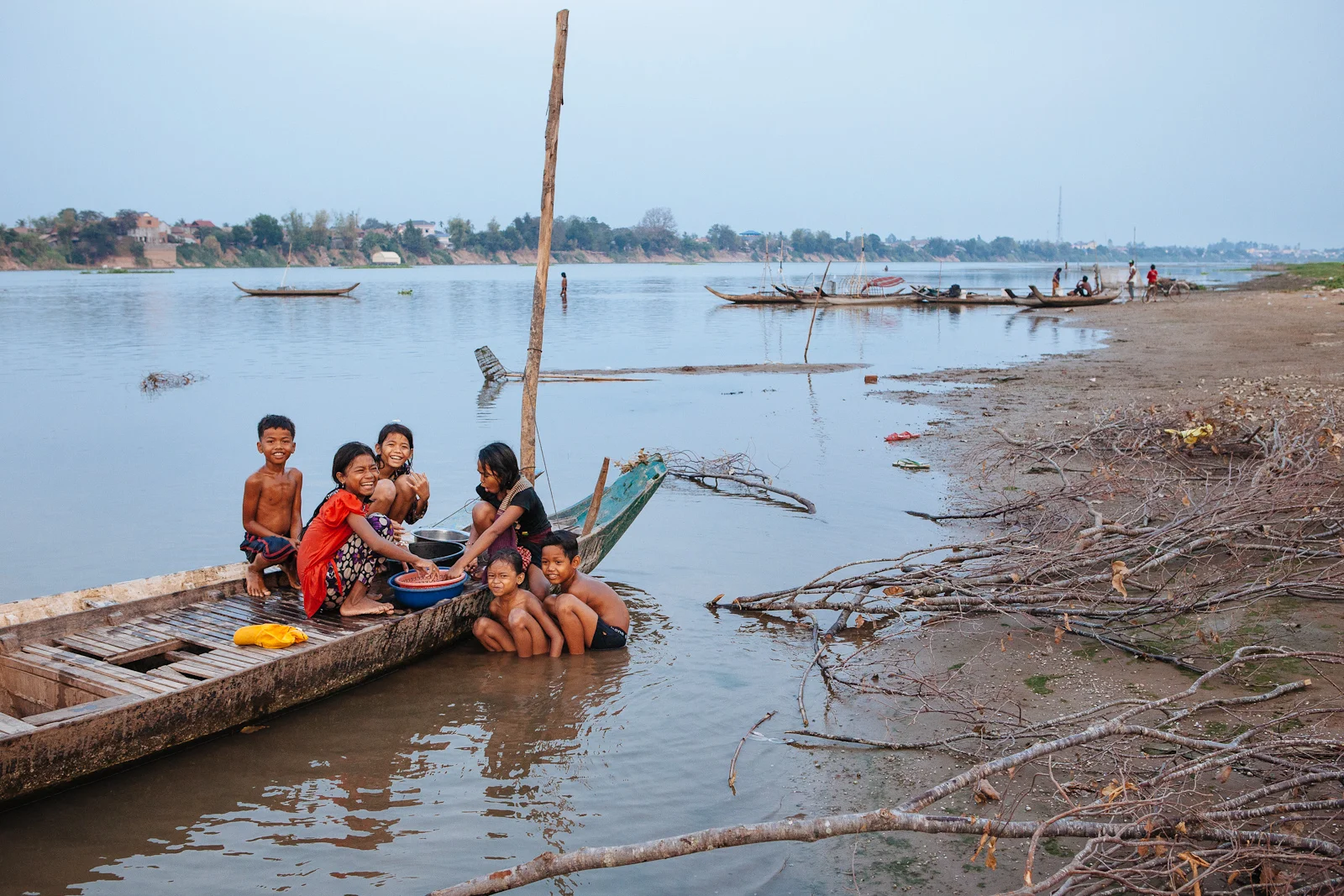
Community children in a riverside village play and do chores at dusk.
Phearom relates this story. He's one of the national coordinators for Alongsiders Cambodia, and he's constantly networking with pastors and visiting churches to invite the youth to join the movement.
His story is an illustration of why we work with local churches.
The young woman had a heart of compassion, and she was already connected in her own village and aware of people in need there. She was poised to act, but she was waiting for an opening.
There are others like her, and there are many, many remote villages in Cambodia. How can an organization based in the capital reach and mobilize them?
The answer that makes the most sense, especially for a Christian organization, is to work through local churches. Local churches are already in place in hundreds of remote villages, and their members already have relationships and local knowledge that organizations coming from outside dream of having. And the local churches come with leaders and structures included.
They are resources hidden in plain site, often overlooked because they are - like their communities - small and seemingly isolated.
Local churches aren't just gateways to villages, they provide critical backup for the Alongsiders. The little brothers and sisters don't just get the support and attention of one person, but they gain access to a community with varied gifts, wisdom, and resources.
When we work with a local church, the local church benefits.
Local churches are people, the Body of Christ with faces and names. Partnering with Alongsiders helps them practice evangelism in the truest sense: by embodying and proclaiming good news for people who are struggling and alone in their own communities.
Alongsiders is also discipleship in action, starting with the youth and young adults who participate (who are the majority in their churches). The young woman in the story above just needed encouragement to do something. As regular people like her take risks in faith and love, they will grow in Christ - and local churches will grow in healthy ways.
Finally, the communities benefit. Strengthening ties, building trust, and helping local people to face local problems together are all good development practices. Local churches can play a key role in serving their whole communities.
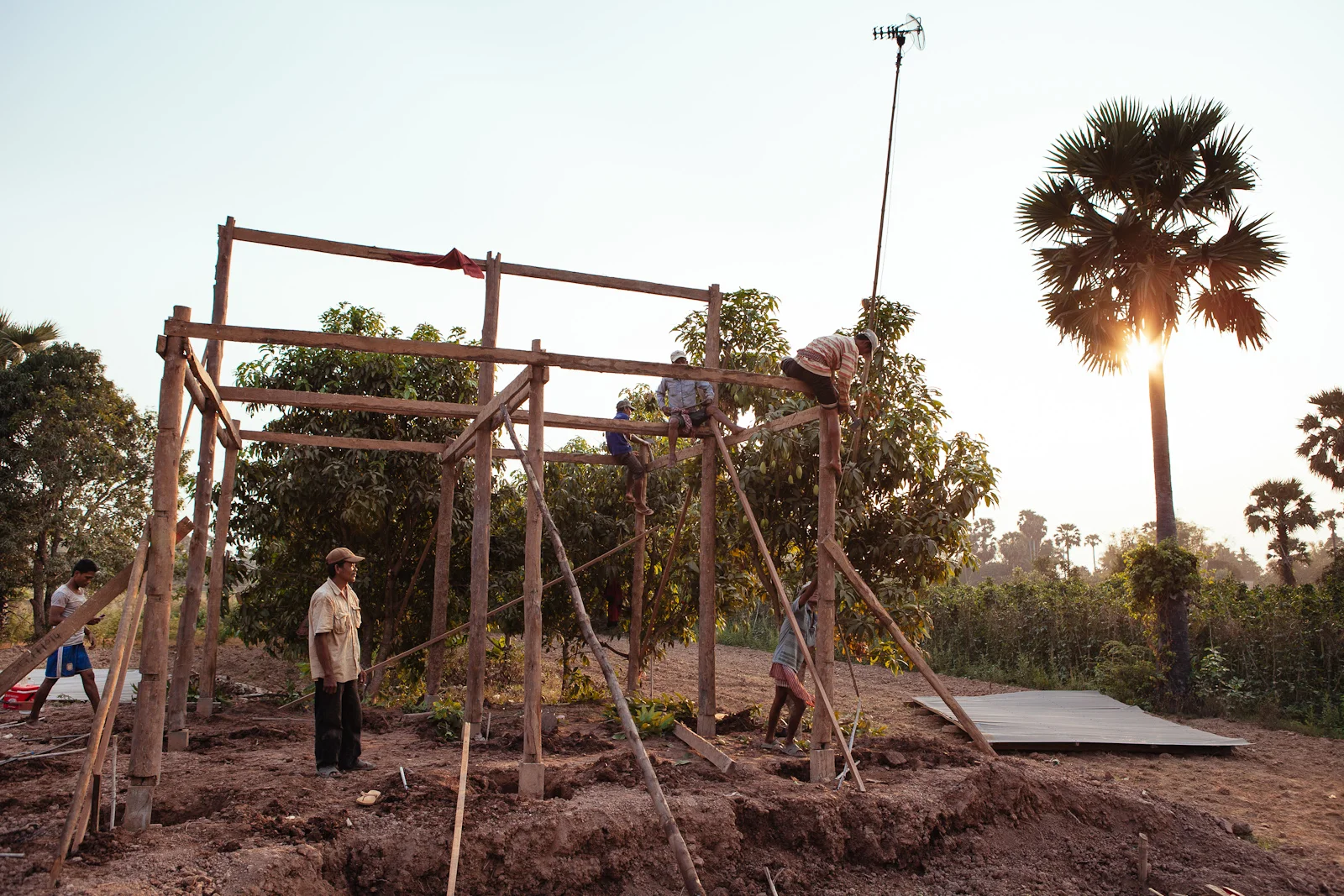
Local men in a remote village work together to build a simple house.
Despite all of the big words, what Alongsiders actually do for their little brothers and sisters is simple, and simply transforming.
And...you can do it, too.
Does your Christian community divide evangelism, discipleship, justice, and compassion into separate categories? Neglect one or more of them? Or put them off by calling them specialized roles?
Put them all together in love by coming alongside someone isolated and in need of a friend or mentor. You can be a light at the margins of your community, and no need to go alone. Invite others to join in!
There are also challenges in working with local churches. That sticky topic will be addressed in the next post!
The most effective tool for fighting Human Trafficking is right where we need it to be
"I want to work in Korea", he said
"I want to work in Korea", he said.
We were standing along a dusty road lined with wooden homes and plots of dried rice stalks, dormant until the next rainy season, loosely called a village. The nearest town was a cluster of businesses along the highway a kilometer away. He was a farmer's son, maybe fifteen, who had probably never traveled further than Phnom Penh, two hours up the highway. Korea seemed another world away.
But it wasn't surprising, not at all. I neither doubted his intention nor the possibility he might go. He probably already had a connection who could make it happen.
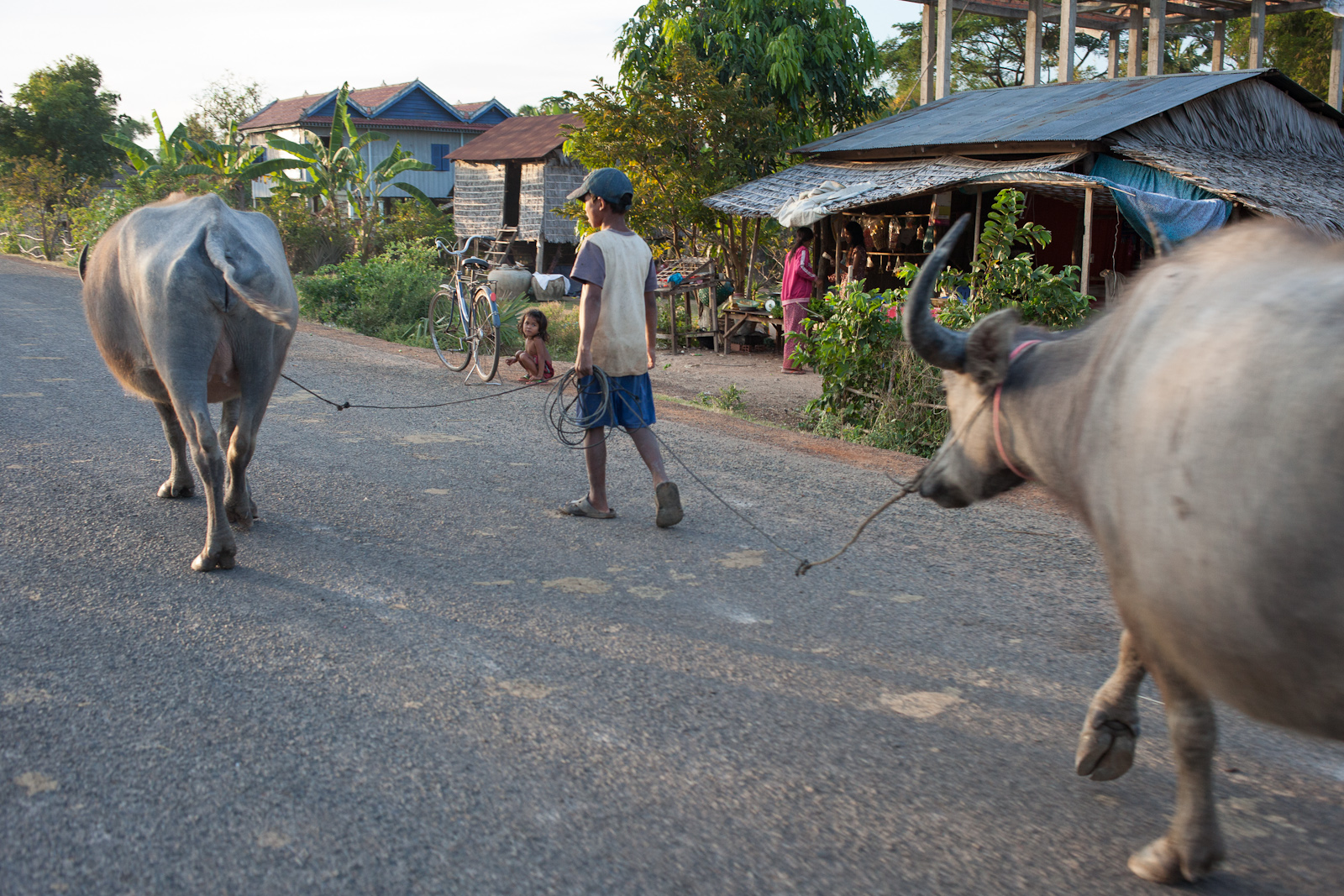
In rural Cambodia, and in the slums of the major cities, you can bet every young person is thinking about a way to make his or her fortune and choosing from options such as: go to a university and get an office job, work in a factory, become a famous singer, become a hairdresser, or take a chance in another country.
Most choose the factory; it's most accessible and anybody can do it. But factory work is exhausting and hardly pays a living wage. It's a way to survive and not much more.
Enter the recruiters.
The recruiters are people who show up in the village talking about opportunities: a dream job in Phnom Penh, a "good" company in Thailand, Malaysia, or Korea that pays five or ten times the wages of factories in Cambodia, or a rich and generous family looking for a domestic worker.
These recruiters, who hold out these visions, are often relatives or "friends" living in the community, and there is a seed of truth in what they say. Indeed, many Cambodians have changed their lives by working abroad or by connecting with a generous employer.
One of our Alongsider leaders, mentioned in a previous post, took a job as a domestic worker in Malaysia as a teenager. She was employed by a family who treated her well, and she saved enough money to buy her family a house when she returned.
But in hundreds of cases, Cambodians who respond to these great "opportunities" are exploited: passports confiscated, paychecks withheld, yelled at and beaten, and forced to work brutally long hours.
Another Alongsider has a different story. When she went to Malaysia her passport was taken and she was forced to work twenty hours a day, seven days per week as a seamstress at a factory.
And worse things than that happen.
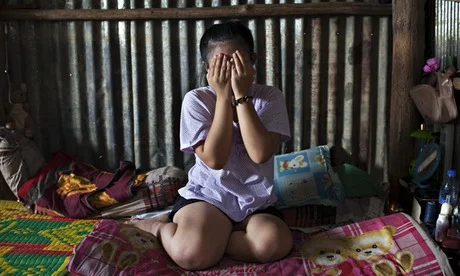
The UN reports that most Cambodian children who are officially repatriated from Thailand and Vietnam have been forced to beg and sell things on the streets. Within Cambodia, many young children and youth are sold or tricked into lives of sexual exploitation.
Where does Alongsiders come in? Truth is, we are well situated to prevent trafficking of the children whose lives we touch.
Most organizations working to prevent human trafficking are waging educational campaigns: making videos and other media, distributing written materials, and sending speakers to schools. Or they are rescuing people who are already victims.
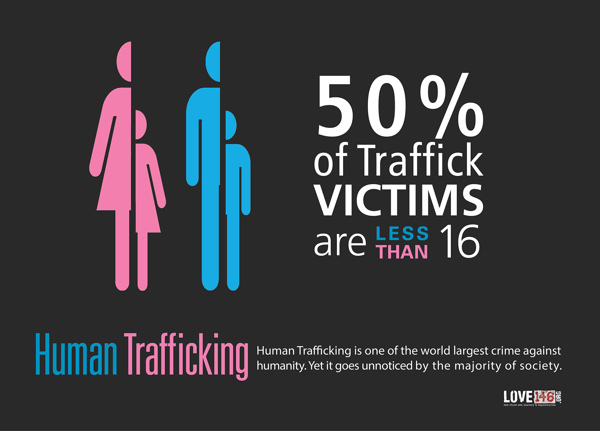
These are all important activities, but let's be honest about the shortcomings. Research shows that most human trafficking victims in Cambodia come from specific places: isolated rural areas in Kampong Cham, Prey Veng, Kandal, Takeo, and Battambang and urban slums in Phnom Penh. And in those places, most victims of human trafficking are less than sixteen years old.
But the educational campaigns originate from Phnom Penh and other cities where organizations keep their offices, and if they connect with likely victims, it's from a distance and indirectly. Even so, how many fifteen year old youth make decisions based on what they read or because of what far away adults are saying?
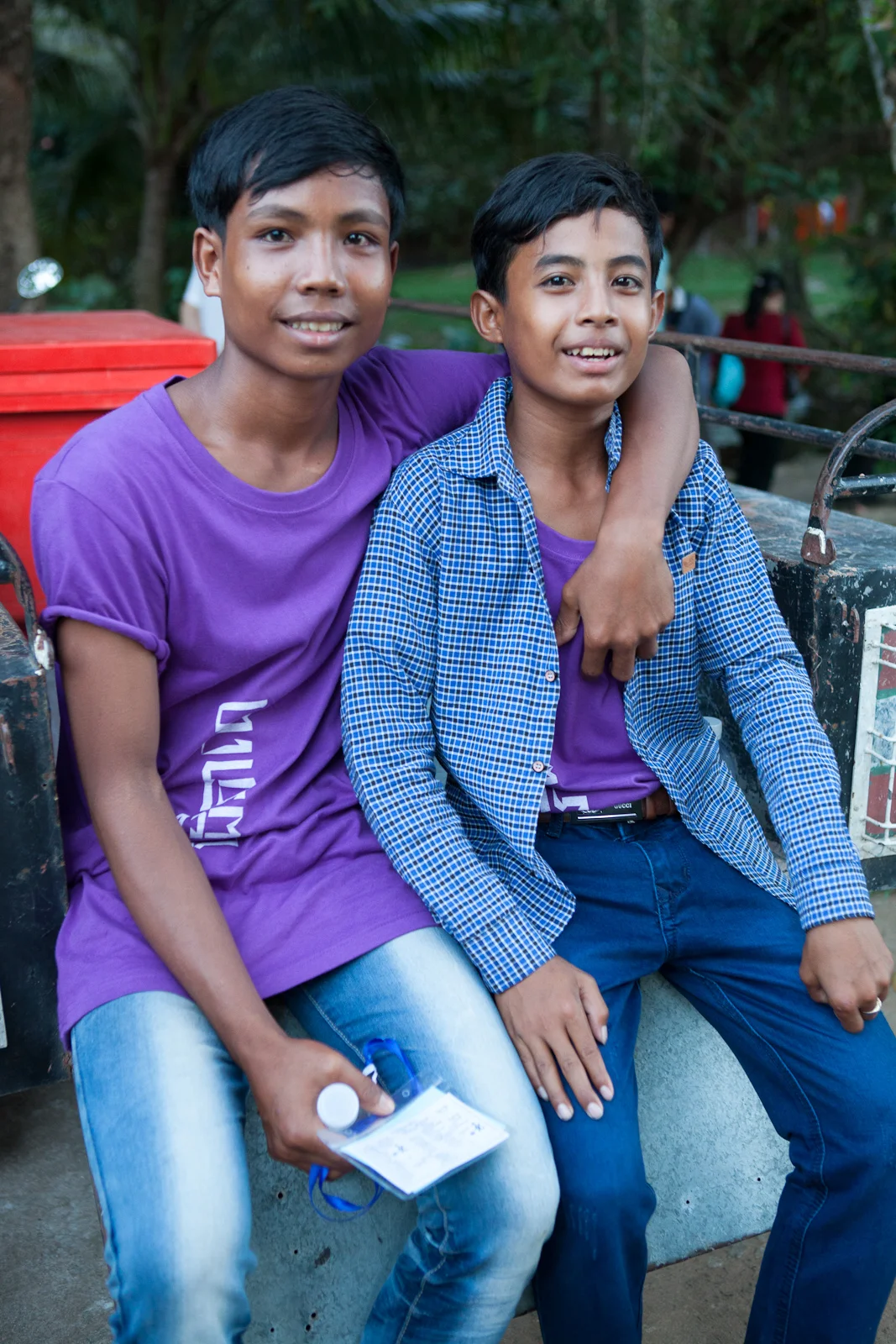
Alongsiders aren't touching thousands - not yet - but we have active groups in most of the vulnerable provinces listed above, and also in Phnom Penh slums. Alongsiders live in those communities, and every Alongsider connects with a little brother or sister, who is less than sixteen years old, and builds a trusting relationship.
As a previous post explains, we take concrete steps to train our leaders to prevent abuse and human trafficking. But it's not just tactics that make a difference, it's the power of relationships.
What makes children most vulnerable to human trafficking is, first of all, their real and imagined insecurities and needs, and yet it's even more than that. It's also about being unnoticed and unconnected.
It's much harder to traffic a child who has someone watching him or her; to take advantage of a child who has a true advocate; or to trick a child who is connected to a network of people who talk to each other.
That fifteen year old boy with a plan to work in Korea is standing on the verge of a precipice, or it may be a launch pad.
Who is he connected to?
4 Keys for Resilience: how to help kids bounce back
The principles we draw on to build resilience are useful for every parent, and any person working with children.
Nine year old Sita* was severely shaken as a baby, leading to brain damage. When she was two years old, her mother brought her to a center in Kampot that supports parents who are raising mentally disabled children.
Her mother abandoned Sita there.
Testing revealed the left side of Sita's brain had shrunken to a fraction of normal size. She couldn't taste or smell or talk, and the doctors said there was little hope she would ever walk either. They were surprised she had lived so long.

Against the odds, today Sita has learned to taste, smell, talk, walk and play on her own.
Surprisingly, more recent testing shows the right side of her brain has actually grown to take up space as the left side of her brain receded.
Sita's story is inspiring, but it's not as unique as you may think.
Many stories testify to the ability of children to recover from even the most devastating circumstances. Children have an astounding bounce-back-ability - also known as Resilience.
Resilience is a God-given human ability to recover from physical, psychological, and emotional trauma. It's the "wow" factor in stories of survival and overcoming the odds.
And every child has it!
“Initially many researchers thought resilience was a personality trait of a few “invulnerable” super-kids who could leap life’s barriers in an effortless bound. Instead, the emerging view is that resilience is programmed into our DNA... In the words of one resilience expert, ‘Given sufficient support humans can defy the odds and become agents of history.’”
Sita's story illustrates something important at the heart of the Alongsiders movement.
Children growing up in material poverty face all kinds of challenges from malnutrition and neglect, to sickness and abuse. These range from mild setbacks to severely debilitating ones.
Think of what the term "crushing poverty" implies: impossible burdens, lack of hope, and real damage. Yet many children rise up out of the most difficult situations to lead full and productive lives.
That is the miracle of Resilience.
One of the core goals of Alongsiders is to increase resilience in the little brothers and sisters in our movement and thus improve their chances of overcoming their own challenging circumstances.
Yet, the principles we draw on are useful for every parent, and any person working with children.
The Circle of Courage identifies four "universal needs" of children that, when met, increase resilience in children. The four needs are Belonging, Mastery, Independence, and Generosity.
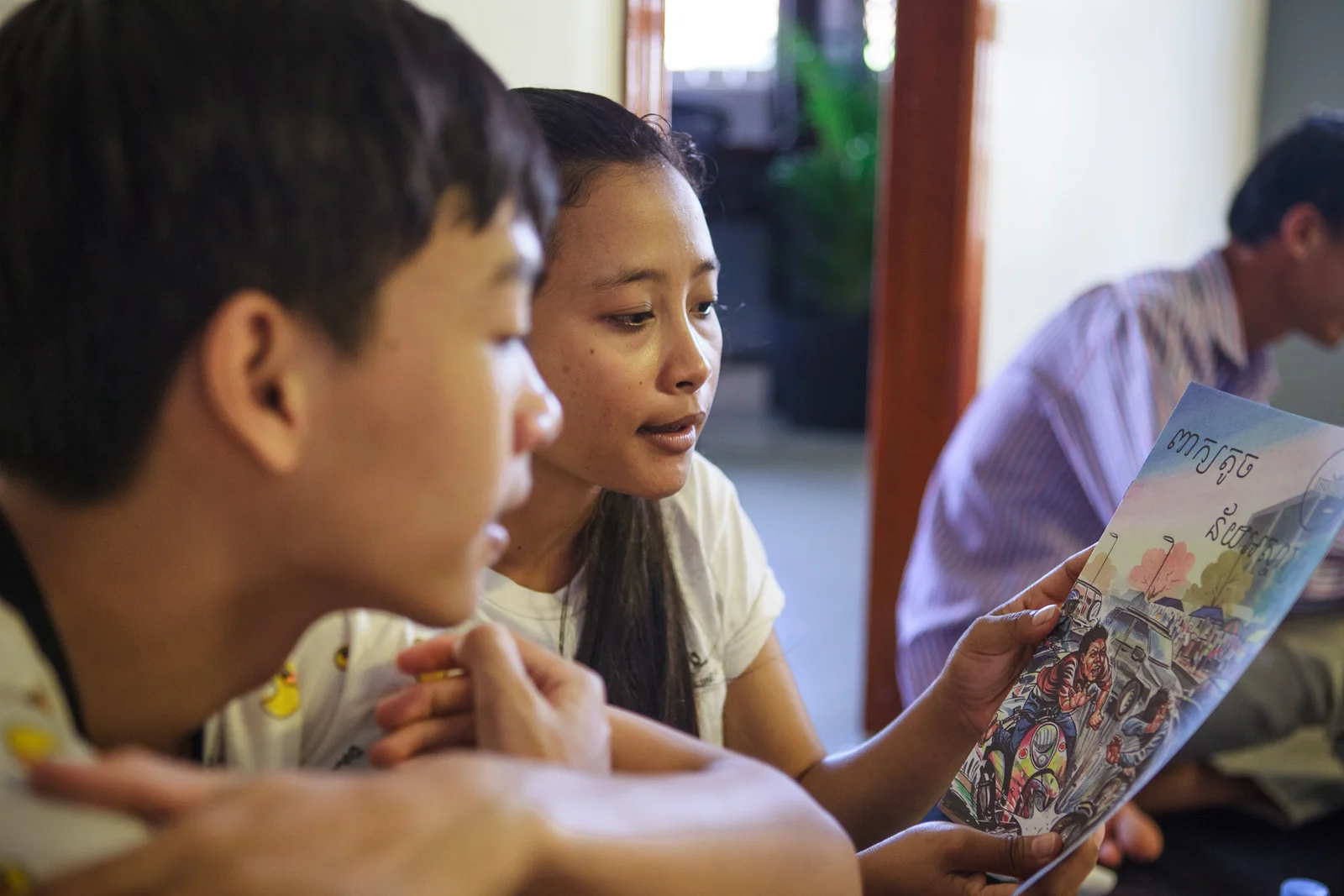
Alongsiders look at a comic book in training
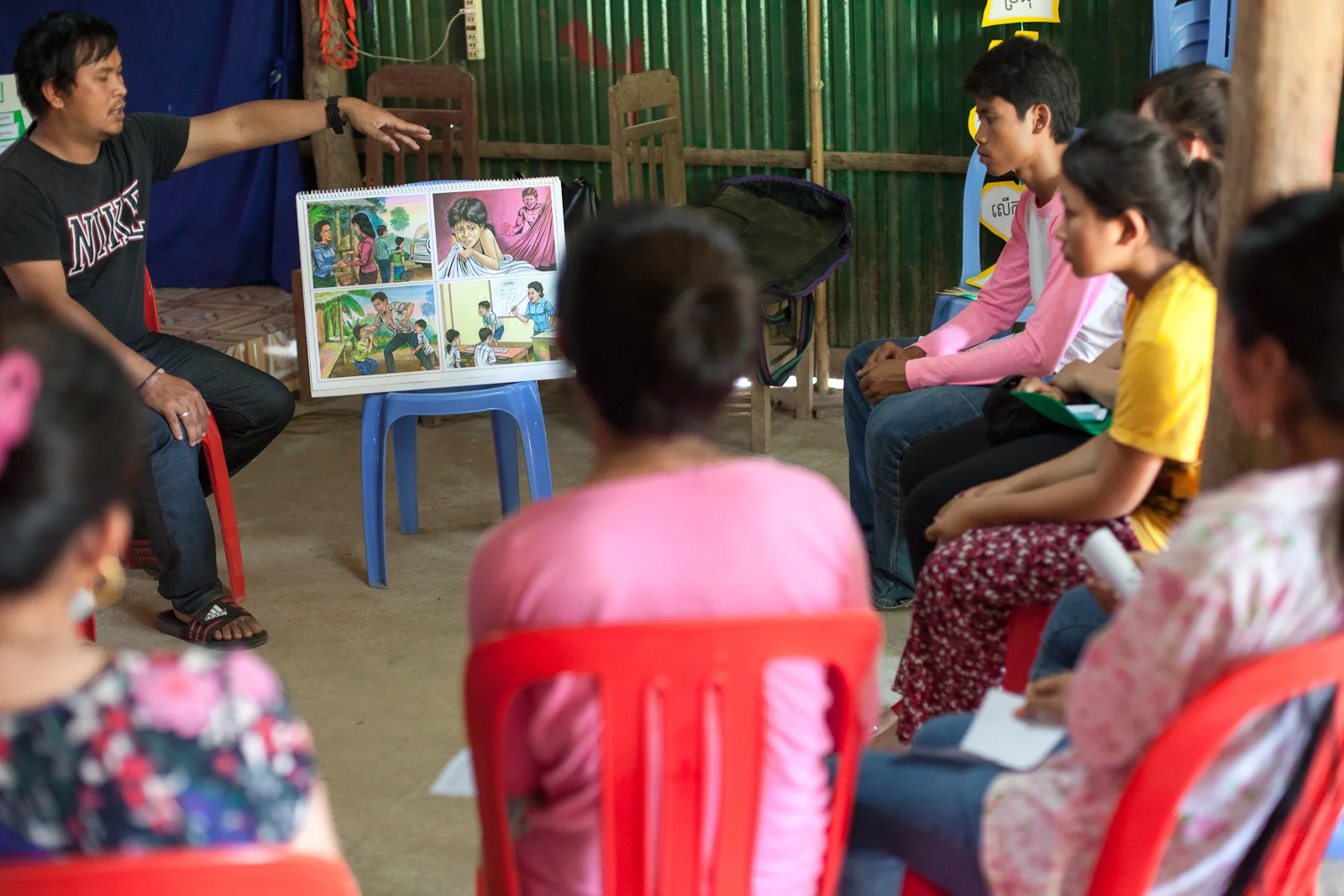
Everything that an Alongsider mentor does with their little brother or sister helps strengthen these four areas. And that loving relationship is bolstered by our three year comic book curriculum which is designed to address different aspects of these four needs:
- Belonging.
Every child has a deep yearning to know they are accepted and appreciated, that they are part of a loving family and a welcoming wider community. If they can’t find that in a healthy group, they will join a gang or other dysfunctional community in order to meet that need. Rather than simply warn children against gangs, we seek to address the deeper need for connectedness by helping children to stay and thrive in their own families and communities with their Alongsiders and the local church who walk with them. Comic book topics related to Belonging include lessons on forgiveness and resolving conflicts.
- Mastery.
Every child needs to learn how to solve problems and take steps to achieve goals. They need the encouragement of achieving small successes. Through these ordinary breakthroughs, they find motivation and develop confidence. Alongsiders encourage their little brothers to stay in school, a proven route out of poverty, and they have important conversations about future goals and direction. Some lessons that relate to this need are our lessons on perseverance, servant leadership, and discipleship.
- Independence.
Children also need to learn responsibility, autonomy and self-control in order to grow into healthy adults. The greatest forms of responsibility and self-control are not based on fear or obligation, but on love. With shortcuts and corruption all around, Alongsider mentors are themselves powerful models of responsibility in action as they choose to commit their lives to their little brothers and sisters and then follow through. Comic book lessons that build this area include our lessons on decision-making, courage, and setting goals.
- Generosity.
Children long for purpose, but children who lack an innate sense of value will be too focused on their own needs to show generous concern for others. Alongsiders see the value in their little brothers and sisters and then give generously to them (of their time and commitment) in love. They invite their little brothers and sisters to grow up and do the same for others, not as an obligation but as an opportunity. Comic book lessons that build this area include our lessons on gratitude, service, and how to become an Alongsider.
Step-by-step over time, building up children in these four areas nurtures their God-given resilience so they can "rewire" their thinking and lead transformed lives that defy expectations.
And that is how kids defy the odds and bounce back - from the most incredible obstacles and suffering.
(*Sita's name has been changed for privacy)
9 things we can do to protect children from trafficking and abuse
Last week a little brother escaped a potentially dangerous situation...
Last week an Alongsider group leader calmly described how one of the little brothers, with help from his Alongsider, had avoided being molested by a man in his community. Other group leaders listening to the story nodded and said they have heard of similar incidents in their groups.
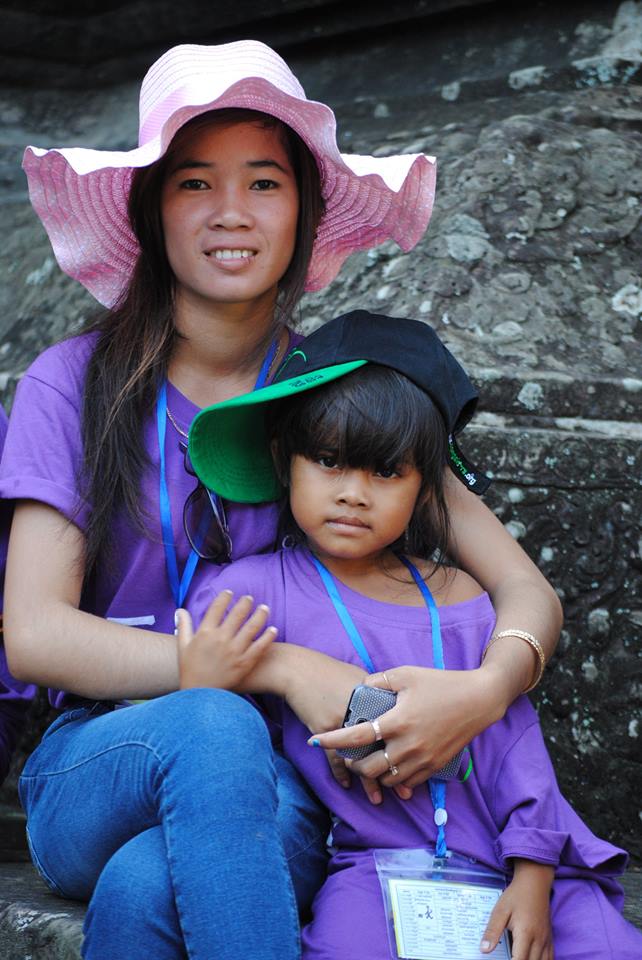
Alongsiders become mentors for the most vulnerable children in their communities. Children of economically poor families are vulnerable to malnutrition, social marginalization, child labor, and the loss of an education.
They can lack power to defend themselves and knowledge of the ways of the world; and they are often on their own while their parents are working. As a result, they are vulnerable to abuse: domestic and gang violence, molestation, rape and human trafficking.
Cambodian society has very rough edges where the powerless are concerned. The legacy of trauma is well-known.
Some say orphanages and shelters are needed for this very reason, even if the children housed inside aren't really orphans (80% aren't). But consider that hundreds of thousands of children in Cambodia are highly vulnerable. Orphanages could only care for a handful of them. On top of that, studies show children placed in orphanages are even more vulnerable to abuse and exploitation due to the isolation of children behind closed doors. Problem not solved.
Alongsiders doesn't remove children from their families. We believe that's a good thing. Yet we do make a difference in protecting and strengthening children.
- Before joining, Alongsider mentors study and sign a Child Protection Policy which outlines their commitment to a variety of protective measures for both the mentor and their little brother/sister.
- As part of their initial training, Alongsider mentors are taught how to spot abuse and exploitation of children and how to respond in appropriate ways, including reporting criminal activities and suspicions to authorities.
- An early comic book lesson in our curriculum addresses sexual abuse and the legal consequences for an abuser. Alongsider mentors are taught to discuss the story with their little brother/sister and report to us if any abuse is disclosed.
- As part of that Lesson, little brothers and sisters identify 5 trusted adults (counted on the fingers of one hand) that they can turn to in case of future abuse.
- Alongsider mentors and their little brothers and sisters learn the phone number for the Child Helpline - a crisis telephone line for support in case of danger or abuse.
- In the second year of the curriculum, we use our comic book lessons to address the issues of respecting girls and women and the problem of pornography.
- Alongsiders frequently speak up or even intervene when their little brothers or sisters are mistreated or neglected. By their actions and attitudes they are raising the standards of society around them.
- Alongsiders International has a dedicated Child Protection Officer, who ensures that all our partners and their staff have a solid Child Protection Policy and good training and systems in place to protect children.
- Perhaps most importantly, the little brothers and sisters have someone older who they can trust and talk to about their problems and fears. Someone is checking on them every week. They are no longer so alone or isolated. This simple fact makes them less vulnerable.
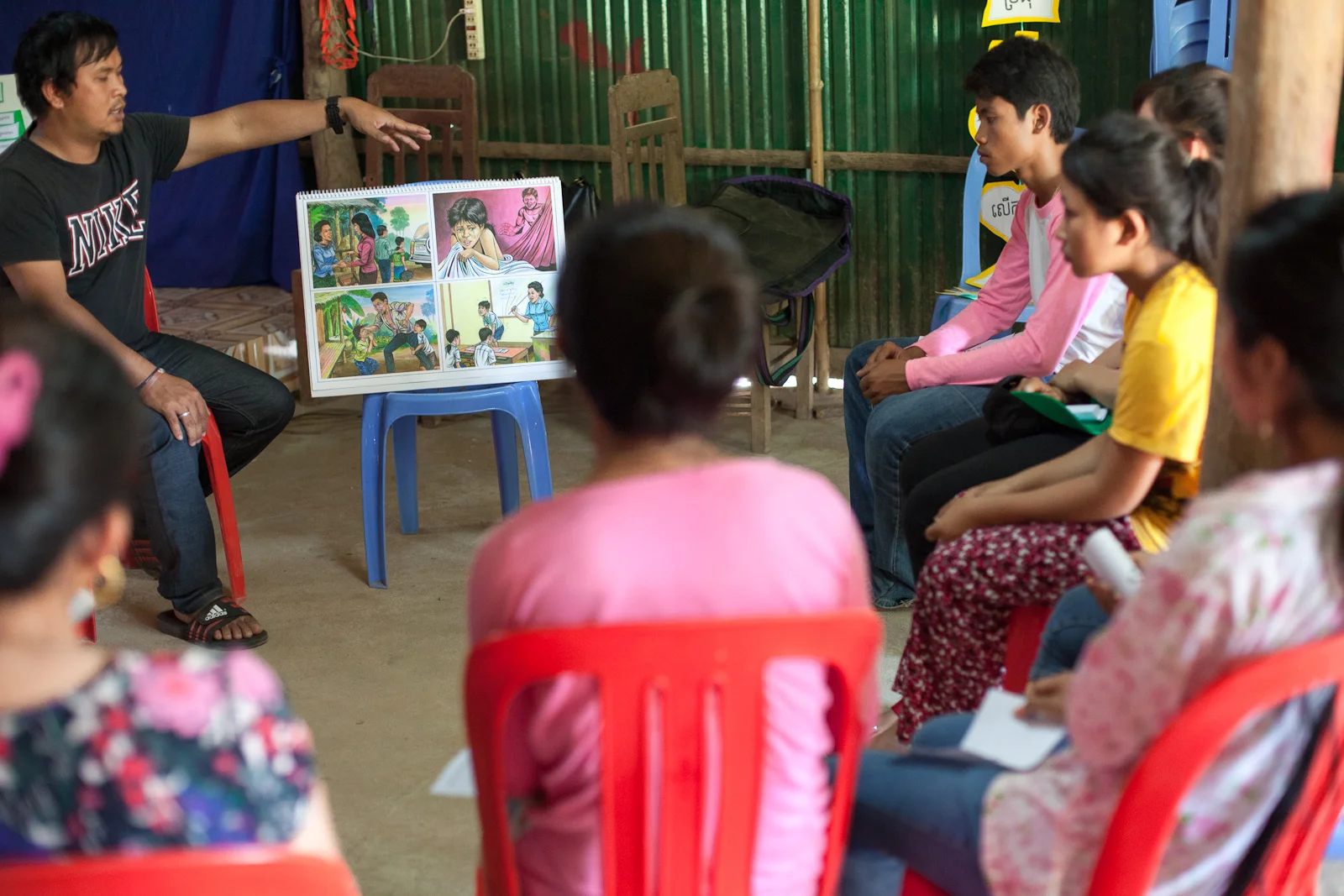
Phearom, Alongsiders Cambodia Coordinator, trains Alongsiders in Kandal Province to respond to child protection issues.
In the story mentioned at the top of this post, the little brother went to his Alongsider and told him that a man had invited him inside his house. The Alongsider knew about this man and his reputation. He warned his little brother to avoid him and even walk home by a different route in order not to pass in front of his house.
Sadly, there was little that the local authorities could have done to stop this man from preying on vulnerable children short of catching him in the act. But having an Alongsider made a difference for the little brother and his friends.
Alongsiders Cambodia has hundreds of little brothers and sisters living in diverse communities around the country, and it's growing as quickly as the staff sign up and train new groups. Even so the total cost of running Alongsiders Cambodia, including sending kids to camp each year, is less than the annual cost of running an average orphanage for a few dozen kids.
Alongsiders Cambodia isn't dramatically rescuing victims of abuse, exploitation, or human trafficking. We're grateful for organizations that do those things well.
What we're happy to say is that hundreds of Alongsiders are out in local communities protecting vulnerable children from experiencing these tragedies in the first place.
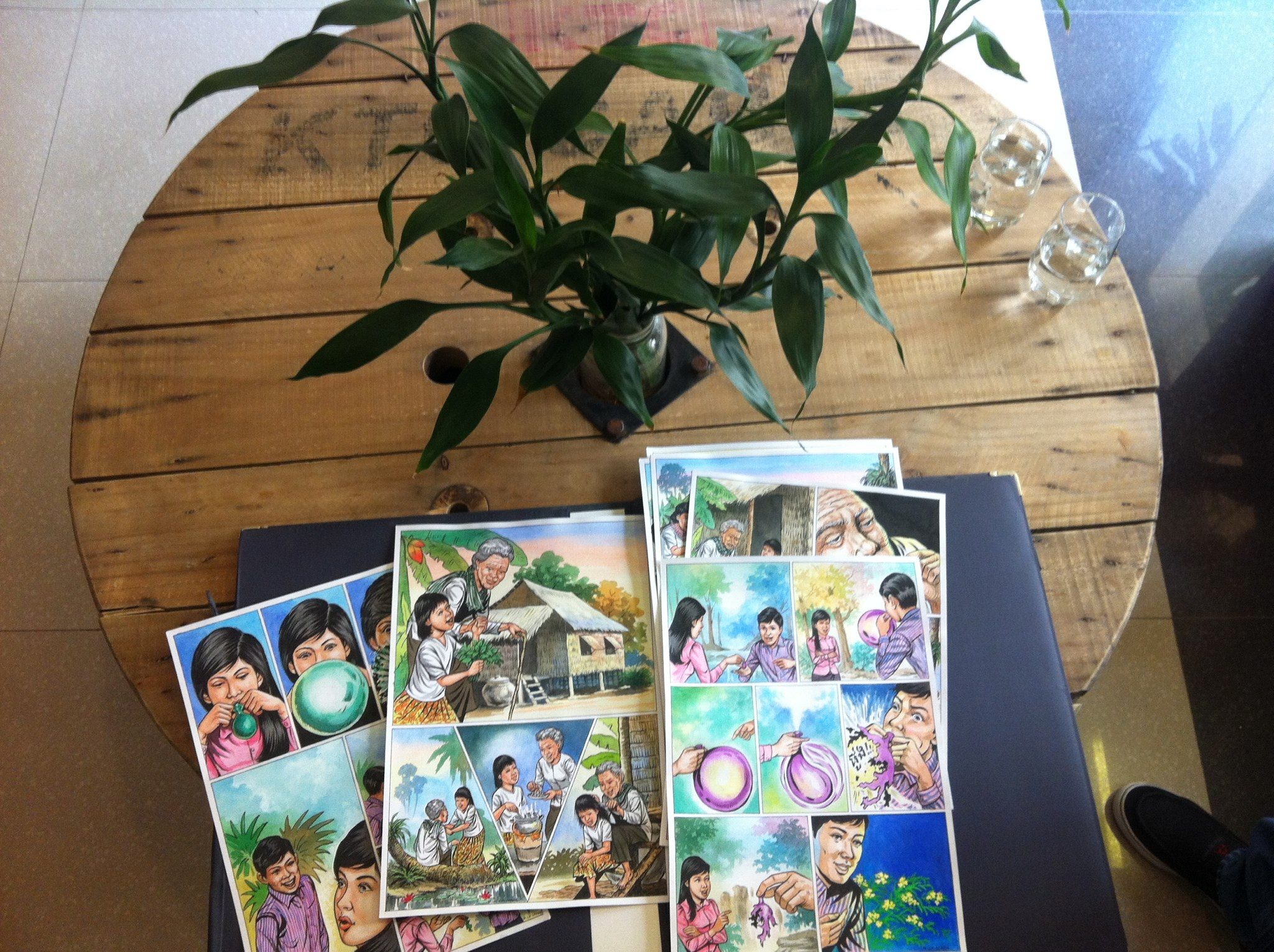
5 steps to creating a life-changing comic
What does it take to create a comic book simple enough for a semi-literate child to understand, but profound enough to spark change in that child's life?
What does it take to create a comic book simple enough for a child to understand, but profound enough to spark change in that child's life?
What does it take to put a brand new comic book like that in the hands of every Alongsider mentor each month?
Truly, a significant amount of thought and work goes into each comic. Here's the process...

Step 1: The Topic Meeting
A comic book lesson begins life in a Topic Meeting with members of the Curriculum Development Team.
Team leader, Hitomi Gray, and her assistant, Puthida Bou, undertake the preliminary research: gathering background information, considering how the topic normally plays out culturally and counter-culturally in Cambodia, and prayerfully considering relevant Bible themes, stories or verses.
All this background data is brought to the Topic Meeting for prayer and further brainstorming with the rest of the team. By the end of that meeting, we have agreed on the main objectives of the lesson, and we have a good sense of where we want to go with it.
Step 2: The Storytelling Circle
The next step is to form a Storytelling Circle. Alongsider mentors (some who were "little brothers or sisters" formerly) are central to this storytelling gathering. The non-Cambodians take a back-seat role. It’s not that Westerners can’t contribute, but the Cambodians know best what story elements are the most authentic and compelling in their own culture.
All of the comics are based on real-life experiences of poverty and struggle shared by the young people at this Storytelling Circle. Over the course of two or three hours, stories and lessons are crafted into engaging plots that can be told visually in just a few pages.
We make sure the story incorporates essential storytelling techniques such as conflict, drama, character development and clear messaging.
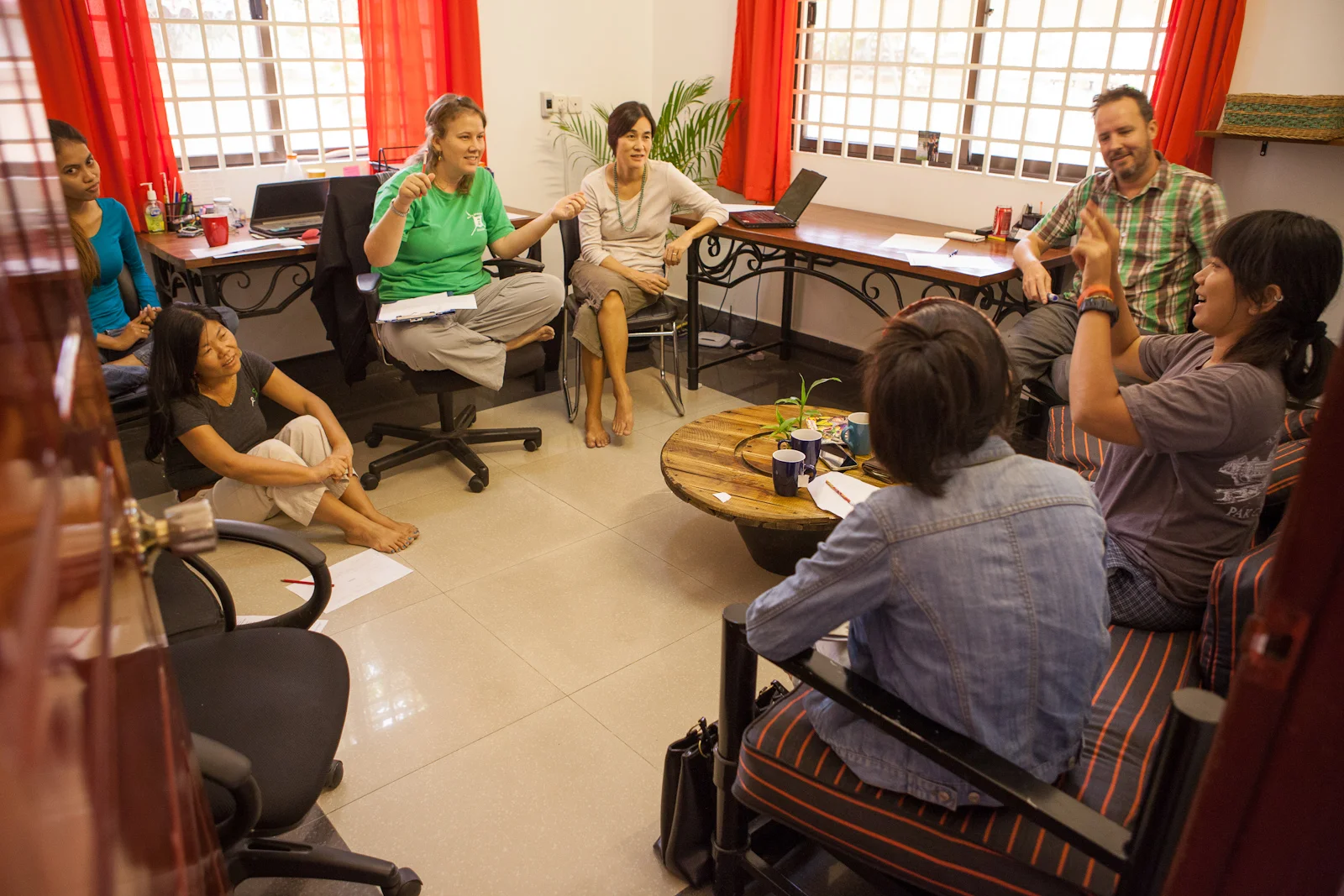
A recent story-telling circle in progress ... crafting a story on the topic of Fearlessness.
Step 3: The Artwork
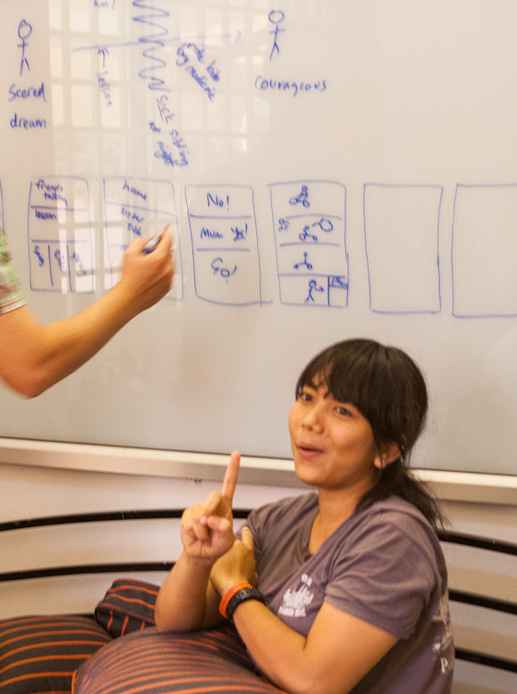
Once the rough story is outlined on a whiteboard, Puthida, an accomplished artist herself, takes a photo of what has been imagined by the group. She then hand-draws, using electronic paper and pen, a detailed storyboard of the 10 pages for the comic.
Finally, the story is ready for the artist, a Cambodian pastor named Met Sokha. Puthida meets with Pastor Sokha and goes through each page to make sure he understands the story and her drawings and notes.
Step 4: The Lesson Components
For the next week or so, while Pastor Sokha hand-paints each page (typically one day per page), Hitomi and Puthida develop relevant questions that the Alongsider mentors can discuss with their little brothers and sisters after reading the story. They also create one or two practical action steps to apply the lesson. These are essential, so that the lesson doesn't just remain as head knowledge.
For example:
1) with your Alongsider mentor write one short term goal and identify what you will need to sacrifice in order to attain it (in Perseverance, Lesson #10), or
2) list five adults who you can trust and who you will talk with if you are ever touched in an inappropriate way (in Good Touch/Bad Touch, Lesson #3).
Step 5: Design, Test Test Test and Print
When the artwork comes back from Pastor Sokha each page is carefully scanned in and edited using Adobe InDesign. Speech bubbles and story boxes are added and the various components laid out for printing.
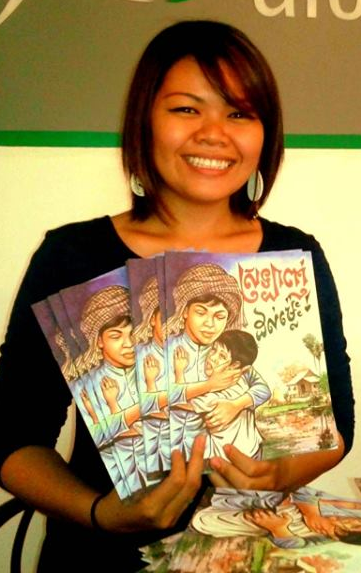
The final product!
The draft comic is now ready for testing and correcting. Puthida takes the comic out and about to test with neighborhood children. We also test it with a small selection of Alongsider mentors and a couple of proofreaders. Any errors will hopefully be picked up at this stage, but we are mostly checking that the main message and story is easily understood.
When everything is checked and signed off, we work with a local printer to print the comic. All going well, we have the comics, printed and delivered to us two weeks later, ready for training and distribution!
These comics are gaining a following. Other organizations are taking notice. One NGO reprinted 10,000 copies for distribution in schools and we're supplying free copies to various schools, churches and orphanages.
And of course, the curriculum is now being translated back into English, as well as developed and contextualized locally in other countries such as India and Indonesia.
All this effort, prayer and hard work is for one purpose: the transformation of young lives. So, join us in praying that the Spirit of God will work in and through us, and these comics, as they find their way into eager hands across Asia.
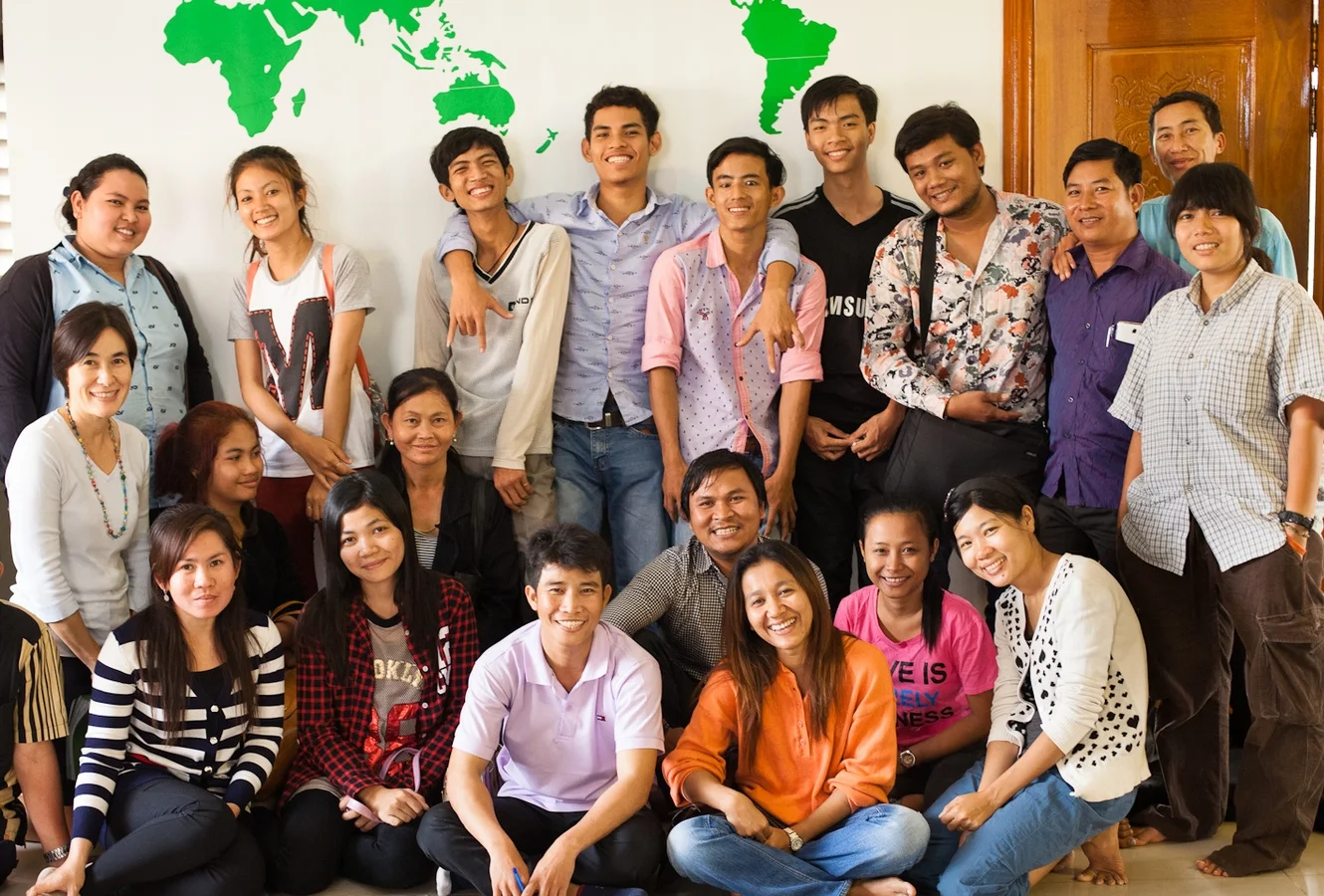
A comic way of developing our greatest gift
Grassroots leaders in Cambodia are using an innovative approach to training...
Every three months Alongsider group leaders from several provinces around Cambodia gather at the office in Phnom Penh for training. These are moments to reconnect - and to equip, listen and provide them with fresh encouragement and direction.
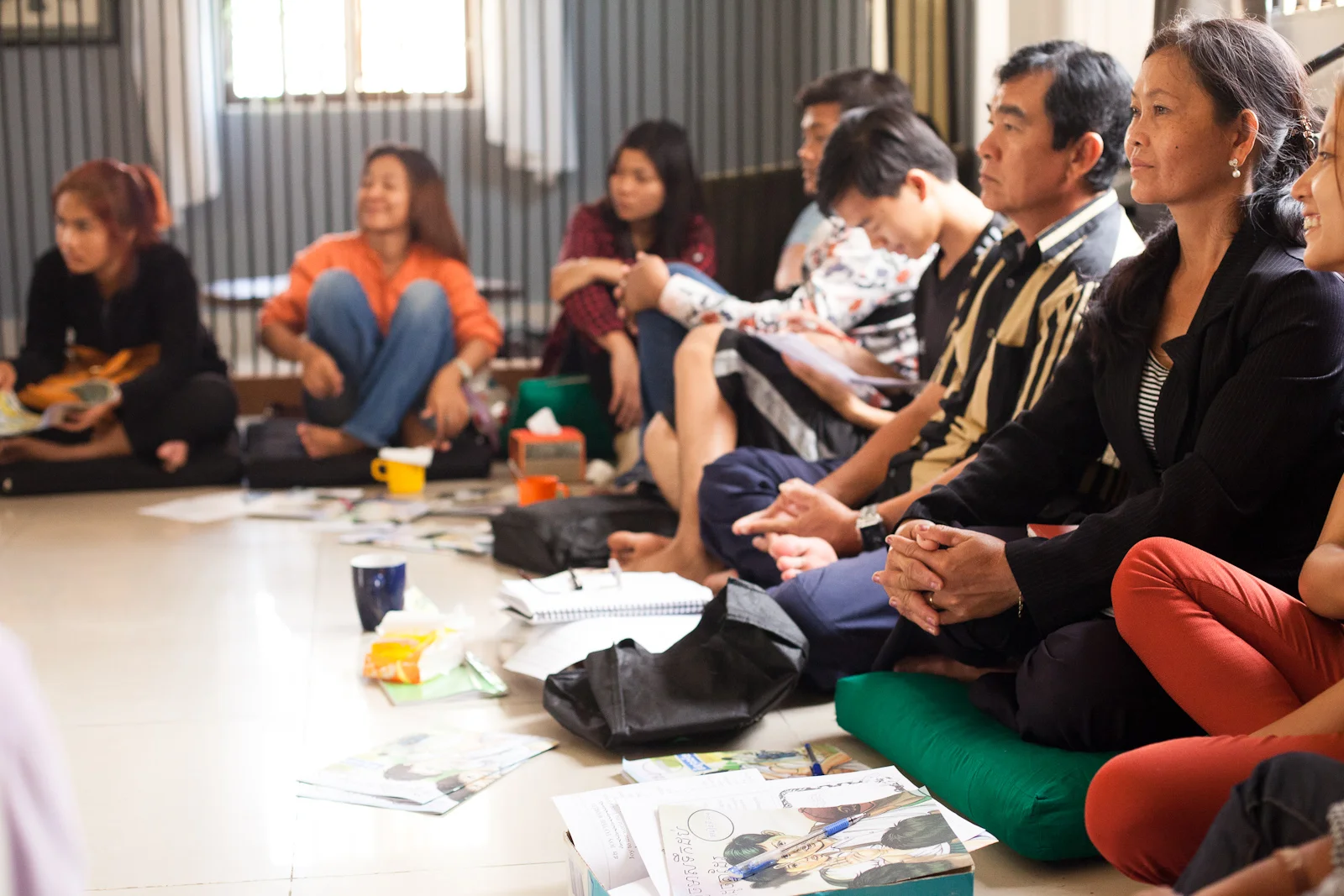
“I came with my pastor. When we go back he will have a meeting with the other Alongsiders and teach them how to read the books with their little brothers and sisters.”
It's at these meetings that staff distribute the curriculum: always three new issues of our comic books for Alongsiders. The leaders look at each story and discuss how mentors can read them most effectively with their little brothers and sisters. Then they take them back to their groups to use for the next three months (1 comic book per month).
Each book comes with discussion questions and one practical way to act on the lesson in the story.
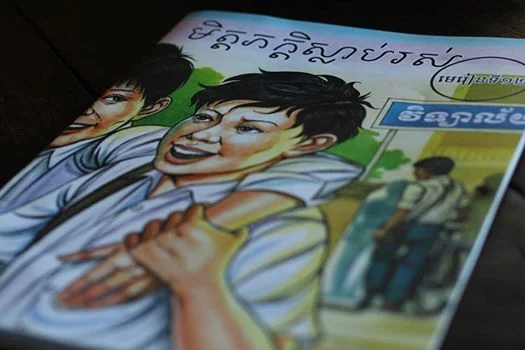
In a society that still struggles to provide most citizens with a meaningful education, it's no small step for an Alongsider to read and learn together with her little sister. We can't take it for granted that she'll know what to do or feel confident if we just put materials in her hands, so the training is vitally important.
Typically part of the training consists of the coordinators role playing how to read through the comic - eliciting questions and observations from the "little brother". These sessions are becoming increasingly interactive. There is always lots of discussion about the topic (whether drugs, gender, grace or some other Biblical theme). The recent meeting included lots of discussion in pairs.
“I like the comics. The pictures are pretty and the stories are meaningful. They relate to real social issues and problems, and they lead the kids to learn and relate to God.”
Each comic has an insert with questions to discuss and one suggestion to act on the embedded lesson.
One of the comic books introduced last week focuses on how boys and girls are often valued differently and treated with different standards. The two main characters are twins, a boy and a girl. The conflict arises when the girl is treated badly by some boys who are (it is implied) looking at illicit images on a mobile phone.
The story resolves as the boy comes to realize that his sister and mother do most of the household work and deserve, at the very least, his respect and help. Then he begins to change his own actions accordingly.
The application activity encourages readers to compose letters of appreciation to their mother or female guardian. The supporting Bible passage is Psalm 139:14: "I praise you because I am fearfully and wonderfully made. Your works are wonderful, I know that full well." We are all, male and female alike, wonderfully made by God and deserving of value and respect.
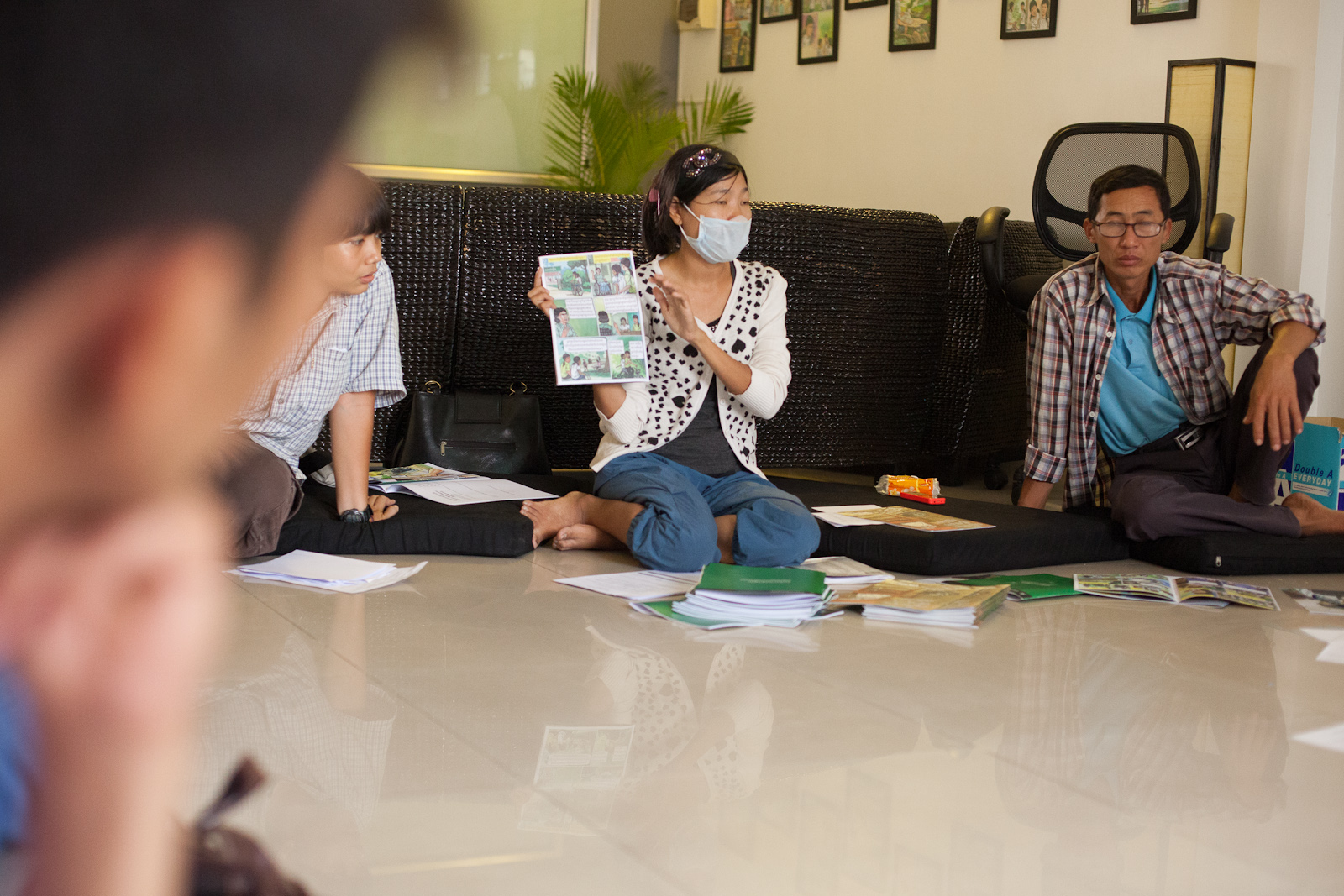
As movements go, there is no explicit call for revolution here. Yet, as in the gospels, seeds are being planted with the potential to transform not just lives but families and society as well.
We often say that Alongsiders is a movement. Some movements are headed by high profile leaders. Others have flashy programs and structures. But Alongsiders is low key; our leaders come from the margins themselves; and our methods are so simple it's hard to spot them. This gathering of "unremarkable" leaders from "out of the way" places is about as "big" as it normally gets.
The most tangible material assets we work with, comic books, are disposable (albeit strategic and lovingly developed) tools - but they feed and nurture our real strength: transforming relationships.
We're proud of our comic books. We're especially proud of the people who read them together.
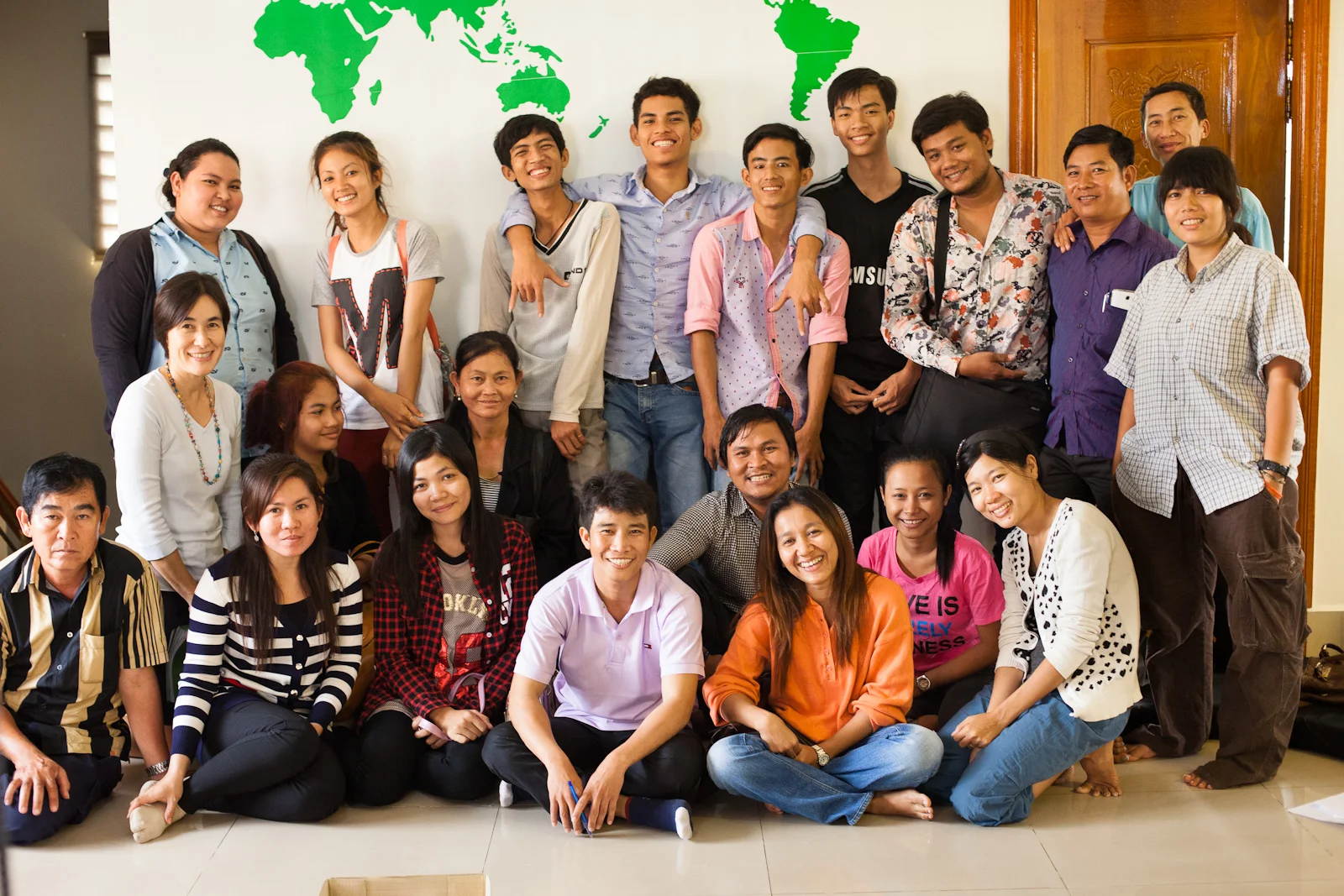
Group leaders and Alongsiders at the training last week
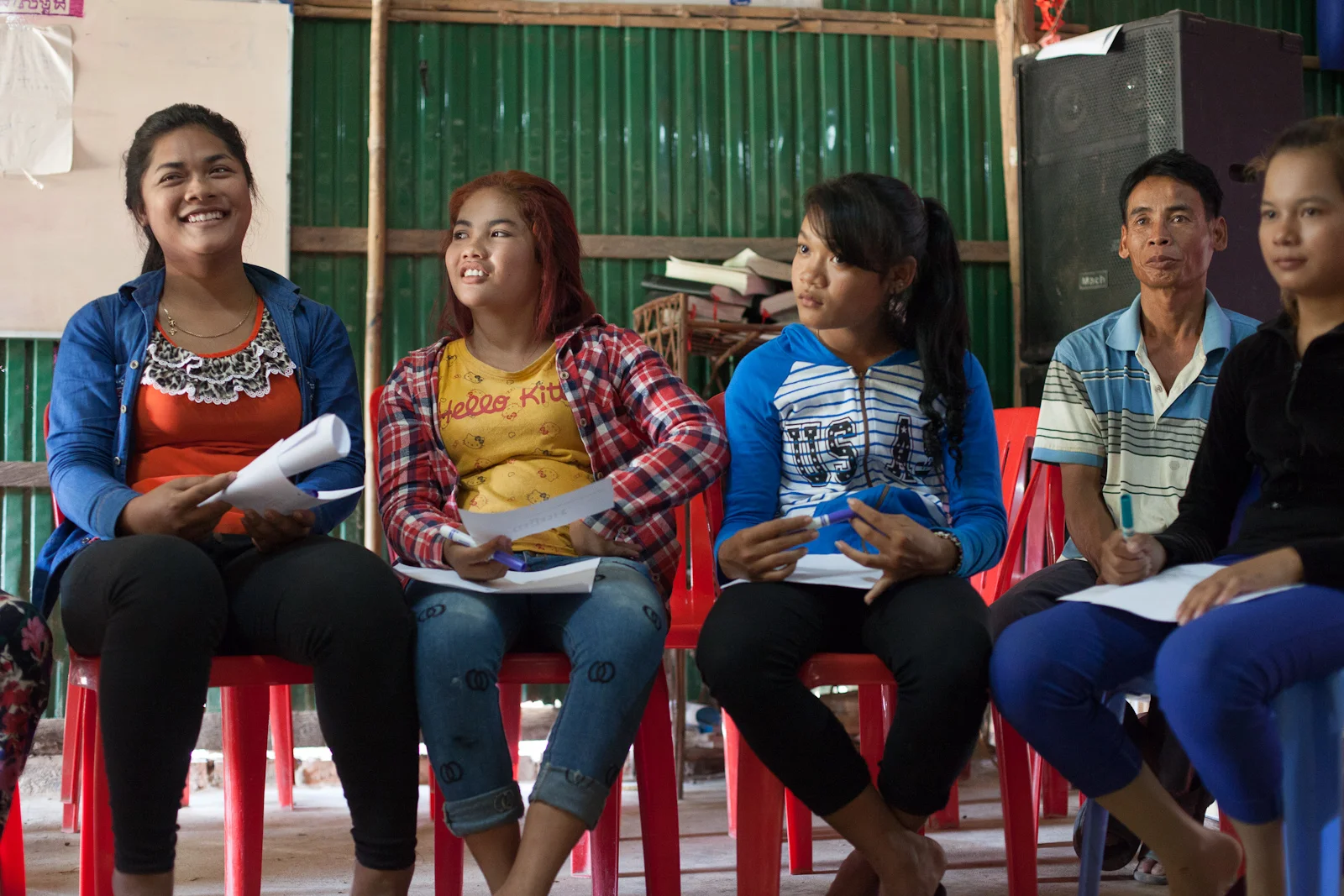
How to keep a movement going
Keeping a movement growing and thriving is not an easy task. But these two leaders have figured some things out...
Movements that change society emerge and grow in villages, neighborhoods, streets, and workplaces as regular people actively take their parts. Organizations may tend to centralize leadership and power, but movements must allow leadership and power to reside at the (human) edges.
Our goal at Alongsiders is to empower and release movements of young people who make long term commitments to walk alongside the most vulnerable children in their own communities. Such movements would transform individuals, churches, and society.
Big words. But these high hopes boil down to lots of young people in scattered communities at the margins of society and what they do with the vision entrusted to them.
Last week both Serey and Phearom, who direct and coordinate Alongsiders Cambodia, went to a village in Kandal Province to meet with a group of Alongsiders who joined about a year ago. The main purpose was follow-up, and also to orient some new Alongsiders.
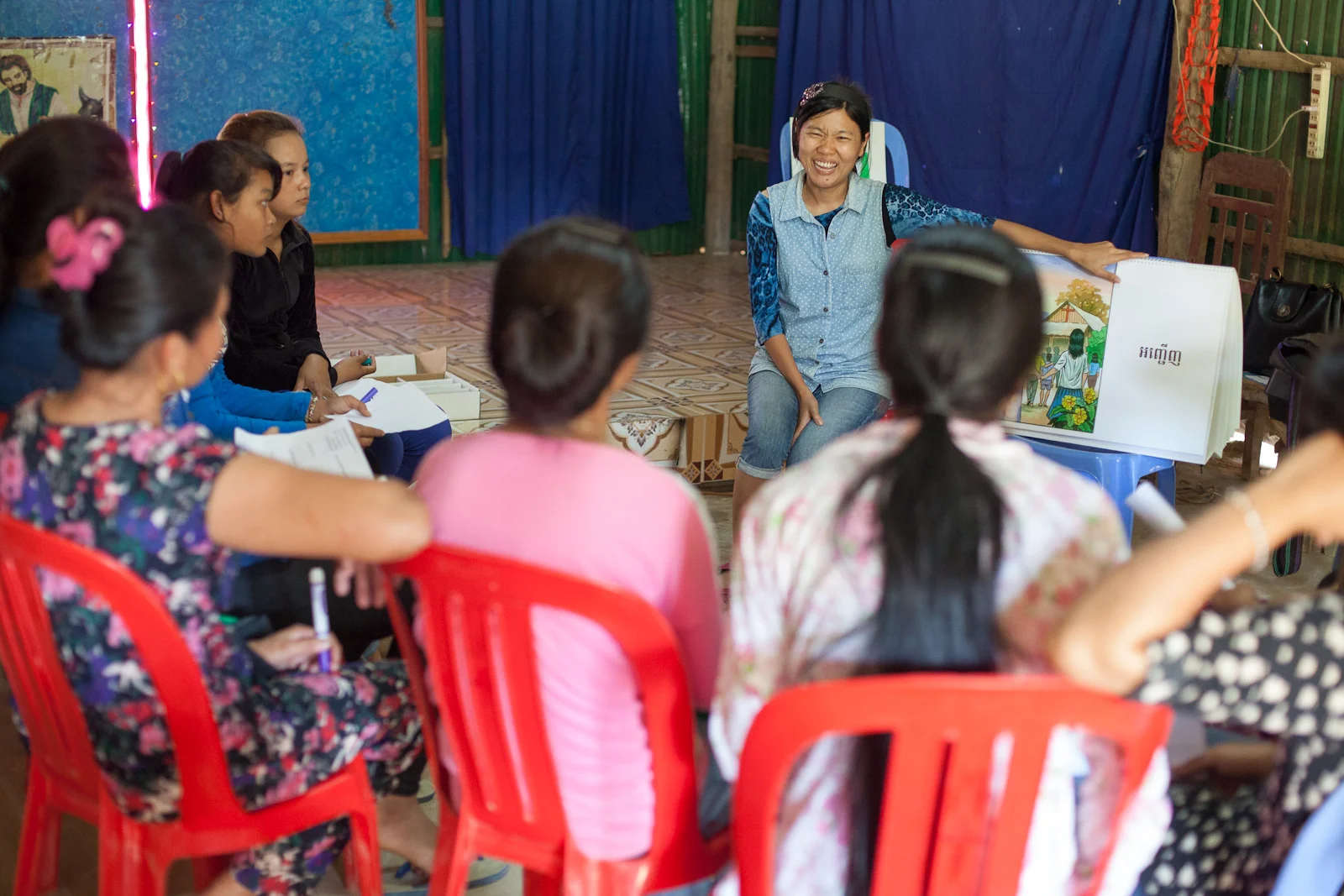
Serey teaches the 8 commitments of an Alongsider - using a flipchart
Becoming an Alongsider is a long-term commitment based on trust. Most of the time no one is looking over their shoulder to see if they spend time with their little brothers and sisters each week. They aren't paid or rewarded, except for an invitation to national camp each year. What they do flows out of motivation and character qualities like faithfulness, generosity, and a willingness to share as they learn and grow - all rooted in the love of Christ.
Yet most Alongsiders are young people whose character is still forming. It's a process of discipleship for them. They need words of encouragement and refreshment of the vision, plus examples to follow. That Sunday afternoon, Serey and Phearom took time to travel to the village and meet face-to-face. They carefully reviewed what Alongsiders is all about and talked honestly.
“When we meet with a group that has been going for six months or a year, we remind them of why they became Alongsiders and encourage them. They also hear what the others in their group are doing. That’s important, because they may not realize all that can be done. Many of them do better after we visit. Follow-up is really important, but it’s also a challenge as we grow.”
Serey was an Alongsider herself for years before she became the national coordinator. She epitomizes faithfulness in her leadership and in her ongoing relationship with her own little sister. She earnestly desires Alongsiders to be committed and faithful.
Phearom came to Alongsiders after serving in a national youth organization. He is passionate about education and mentoring. He hopes Alongsider mentors will be a potent force for education and change in Cambodian lives and society.
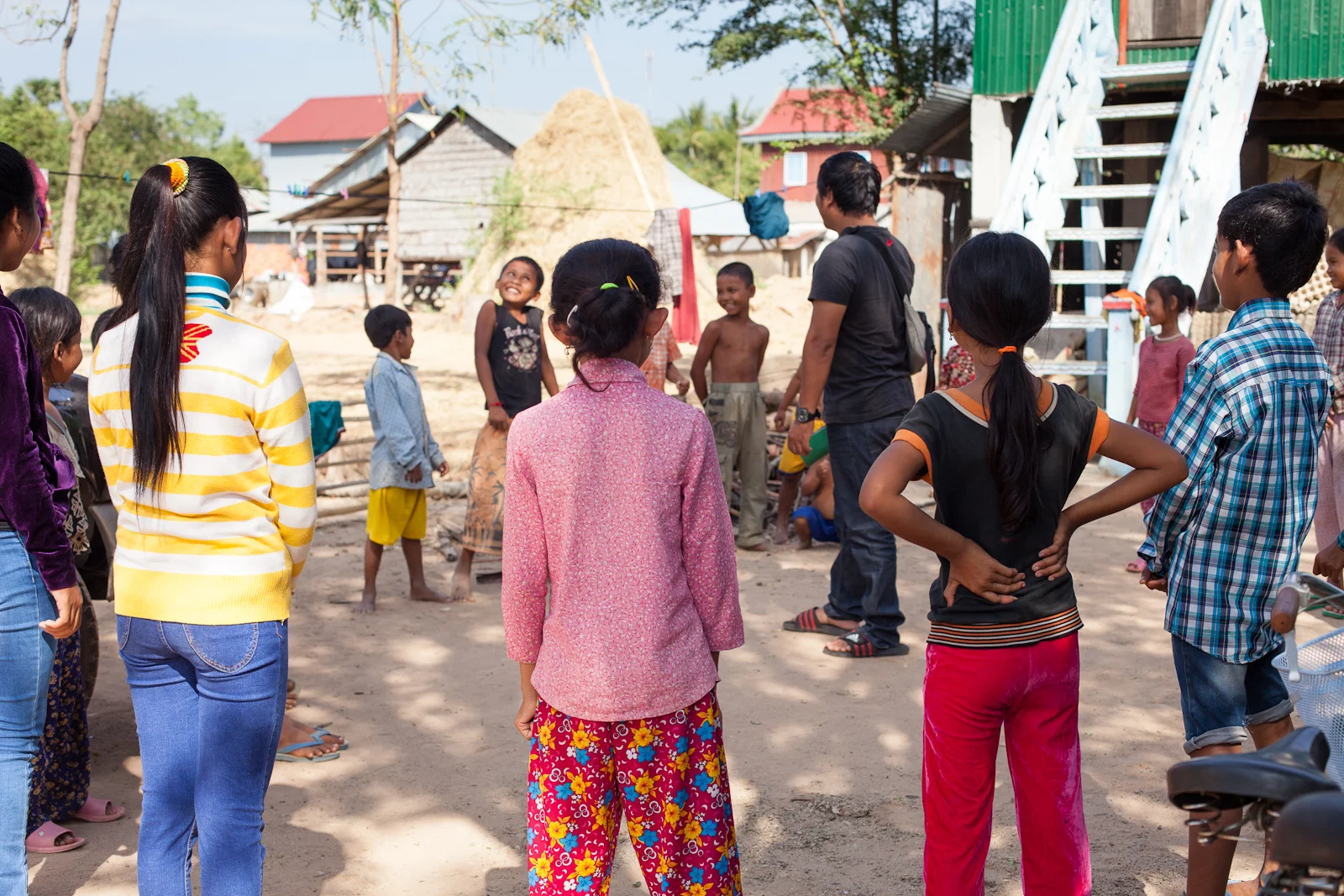
Phearom leads a group of little brothers/sisters in a warm up game
On this day, they trade off roles. Serey goes through the vision and expectations in all seriousness, while Phearom goes outside and organizes fun games for a group of little brothers and sisters and their friends. Later he comes inside and leads a discussion about child protection issues, and he encourages the Alongsiders in his own humorous way.
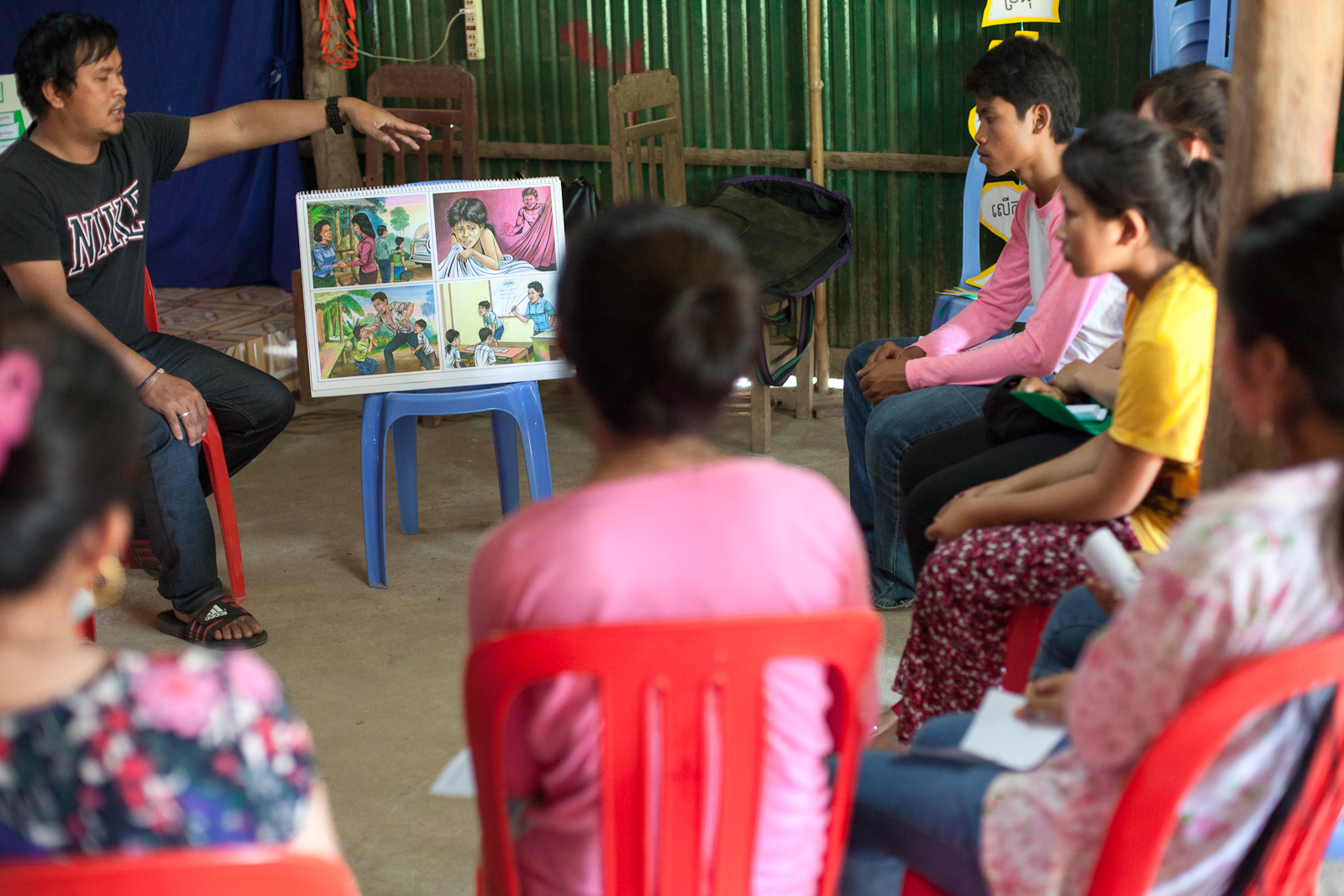
Phearom teaches on how to recognize trafficking or abuse... and how to respond.
The two compliment each other: Serey's stability and Phearom's zeal. They are both very earnest about Alongsiders. Afterwards they offer candid assessments: two or three in the group seem very dedicated, a couple are less sure. But it was a good meeting.
And then it's time to go and release the movement back into the hands of these young people. And trust God.
The Body of Christ is moving.
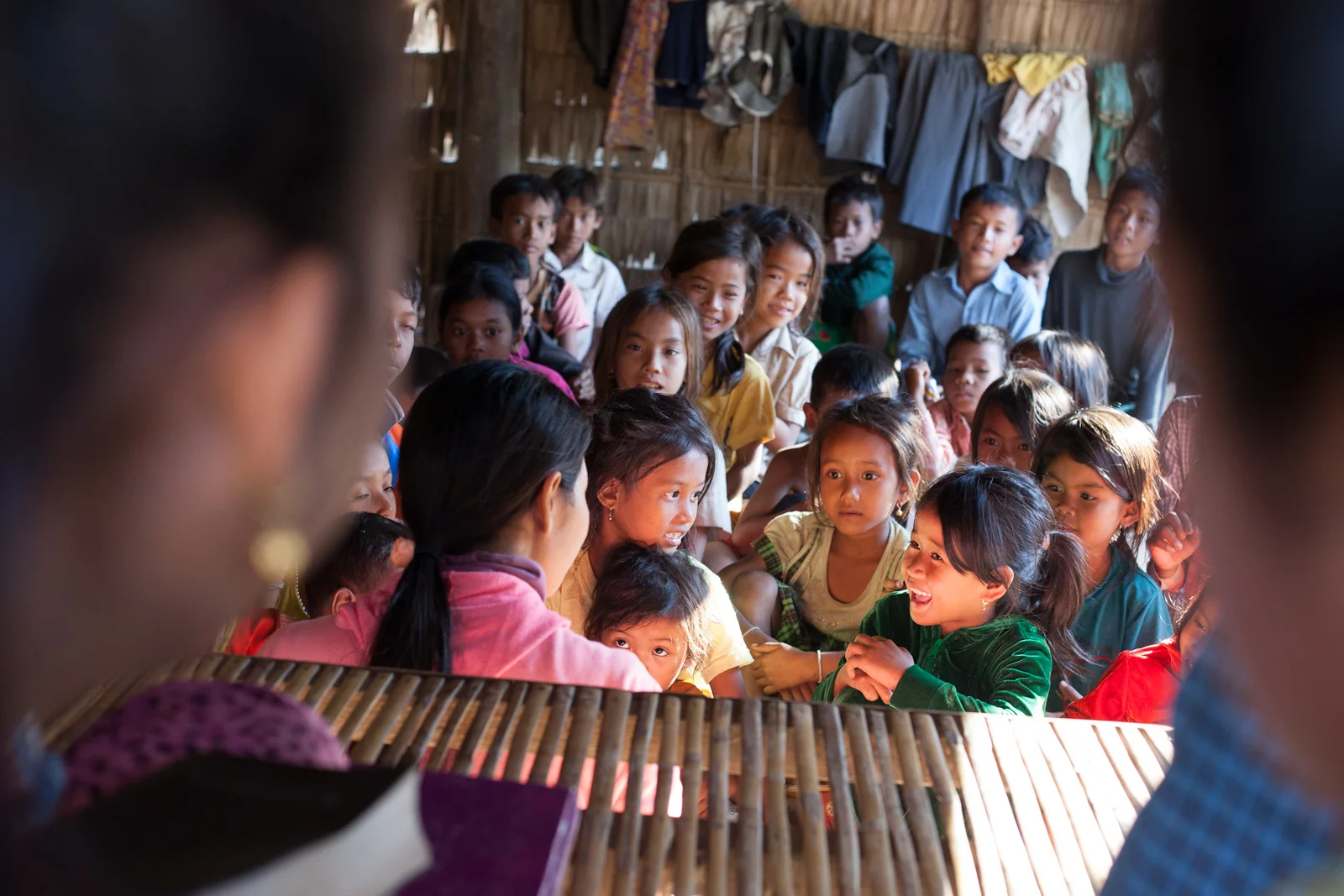
This young leader faces a big dilemma. Her story will inspire you.
There are extraordinary people hidden just out of sight at the margins of society.
“I am less interested in the weight and convolutions of Einstein’s brain than in the near certainty that people of equal talent have lived and died in cotton fields and sweatshops.”
Chanthy is not average. She's really quite amazing and unique. She's an example of why we want to empower and release Cambodians to lead, rather than relying on the tired model of foreigners controlling the wheel.
As Stephen Jay Gould attests in the quote to the right, there are extraordinary people hidden just out of sight at the margins of society.
Chanthy is a farmer's daughter with exceptional energy and capacity. Though few, perhaps, are quite like her, many capable yet unrecognized Cambodians are ready to love and lead in surprising ways.
Four months ago, Chanthy gathered a dozen or so youth from the rural church she pastors, and they all became Alongsider mentors together. She is the small group leader. On the day they officially signed up, she was charged with excitement as her new little sister stood beaming beside her.
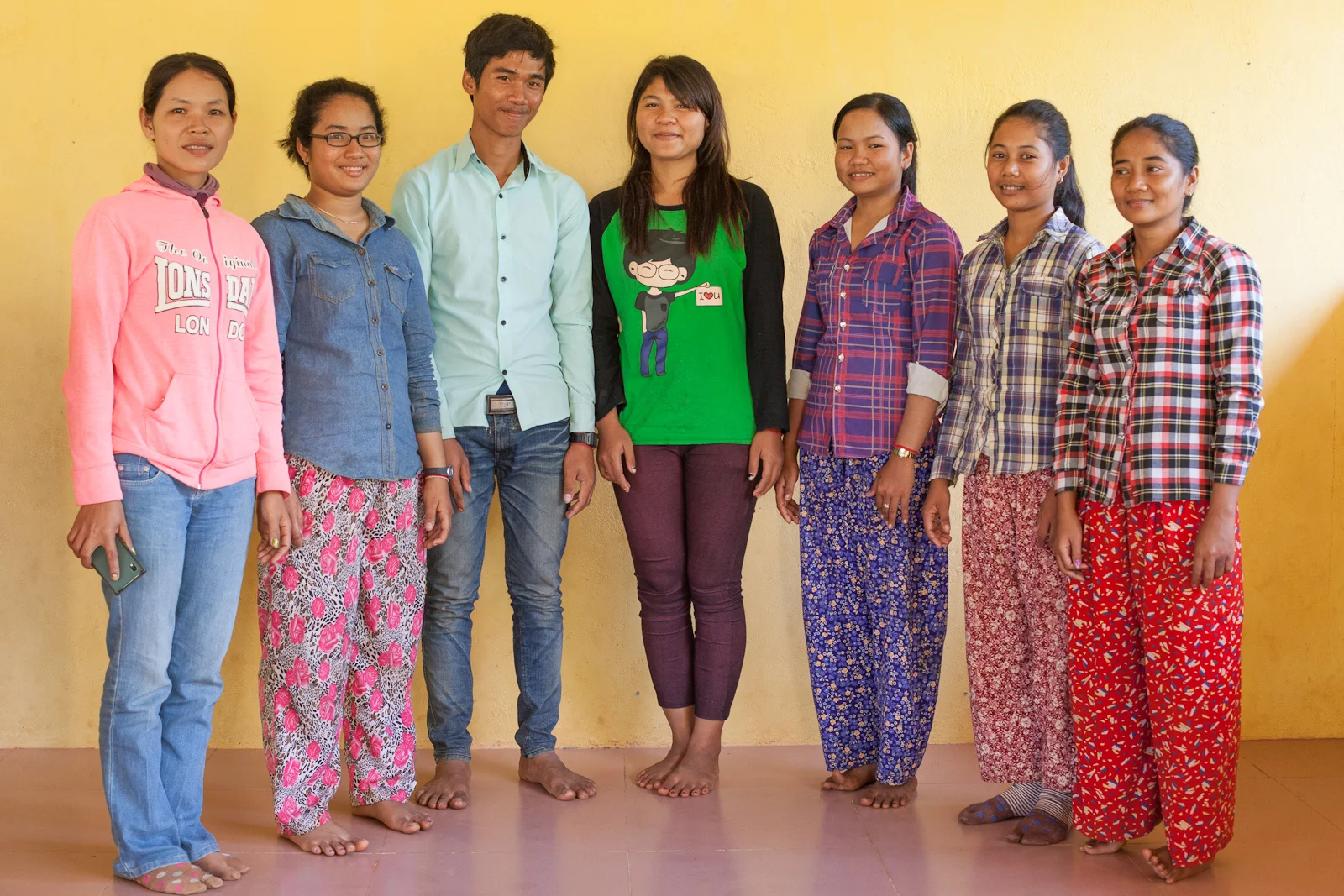
Chanthy, left, with six of the new Alongsiders from her community.
That evening she returned home after dark and helped her parents tend a tremendous pot of curry simmering over coals outside their house. It cooked all night, and the next morning they rose together before dawn to crack coconuts and squeeze the pulp, shell garlic, and add the final spices. About 6:30 a.m. people began arriving and leaving with enough delicious food to feed their families. They fed more than 200 people that day.
Chanthy's family isn't rich. They saved for months for that day. It was during the week of P'chum Ben, one of the most important Buddhist festivals in the country. As devout Buddhists, Chanthy's family had brought food to the local temple every year and given it to the monks. In theory, the food they gave was supposed to help feed the poor, but that didn't always happen. After coming to faith in Jesus, the family decided to continue to tradition, but they elected to give food directly to the poorest families in their community.
This year was the first time they tried it.
Chanthy had come to faith first. She walked over to the Christian church to learn what Jesus was about, and she never turned back. That was just over a year ago, and it didn't go over well. "My parents scolded me," she says. It must have been a serious scolding, because she moved out of her home and slept at the church for three months. But it was her parents who relented, and soon after her whole family put their trust in Jesus as well.
Chanthy is a force that's hard to resist. At some point in her life she developed a very strong character.
She was born in a refugee camp in Thailand. Her parents had fled there when Vietnam invaded Cambodia in 1979, and they stayed for the next twelve years.
When the family returned to Cambodia they erected a shelter on a piece of land in an isolated village north of Phnom Penh, and they began the nearly impossible task of starting from nothing as rice farmers. After some years of hard-scrabble existence, the family desperately needed a break, and Chanthy provided it. She went to Malaysia, where she took a risk, employing herself as a nanny for a rich family. Many Cambodian nannies have endured tragic abuses, but fortunately Chanthy was hired by a good family. They paid fairly, and she even got to travel to Japan and Korea with her employer on business trips. When she returned home, she gave all the money she had saved to her parents, and they used it to build their house.
Now Chanthy is the assistant pastor at her church. The "real" pastor, she explains, lives in Phnom Penh and visits once a month.
She doesn't receive a salary. She rises at 3 a.m. daily to help fix food for the family. Then she goes to a nearby high school where she spends the morning selling snacks to the students. She makes about $1.25 each day.
On Sunday she drives a wide loop on her motorcycle and visits five "house churches." On the way, she buys a huge load of snack food using her earnings. At each stop, a crowd of children gather and listen to her share from the Bible. A few adults hover nearby, some listening and others idly chatting. When she finishes teaching, she distributes the snacks and moves on.
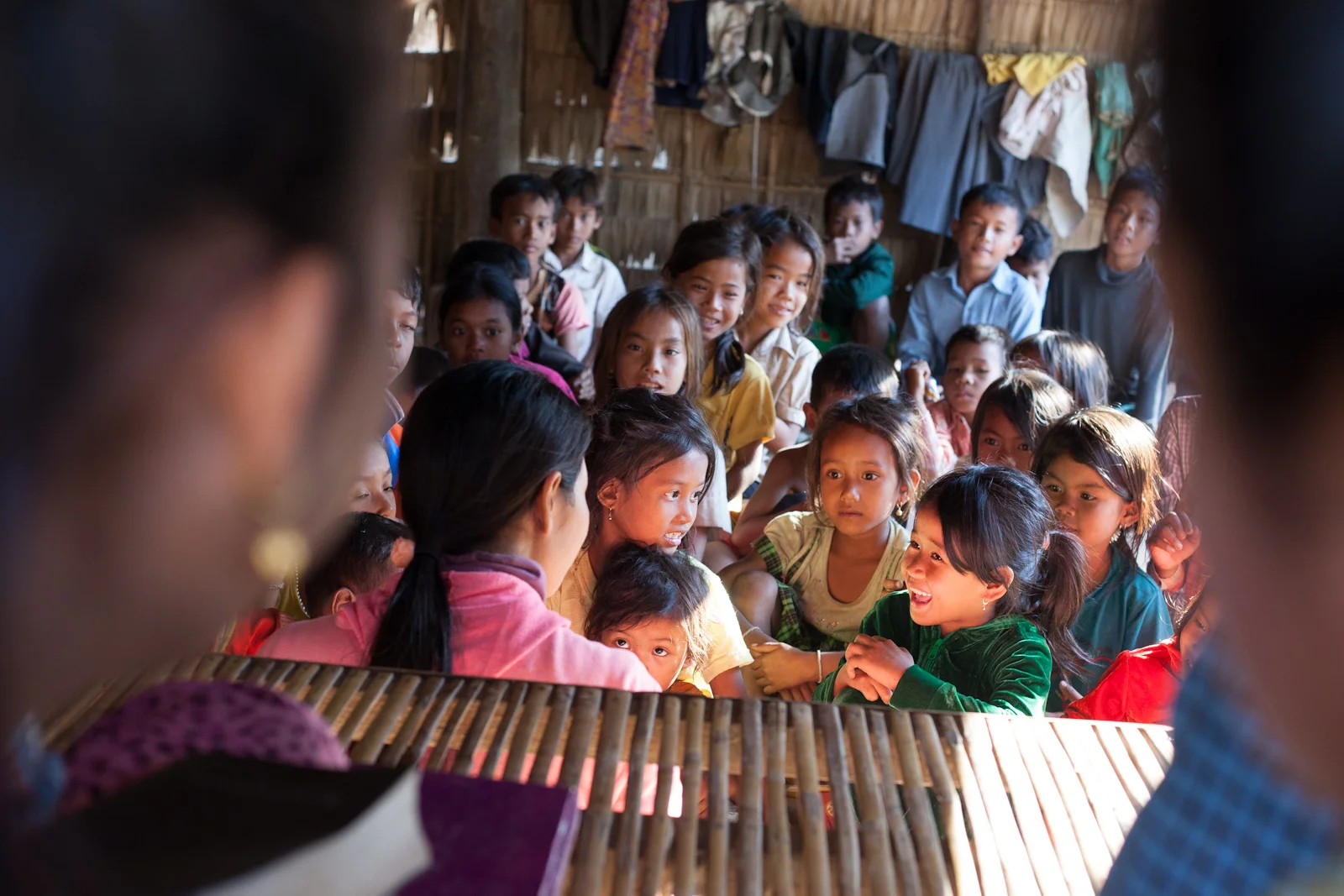
Chanthy teaches young children from the Bible. Afterward a group of older youth took their place and Chanthy led them through a more advanced version of the same teaching. Chanthy is learning how to teach the Bible at a Bible school in the nearby city, and each week she teaches what she recently learned there.
"I love children," she says, and she repeats herself until she is sure she has made herself clear. "I really love children. People ignore them and treat them badly, especially poor children, but I love them."
But later she admits she dreams of leaving the countryside, and she worries what will happen to the children without her. She points to the beauty all around and flatly states that she hates the crowded streets and noise of Phnom Penh. But she wants to learn more and expand her life. She feels, well, marginalized. "I'm not doing anything here, she says, oblivious to the incongruity in her words.
Herein lies the challenge. The big dilemma.
Alongsiders is working with young leaders at the grassroots. They are doing things and going places foreign workers and even Cambodians schooled in the cities could hardly emulate or follow.
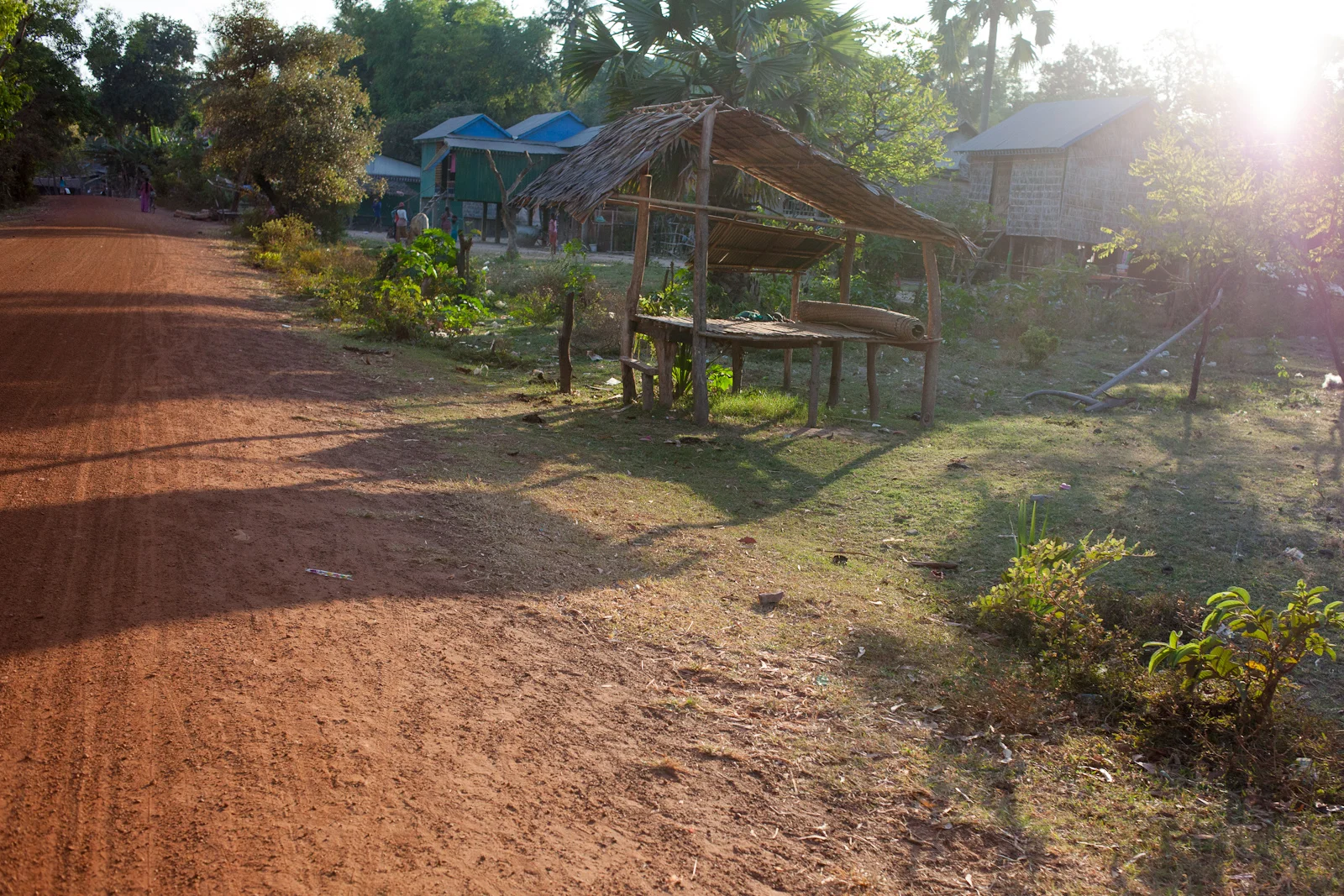
Yet they live in a world that tells them relentlessly, just as it tells us, that they are insignificant unless they land a particular kind of job or reach a certain status. If they shine as leaders, there are companies and big-budget organizations that will hire and take them away.
But we will not be discouraged. Right now the work of enduring beauty and significance in the Kingdom of God is being done by Chanthy and her fellow Alongsiders!
We often celebrate the children of Alongsiders - the little brothers and sisters - but today we're grateful for the Alongsider leaders and mentors, who are more often than not young men and women who have grown up at the margins themselves.
May we have eyes to see them, a vision that includes and expands with them, and a willingness to trust them with it. And let us learn to walk with them without using or corrupting them (and that, in itself, is a challenge worthy of writing about another day).
Thank God for them, and pray that the Lord of the Harvest - who must have an affinity with farmers judging by the way Jesus taught and talked about Him - will raise up more amazing and unique leaders to serve as Alongsiders.
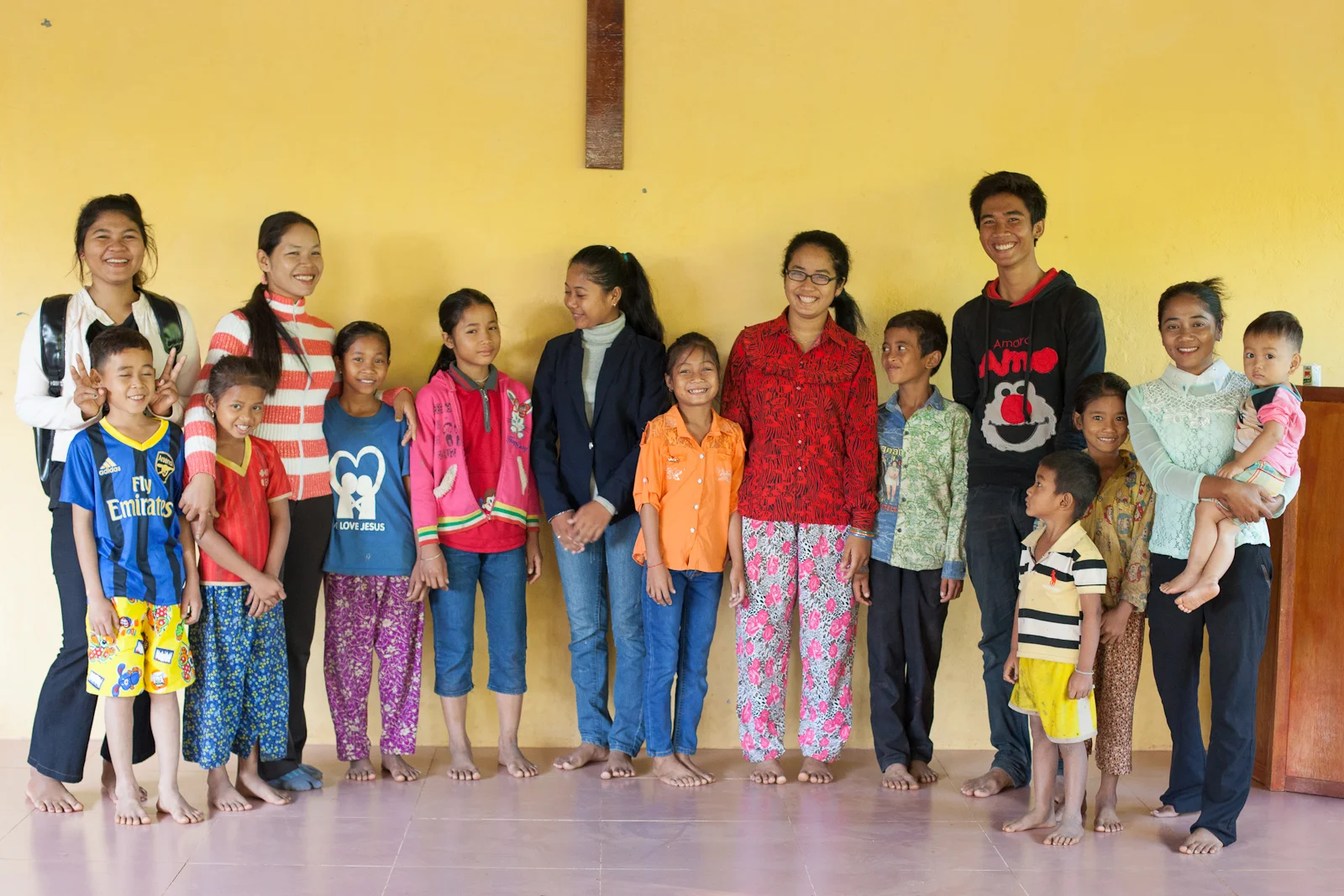
They might be giants
You'll be encouraged to see the significant progress a group of Alongsiders and their little brothers and sisters have made after four months...
Four months ago I traveled by bus, boat, and motorcycle to Kampong Leng, a remote farming community north of Phnom Penh, to witness a group of new Alongsider mentors signing up with their newly chosen little brothers and sisters. A few days ago I went back to check on their progress, and this is what I saw.
Even in the dry season, Kampong Leng is a lush, green country, especially for one accustomed to Phnom Penh's concrete skylines and motorcycle rivers. Most land in Kampong Leng that isn't covered in jungle or water is cultivated to grow rice and a dozen other crops. Fruit trees spring up everywhere, even on the school grounds.
When I arrive at the local church, five of the Alongsider mentors are gathered to meet me with their little brothers and sisters. They have come from all directions, and one has traveled several miles on his bicycle.
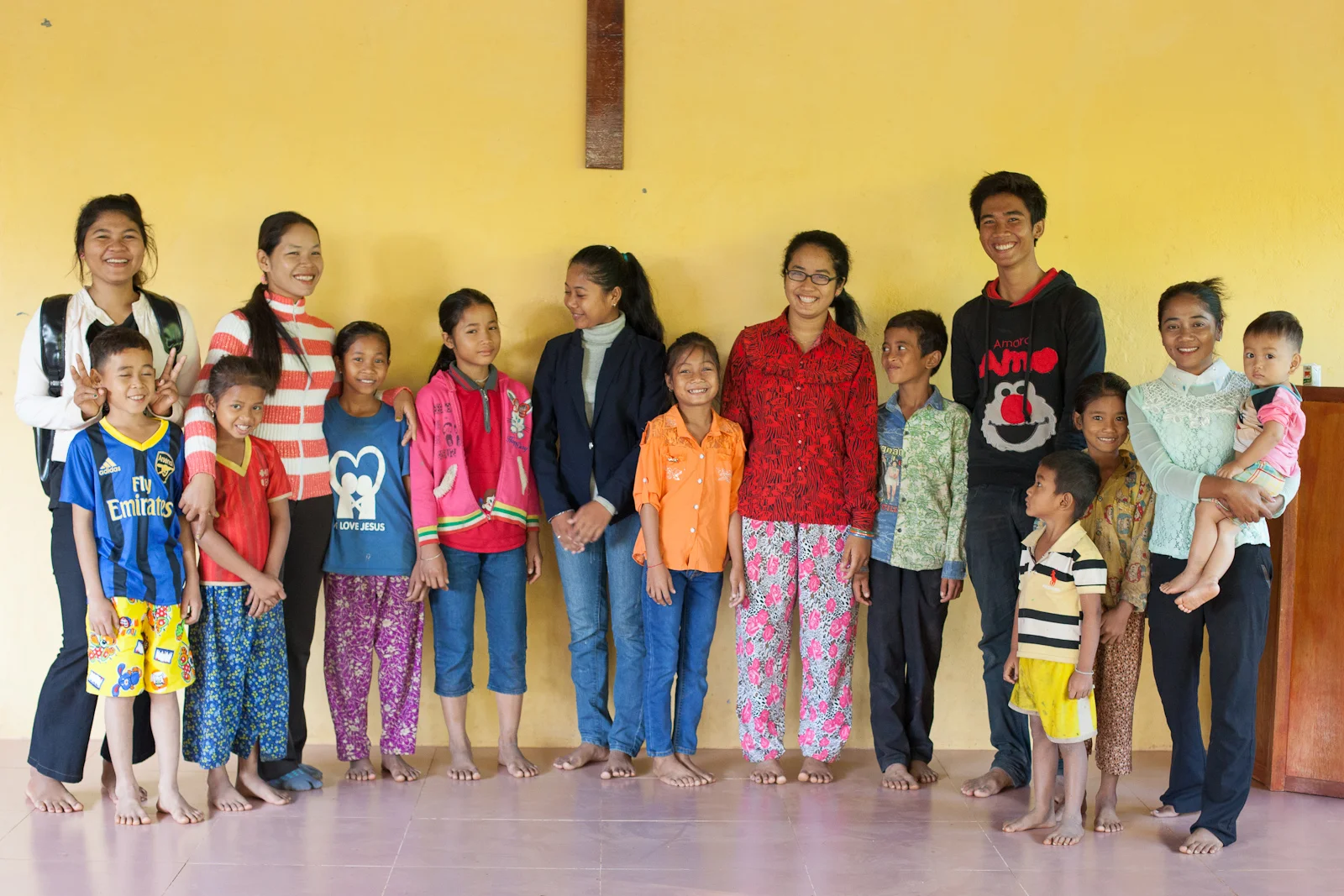
Alongsiders with their little brothers and sisters and a few extras. Chanthy is wearing orange and white stripes. Piya and her little brother are on the right in yellow.
For the past four months these new Alongsiders have been meeting with their little brothers and sisters once a week on average. I ask whether meeting regularly is a challenge, and I receive an education.
Most families in Kampong Leng are rice farmers, though many are diversifying as family members start businesses, work in factories, and (in dream scenarios) get educated and find salaried jobs. Those families that subsist on farming alone are very poor, usually earning less than $1 per day according to Chanthy, the Alongsiders group leader in the community.
Farmers in Kampong Leng work through the dry season. They can't use the fields near to their homes, so they travel (or relocate) to rented fields closer to the retreating Mekong River.
The little brothers and sisters all come from farming families, so their parents are on the move. Sometimes the children move with them.
The Alongsider mentors are also from farming families. Most are high school students. When they are not studying, they may attend extra classes to learn English or computer skills. Otherwise, if they have free time, they are expected to help their parents by working in the fields or at home.
Making time for their little brothers and sisters, even once a week, is a significant gift - and an effective one!
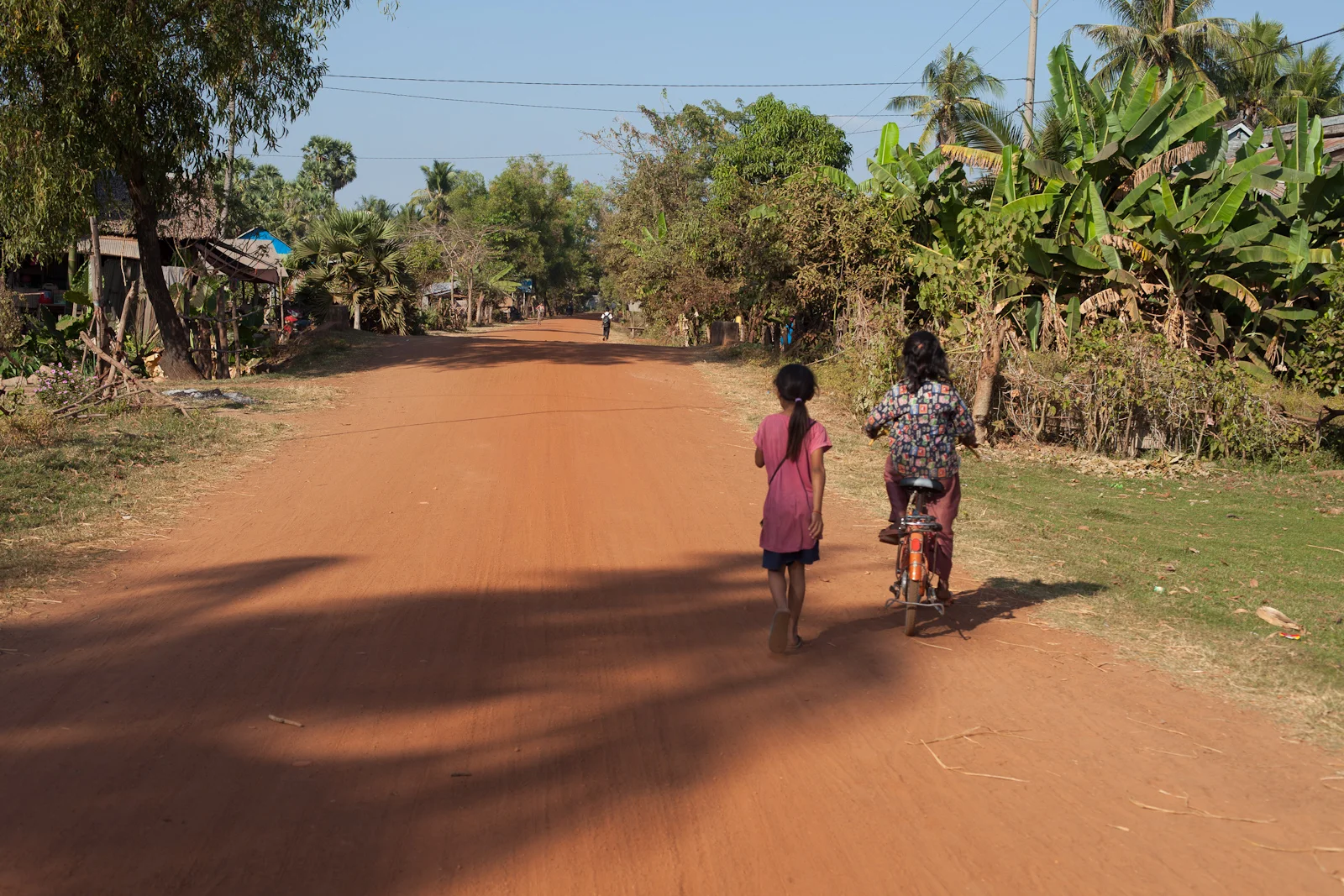
After my last visit I wrote about Piya, an 11 year-old who cares for three younger siblings every day while her parents are away working. Recently, Piya has started attending school about three days a week. In order for her to study, her mother will stay home in the mornings until Piya returns to look after her siblings.
Piya's mother wants her daughter to attend school. The greatest obstacle for Piya isn't time or even money: it's the shame.
Chanthy says, "Cambodians don't like poor children." She repeats the words, to make sure I understand, and adds, "Only the Christians love poor children, but not all the Christians do."
Piya, like many of the poorest children, doesn't have a school uniform, just a set or two of worn out clothes, plus she lacks basic school supplies like notebooks and pens.
When she attends school without a uniform or proper materials, the other children treat her with contempt, so she doesn't want to go. She has only started attending recently due to her Alongsider's strong encouragement.
I had thought that Piya's circumstances were unique, but as I listen to the Alongsiders share, I realize most of their little brothers and sisters face similar challenges. Most would not be attending school regularly without the support of their Alongsiders.
One little sister goes to school, then she walks one-and-a-half hours to join her parents at their rented rice field. They walk home together in the evening.
So what do the Alongsiders do with their little brothers and sisters? Most spend two or three hours together and do similar activities.
- They eat together.
- They help with homework and reading and writing Khmer.
- Some read the Bible together.
- Most of the Alongsiders have taken their little brothers and sisters to buy school supplies using their own money.
- Most of the Alongsiders help their little brothers and sisters to thoroughly clean themselves and wash their clothes.
- All the Alongsiders pray for their little brothers and sisters in their personal prayer times, and some pray for them directly.
Some Alongsiders have been able to bring their little brothers and sisters to church, but for many this is not yet possible. The distance is great, and the parents of the children (who are not Christians) work on Sundays and need their children at home or in the fields.
But through their actions and prayers, they are extending the Body of Christ to their little brothers and sisters where they are.
I leave with an enlarged vision, inspired and challenged by these amazing Alongsiders. In the eyes of the world - and even in their own eyes - they are marginalized. Yet they are most significant and central in the eyes of God, giants in the real Kingdom.
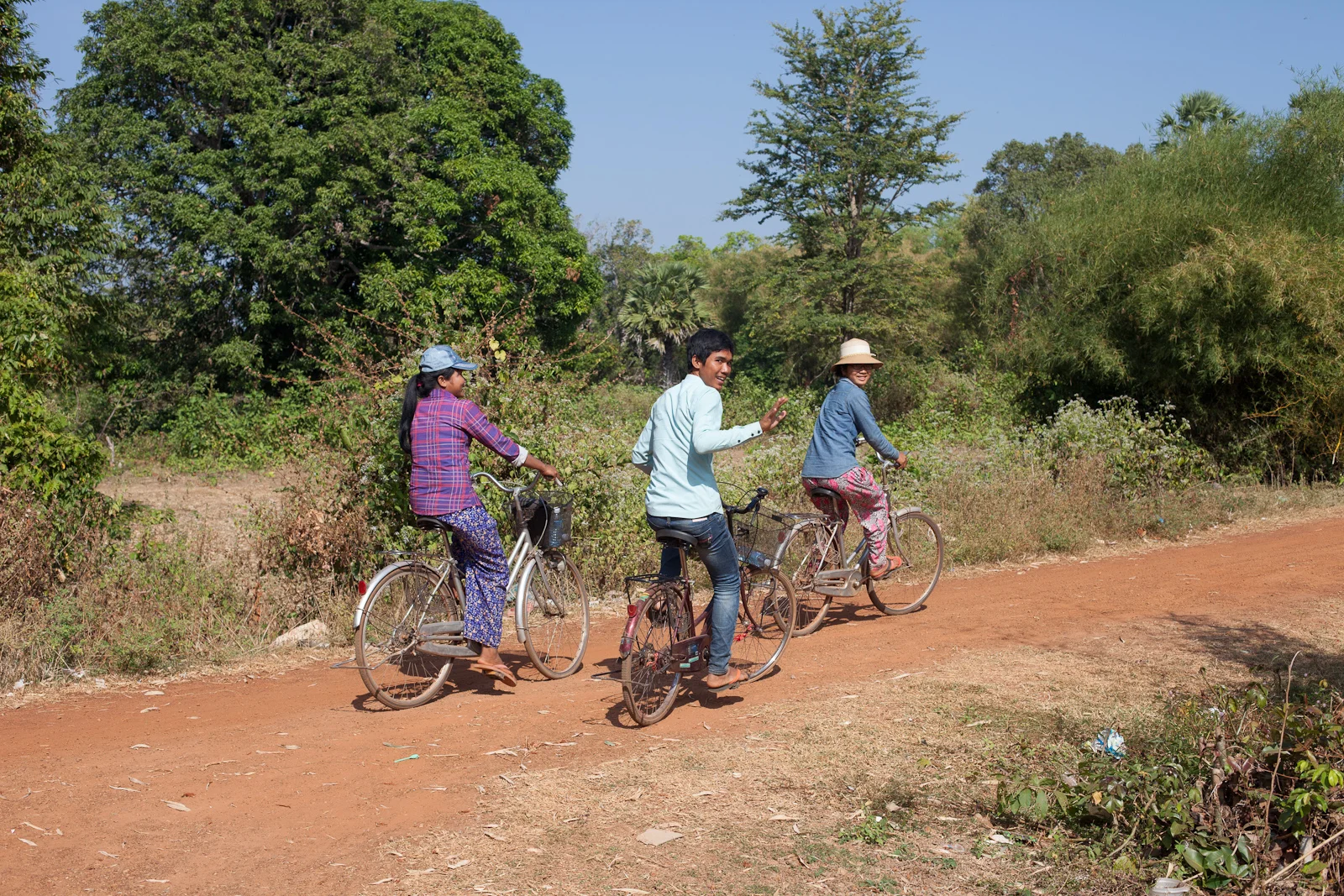
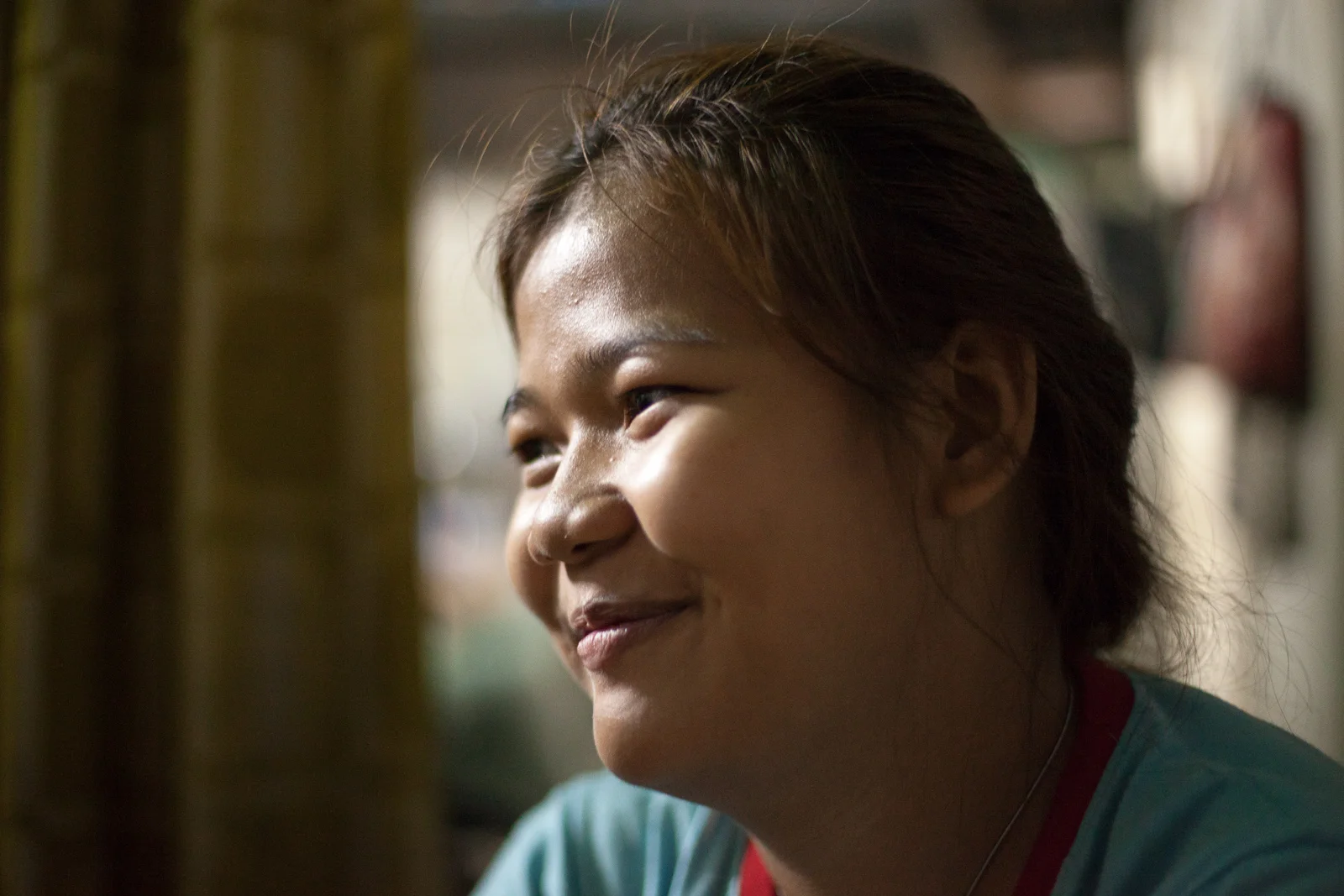
A New Year's lesson from a 17 year-old girl in Cambodia
How do we change? This year many resolutions will fail because we lack an answer for this question, so here's a simple, encouraging lesson from a young woman in Cambodia.
In the spirit of the New Year, what could be more on topic than the subject of transformation? It’s the hope of transformation that keeps us going.
When we find ourselves paralyzed, lacking hope, and resorting to actions we later regret, it’s so often because we wonder if anything really changes.
How do we change? This year many resolutions will fail because we lack an answer for this question, so here's a simple, encouraging lesson from a young woman in Cambodia.
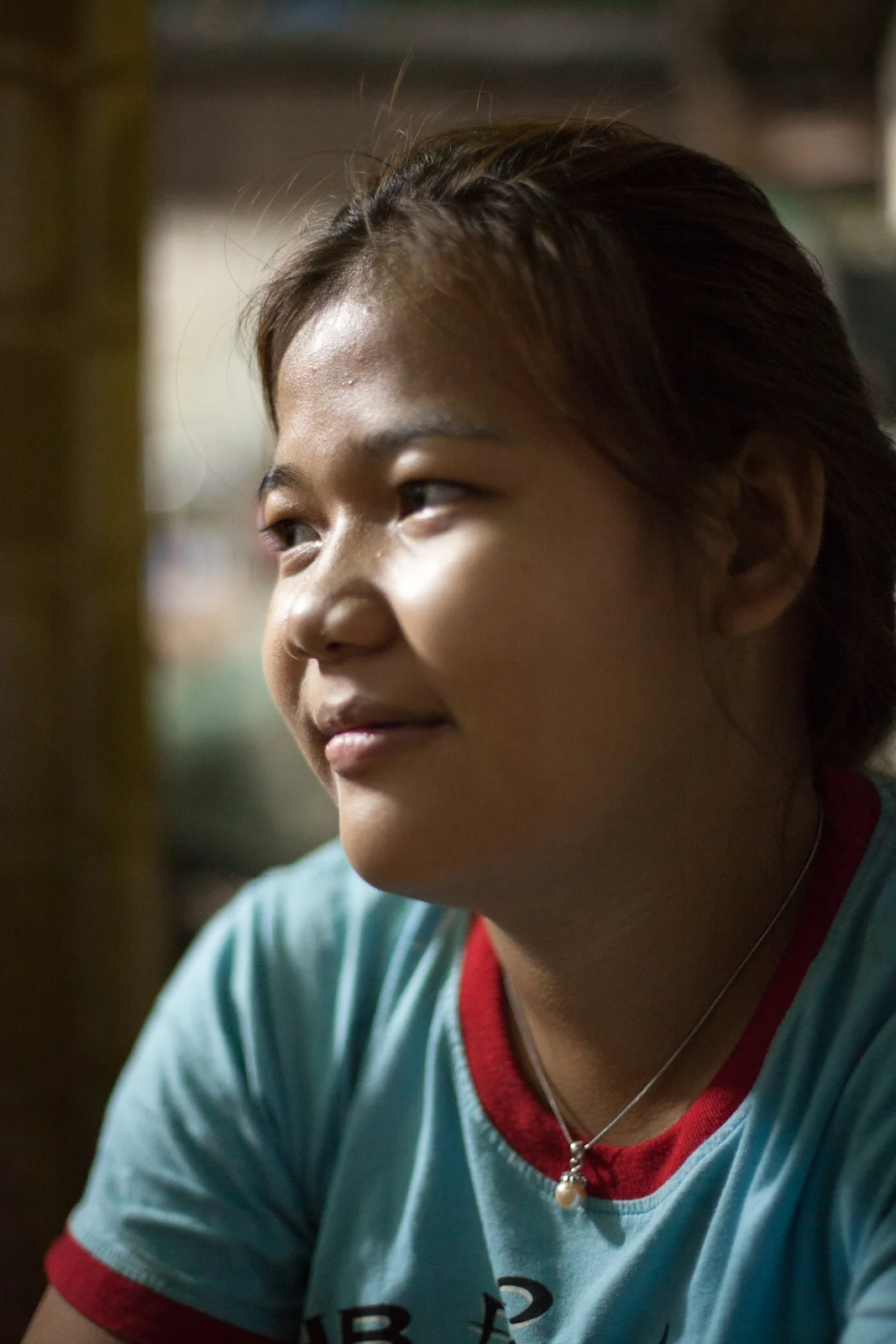
Sreyleak is seventeen years old and lives in a community on the outskirts of Phnom Penh that most people would call a slum. It’s full of vibrancy and life along with suffering and heartache.
And that just about describes Sreyleak as well.
Slums are communities in transition, but we don’t usually think of them in terms of positive change. Rather we see repeated patterns: family dysfunction, kids dropping out of school, and cycles of poverty.
Sreyleak’s parents have been ill for a long time, as long as she can remember, but seven years ago one of the first Alongsider mentors chose Sreyleak to be her “little sister.”
“Back then I was always alone. When I saw how others had relationships, I thought, ‘No one cares about me.’ But my Alongsider showed her love for me and cared about me.
She invited me to come to church every Sunday. She said, ‘Jesus is coming soon, so we’d better not wait.’ She told me about God’s love and encouraged me to read the Bible.
One day my Alongsider invited me to celebrate my birthday along with her daughter, because our birthdays are on the same day. I was very happy, because someone knew about my birthday.
Before knowing God, I used to have bad dreams. It was like war and fighting every night. It was frightening. But I’m not scared of anything around me anymore, because I have God with me. Last night my friend was talking about ghosts, and it was scary, but I didn’t have bad dreams.
Now my purpose in life is to get wisdom from God for my studies, so I can get a job with enough income to support my family. I pray that God will give my family health and energy.
Someday I want to be an Alongsider and do what my Alongsider mentor did for me. She showed me love and encouraged me, and I want to give this gift to my own Little Sister.
I thank my Alongsider, and I thank God. I feel like God is near to me now. ”
So what can we learn from Sreyleak about transformation?
If you ask Sreyleak questions about God, she is likely to answer with a list of religiously correct rules and principles.
But if you listen closely to her story, she will tell you about freedom from fear and about being loved. The principles may point in the right direction, but love and courage are what will sustain her through real, lasting transformation. People who change from living in fear to living in love and courage will surely experience transformation.
But how do we change at such fundamental levels? Sreyleak may not have all her theological answers straight, but she has experienced truth. Now she’s on the verge of transitioning from receiving as a “little sister” to giving and mentoring as a “big sister.”
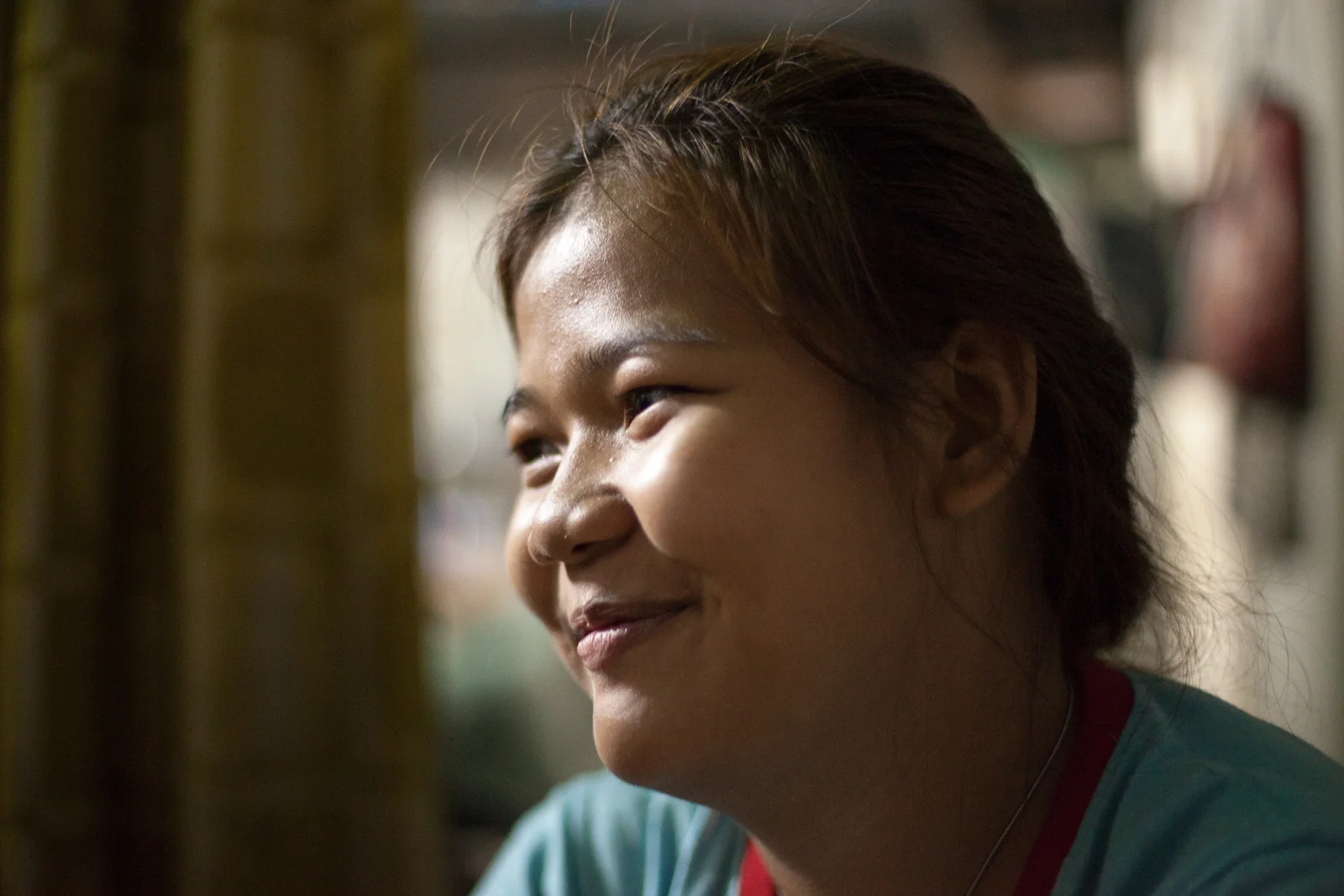
We have sometimes over-emphasized the role of knowledge in transformation.
Knowledge is important, but if transformation were powered primarily by knowledge, then most New Year’s resolutions would be a piece of cake and the most well-educated, knowledgeable Christians would be the most transformed people on earth.
Real transformation takes place in the world of experience and gritty face-to-face relationships. It’s powered by messy everyday choices coupled with the limited information we have.
Those who lean on the clean flow of seemingly unlimited information online, or prefer an ever-increasing knowledge of scripture detached from relationships, will not experience transformation despite many New Year’s resolutions and prayers.
Through the simplicity and rough edges of Sreyleak’s story, we see a life being transformed with ripples shooting out in all directions. It’s about love and courage from God lived out in relationships.
Really, it doesn’t have to be much more complicated than that for any of us.