
If young people are changing the world, here's how the young people need to change
Change starts with this generation. But here's what we need to know when there are set-backs.
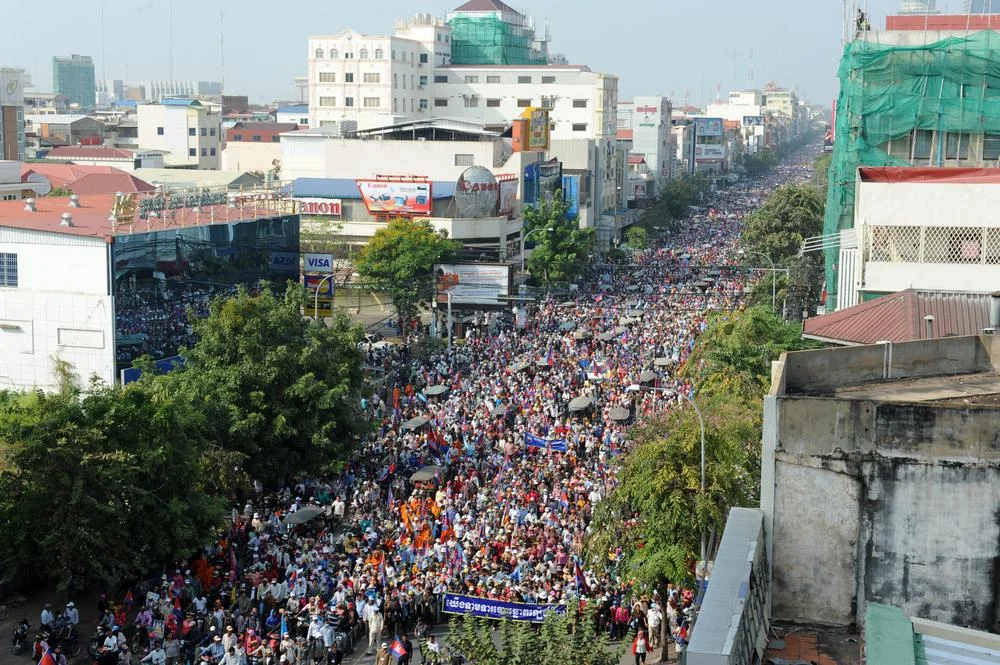
More than seventy-thousand Cambodians turned out to watch exiled politician, Sam Rainsy, return home. They were said to line the streets from the airport to the river side.
It was ten days before the national election in 2013. Sam Rainsy was the leader of the unified opposition party. He had just received a royal pardon from politically motivated charges that had kept him out of the country and away from campaigning for four years. But over the ensuing week tens of thousands flocked to see him as he made a circuit of the major cities. There was a palpable buzz in the air.
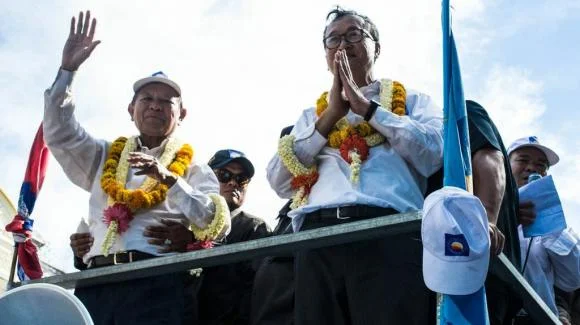
Sam Rainsy, right, and Kem Sokha - the leaders of the Cambodian National Rescue Party (CNRP) greet crowds as they roll through Phnom Penh atop a customized tuk-tuk.
The election was held, and in the following days the government went silent as the opposition party claimed victory. After a ten day delay, the official results finally (some would say inevitably) gave the ruling party a majority of the vote.
The Economist called it "the humbling of Hun Sen" and added "Cambodia's strongman gets a shock at the polls." It was the worst showing for the ruling party in its history - but it was not over yet.
The opposition declared they would march every week until election irregularities were properly investigated. Huge numbers of Cambodians joined marches through the streets of Phnom Penh and camped out in "Freedom Park" (the designated area for peaceful protest). The government brought soldiers into the capital to provide "security." Razor wire barricades blocked the streets to prevent people from easily joining the demonstrations and marches, and checkpoints on the roads surrounding Phnom Penh turned busloads of people away.
The largest march, in December 2013, drew hundreds of thousands of people (the highest estimates say close to 500,000 joined).
What happened?
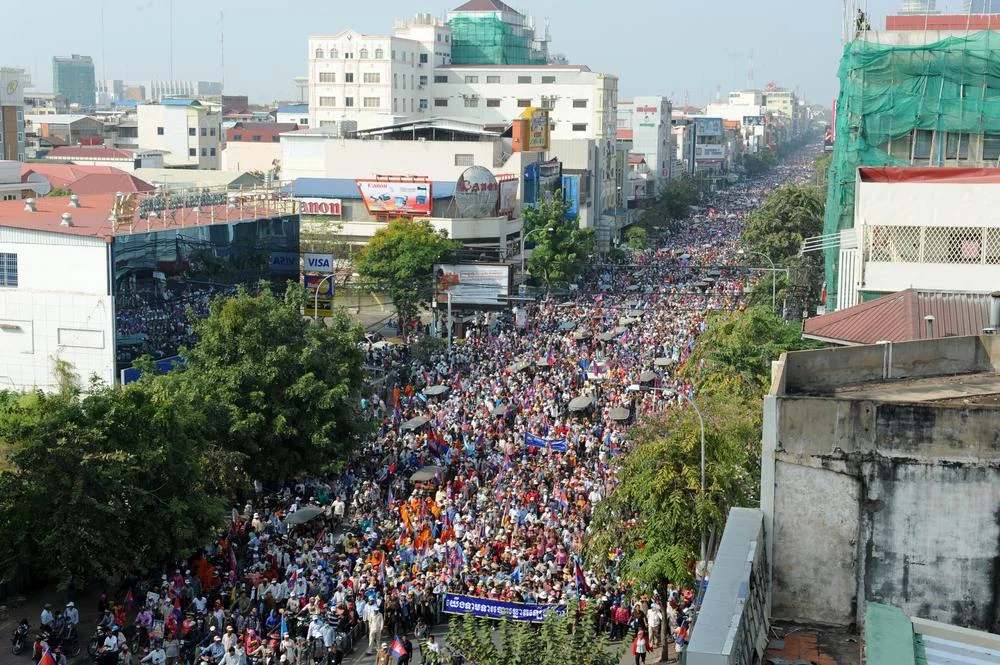
December 29, 2013, marchers stretch out for kilometers through the city of Phnom Penh
More than half of the registered voters in Cambodia are under 30 years old, and a third are under 24 years old. This young Cambodian majority does not rely as much as the older generation on television news, which they know is controlled by the ruling party, but more and more read news online and connect on Facebook.
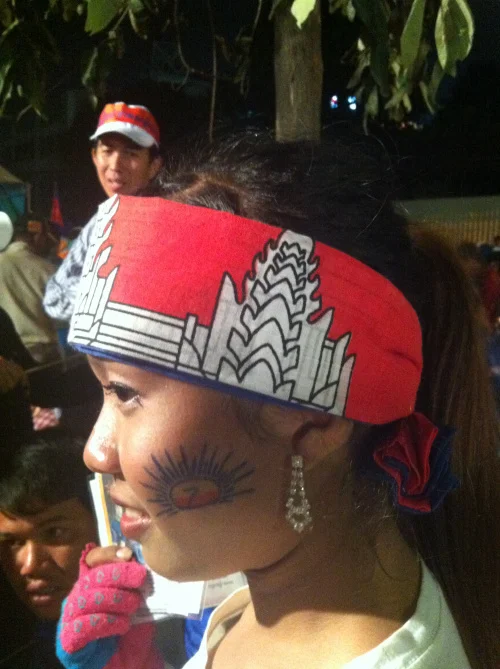
The official news media ignored or downplayed the marches and demonstrations. There were also veiled threats and increasing numbers of soldiers in the streets. Parents told their children not to get involved. But many young Cambodians saw a ray of hope and reached for it.
As one Cambodian blogger wrote:
“These young people are hungry for change in their [own] lives and... [for] the next generation.”
This is the generation we want to reach as Alongsiders. They are the future of broken nations like Cambodia, even if their time is delayed. We're not content to reach hundreds, we want to reach thousands of them in a way that prepares them to serve and lead for change.
In all the countries where Alongsiders is expanding, including India and Indonesia, and in other countries where Alongsiders is breaking ground, young people are the majority. In Indonesia, half the population is under the age of 28, and in India half the population is under the age of 25!
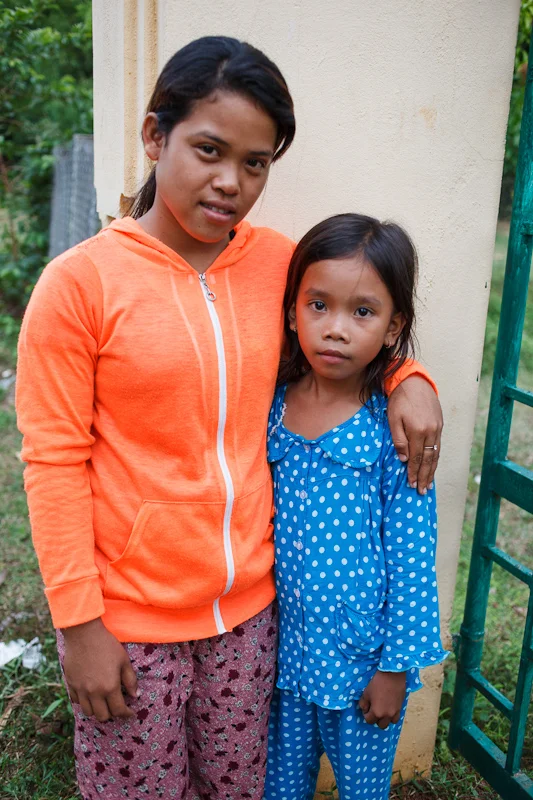
Alongsiders as a movement is raising up young people to be Godly leaders who know that following Jesus means putting love in action over time, starting with loving and serving their own young neighbors who are marginalized.
They are getting to know by experience the Grace that can transform the world without being overcome by the world's values.
And here's a reality check.
Those were heady days two years ago. I remember the feeling of being stopped in traffic at an intersection as an interminable line of people passed by waving flags and cheering. Bystanders stood by their cars and motorcycles taking pictures and calling out support. I walked into the street and stood a few feet away as Sam Rainsy and Kem Sokha rolled by on a customized tuk-tuk with a platform installed so they could wave to the crowds.
I remember talking with young Cambodians at that time who had never expressed interest in politics before, who had actively joined the movement in one way or another.
But those days are a memory now.
- The demonstrations stopped when the government cleared "Freedom Park" and surrounded it with razor wire barricades, then began to unleash violence on protesters.
- Sam Rainsy and the opposition party were quieted when eleven prominent party leaders and activists were arrested on trumped up charges of insurrection. Their case has since been held in limbo, improving or looking grim depending on how well the CNRP cooperates with the ruling CPP.
- The unity of the opposition has begun to crack under the strains of time and forced compromises. Sam Rainsy himself was accused, fairly or not, of corruption by a party insider.
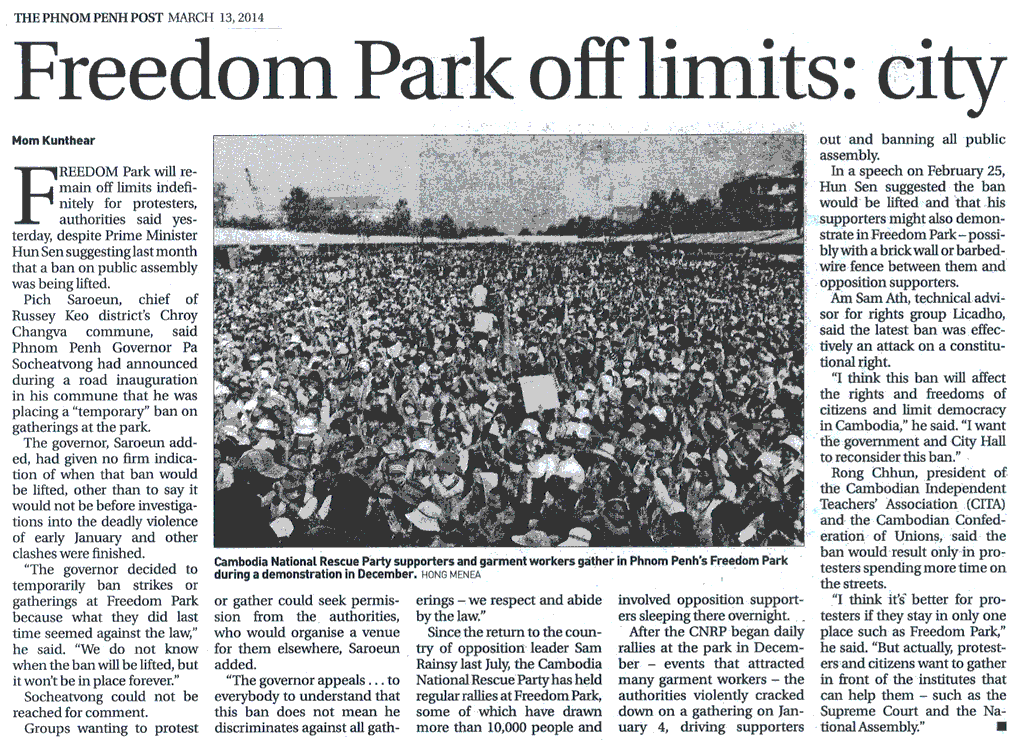
Image in March, 2014, from the Phnom Penh Post
Change isn't easy, even with overwhelming popular support. The "Arab Spring" is proof enough of that.
The young generation, like the generation before it, has never been empowered. They have received, at best, a poor education, and they have suffered a sore lack of quality leaders.
What if they had won and toppled the government? Some say it would have been a disaster.
The youth are the future of Cambodia, but will they be ready for it?
Many Alongsiders joined the demonstrations. They are hungry for change, too. They see that change is slow, and full of set-backs. But their faith is in God, not a political party, politicians or even a system of government. It is founded on their hope in the Reign of God with real peace and justice.
Do you want to help change the world? It may sound trite, but we must begin with ourselves - BE the change you want to see. Live it out in your own sphere of influence, starting with the most vulnerable. Faith in God is faith that is lived out in love. It endures, suffers, and celebrates. And it bears fruit in life.
Why work with local churches?
I went to a rural church to follow-up with a group of Alongsiders, and I asked them how they chose their little brothers and sisters from all the children in the community. One of the young women started to cry as she answered...
I went to a rural church to follow-up with a group of Alongsiders, and I asked them how they chose their little brothers and sisters out of all the children in the community. One of the young women started to cry as she answered, and she said:
“I saw that one of the families in our community was suffering. The mother died, and the father went to Thailand to work and save money. Now the grandmother is raising all six children. I really wanted to help them, but I didn’t know what to do. After I heard about Alongsiders, I went and talked to the grandmother. I told her that I wanted to choose one of the girls to be my little sister, and she immediately said, ‘Yes!’”
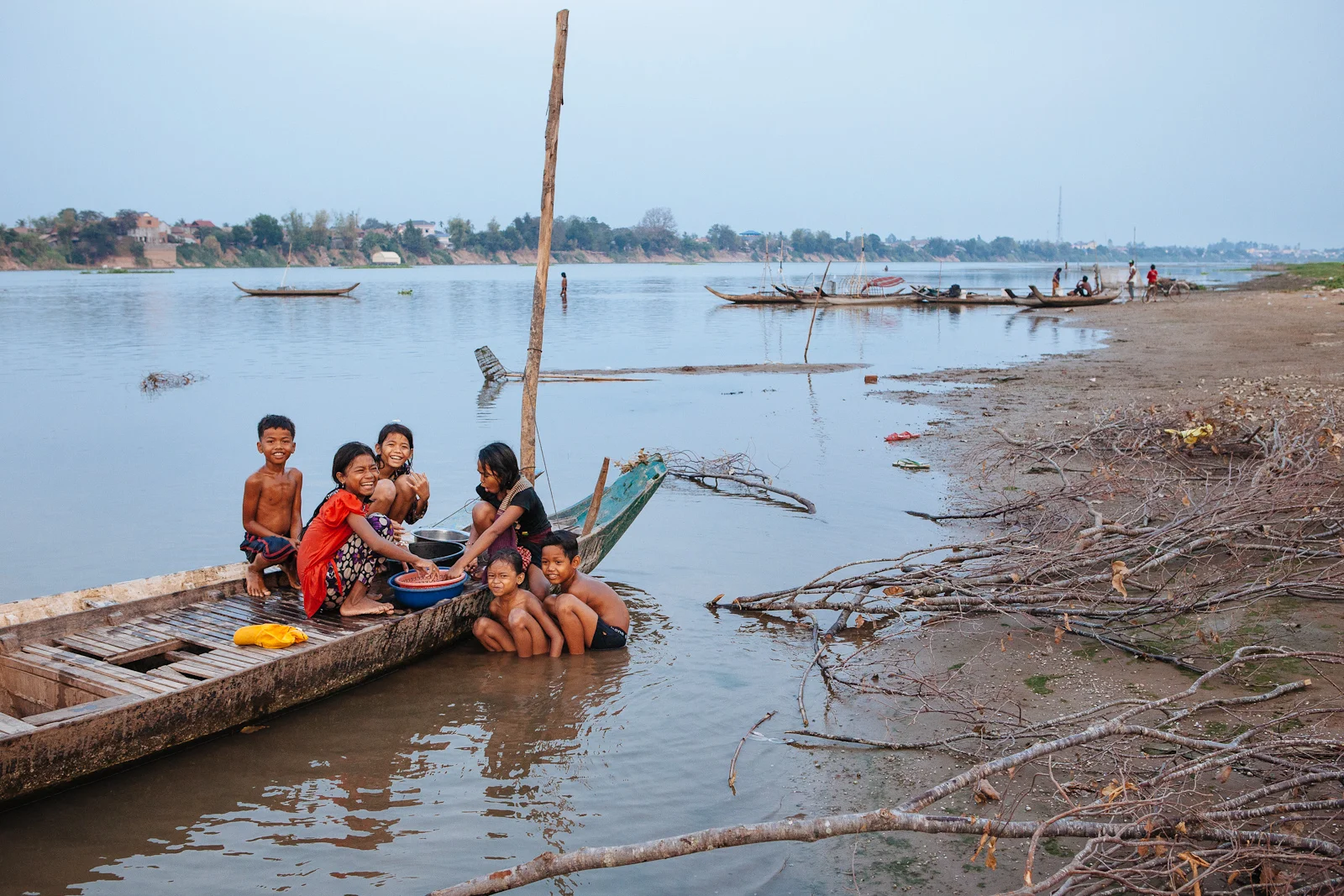
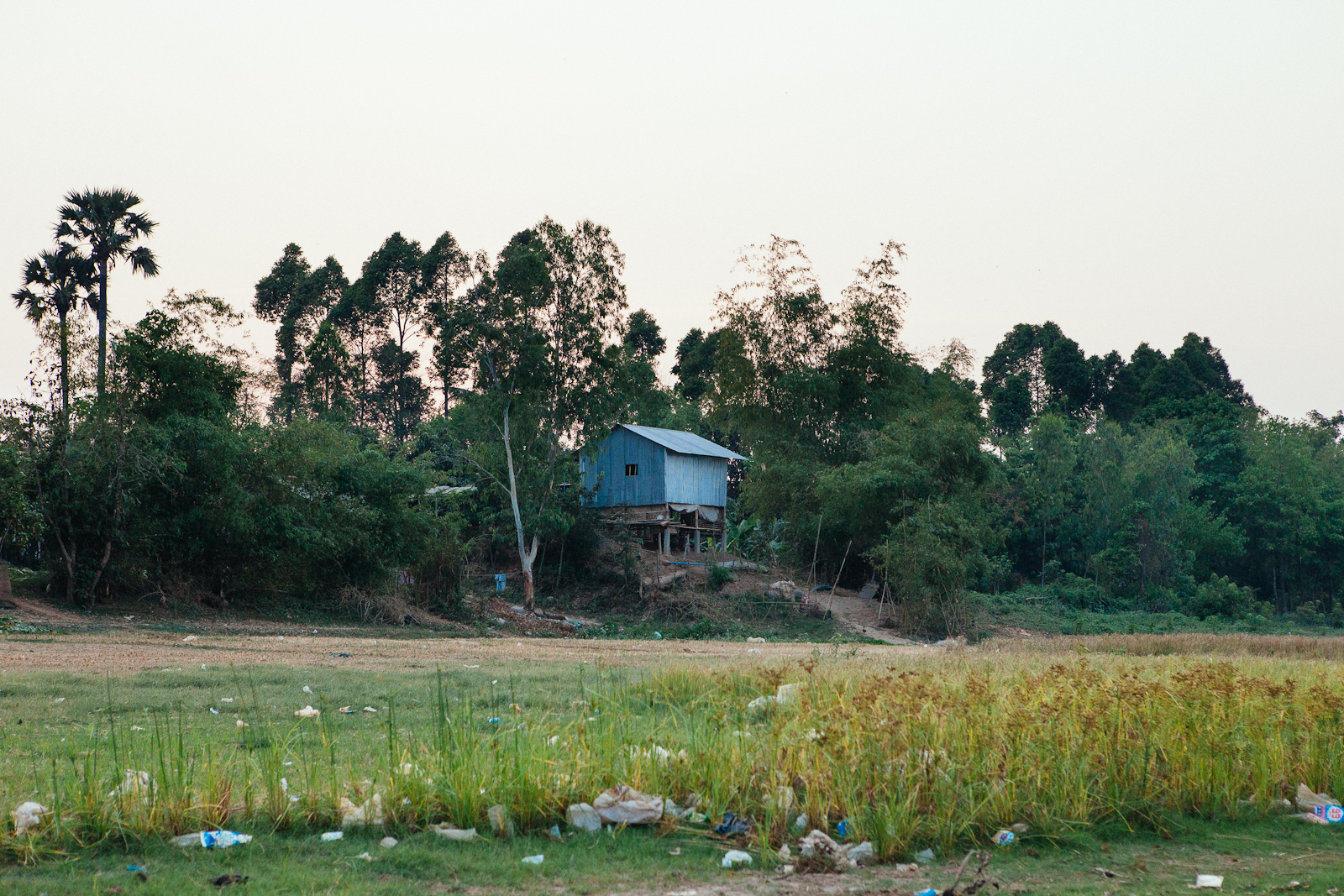
Community children in a riverside village play and do chores at dusk.
Phearom relates this story. He's one of the national coordinators for Alongsiders Cambodia, and he's constantly networking with pastors and visiting churches to invite the youth to join the movement.
His story is an illustration of why we work with local churches.
The young woman had a heart of compassion, and she was already connected in her own village and aware of people in need there. She was poised to act, but she was waiting for an opening.
There are others like her, and there are many, many remote villages in Cambodia. How can an organization based in the capital reach and mobilize them?
The answer that makes the most sense, especially for a Christian organization, is to work through local churches. Local churches are already in place in hundreds of remote villages, and their members already have relationships and local knowledge that organizations coming from outside dream of having. And the local churches come with leaders and structures included.
They are resources hidden in plain site, often overlooked because they are - like their communities - small and seemingly isolated.
Local churches aren't just gateways to villages, they provide critical backup for the Alongsiders. The little brothers and sisters don't just get the support and attention of one person, but they gain access to a community with varied gifts, wisdom, and resources.
When we work with a local church, the local church benefits.
Local churches are people, the Body of Christ with faces and names. Partnering with Alongsiders helps them practice evangelism in the truest sense: by embodying and proclaiming good news for people who are struggling and alone in their own communities.
Alongsiders is also discipleship in action, starting with the youth and young adults who participate (who are the majority in their churches). The young woman in the story above just needed encouragement to do something. As regular people like her take risks in faith and love, they will grow in Christ - and local churches will grow in healthy ways.
Finally, the communities benefit. Strengthening ties, building trust, and helping local people to face local problems together are all good development practices. Local churches can play a key role in serving their whole communities.
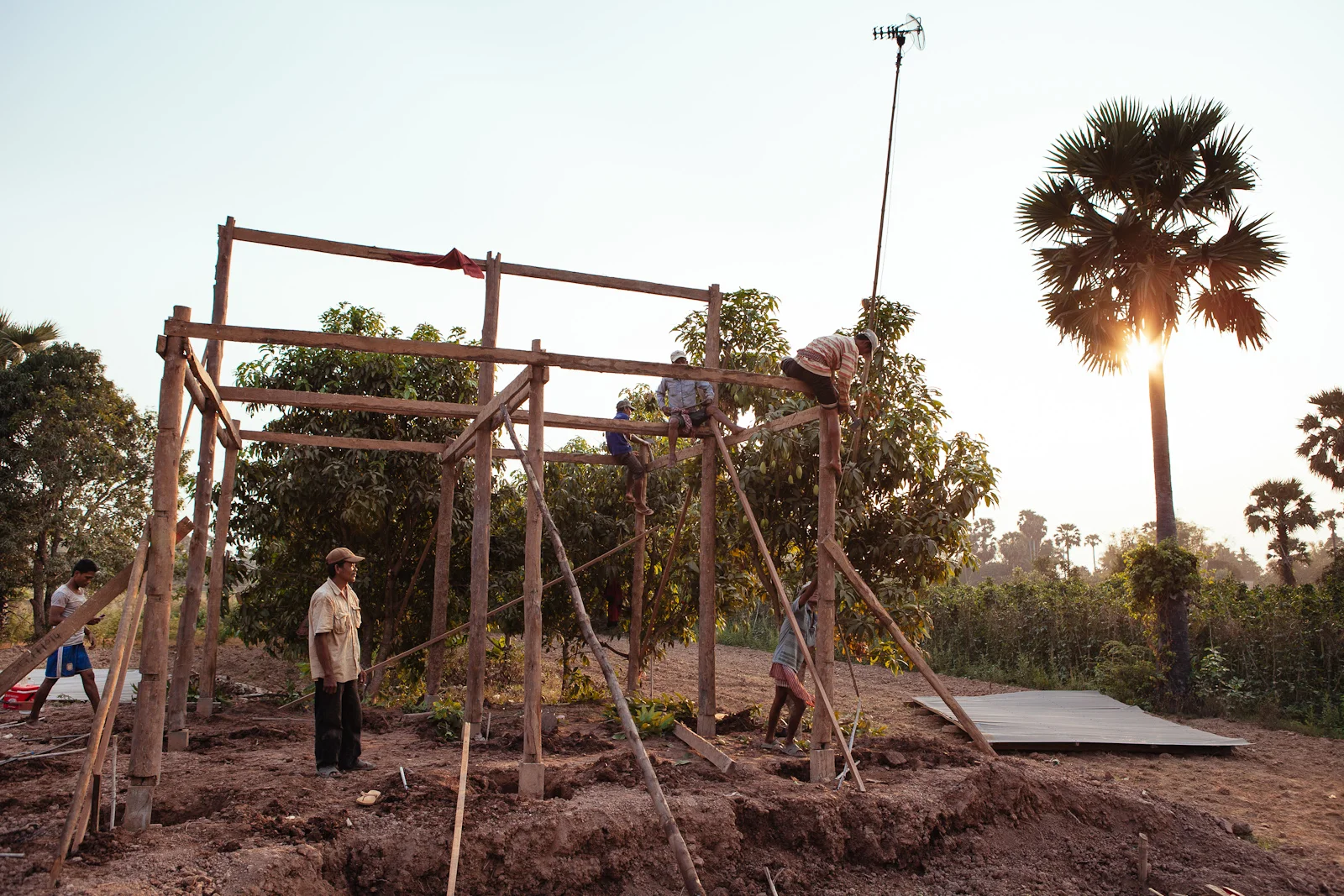
Local men in a remote village work together to build a simple house.
Despite all of the big words, what Alongsiders actually do for their little brothers and sisters is simple, and simply transforming.
And...you can do it, too.
Does your Christian community divide evangelism, discipleship, justice, and compassion into separate categories? Neglect one or more of them? Or put them off by calling them specialized roles?
Put them all together in love by coming alongside someone isolated and in need of a friend or mentor. You can be a light at the margins of your community, and no need to go alone. Invite others to join in!
There are also challenges in working with local churches. That sticky topic will be addressed in the next post!
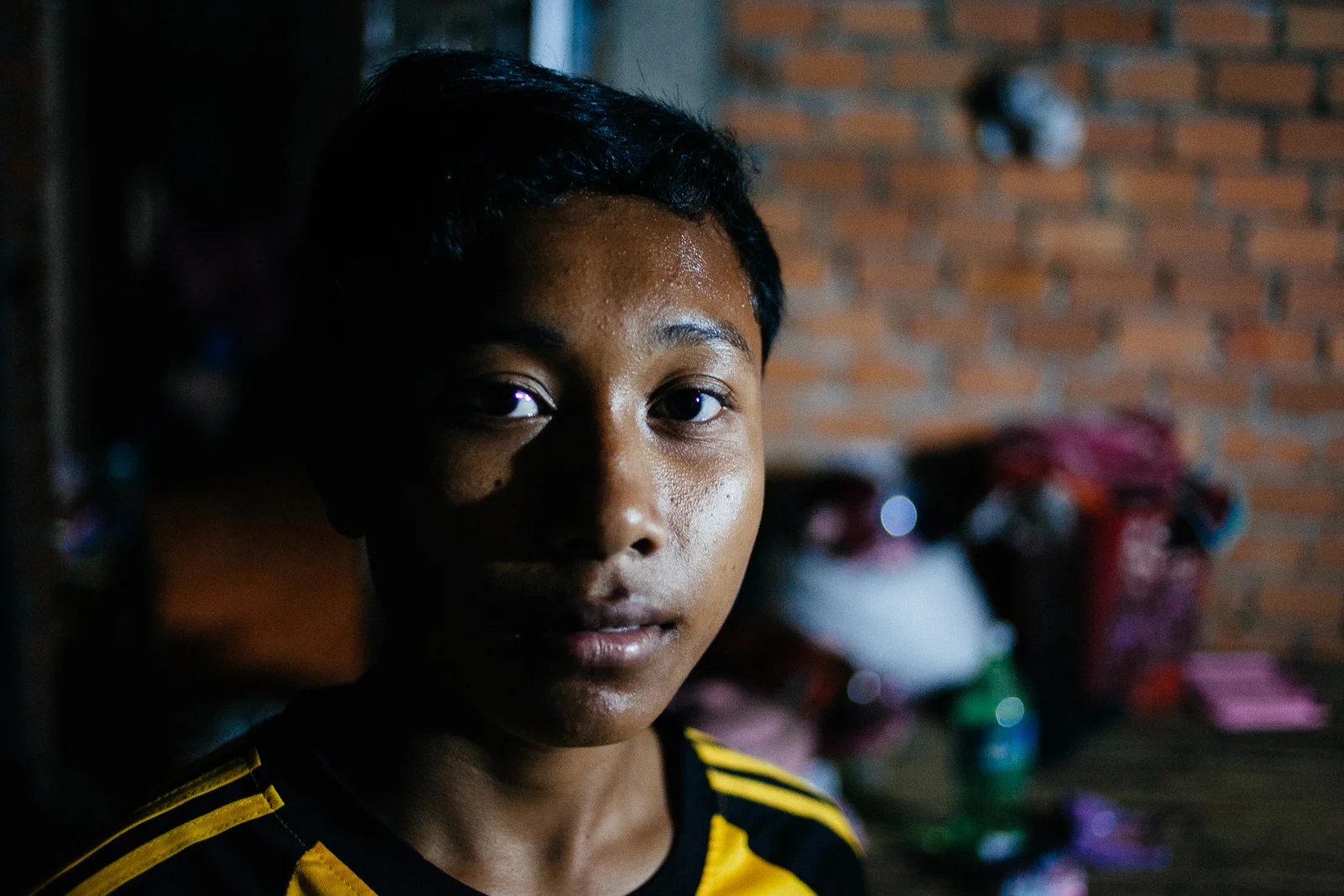
The most effective tool for fighting Human Trafficking is right where we need it to be
"I want to work in Korea", he said
"I want to work in Korea", he said.
We were standing along a dusty road lined with wooden homes and plots of dried rice stalks, dormant until the next rainy season, loosely called a village. The nearest town was a cluster of businesses along the highway a kilometer away. He was a farmer's son, maybe fifteen, who had probably never traveled further than Phnom Penh, two hours up the highway. Korea seemed another world away.
But it wasn't surprising, not at all. I neither doubted his intention nor the possibility he might go. He probably already had a connection who could make it happen.
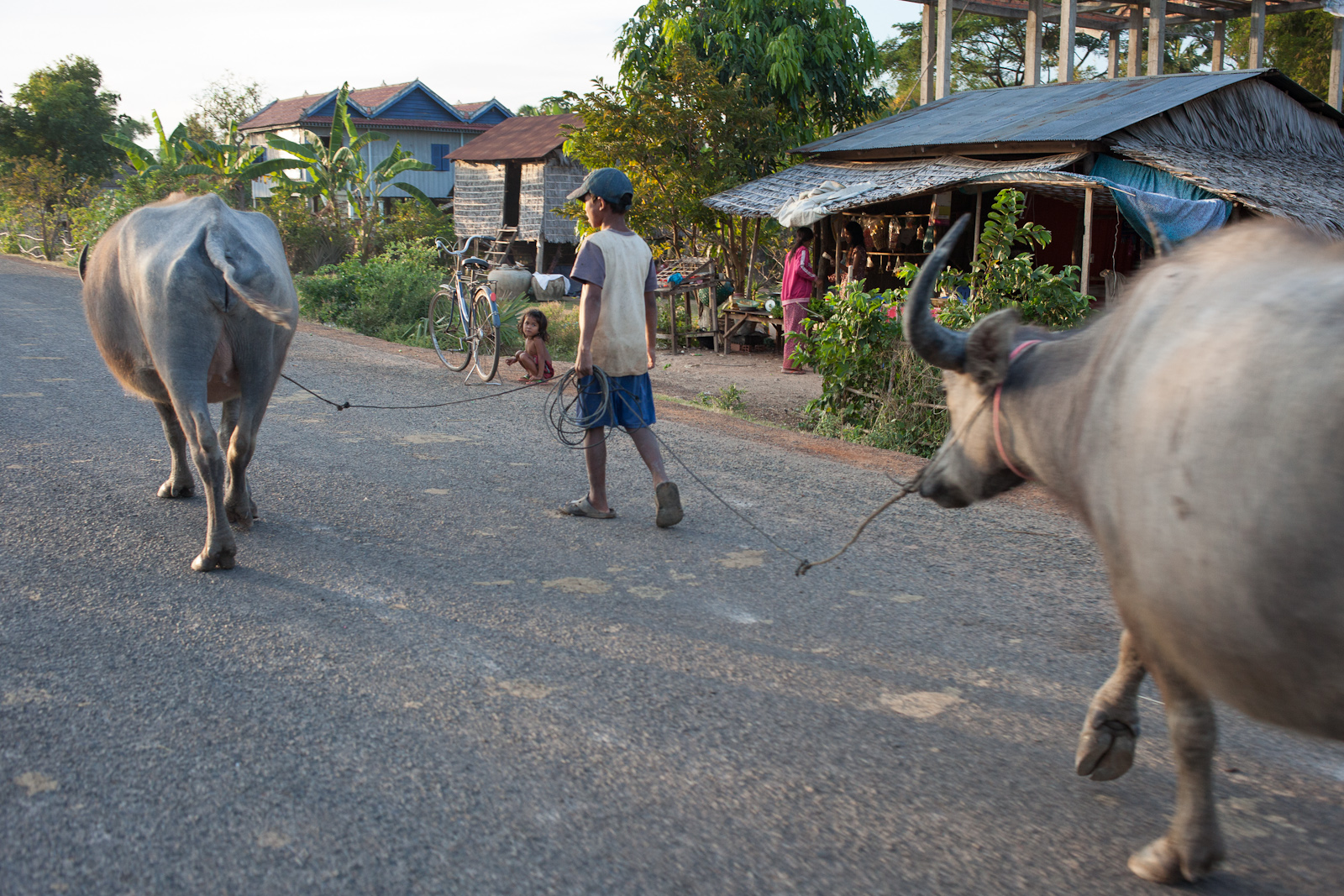
In rural Cambodia, and in the slums of the major cities, you can bet every young person is thinking about a way to make his or her fortune and choosing from options such as: go to a university and get an office job, work in a factory, become a famous singer, become a hairdresser, or take a chance in another country.
Most choose the factory; it's most accessible and anybody can do it. But factory work is exhausting and hardly pays a living wage. It's a way to survive and not much more.
Enter the recruiters.
The recruiters are people who show up in the village talking about opportunities: a dream job in Phnom Penh, a "good" company in Thailand, Malaysia, or Korea that pays five or ten times the wages of factories in Cambodia, or a rich and generous family looking for a domestic worker.
These recruiters, who hold out these visions, are often relatives or "friends" living in the community, and there is a seed of truth in what they say. Indeed, many Cambodians have changed their lives by working abroad or by connecting with a generous employer.
One of our Alongsider leaders, mentioned in a previous post, took a job as a domestic worker in Malaysia as a teenager. She was employed by a family who treated her well, and she saved enough money to buy her family a house when she returned.
But in hundreds of cases, Cambodians who respond to these great "opportunities" are exploited: passports confiscated, paychecks withheld, yelled at and beaten, and forced to work brutally long hours.
Another Alongsider has a different story. When she went to Malaysia her passport was taken and she was forced to work twenty hours a day, seven days per week as a seamstress at a factory.
And worse things than that happen.
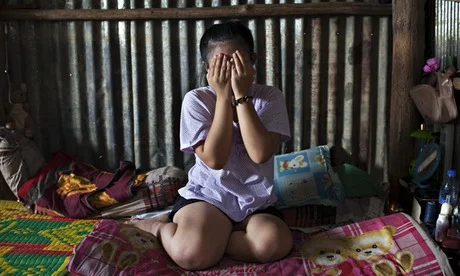
The UN reports that most Cambodian children who are officially repatriated from Thailand and Vietnam have been forced to beg and sell things on the streets. Within Cambodia, many young children and youth are sold or tricked into lives of sexual exploitation.
Where does Alongsiders come in? Truth is, we are well situated to prevent trafficking of the children whose lives we touch.
Most organizations working to prevent human trafficking are waging educational campaigns: making videos and other media, distributing written materials, and sending speakers to schools. Or they are rescuing people who are already victims.
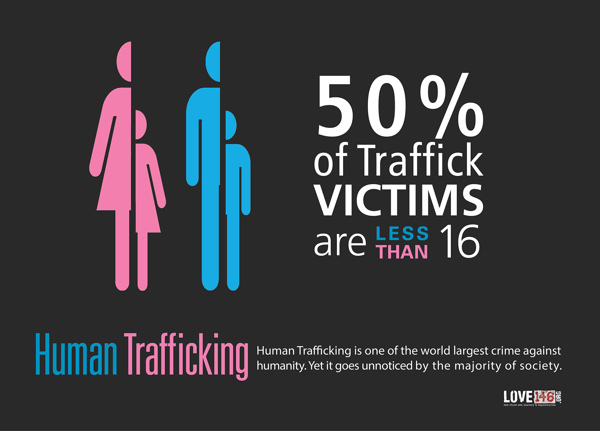
These are all important activities, but let's be honest about the shortcomings. Research shows that most human trafficking victims in Cambodia come from specific places: isolated rural areas in Kampong Cham, Prey Veng, Kandal, Takeo, and Battambang and urban slums in Phnom Penh. And in those places, most victims of human trafficking are less than sixteen years old.
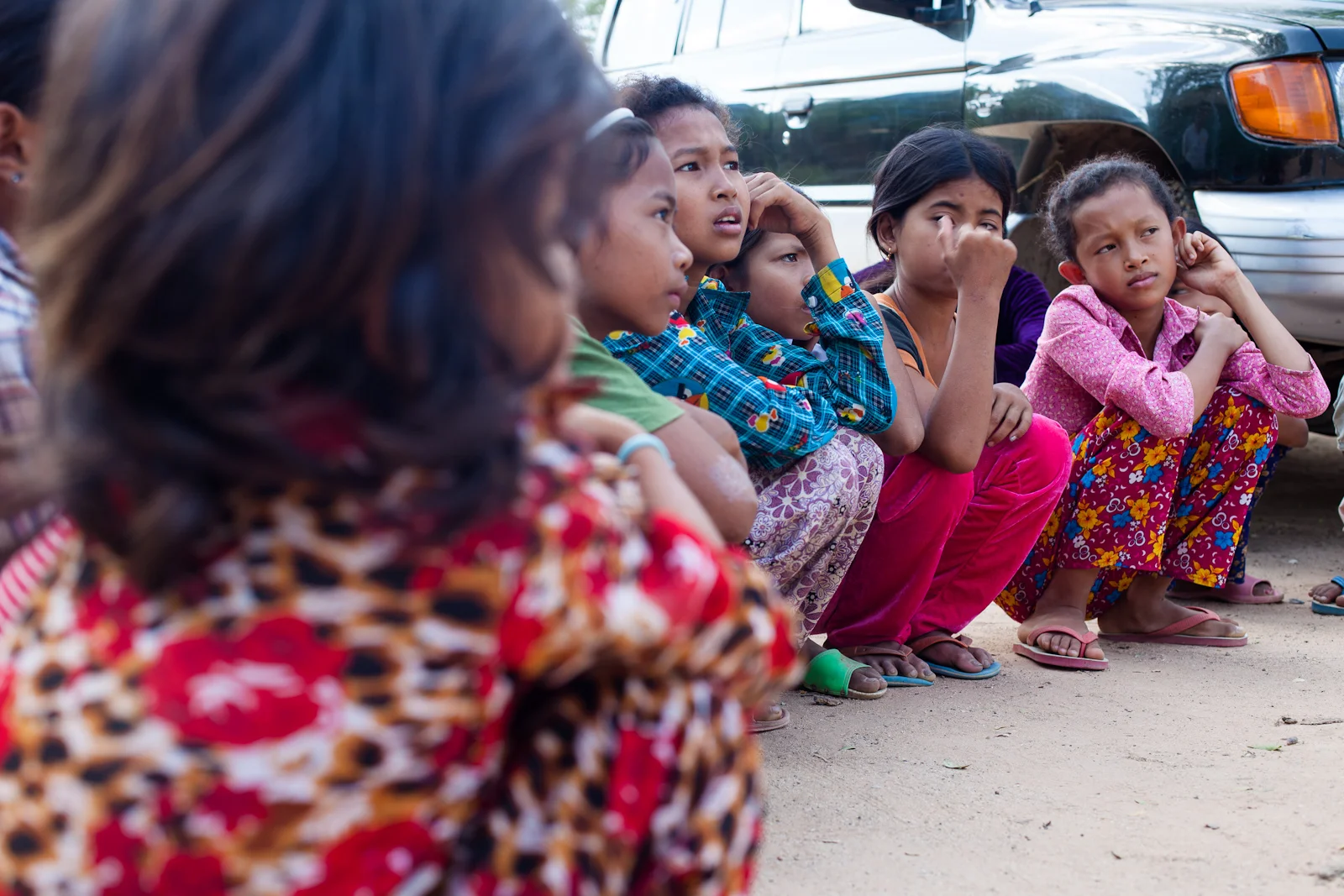
But the educational campaigns originate from Phnom Penh and other cities where organizations keep their offices, and if they connect with likely victims, it's from a distance and indirectly. Even so, how many fifteen year old youth make decisions based on what they read or because of what far away adults are saying?
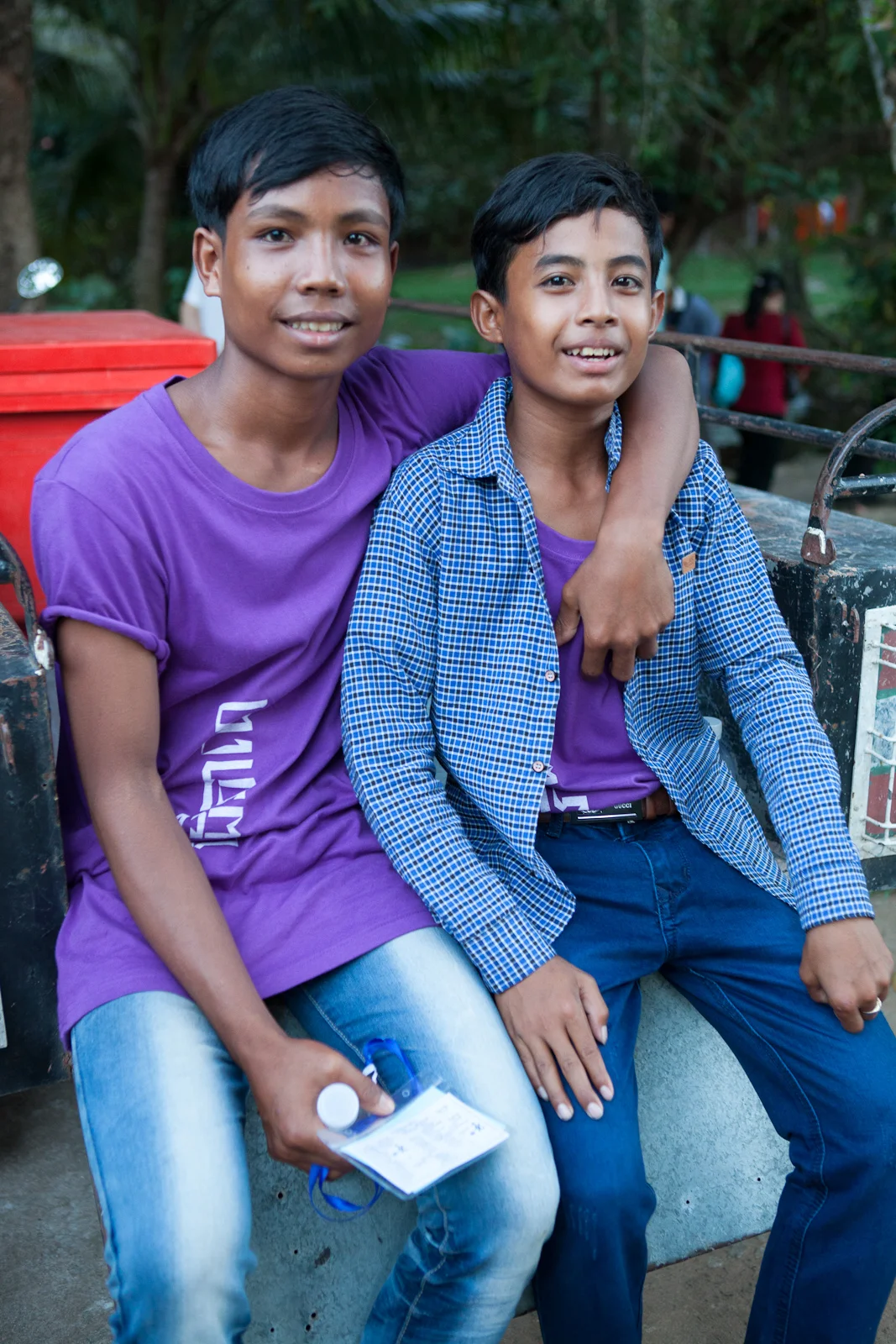
Alongsiders aren't touching thousands - not yet - but we have active groups in most of the vulnerable provinces listed above, and also in Phnom Penh slums. Alongsiders live in those communities, and every Alongsider connects with a little brother or sister, who is less than sixteen years old, and builds a trusting relationship.
As a previous post explains, we take concrete steps to train our leaders to prevent abuse and human trafficking. But it's not just tactics that make a difference, it's the power of relationships.
What makes children most vulnerable to human trafficking is, first of all, their real and imagined insecurities and needs, and yet it's even more than that. It's also about being unnoticed and unconnected.
It's much harder to traffic a child who has someone watching him or her; to take advantage of a child who has a true advocate; or to trick a child who is connected to a network of people who talk to each other.
That fifteen year old boy with a plan to work in Korea is standing on the verge of a precipice, or it may be a launch pad.
Who is he connected to?
4 Keys for Resilience: how to help kids bounce back
The principles we draw on to build resilience are useful for every parent, and any person working with children.
Nine year old Sita* was severely shaken as a baby, leading to brain damage. When she was two years old, her mother brought her to a center in Kampot that supports parents who are raising mentally disabled children.
Her mother abandoned Sita there.
Testing revealed the left side of Sita's brain had shrunken to a fraction of normal size. She couldn't taste or smell or talk, and the doctors said there was little hope she would ever walk either. They were surprised she had lived so long.
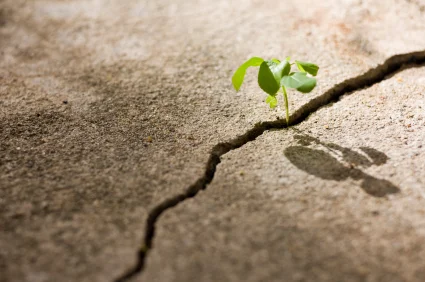
Against the odds, today Sita has learned to taste, smell, talk, walk and play on her own.
Surprisingly, more recent testing shows the right side of her brain has actually grown to take up space as the left side of her brain receded.
Sita's story is inspiring, but it's not as unique as you may think.
Many stories testify to the ability of children to recover from even the most devastating circumstances. Children have an astounding bounce-back-ability - also known as Resilience.
Resilience is a God-given human ability to recover from physical, psychological, and emotional trauma. It's the "wow" factor in stories of survival and overcoming the odds.
And every child has it!
“Initially many researchers thought resilience was a personality trait of a few “invulnerable” super-kids who could leap life’s barriers in an effortless bound. Instead, the emerging view is that resilience is programmed into our DNA... In the words of one resilience expert, ‘Given sufficient support humans can defy the odds and become agents of history.’”
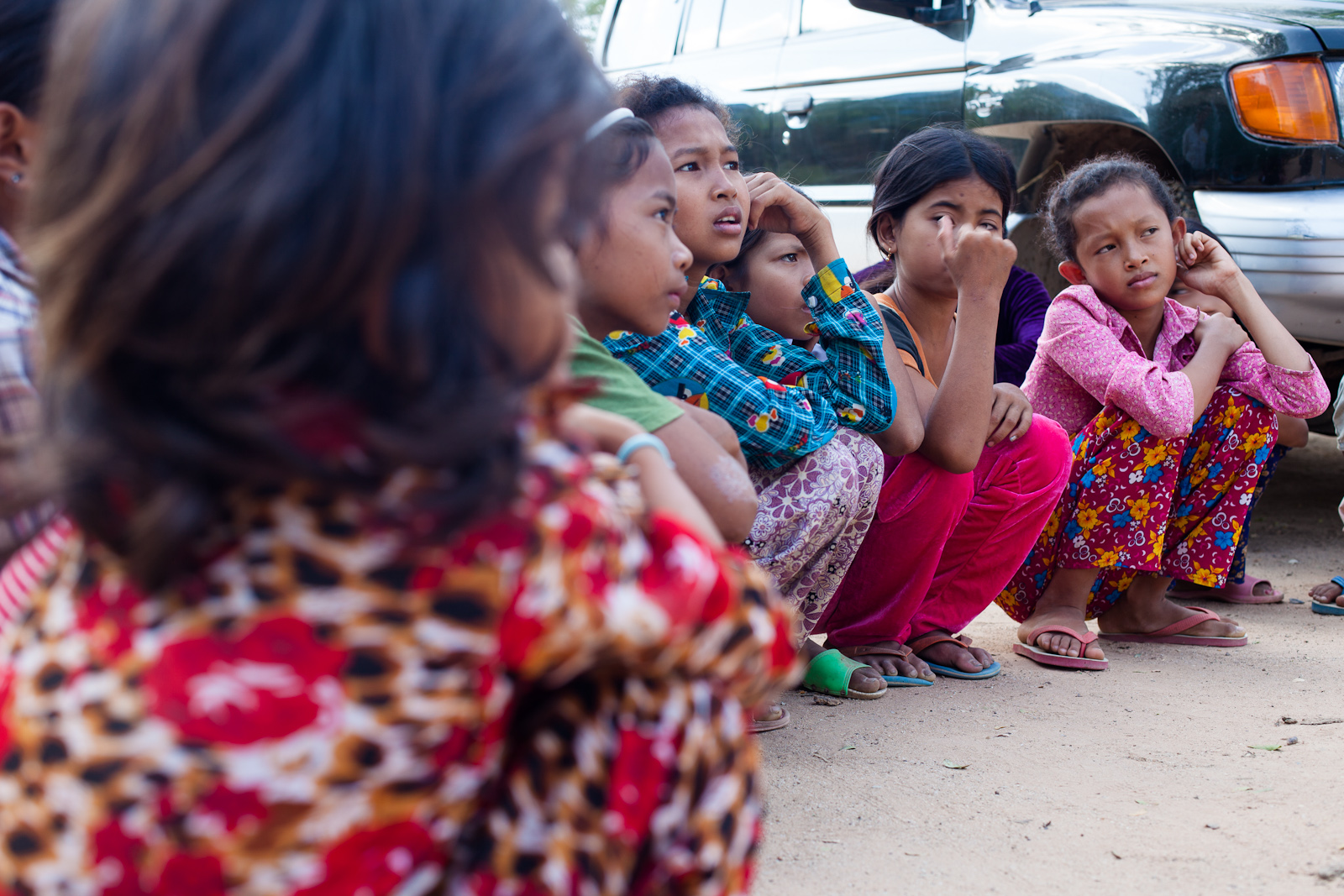
Sita's story illustrates something important at the heart of the Alongsiders movement.
Children growing up in material poverty face all kinds of challenges from malnutrition and neglect, to sickness and abuse. These range from mild setbacks to severely debilitating ones.
Think of what the term "crushing poverty" implies: impossible burdens, lack of hope, and real damage. Yet many children rise up out of the most difficult situations to lead full and productive lives.
That is the miracle of Resilience.
One of the core goals of Alongsiders is to increase resilience in the little brothers and sisters in our movement and thus improve their chances of overcoming their own challenging circumstances.
Yet, the principles we draw on are useful for every parent, and any person working with children.
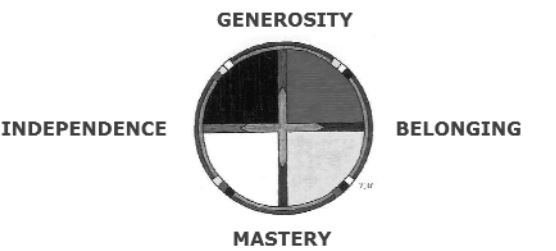
The Circle of Courage identifies four "universal needs" of children that, when met, increase resilience in children. The four needs are Belonging, Mastery, Independence, and Generosity.
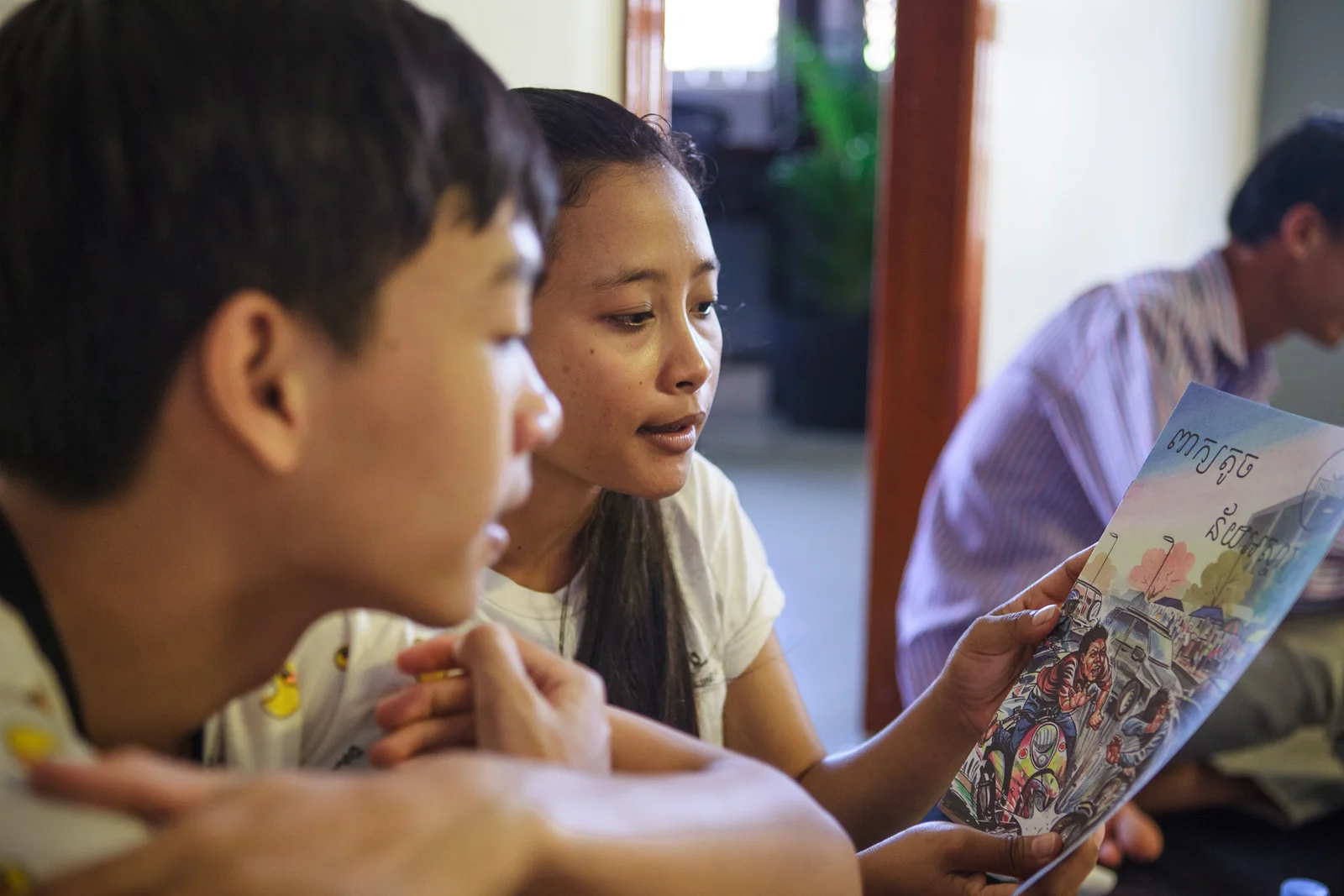
Alongsiders look at a comic book in training
Everything that an Alongsider mentor does with their little brother or sister helps strengthen these four areas. And that loving relationship is bolstered by our three year comic book curriculum which is designed to address different aspects of these four needs:
- Belonging.
Every child has a deep yearning to know they are accepted and appreciated, that they are part of a loving family and a welcoming wider community. If they can’t find that in a healthy group, they will join a gang or other dysfunctional community in order to meet that need. Rather than simply warn children against gangs, we seek to address the deeper need for connectedness by helping children to stay and thrive in their own families and communities with their Alongsiders and the local church who walk with them. Comic book topics related to Belonging include lessons on forgiveness and resolving conflicts.
- Mastery.
Every child needs to learn how to solve problems and take steps to achieve goals. They need the encouragement of achieving small successes. Through these ordinary breakthroughs, they find motivation and develop confidence. Alongsiders encourage their little brothers to stay in school, a proven route out of poverty, and they have important conversations about future goals and direction. Some lessons that relate to this need are our lessons on perseverance, servant leadership, and discipleship.
- Independence.
Children also need to learn responsibility, autonomy and self-control in order to grow into healthy adults. The greatest forms of responsibility and self-control are not based on fear or obligation, but on love. With shortcuts and corruption all around, Alongsider mentors are themselves powerful models of responsibility in action as they choose to commit their lives to their little brothers and sisters and then follow through. Comic book lessons that build this area include our lessons on decision-making, courage, and setting goals.
- Generosity.
Children long for purpose, but children who lack an innate sense of value will be too focused on their own needs to show generous concern for others. Alongsiders see the value in their little brothers and sisters and then give generously to them (of their time and commitment) in love. They invite their little brothers and sisters to grow up and do the same for others, not as an obligation but as an opportunity. Comic book lessons that build this area include our lessons on gratitude, service, and how to become an Alongsider.
Step-by-step over time, building up children in these four areas nurtures their God-given resilience so they can "rewire" their thinking and lead transformed lives that defy expectations.
And that is how kids defy the odds and bounce back - from the most incredible obstacles and suffering.
(*Sita's name has been changed for privacy)
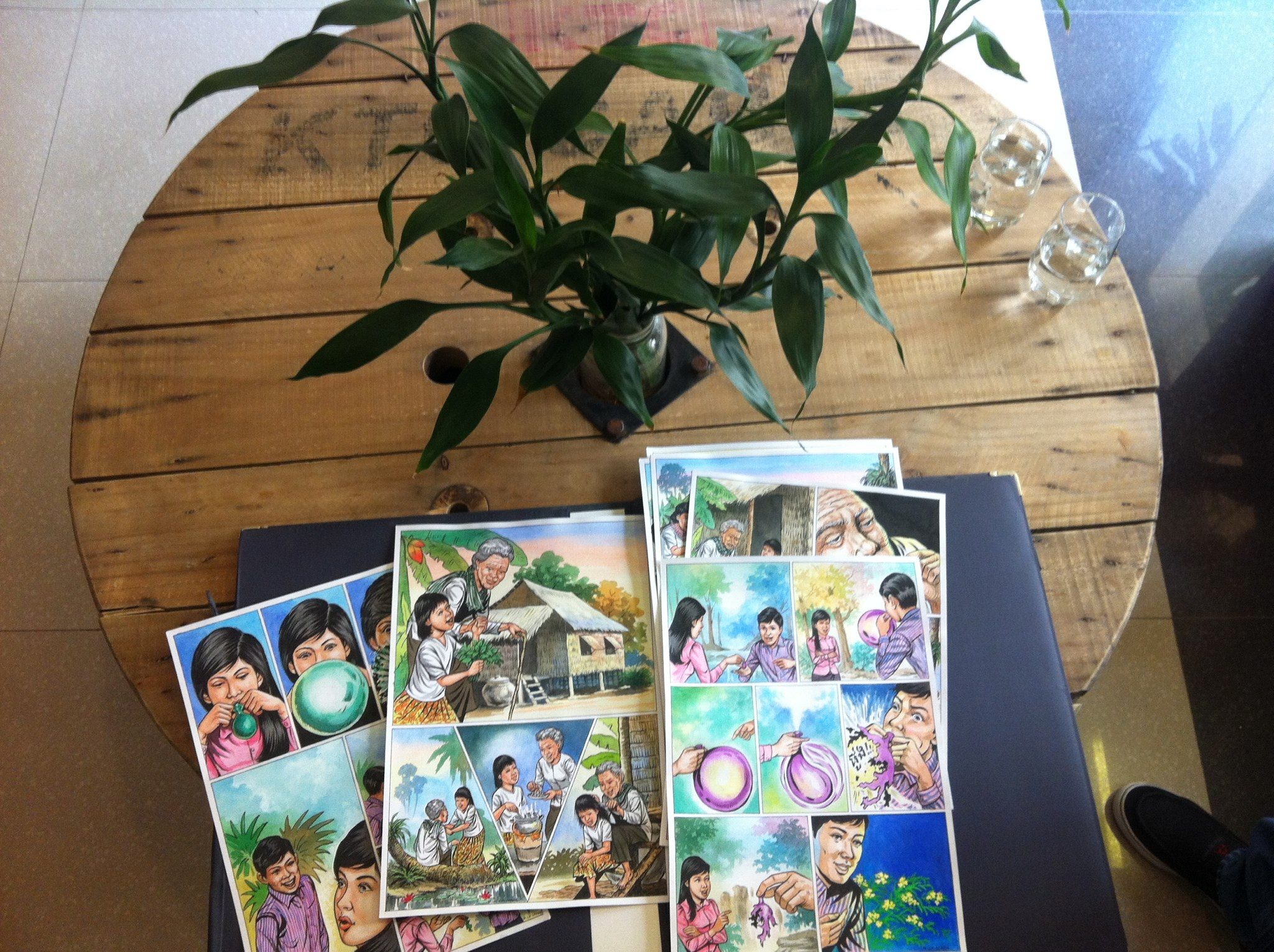
5 steps to creating a life-changing comic
What does it take to create a comic book simple enough for a semi-literate child to understand, but profound enough to spark change in that child's life?
What does it take to create a comic book simple enough for a child to understand, but profound enough to spark change in that child's life?
What does it take to put a brand new comic book like that in the hands of every Alongsider mentor each month?
Truly, a significant amount of thought and work goes into each comic. Here's the process...

Step 1: The Topic Meeting
A comic book lesson begins life in a Topic Meeting with members of the Curriculum Development Team.
Team leader, Hitomi Gray, and her assistant, Puthida Bou, undertake the preliminary research: gathering background information, considering how the topic normally plays out culturally and counter-culturally in Cambodia, and prayerfully considering relevant Bible themes, stories or verses.
All this background data is brought to the Topic Meeting for prayer and further brainstorming with the rest of the team. By the end of that meeting, we have agreed on the main objectives of the lesson, and we have a good sense of where we want to go with it.
Step 2: The Storytelling Circle
The next step is to form a Storytelling Circle. Alongsider mentors (some who were "little brothers or sisters" formerly) are central to this storytelling gathering. The non-Cambodians take a back-seat role. It’s not that Westerners can’t contribute, but the Cambodians know best what story elements are the most authentic and compelling in their own culture.
All of the comics are based on real-life experiences of poverty and struggle shared by the young people at this Storytelling Circle. Over the course of two or three hours, stories and lessons are crafted into engaging plots that can be told visually in just a few pages.
We make sure the story incorporates essential storytelling techniques such as conflict, drama, character development and clear messaging.
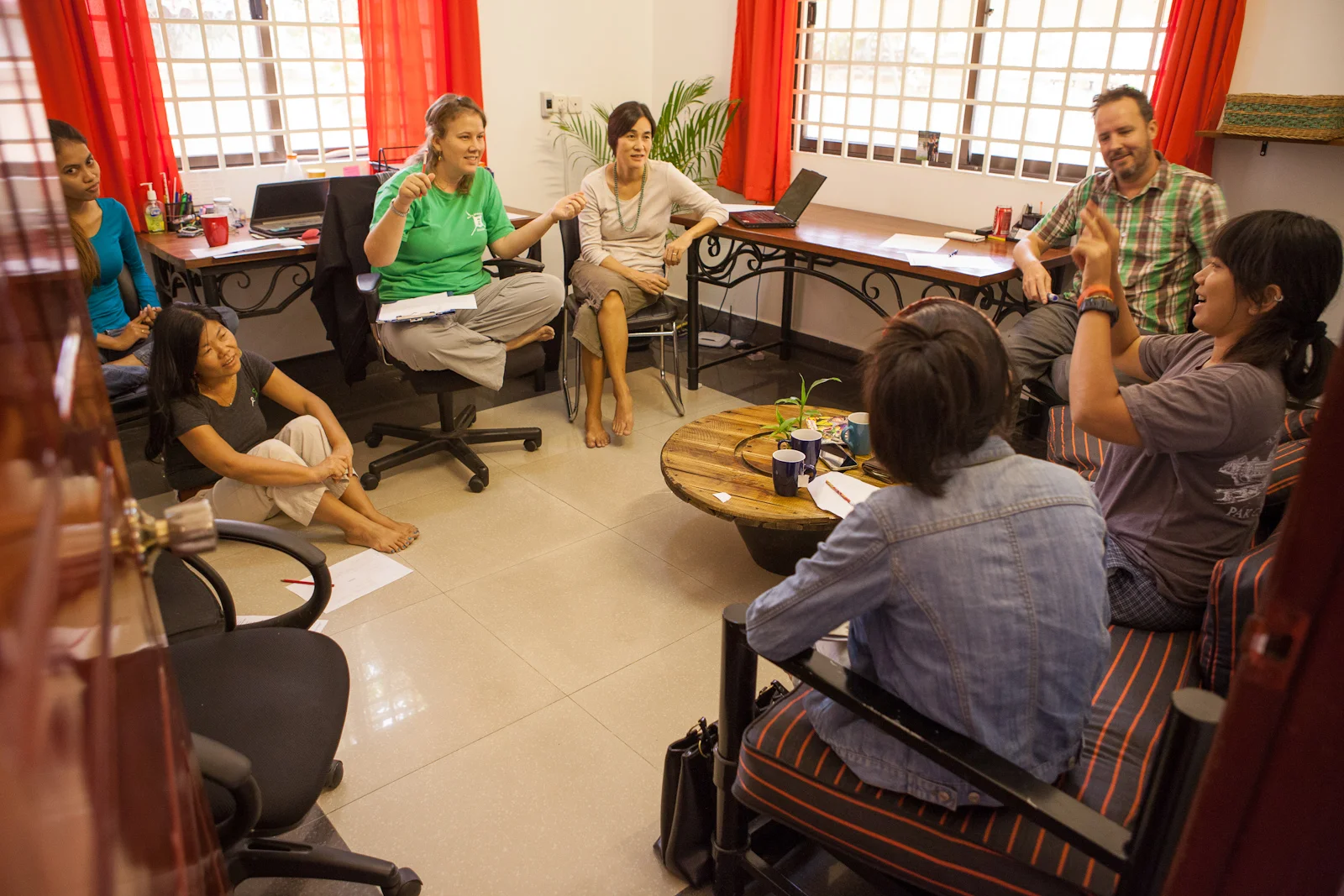
A recent story-telling circle in progress ... crafting a story on the topic of Fearlessness.
Step 3: The Artwork
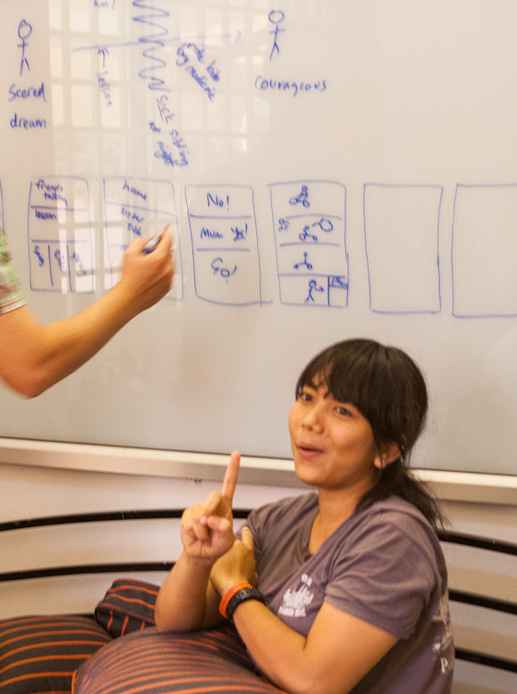
Once the rough story is outlined on a whiteboard, Puthida, an accomplished artist herself, takes a photo of what has been imagined by the group. She then hand-draws, using electronic paper and pen, a detailed storyboard of the 10 pages for the comic.
Finally, the story is ready for the artist, a Cambodian pastor named Met Sokha. Puthida meets with Pastor Sokha and goes through each page to make sure he understands the story and her drawings and notes.
Step 4: The Lesson Components
For the next week or so, while Pastor Sokha hand-paints each page (typically one day per page), Hitomi and Puthida develop relevant questions that the Alongsider mentors can discuss with their little brothers and sisters after reading the story. They also create one or two practical action steps to apply the lesson. These are essential, so that the lesson doesn't just remain as head knowledge.
For example:
1) with your Alongsider mentor write one short term goal and identify what you will need to sacrifice in order to attain it (in Perseverance, Lesson #10), or
2) list five adults who you can trust and who you will talk with if you are ever touched in an inappropriate way (in Good Touch/Bad Touch, Lesson #3).
Step 5: Design, Test Test Test and Print
When the artwork comes back from Pastor Sokha each page is carefully scanned in and edited using Adobe InDesign. Speech bubbles and story boxes are added and the various components laid out for printing.
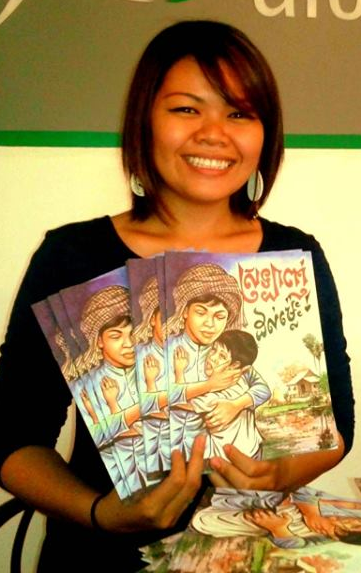
The final product!
The draft comic is now ready for testing and correcting. Puthida takes the comic out and about to test with neighborhood children. We also test it with a small selection of Alongsider mentors and a couple of proofreaders. Any errors will hopefully be picked up at this stage, but we are mostly checking that the main message and story is easily understood.
When everything is checked and signed off, we work with a local printer to print the comic. All going well, we have the comics, printed and delivered to us two weeks later, ready for training and distribution!
These comics are gaining a following. Other organizations are taking notice. One NGO reprinted 10,000 copies for distribution in schools and we're supplying free copies to various schools, churches and orphanages.
And of course, the curriculum is now being translated back into English, as well as developed and contextualized locally in other countries such as India and Indonesia.
All this effort, prayer and hard work is for one purpose: the transformation of young lives. So, join us in praying that the Spirit of God will work in and through us, and these comics, as they find their way into eager hands across Asia.
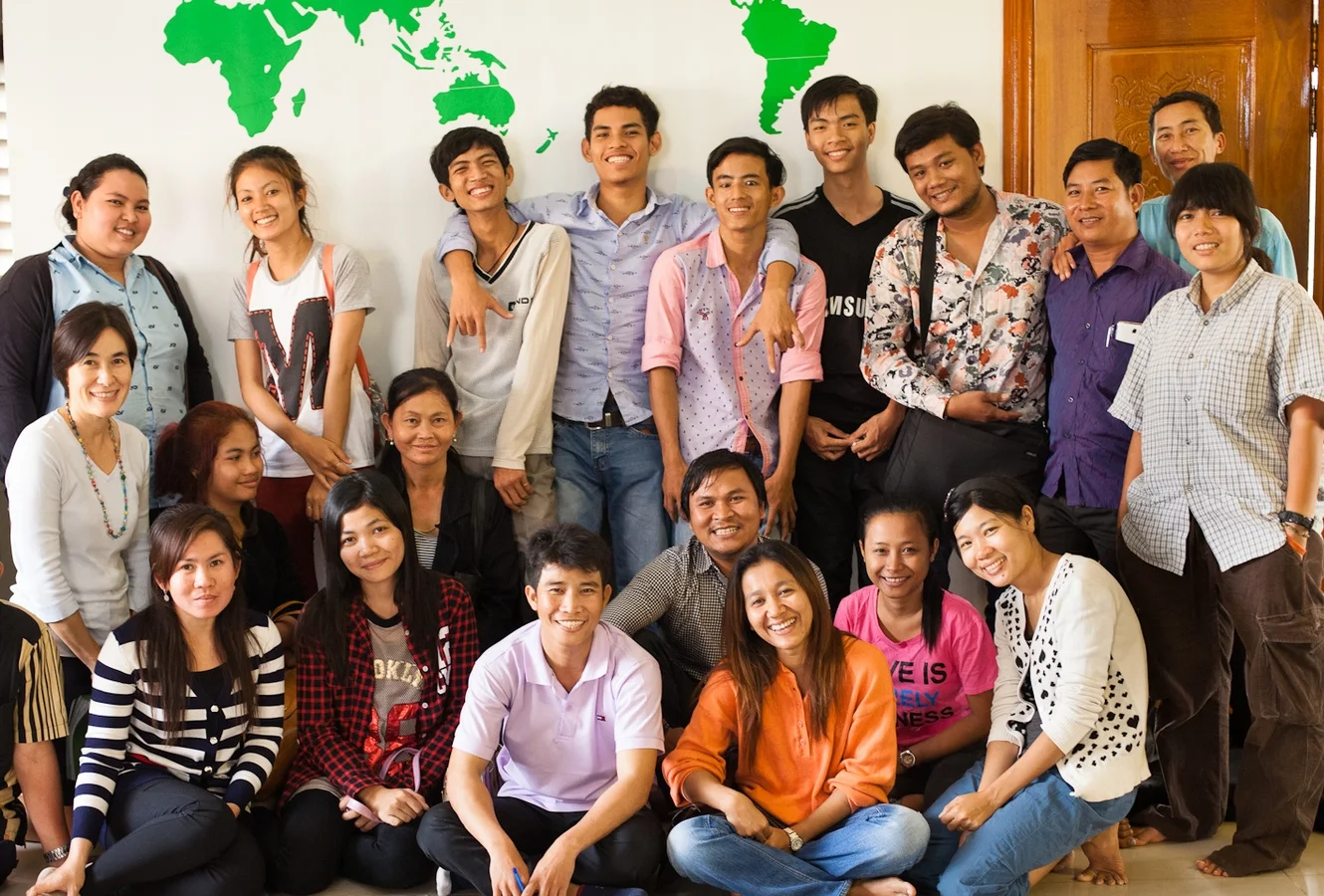
A comic way of developing our greatest gift
Grassroots leaders in Cambodia are using an innovative approach to training...
Every three months Alongsider group leaders from several provinces around Cambodia gather at the office in Phnom Penh for training. These are moments to reconnect - and to equip, listen and provide them with fresh encouragement and direction.
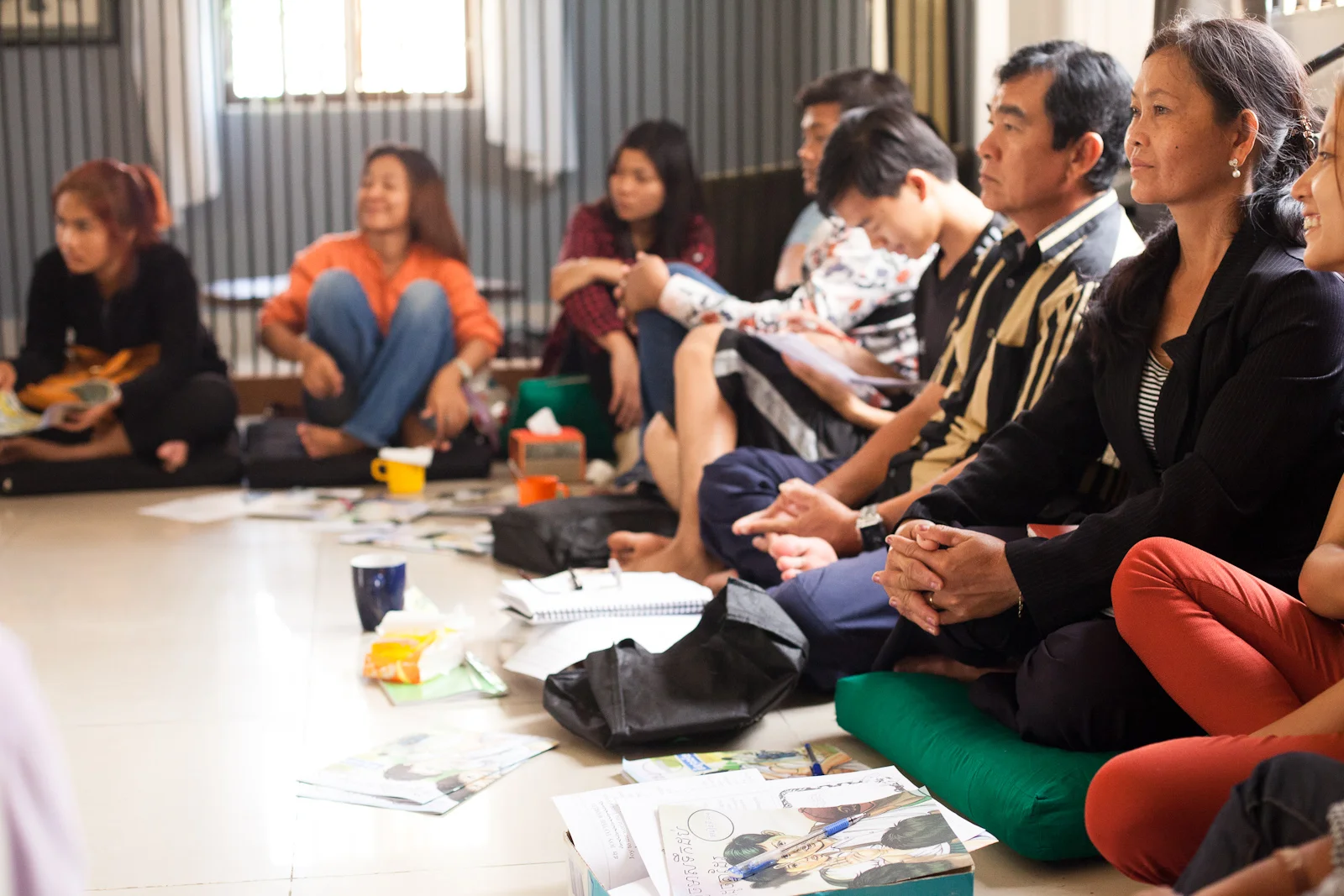
“I came with my pastor. When we go back he will have a meeting with the other Alongsiders and teach them how to read the books with their little brothers and sisters.”
It's at these meetings that staff distribute the curriculum: always three new issues of our comic books for Alongsiders. The leaders look at each story and discuss how mentors can read them most effectively with their little brothers and sisters. Then they take them back to their groups to use for the next three months (1 comic book per month).
Each book comes with discussion questions and one practical way to act on the lesson in the story.
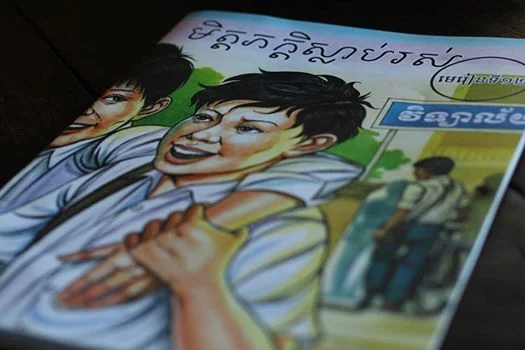
In a society that still struggles to provide most citizens with a meaningful education, it's no small step for an Alongsider to read and learn together with her little sister. We can't take it for granted that she'll know what to do or feel confident if we just put materials in her hands, so the training is vitally important.
Typically part of the training consists of the coordinators role playing how to read through the comic - eliciting questions and observations from the "little brother". These sessions are becoming increasingly interactive. There is always lots of discussion about the topic (whether drugs, gender, grace or some other Biblical theme). The recent meeting included lots of discussion in pairs.
“I like the comics. The pictures are pretty and the stories are meaningful. They relate to real social issues and problems, and they lead the kids to learn and relate to God.”
Each comic has an insert with questions to discuss and one suggestion to act on the embedded lesson.
One of the comic books introduced last week focuses on how boys and girls are often valued differently and treated with different standards. The two main characters are twins, a boy and a girl. The conflict arises when the girl is treated badly by some boys who are (it is implied) looking at illicit images on a mobile phone.
The story resolves as the boy comes to realize that his sister and mother do most of the household work and deserve, at the very least, his respect and help. Then he begins to change his own actions accordingly.
The application activity encourages readers to compose letters of appreciation to their mother or female guardian. The supporting Bible passage is Psalm 139:14: "I praise you because I am fearfully and wonderfully made. Your works are wonderful, I know that full well." We are all, male and female alike, wonderfully made by God and deserving of value and respect.
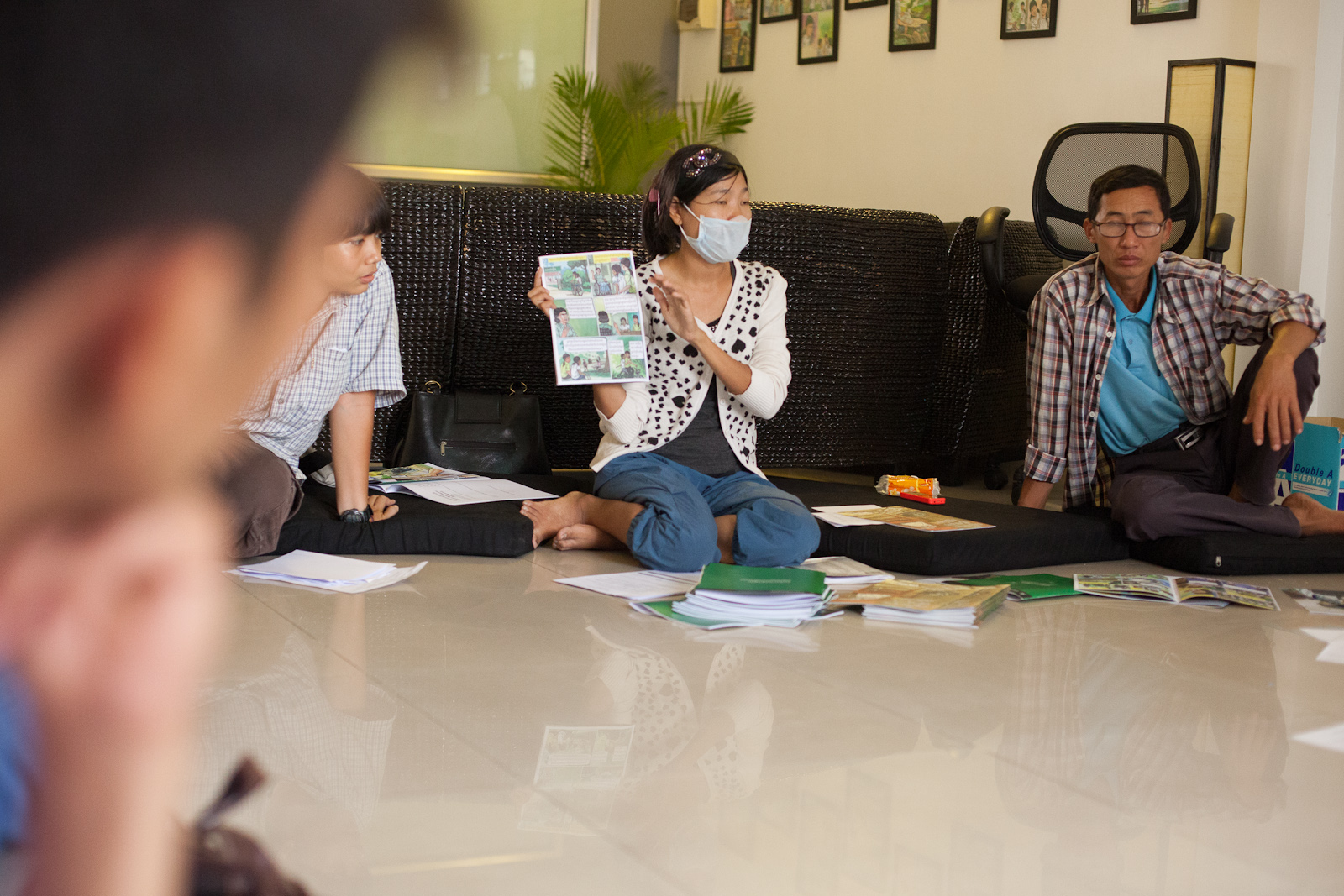
As movements go, there is no explicit call for revolution here. Yet, as in the gospels, seeds are being planted with the potential to transform not just lives but families and society as well.
We often say that Alongsiders is a movement. Some movements are headed by high profile leaders. Others have flashy programs and structures. But Alongsiders is low key; our leaders come from the margins themselves; and our methods are so simple it's hard to spot them. This gathering of "unremarkable" leaders from "out of the way" places is about as "big" as it normally gets.
The most tangible material assets we work with, comic books, are disposable (albeit strategic and lovingly developed) tools - but they feed and nurture our real strength: transforming relationships.
We're proud of our comic books. We're especially proud of the people who read them together.
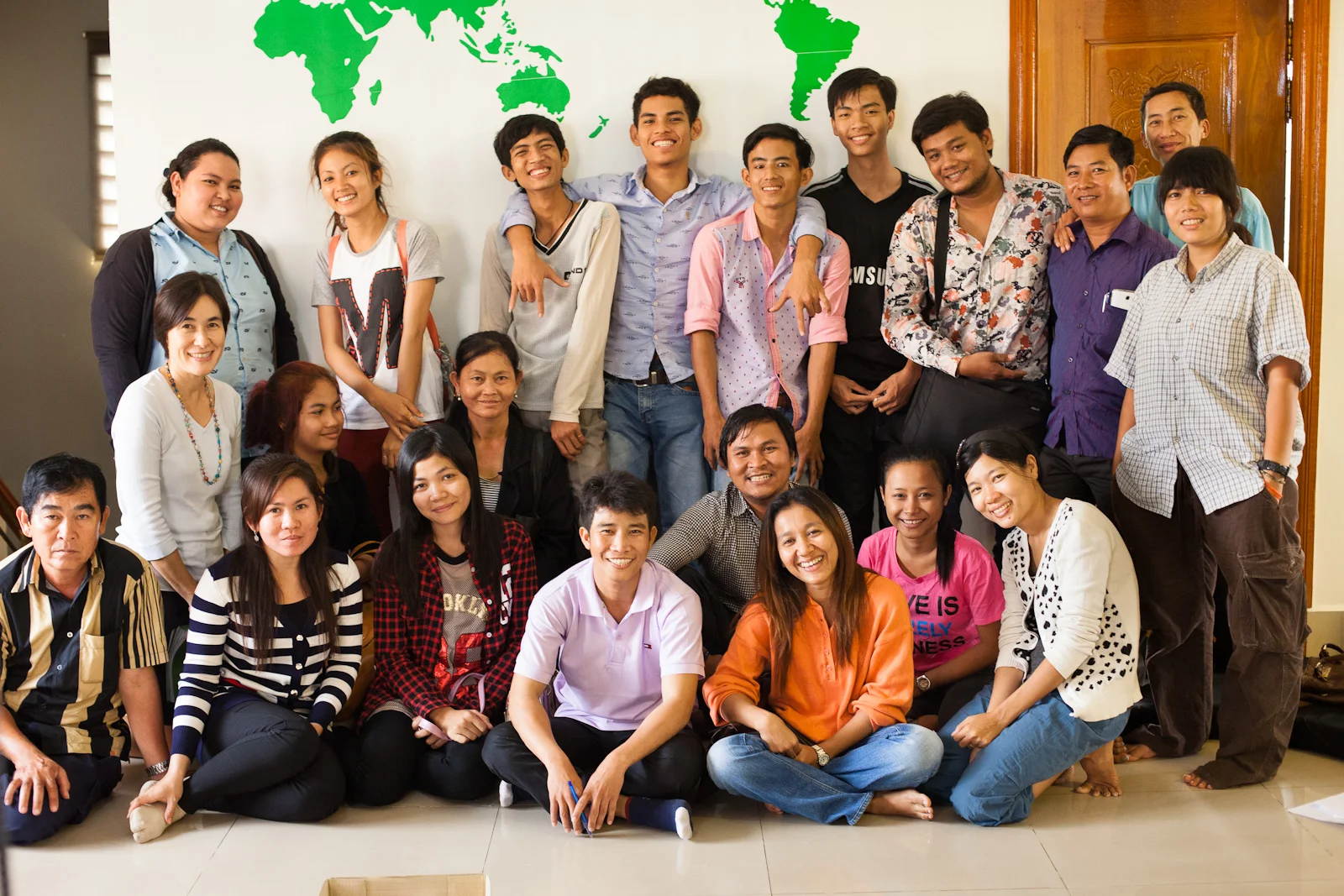
Group leaders and Alongsiders at the training last week
How to keep a movement going
Keeping a movement growing and thriving is not an easy task. But these two leaders have figured some things out...
Movements that change society emerge and grow in villages, neighborhoods, streets, and workplaces as regular people actively take their parts. Organizations may tend to centralize leadership and power, but movements must allow leadership and power to reside at the (human) edges.
Our goal at Alongsiders is to empower and release movements of young people who make long term commitments to walk alongside the most vulnerable children in their own communities. Such movements would transform individuals, churches, and society.
Big words. But these high hopes boil down to lots of young people in scattered communities at the margins of society and what they do with the vision entrusted to them.
Last week both Serey and Phearom, who direct and coordinate Alongsiders Cambodia, went to a village in Kandal Province to meet with a group of Alongsiders who joined about a year ago. The main purpose was follow-up, and also to orient some new Alongsiders.
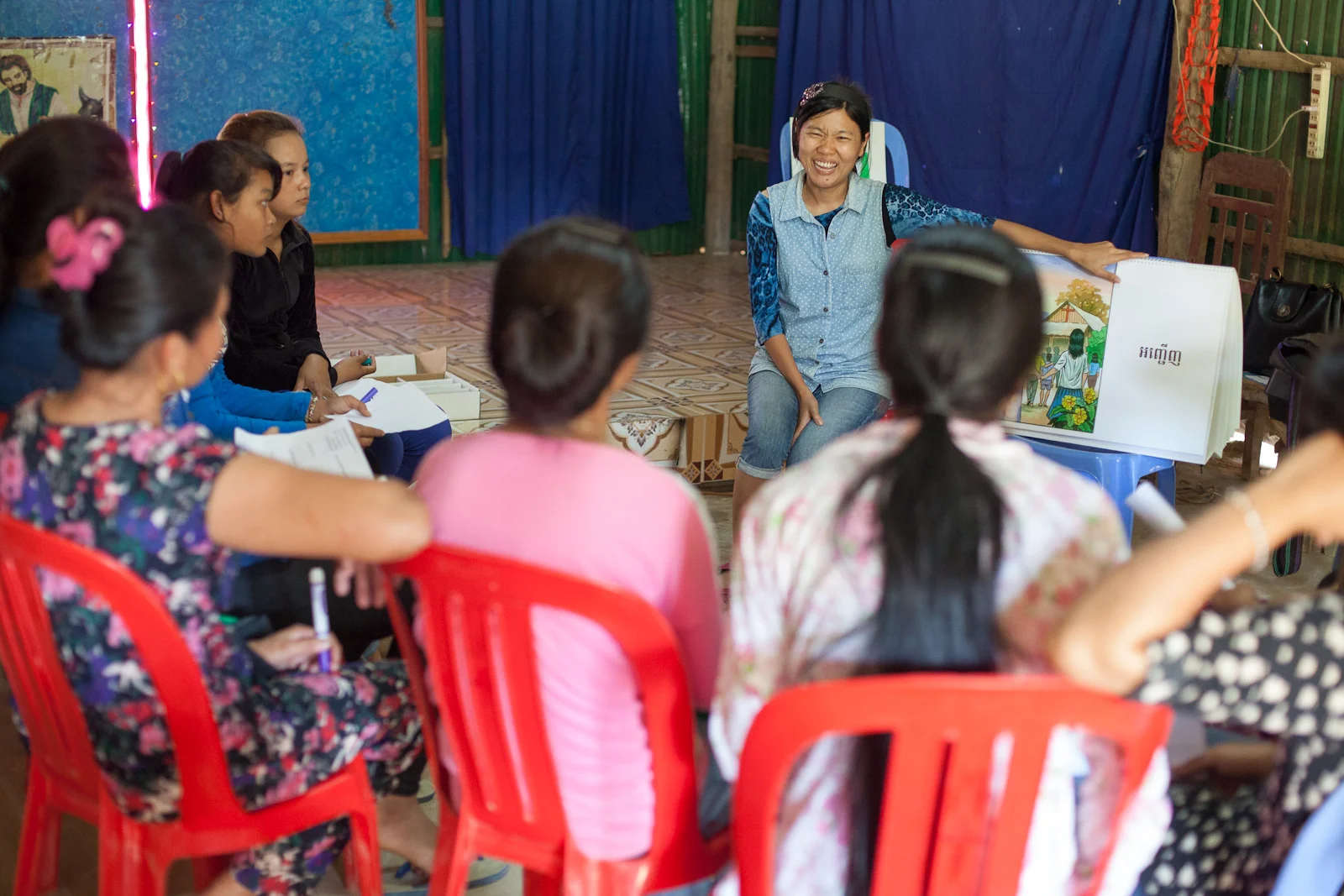
Serey teaches the 8 commitments of an Alongsider - using a flipchart
Becoming an Alongsider is a long-term commitment based on trust. Most of the time no one is looking over their shoulder to see if they spend time with their little brothers and sisters each week. They aren't paid or rewarded, except for an invitation to national camp each year. What they do flows out of motivation and character qualities like faithfulness, generosity, and a willingness to share as they learn and grow - all rooted in the love of Christ.
Yet most Alongsiders are young people whose character is still forming. It's a process of discipleship for them. They need words of encouragement and refreshment of the vision, plus examples to follow. That Sunday afternoon, Serey and Phearom took time to travel to the village and meet face-to-face. They carefully reviewed what Alongsiders is all about and talked honestly.
“When we meet with a group that has been going for six months or a year, we remind them of why they became Alongsiders and encourage them. They also hear what the others in their group are doing. That’s important, because they may not realize all that can be done. Many of them do better after we visit. Follow-up is really important, but it’s also a challenge as we grow.”
Serey was an Alongsider herself for years before she became the national coordinator. She epitomizes faithfulness in her leadership and in her ongoing relationship with her own little sister. She earnestly desires Alongsiders to be committed and faithful.
Phearom came to Alongsiders after serving in a national youth organization. He is passionate about education and mentoring. He hopes Alongsider mentors will be a potent force for education and change in Cambodian lives and society.
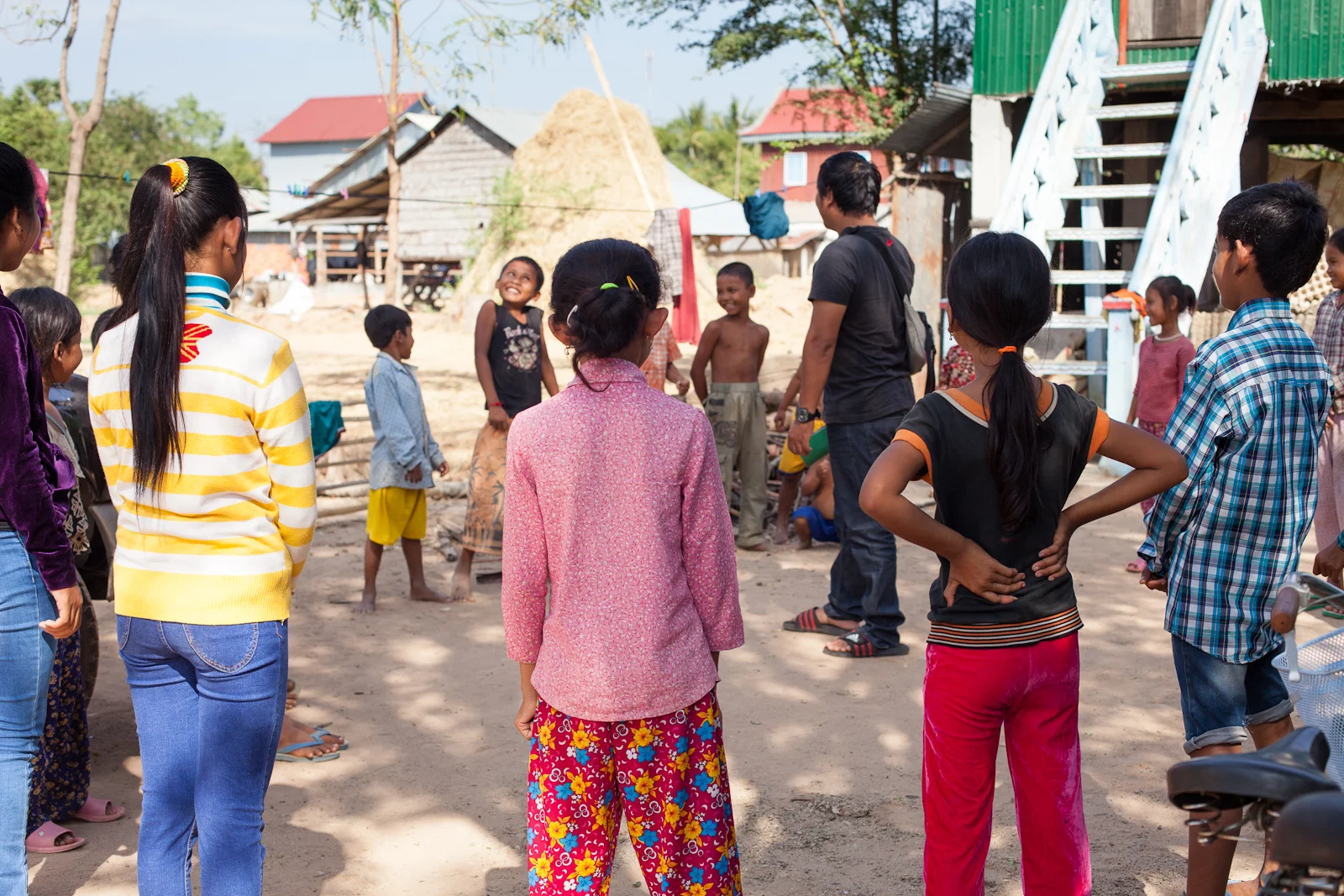
Phearom leads a group of little brothers/sisters in a warm up game
On this day, they trade off roles. Serey goes through the vision and expectations in all seriousness, while Phearom goes outside and organizes fun games for a group of little brothers and sisters and their friends. Later he comes inside and leads a discussion about child protection issues, and he encourages the Alongsiders in his own humorous way.
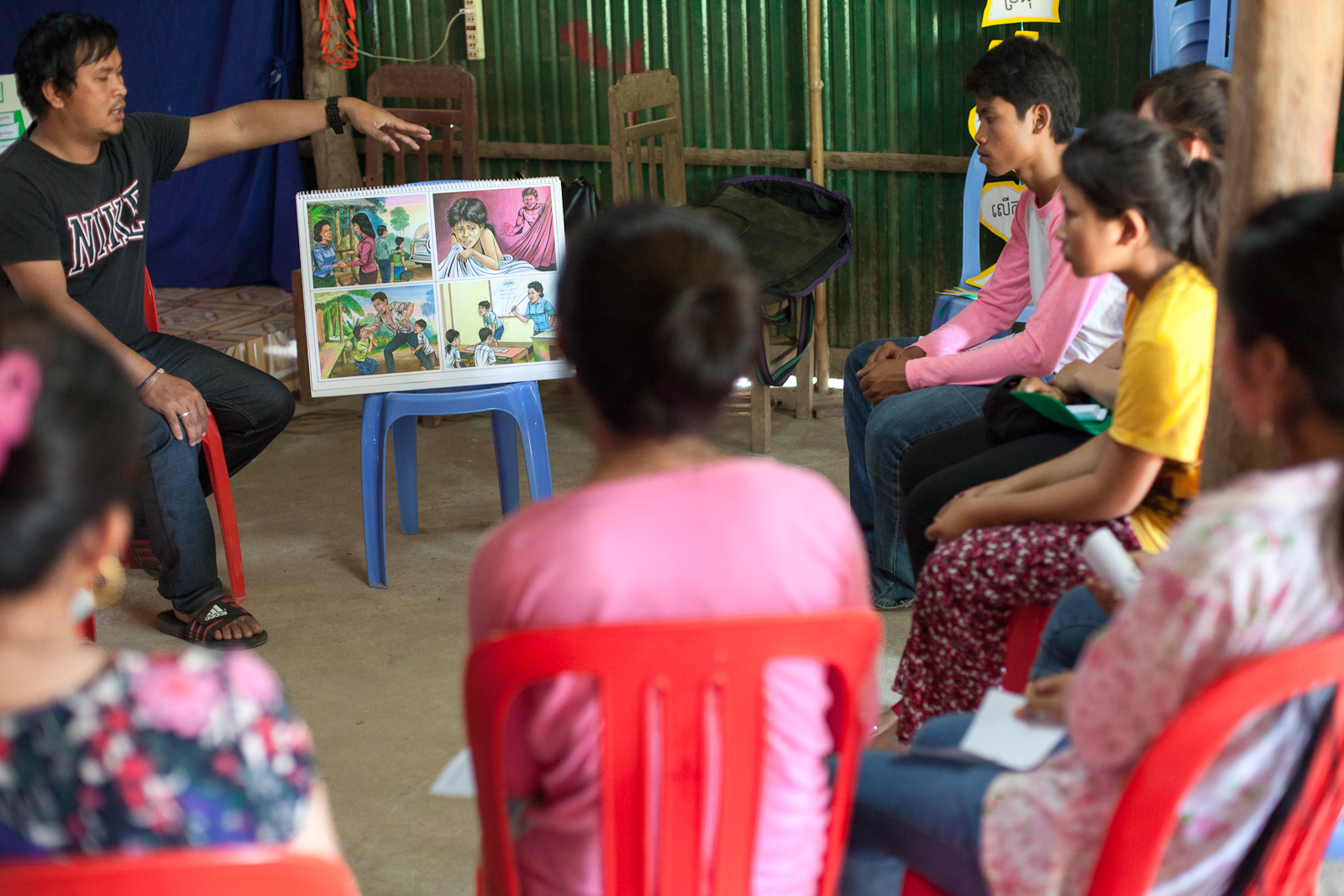
Phearom teaches on how to recognize trafficking or abuse... and how to respond.
The two compliment each other: Serey's stability and Phearom's zeal. They are both very earnest about Alongsiders. Afterwards they offer candid assessments: two or three in the group seem very dedicated, a couple are less sure. But it was a good meeting.
And then it's time to go and release the movement back into the hands of these young people. And trust God.
The Body of Christ is moving.
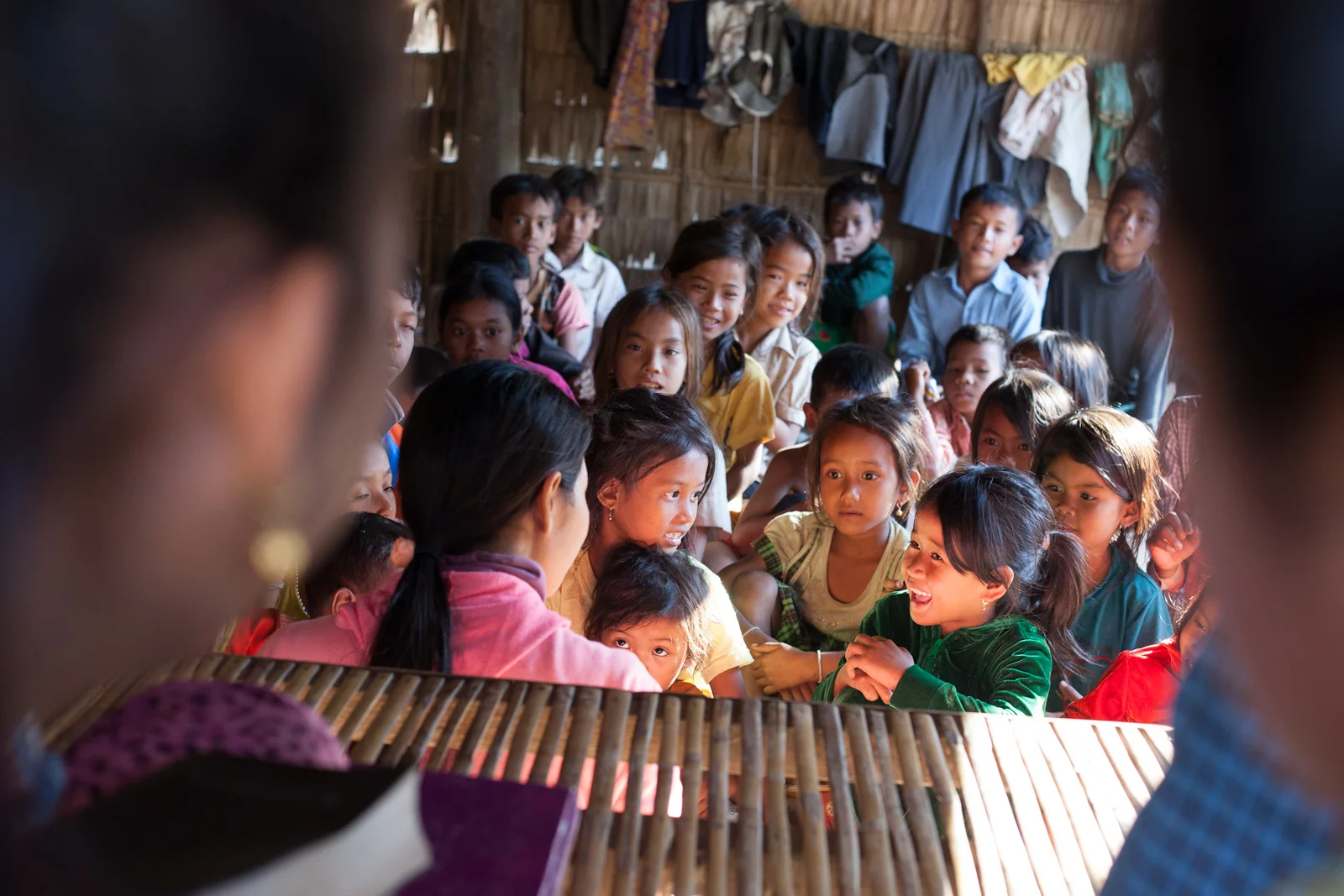
This young leader faces a big dilemma. Her story will inspire you.
There are extraordinary people hidden just out of sight at the margins of society.
“I am less interested in the weight and convolutions of Einstein’s brain than in the near certainty that people of equal talent have lived and died in cotton fields and sweatshops.”
Chanthy is not average. She's really quite amazing and unique. She's an example of why we want to empower and release Cambodians to lead, rather than relying on the tired model of foreigners controlling the wheel.
As Stephen Jay Gould attests in the quote to the right, there are extraordinary people hidden just out of sight at the margins of society.
Chanthy is a farmer's daughter with exceptional energy and capacity. Though few, perhaps, are quite like her, many capable yet unrecognized Cambodians are ready to love and lead in surprising ways.
Four months ago, Chanthy gathered a dozen or so youth from the rural church she pastors, and they all became Alongsider mentors together. She is the small group leader. On the day they officially signed up, she was charged with excitement as her new little sister stood beaming beside her.
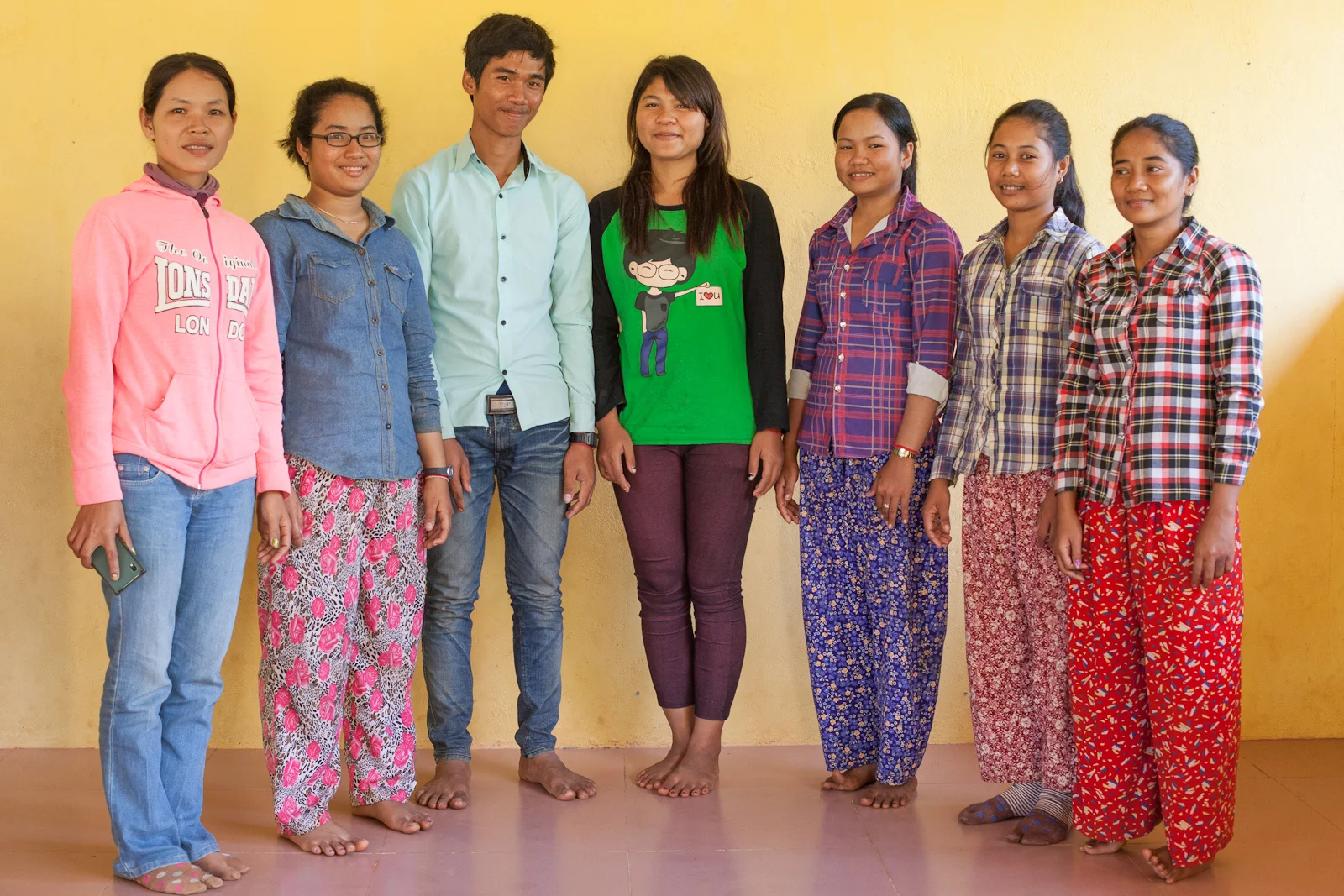
Chanthy, left, with six of the new Alongsiders from her community.
That evening she returned home after dark and helped her parents tend a tremendous pot of curry simmering over coals outside their house. It cooked all night, and the next morning they rose together before dawn to crack coconuts and squeeze the pulp, shell garlic, and add the final spices. About 6:30 a.m. people began arriving and leaving with enough delicious food to feed their families. They fed more than 200 people that day.
Chanthy's family isn't rich. They saved for months for that day. It was during the week of P'chum Ben, one of the most important Buddhist festivals in the country. As devout Buddhists, Chanthy's family had brought food to the local temple every year and given it to the monks. In theory, the food they gave was supposed to help feed the poor, but that didn't always happen. After coming to faith in Jesus, the family decided to continue to tradition, but they elected to give food directly to the poorest families in their community.
This year was the first time they tried it.
Chanthy had come to faith first. She walked over to the Christian church to learn what Jesus was about, and she never turned back. That was just over a year ago, and it didn't go over well. "My parents scolded me," she says. It must have been a serious scolding, because she moved out of her home and slept at the church for three months. But it was her parents who relented, and soon after her whole family put their trust in Jesus as well.
Chanthy is a force that's hard to resist. At some point in her life she developed a very strong character.
She was born in a refugee camp in Thailand. Her parents had fled there when Vietnam invaded Cambodia in 1979, and they stayed for the next twelve years.
When the family returned to Cambodia they erected a shelter on a piece of land in an isolated village north of Phnom Penh, and they began the nearly impossible task of starting from nothing as rice farmers. After some years of hard-scrabble existence, the family desperately needed a break, and Chanthy provided it. She went to Malaysia, where she took a risk, employing herself as a nanny for a rich family. Many Cambodian nannies have endured tragic abuses, but fortunately Chanthy was hired by a good family. They paid fairly, and she even got to travel to Japan and Korea with her employer on business trips. When she returned home, she gave all the money she had saved to her parents, and they used it to build their house.
Now Chanthy is the assistant pastor at her church. The "real" pastor, she explains, lives in Phnom Penh and visits once a month.
She doesn't receive a salary. She rises at 3 a.m. daily to help fix food for the family. Then she goes to a nearby high school where she spends the morning selling snacks to the students. She makes about $1.25 each day.
On Sunday she drives a wide loop on her motorcycle and visits five "house churches." On the way, she buys a huge load of snack food using her earnings. At each stop, a crowd of children gather and listen to her share from the Bible. A few adults hover nearby, some listening and others idly chatting. When she finishes teaching, she distributes the snacks and moves on.
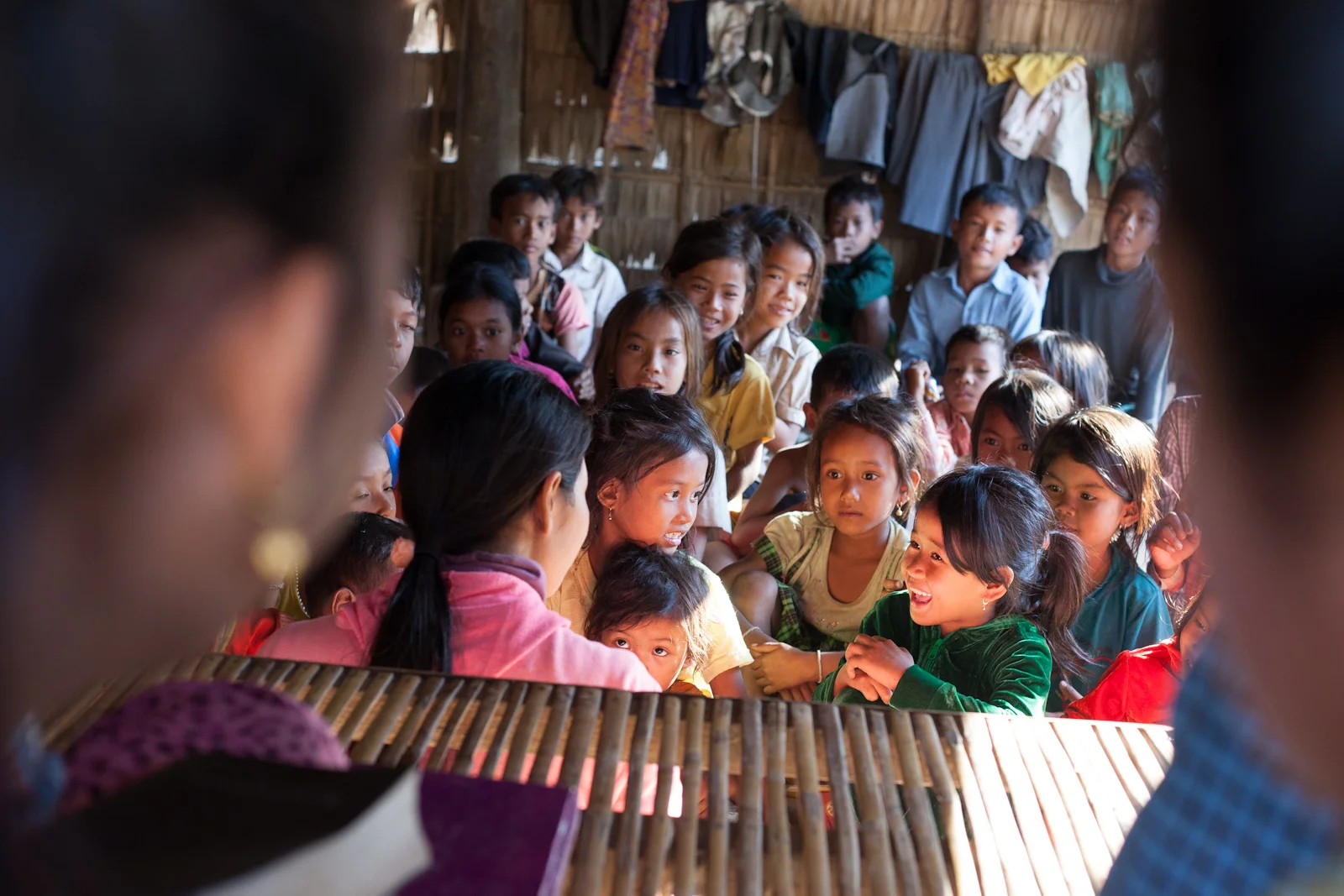
Chanthy teaches young children from the Bible. Afterward a group of older youth took their place and Chanthy led them through a more advanced version of the same teaching. Chanthy is learning how to teach the Bible at a Bible school in the nearby city, and each week she teaches what she recently learned there.
"I love children," she says, and she repeats herself until she is sure she has made herself clear. "I really love children. People ignore them and treat them badly, especially poor children, but I love them."
But later she admits she dreams of leaving the countryside, and she worries what will happen to the children without her. She points to the beauty all around and flatly states that she hates the crowded streets and noise of Phnom Penh. But she wants to learn more and expand her life. She feels, well, marginalized. "I'm not doing anything here, she says, oblivious to the incongruity in her words.
Herein lies the challenge. The big dilemma.
Alongsiders is working with young leaders at the grassroots. They are doing things and going places foreign workers and even Cambodians schooled in the cities could hardly emulate or follow.
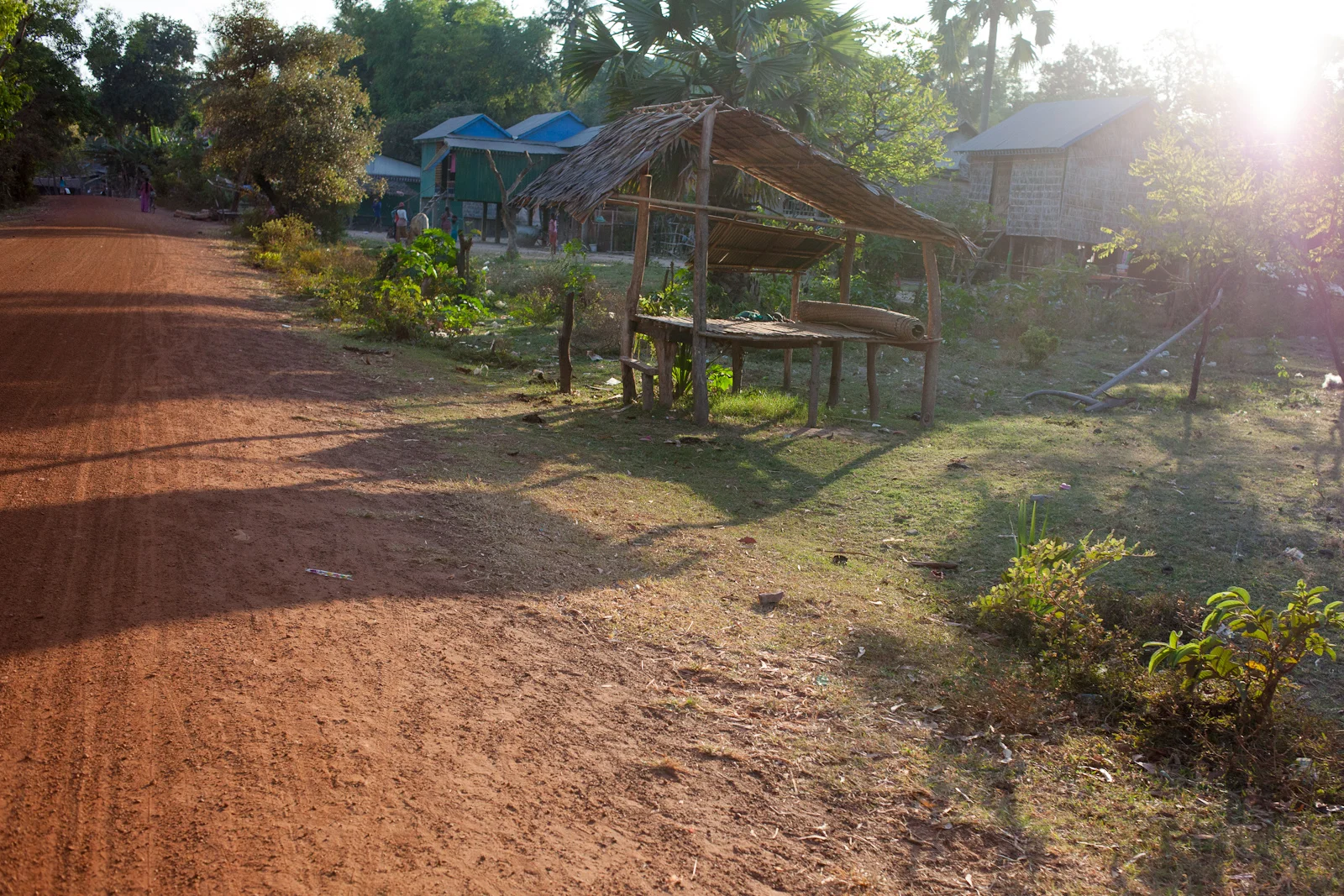
Yet they live in a world that tells them relentlessly, just as it tells us, that they are insignificant unless they land a particular kind of job or reach a certain status. If they shine as leaders, there are companies and big-budget organizations that will hire and take them away.
But we will not be discouraged. Right now the work of enduring beauty and significance in the Kingdom of God is being done by Chanthy and her fellow Alongsiders!
We often celebrate the children of Alongsiders - the little brothers and sisters - but today we're grateful for the Alongsider leaders and mentors, who are more often than not young men and women who have grown up at the margins themselves.
May we have eyes to see them, a vision that includes and expands with them, and a willingness to trust them with it. And let us learn to walk with them without using or corrupting them (and that, in itself, is a challenge worthy of writing about another day).
Thank God for them, and pray that the Lord of the Harvest - who must have an affinity with farmers judging by the way Jesus taught and talked about Him - will raise up more amazing and unique leaders to serve as Alongsiders.
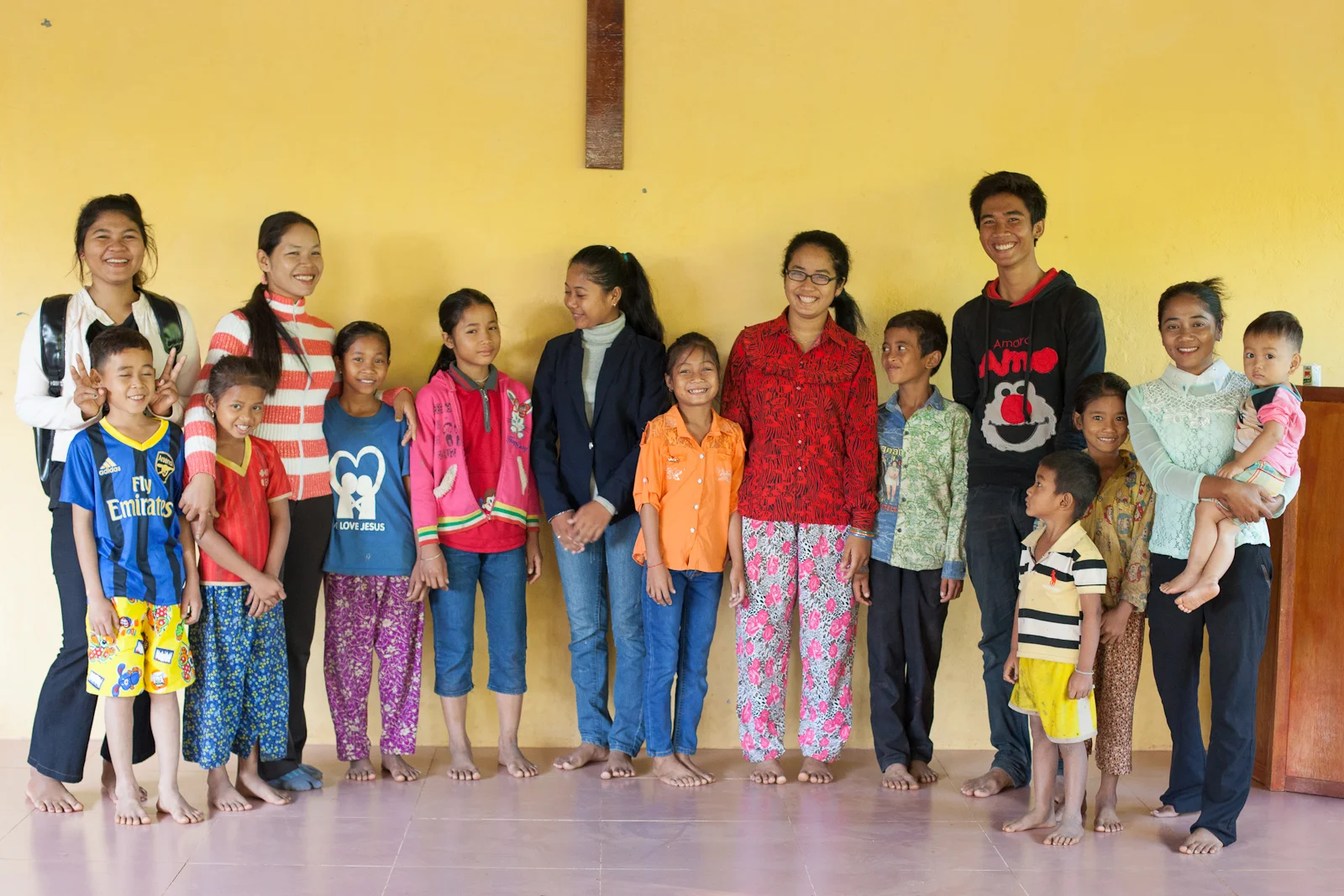
They might be giants
You'll be encouraged to see the significant progress a group of Alongsiders and their little brothers and sisters have made after four months...
Four months ago I traveled by bus, boat, and motorcycle to Kampong Leng, a remote farming community north of Phnom Penh, to witness a group of new Alongsider mentors signing up with their newly chosen little brothers and sisters. A few days ago I went back to check on their progress, and this is what I saw.
Even in the dry season, Kampong Leng is a lush, green country, especially for one accustomed to Phnom Penh's concrete skylines and motorcycle rivers. Most land in Kampong Leng that isn't covered in jungle or water is cultivated to grow rice and a dozen other crops. Fruit trees spring up everywhere, even on the school grounds.
When I arrive at the local church, five of the Alongsider mentors are gathered to meet me with their little brothers and sisters. They have come from all directions, and one has traveled several miles on his bicycle.
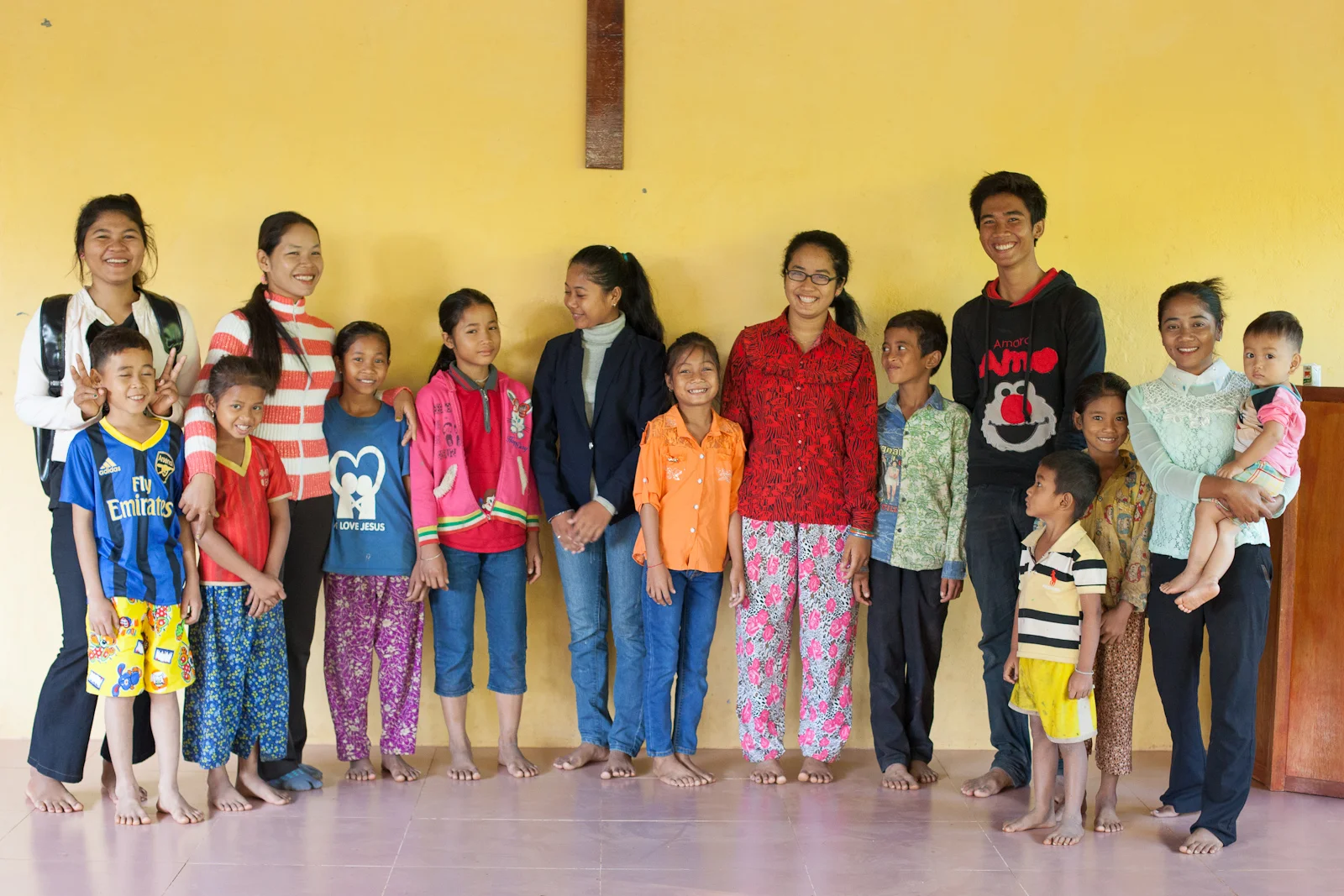
Alongsiders with their little brothers and sisters and a few extras. Chanthy is wearing orange and white stripes. Piya and her little brother are on the right in yellow.
For the past four months these new Alongsiders have been meeting with their little brothers and sisters once a week on average. I ask whether meeting regularly is a challenge, and I receive an education.
Most families in Kampong Leng are rice farmers, though many are diversifying as family members start businesses, work in factories, and (in dream scenarios) get educated and find salaried jobs. Those families that subsist on farming alone are very poor, usually earning less than $1 per day according to Chanthy, the Alongsiders group leader in the community.
Farmers in Kampong Leng work through the dry season. They can't use the fields near to their homes, so they travel (or relocate) to rented fields closer to the retreating Mekong River.
The little brothers and sisters all come from farming families, so their parents are on the move. Sometimes the children move with them.
The Alongsider mentors are also from farming families. Most are high school students. When they are not studying, they may attend extra classes to learn English or computer skills. Otherwise, if they have free time, they are expected to help their parents by working in the fields or at home.
Making time for their little brothers and sisters, even once a week, is a significant gift - and an effective one!
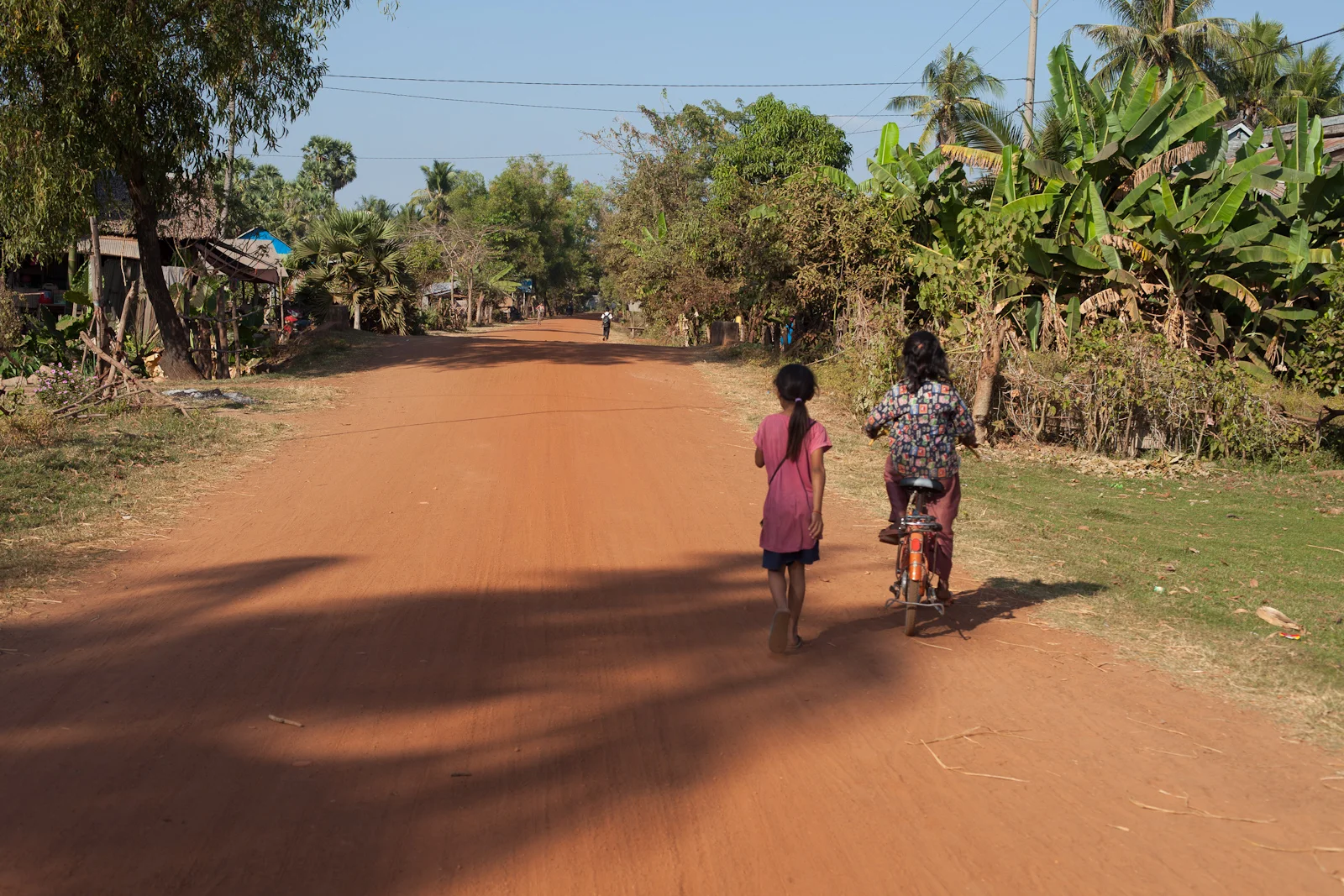
After my last visit I wrote about Piya, an 11 year-old who cares for three younger siblings every day while her parents are away working. Recently, Piya has started attending school about three days a week. In order for her to study, her mother will stay home in the mornings until Piya returns to look after her siblings.
Piya's mother wants her daughter to attend school. The greatest obstacle for Piya isn't time or even money: it's the shame.
Chanthy says, "Cambodians don't like poor children." She repeats the words, to make sure I understand, and adds, "Only the Christians love poor children, but not all the Christians do."
Piya, like many of the poorest children, doesn't have a school uniform, just a set or two of worn out clothes, plus she lacks basic school supplies like notebooks and pens.
When she attends school without a uniform or proper materials, the other children treat her with contempt, so she doesn't want to go. She has only started attending recently due to her Alongsider's strong encouragement.
I had thought that Piya's circumstances were unique, but as I listen to the Alongsiders share, I realize most of their little brothers and sisters face similar challenges. Most would not be attending school regularly without the support of their Alongsiders.
One little sister goes to school, then she walks one-and-a-half hours to join her parents at their rented rice field. They walk home together in the evening.
So what do the Alongsiders do with their little brothers and sisters? Most spend two or three hours together and do similar activities.
- They eat together.
- They help with homework and reading and writing Khmer.
- Some read the Bible together.
- Most of the Alongsiders have taken their little brothers and sisters to buy school supplies using their own money.
- Most of the Alongsiders help their little brothers and sisters to thoroughly clean themselves and wash their clothes.
- All the Alongsiders pray for their little brothers and sisters in their personal prayer times, and some pray for them directly.
Some Alongsiders have been able to bring their little brothers and sisters to church, but for many this is not yet possible. The distance is great, and the parents of the children (who are not Christians) work on Sundays and need their children at home or in the fields.
But through their actions and prayers, they are extending the Body of Christ to their little brothers and sisters where they are.
I leave with an enlarged vision, inspired and challenged by these amazing Alongsiders. In the eyes of the world - and even in their own eyes - they are marginalized. Yet they are most significant and central in the eyes of God, giants in the real Kingdom.
A New Year's lesson from a 17 year-old girl in Cambodia
How do we change? This year many resolutions will fail because we lack an answer for this question, so here's a simple, encouraging lesson from a young woman in Cambodia.
In the spirit of the New Year, what could be more on topic than the subject of transformation? It’s the hope of transformation that keeps us going.
When we find ourselves paralyzed, lacking hope, and resorting to actions we later regret, it’s so often because we wonder if anything really changes.
How do we change? This year many resolutions will fail because we lack an answer for this question, so here's a simple, encouraging lesson from a young woman in Cambodia.
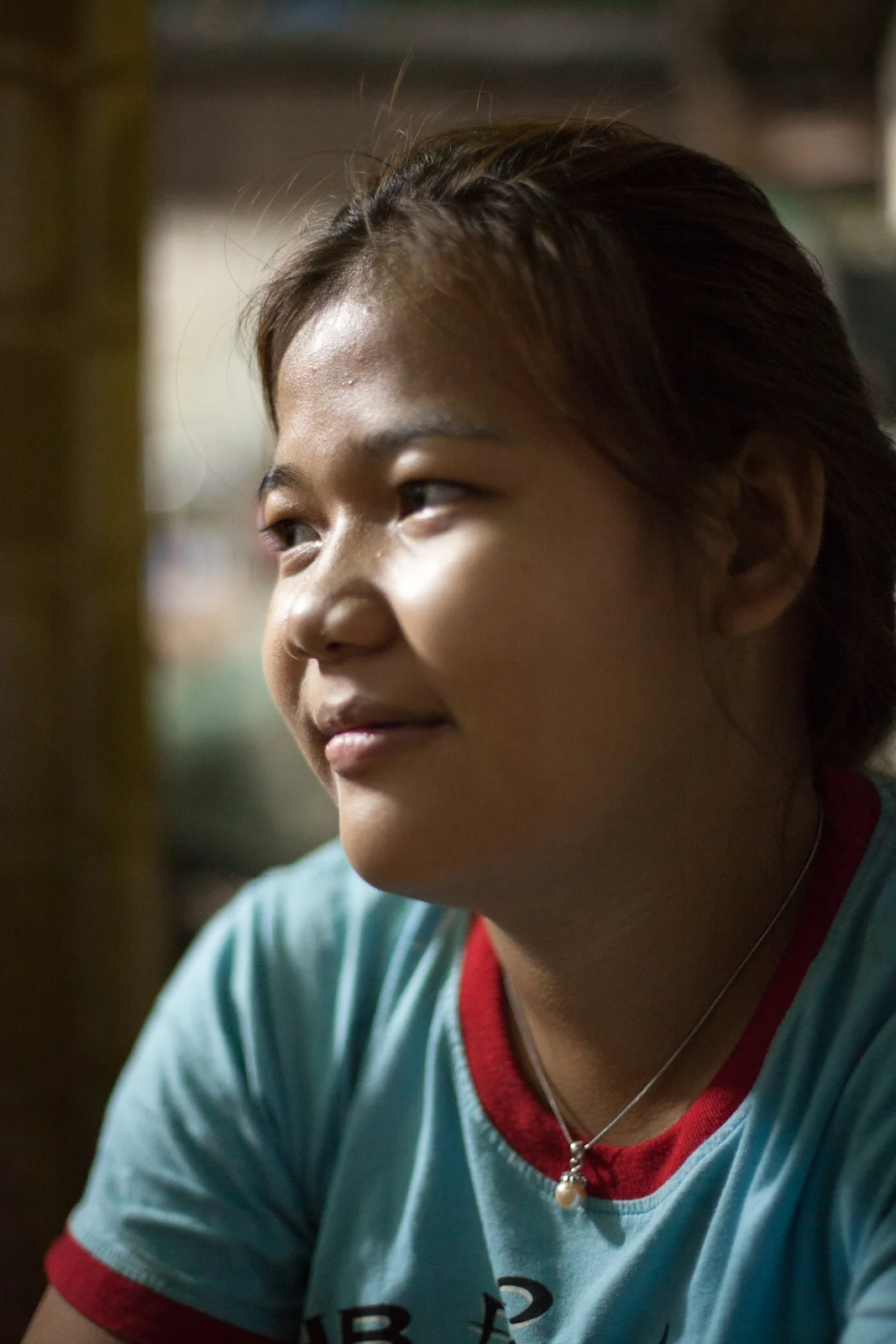
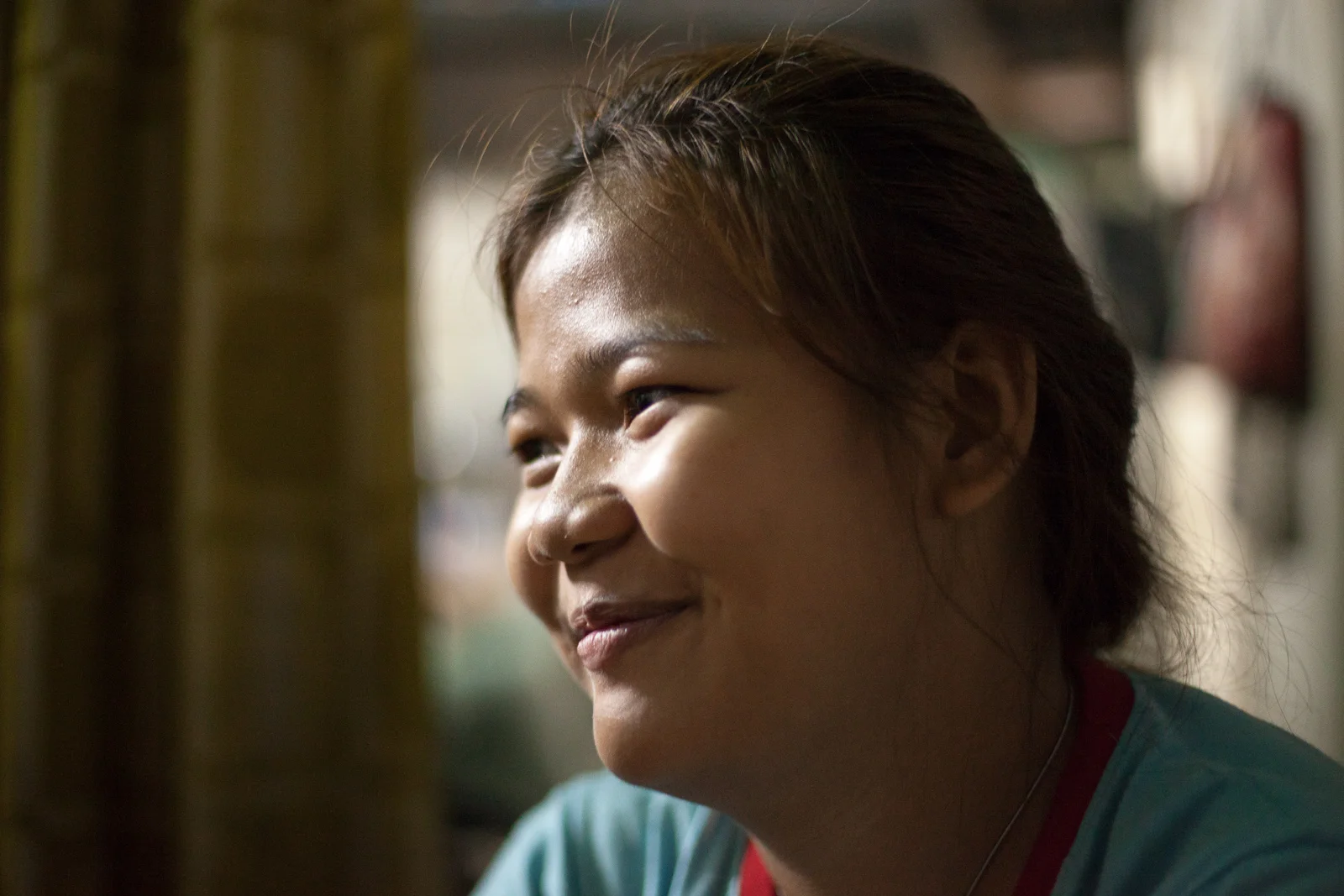
Sreyleak is seventeen years old and lives in a community on the outskirts of Phnom Penh that most people would call a slum. It’s full of vibrancy and life along with suffering and heartache.
And that just about describes Sreyleak as well.
Slums are communities in transition, but we don’t usually think of them in terms of positive change. Rather we see repeated patterns: family dysfunction, kids dropping out of school, and cycles of poverty.
Sreyleak’s parents have been ill for a long time, as long as she can remember, but seven years ago one of the first Alongsider mentors chose Sreyleak to be her “little sister.”
“Back then I was always alone. When I saw how others had relationships, I thought, ‘No one cares about me.’ But my Alongsider showed her love for me and cared about me.
She invited me to come to church every Sunday. She said, ‘Jesus is coming soon, so we’d better not wait.’ She told me about God’s love and encouraged me to read the Bible.
One day my Alongsider invited me to celebrate my birthday along with her daughter, because our birthdays are on the same day. I was very happy, because someone knew about my birthday.
Before knowing God, I used to have bad dreams. It was like war and fighting every night. It was frightening. But I’m not scared of anything around me anymore, because I have God with me. Last night my friend was talking about ghosts, and it was scary, but I didn’t have bad dreams.
Now my purpose in life is to get wisdom from God for my studies, so I can get a job with enough income to support my family. I pray that God will give my family health and energy.
Someday I want to be an Alongsider and do what my Alongsider mentor did for me. She showed me love and encouraged me, and I want to give this gift to my own Little Sister.
I thank my Alongsider, and I thank God. I feel like God is near to me now. ”
So what can we learn from Sreyleak about transformation?
If you ask Sreyleak questions about God, she is likely to answer with a list of religiously correct rules and principles.
But if you listen closely to her story, she will tell you about freedom from fear and about being loved. The principles may point in the right direction, but love and courage are what will sustain her through real, lasting transformation. People who change from living in fear to living in love and courage will surely experience transformation.
But how do we change at such fundamental levels? Sreyleak may not have all her theological answers straight, but she has experienced truth. Now she’s on the verge of transitioning from receiving as a “little sister” to giving and mentoring as a “big sister.”
We have sometimes over-emphasized the role of knowledge in transformation.
Knowledge is important, but if transformation were powered primarily by knowledge, then most New Year’s resolutions would be a piece of cake and the most well-educated, knowledgeable Christians would be the most transformed people on earth.
Real transformation takes place in the world of experience and gritty face-to-face relationships. It’s powered by messy everyday choices coupled with the limited information we have.
Those who lean on the clean flow of seemingly unlimited information online, or prefer an ever-increasing knowledge of scripture detached from relationships, will not experience transformation despite many New Year’s resolutions and prayers.
Through the simplicity and rough edges of Sreyleak’s story, we see a life being transformed with ripples shooting out in all directions. It’s about love and courage from God lived out in relationships.
Really, it doesn’t have to be much more complicated than that for any of us.
Was Jesus vulnerable?
Was Jesus vulnerable? Not merely in the cute, helpless way that every baby is vulnerable, but vulnerable in the way that children in Allepo, Syria are vulnerable to violence?
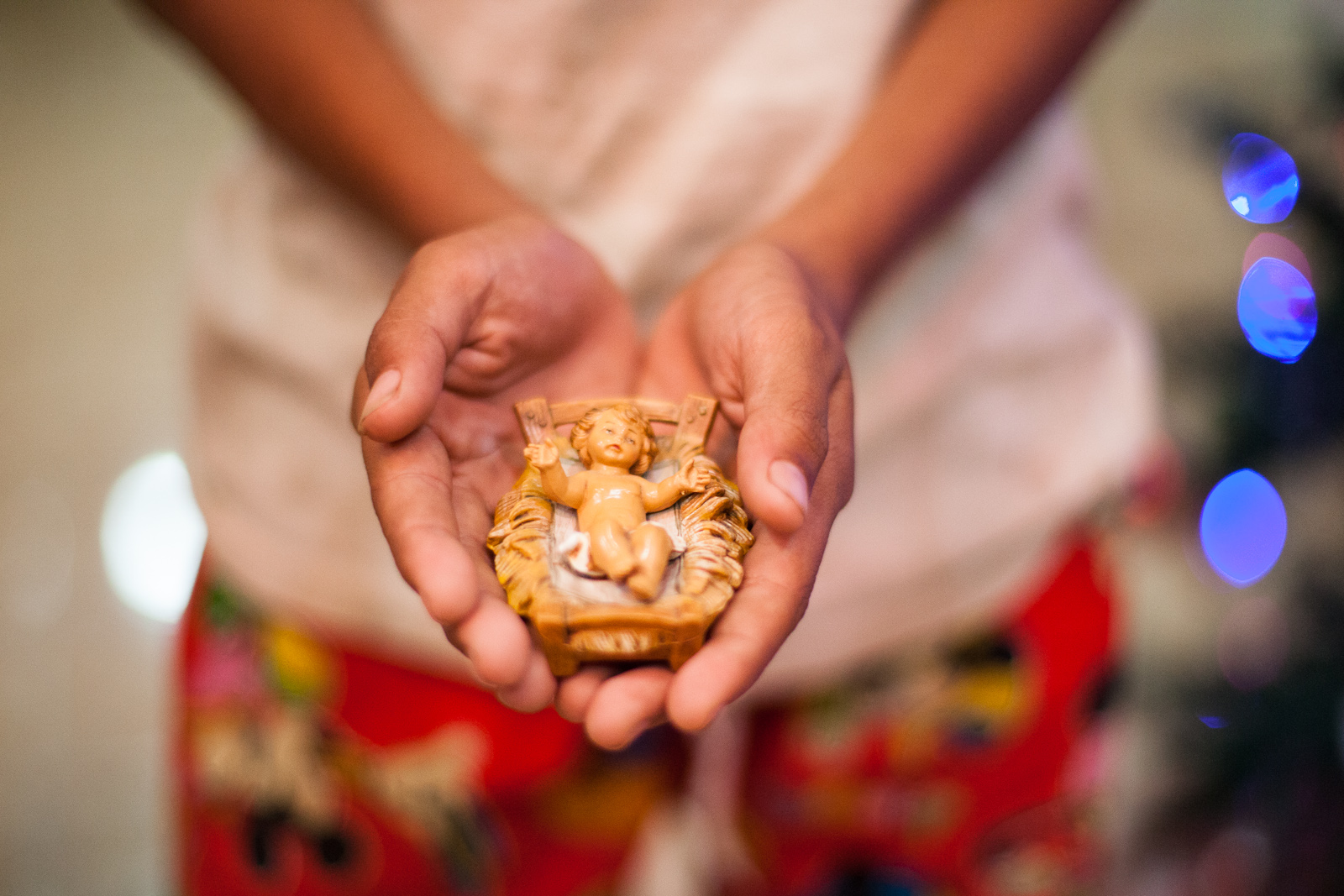
Was Jesus a vulnerable child?
Not merely in the cute, helpless way that every baby is vulnerable, but vulnerable in the way that children in Allepo, Syria are vulnerable to violence?
Vulnerable to prejudice and exclusion like children of immigrants?
Vulnerable to hunger and illness like children of the homeless?
The simple answer is Yes.
We know that Jesus was vulnerable in these ways, but most of our songs and traditions gloss over those parts of the Christmas story.
True confession:
I love The Christmas Song...
Chestnuts roasting on an open fire,
Jack Frost nipping at your nose.
It's about being warm even when it's cold outside, good food and happy children, and being merry all-around. Christmas for many people really is a most wonderful time of the year.
But it's not that way for everyone, and it doesn't match the whole story.
Just take a couple of minutes to review what happened.
Matthew begins the story of Christmas by intentionally pointing out that Jesus' lineage includes a prostitute (Rahab) and a homeless immigrant (Ruth), and neither of them was Jewish. Although Jesus descended from David, Matthew clarifies that it was from David's adulterous and murderous affair with Bathsheba. Finally, Jesus' family tree ends with his mother, not with Joseph, because she was pregnant before she married him.
Sure, Mary was with child by the Holy Spirit, as we read now, but that's not how the neighbors saw it. More likely they said Joseph was a kind and gentle man for enduring the shame rather than leaving her.
This was, to say the least, a blended family.
Next consider the characters who gathered around "yon virgin and child." The shepherds were dirty, unwashed, poor men who slept in the fields, apart from their wives if they were married. The wise men were foreigners who practiced astrology. Pagans.
If a nativity scene had been set up at the time, it would have looked like a vicious parody: the King of the Jews welcomed by nobodies and pagans.
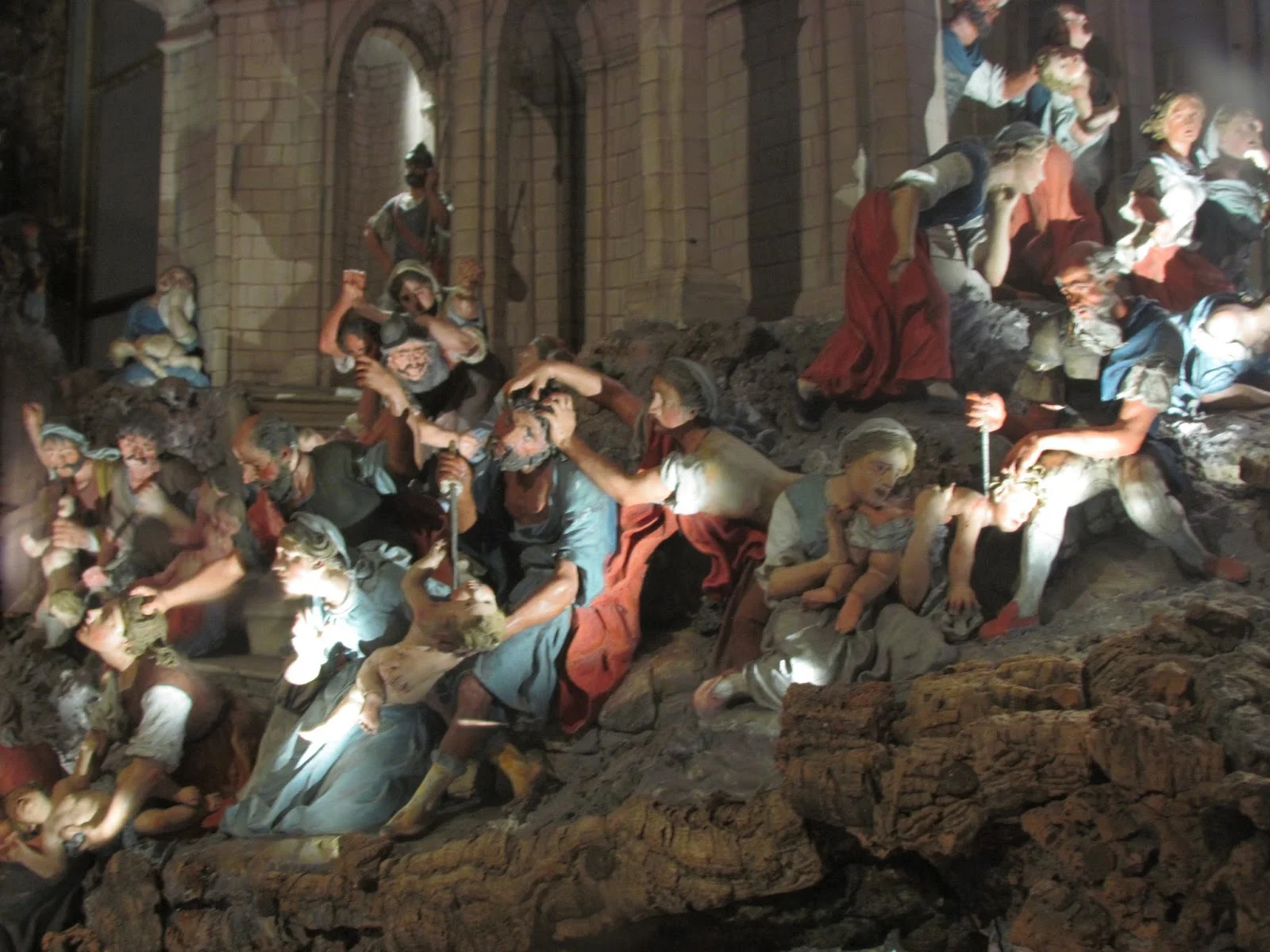
An 18th Century nativity in Portugal depicts the slaughter of the innocents.
And faster than you can say, "Holy infant so tender and mild" the story jumps from the baby in a manger to a power hungry man ordering the slaughter of innocent children and Jesus' family fleeing for their lives to Egypt.
Can you imagine that verse inserted into a carol, or that scene in a nativity play?
What became of the family in Egypt? They were immigrants who couldn't speak the language, unwanted refugees, homeless and poor, or cheap labor.
The purpose here is not to spoil the warm glow of Christmas - if that's how you experience it. Be thankful for family and safety and simple comforts if you have those blessings.
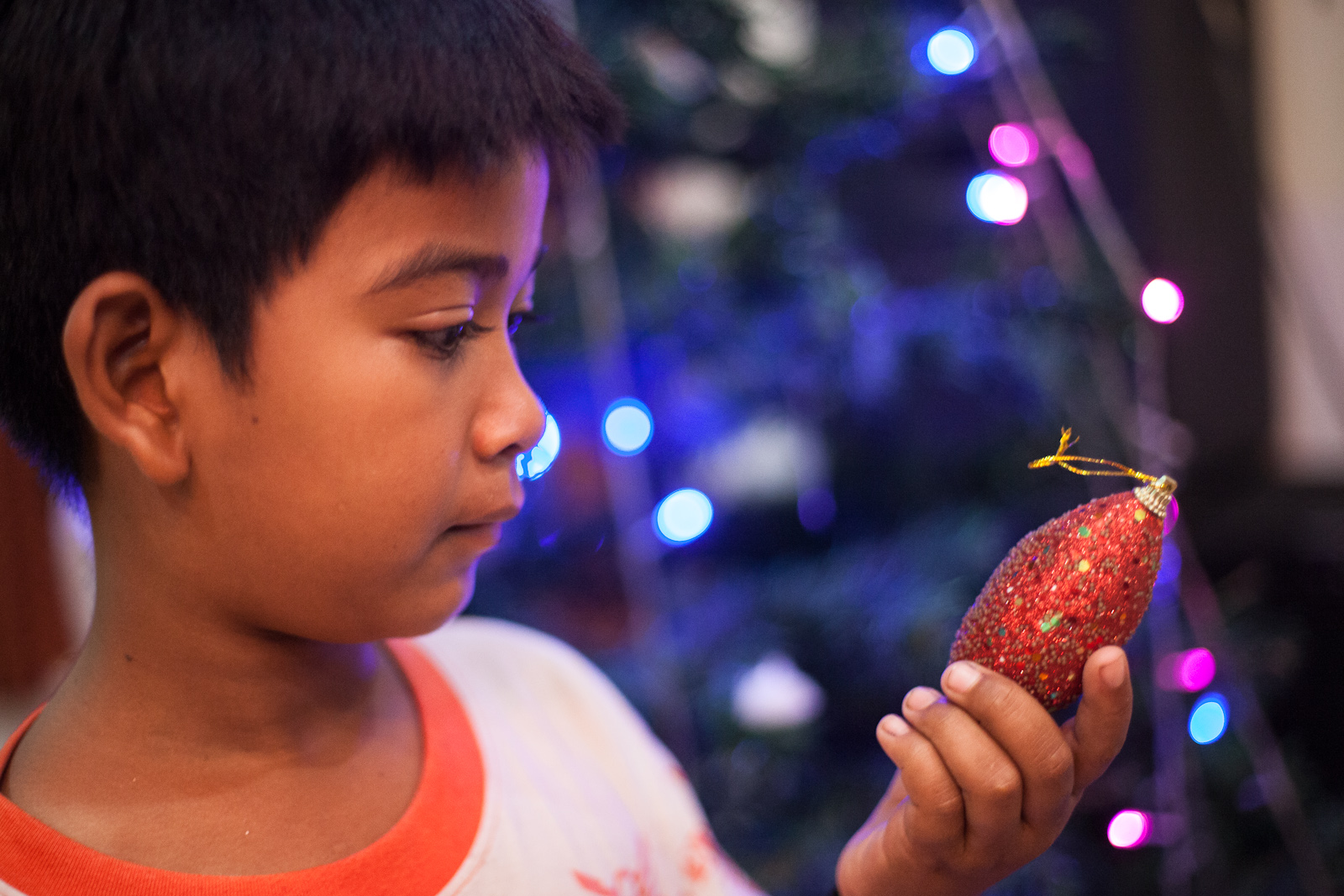
But let's also open our eyes and see the whole story, including the parts that don't make it into most carols and nativity scenes.
Consider that the story we celebrate is still unfolding even now.
To be alive in the story of Christmas today, look and see the vulnerable children and families in the world around us and, as we are able, welcome them. They are both far and near, and they have more to do with the original Christmas than feasts and silver bells.
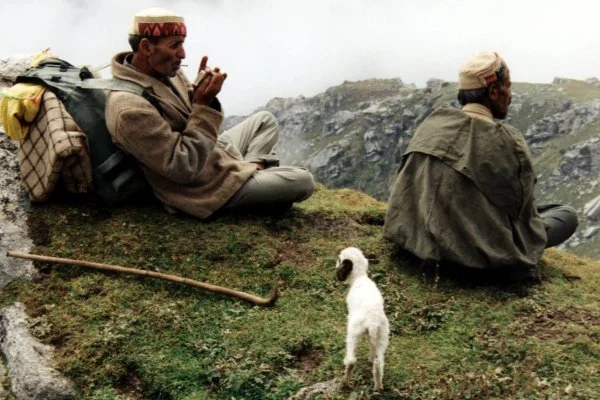
Let the shepherds and wise men be our examples.
What we all have in common - whether in vulnerability or comfort - is God's gift to us all in Christ, born into a world of poverty, politics, and violence. Born into an imperfect but loving family.
Young and old, foreigners and locals, citizens and immigrants, happily married men and women and prostitutes and adulterers: the gift of Christ draws us together.
Merry Christmas! Christ is born.
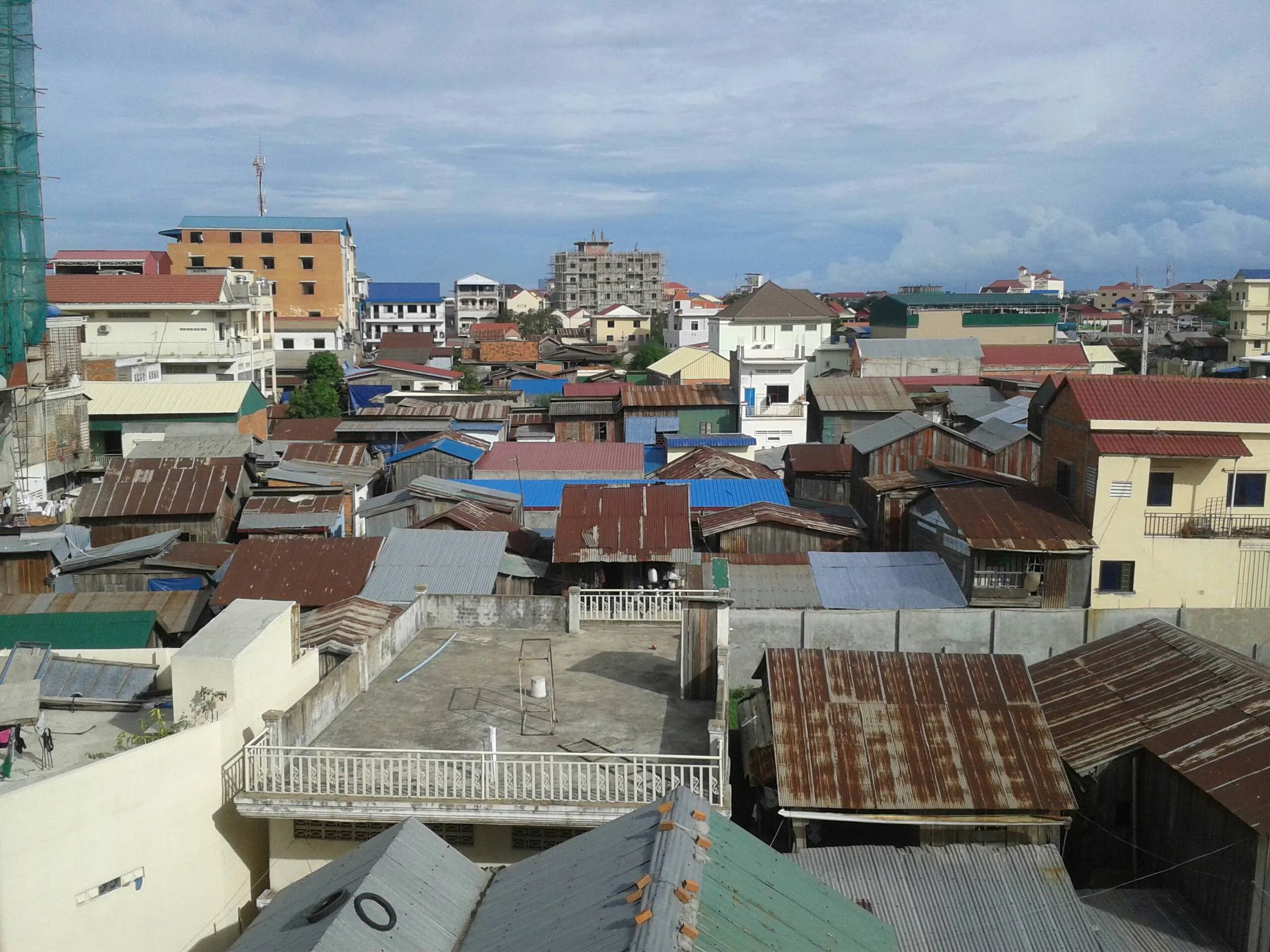
Urbanization: our biggest challenge
Today almost 80 percent of Cambodians live in rural communities, but within 15 years the majority of Cambodians (60 percent) will be living in cities.
Here’s a unique strength of Alongsiders with a perplexing challenge.
Alongsider mentors are empowering vulnerable children – and stirring up local churches – in rural communities that are “off the radar” for most ministries and development organizations.
The key strength of Alongsiders is the physical presence of mentors serving out of relationships in their own villages.
But consider this. Today almost 80 percent of Cambodians live in rural communities, but within 15 years the majority of Cambodians (60 percent) will be living in cities. We’re in the midst of a huge migration of Cambodians to cities, and the people most likely to move in the next decade are young people in the age group we are working with!
Meet Marketa, our intern from Slovakia. Her role is to research how this rural to urban migration is affecting Alongsiders in Cambodia.
“The main concern is if the Alongsider mentors move, how is this going to affect the relationships between them and their little brothers and sisters? ”
Although we’re just starting to formally measure the impact of urbanization on our work, Alongsiders Cambodia has been aware of the trend for some time. Here are some steps they have taken to address it.
- They encourage mentors who think they will move to choose little brothers and sisters who are older (e.g., twelve rather than six or eight years old).
- They are allowing older people who are less likely to move (e.g., in their late twenties and thirties) to become mentors.
- They are strategizing with small group leaders and mentors about how mentors can best maintain relationships, such as on weekend trips home and by phone.
- Of course, they are also working in urban communities with high concentrations of vulnerable children.
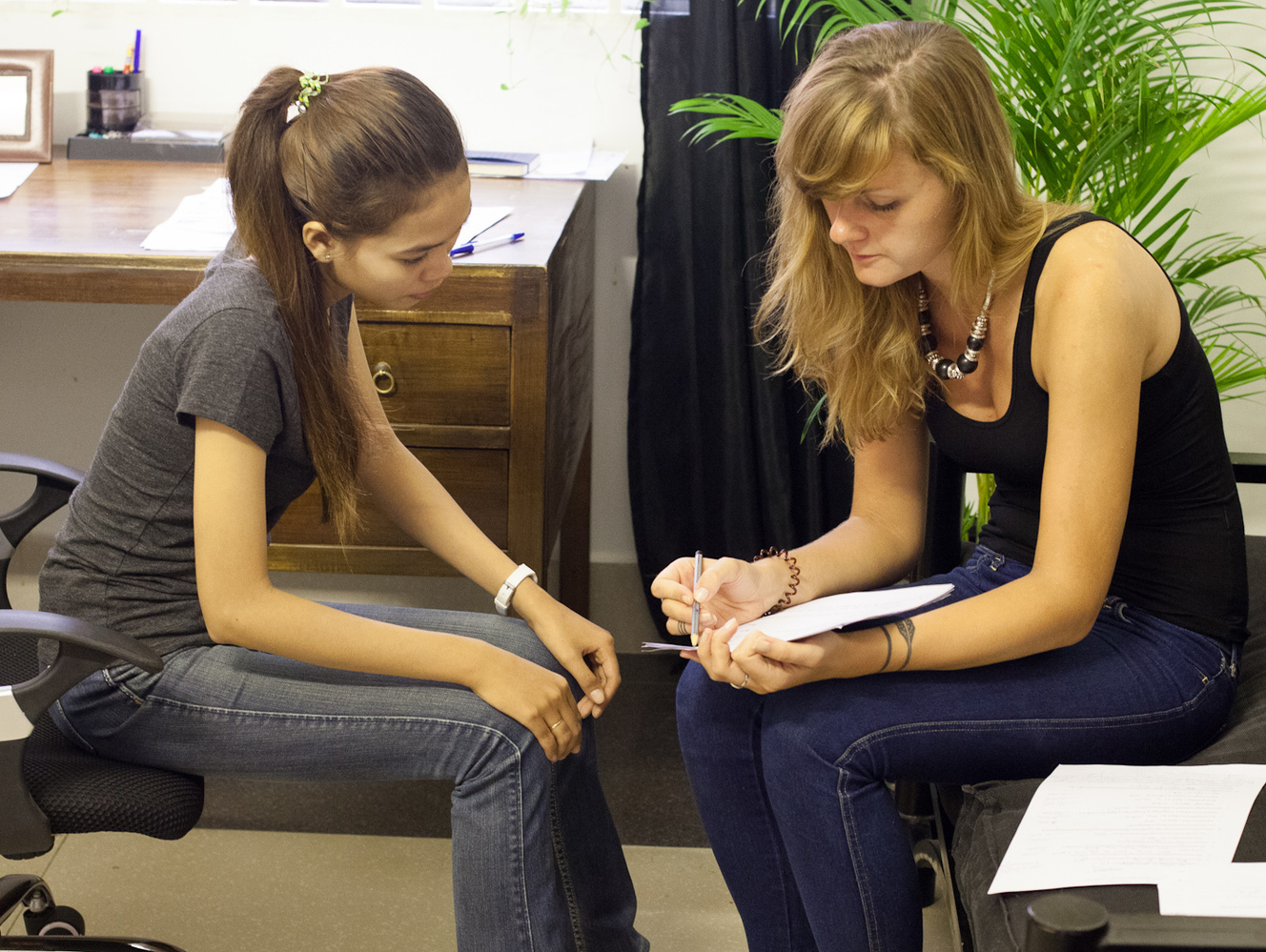
This week Marketa obtained her first data via a survey of small group leaders from around the country. At first glance, the challenge is plain to see.
In a group of 15 mentors from Kandal Province, 8 have moved to the city. In another group of 19 from the same region, 5 have moved. Yet in the entire province of Kampong Chhnang, 10 of 68 have moved, and of nearly 60 mentors in Kampong Saum, none have moved.
We want to know more about the story behind these diverse numbers.
Kandal is a relatively poor province adjacent to Phnom Penh, so it's easy for young people to go try their luck in the city. Kampong Chhnang is hours away from Phnom Penh, and there is a special economic zone in Kampong Chhnang, so many factories are employing workers there. Kampong Saum is a tourist destination with a robust local job market compared to other rural provinces.
Many Alongsider mentors who move to the city return home on weekends, so they are able to maintain relationships with their little brothers and sisters. But if their homes are more then two hours from the city, then it's too far to visit regularly.
These are just some of the details and variables we want to look at more carefully.
Alongsiders is part of the fabric of society in rural Cambodia, and now urbanization is tearing the fabric apart.
Asia is developing and urbanizing faster than any region in the world, so we can expect similar patterns as Alongsiders expands to other Asian countries.
The good news is that Alongsider mentors are living and serving right where life is changing the fastest and the needs are most acute; they are at the epicenter of a societal earthquake.
Our liability, relationships, is also our strength. Our success or failure depends on the quality of relationships formed by our mentors and our ability as a supporting organization to balance and shift as the ground moves beneath us.
We're willing to take that challenge.
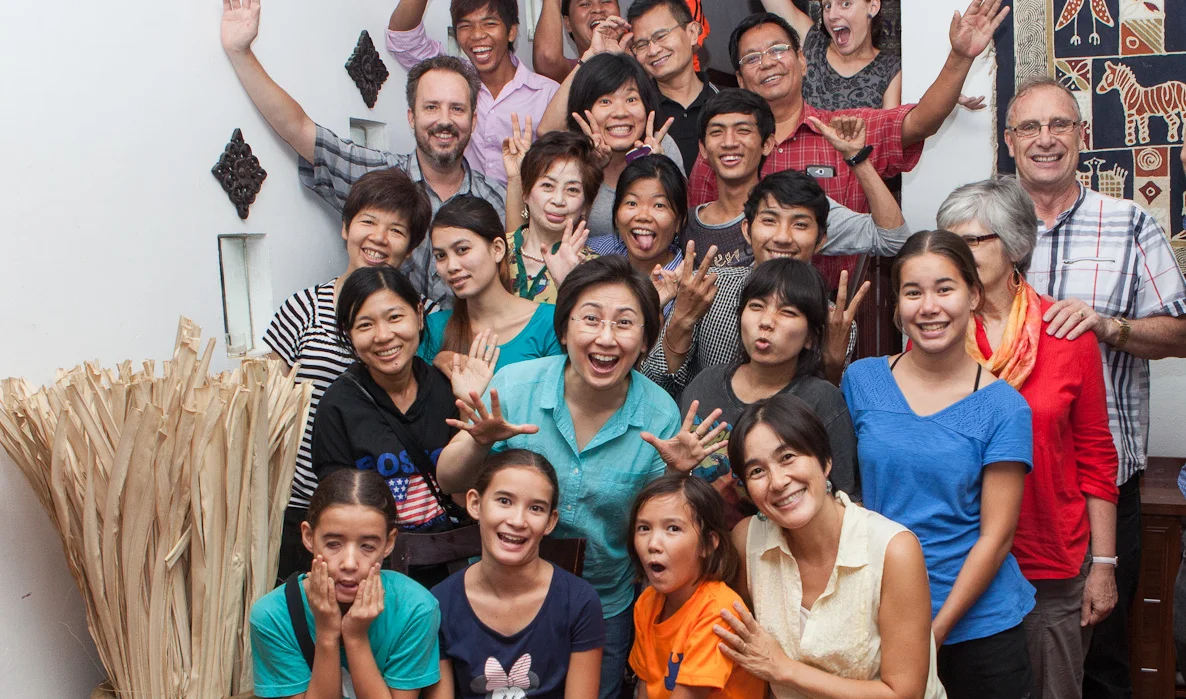
What keeps us going?
A few days ago, at our staff retreat, some of our staff responded to a simple question: What encourages you most about the ministry of Alongsiders? Here are some of their replies.
What motivates our staff and keeps us going?
It’s the end of a busy and productive year: a time of board meetings, retreats, evaluations, and eventually a Christmas party. A few days ago, at our staff retreat, some of our staff responded to a simple question: What encourages you most about the ministry of Alongsiders? Here are some of their replies.

“I love the vision to help poor and vulnerable children. Most people don’t value poor children; and the children themselves don’t have the opportunity to break out of poverty. But Alongsiders gives them a chance.
My little brother has changed. He used to be withdrawn, but he has become more brave and communicative. I see how Alongsider mentors can change the lives of their little brothers and sisters. ”

“Many of the poor in my community are just doing what they see in front of them. They don’t have power, and the rich people and the government don’t empower them. But I’ve experienced that we can love and serve each other. Even though I don’t have much, and I’m not rich, I can share what I have. We can give what we have, and we can help each other. That is God’s plan. ”
“I read one of the Alongsiders comic books and learned about protecting and caring for children, and that motivated me as I serve the Alongsiders staff.
There is a child who lives across from my house who is often hit by his uncle. I imagine what would happen if he had an Alongsider mentor to help protect him.”

“I remember many times being sent away or told off by the adults if I was around while they were chatting. They never liked the idea of me as a kid being involved with them. I was raised to believe children are lower than adults. Seeing how Alongsiders (following Jesus’s example) puts children in the center, I am very much encouraged. It gives me more faith in the next generation of adults. ”

“People have grown up seeing examples of adults who don’t see the value of children, and it’s difficult to overcome that. In my own family we had violence and conflict, but I was educated in ways that changed my life. I think we need to be educated in love, hope, joy, and peace, and we need to receive God in real-life. That’s the kind of education that encourages me as I work with Alongsiders. This kind of education will not only change lives, but it will also change families, the church, society, and Cambodia.”
“I’m most encouraged by the strategy of connecting with the young ones in the community. The peer relationships are the key. It’s a discipleship model that is very biblical and sustainable. And using storytelling is very good way to reach the children effectively. ”
“I am encouraged by the testimonies of the Alongsider mentors and their faithful love for their little brothers and sisters. Alongsiders has a vision that’s completely replicable. It has low consumables and low financials. You get the ball rolling and let the Lord work. It doesn’t require foreigners, just pastors and other locals who are surrendered to the Lord’s moving.”

“One of the small group leaders, told me that even if there was no Alongsiders organization, no support, and no meetings, his church would still continue with the Alongsiders program. I asked him why, and he said, ‘Because it helps the children in my village to have hope.’”
A survey like this doesn't tell the whole story of what encourages and motivates us, but consider a quick summary of the responses:
We are encouraged by Alongsider mentors loving, serving, and valuing poor and vulnerable children. It's effective! What they are doing is changing the lives of the children, and it's also changing families, churches, and eventually society!
This is not something foreigners or rich and powerful people are doing for the poor; it is poor people serving one-another and giving from what they have, starting with their own neighbors.
Participating in Alongsiders changes the way people act and think. It's a transforming educational experience, and it's based on simple and sustainable practices: loving and serving neighbors and making disciples (of the mentors!) within local communities.
Even if Alongsiders were to disappear, there are people who have caught the vision who would continue the work, because it is giving people hope.
So...we're encouraged. Are you?
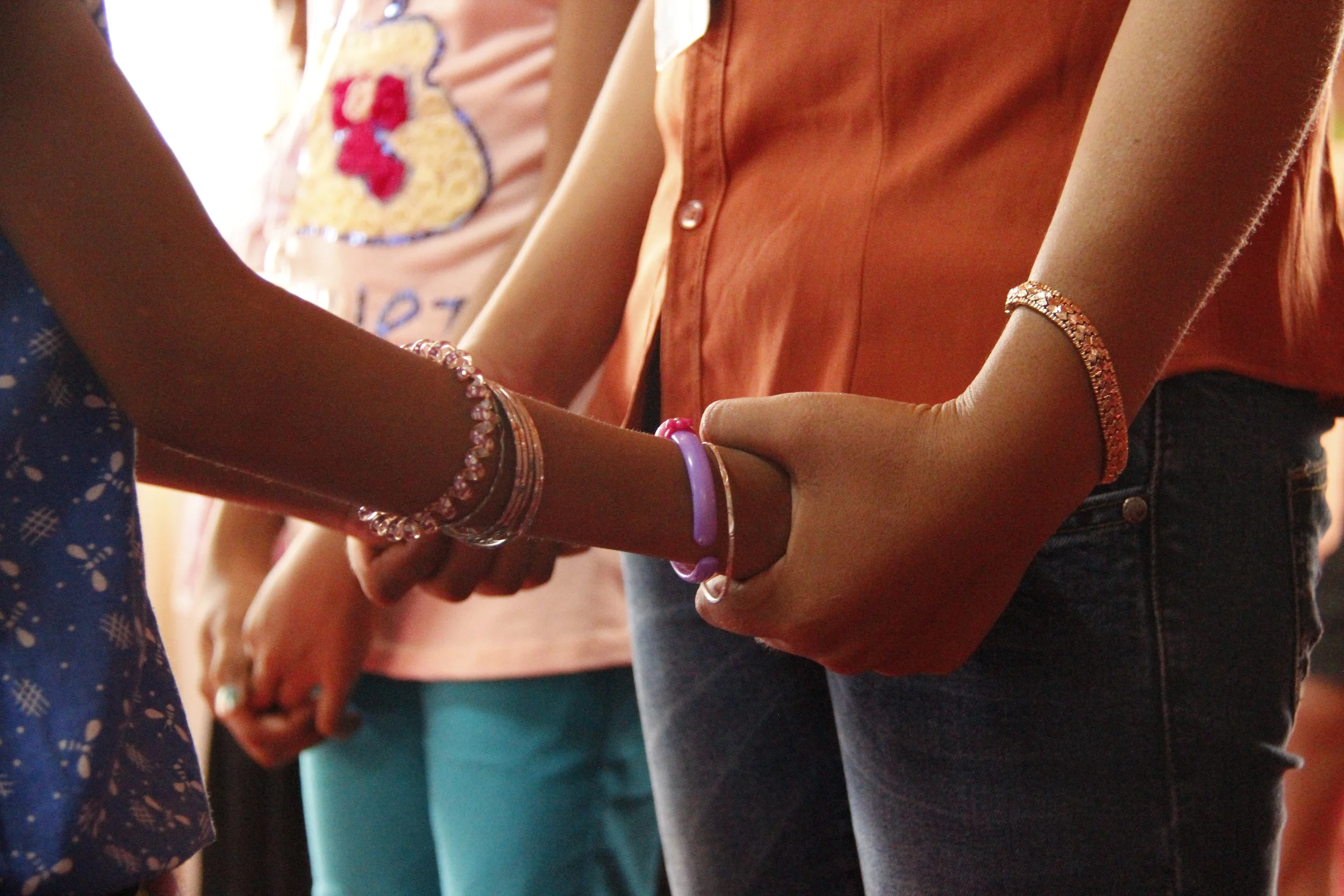
The gospel expressed in love looks like this
What happens when an Alongsider mentor begins to live out the gospel?
Lijieng is twelve years old, a daughter of farmers in Kampong Chhnang province, two hours drive from Phnom Penh. Recently her entire family came to faith in Jesus.
That is not typical in rural Cambodia, where villages are steeped in the culture of Buddhism and indigenous beliefs about spirits and nature. And farmers, who don't want to upset the delicate balance of things - nature, community relationships, and religious traditions - are the most conservative about change.
"What happened?" is a fair question.
Chanoo came to faith in Jesus herself three years ago, and she recently became an Alongsider mentor. She looked around in her immediate area and chose her neighbor, Lijieng, to be her little sister.
Lijieng's parents recognized their daughter's need and gave their approval. They both work many hours a day, and they rely on Lijieng to cook and care for her two year-old sister and handle numerous other chores. Lijieng needed the support.
Chanoo has been a Christian long enough to be familiar with the call to share her faith with others. But Alongsiders didn't send her out with any evangelism program or method, just an admonition to love and encourage her little sister.
Here's what she says.
“I see Lijieng every day. Sometimes I help her with school work. I want her to learn and to eventually have a good job.”
Such a simple summary may not sound spiritual, but it goes to the heart of Lijieng's undeniable needs. She explains herself in similar fashion, "I have hope for the future, because I want to be educated."
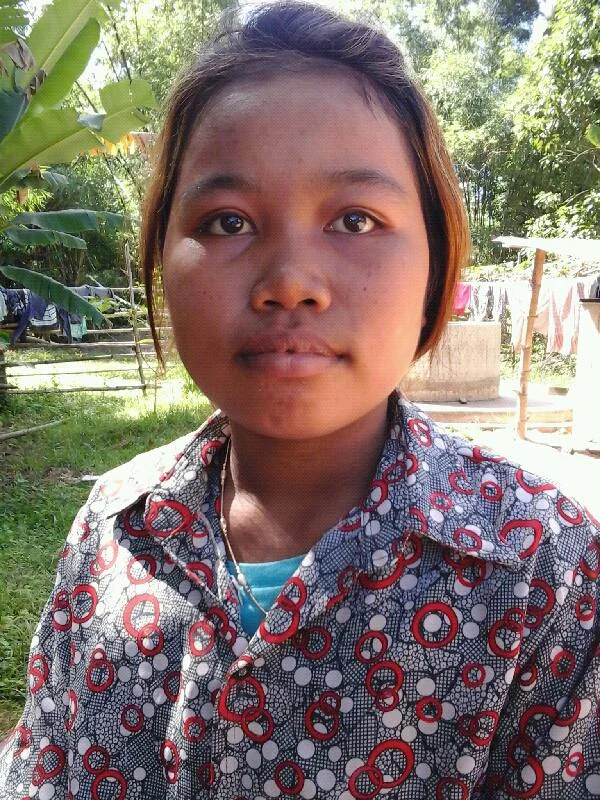
Alongsider mentor: Meth Chanoo
Lijieng's parents saw how Chanoo related with their daughter, and they watched how Lijieng responded. Another neighbor had previously come to faith, and they listened to her testimony as well. And somewhere on the way, between these relationships and visiting the local church, they came to faith along with their daughter.
No grand strategy was realized; this was just faith working itself out in love.
Chanoo felt happy for them, and it encouraged her. "I have to be ready," she says, "and confident about what I believe." She started by putting her faith in action, and now she is more willing and able to express her faith in words.
This is an essential part of what Alongsiders is about: the gospel expressed in love, shared between neighbors, starting with vulnerable children and impacting families and communities.
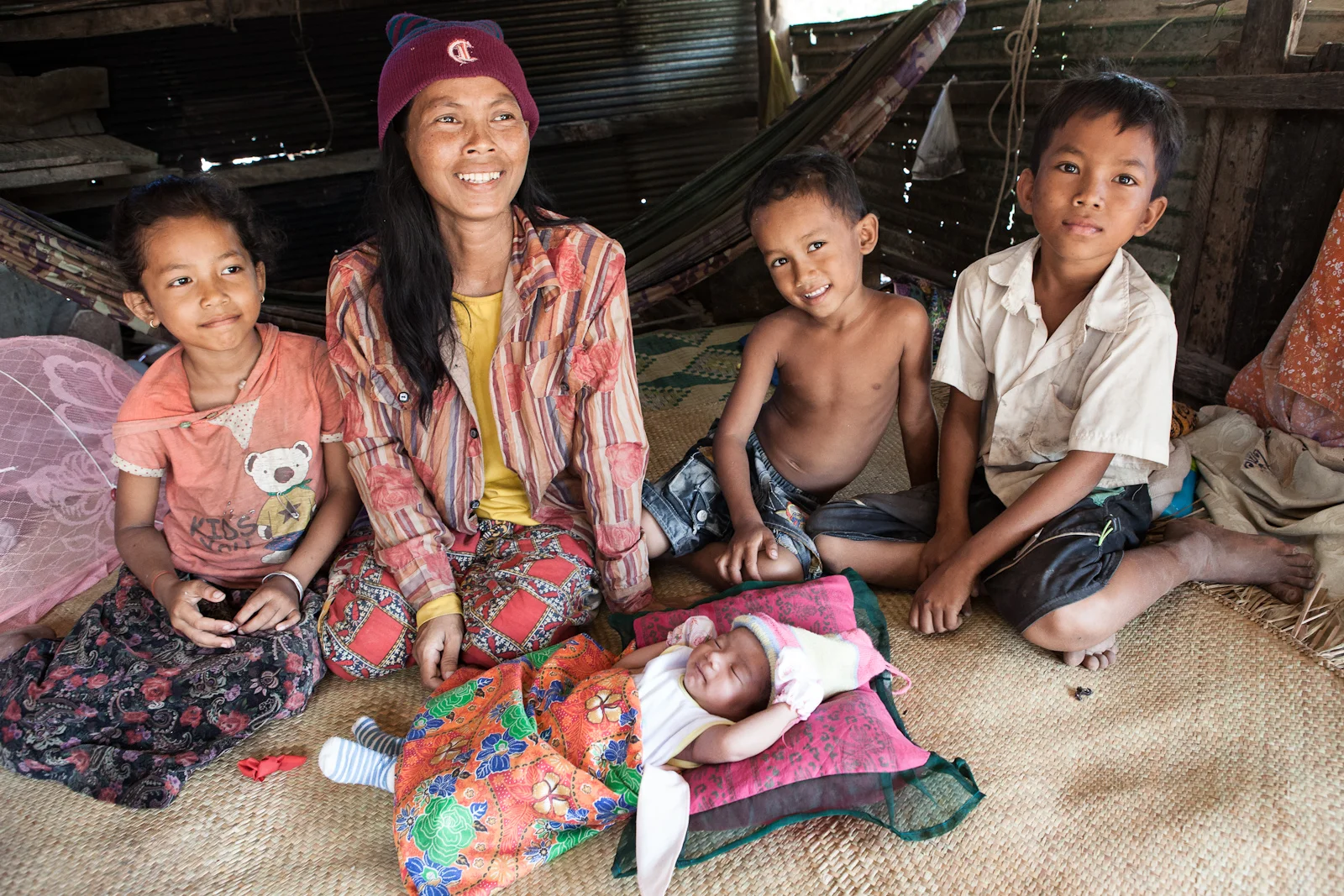
By knowing how to heal the family, I know how to heal the world.
How do we begin to address brokenness, violence, alcoholism and neglect within families?
“I hope one day my little brother will be a good father. If I’m a good example, he can learn from me.
”
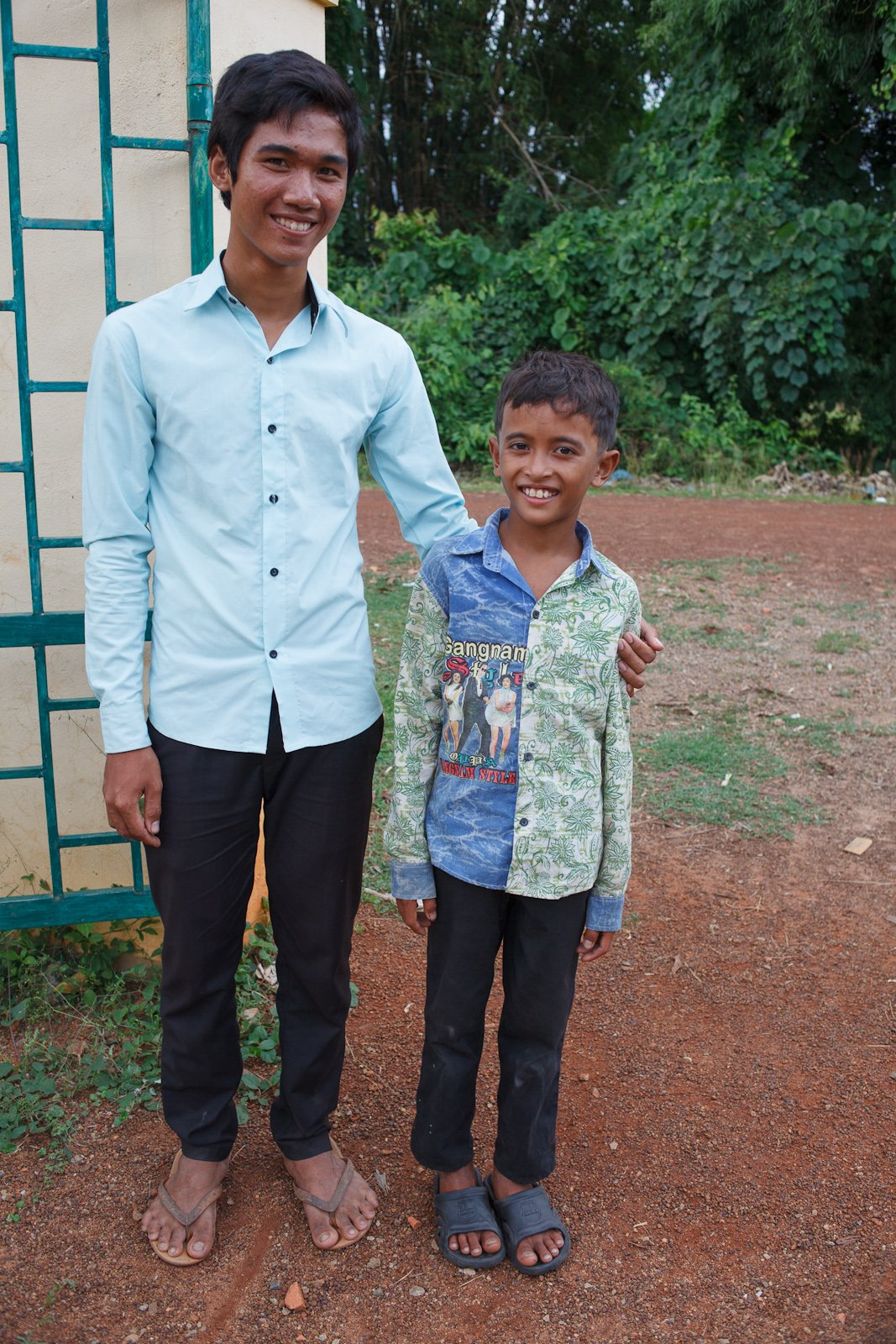
A little brother with his new Alongsider mentor
During the 1970's, the Khmer Rouge set out to destroy the family as an institution in Cambodia. They separated children from their parents; young adults were forced to marry partners selected by the state; and countless fathers were led away and never returned. The state, in it's role as father and mother, enforced order with violence.
That was two generations ago, but dig beneath the surface today and nearly every Cambodian seems to have a heart-wrenching story involving family relationships, including those who grew up after the Khmer Rouge. The problem is no longer what happened 40 years ago, but what is happening today.
We see two prevailing challenges: domestic violence and a shortage of parental care.
“In poor families, one problem is violence. The husband and wife are under stress. Some people use alcohol or drugs and fight every day, especially the husband. He doesn’t earn enough to support the family and feels frustrated.
Another problem in poor families is that both parents are busy. They have to work long hours and there is no one to look after the children, so they are at high risk.”
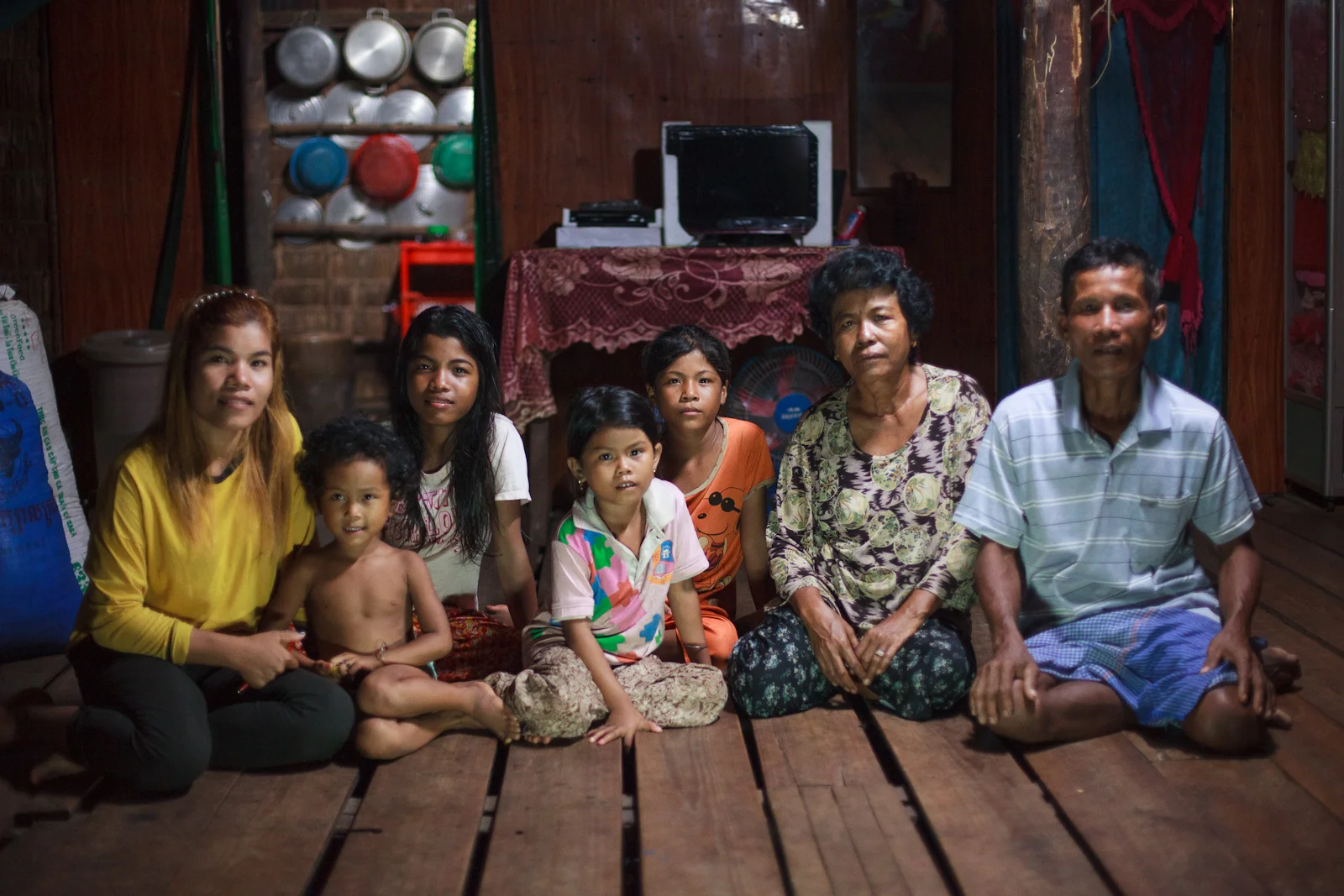
What can Alongsider mentors do in the face of such needs? They offer themselves as a go-between, and they come with new ways of thinking and acting.
In last year's impact assessment, half the little brothers and sisters reported receiving help with conflict or discrimination within their family or community. This compared with less than a quarter of similar children without Alongsiders in their communities.
Our research shows that many Alongsider mentors intervene in practical ways in these situations. This is in addition to other important forms of support, such as prayer and encouragement.
Alongsider mentors also introduce new ways of thinking. The most direct way they do this is by using the comic book curriculum.
The stories and images in the comic books portray alternatives to violence and new ways of looking at relationships. But it's not just the comic books that matter, it's also the process of using them that can make a difference.
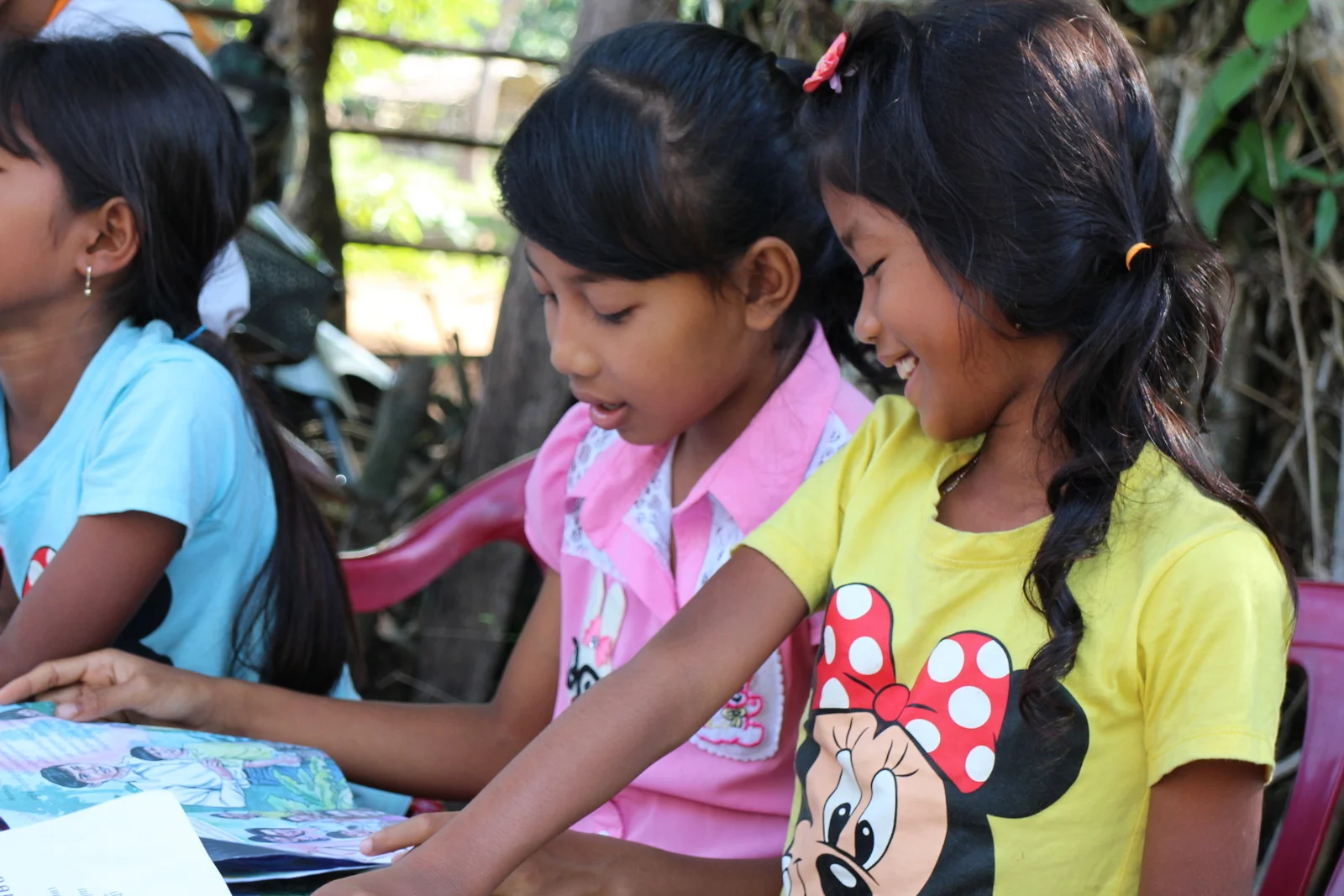
Little sisters enjoying the latest comic
“Adults don’t know how to sit a child down and talk through problems. They just say what is right or wrong. If a child does wrong, the parents pinch them or hit them with a switch.”
Alongsider mentors are being trained to read and discuss the stories in the comic books with their little brothers and sisters. Discussion, reflection, and evaluation of conflicts and behaviors is an important discipline for growth in relationships. Simply working through this process together is a learning experience.
Then the lessons contain powerful insights. Forgiveness is revolutionary in any context, but especially in communities where forgiveness is not a cultural value. Even a normal practice, such as saying thank you, can take on new dimensions. Often, Cambodian children are taught to thank people outside their families, but they rarely thank members of their own family. Our story about "Thankfulness" brings expressions of gratitude home to the family.
And the comic books don't necessarily stop at the first reading.
“My little brother read the comic with his sister and his cousin. Later I heard some kids repeating the words from the story, so I asked them about it. They said, ‘Oh, I liked this,’ or ‘I liked that.’”
But there are challenges.
Many Alongsider mentors develop good relationships with the families of their little brothers and sisters, but others struggle. As a younger person it can be difficult to communicate with older family members in a hierarchical society. Thus the engagement with families may be limited by cultural dynamics.
Most mentors read and discuss the comic books faithfully and carefully with their little brother or sister, but some struggle to find the time or don't follow the correct process.
These are growth challenges. They shouldn't be surprising in a country where few people reach outside their trusted circles of family and friends, and most people don't read or have discussions about what they've read.
But when Alongsider mentors visit their little brothers and sisters at home and develop relationships with their families, good things happen. We've seen entire families come to faith and behaviors start to change.
The changes we hope to see may take a generation to emerge. But families are the foundation of society. Better to start at the cracked foundation and restore that first.
In the words of famed American social worker and author Virginia Satir, known especially for her innovative approaches to family therapy:
“The family is a microcosm. By knowing how to heal the family, I know how to heal the world.”
The movement needs waypoints: 5 reasons we do camp
Something powerful happens when hundreds of young people gather together for camp...
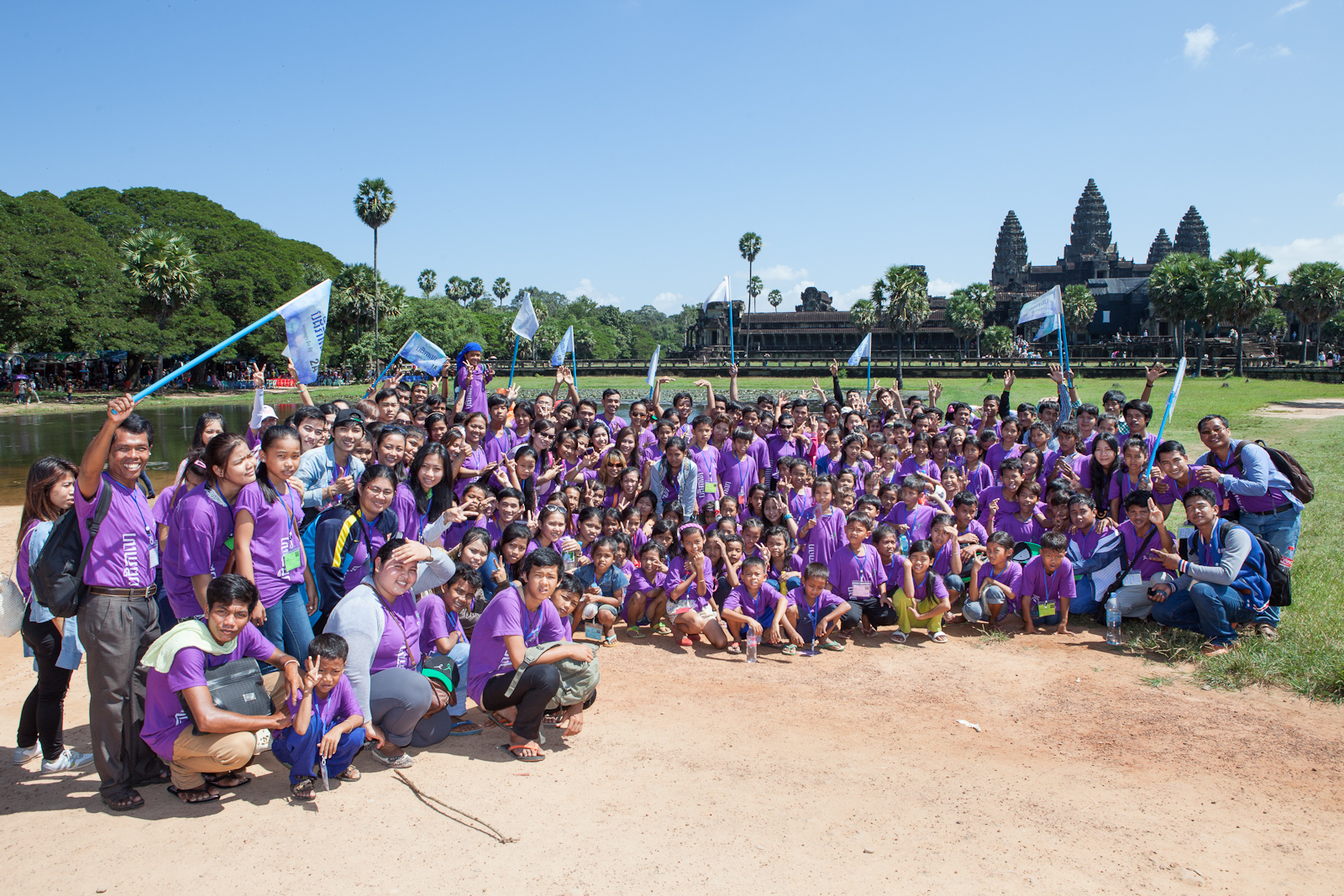
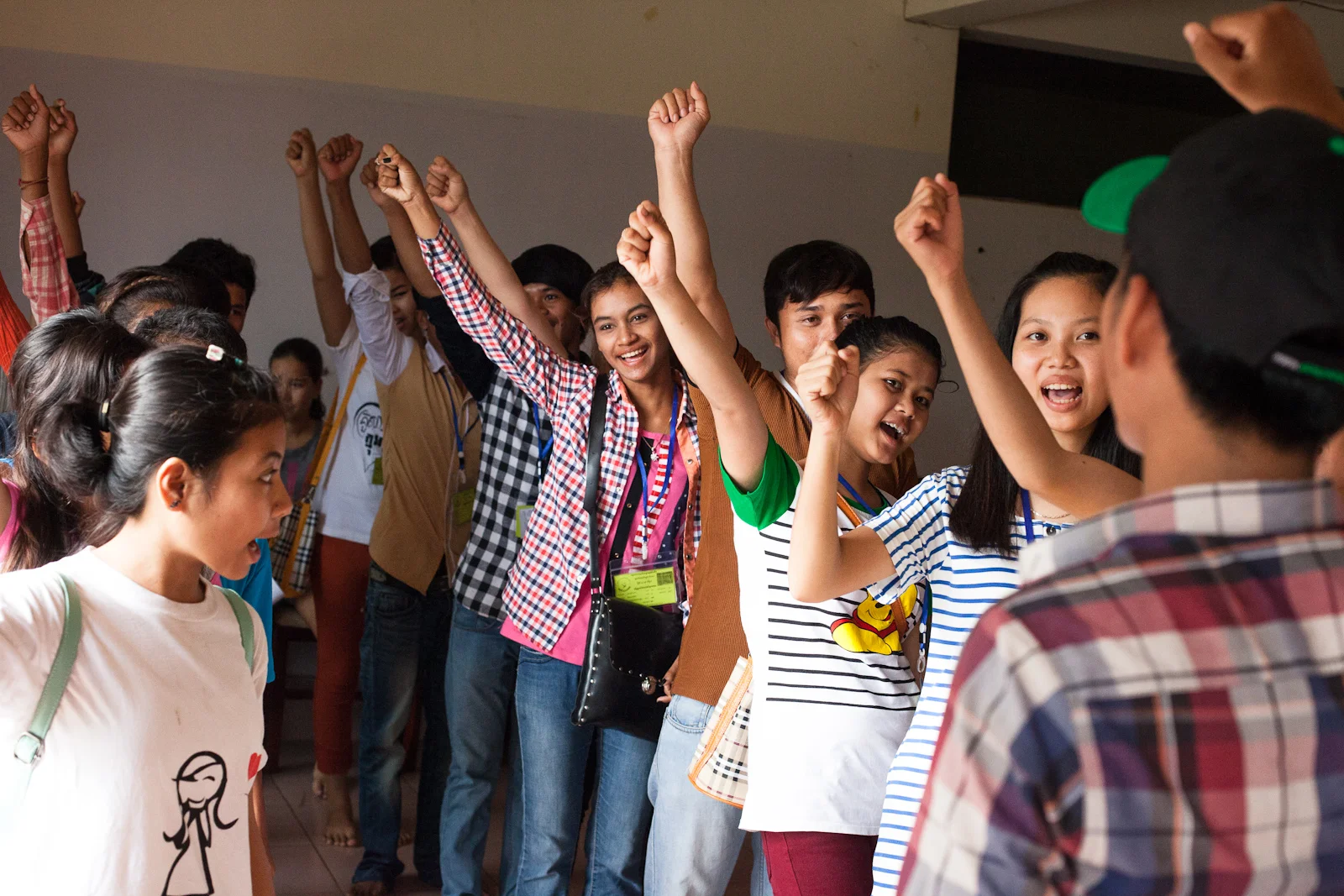
Last week nearly 300 Alongsider mentors with their little brothers and sisters, plus staff and other leaders, traveled from six provinces and converged in Siem Reap for the Alongsiders annual camp.
Their ages ranged from about 5 to 35. The event lasted for two full days, with travel days on each end; it was enough to burn through even this group's abundance of youthful energy.
As for the staff and older leaders, they were exhausted. It was a lot of work! And this was really just one HALF of the annual camp. Alongsiders Cambodia has grown to the extent that it's difficult to gather everyone together at the same time, so the annual camp is split in two. The other half experienced camp in May.
Besides taking a tremendous amount of preparation, leadership, and energy to pull off, the annual camp is also the single greatest expense for Alongsiders Cambodia.
You may well ask why we do it.
Following are five reasons why we have an annual camp along with some colorful pictures to illustrate.
1. The annual camp is a rallying point for the movement.
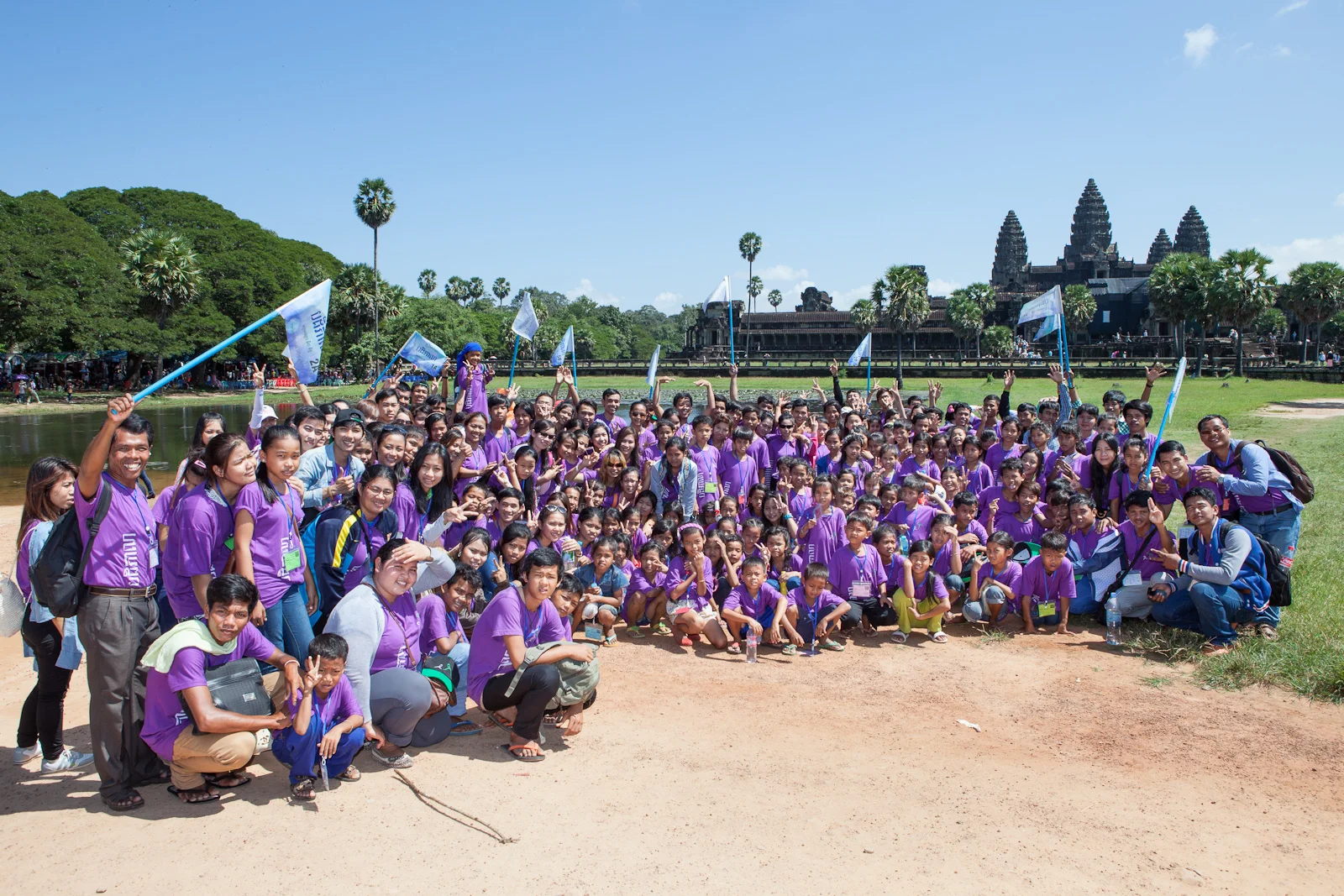
Alongsiders Camp 2014 at Angkor Wat
Throughout the year Alongsider mentors and their little brothers and sisters are dispersed throughout the country. Provincial leaders provide limited supervision and training, but most of the time mentors are meeting with their little brothers and sisters on their own. They may not feel like much is changing, but the movement as a whole is on the move and growing and changing as it goes.
When dispersed groups are on the move, they need rallying points in order to keep moving together. Otherwise people drift away or get left behind. Actually, the four points below all follow from this one.
2. Camp puts things in perspective.
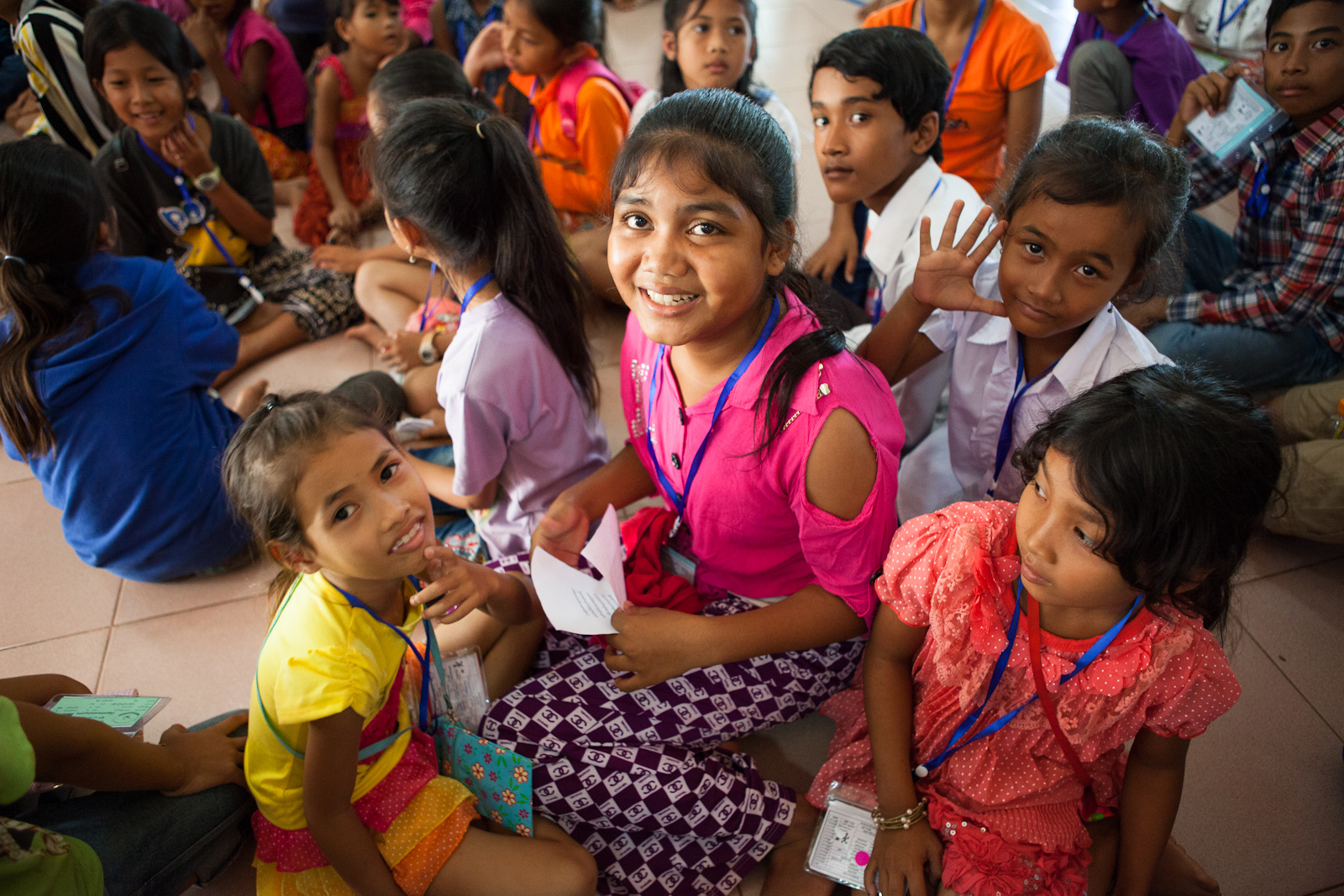
Mentors see other mentors. They learn from each other, and some stand out as inspiring examples. Others may realize the need to make corrections. The little brothers and sisters also meet each other, and they can see in a new way they are far from alone. There are other children all over Cambodia who have found big brothers and sisters, too. All the people gathered can see that they are part of something exciting - a movement of like-minded people that is bigger than themselves.
3. Camp is an opportunity to empower the Alongsider mentors.
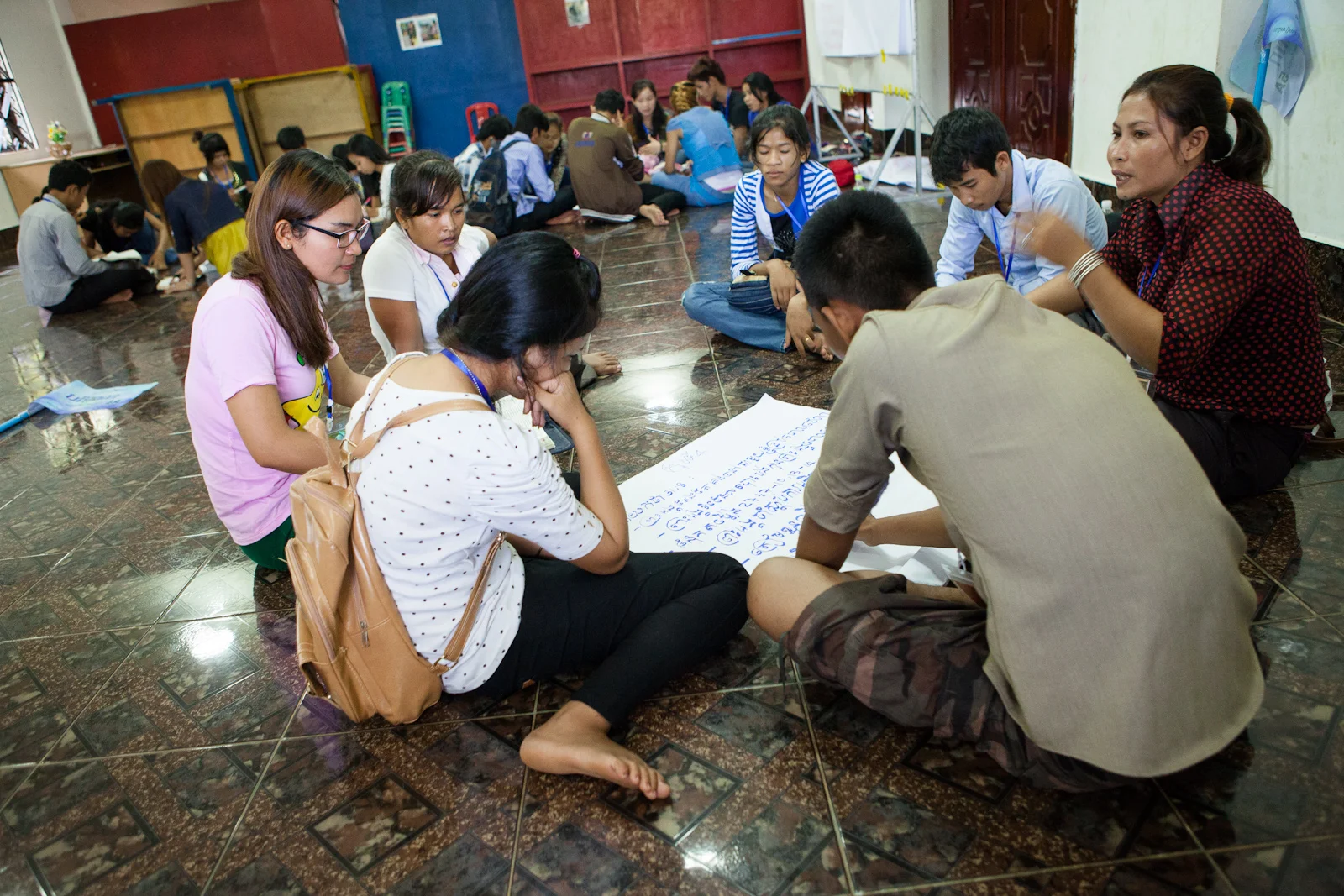
Alongsider mentors in a facilitated workshop about growing in intimacy with God
This year, while the little brothers and sisters joined in a day of fun educational activities, the mentors got to choose from three one-day workshops: finding your spiritual gifts, growing in intimacy with God, and team building. The workshops were run by volunteers and Cambodian leaders who came to serve the mentors. Afterwards, one mentor said, "For the first time, I think I know what my spiritual gifts are." Another said, "I love God more than I did before." We focus heavily on the little brothers and sisters, but the vision of Alongsiders actually relies on empowering and transforming the mentors:
We equip compassionate young Christians in poor nations to walk alongside those who walk alone: to love, welcome and encourage the most vulnerable children and orphans, in their own communities.
4. Camp is a time to celebrate how far we've come.
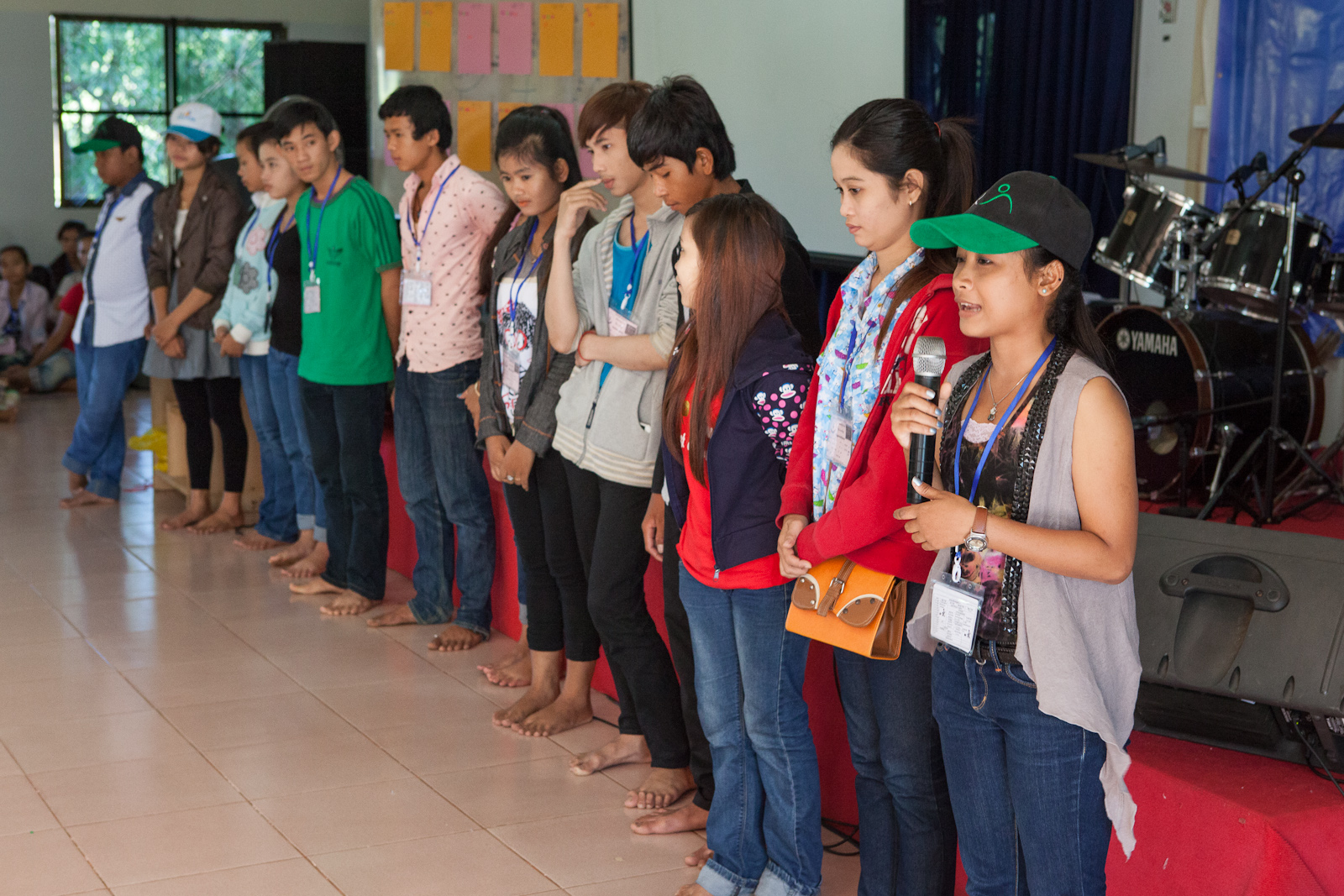
Second generation Alongsider mentors are recognized at camp every year.
Camp is fun. We eat good food. We visit interesting places. We have raucous meetings and creative activities. All of these are forms of celebration, the sort of things you might do at a party.
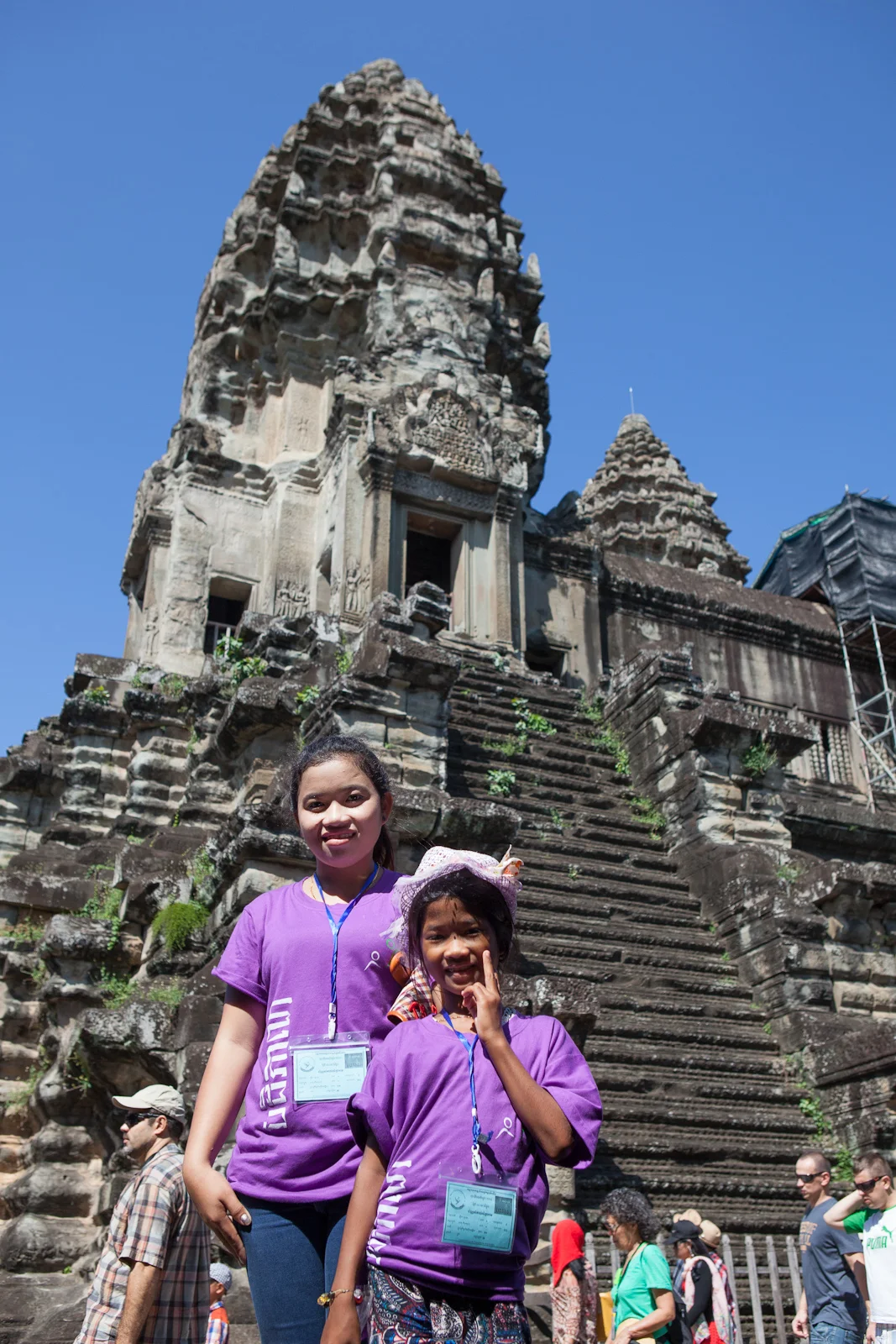
This year everyone who attended camp went to see Angkor Wat and had a great evening at the Cambodian Cultural Village in Siem Reap. We also celebrated in more formal ways, like recognizing all the second generation Alongsider mentors (former little brothers and sisters who have become Alongsiders themselves) and affirming what they've done.
In celebration we rest, recharge, and renew vision. People who don't know how to stop and celebrate won't travel far together.
5. It is a time of extended worship and prayer.
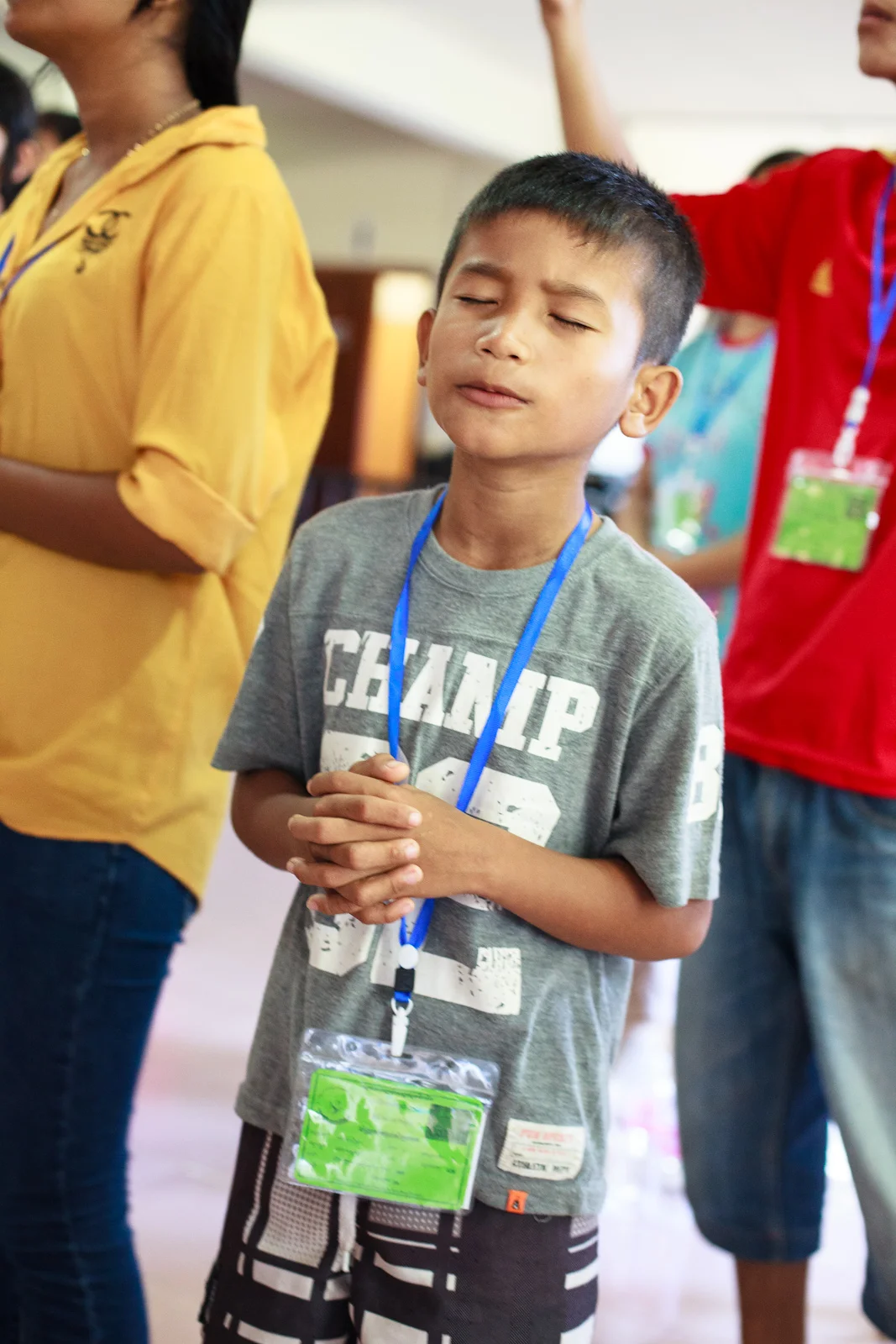
Christian movements throughout history have grown as participants have turned toward God in worship and prayer.
We believe God is the source of the transformation we seek in this country and around the world. We long for the Kingdom Jesus announced: of forgiveness and reconciled relationships, peace overcoming violence, and justice for the poor and oppressed. And we are drawn to his grace personally.
For all these reasons we worship and pray. Alongsider mentors pray with the little brothers and sisters all the time. Once a year they join to worship and pray together, and it's powerful.
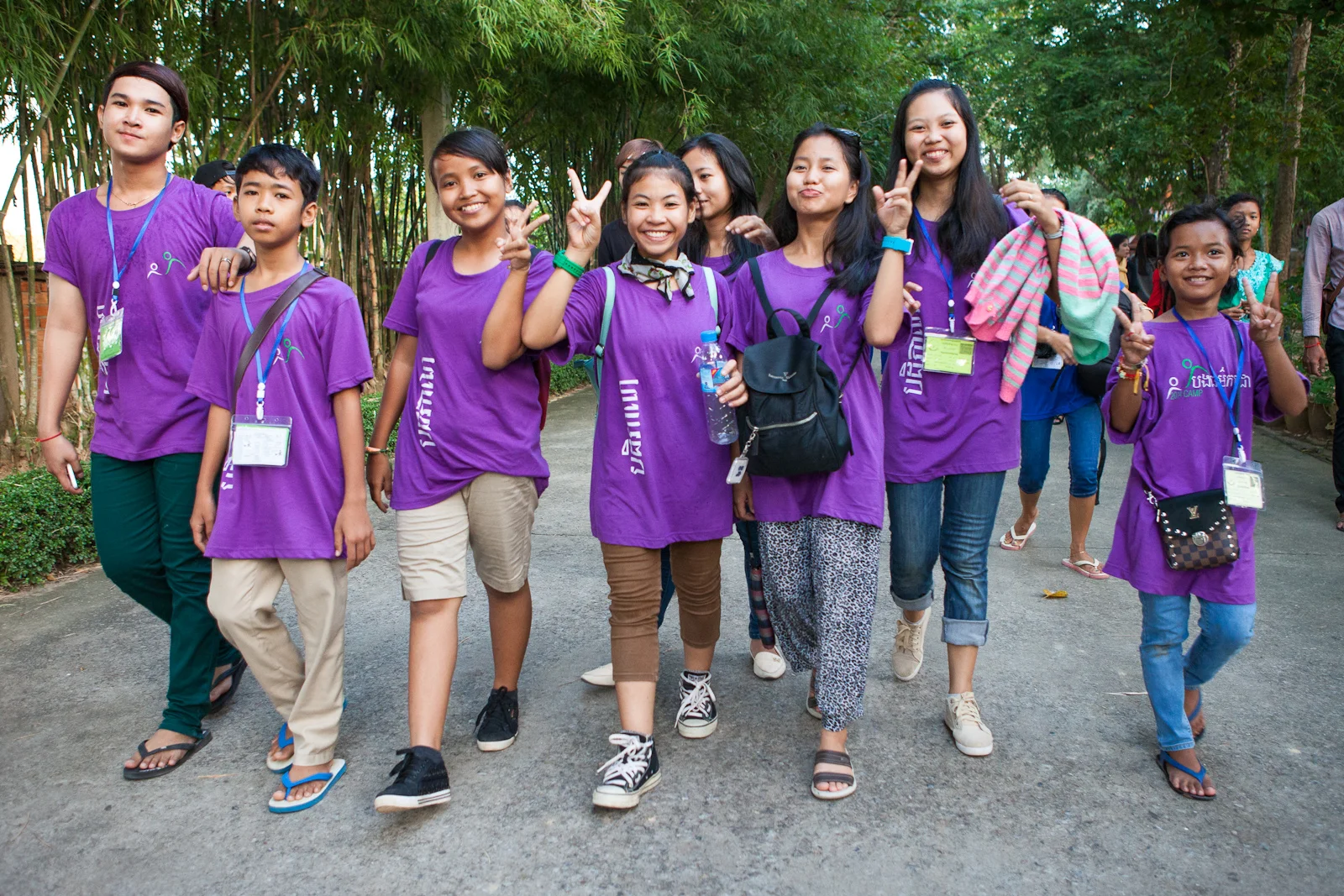
Alongsiders at the Cambodian Cultural Village in Siem Reap
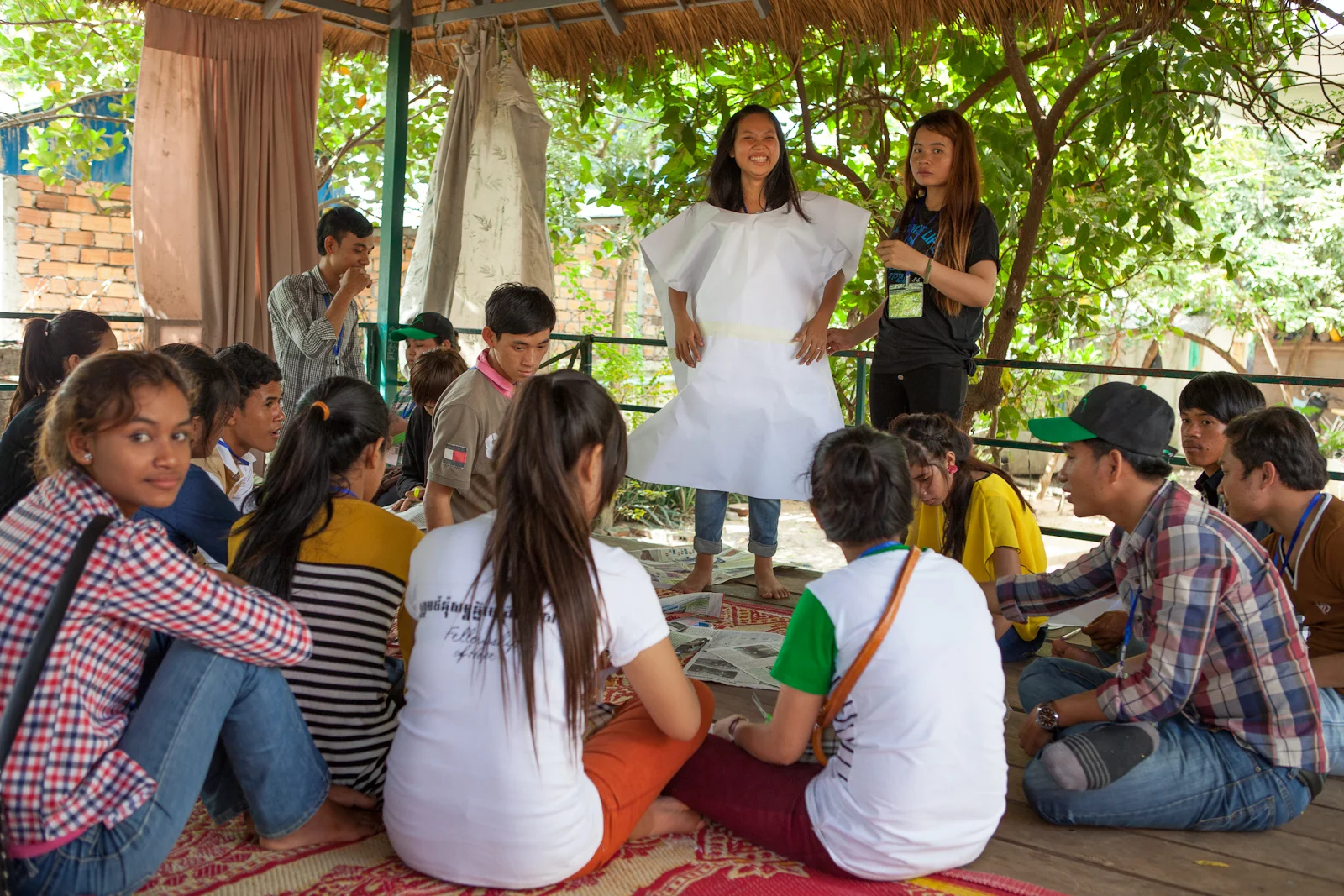
A unique home situation kept this boy coming back to camp 8 times in a row
Narith is slow to reveal the details of his story, especially the challenges in his life, as though they are commonplace and hardly worth mentioning.
Narith is slow to reveal the details of his story, especially the challenges in his life, as though they are commonplace and hardly worth mentioning. He has a calm, quiet presence. He's the sort of person you might overlook in a gathering of nearly 300 excited children and youth.
That was the scene last week at the Alongsiders Cambodia annual camp for mentors and their little brothers and sisters.
Narith was there attending for the eighth consecutive year. He was chosen as a little brother at the age of nine. Now at seventeen years old he is one of the oldest "little" brothers. And he is a good example of why we have an annual camp.
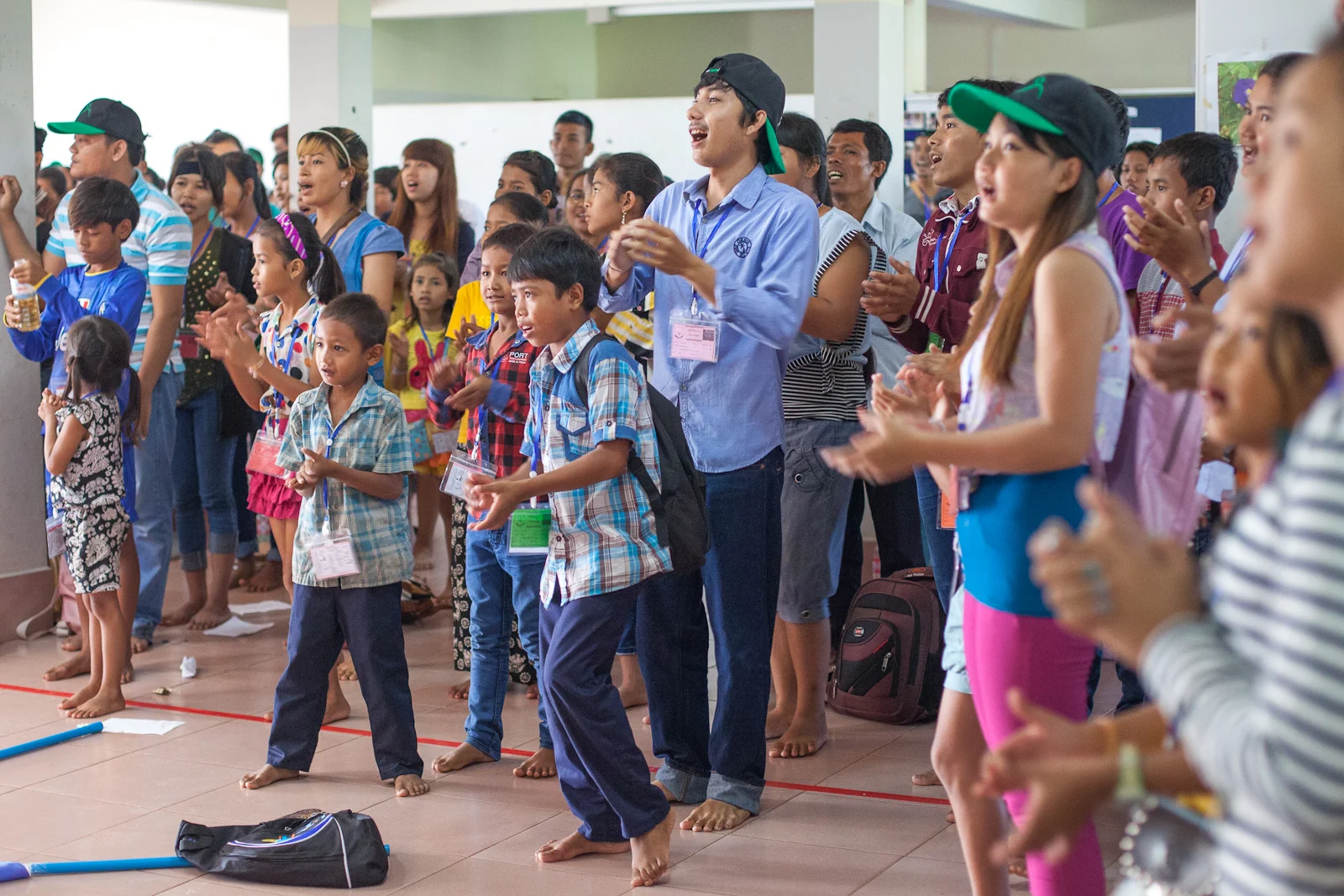
Worship, music and even dance are important parts of camp
What he enjoys about camp, he says, are the worship and teaching times. But most of all he loves being part of the community: the big gatherings, the shared energy, the group activities, and the sense of movement together.
As he keeps talking, it's clear why the community experience is so important to him.
He starts by saying his mother has been "low in energy" for as long as he can remember. His father, he adds, died when he was very young.
Narith's mother has worked for many years in a garment factory as a seamstress seven days a week. So she's away from home and Narith does many things for himself. Mostly he studies.
He's an only child, he says. His mother never remarried. She has worked hard all these years so that he can get an education, and now he is on track to graduate from high school, thanks to her sacrifices.
Being in the Alongsiders movement, not surprisingly, has had a significant impact on his life. After he was chosen as a little brother, his Alongsider mentor used to visit all the time to encourage and pray for him. They still meet frequently. Narith himself came to faith and joined a local church.
His mother also came to faith along the way. As he says this, Narith makes a curious gesture with his hands motioning toward his heart, as if he's trying to show his mother's faith because words aren't enough to describe it.
There is one more detail to the story.
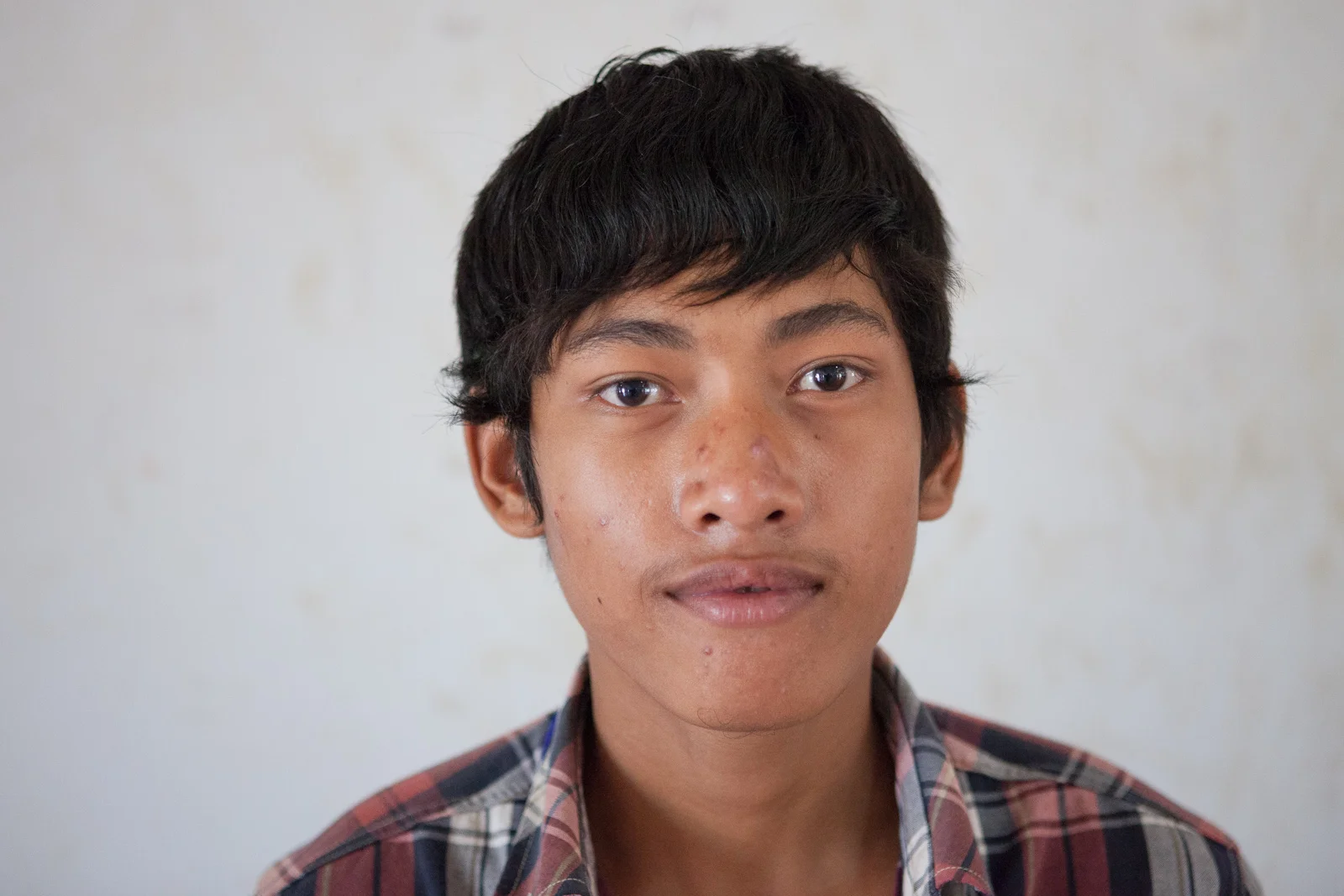
Narith has been a "little brother" since he was 9 years old.
Perhaps it's out of respect for her that he leaves this point until the end, because she has not let it define her. Narith's mother is deaf and she can't speak. They share a sign language they developed together over the years.
It's no wonder Narith loves the community life at camp! No wonder he is drawn to the volume and energy. No wonder he participates in every activity wholeheartedly, even craft projects designed for younger children. At home he is most often alone or, when his mother returns from a long day of work, in silence.
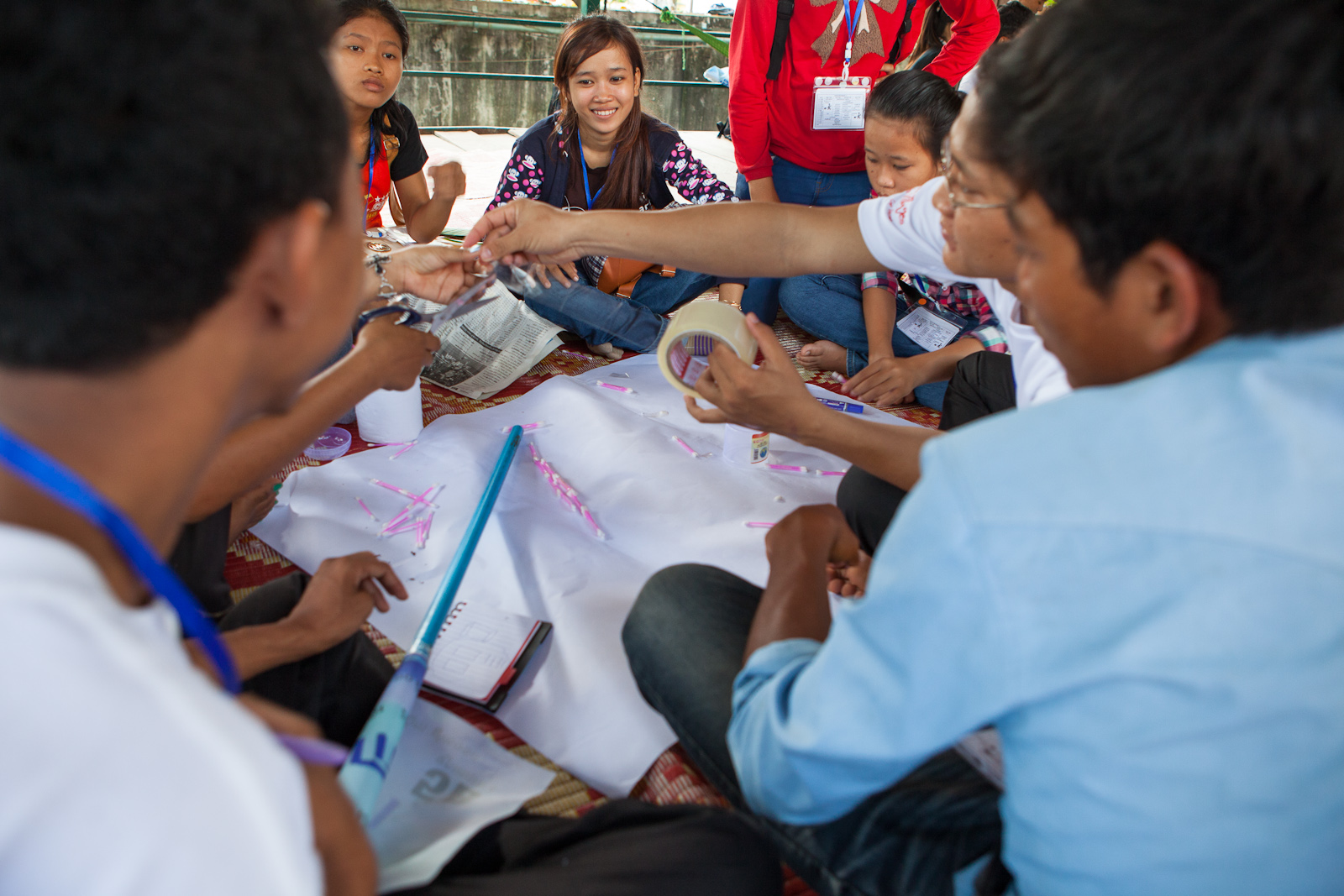
Workshop learning and fun
Isolation is the essence of poverty. Many of the little brothers and sisters have lost one or more parents, and many take care of themselves while their parents or guardians go to work. Alongsiders is overcoming isolation through relationships.
At the annual camp, little brothers and sisters see they are not alone. Mentors learn from each other. It's a time of renewing, recharging, and sharing vision. It's for everyone to recognize they are part of a movement, and that it's from God.
Next year Narith will likely return to camp for the ninth time as an Alongsider mentor himself.
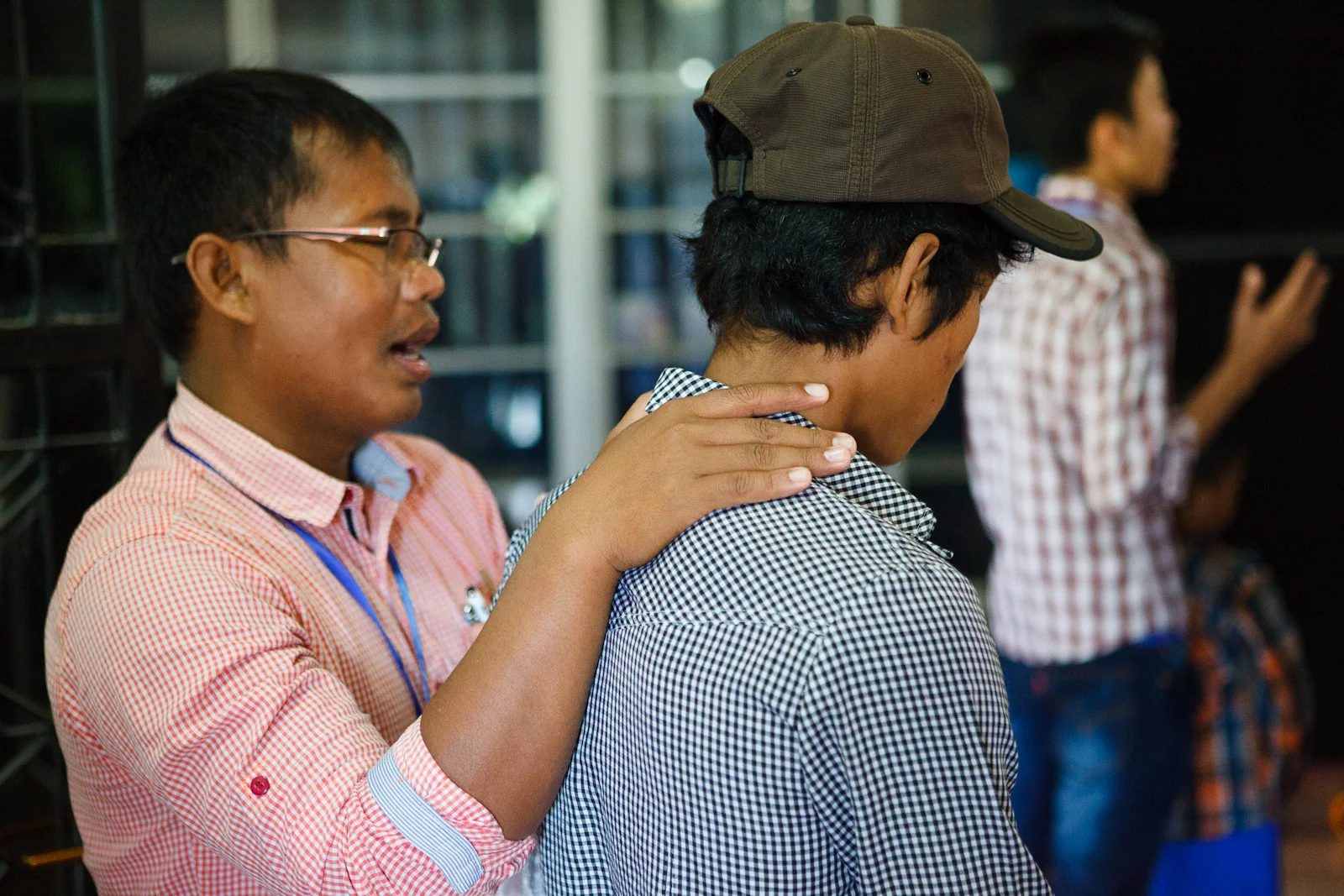
Narith's Alongsider mentor, Kimyan, praying for him at camp
"I know because of my own experience. My Alongsider mentor always showed me love. I want to give my love to another little brother like he did for me."
As Narith speaks, music is playing upstairs and a voice is peeling through a microphone calling everyone together. It's time to go and join the movement again.
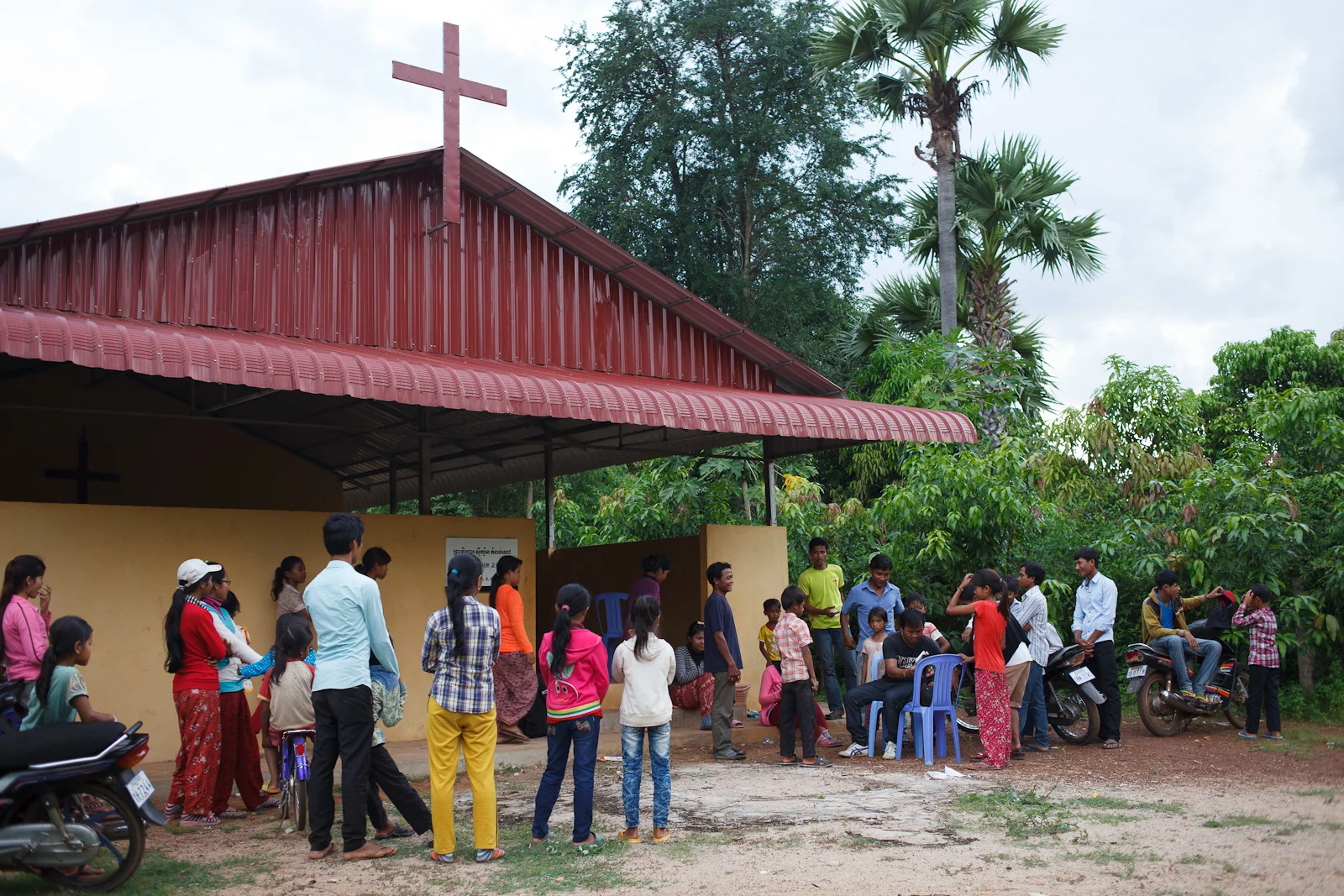
Why we work with churches, even when it gets uncomfortable
We work with local churches. If you’re nodding your head, or shaking it in concern, keep reading. Some of our reasons may surprise you.
We work with local churches.
If you’re nodding your head, or shaking it in concern, keep reading. Some of our reasons may surprise you.
Alongsiders doesn’t just work ON or FOR local churches; we work within them. We equip young church members, and they do the most important work of being Alongsiders. Most of that is done outside the view and control of our movement leaders who are in supporting roles.
Here are four reasons why we do it this way, starting with the easy ones.
1. Local churches are present in local communities almost everywhere.
Local churches are spread out all over the countries we work in. For example, in India we partner with a network of 3000 churches. What organization can claim to have offices and staff in so many places? Especially in places where the poorest of the poor really live? If there is such an organization, then it must spend a fortune on staff and overhead.
To reach thousands of vulnerable children we need a presence in thousands of local communities. Grassroots movements depend on grassroots structures and networks. Working with local churches means the structures we need are already in place where we need them.
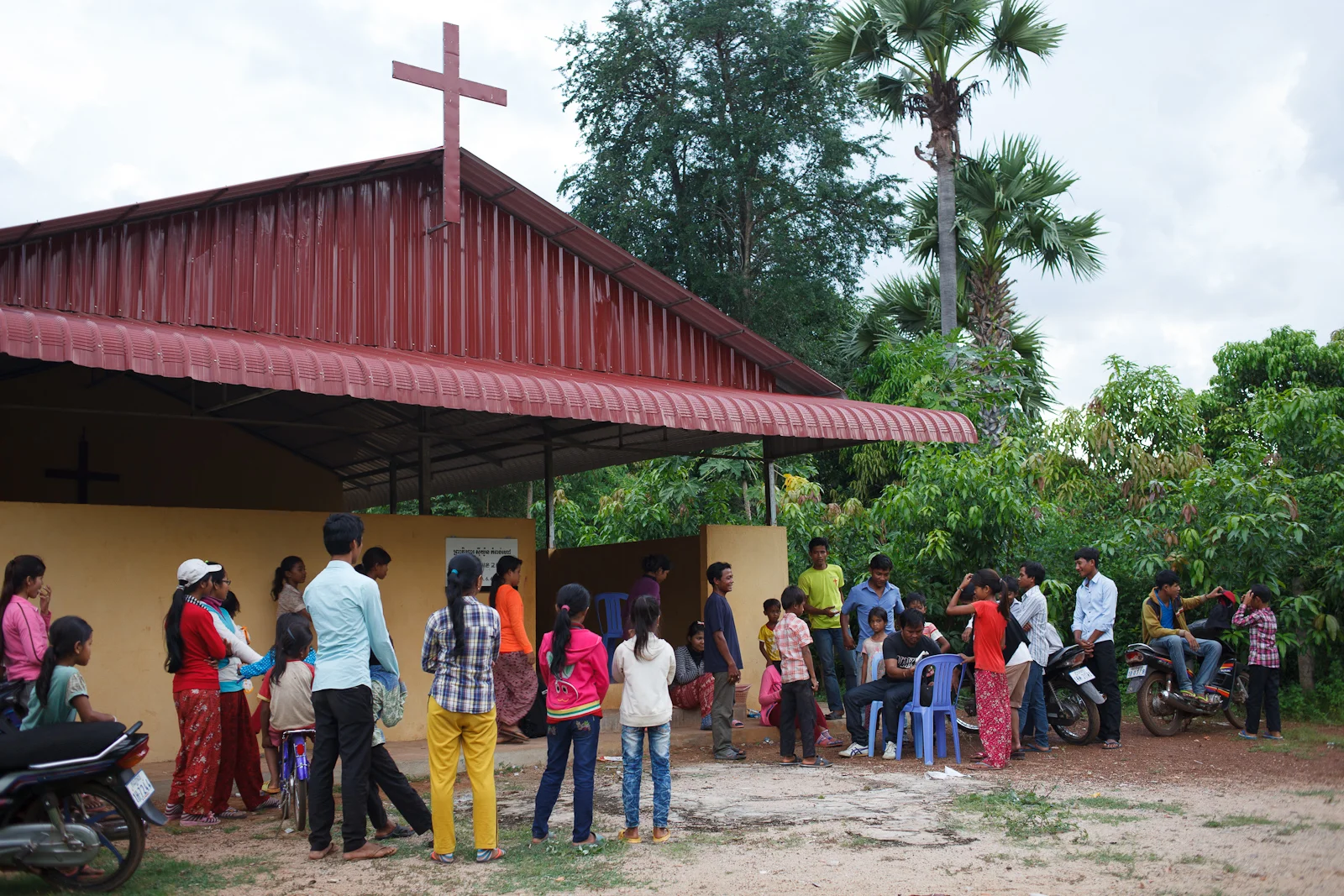
2. Local church relationships are an important support network.
Most mentors are singles in their twenties. They may lack the wisdom and experience to respond to all the needs their little brothers and sisters may face. Family problems, abuse or entrenched poverty may require intervention by wise older adults. Mentors who are part of healthy local churches have a support network already in place to stand with them.
And that support network becomes a blessing and source of strength for the little brothers and sisters and their families too. Vulnerable children are often isolated and disconnected. By welcoming them into the local church, children gain an important support network which will be there to help them face the challenges of life.
In Alongsiders we often quote the Cambodian proverb: It takes a spider to repair its own web. In real life it often takes a community of spiders.
3. We believe in the gospel.
When Jesus started his ministry, he declared “good news (or the gospel) to the poor” and said:
(God) has sent me to proclaim freedom to the prisoners and recovery of sight to the blind, to set the oppressed free, to proclaim the year of the Lord’s favor.
We already speak a common language with the local churches. Or do we not?
Some Christians and churches have taken this gospel and spiritualized it as solely a message of salvation from sin. They interpret “poverty” and “blindness” and “captivity” entirely as metaphors for spiritual conditions.
Others believe Jesus addresses both spiritual and material poverty, disability, and oppression (and other dimensions besides), but they have struggled to communicate and live out a more complete (wholistic) gospel in their local churches.
As a result, many Christians concerned about the poor have supported Christian organizations which focus on compassion and social justice, while their local church attends to the "more spiritual" tasks.
But should a wholistic gospel be divided up this way?
If we believe Jesus announced such an all-encompassing gospel – that every relationship on earth and in heaven is being put right with forgiveness, healing, and justice – and if we believe Jesus is the Head of the Church, then can't we hope that the Spirit of Christ will guide us into the fullness of the gospel together?
So for the sake of the good news for the poor, Alongsiders as an organization is returning initiative and power to local churches through their members, entrusting them with a wholistic gospel message for the vulnerable, the disabled, and the captives among them, and empowering them to live it out.
4. We want to see local churches transformed.
Alongsiders works through local churches. And very often the mentors themselves, and even whole churches, are transformed along the way. This is not always a comfortable process for those in entrenched positions of leadership. The contribution of younger people is not always valued. But Jesus was a master at turning things upside-down and challenging the prevailing culture.
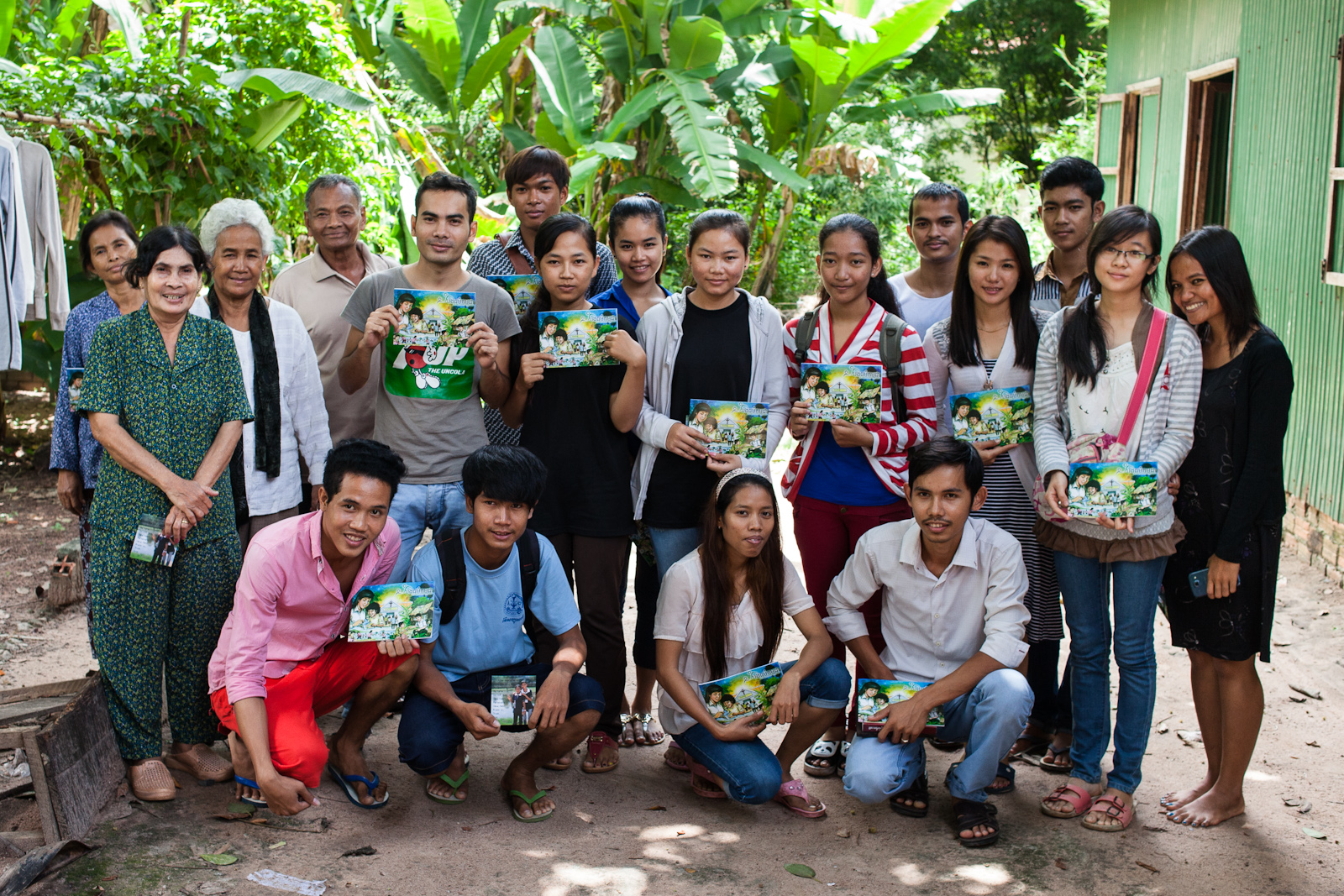
Church elders and leaders with a new batch of Alongsiders
The Alongsiders movement is not merely a movement to bring love and encouragement and discipleship to vulnerable children. It is also a movement of young people being transformed. We believe that in reaching out the poor, it is often WE who are most deeply impacted, OUR faith that is stretched, and OUR capacity for love that is enlarged. It is counter-intuitive, but central to the gospel, that when we lay down our lives for others we will actually find life ourselves. This is what we are seeing everyday in the lives of the Alongsider mentors. This is what is transforming the church.
Christ loved the church - to the point where He laid down his life for it (Eph 5:25). Despite all the problems and challenges of loving sinful human beings, we are called to do the same.
There are MANY more reasons we work through local churches, but most of all we long to see the Kingdom that Jesus announced being fulfilled...
On earth as it is in heaven.
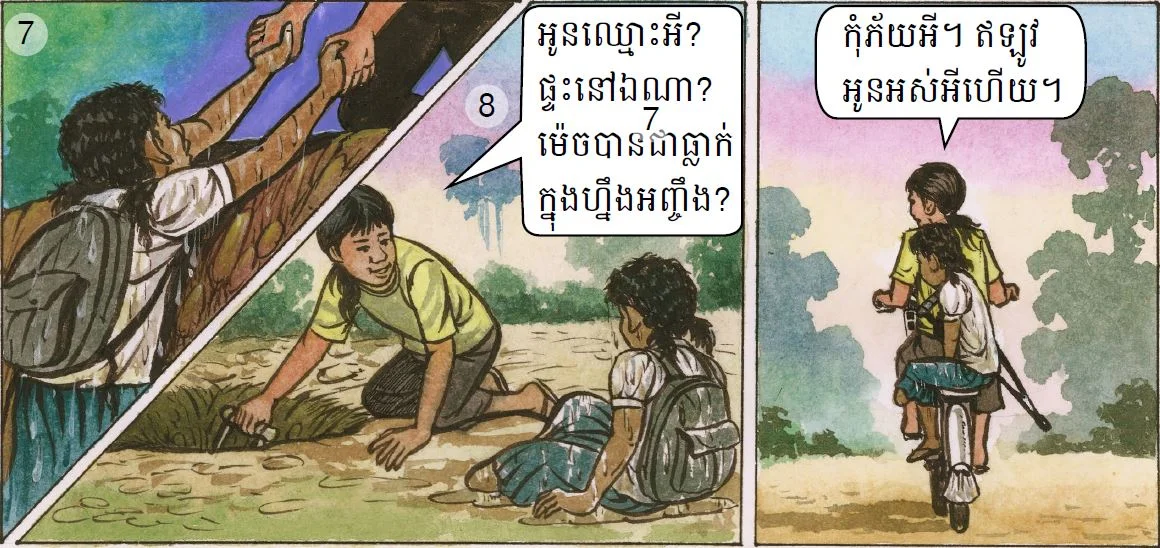
4 lessons about vulnerability from an unlikely source
A disabled girl and her struggle for education teaches us some important lessons about vulnerability.
Sreymao pressed forward. Step-by-step. Hardly stopping to rest. The road stretched out ahead, full of challenges: hard clay ridges and rain-slickened ruts that might catch the foot of her crutch or send her sliding.
Two hundred meters to go. It had been a long morning at school and she just wanted to be home.
Suddenly a group of boys came running up the road behind her, shouting and swinging their school bags around their heads like helicopter blades. She didn’t have time to brace herself. The first one shouldered her as he went by, and then the swinging bag of the third one crashed down on her arm just as her weight shifted.
The crutch slipped sideways and she fell off the side of the road into a muddy hole.
A farmer, unfortunately, had started digging a pond on that spot. It was empty except for two or three inches of rainwater and mud at the bottom. At least it was a soft landing. She found her crutch and shook it free of water and muck.
As she picked herself up and attempted to wipe clay off her navy blue skirt and white school shirt, she realized with a sickening dread that the lip of the pond was nearly eye-level.
She couldn’t pull herself out.
In that moment she heard a bicycle approaching. She called out for help and braced herself for the shame of discovery. But her eyes lit up as the rider appeared. It was Karuna, her ally – her Alongsider “big sister!”
Karuna took Sreymao’s hands, pulled her up, and gave her a ride home on the back of her bicycle. At the house Karuna explained to Sreymao’s mother what had happened. From inside the house they heard a crash. When Karuna entered she found a muddy school bag in a heap.
And then, Sreymao finally let the tears come out.
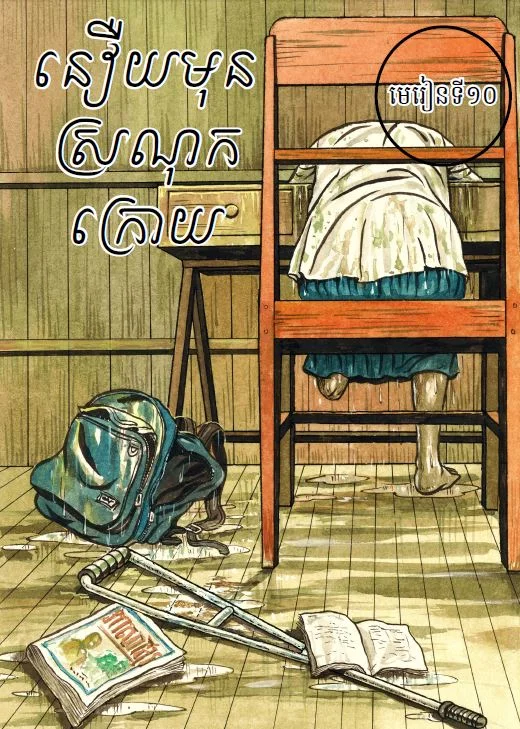
The cover image: Sreymao after returning home
This isn’t a true story in the historical sense, but it will be very “real” for many young Cambodians who read it. It’s the first couple of pages of the story told in our latest comic book, which has already been delivered to the printer.
We are creating culturally aware comic books with engaging stories and simple, practical lessons. They form the core of our curriculum.
Every month Alongsiders group leaders distribute copies of the newest comic to the Alongsider mentors who in turn read through them interactively with their little brothers and sisters.
Alongsiders Cambodia is empowering a movement of mentors at the social and economic margins. These comic books provide a simple structure and an effective means to communicate vision, equip leaders, and enable learning together.
Comic books don't transform people, but Alongsider mentors reading them interactively with their little brothers and sisters in growing relationships is transforming.
Now let’s return to the story. What will the Alongsider mentors and their little brothers and sisters take away from it? Following are four lessons this comic directly and indirectly conveys.
1. We choose to see the most vulnerable people in our midst.
There are many poor and vulnerable children in Cambodia. In this comic the team deliberately set out to tell a story about someone who is more vulnerable than most. Most of us are pretty good at spotting people in need from a distance, but in some insidious way, we (many of us) are adept at filtering out the most vulnerable people in our own neighborhoods and communities. The same thing happens in Cambodia.
When Alongsider mentors read this comic with their little brothers and sisters, it’s a reminder of the vision and calling they responded to. When young adults sign up to become mentors, they agree to: 1) choose a little brother or sister who lives in their own community, 2) choose someone of the same gender, 3) choose someone who is most vulnerable, 4) choose someone who is NOT a relative, family friend, or church member, and 5) pray about the decision.
Alongsider mentors are learning to see and value people who most others overlook!
2. It takes discipline and perseverance to succeed.
This is the direct message in the story. It's not really a story about disability; it's about a girl developing the kind of character it takes to succeed in education and life.
Sreymao is ready to give up, but Karuna encourages her to stick with it. They study together and work hard, and as a result Sreymao's grades and attitude improve. It's a simple message, but it's part of a series of lessons that build on one another, and this one can make a difference in a child's life - especially if the Alongsider mentor follows Karuna's example!
Sreymao and Karuna each study hard for school independently and together
3. We are defined by our choices, not by our weaknesses.
We are all vulnerable, but we don't want to be defined by what we lack.
This story doesn't treat Sreymao like a condition to be solved, and her fall does not warrant a full scale rescue operation. She just needs some help to get back on the road, and with thanks to Karuna, her dignity emerges intact.
Too often helping organizations send out the message, “We will solve your problems (on our terms).” The message of Alongsiders is, “You have what it takes to succeed already and we'll find it together."
Karuna takes Sreymao to visit an older woman who has become a teacher despite being confined to a wheelchair, so Sreymao begins to see that she has choices about her future.
4. Prayer and engagement in life go naturally together.
When confronted with suffering, many people react with the "fight or flight" reflex. "Fighting" may mean trying to fill in for God (in his apparent absence) in order to solve the problem. "Flight" may mean escaping into distraction or a safer place. The alternative, being present in a relationship without easy answers, requires trust in God.
The theme of the story above is the need for discipline and perseverance, but there's a moment when Karuna and Sreymao stop to pray in the midst of all their activity. Such prayer is natural; it's not forced ritual, nor passive resignation, nor an after-thought. It stems from faithful engagement in the realities of life.
In the face of poverty and vulnerabilities and an unknown future, Alongsider mentors don't have many answers. They often have their own daunting problems. If they want to stay on the journey with their little brothers and sisters, they need to trust God, and so they will pray.
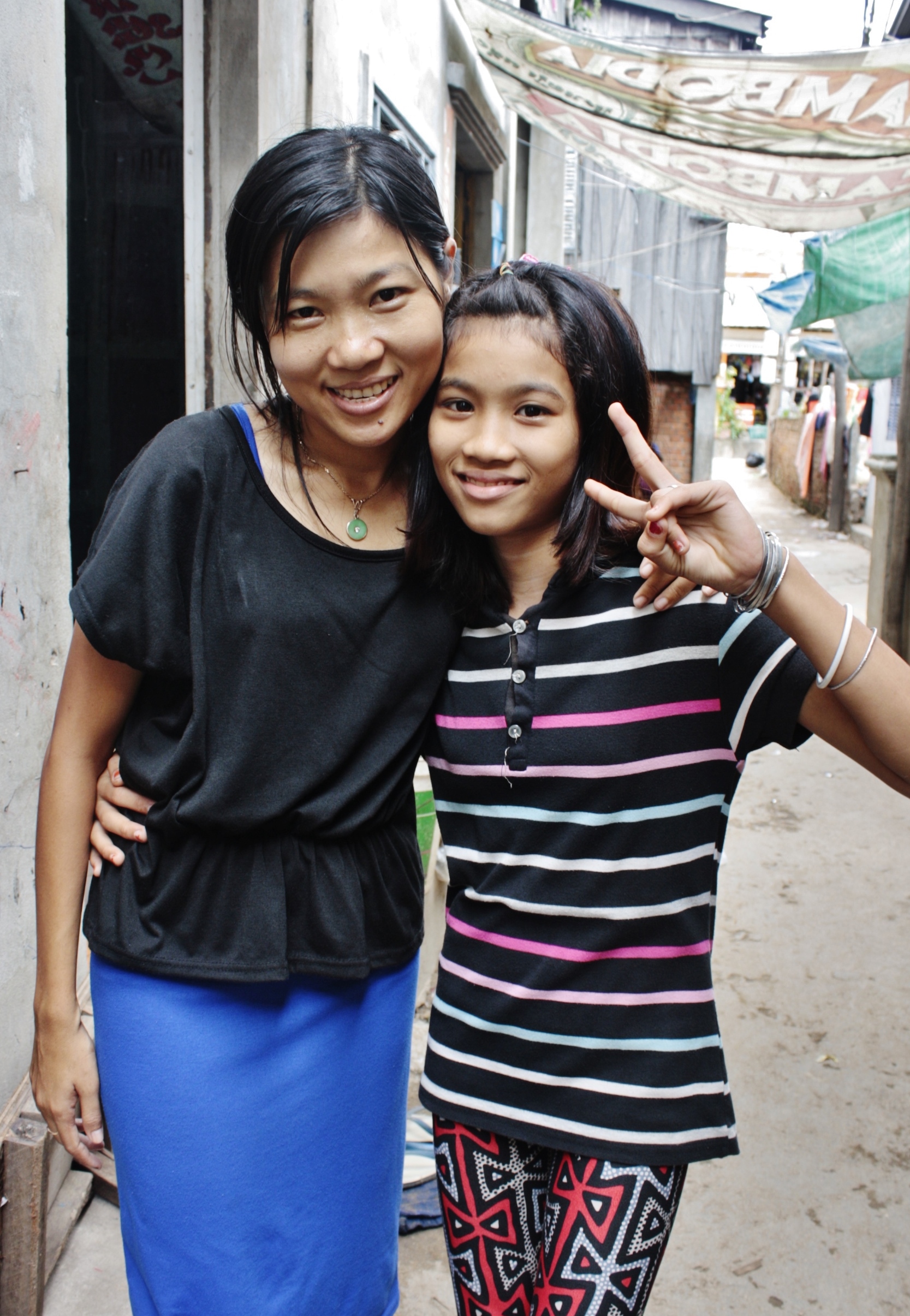
One teenage girl's audacious idea
When Serey heard about Neang’s announcement, she went to ask some questions... What would she truly love to do that she felt she might be good at?
No one seemed to care about Neang*. Overlooked by everyone, she was the youngest child of a single mother whose father died when she was just three months old.
But one day, a young woman from the same community noticed Neang.
Serey was a 23 year-old Alongsider mentor prayerfully choosing a "little sister". She herself was searching for a way forward in life after growing up in poverty, so she knew the challenges facing Neang and wanted to serve. Serey says,
“Neang didn’t speak much, and she looked lonely. I loved her and wanted to help. There were other girls from poor families who I thought about as well, but her situation seemed more difficult. So I chose her.”
Serey and Neang early in their relationship
Today Serey is still a "big sister" to Neang. Serey has been walking alongside Neang for the past eight years.
“I became her friend. I encouraged her and met with her almost every day. I visited her house, and I talked with her family. She trusted me, and we had a good relationship. When she was eleven, she came to have faith in Jesus. ”
Neang is now 14 years old, and Serey still meets with her regularly. They are part of the same church family. But the challenges of growing up in a slum continue for Neang.
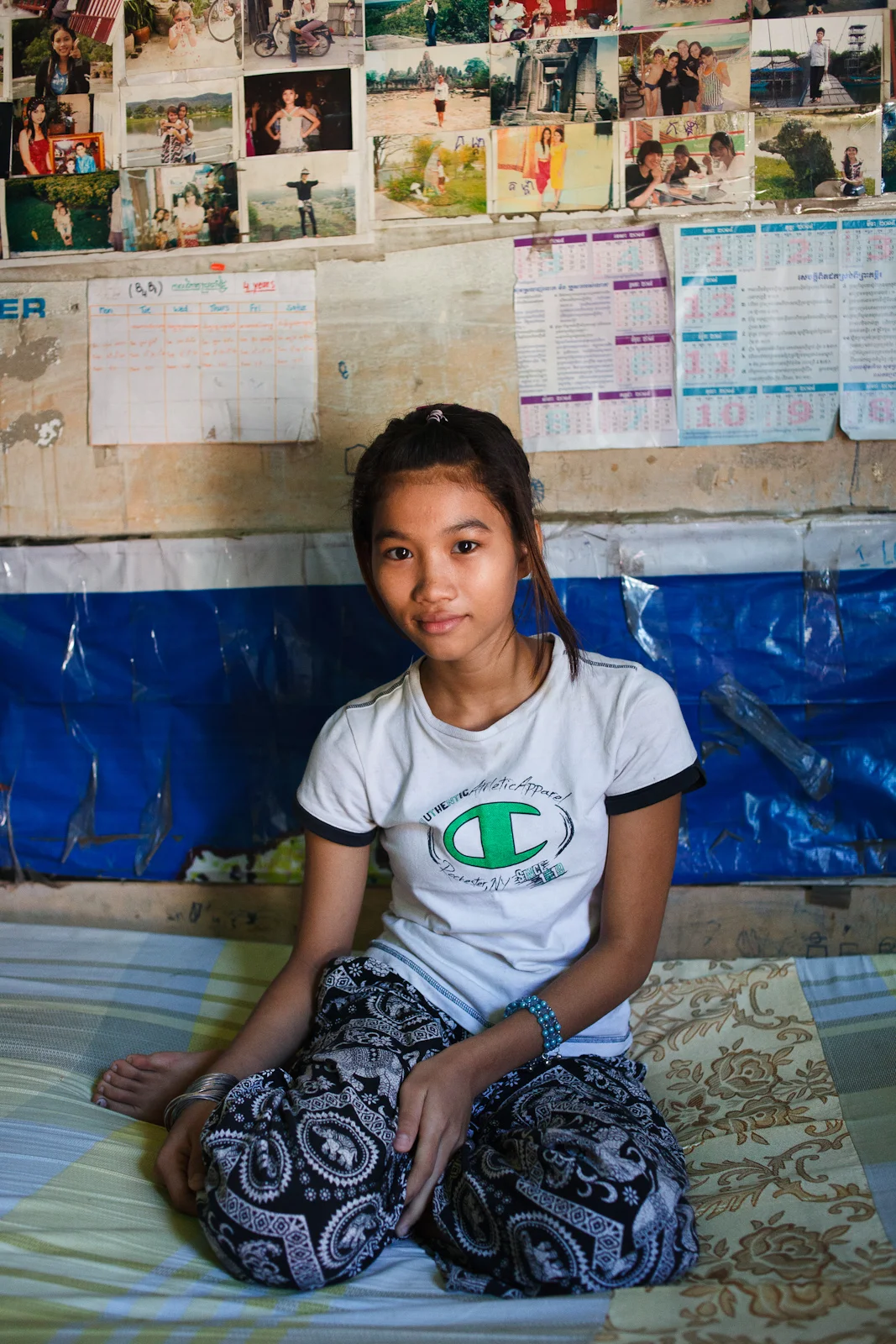
A few months ago Neang announced to her family that she would drop out of school after the 9th grade. The family needed money and she had a plan to attend classes to become a beautician and then open her own little beautician booth. She had heard about a government scholarship for vocational training. Besides, she liked make-up and hair-styling. She and her friends often practiced on each other. They like feeling beautiful.
For teenage girls living in the slum, some version of this story is the norm, not an exception. Among the poorest of the poor in Cambodia, just over half of the children attend primary school. Only a tiny percentage of students continue through high school.
And like students her age everywhere, Neang felt like she had been in school for a LONG time with no end in sight. Unlike students in many other places, the majority of her older role models have dropped out of school and taken jobs in local factories, and most of her peers will do the same. The money is very tempting, even $120 per month earned by working ten hour days, six days a week in a factory.
Neang’s grandmother, who runs the household, also liked the idea of Neang earning money to help with expenses. Neither Neang’s mother nor her grandmother finished high school, but they understand hard work. The sooner Neang gets a job or starts a small business, the sooner she can help support the family - and they can use the money.
Four years of high school (with significant costs in school supplies and fees) is a long time to wait. Besides, Neang's grades are average, and her family is poorer than most.
When Serey heard about Neang’s announcement, she went to meet with her and ask some questions. How would Neang get the money to open her own business? She didn't know. Serey probed further and asked Neang about her personal vision. She asked her to think about the long term. What would she truly love to do that she felt she might be good at?
"I would like to be a teacher," Neang answered softly.
Serey smiled her encouragement. "A teacher? What will it take to become a teacher?"
After discussing the options with Serey and her family, Neang decided to finish high school first, and then decide whether to go to beautician classes or university. Either way would present challenges, but having a high school diploma will be a tangible asset and possibly a way out of poverty.
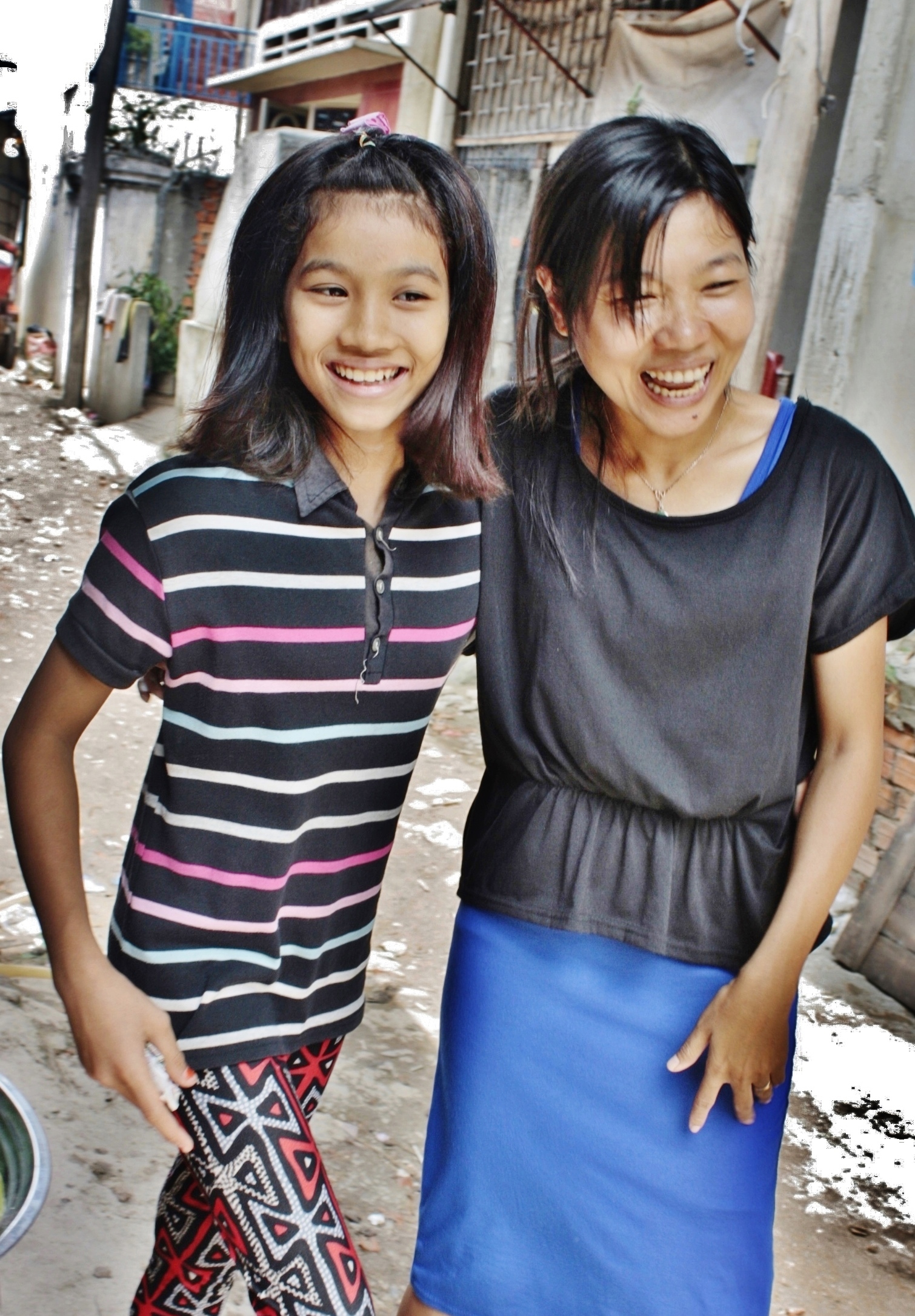
Serey and Neang are firm friends today
Becoming a teacher is an audacious idea. Kids who grow up in the slum rarely become high school graduates; they rarely attend university; and they very rarely become teachers.
Having your own business is also a worthy goal.
Whatever direction Neang takes will require courage and dedication, and someone to walk alongside her as she makes big decisions.
You need someone standing with you to help you voice a vision. You need someone walking alongside to help you stick with that vision. Serey wants to be that person for Neang.
Neang says of her Alongsider mentor, "She encourages me. She helps me stay on a good path."
Neang is no longer overlooked. And with Serey's help, she might just see some of her audacious dreams come true.
Serey offers this insight, "When Neang was young she had a lot of shame, and she felt afraid. But she became brave."
* Neang's full name is Srey Neang