
5 steps to creating a life-changing comic
What does it take to create a comic book simple enough for a semi-literate child to understand, but profound enough to spark change in that child's life?
What does it take to create a comic book simple enough for a child to understand, but profound enough to spark change in that child's life?
What does it take to put a brand new comic book like that in the hands of every Alongsider mentor each month?
Truly, a significant amount of thought and work goes into each comic. Here's the process...

Step 1: The Topic Meeting
A comic book lesson begins life in a Topic Meeting with members of the Curriculum Development Team.
Team leader, Hitomi Gray, and her assistant, Puthida Bou, undertake the preliminary research: gathering background information, considering how the topic normally plays out culturally and counter-culturally in Cambodia, and prayerfully considering relevant Bible themes, stories or verses.
All this background data is brought to the Topic Meeting for prayer and further brainstorming with the rest of the team. By the end of that meeting, we have agreed on the main objectives of the lesson, and we have a good sense of where we want to go with it.
Step 2: The Storytelling Circle
The next step is to form a Storytelling Circle. Alongsider mentors (some who were "little brothers or sisters" formerly) are central to this storytelling gathering. The non-Cambodians take a back-seat role. It’s not that Westerners can’t contribute, but the Cambodians know best what story elements are the most authentic and compelling in their own culture.
All of the comics are based on real-life experiences of poverty and struggle shared by the young people at this Storytelling Circle. Over the course of two or three hours, stories and lessons are crafted into engaging plots that can be told visually in just a few pages.
We make sure the story incorporates essential storytelling techniques such as conflict, drama, character development and clear messaging.
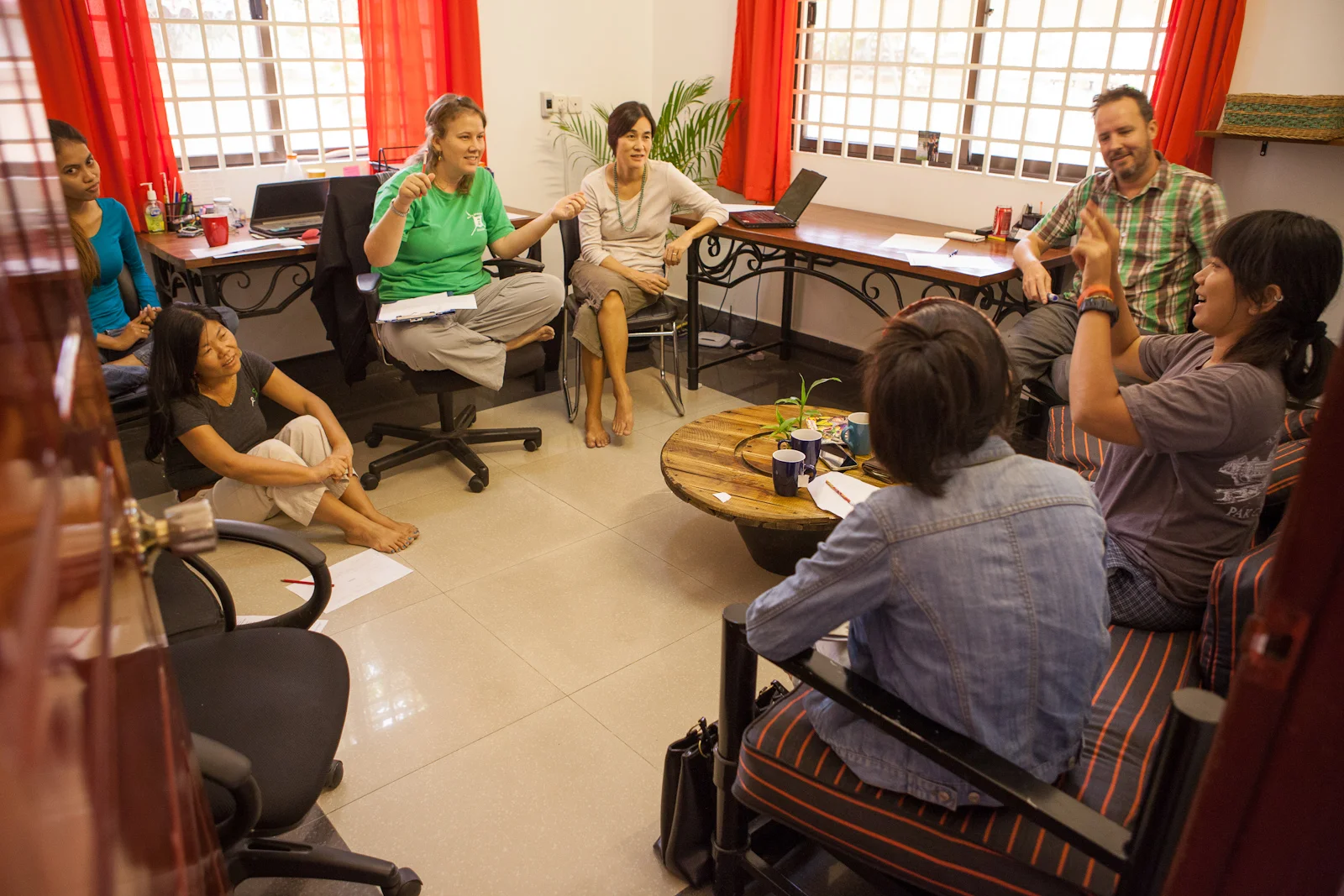
A recent story-telling circle in progress ... crafting a story on the topic of Fearlessness.
Step 3: The Artwork
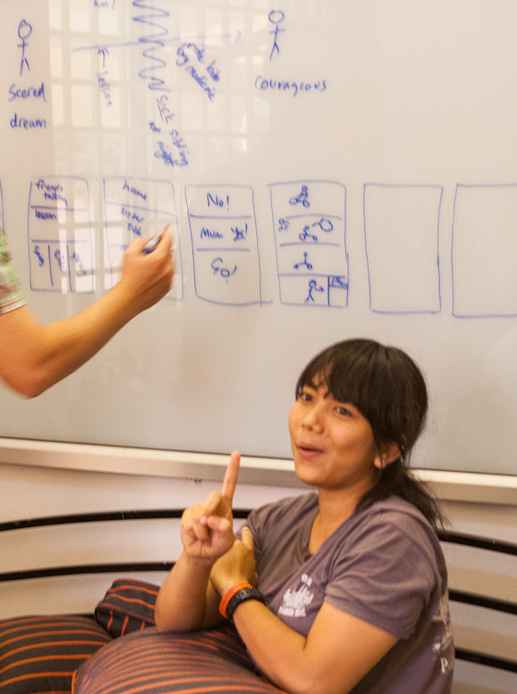
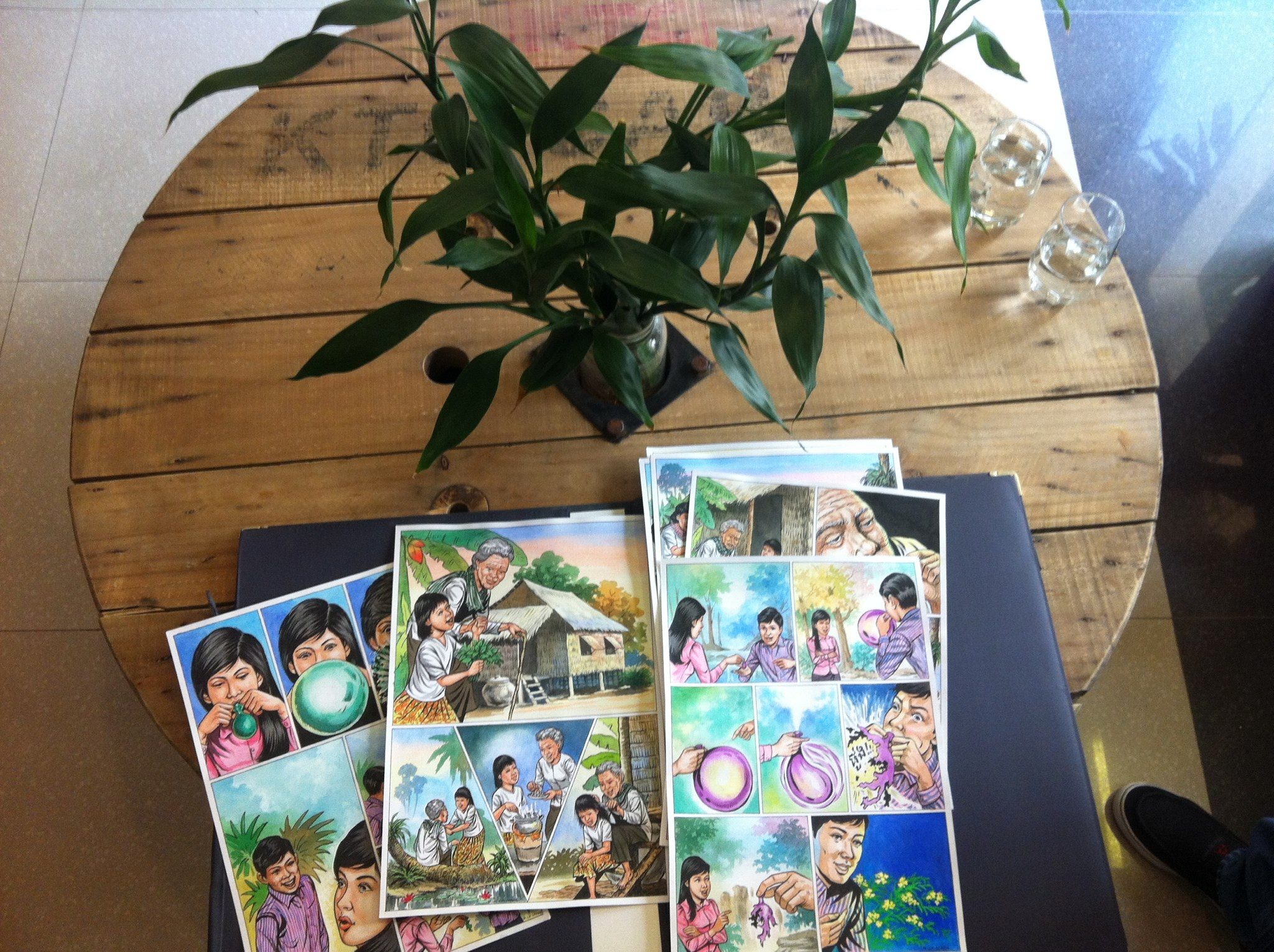
Once the rough story is outlined on a whiteboard, Puthida, an accomplished artist herself, takes a photo of what has been imagined by the group. She then hand-draws, using electronic paper and pen, a detailed storyboard of the 10 pages for the comic.
Finally, the story is ready for the artist, a Cambodian pastor named Met Sokha. Puthida meets with Pastor Sokha and goes through each page to make sure he understands the story and her drawings and notes.
Step 4: The Lesson Components
For the next week or so, while Pastor Sokha hand-paints each page (typically one day per page), Hitomi and Puthida develop relevant questions that the Alongsider mentors can discuss with their little brothers and sisters after reading the story. They also create one or two practical action steps to apply the lesson. These are essential, so that the lesson doesn't just remain as head knowledge.
For example:
1) with your Alongsider mentor write one short term goal and identify what you will need to sacrifice in order to attain it (in Perseverance, Lesson #10), or
2) list five adults who you can trust and who you will talk with if you are ever touched in an inappropriate way (in Good Touch/Bad Touch, Lesson #3).
Step 5: Design, Test Test Test and Print
When the artwork comes back from Pastor Sokha each page is carefully scanned in and edited using Adobe InDesign. Speech bubbles and story boxes are added and the various components laid out for printing.
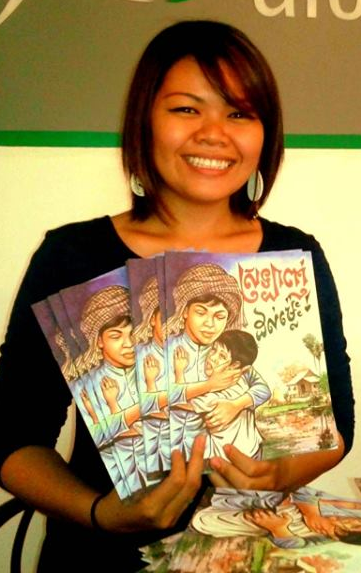
The final product!
The draft comic is now ready for testing and correcting. Puthida takes the comic out and about to test with neighborhood children. We also test it with a small selection of Alongsider mentors and a couple of proofreaders. Any errors will hopefully be picked up at this stage, but we are mostly checking that the main message and story is easily understood.
When everything is checked and signed off, we work with a local printer to print the comic. All going well, we have the comics, printed and delivered to us two weeks later, ready for training and distribution!
These comics are gaining a following. Other organizations are taking notice. One NGO reprinted 10,000 copies for distribution in schools and we're supplying free copies to various schools, churches and orphanages.
And of course, the curriculum is now being translated back into English, as well as developed and contextualized locally in other countries such as India and Indonesia.
All this effort, prayer and hard work is for one purpose: the transformation of young lives. So, join us in praying that the Spirit of God will work in and through us, and these comics, as they find their way into eager hands across Asia.
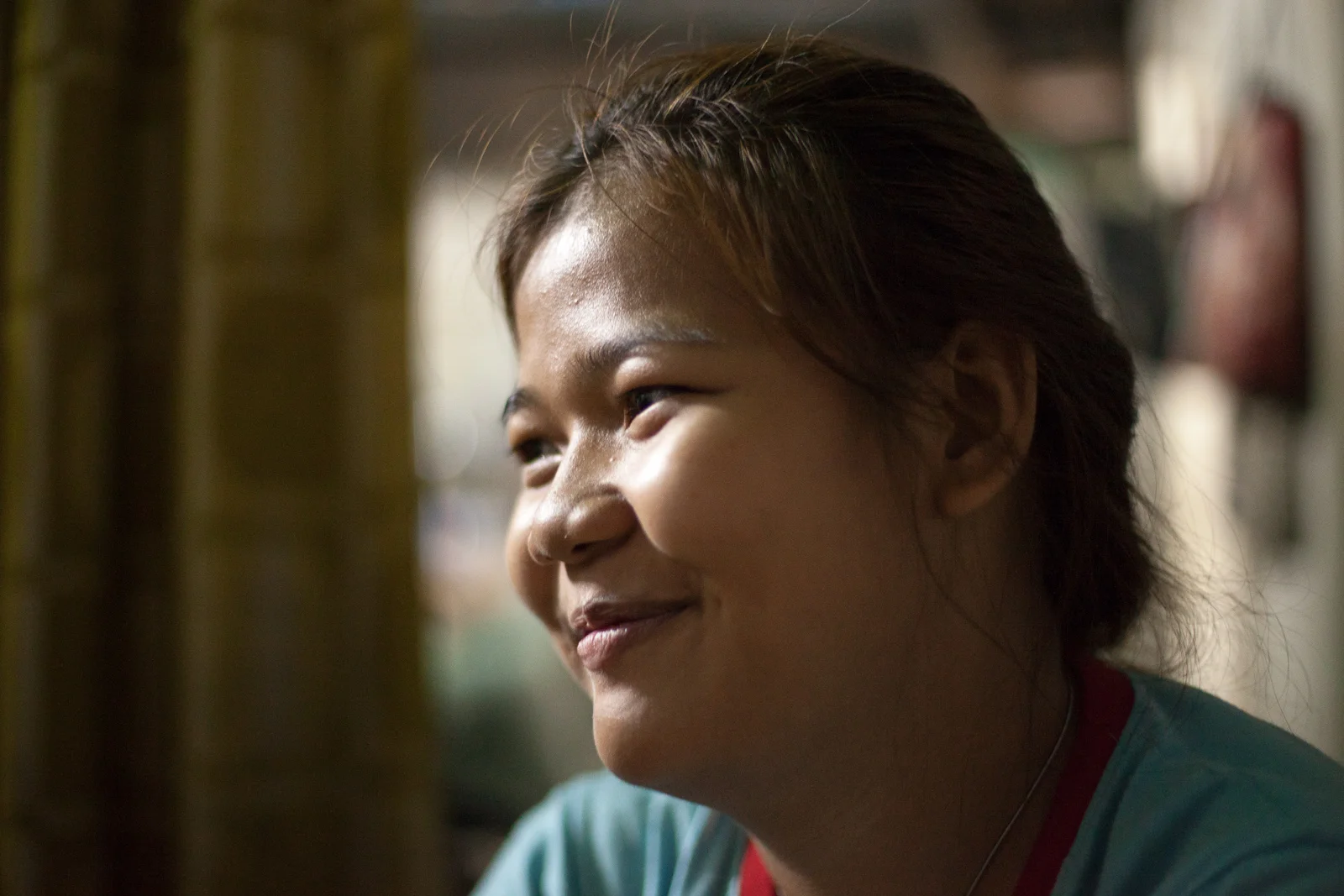
A New Year's lesson from a 17 year-old girl in Cambodia
How do we change? This year many resolutions will fail because we lack an answer for this question, so here's a simple, encouraging lesson from a young woman in Cambodia.
In the spirit of the New Year, what could be more on topic than the subject of transformation? It’s the hope of transformation that keeps us going.
When we find ourselves paralyzed, lacking hope, and resorting to actions we later regret, it’s so often because we wonder if anything really changes.
How do we change? This year many resolutions will fail because we lack an answer for this question, so here's a simple, encouraging lesson from a young woman in Cambodia.
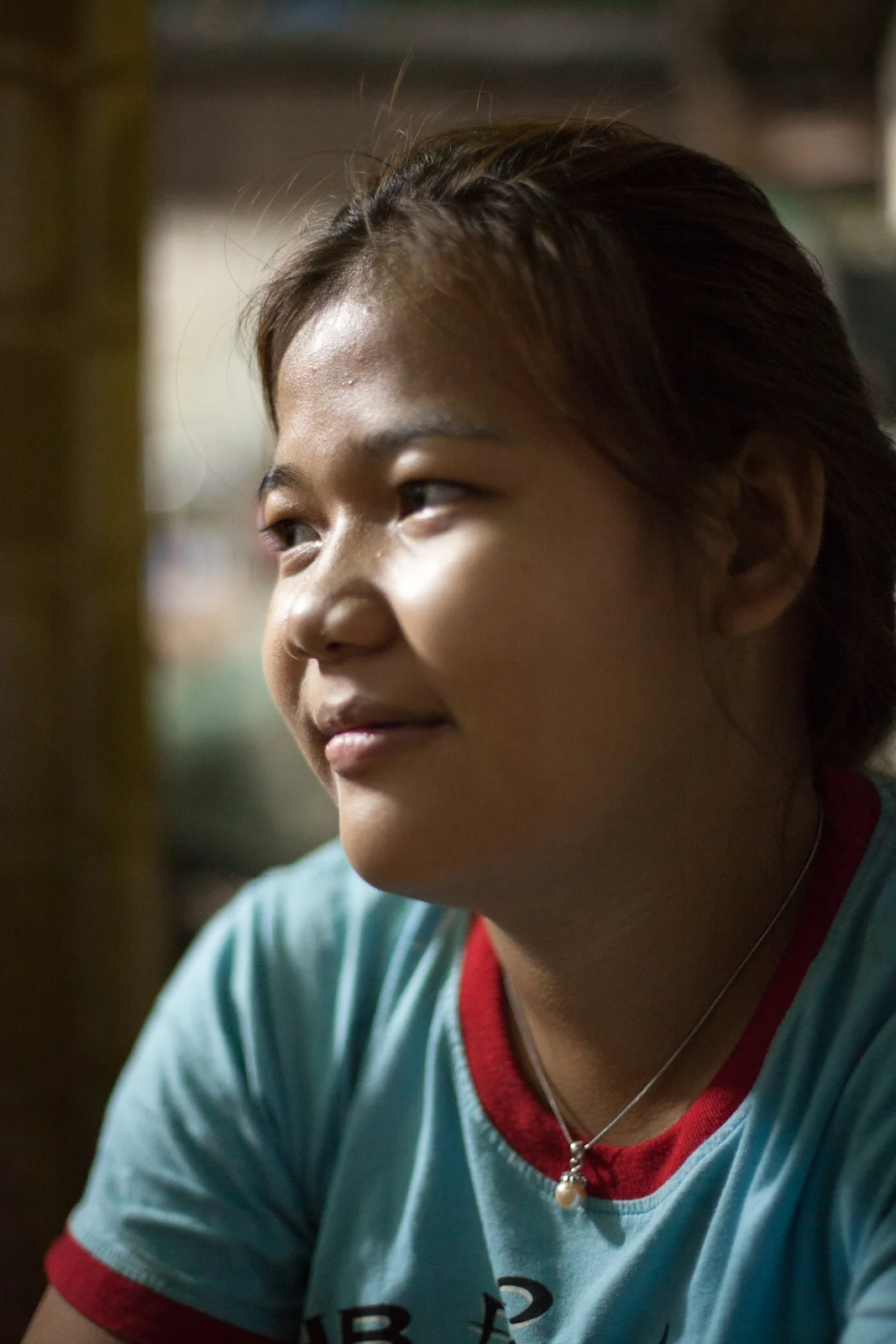
Sreyleak is seventeen years old and lives in a community on the outskirts of Phnom Penh that most people would call a slum. It’s full of vibrancy and life along with suffering and heartache.
And that just about describes Sreyleak as well.
Slums are communities in transition, but we don’t usually think of them in terms of positive change. Rather we see repeated patterns: family dysfunction, kids dropping out of school, and cycles of poverty.
Sreyleak’s parents have been ill for a long time, as long as she can remember, but seven years ago one of the first Alongsider mentors chose Sreyleak to be her “little sister.”
“Back then I was always alone. When I saw how others had relationships, I thought, ‘No one cares about me.’ But my Alongsider showed her love for me and cared about me.
She invited me to come to church every Sunday. She said, ‘Jesus is coming soon, so we’d better not wait.’ She told me about God’s love and encouraged me to read the Bible.
One day my Alongsider invited me to celebrate my birthday along with her daughter, because our birthdays are on the same day. I was very happy, because someone knew about my birthday.
Before knowing God, I used to have bad dreams. It was like war and fighting every night. It was frightening. But I’m not scared of anything around me anymore, because I have God with me. Last night my friend was talking about ghosts, and it was scary, but I didn’t have bad dreams.
Now my purpose in life is to get wisdom from God for my studies, so I can get a job with enough income to support my family. I pray that God will give my family health and energy.
Someday I want to be an Alongsider and do what my Alongsider mentor did for me. She showed me love and encouraged me, and I want to give this gift to my own Little Sister.
I thank my Alongsider, and I thank God. I feel like God is near to me now. ”
So what can we learn from Sreyleak about transformation?
If you ask Sreyleak questions about God, she is likely to answer with a list of religiously correct rules and principles.
But if you listen closely to her story, she will tell you about freedom from fear and about being loved. The principles may point in the right direction, but love and courage are what will sustain her through real, lasting transformation. People who change from living in fear to living in love and courage will surely experience transformation.
But how do we change at such fundamental levels? Sreyleak may not have all her theological answers straight, but she has experienced truth. Now she’s on the verge of transitioning from receiving as a “little sister” to giving and mentoring as a “big sister.”
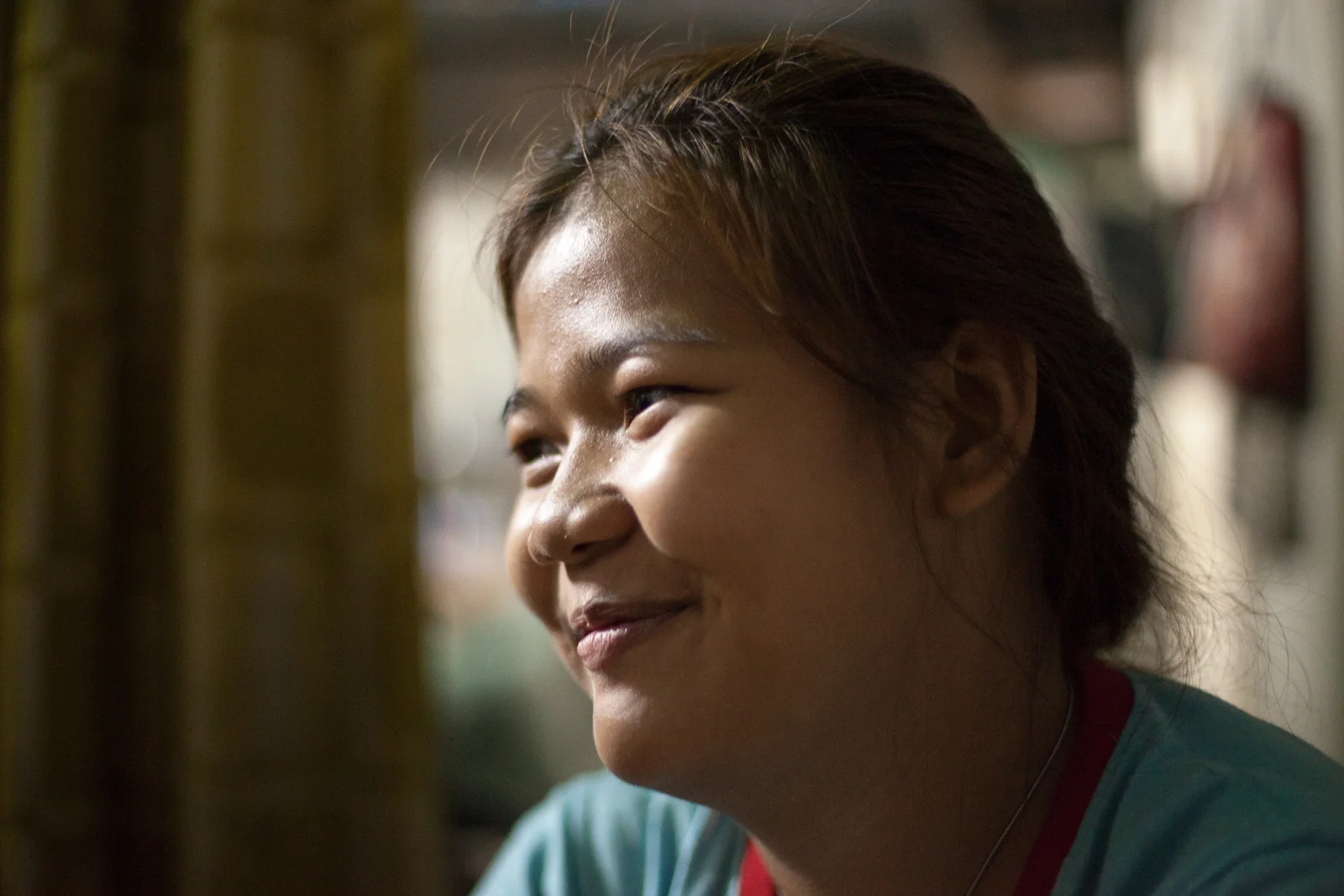
We have sometimes over-emphasized the role of knowledge in transformation.
Knowledge is important, but if transformation were powered primarily by knowledge, then most New Year’s resolutions would be a piece of cake and the most well-educated, knowledgeable Christians would be the most transformed people on earth.
Real transformation takes place in the world of experience and gritty face-to-face relationships. It’s powered by messy everyday choices coupled with the limited information we have.
Those who lean on the clean flow of seemingly unlimited information online, or prefer an ever-increasing knowledge of scripture detached from relationships, will not experience transformation despite many New Year’s resolutions and prayers.
Through the simplicity and rough edges of Sreyleak’s story, we see a life being transformed with ripples shooting out in all directions. It’s about love and courage from God lived out in relationships.
Really, it doesn’t have to be much more complicated than that for any of us.
How one girl found the confidence to grow up
Karuna, in her own words, was "messy" when her Alongsider mentor came into her life.
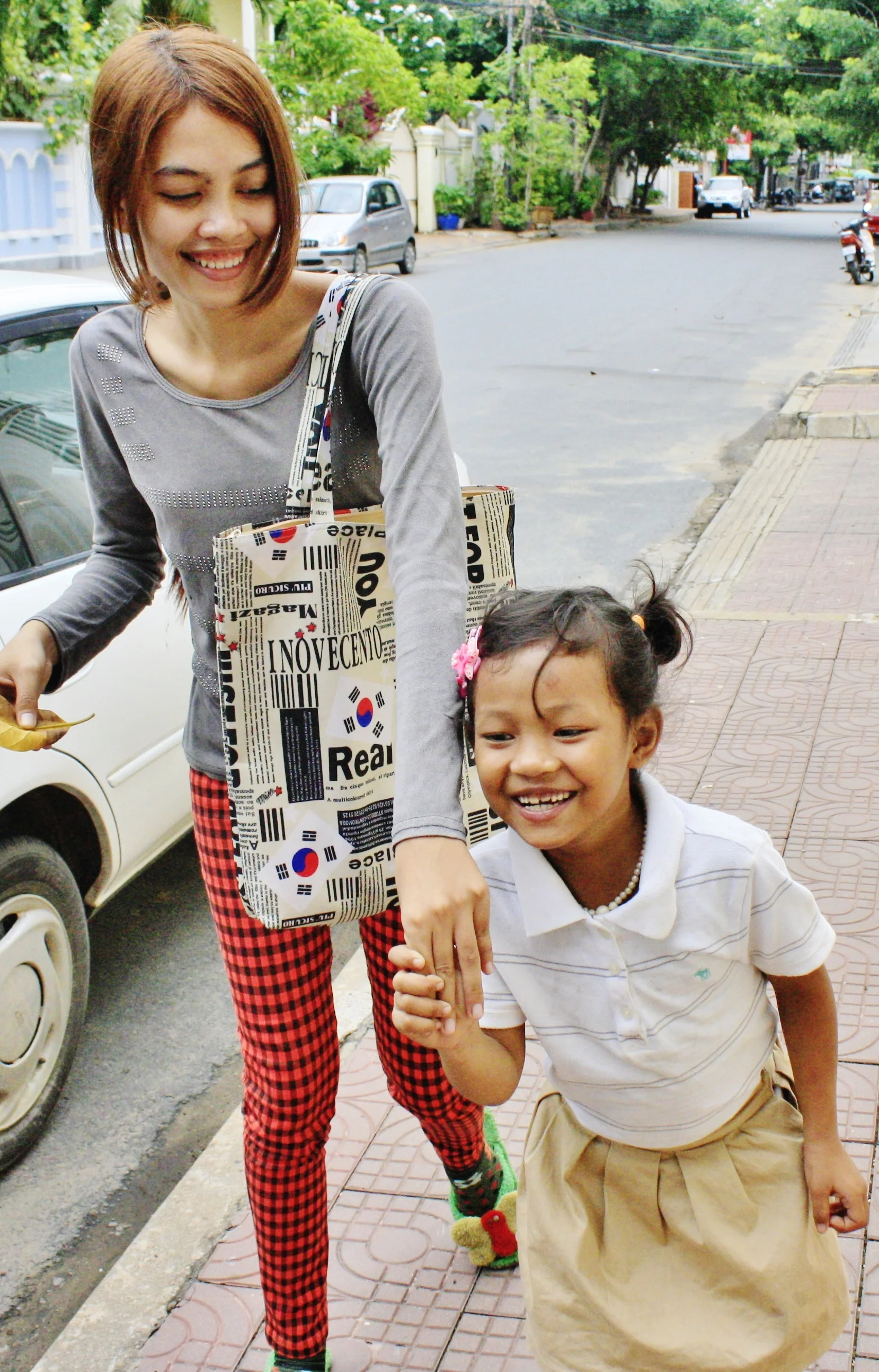
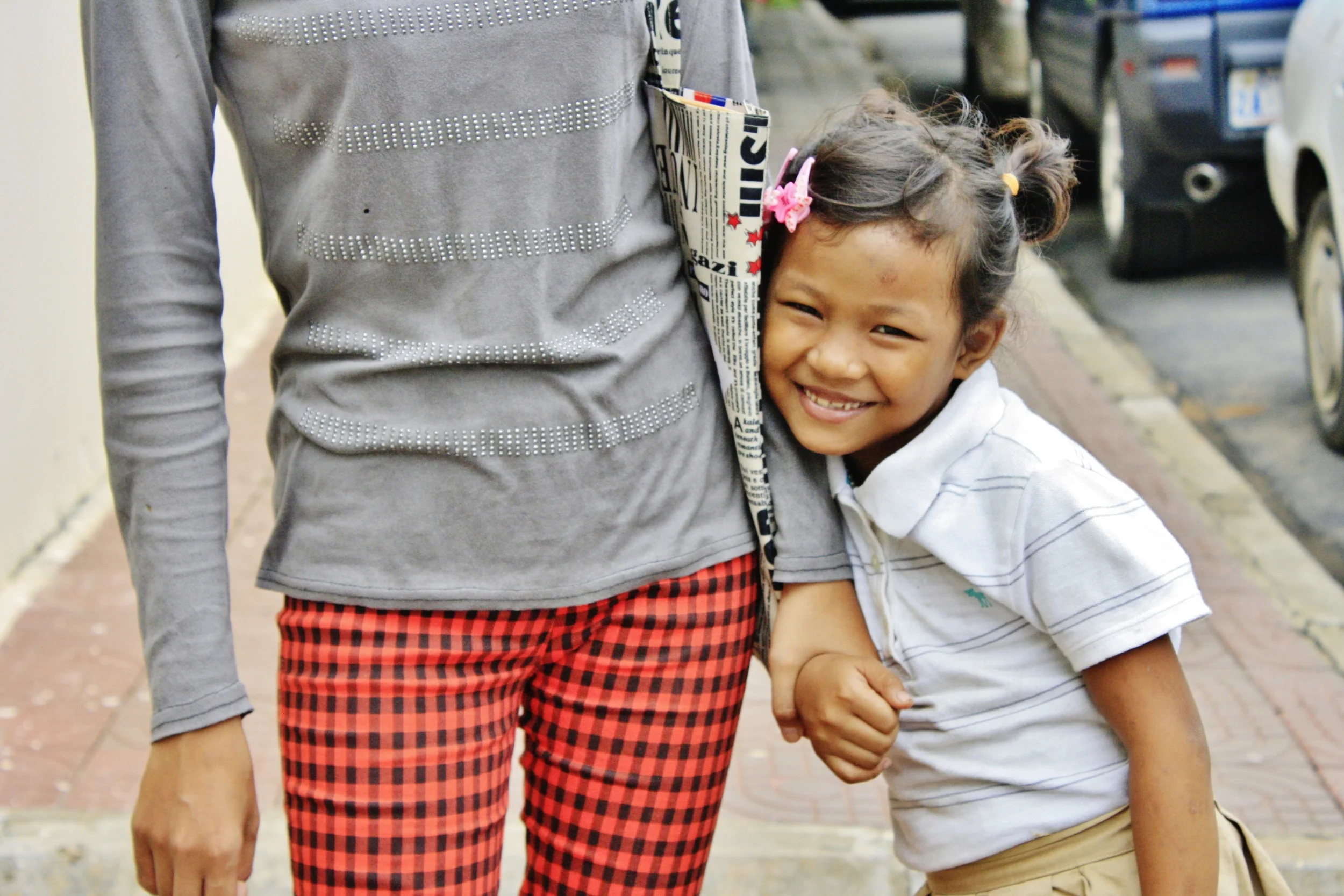
Karuna (left), now 21 years old with her own "little sister"
Karuna, in her own words, was "messy" when her Alongsider mentor came into her life.
Her father had died when she was eight. Her mother went to work in a factory for ten hours a day, six days a week.
So Karuna and her five sisters lived with her grandmother in a small house along a narrow alley in an urban slum.
With no money for them to attend school, Karuna and her sisters sold cakes to make money for their basic needs.
She had friends, but they were all struggling with similar circumstances. “I used to talk with my friends for hours about nothing," she says. "We didn't want to think about the future.”
"Before my Alongsider mentor came into my life, no one had ever related with me that way before."
Somaly, Karuna's mentor, talked with her about real life issues. She helped her with hygiene, cleaned her up, prayed with her, and brought her to the Alongsiders annual camp.
Social impact on young lives
When we evaluated the impact of the Alongsiders movement in 2013, we found that 74 percent of Alongsider little brothers and sisters report they "have someone they can talk to about their problems" compared to just 48 percent of their peers.
And a striking 99 percent of little brothers and sisters say they have hope for the future, compared with 60 percent among their peers.
Karuna sensed her lack of life skills as a young girl, but she didn't know what to do about it. Encouraging little brothers and sisters to grow in their ability to deal with others is another crucial part of what Alongsider mentors do.
The following chart shows some ways little brothers and sisters grow in life skills and social awareness (based on self-assessments).
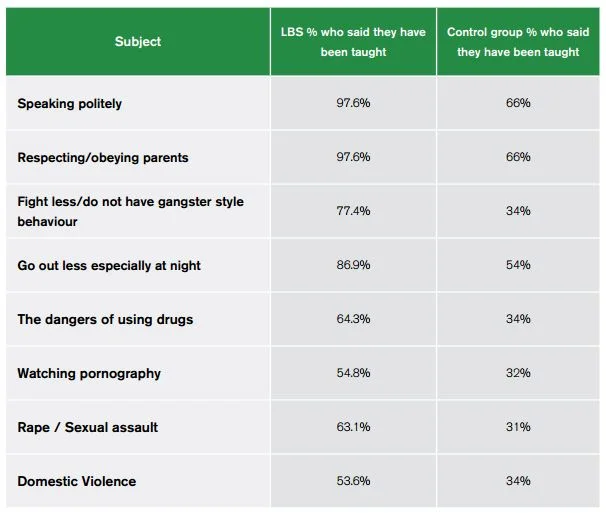
Becoming more capable socially may not seem like a big deal, but knowing how to speak politely or how to handle anger will have a significant impact on a young person's confidence and ability to succeed in work and life. Being more aware of sexual issues, drugs, and domestic violence make vulnerable children safer and more likely to avoid falling into destructive relationships.
Today, Karuna still lives with her grandmother and her sisters in the same home in the slum. The doorway to their house is small but welcoming. Her grandmother is often sitting at the entrance next to a sewing machine with a background of colorful family pictures on the wall behind her. The family members squeeze into small rooms and sleep on beds made of rough-hewn planks. An outsider looking in might declare that they are poor and even question what has really changed.
But something fundamental has shifted.
Karuna is a confident and dignified young woman. She is working and hopeful about the future. Her family attends a church at the end of the alley that serves the community, and they are a source of strength for others.
And Karuna is an Alongsider mentor herself now.
Her little sister is an eight year-old girl whose parents are divorced. She lives in the slum with her grandmother. Lately, she has been missing school to stay home and look after her younger brother. Her grandmother is out working hard every day so they can eat.
Karuna has the confidence to talk with the girl's grandmother about her little sister's school attendance. For now there is no simple solution, but Karuna stands by her little sister as one who has been down this road before. Her little sister won't have to walk it alone either.
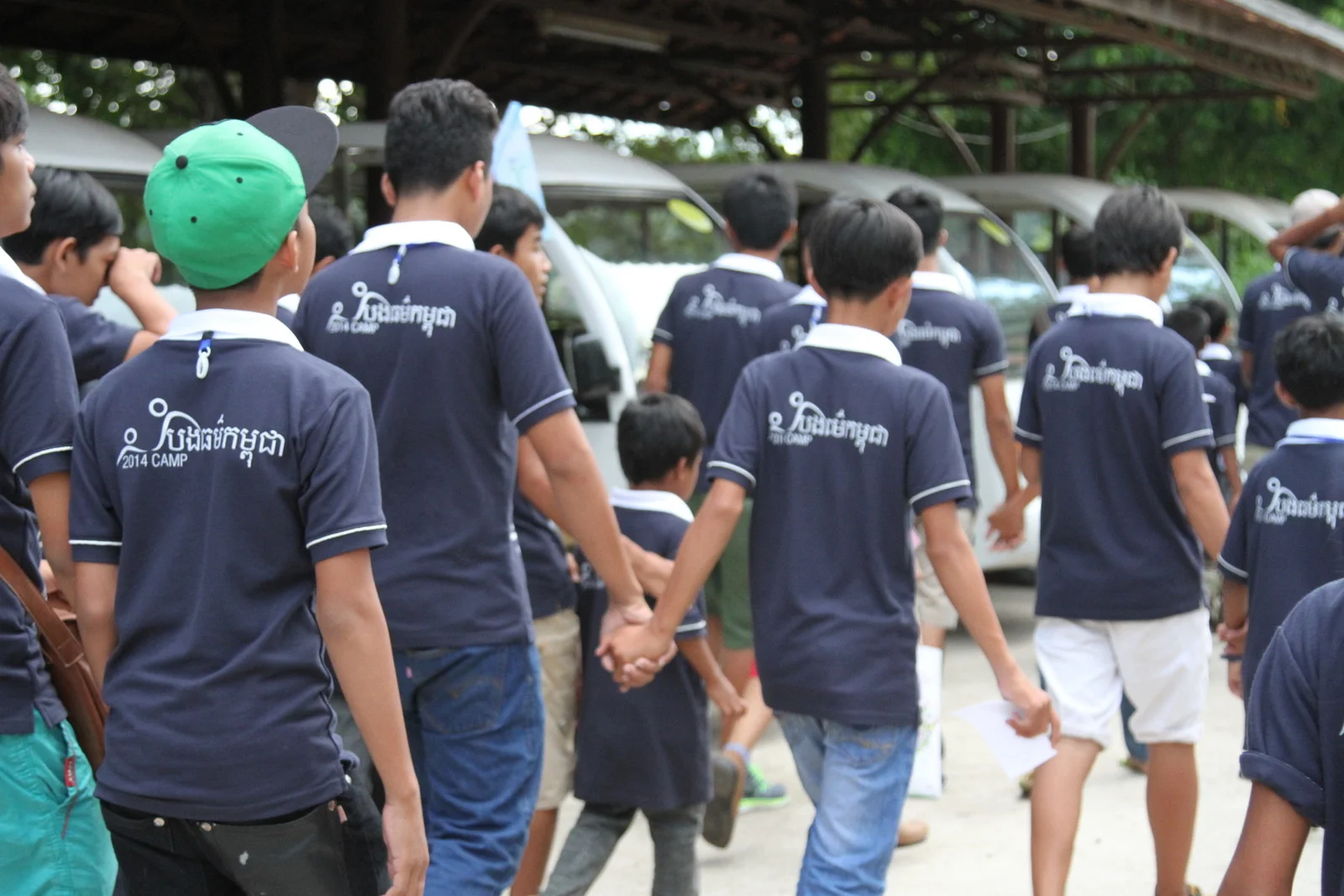
No-one ever washes a rental car
Seth Godin points out that no-one ever bothers to wash a rental car. The reason why is of critical importance to Alongsiders.
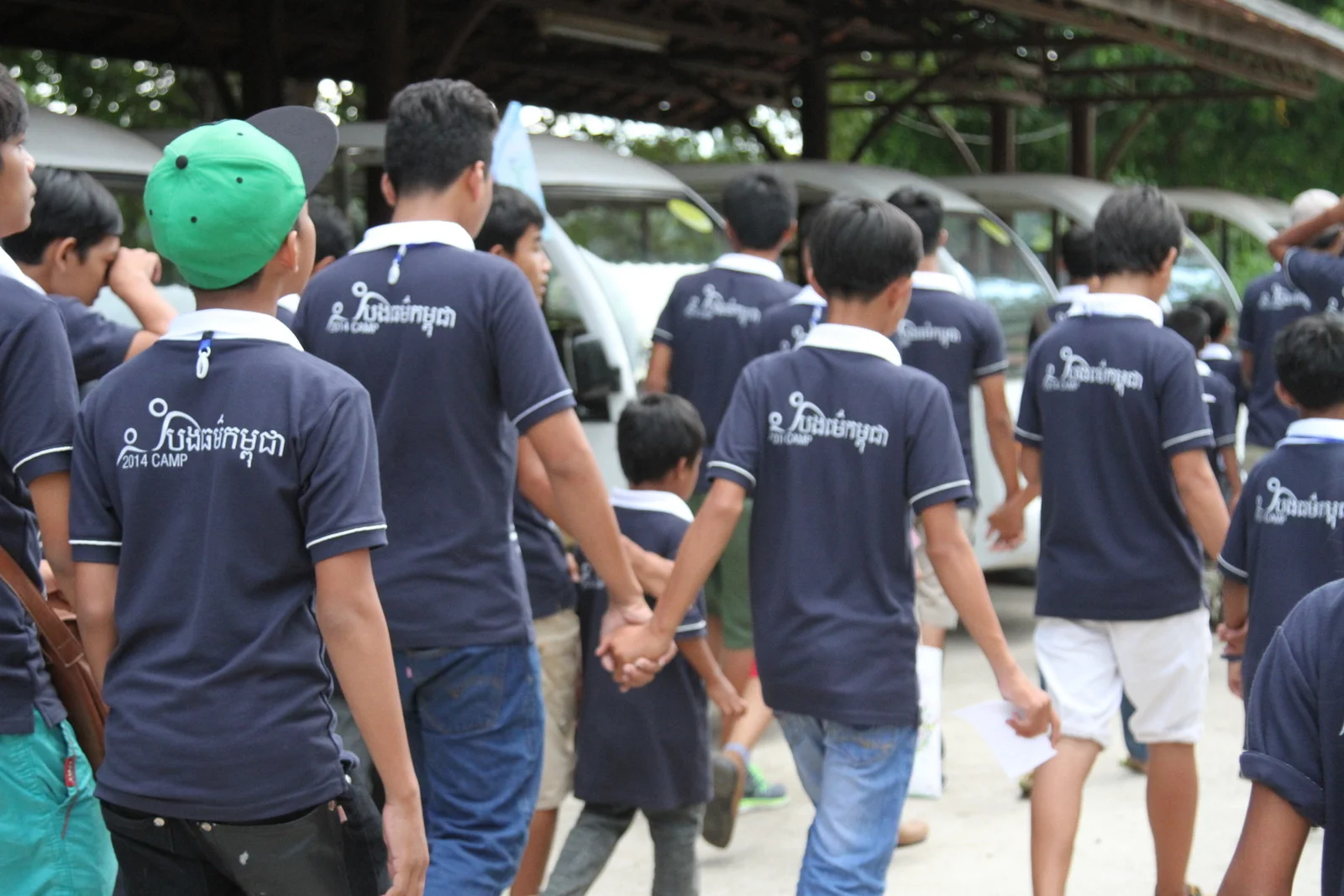
Seth Godin points out that no-one ever bothers to wash a rental car. Why? Because there's no sense of ownership. And a sense of ownership is required in order for someone to go the extra mile.
In Alongsiders, we are serious about fostering a sense of ownership amongst those in the movement. It's not just lip-service. We build it in from the ground up.
Here is one of the key ways we try to do that:
Alongsider mentors choose their own little brother or little sister.
Rather than matching up mentors with kids that have been previously selected by some outside group or organization, the Alongsider mentors themselves prayerfully discern which child they will personally walk alongside. They select a vulnerable child from nearby their own house, in the same community. For some, this is a several months-long process of discernment.
And the result? Alongsider mentors are more likely to take the relationship seriously, have a sense of ownership of that relationship, and go the extra mile. We have some mentors who have been faithfully walking alongside their little brother or sister for more than a decade.
Cambodians have a proverb - it takes a spider to repair its own web. In other words, it is going to take insiders to transform a society.
In order to be motivated to work for this kind of deep transformation, those insiders need to own the work. They need to lead the charge. They need to have a sense that they are responsible for the change that needs to take place. They need to deeply commit. And that only happens when they are given ownership.
But here's the catch. Empowering young people, giving them ownership, means having less control. And this is the core issue we have to face in our movements and organizations. Sure, we want to empower and give ownership. BUT....
...are we willing to give up control?
No-one ever washes a rental car. No-one pours out their heart and soul for something they don't truly have a sense of ownership or responsibility for.
So which path will you choose?
Control or transformation?