
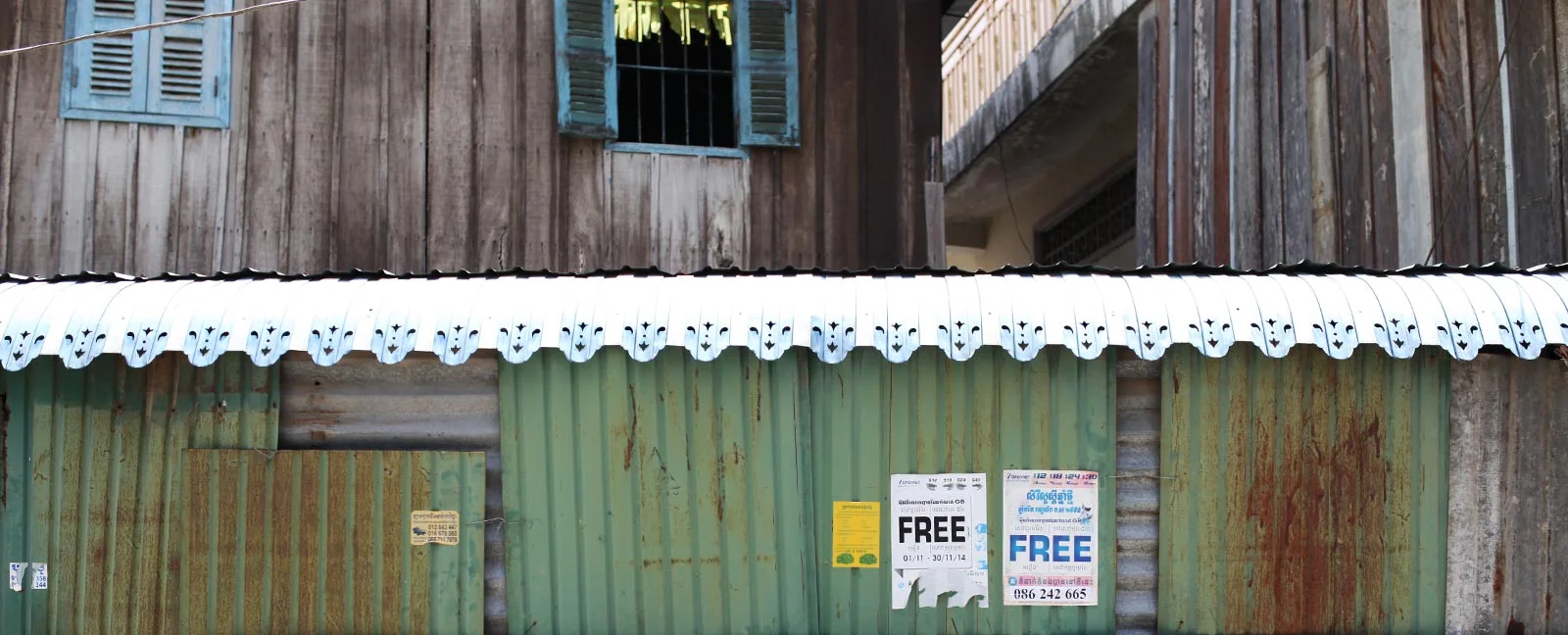
Reflections from an intern: "What the slum taught me about changing the world"
How could I possibly love a family and community so much and still walk away?
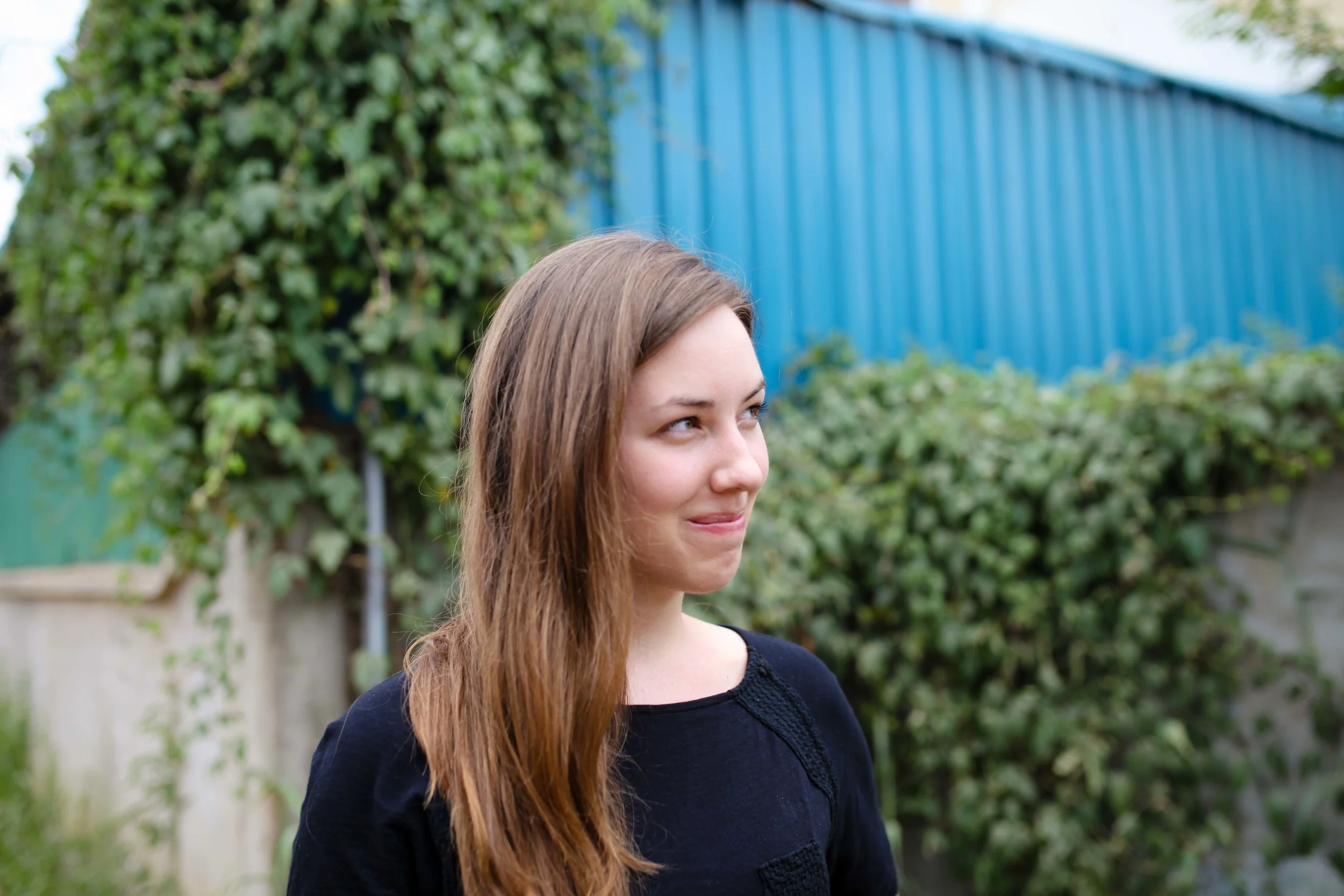
Whenever anyone asked me what I wanted to do when I grew up, I answered, "Change the world."
As an intern for Alongsiders International, I was excited to travel to different Cambodian provinces to conduct interviews, write for the blog, and live in a Phnom Penh slum. I was sure I would see God working in incredible ways in my slum community.
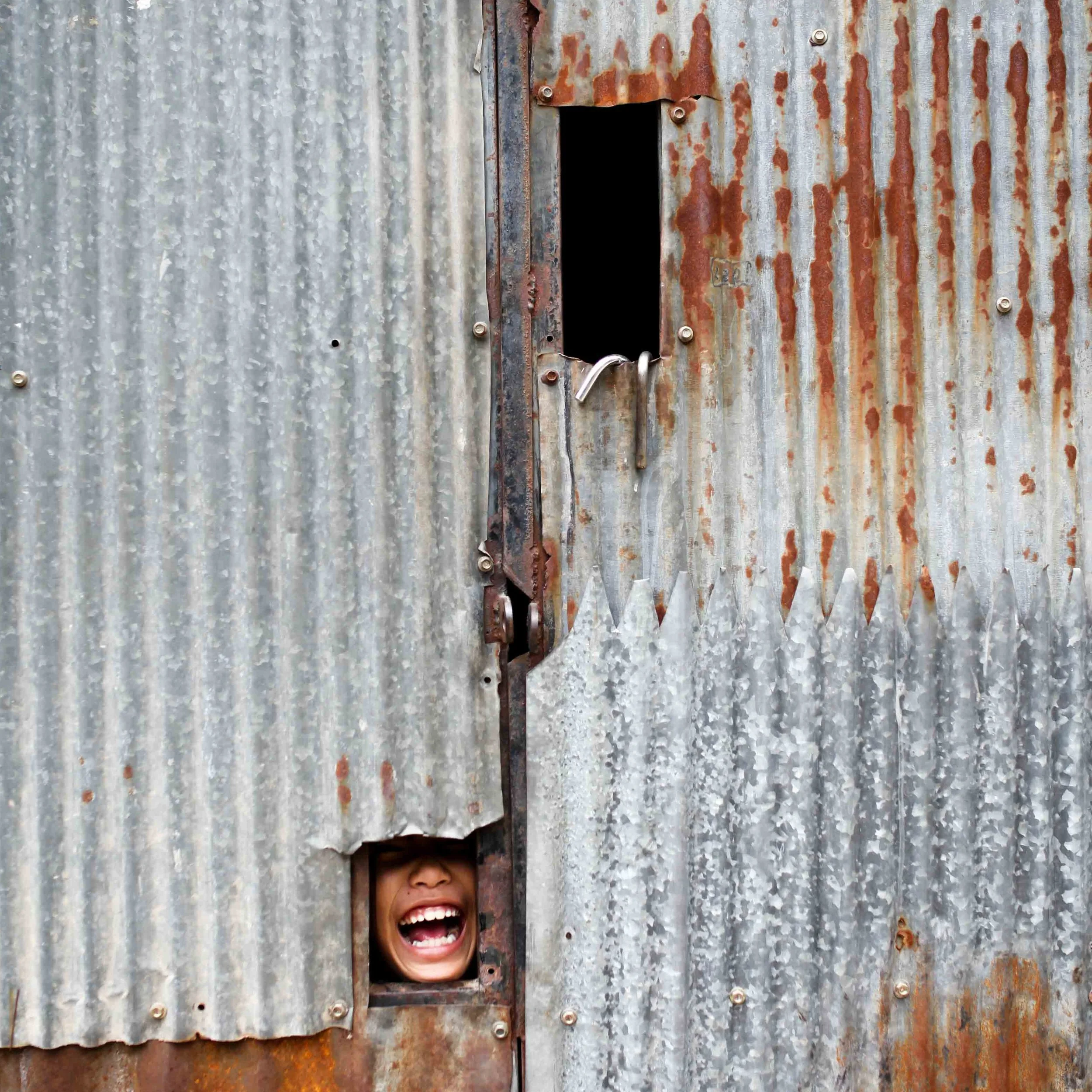
I moved into an extended family of eight people, a dog, several pesky rats, and a million mosquitoes. I took bucket showers and slept under a mosquito net. I ate rice three times a day and tried hard not to get food poisoning. I went with Ming to the market to buy live frogs and helped her and her son cut them up and cook them. I biked to work in crazy traffic and learned to ring the bell on my bicycle when turning corners to alert other drivers to my presence.
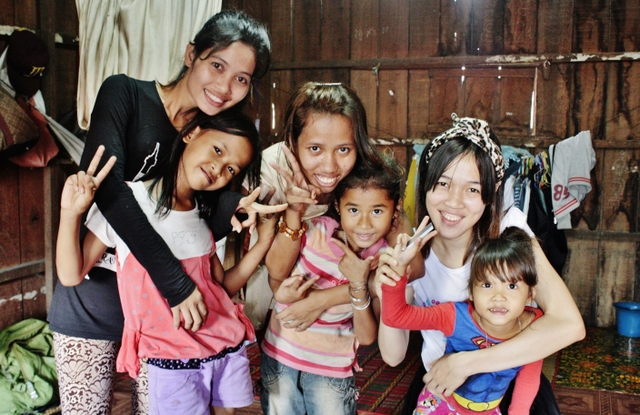
Most importantly, I fell in love with my host family and neighbors. I'll never forget the night I carried the baby outside the slum to a sand dune to watch the sunset, while she laughed and clapped her hands. Or the night that Theary and I read Alongsiders comic books for hours. Or all the days spent playing Moan, Moan, Tia with the neighbor kids (Cambodian duck, duck, goose). Or rocking in a hammock while eating green mangoes dipped in chili powder and salt, trying to communicate with my host family using my limited Khmer.
But I also can't forget the hard things: the nights I ran to the bathroom with food poisoning. The day a drunk man shook Ming, and her terrified little granddaughter tried to slash him with a wire hanger. The meals when I looked down to see yet another plate of boiled, fatty fish and steeled myself to choke it down again. The neighbor lady who would slap her her little daughter. The food offerings made to ancestors by people who could hardly afford three meals a day. The rubbish and the stench everywhere.
Most of all, I can't forget the way I had to leave. One of the sons had a party, and eight hungover men sprawled in the living room later, my time in the slum came to a screeching halt. I cried to leave, choked back tears when Ming asked if I still respected her family. How could I possibly love a family and community so much and still walk away?
Because I had money and a support network, I could walk away and find new housing. The young granddaughters staying with Ming weren't so fortunate.
I had spent three weeks living beside them, playing with them every day, and now I had nothing to show for it but a broken heart and a lot of memories that were suddenly more bitter than sweet. I had read the story of changing the world, and this wasn't how it was supposed to go-- was it?
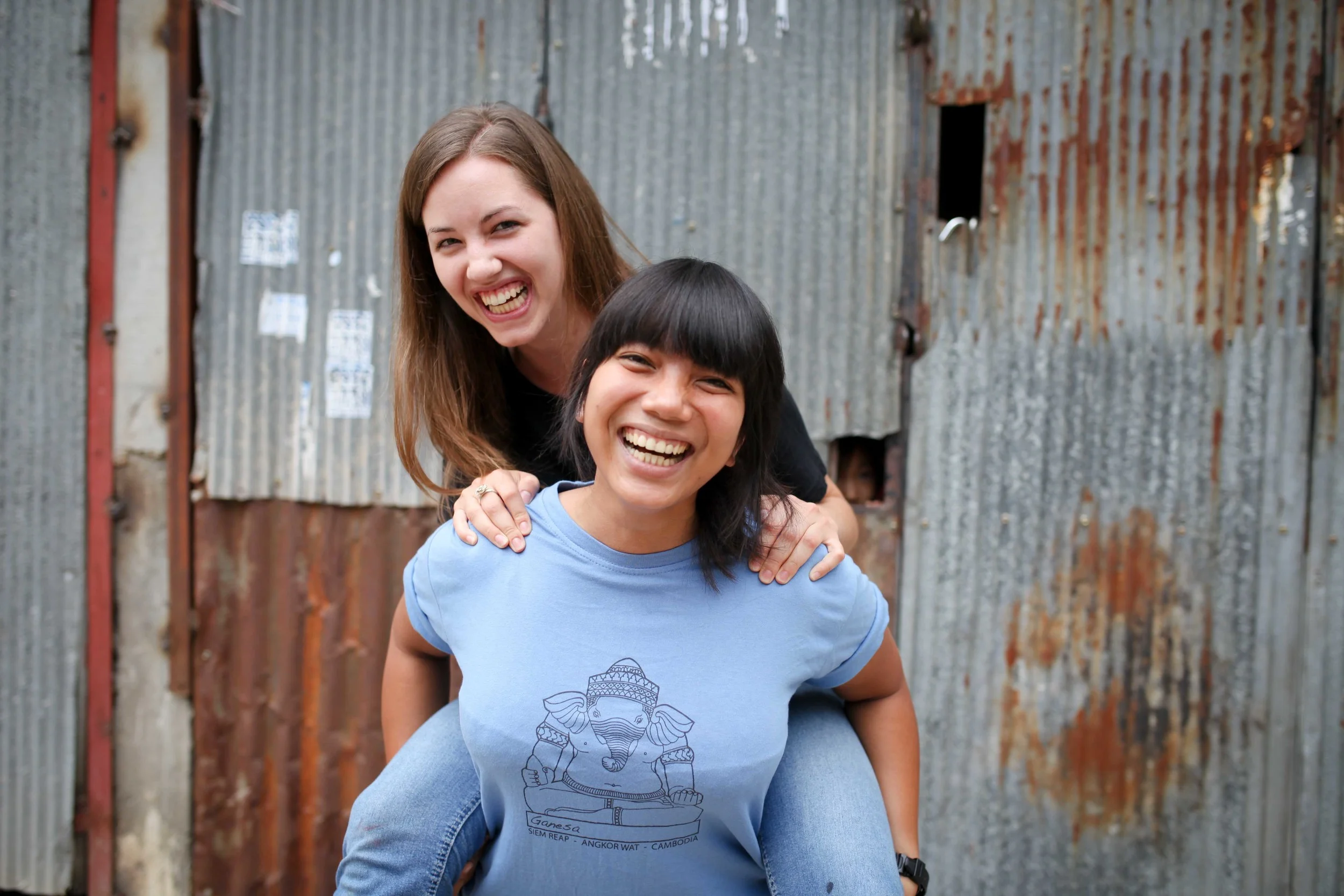
As I tearfully told the story to a friend, she stopped me. "What if living in the slum wasn't about you changing the slum but about the slum changing you?"
During our listening prayer time at Alongsiders the next day, I closed my eyes and told God how much it hurt to have fallen in love with my slum community, invested wholeheartedly in it, and then been forced to leave it unchanged. I poured out my prayer, and waited for His response.
He said simply, Listen.
“You are anxious and troubled about many things, but one thing is necessary. Mary has chosen the good portion, which will not be taken away from her.”
Over the next few weeks, I began to listen to God. At my new house, there was nothing for me to help with, so I found myself with a whole lot of silence and spare time. In the stillness I realized why it had hurt so badly to leave the slum: my identity had gotten wrapped up in making a difference. I was basing my worth as a person on 'changing the world,' at least in my Cambodian slum. Yet I myself had loved the people in the slum for who they were, not for anything they did.
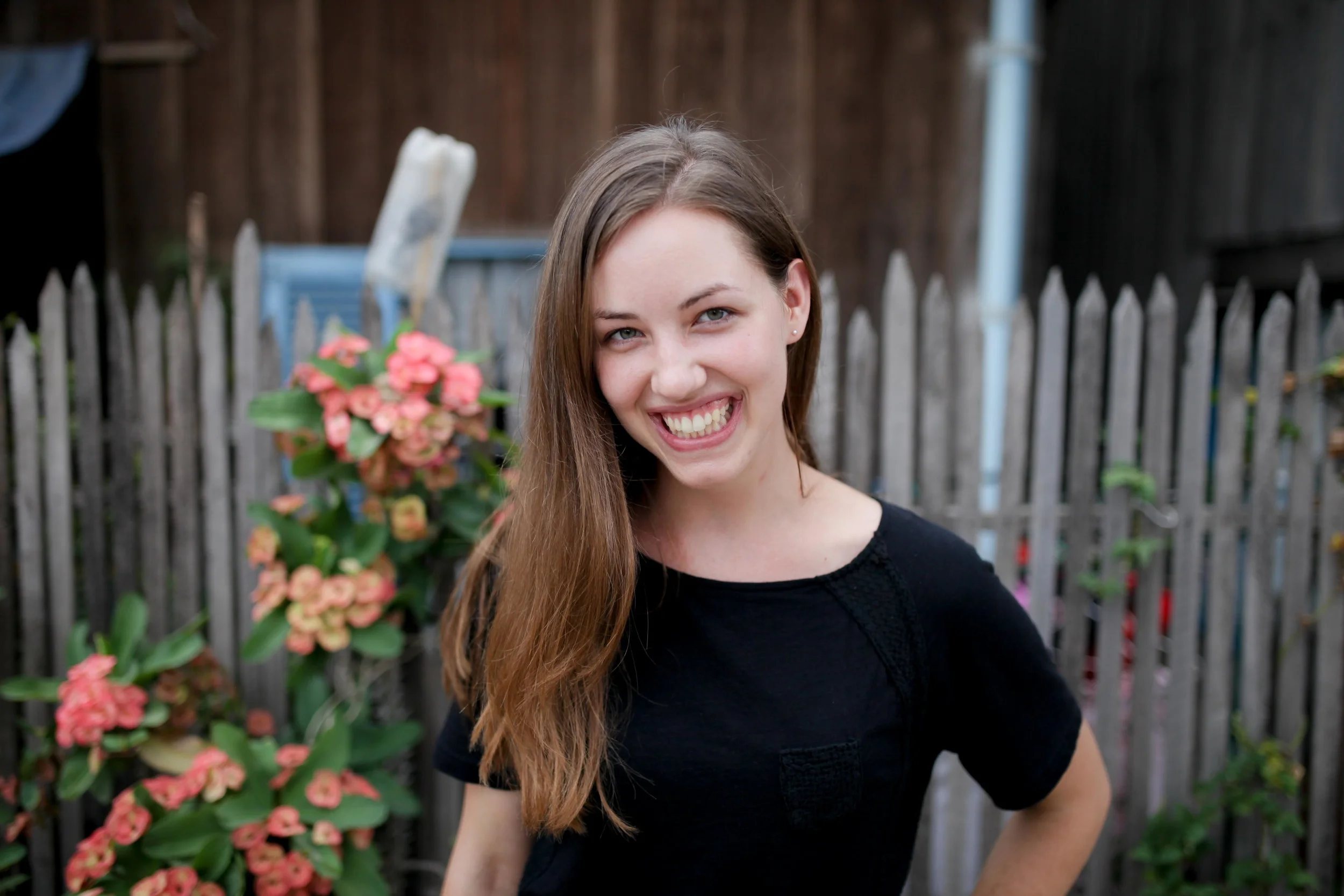
The week I left the slum, I re-learned two important things: I am not the savior and my worth is wholly in the Savior. Ultimately, I learned that changing the world starts with being changed.
Three weeks later I got a text from the son: "I want to know that you feel safe now. I am sorry for the inconvenience. Our family would like to say goodbye before you leave."
So I head back to the slum one last time, to say goodbye to the community I've laughed and cried with, the community that taught me that worth is in being not in doing. As I walk back down my old street, the children come running. "Hello!" they cry. "Hello!" I enter the gate and Ming comes out and gives me a hug. My heart begins to heal as I greet her in Khmer.
It wasn't exactly the incredible summer of changing the world that I'd planned on. But I don't regret it for a second.
“When life is sweet, say thank you and celebrate. And when life is bitter, say thank you and grow.”
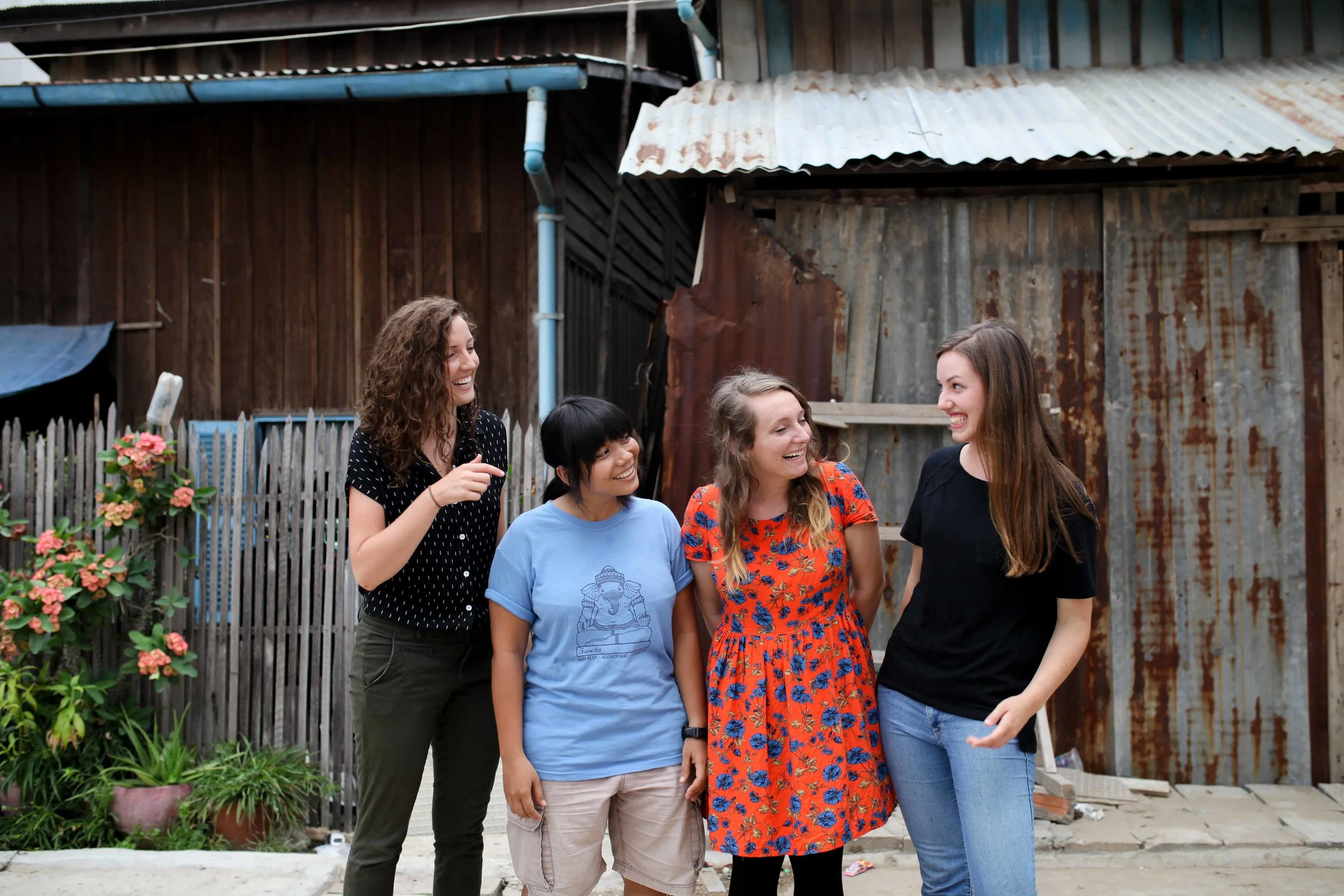
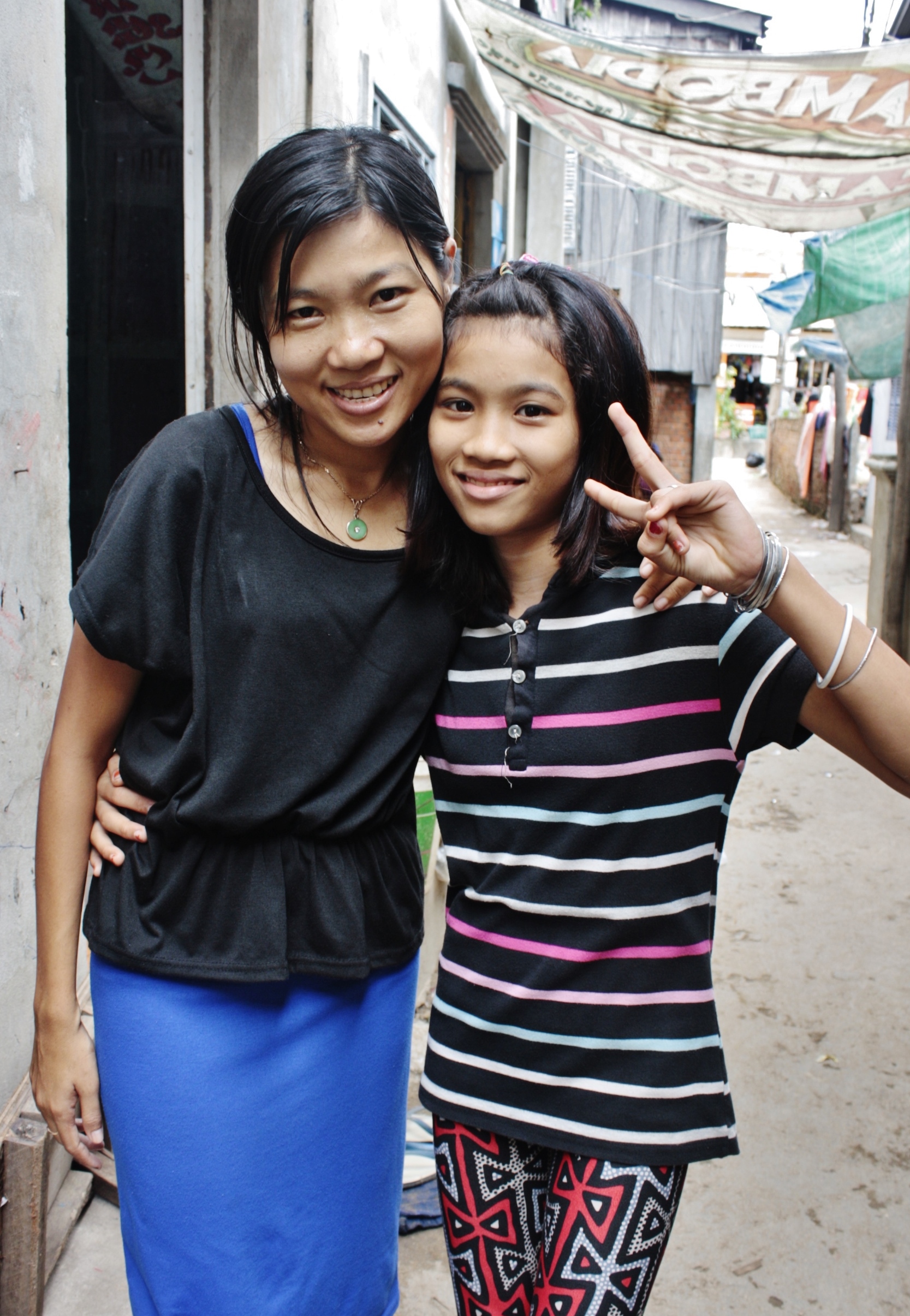
One teenage girl's audacious idea
When Serey heard about Neang’s announcement, she went to ask some questions... What would she truly love to do that she felt she might be good at?
No one seemed to care about Neang*. Overlooked by everyone, she was the youngest child of a single mother whose father died when she was just three months old.
But one day, a young woman from the same community noticed Neang.
Serey was a 23 year-old Alongsider mentor prayerfully choosing a "little sister". She herself was searching for a way forward in life after growing up in poverty, so she knew the challenges facing Neang and wanted to serve. Serey says,
“Neang didn’t speak much, and she looked lonely. I loved her and wanted to help. There were other girls from poor families who I thought about as well, but her situation seemed more difficult. So I chose her.”
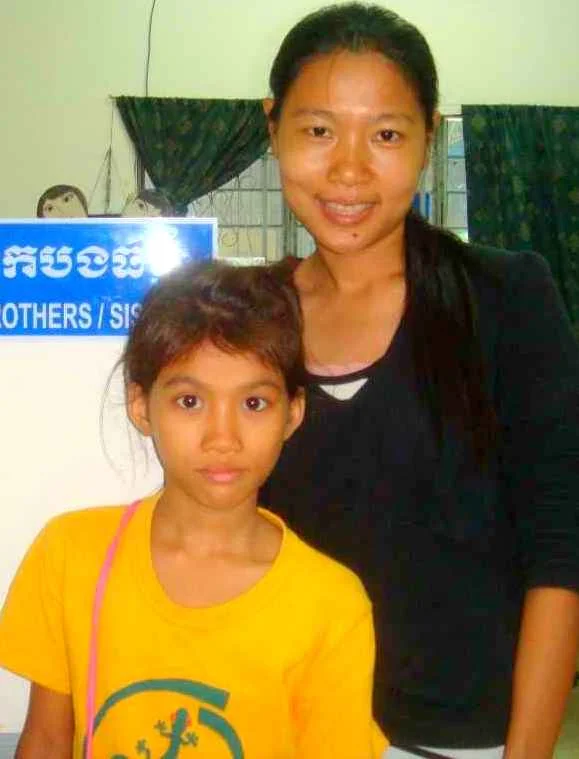
Serey and Neang early in their relationship
Today Serey is still a "big sister" to Neang. Serey has been walking alongside Neang for the past eight years.
“I became her friend. I encouraged her and met with her almost every day. I visited her house, and I talked with her family. She trusted me, and we had a good relationship. When she was eleven, she came to have faith in Jesus. ”
Neang is now 14 years old, and Serey still meets with her regularly. They are part of the same church family. But the challenges of growing up in a slum continue for Neang.
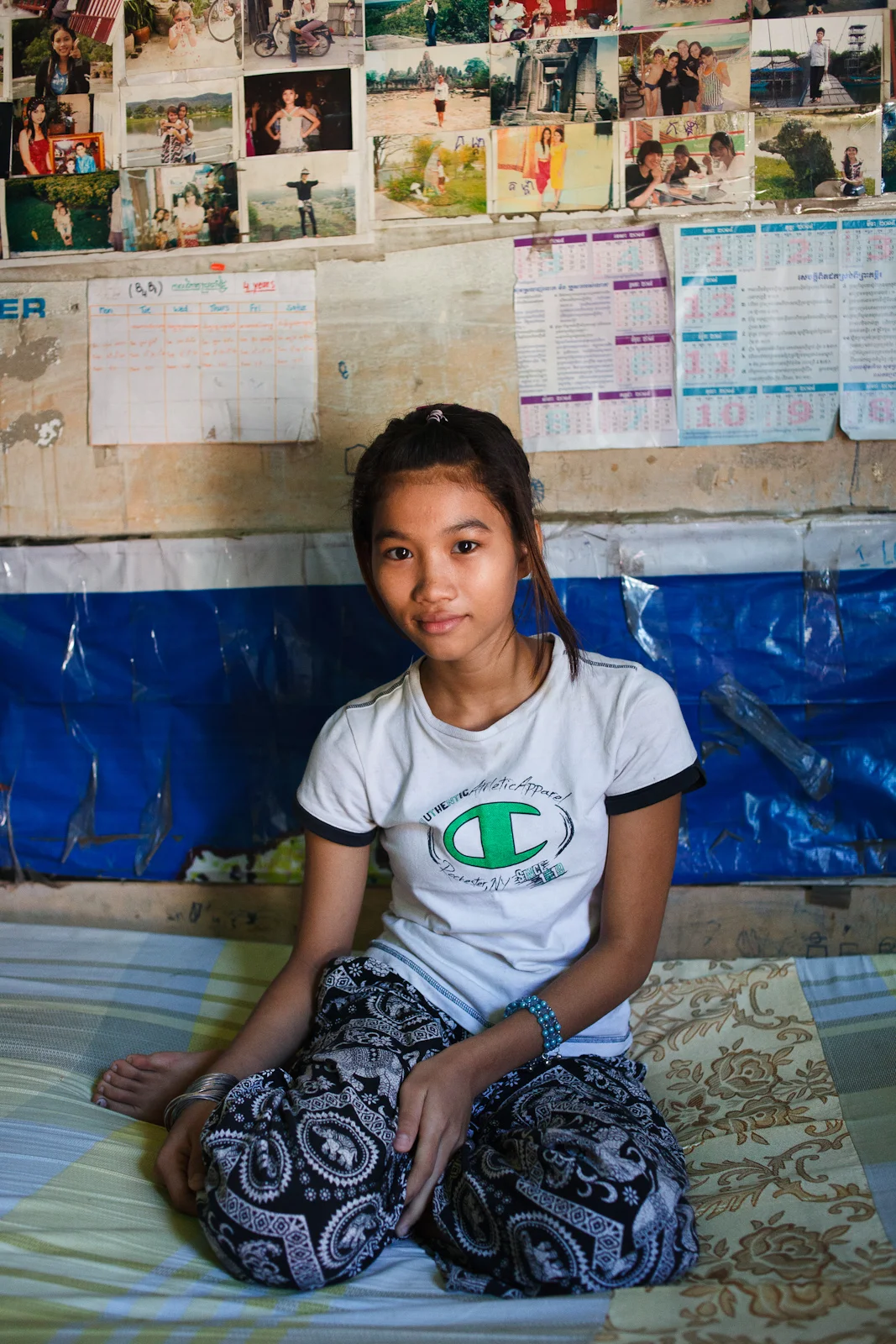
A few months ago Neang announced to her family that she would drop out of school after the 9th grade. The family needed money and she had a plan to attend classes to become a beautician and then open her own little beautician booth. She had heard about a government scholarship for vocational training. Besides, she liked make-up and hair-styling. She and her friends often practiced on each other. They like feeling beautiful.
For teenage girls living in the slum, some version of this story is the norm, not an exception. Among the poorest of the poor in Cambodia, just over half of the children attend primary school. Only a tiny percentage of students continue through high school.
And like students her age everywhere, Neang felt like she had been in school for a LONG time with no end in sight. Unlike students in many other places, the majority of her older role models have dropped out of school and taken jobs in local factories, and most of her peers will do the same. The money is very tempting, even $120 per month earned by working ten hour days, six days a week in a factory.
Neang’s grandmother, who runs the household, also liked the idea of Neang earning money to help with expenses. Neither Neang’s mother nor her grandmother finished high school, but they understand hard work. The sooner Neang gets a job or starts a small business, the sooner she can help support the family - and they can use the money.
Four years of high school (with significant costs in school supplies and fees) is a long time to wait. Besides, Neang's grades are average, and her family is poorer than most.
When Serey heard about Neang’s announcement, she went to meet with her and ask some questions. How would Neang get the money to open her own business? She didn't know. Serey probed further and asked Neang about her personal vision. She asked her to think about the long term. What would she truly love to do that she felt she might be good at?
"I would like to be a teacher," Neang answered softly.
Serey smiled her encouragement. "A teacher? What will it take to become a teacher?"
After discussing the options with Serey and her family, Neang decided to finish high school first, and then decide whether to go to beautician classes or university. Either way would present challenges, but having a high school diploma will be a tangible asset and possibly a way out of poverty.
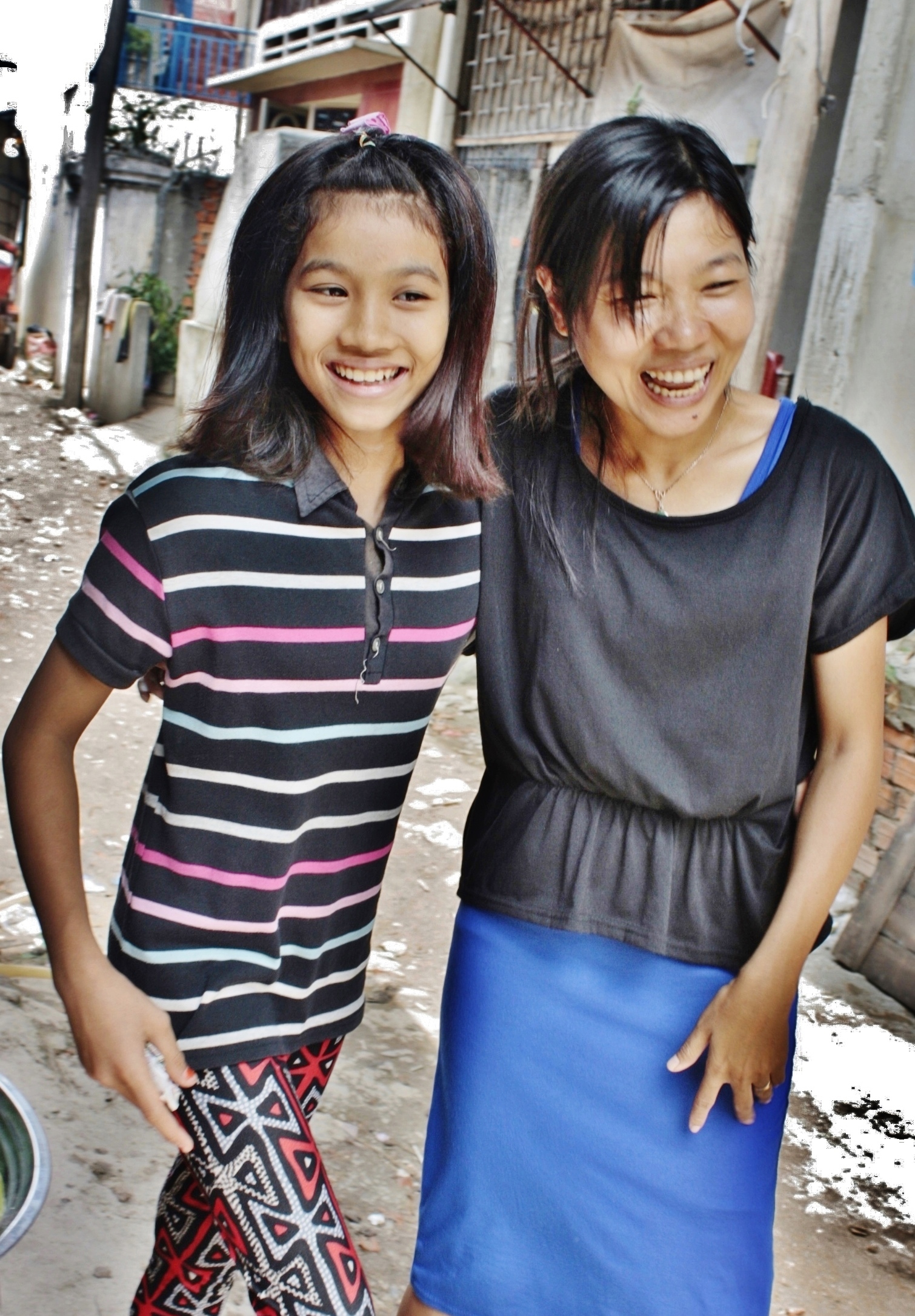
Serey and Neang are firm friends today
Becoming a teacher is an audacious idea. Kids who grow up in the slum rarely become high school graduates; they rarely attend university; and they very rarely become teachers.
Having your own business is also a worthy goal.
Whatever direction Neang takes will require courage and dedication, and someone to walk alongside her as she makes big decisions.
You need someone standing with you to help you voice a vision. You need someone walking alongside to help you stick with that vision. Serey wants to be that person for Neang.
Neang says of her Alongsider mentor, "She encourages me. She helps me stay on a good path."
Neang is no longer overlooked. And with Serey's help, she might just see some of her audacious dreams come true.
Serey offers this insight, "When Neang was young she had a lot of shame, and she felt afraid. But she became brave."
* Neang's full name is Srey Neang
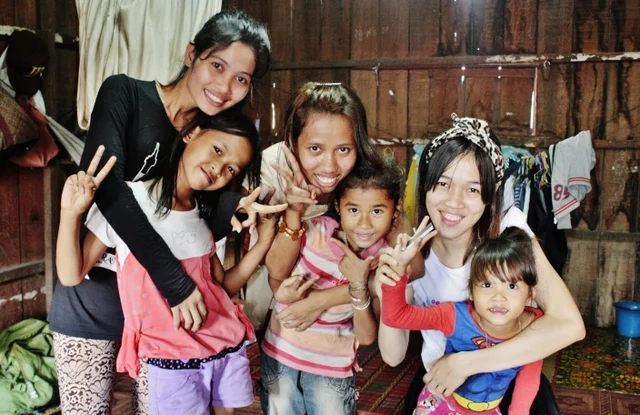
Six months in a slum – an intern’s perspective
In the days following her mother’s death, I remember longing to know how Dai, my 8 year old neighbor in this Phnom Penh slum, was doing.
In the days following her mother’s death, I remember longing to know how Dai, my 8 year old neighbor in this Phnom Penh slum, was doing.
You can only imagine how I felt, when after the death, I heard a familiar voice cry my name, “Han-NA”!
Turning around quickly, I received the emphatic hug of a small friend, whose presence perhaps provided as much comfort to me as it might have provided to her.
When I think about Dai’s future, I cannot help but wish that someone would guide her in the coming years—someone who shares the language and background, someone committed to her in the difficult time ahead without a mother, someone who will point her to an ever-present hope in God.
Dai is one of a significant number of children, in my community alone, that could use such a person in their life... someone to walk alongside.
As children face the brunt of neglect and injustice in most of the world, the Church is called to respond. Perhaps then, rather than fighting the wrong battles, the Church can be the kind of people who live like Jesus, in coming alongside the forgotten— communicating to the world, thus, that the ones the world has rejected… are loved, valuable, and absolutely worthwhile.
I am still not quite sure how I got connected with Alongsiders exactly, but the connection was a God-send, undoubtedly. My deep-seated desire to see local churches actively engaging in the reconciliation and redemption of lives in their community, particularly through discipleship and education, is exactly what I found happening in Cambodia, through Alongsiders.
As a fourth year student at Wheaton College, Illinois, getting to be a part of what is happening in Cambodia through a six-month internship, is an absolute privilege. These crucial six months are an opportunity to glimpse of what God is doing in the world, in the heart of marginalized communities, and a time to experience the difficult tension between the “Developed” and “Developing” Worlds.
The experience provides a platform to
question, what it means to live, responsibly, as a Christian in a divided
world, and further, to think through principles that I will carry with me for the
rest of my life.
Every so often, one gets the opportunity to witness something in life that
makes the heart come alive, that is so obviously steeped in God’s presence that
it brings us to our knees, that is so extraordinary that it can only be the
Kingdom of God.
Within the last two months in Cambodia, I have experienced a few of these moments, in places, perhaps, least expected. Some of these have been with my Cambodian family in our urban slum—moments of deep grace when I had nothing to offer, but a throbbing head, a lingering fever, and a few Khmer words.
I have also had the privilege to bear witness to an extraordinary group of local young people committed to the life of one vulnerable child each, at the epicenter of the system’s injustices.
I have been able to see a Church alive and active, in the discipleship of their community’s at-risk children.
Quite frankly, the Life—in every sense of the word— that is being shared, is nothing short of remarkable.
It is that Life that I wish for my friend, Dai
[Written by Hanna Tzou, currently interning with Alongsiders in Cambodia. Contact us for more information about internship opportunities in 2014.]