
How to find intimacy with God this Christmas - a lesson from an Alongsider
Learning the one thing that never fails to bring us closer to God.
Most Christians I know want a more intimate relationship with God, but most of us, when we strive to have a closer relationship with God, struggle to find it.
Again and again it seems the things we do to draw closer to God fall short. It's as though the intimate relationship we seek is a mirage that recedes before us.
Or we experience intimacy with God in a wonderful moment, but then it passes. So we throw ourselves back into prayer, worship, Bible study, or the next big event longing for a breakthrough.
What we don't appreciate is that God has already closed the gap and is with us. We don't see this, because we're focused on ourselves or off in the distance where we think Jesus is.
No one has known the heart of the Father better than Jesus. He said that he always did what his "Abba" (Papa) was doing. How we long for that kind of relationship, and yet it's right in front of us. We can talk about how Jesus woke up early to pray, or about signs and wonders he did, but we can never say Jesus was searching somewhere "out there" for intimacy with God. He didn't go looking for spiritual experiences, because he was constantly running into real people and loving them with the gifts and resources he had.
That's what his Papa was doing.
Consider the words of Paul to a group of believers in Corinth who seemed to have it ALL (knowledge, spiritual gifts, and powerful signs and wonders). He said all of that was useless noise without love. It was falling short.
The only thing that will NEVER fail you, he wrote, is love.
Now how about some spiritual wisdom from a farmer's son in Cambodia.
“I want to have compassion for people. I was really glad when Alongsiders came and I had a chance to choose a little brother.”
What an amazing desire this is: to have compassion. He recognized in Alongsiders an opportunity he didn't want to miss.
Sarath, the son of farmers, is a four year university student. His goal, when he graduates, is to start a business raising pigs. If you were to imagine a person of spiritual insight, you might not picture an aspiring pig farmer in rural Cambodia. But what Sarath desires - to have compassion for others - is great in the eyes of God, and it will not fail.
Jesus called himself the Son of Man, which simply means "the human." At Christmas we celebrate that Jesus was born as a baby. In that way, God became fully human among us. A mark of those who follow Jesus - here and now in this world where we live - is that they embrace being human; they plunge into human relationships; and they love people as the Father is doing. This is the way to the Father's heart.
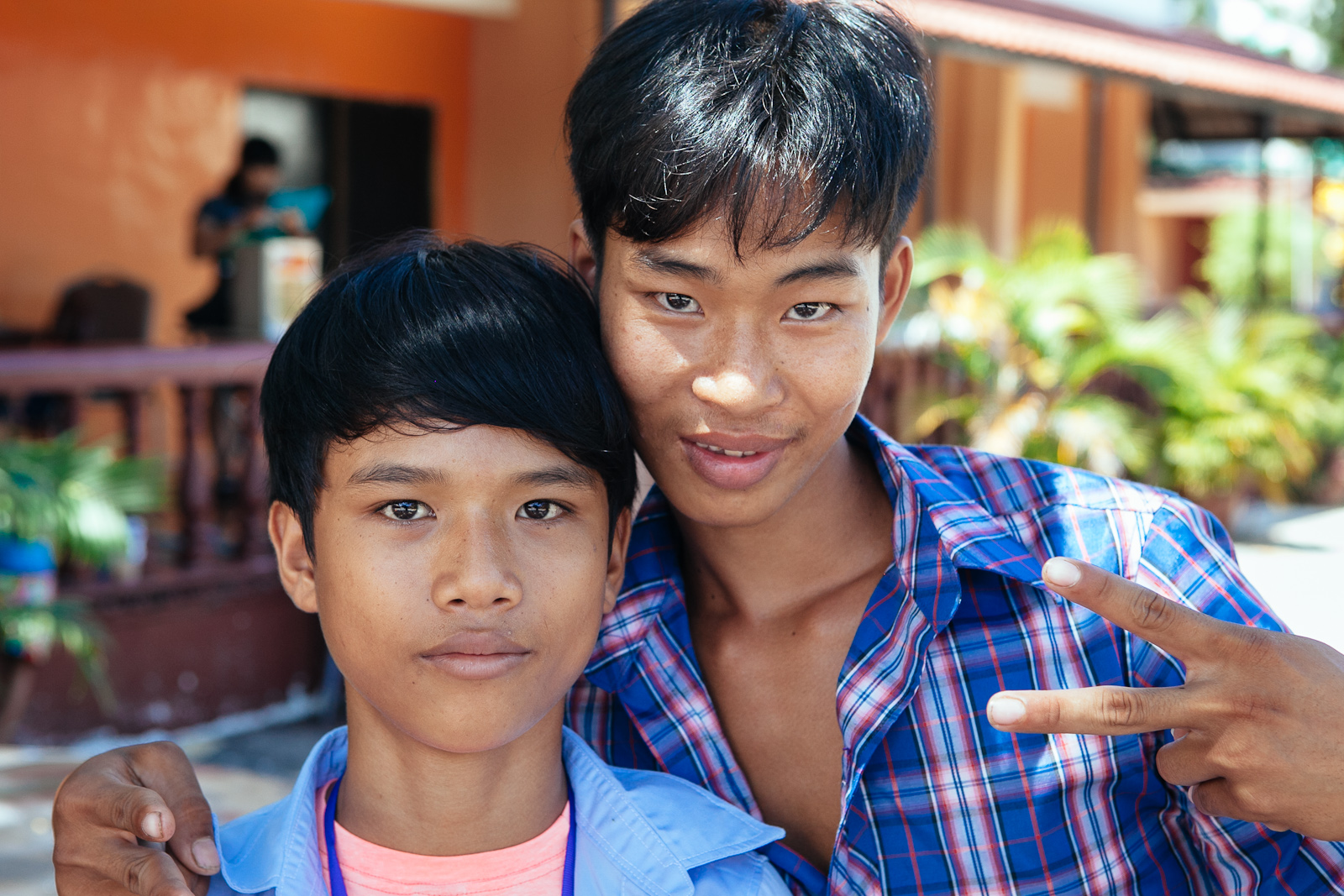
As for Sarath, he became an Alongsider for a boy named Sokty. "He was different from the boys in the village," says Sarath. "He was really hungry for education, but his family had no money to support him. I spend time helping him with his homework. He doesn't have money to pay his teacher, but sometimes the church helps."
In Cambodia most teachers expect their students to bring a little money to school every day to "pay for the paper handouts." In this way, the teachers supplement their very low salaries. Teachers aren't supposed to require these payments, but it's very hard for students to refuse. Recently, Sarath went to speak with Sokty's teacher, and then the teacher agreed to visit Sokty's family to see for himself how poor they are. Sarath hopes the teacher will give Sokty an exception after this.
Besides school, Sokty has many chores at home, so he doesn't have much free time. He meets with Sarath two or three times per week. Then they read the lessons that Alongsiders provides, and they often pray together. Sokty says the support and encouragement he's received from Sarath have changed his life. He comes from a Buddhist family, but now he believes there is a God who loves him.
When Christ became fully human, he didn't move away from his Papa's heart physically or relationally. He walked on human feet on dusty ground right into the center of it. I'm pretty sure Sarath, who sees that loving this one vulnerable neighbor is an opportunity, is on to something big. That many of us long for. Now may we have eyes to see it.
The movement needs waypoints: 5 reasons we do camp
Something powerful happens when hundreds of young people gather together for camp...
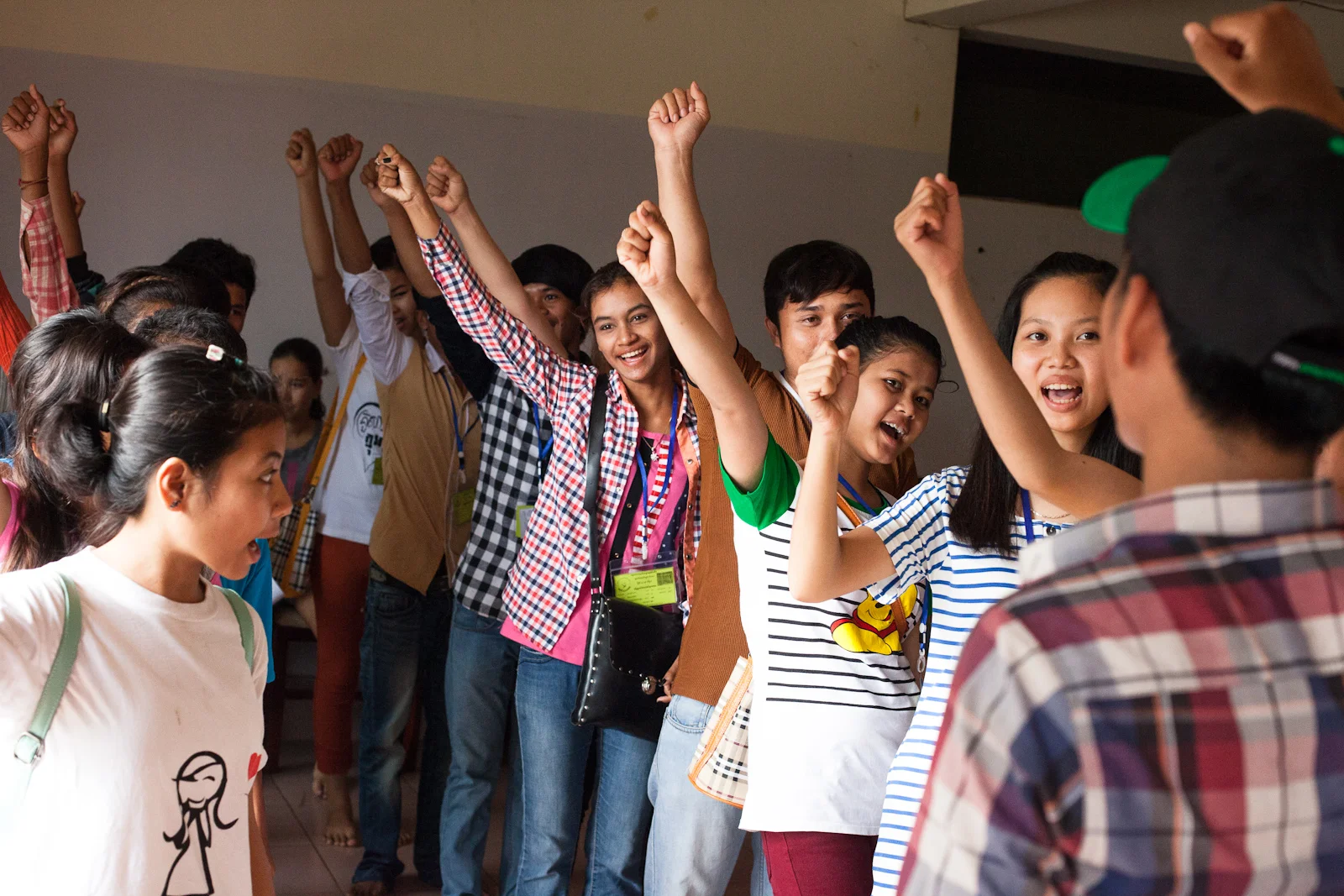
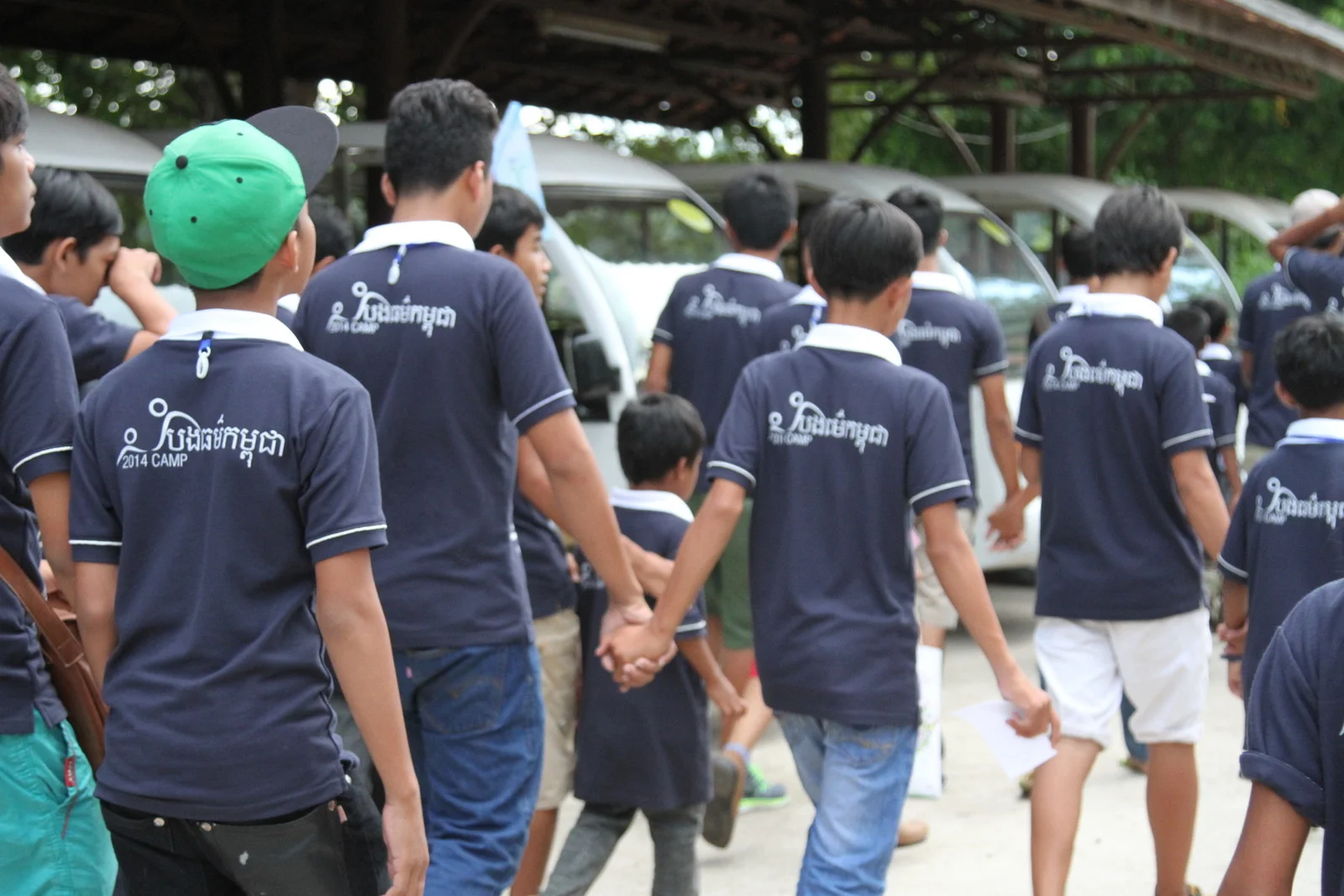
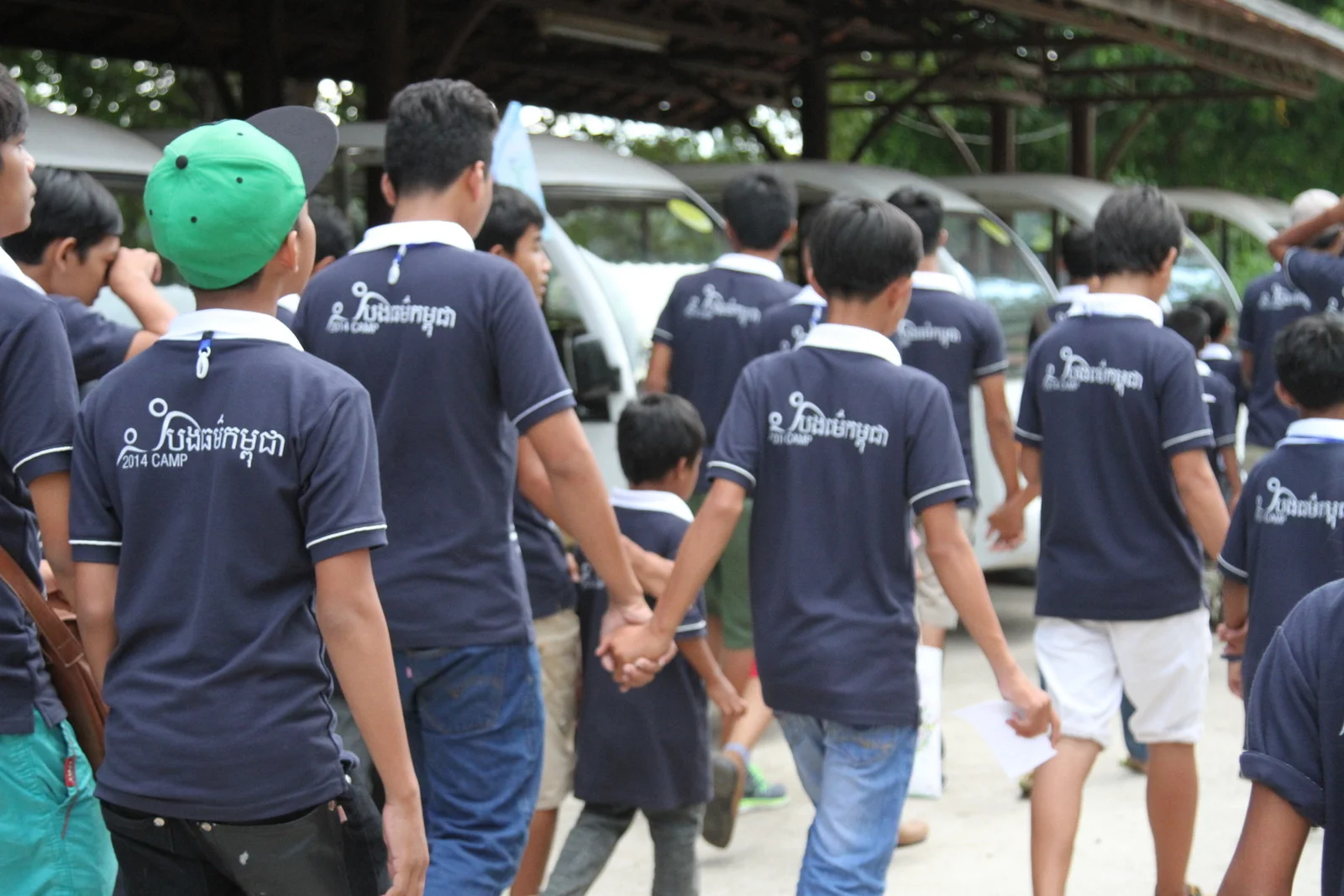
Last week nearly 300 Alongsider mentors with their little brothers and sisters, plus staff and other leaders, traveled from six provinces and converged in Siem Reap for the Alongsiders annual camp.
Their ages ranged from about 5 to 35. The event lasted for two full days, with travel days on each end; it was enough to burn through even this group's abundance of youthful energy.
As for the staff and older leaders, they were exhausted. It was a lot of work! And this was really just one HALF of the annual camp. Alongsiders Cambodia has grown to the extent that it's difficult to gather everyone together at the same time, so the annual camp is split in two. The other half experienced camp in May.
Besides taking a tremendous amount of preparation, leadership, and energy to pull off, the annual camp is also the single greatest expense for Alongsiders Cambodia.
You may well ask why we do it.
Following are five reasons why we have an annual camp along with some colorful pictures to illustrate.
1. The annual camp is a rallying point for the movement.
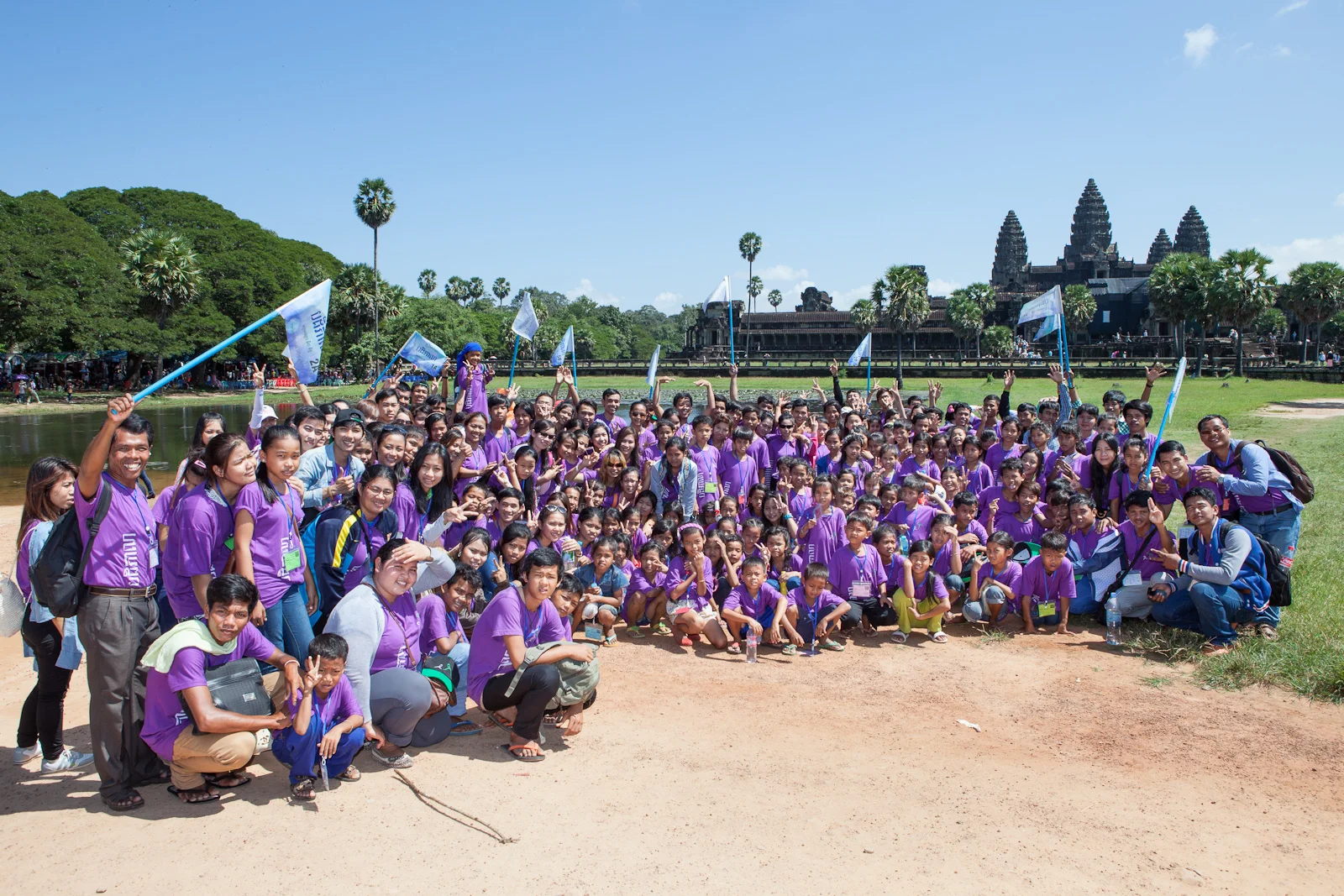
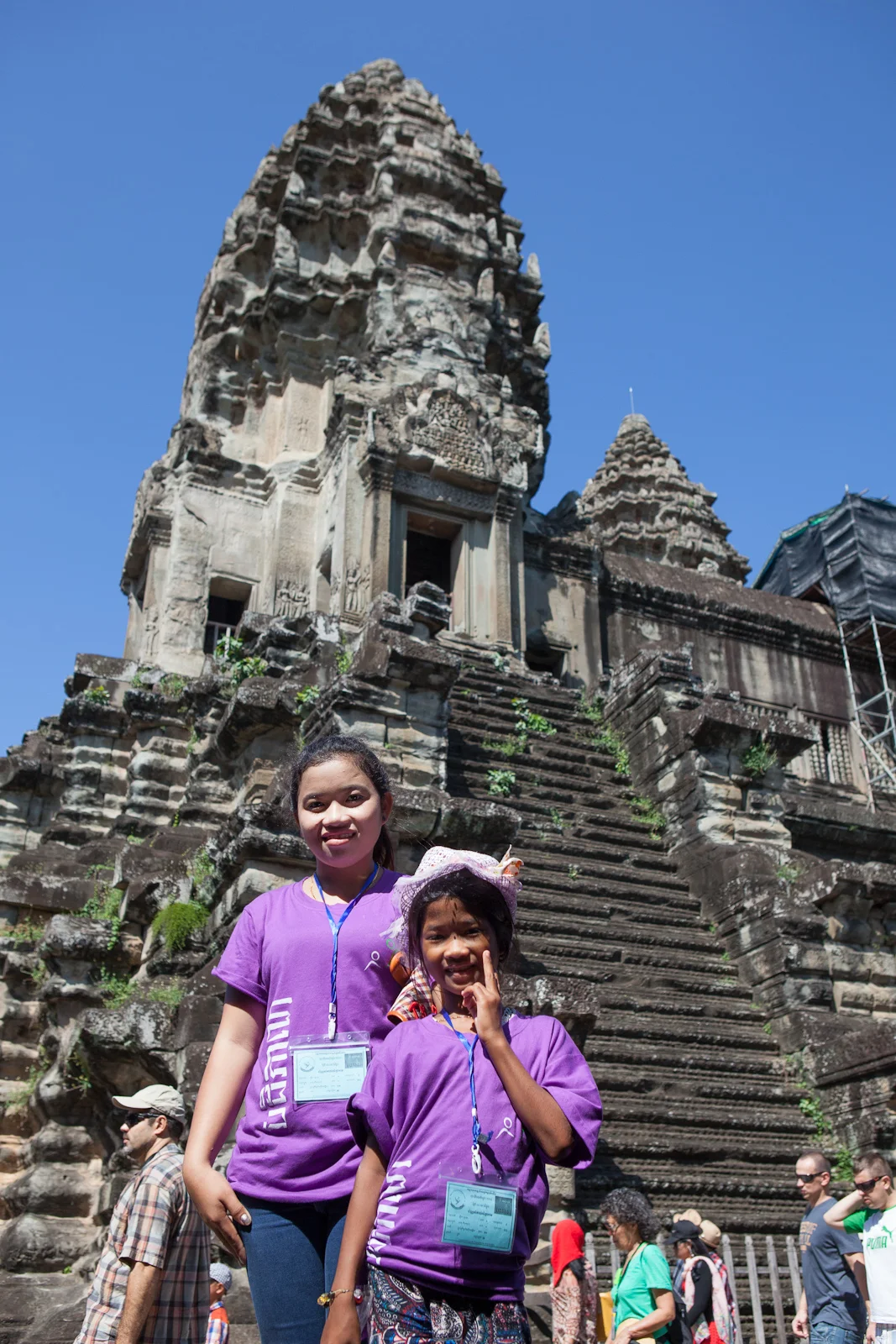
Alongsiders Camp 2014 at Angkor Wat
Throughout the year Alongsider mentors and their little brothers and sisters are dispersed throughout the country. Provincial leaders provide limited supervision and training, but most of the time mentors are meeting with their little brothers and sisters on their own. They may not feel like much is changing, but the movement as a whole is on the move and growing and changing as it goes.
When dispersed groups are on the move, they need rallying points in order to keep moving together. Otherwise people drift away or get left behind. Actually, the four points below all follow from this one.
2. Camp puts things in perspective.
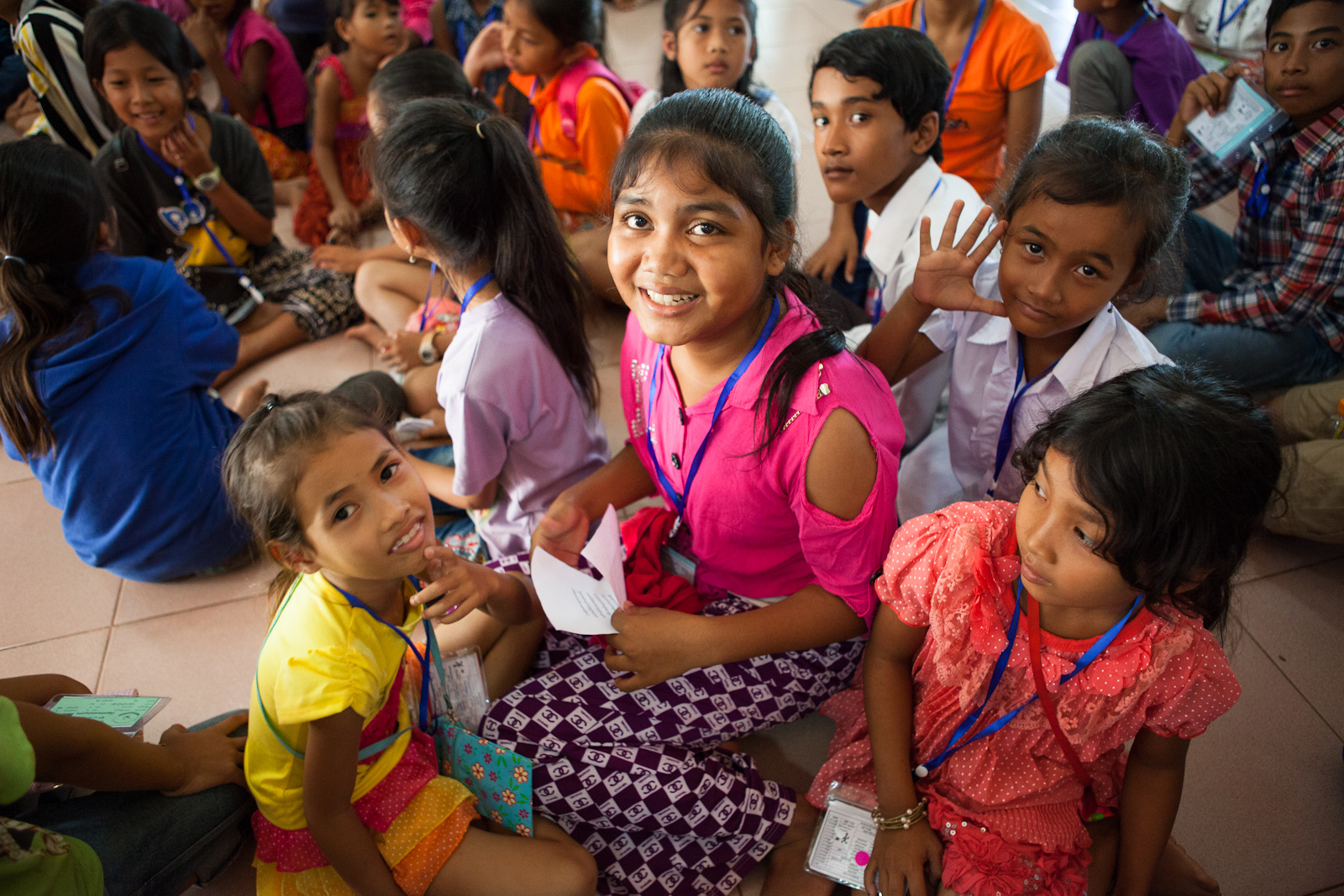
Mentors see other mentors. They learn from each other, and some stand out as inspiring examples. Others may realize the need to make corrections. The little brothers and sisters also meet each other, and they can see in a new way they are far from alone. There are other children all over Cambodia who have found big brothers and sisters, too. All the people gathered can see that they are part of something exciting - a movement of like-minded people that is bigger than themselves.
3. Camp is an opportunity to empower the Alongsider mentors.
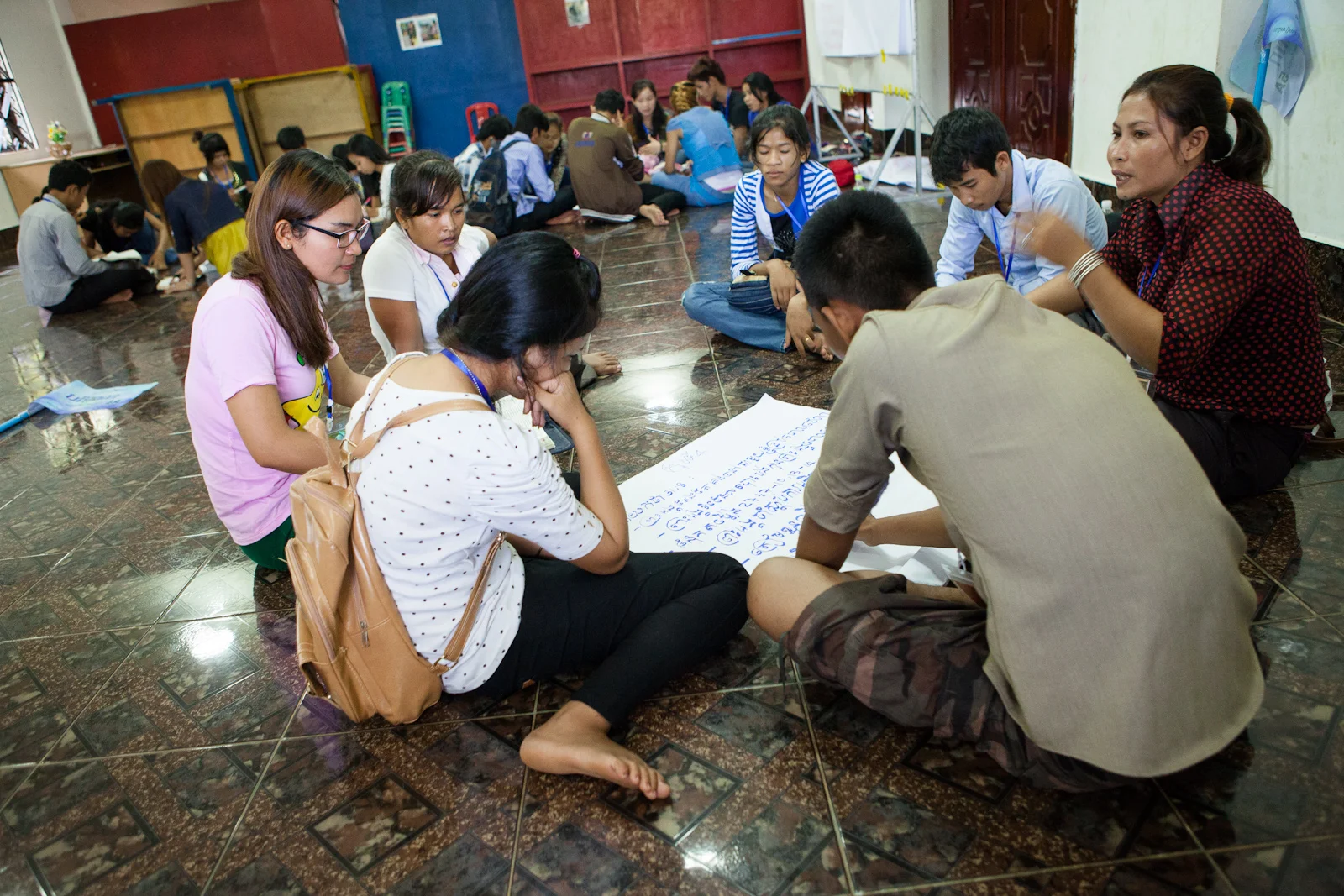
Alongsider mentors in a facilitated workshop about growing in intimacy with God
This year, while the little brothers and sisters joined in a day of fun educational activities, the mentors got to choose from three one-day workshops: finding your spiritual gifts, growing in intimacy with God, and team building. The workshops were run by volunteers and Cambodian leaders who came to serve the mentors. Afterwards, one mentor said, "For the first time, I think I know what my spiritual gifts are." Another said, "I love God more than I did before." We focus heavily on the little brothers and sisters, but the vision of Alongsiders actually relies on empowering and transforming the mentors:
We equip compassionate young Christians in poor nations to walk alongside those who walk alone: to love, welcome and encourage the most vulnerable children and orphans, in their own communities.
4. Camp is a time to celebrate how far we've come.
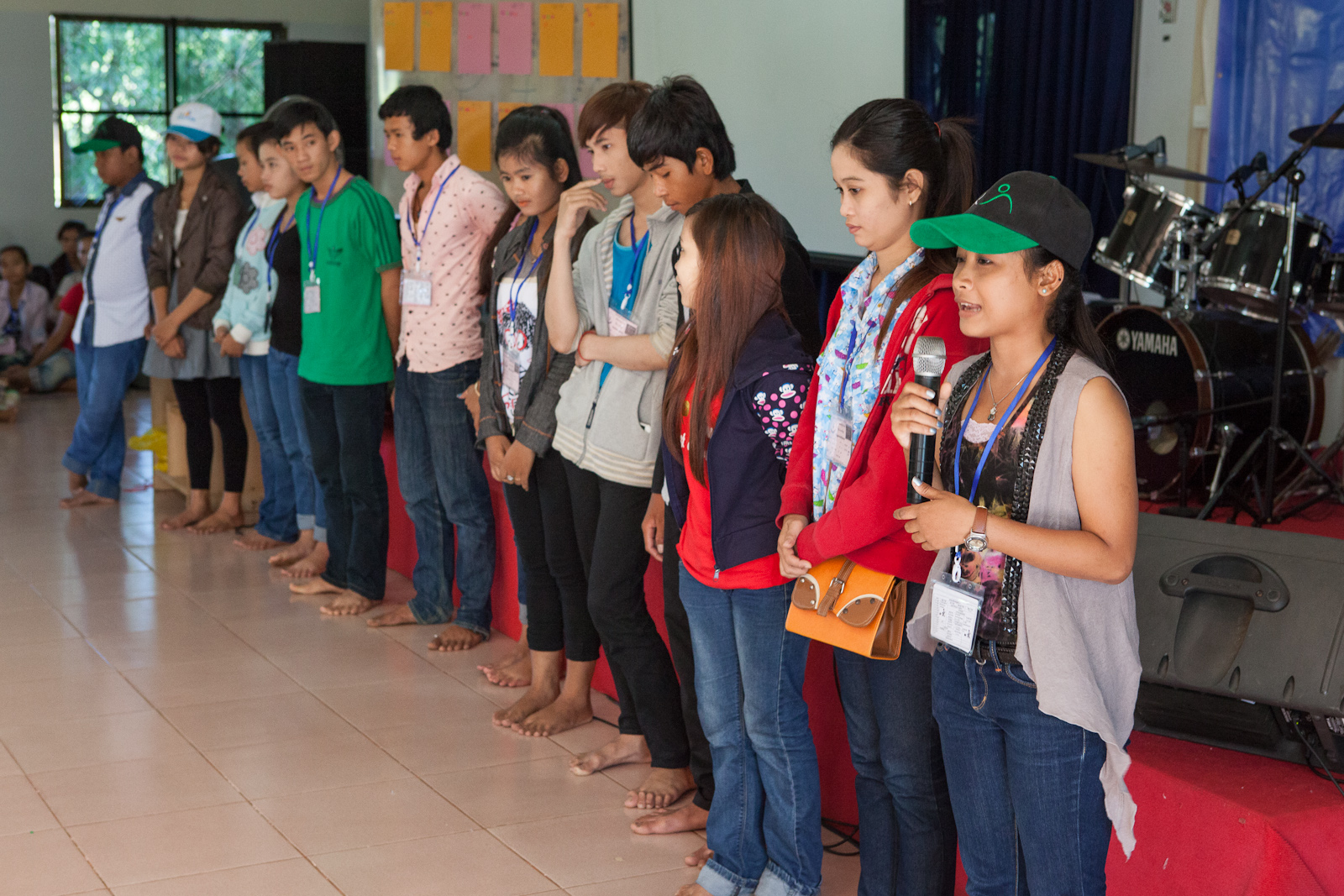
Second generation Alongsider mentors are recognized at camp every year.
Camp is fun. We eat good food. We visit interesting places. We have raucous meetings and creative activities. All of these are forms of celebration, the sort of things you might do at a party.
This year everyone who attended camp went to see Angkor Wat and had a great evening at the Cambodian Cultural Village in Siem Reap. We also celebrated in more formal ways, like recognizing all the second generation Alongsider mentors (former little brothers and sisters who have become Alongsiders themselves) and affirming what they've done.
In celebration we rest, recharge, and renew vision. People who don't know how to stop and celebrate won't travel far together.
5. It is a time of extended worship and prayer.
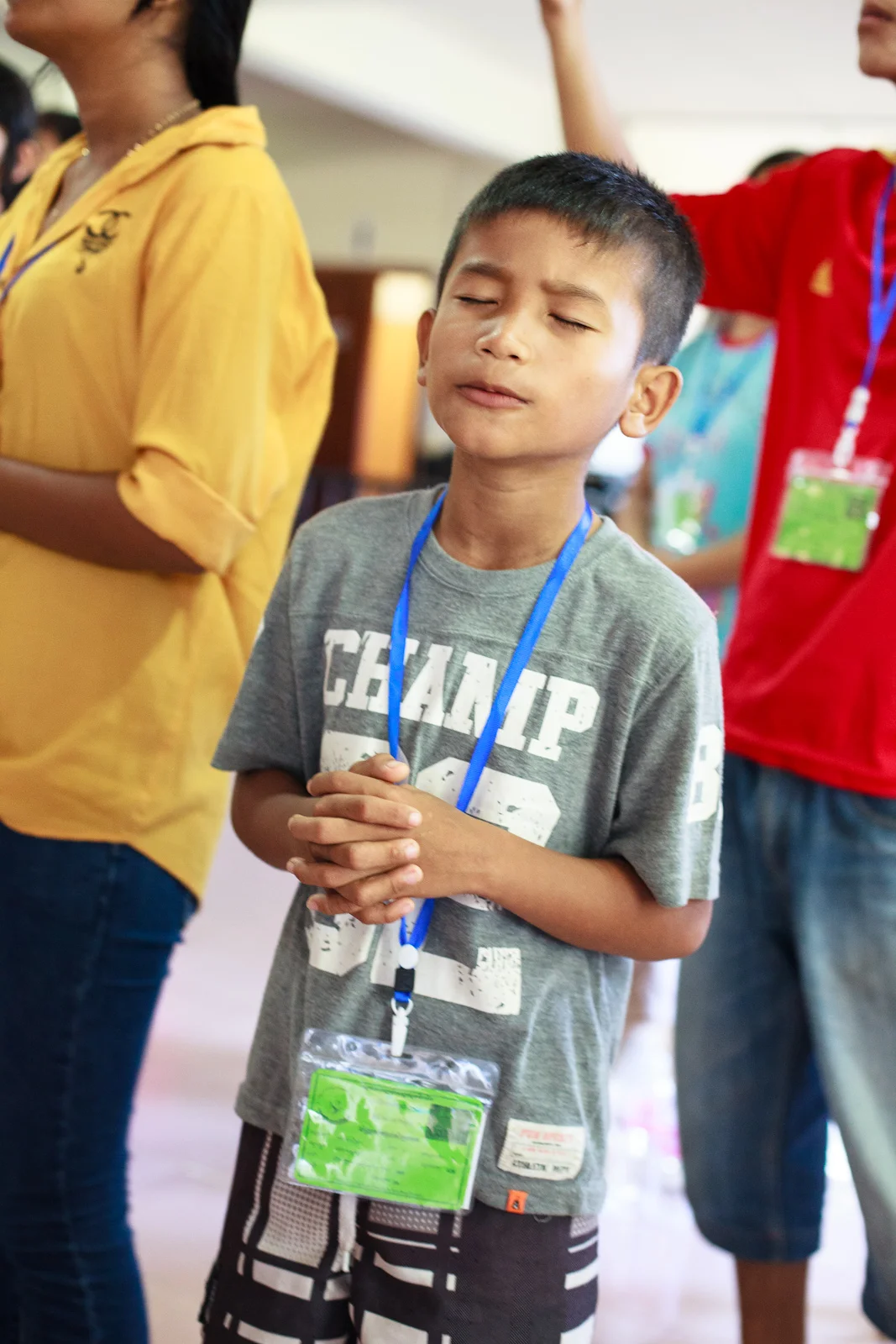
Christian movements throughout history have grown as participants have turned toward God in worship and prayer.
We believe God is the source of the transformation we seek in this country and around the world. We long for the Kingdom Jesus announced: of forgiveness and reconciled relationships, peace overcoming violence, and justice for the poor and oppressed. And we are drawn to his grace personally.
For all these reasons we worship and pray. Alongsider mentors pray with the little brothers and sisters all the time. Once a year they join to worship and pray together, and it's powerful.
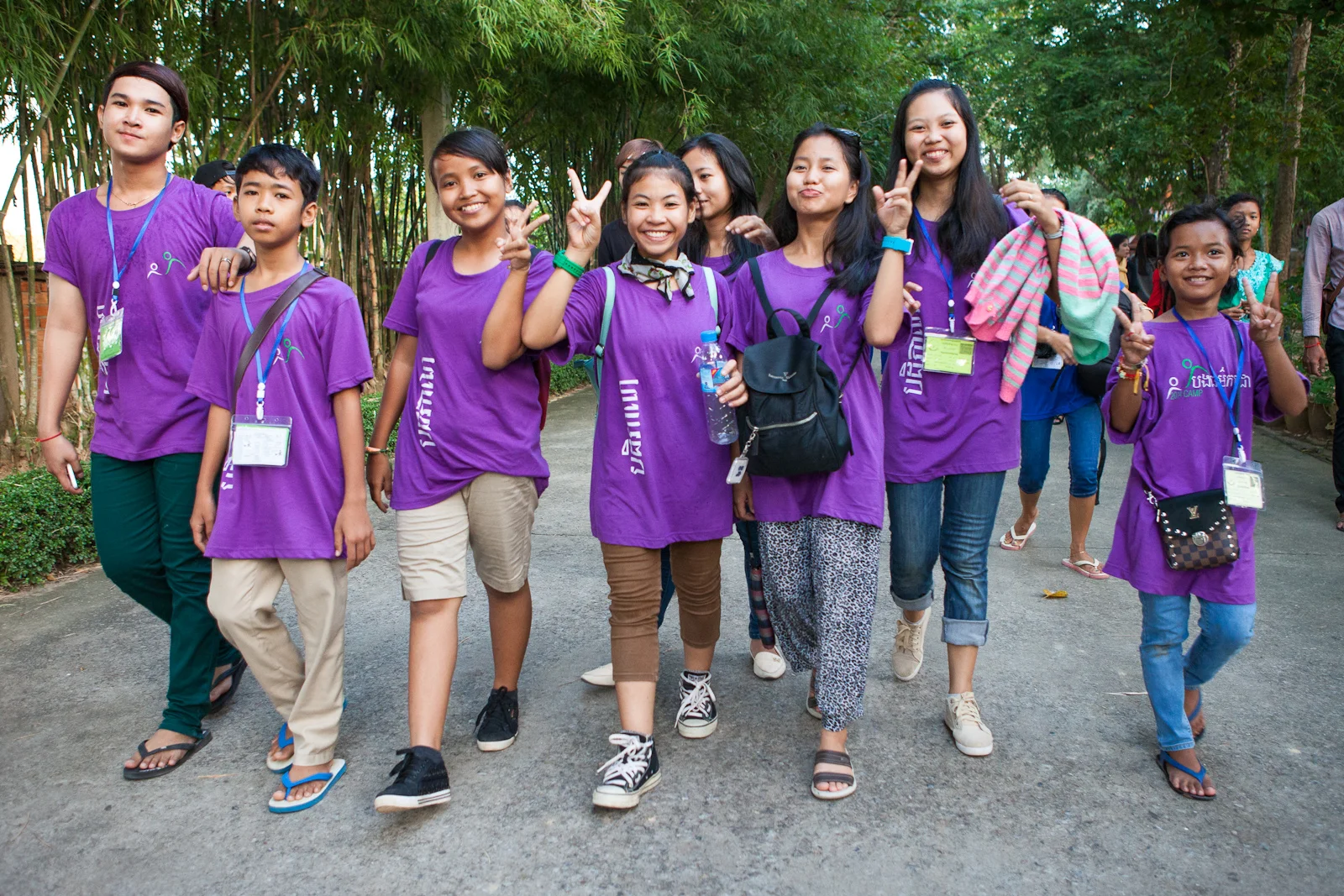
Alongsiders at the Cambodian Cultural Village in Siem Reap
No-one ever washes a rental car
Seth Godin points out that no-one ever bothers to wash a rental car. The reason why is of critical importance to Alongsiders.
Seth Godin points out that no-one ever bothers to wash a rental car. Why? Because there's no sense of ownership. And a sense of ownership is required in order for someone to go the extra mile.
In Alongsiders, we are serious about fostering a sense of ownership amongst those in the movement. It's not just lip-service. We build it in from the ground up.
Here is one of the key ways we try to do that:
Alongsider mentors choose their own little brother or little sister.
Rather than matching up mentors with kids that have been previously selected by some outside group or organization, the Alongsider mentors themselves prayerfully discern which child they will personally walk alongside. They select a vulnerable child from nearby their own house, in the same community. For some, this is a several months-long process of discernment.
And the result? Alongsider mentors are more likely to take the relationship seriously, have a sense of ownership of that relationship, and go the extra mile. We have some mentors who have been faithfully walking alongside their little brother or sister for more than a decade.
Cambodians have a proverb - it takes a spider to repair its own web. In other words, it is going to take insiders to transform a society.
In order to be motivated to work for this kind of deep transformation, those insiders need to own the work. They need to lead the charge. They need to have a sense that they are responsible for the change that needs to take place. They need to deeply commit. And that only happens when they are given ownership.
But here's the catch. Empowering young people, giving them ownership, means having less control. And this is the core issue we have to face in our movements and organizations. Sure, we want to empower and give ownership. BUT....
...are we willing to give up control?
No-one ever washes a rental car. No-one pours out their heart and soul for something they don't truly have a sense of ownership or responsibility for.
So which path will you choose?
Control or transformation?