
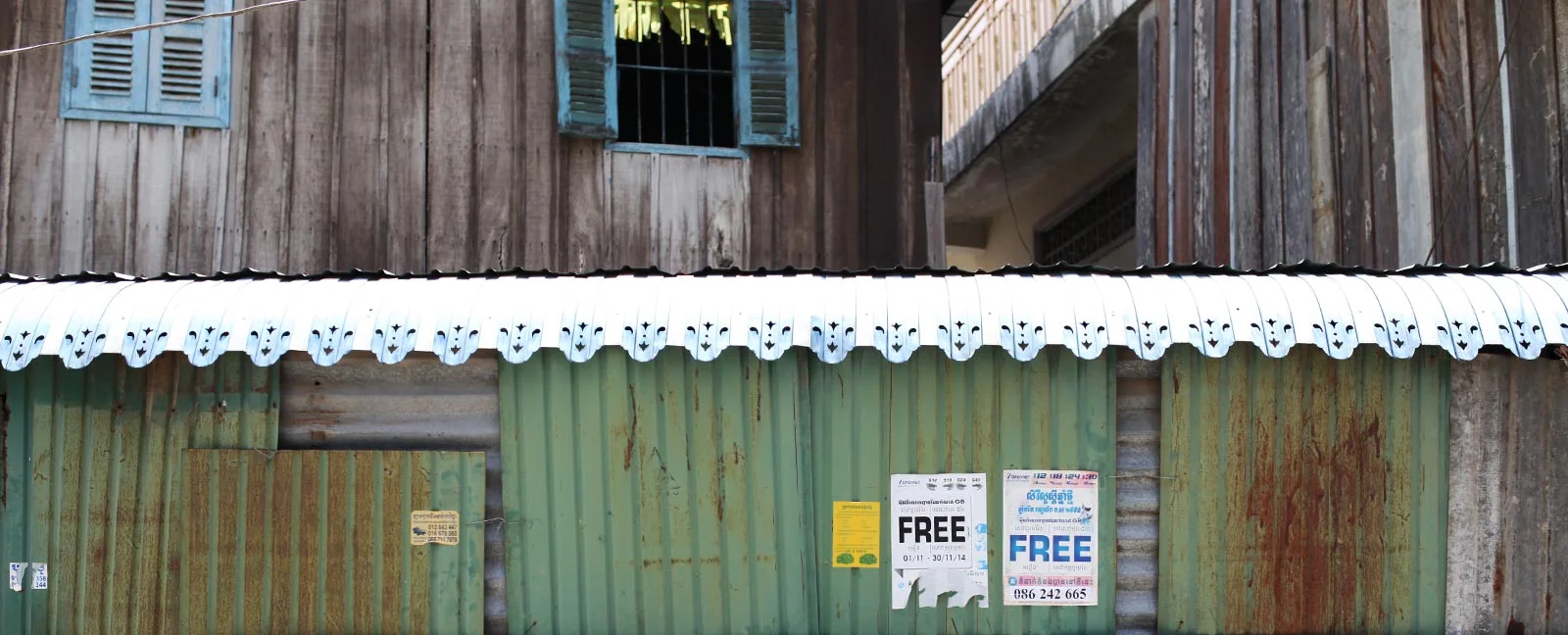
Reflections from an intern: "What the slum taught me about changing the world"
How could I possibly love a family and community so much and still walk away?
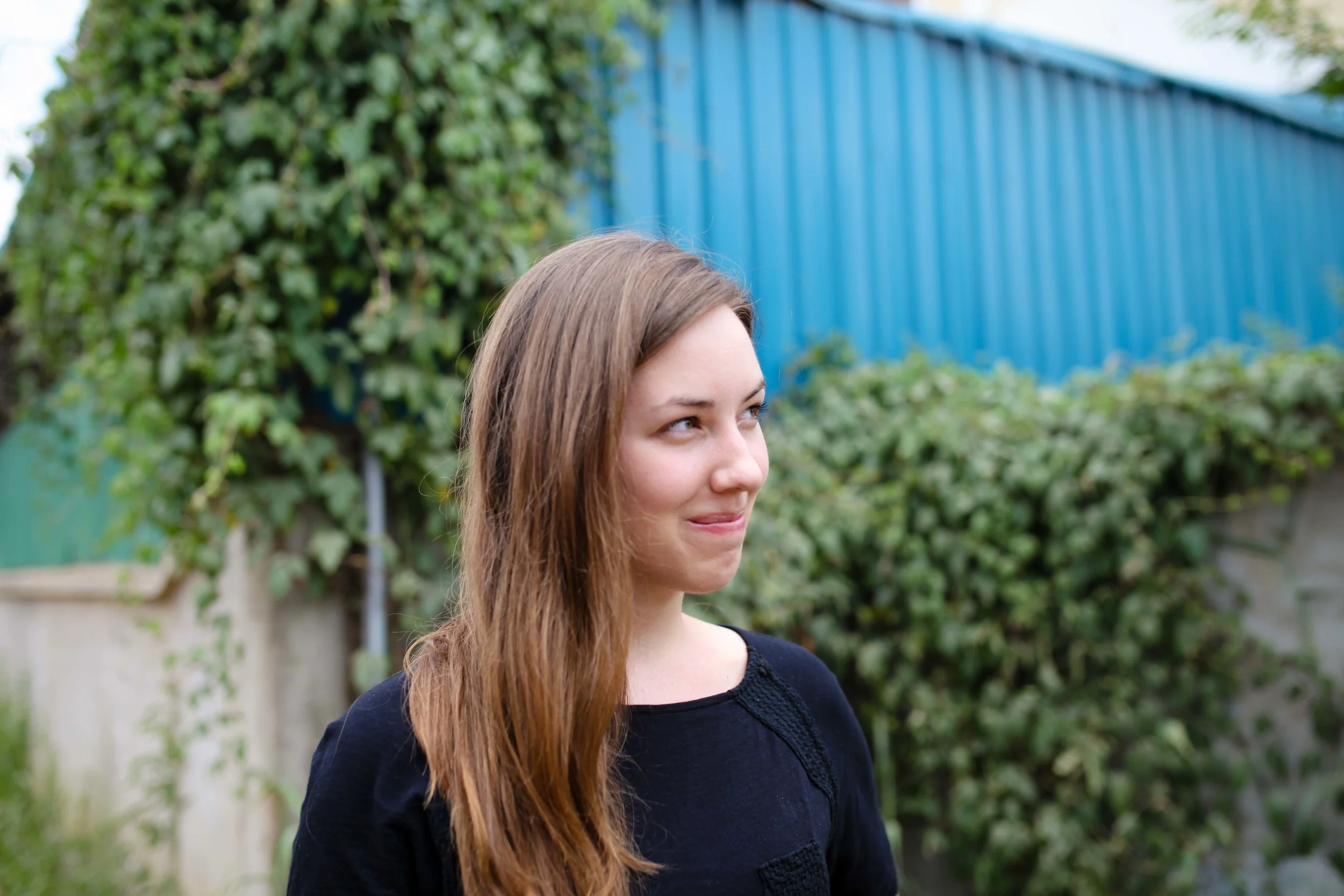
Whenever anyone asked me what I wanted to do when I grew up, I answered, "Change the world."
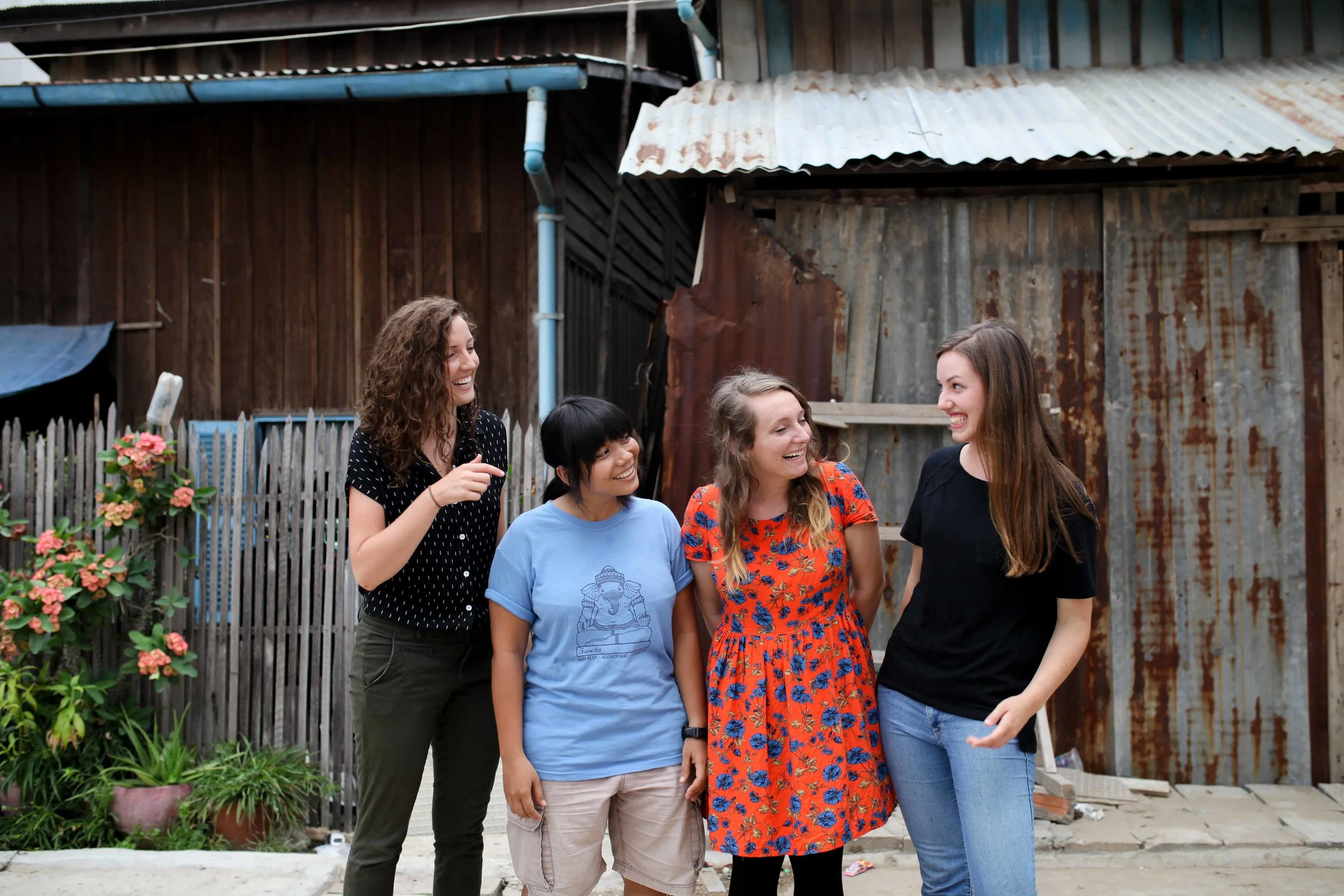
As an intern for Alongsiders International, I was excited to travel to different Cambodian provinces to conduct interviews, write for the blog, and live in a Phnom Penh slum. I was sure I would see God working in incredible ways in my slum community.
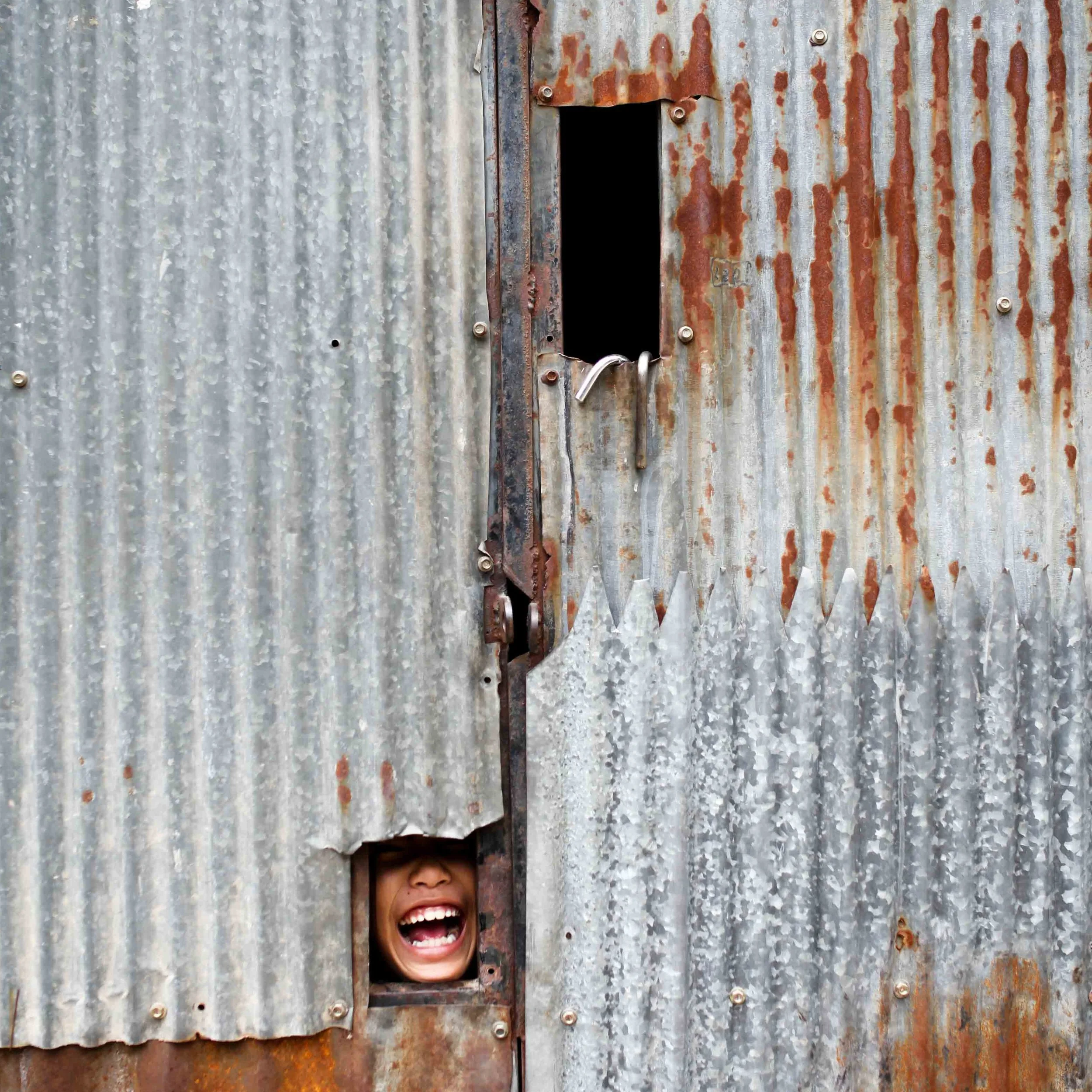
I moved into an extended family of eight people, a dog, several pesky rats, and a million mosquitoes. I took bucket showers and slept under a mosquito net. I ate rice three times a day and tried hard not to get food poisoning. I went with Ming to the market to buy live frogs and helped her and her son cut them up and cook them. I biked to work in crazy traffic and learned to ring the bell on my bicycle when turning corners to alert other drivers to my presence.
Most importantly, I fell in love with my host family and neighbors. I'll never forget the night I carried the baby outside the slum to a sand dune to watch the sunset, while she laughed and clapped her hands. Or the night that Theary and I read Alongsiders comic books for hours. Or all the days spent playing Moan, Moan, Tia with the neighbor kids (Cambodian duck, duck, goose). Or rocking in a hammock while eating green mangoes dipped in chili powder and salt, trying to communicate with my host family using my limited Khmer.
But I also can't forget the hard things: the nights I ran to the bathroom with food poisoning. The day a drunk man shook Ming, and her terrified little granddaughter tried to slash him with a wire hanger. The meals when I looked down to see yet another plate of boiled, fatty fish and steeled myself to choke it down again. The neighbor lady who would slap her her little daughter. The food offerings made to ancestors by people who could hardly afford three meals a day. The rubbish and the stench everywhere.
Most of all, I can't forget the way I had to leave. One of the sons had a party, and eight hungover men sprawled in the living room later, my time in the slum came to a screeching halt. I cried to leave, choked back tears when Ming asked if I still respected her family. How could I possibly love a family and community so much and still walk away?
Because I had money and a support network, I could walk away and find new housing. The young granddaughters staying with Ming weren't so fortunate.
I had spent three weeks living beside them, playing with them every day, and now I had nothing to show for it but a broken heart and a lot of memories that were suddenly more bitter than sweet. I had read the story of changing the world, and this wasn't how it was supposed to go-- was it?
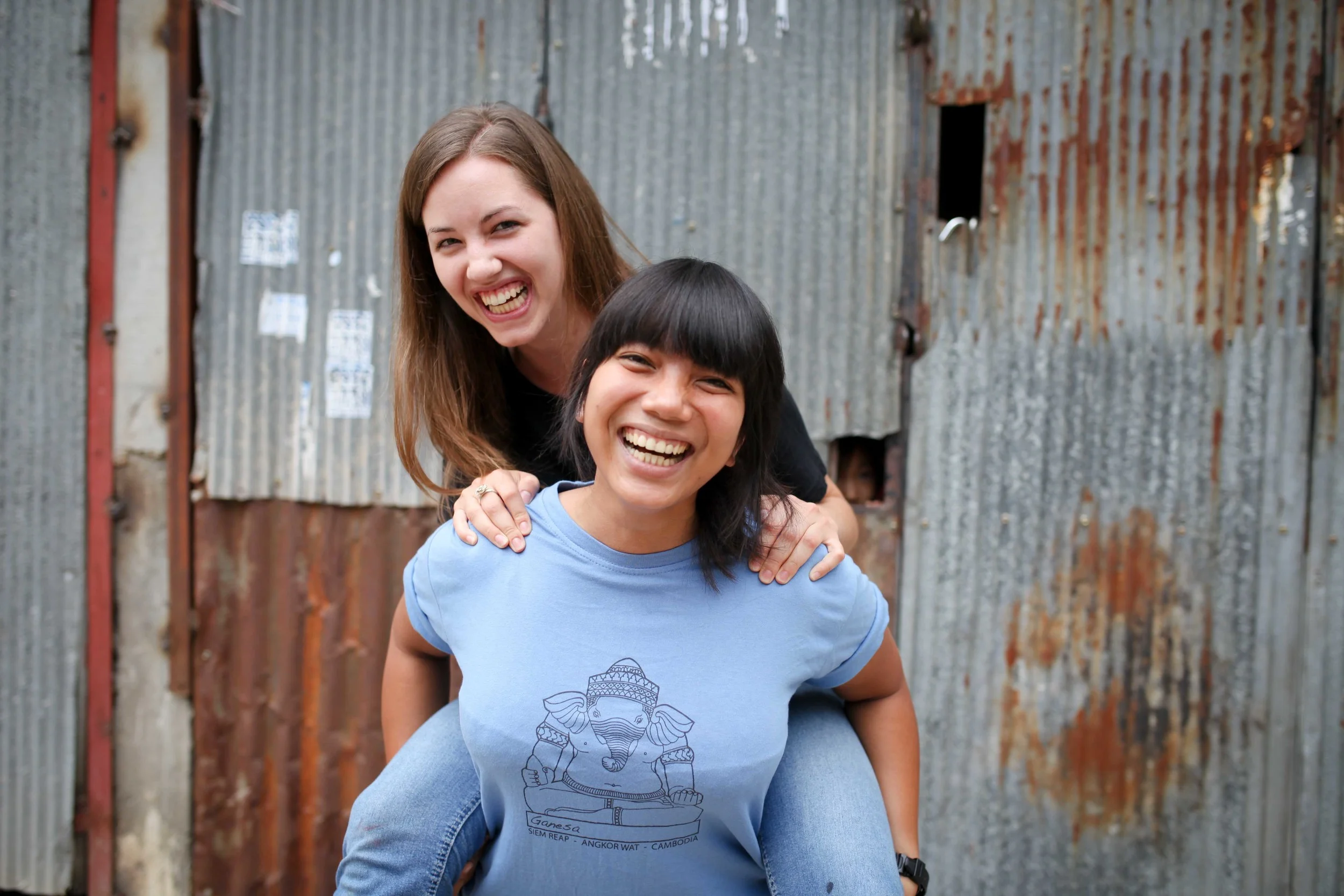
As I tearfully told the story to a friend, she stopped me. "What if living in the slum wasn't about you changing the slum but about the slum changing you?"
During our listening prayer time at Alongsiders the next day, I closed my eyes and told God how much it hurt to have fallen in love with my slum community, invested wholeheartedly in it, and then been forced to leave it unchanged. I poured out my prayer, and waited for His response.
He said simply, Listen.
“You are anxious and troubled about many things, but one thing is necessary. Mary has chosen the good portion, which will not be taken away from her.”
Over the next few weeks, I began to listen to God. At my new house, there was nothing for me to help with, so I found myself with a whole lot of silence and spare time. In the stillness I realized why it had hurt so badly to leave the slum: my identity had gotten wrapped up in making a difference. I was basing my worth as a person on 'changing the world,' at least in my Cambodian slum. Yet I myself had loved the people in the slum for who they were, not for anything they did.

The week I left the slum, I re-learned two important things: I am not the savior and my worth is wholly in the Savior. Ultimately, I learned that changing the world starts with being changed.
Three weeks later I got a text from the son: "I want to know that you feel safe now. I am sorry for the inconvenience. Our family would like to say goodbye before you leave."
So I head back to the slum one last time, to say goodbye to the community I've laughed and cried with, the community that taught me that worth is in being not in doing. As I walk back down my old street, the children come running. "Hello!" they cry. "Hello!" I enter the gate and Ming comes out and gives me a hug. My heart begins to heal as I greet her in Khmer.
It wasn't exactly the incredible summer of changing the world that I'd planned on. But I don't regret it for a second.
“When life is sweet, say thank you and celebrate. And when life is bitter, say thank you and grow.”
The sting of being excluded - and how to address it
Opening gates for excluded children...
Everyone needs to be part of a community: to be accepted, to belong, to contribute. And we all know what it feels like to be excluded and marginalized, how it threatens our well-being to the core.
Consider this story told by a Cambodian friend (in her words as I remember them).
Growing up I was very poor. One of the poorest children in a poor village. Everyone looked down on me. The other children called me names, and I felt dirty and ashamed. When I got older, I had to drop out of school and work. Someday my dream is to drive into my old village in a big, expensive car. They'll all see me and say, "She made it." The poorest children will think, "If she could do it, I can do it." I want to open a school there and use my money to help others, because that's the responsibility you have if you are rich.
Like many children in the developing world, my friend's community of origin was a rural village. It's a place where everyone knows everyone else. Despite its shortcomings, it still helped to shape and guide her. Years later, having finally gotten her high school degree, she still wanted to return and be validated by the people there.
Her home community was not just important to her for emotional reasons. Besides family, local community relationships play an important role in shaping our lives as we grow up. Here are some examples of what children need to learn while growing up in a Cambodian village:
- Culturally appropriate manners in various relationships
- Verbal and non-verbal communication abilities
- Work habits and credibility
- Respect for community values and traditions
- How to navigate vital customs like courtship, marriage, and property ownership
Of course, communities (and families) don't always function as well as we wish they would.
My friend's story demonstrates a sad truth: that even in poor villages the poorest and most vulnerable children and families are often treated badly and further marginalized.
How can they benefit from growing up in the village community if they are excluded?
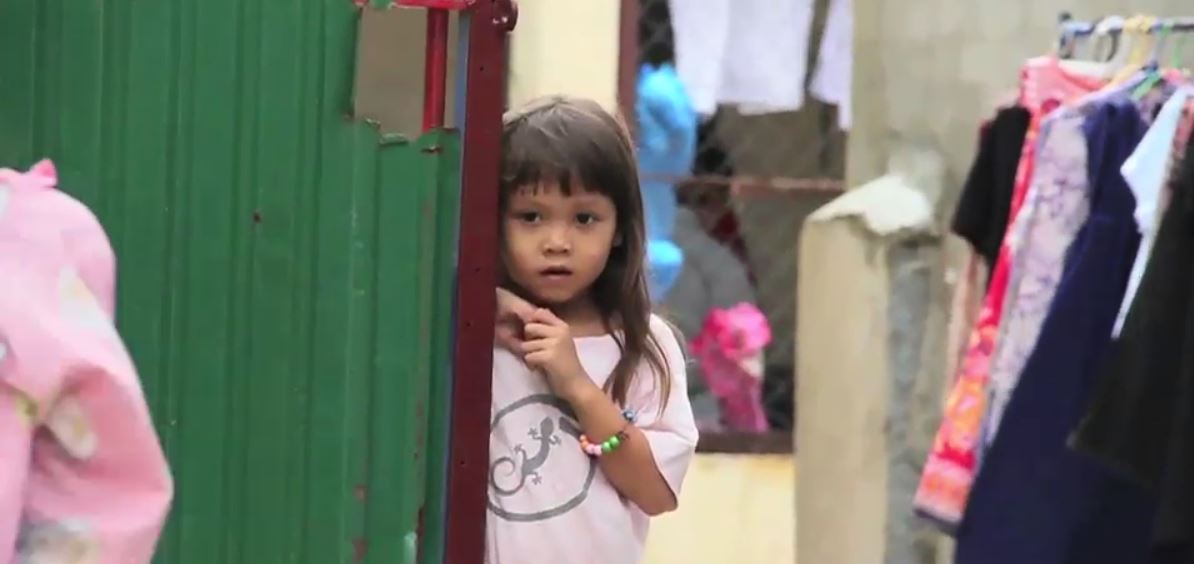
There's a moment in our Alongsiders video (see below at 0:53) in which a little girl is watching a group of children play. She is standing outside a gate, looking in with longing in her eyes to join in. Then her Alongsider comes and takes her by the hand. She helps her little sister join the group and they all play together. In a moment this little sister moves from excluded to included. She is no longer on the outside looking in: she has been chosen and loved.
My friend from the opening story wanted to be included, wanted to be seen differently, but it didn't stop there. She wanted - and still wants - to contribute. To be part of a community and respected within a community is not just about receiving benefits, it's also about participating and giving.
So here's another side to that moment in the video. The Alongsider was once a little sister herself. She was once the one outside the gate; now she is opening the gate for someone else.
Perhaps other gatekeepers in her community - or readers here - will see her example and begin to change.
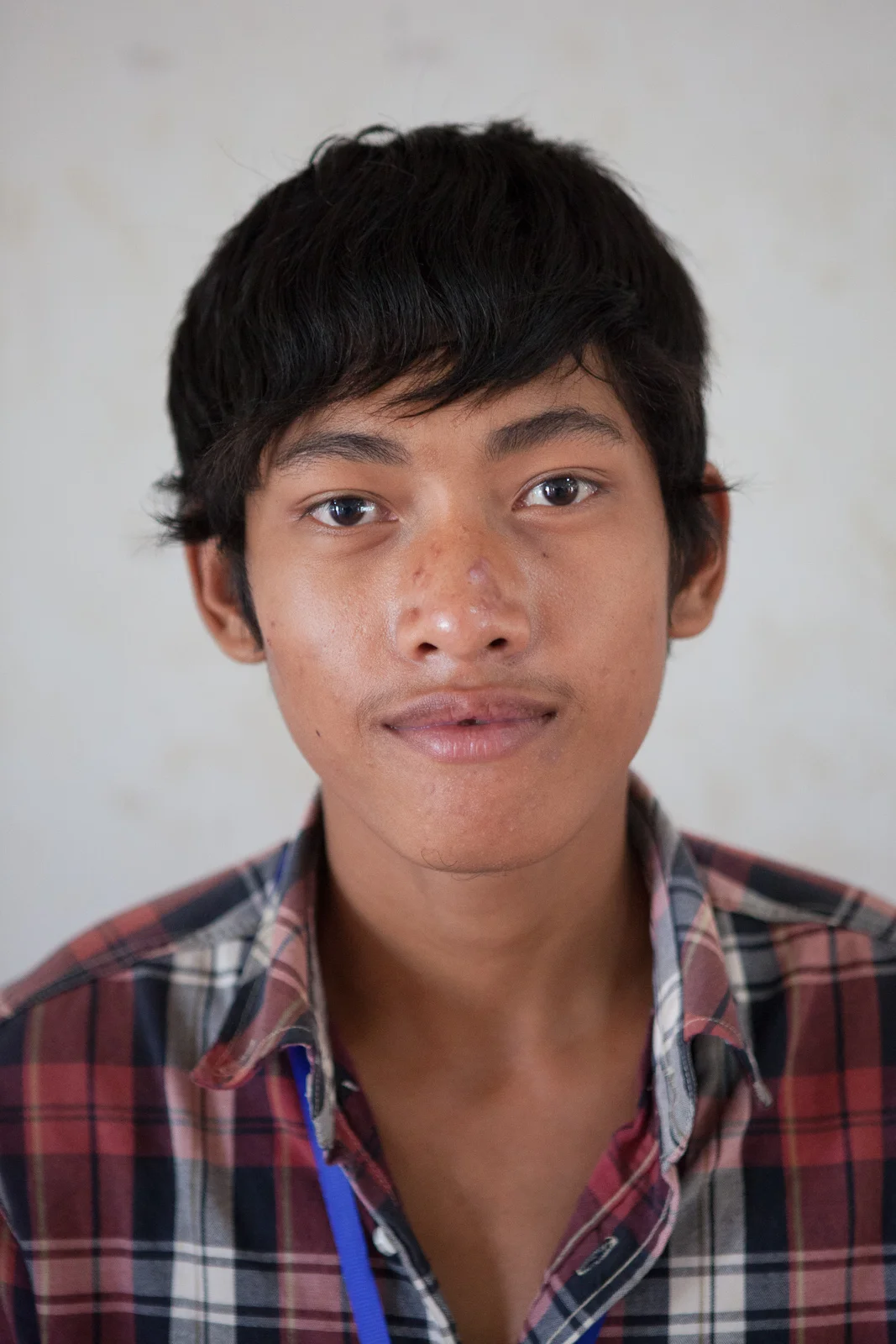
"My Alongsider showed love to me, and now I want to show my love to my own little brother." (Narith, Age 17)
Many Alongsiders have been at the bottom and felt the sting of being excluded. To be sure, many are still struggling to find a way forward economically.
But as Alongsiders they are no longer mere victims or numbers, they are servant leaders and agents of change.
In another vocabulary, they are disciples of Jesus - who himself was marginalized, who identified with people outside the gates.
The community in which the little sister in the video lives isn't perfect, but it has so much to offer. She needs to be included in it for her own learning and development. And it needs her and what she can give. The same is true for many thousands of boys and girls in Cambodia (and in whatever country you may name).
Fortunately, there are many thousands of potential Alongsiders in Cambodia (and in India, Indonesia, China, and a growing list of countries), and they already make their homes in countless rural villages and urban slums where the most vulnerable children live.
Alongsiders see the excluded ones, bring them inside the gates, and walk with them until they can do the same for others.
They might be giants
You'll be encouraged to see the significant progress a group of Alongsiders and their little brothers and sisters have made after four months...
Four months ago I traveled by bus, boat, and motorcycle to Kampong Leng, a remote farming community north of Phnom Penh, to witness a group of new Alongsider mentors signing up with their newly chosen little brothers and sisters. A few days ago I went back to check on their progress, and this is what I saw.
Even in the dry season, Kampong Leng is a lush, green country, especially for one accustomed to Phnom Penh's concrete skylines and motorcycle rivers. Most land in Kampong Leng that isn't covered in jungle or water is cultivated to grow rice and a dozen other crops. Fruit trees spring up everywhere, even on the school grounds.
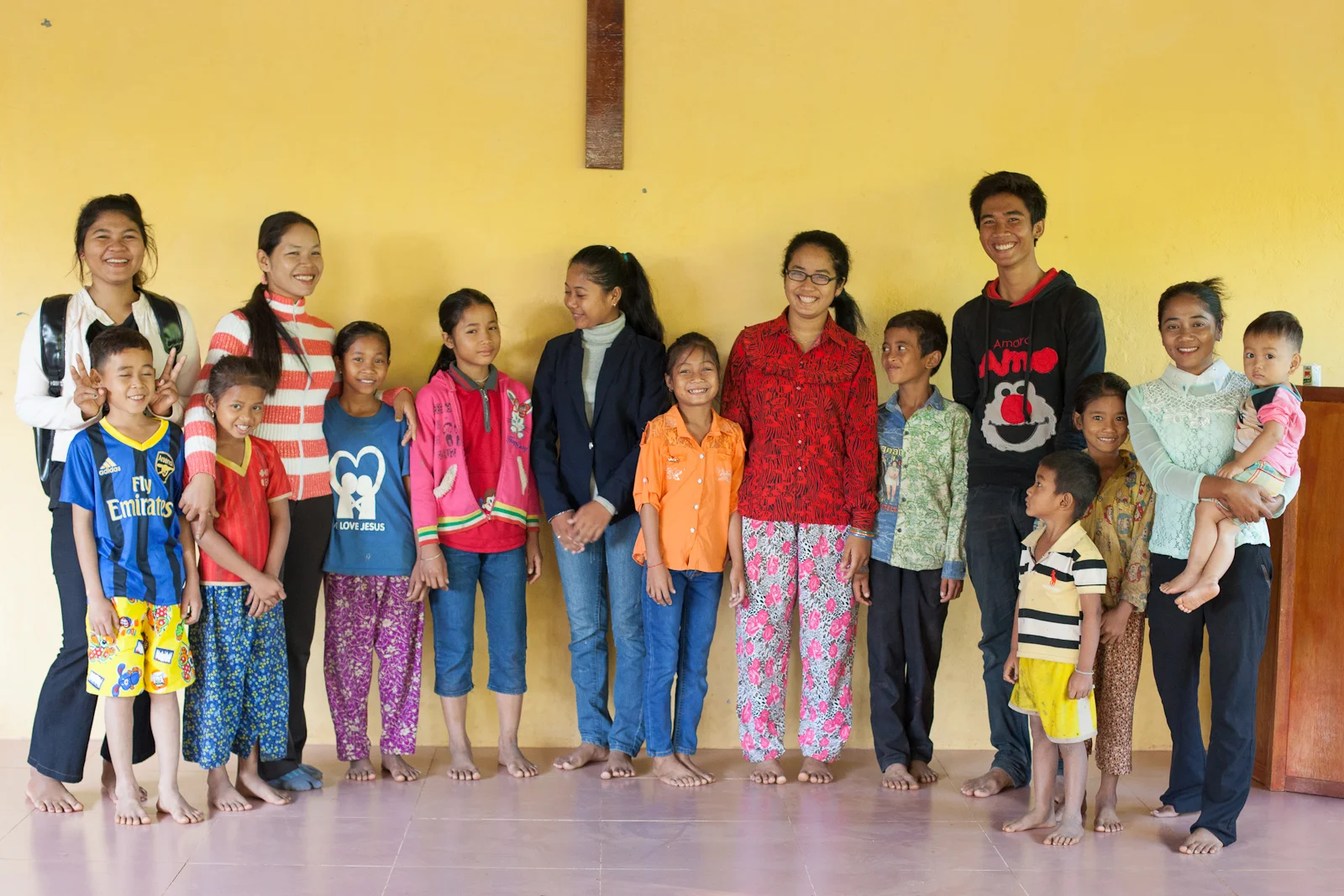
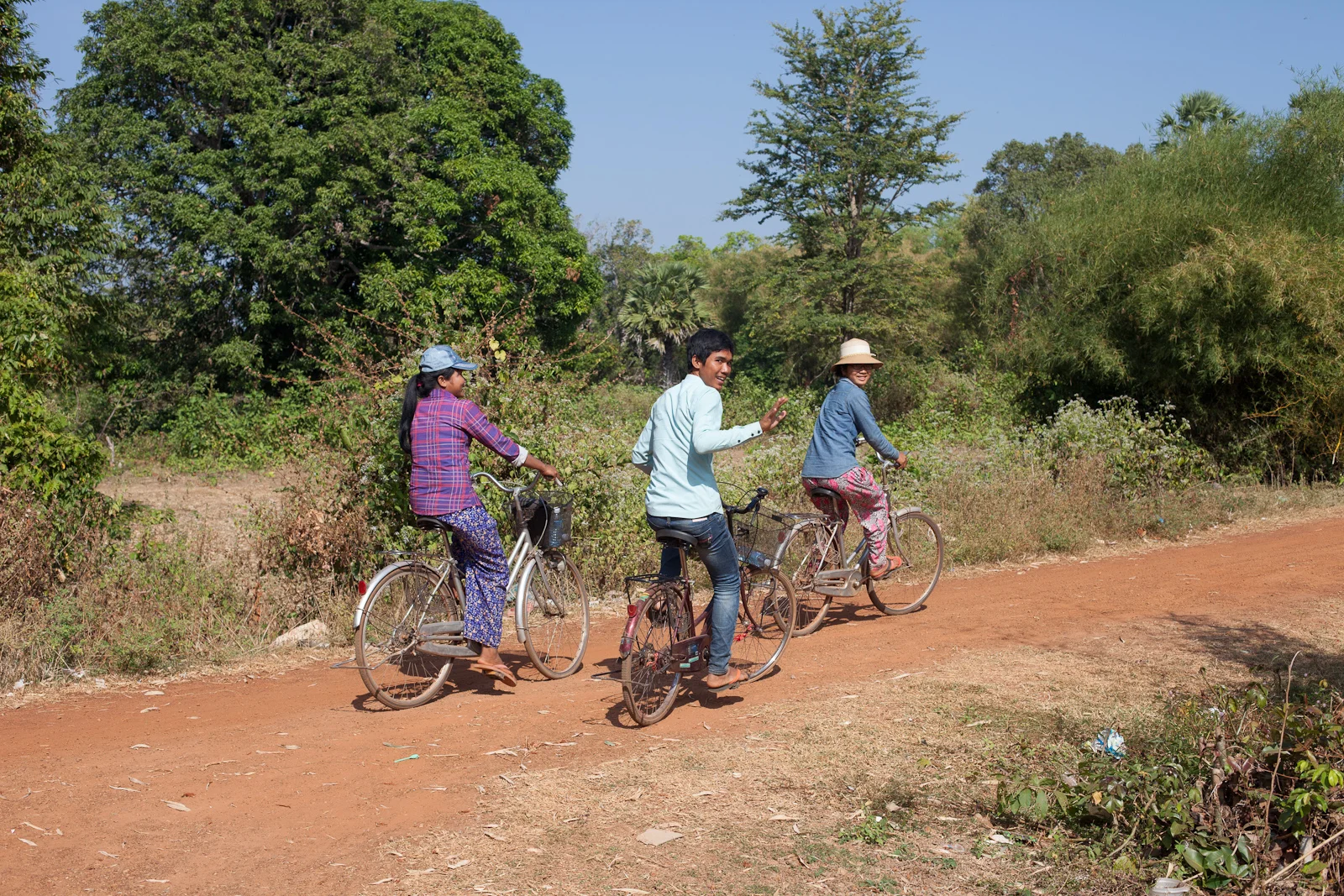
When I arrive at the local church, five of the Alongsider mentors are gathered to meet me with their little brothers and sisters. They have come from all directions, and one has traveled several miles on his bicycle.
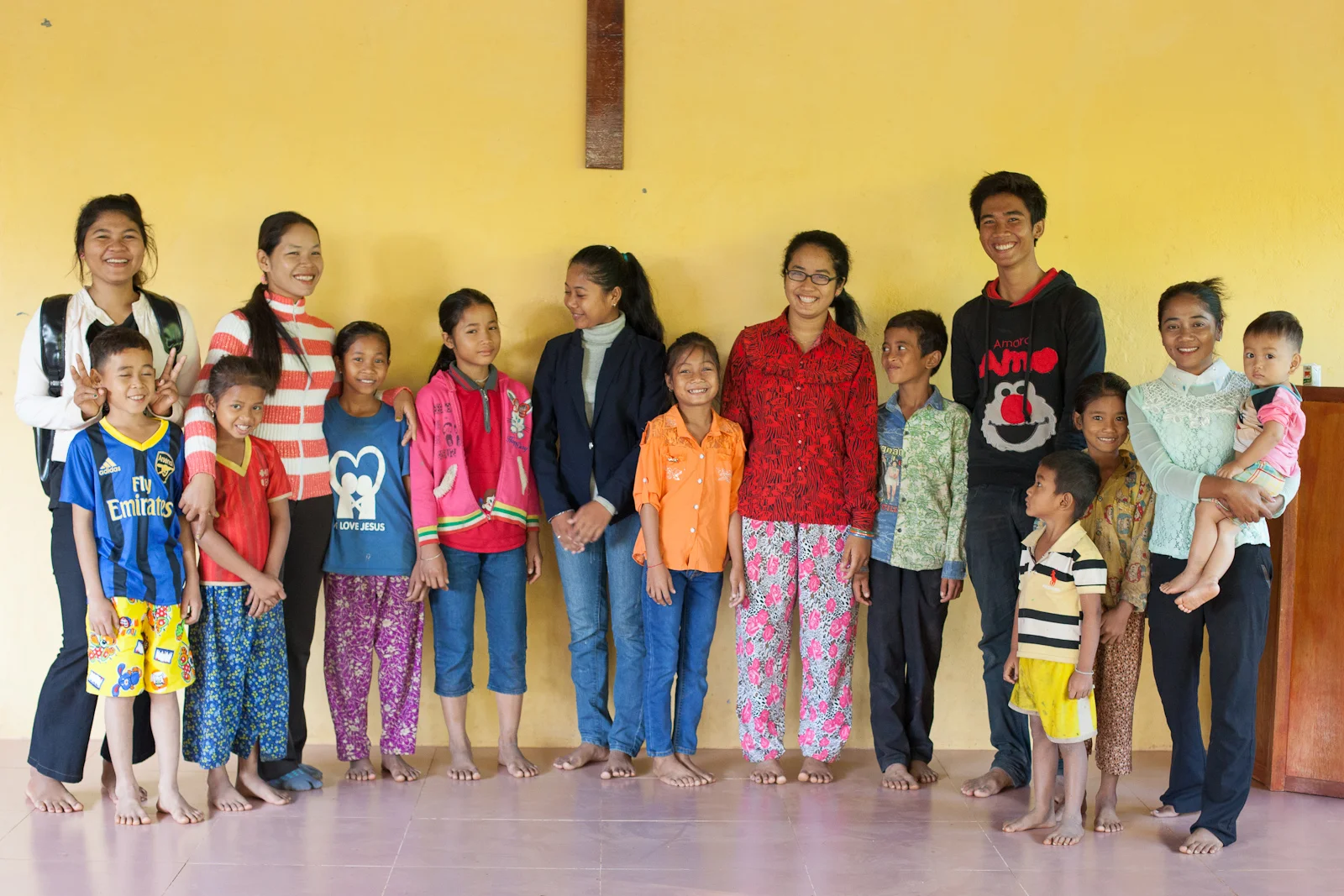
Alongsiders with their little brothers and sisters and a few extras. Chanthy is wearing orange and white stripes. Piya and her little brother are on the right in yellow.
For the past four months these new Alongsiders have been meeting with their little brothers and sisters once a week on average. I ask whether meeting regularly is a challenge, and I receive an education.
Most families in Kampong Leng are rice farmers, though many are diversifying as family members start businesses, work in factories, and (in dream scenarios) get educated and find salaried jobs. Those families that subsist on farming alone are very poor, usually earning less than $1 per day according to Chanthy, the Alongsiders group leader in the community.
Farmers in Kampong Leng work through the dry season. They can't use the fields near to their homes, so they travel (or relocate) to rented fields closer to the retreating Mekong River.
The little brothers and sisters all come from farming families, so their parents are on the move. Sometimes the children move with them.
The Alongsider mentors are also from farming families. Most are high school students. When they are not studying, they may attend extra classes to learn English or computer skills. Otherwise, if they have free time, they are expected to help their parents by working in the fields or at home.
Making time for their little brothers and sisters, even once a week, is a significant gift - and an effective one!
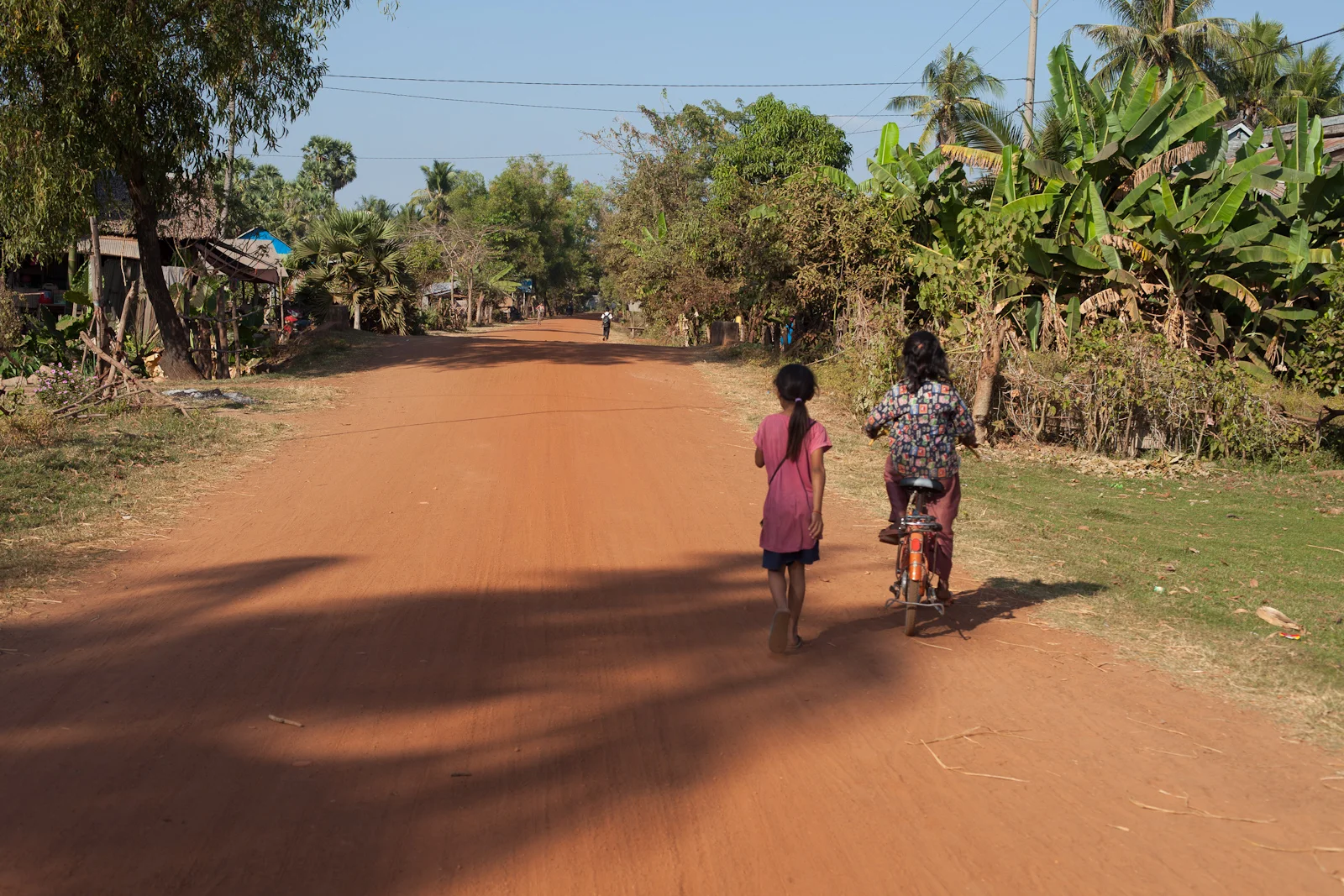
After my last visit I wrote about Piya, an 11 year-old who cares for three younger siblings every day while her parents are away working. Recently, Piya has started attending school about three days a week. In order for her to study, her mother will stay home in the mornings until Piya returns to look after her siblings.
Piya's mother wants her daughter to attend school. The greatest obstacle for Piya isn't time or even money: it's the shame.
Chanthy says, "Cambodians don't like poor children." She repeats the words, to make sure I understand, and adds, "Only the Christians love poor children, but not all the Christians do."
Piya, like many of the poorest children, doesn't have a school uniform, just a set or two of worn out clothes, plus she lacks basic school supplies like notebooks and pens.
When she attends school without a uniform or proper materials, the other children treat her with contempt, so she doesn't want to go. She has only started attending recently due to her Alongsider's strong encouragement.
I had thought that Piya's circumstances were unique, but as I listen to the Alongsiders share, I realize most of their little brothers and sisters face similar challenges. Most would not be attending school regularly without the support of their Alongsiders.
One little sister goes to school, then she walks one-and-a-half hours to join her parents at their rented rice field. They walk home together in the evening.
So what do the Alongsiders do with their little brothers and sisters? Most spend two or three hours together and do similar activities.
- They eat together.
- They help with homework and reading and writing Khmer.
- Some read the Bible together.
- Most of the Alongsiders have taken their little brothers and sisters to buy school supplies using their own money.
- Most of the Alongsiders help their little brothers and sisters to thoroughly clean themselves and wash their clothes.
- All the Alongsiders pray for their little brothers and sisters in their personal prayer times, and some pray for them directly.
Some Alongsiders have been able to bring their little brothers and sisters to church, but for many this is not yet possible. The distance is great, and the parents of the children (who are not Christians) work on Sundays and need their children at home or in the fields.
But through their actions and prayers, they are extending the Body of Christ to their little brothers and sisters where they are.
I leave with an enlarged vision, inspired and challenged by these amazing Alongsiders. In the eyes of the world - and even in their own eyes - they are marginalized. Yet they are most significant and central in the eyes of God, giants in the real Kingdom.
One teenage girl's audacious idea
When Serey heard about Neang’s announcement, she went to ask some questions... What would she truly love to do that she felt she might be good at?
No one seemed to care about Neang*. Overlooked by everyone, she was the youngest child of a single mother whose father died when she was just three months old.
But one day, a young woman from the same community noticed Neang.
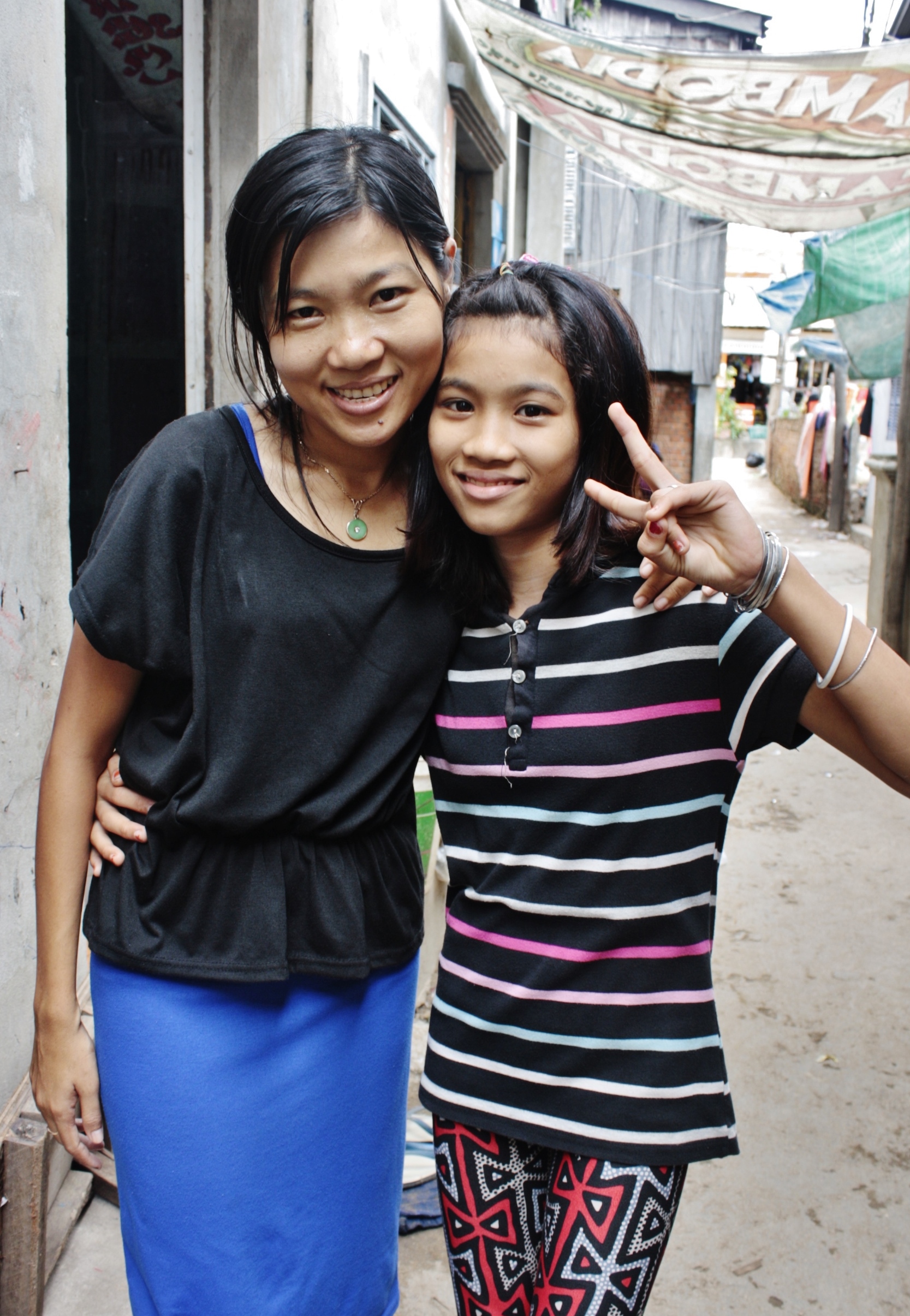
Serey was a 23 year-old Alongsider mentor prayerfully choosing a "little sister". She herself was searching for a way forward in life after growing up in poverty, so she knew the challenges facing Neang and wanted to serve. Serey says,
“Neang didn’t speak much, and she looked lonely. I loved her and wanted to help. There were other girls from poor families who I thought about as well, but her situation seemed more difficult. So I chose her.”
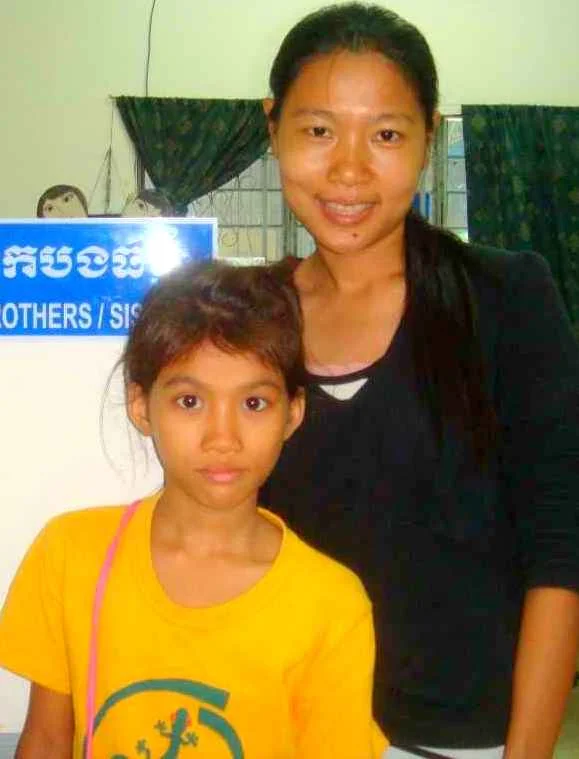
Serey and Neang early in their relationship
Today Serey is still a "big sister" to Neang. Serey has been walking alongside Neang for the past eight years.
“I became her friend. I encouraged her and met with her almost every day. I visited her house, and I talked with her family. She trusted me, and we had a good relationship. When she was eleven, she came to have faith in Jesus. ”
Neang is now 14 years old, and Serey still meets with her regularly. They are part of the same church family. But the challenges of growing up in a slum continue for Neang.
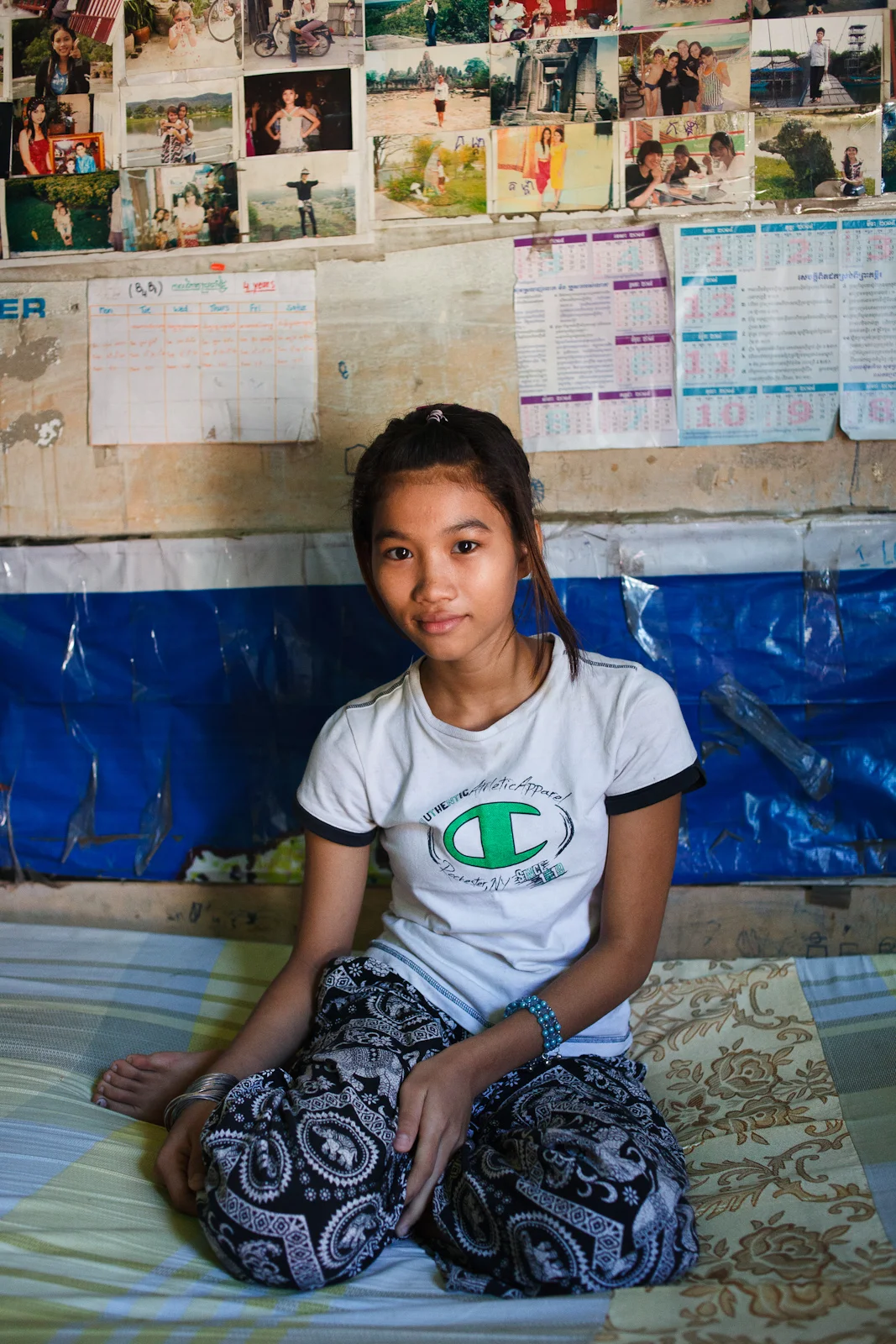
A few months ago Neang announced to her family that she would drop out of school after the 9th grade. The family needed money and she had a plan to attend classes to become a beautician and then open her own little beautician booth. She had heard about a government scholarship for vocational training. Besides, she liked make-up and hair-styling. She and her friends often practiced on each other. They like feeling beautiful.
For teenage girls living in the slum, some version of this story is the norm, not an exception. Among the poorest of the poor in Cambodia, just over half of the children attend primary school. Only a tiny percentage of students continue through high school.
And like students her age everywhere, Neang felt like she had been in school for a LONG time with no end in sight. Unlike students in many other places, the majority of her older role models have dropped out of school and taken jobs in local factories, and most of her peers will do the same. The money is very tempting, even $120 per month earned by working ten hour days, six days a week in a factory.
Neang’s grandmother, who runs the household, also liked the idea of Neang earning money to help with expenses. Neither Neang’s mother nor her grandmother finished high school, but they understand hard work. The sooner Neang gets a job or starts a small business, the sooner she can help support the family - and they can use the money.
Four years of high school (with significant costs in school supplies and fees) is a long time to wait. Besides, Neang's grades are average, and her family is poorer than most.
When Serey heard about Neang’s announcement, she went to meet with her and ask some questions. How would Neang get the money to open her own business? She didn't know. Serey probed further and asked Neang about her personal vision. She asked her to think about the long term. What would she truly love to do that she felt she might be good at?
"I would like to be a teacher," Neang answered softly.
Serey smiled her encouragement. "A teacher? What will it take to become a teacher?"
After discussing the options with Serey and her family, Neang decided to finish high school first, and then decide whether to go to beautician classes or university. Either way would present challenges, but having a high school diploma will be a tangible asset and possibly a way out of poverty.
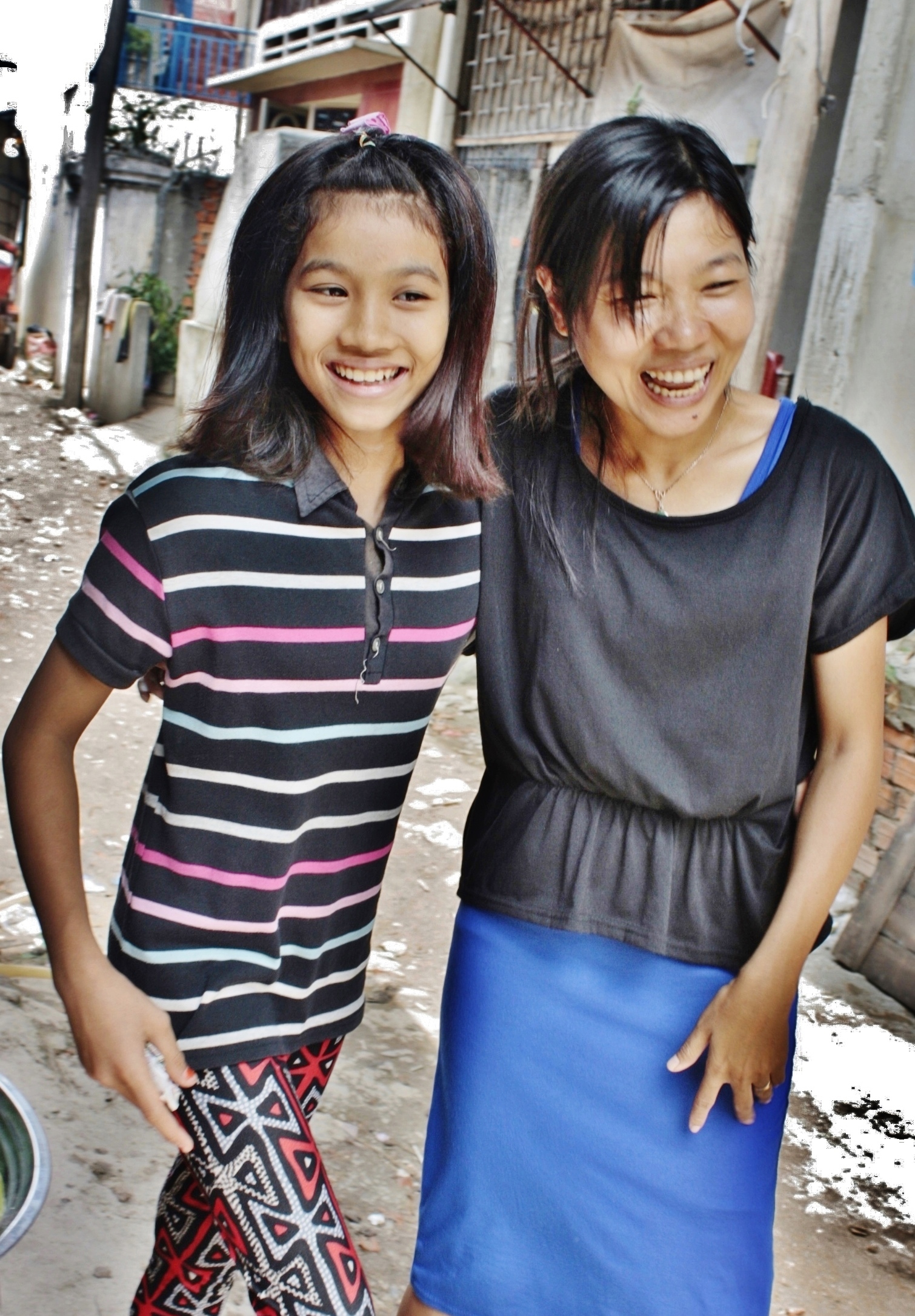
Serey and Neang are firm friends today
Becoming a teacher is an audacious idea. Kids who grow up in the slum rarely become high school graduates; they rarely attend university; and they very rarely become teachers.
Having your own business is also a worthy goal.
Whatever direction Neang takes will require courage and dedication, and someone to walk alongside her as she makes big decisions.
You need someone standing with you to help you voice a vision. You need someone walking alongside to help you stick with that vision. Serey wants to be that person for Neang.
Neang says of her Alongsider mentor, "She encourages me. She helps me stay on a good path."
Neang is no longer overlooked. And with Serey's help, she might just see some of her audacious dreams come true.
Serey offers this insight, "When Neang was young she had a lot of shame, and she felt afraid. But she became brave."
* Neang's full name is Srey Neang
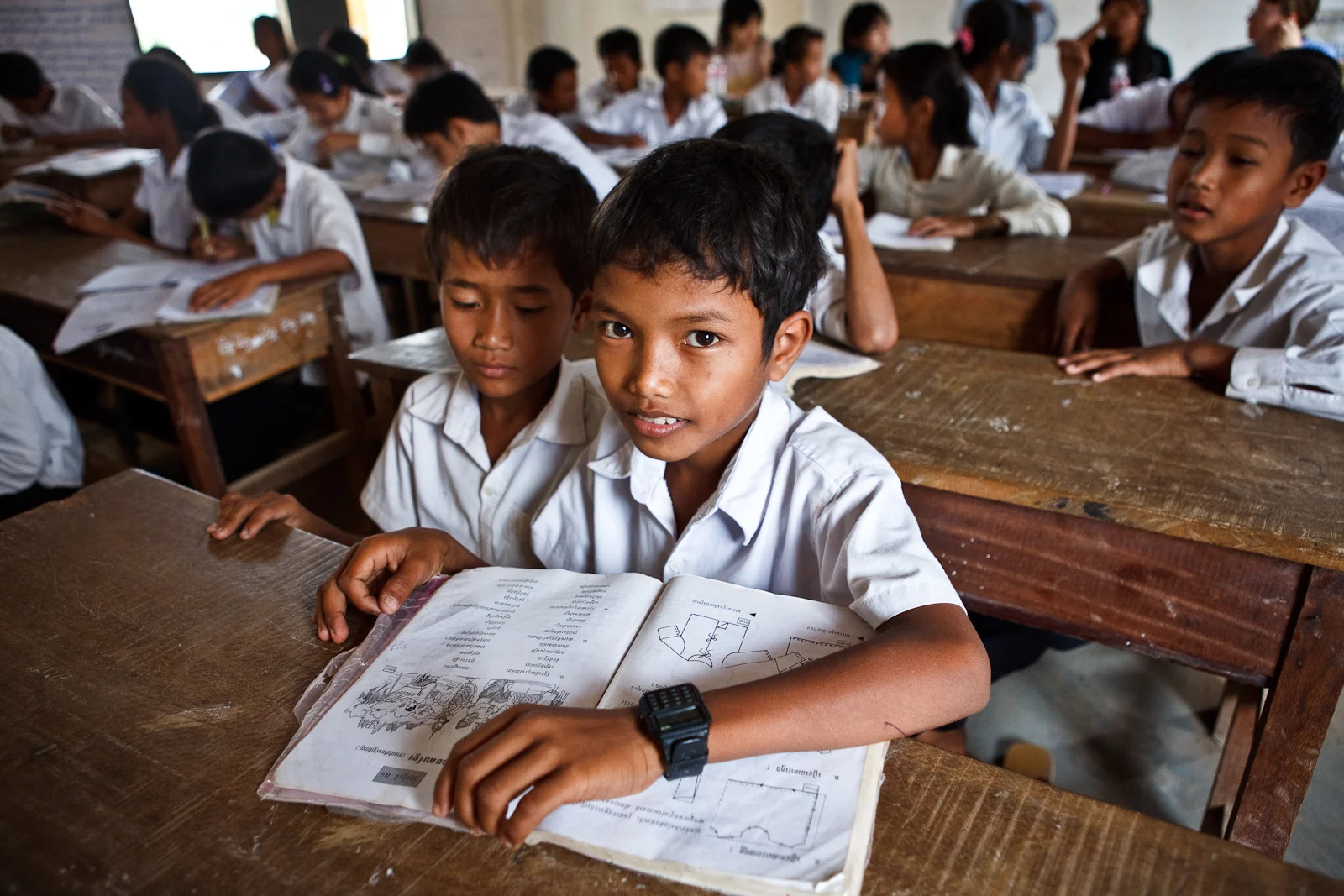
This action seems insignificant at first, but look at the impact on a child's education
What can Alongsiders do to ensure that EVERY child has a chance to learn?
The face of a courageous young girl named Malala is burned forever in our minds.
These are her words:
“I don’t mind if I have to sit on the floor at school, I want an education, and I am afraid of no one.”
Malala took a bullet in the head for her resolve, and even that couldn’t stop her.
Malala’s courage is extraordinary; but her desire to learn shouldn’t be so surprising. Across the developing world children are hungry for an education. Their hunger is evident to anyone who has ever visited a functioning school classroom or after-school program.
Last week, a story in the Cambodian papers ended with an ironic twist.
A young athlete, Sorn Seavmey, won Cambodia’s first ever gold medal in the Asian Games. She was naturally showered with praise and gifts on her return – plus one more thing...
It turns out she was one of many high school seniors this year who failed their graduation exams, so she was slated to take them again like all the rest who didn't pass. But Prime Minister Hun Sen declared that she will be granted an automatic passing grade.
This story captures one of the dilemmas with education in much of the developing world: the system favors some people over others. It’s not just about studying hard or ability; it’s also about power, money, and connections. People at the margins are on their own, and it's not a level playing field.
We know that getting educated is a proven way out of poverty. Improving schools and increasing access to them are staples of poverty reduction programs.
Most of the "little brothers and little sisters" in the Alongsiders movement come from the poorest families. Some simply cannot attend school due to lack of finances or, in some cases, because they must stay home to work or look after siblings.
What can Alongsiders do to ensure EVERY child has a chance to learn?
It may seem small - insignificant even - but simple ongoing acts of one-on-one coaching can significantly impact the education of a boy or girl in poverty.
In practice it looks like this: Alongsider mentors regularly help their little brothers and sisters with their homework, encouraging them to stay in school, and continuing to walk alongside them over the long haul. Sometimes they reach into their own pockets to buy a little brother or sister a notebook or pen that's needed.
In the words of one Alongsider mentor:
“My little brother goes to a school in the countryside where the teachers don’t require extra payments, because most of the families are too poor. The teachers have private classes after school, but he doesn’t attend those because he can’t afford them. But I encourage him, and he studies on his own every day. He can’t study a lot, because he has responsibilities like taking care of the cow and watching his brothers and sisters. But he studies enough.”
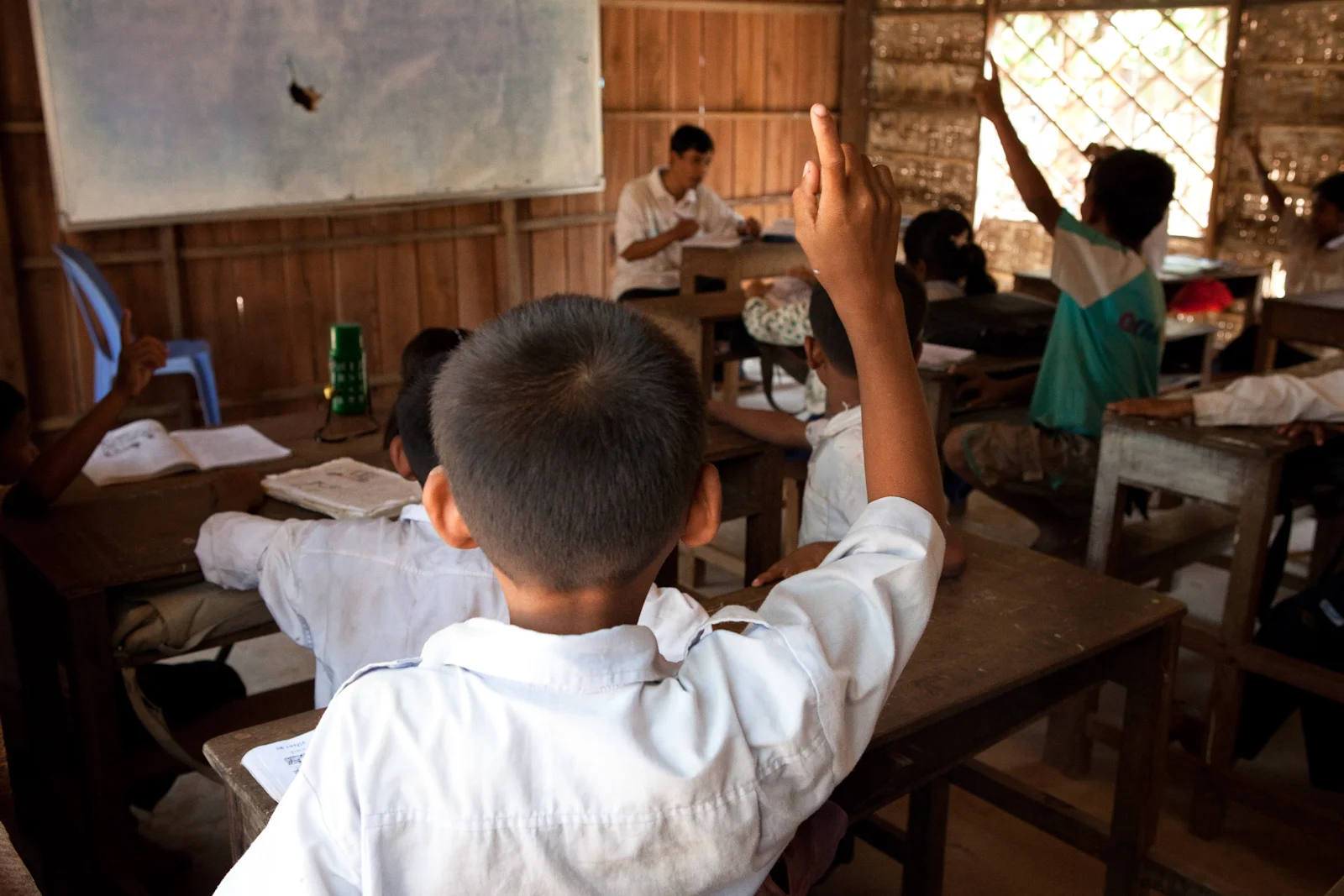
In our impact assessment, 97% of the "little brothers and sisters" in the Alongsiders movement reported that they receive help with their studies. Around half of them said that their Alongsider mentor was the MAIN person who helped them with their homework. Many also reported that their mentors had bought them school supplies or paid school fees at their own expense.
And look at the results:
“99% of little brothers and sisters surveyed are attending school, versus 55% of children of a similar demographic in the same neighborhoods. ”
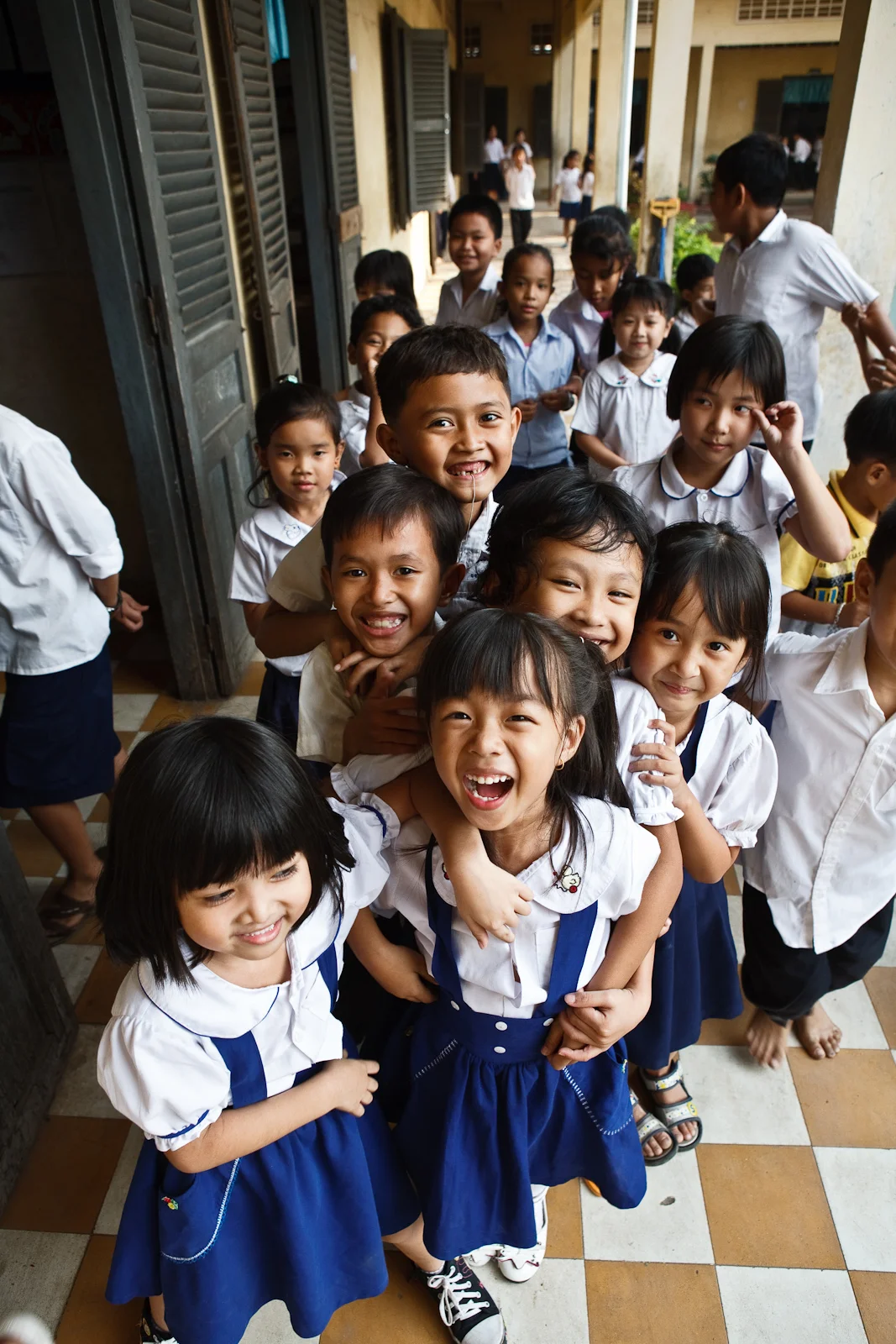
Impoverished students want to learn. It takes great determination to persevere, but it can be done. Every bit of encouragement and support and prayer from an Alongsider mentor helps them to find the strength inside themselves.
In the words of Malala, “One child, one teacher, one book, one pen can change the world.”
![How to hold onto hope in the face of extreme poverty & suffering [video]](https://images.squarespace-cdn.com/content/v1/6a28e0eeb1734d7d91985b22/1781064622202-BZ0ILWNODMZDBO7X4TJB/image-asset.jpeg)
How to hold onto hope in the face of extreme poverty & suffering [video]
Author, practitioner and contemplative activist, Chris Heuertz has spent the past 20 years working for women and children victimized by human traffickers in the commercial sex industry.
Author, practitioner and contemplative activist, Chris Heuertz has recently joined the international Board of Alongsiders.
Chris Heuertz has spent his life bearing witness to the possibility of hope in a world that has legitimate reasons to question God’s goodness.
Originally from Omaha, Nebraska, Chris moved to India where he was mentored by Mother Teresa for three years.
Chris and his wife Phileena served with the Word Made Flesh community for nearly 20 years, working for women and children victimized by human traffickers in the commercial sex industry. This has taken Chris to over 70 countries working among the most vulnerable of the world’s poor.
In 2012 Phileena and Chris launched Gravity, a Center for Contemplative Activism.
Named one of Outreach magazine’s “30 Emerging Influencers Reshaping Leadership,” Chris is a curator of unlikely friendships, an instigator for good, a champion of collaboration, and a witness to hope, Chris fights for a renewal of contemplative activism.
Listen as Chris shares about how to hold onto hope in the face of suffering, poverty and death.
Who REALLY connects with the poorest of the poor? You'll be surprised by the answer...
Here at Alongsiders we say, "It takes a spider to repair it's own web." Here's the secret.
Discarded himself. Phea knows the value of things others see fit to discard.
Every day he took to the streets with a rice sack slung over his shoulder looking for rubbish that he could sell: plastic bottles, cardboard, cans, scrap metal, or broken items that could be repaired.
Some called him names as he made his rounds. Others physically accosted him. They didn't see value of a kid in tattered clothes sifting through the garbage.
One day as he worked he came across a group of excited children and youth. They were Alongsider mentors with their little brothers and sisters waiting for transportation to the annual Alongsiders camp. Phea saw that some were neighbors, not unlike himself, and he asked if he could go with them. They said he had to have an Alongsider mentor, and it was too late for that. But someone invited him to the local church to learn more.
Phea went to the church. He says, "I never got my own Alongsider - I was too old. But instead I found faith." So, he kept attending the church, and when he turned 18 he applied to become an Alongsider mentor himself.
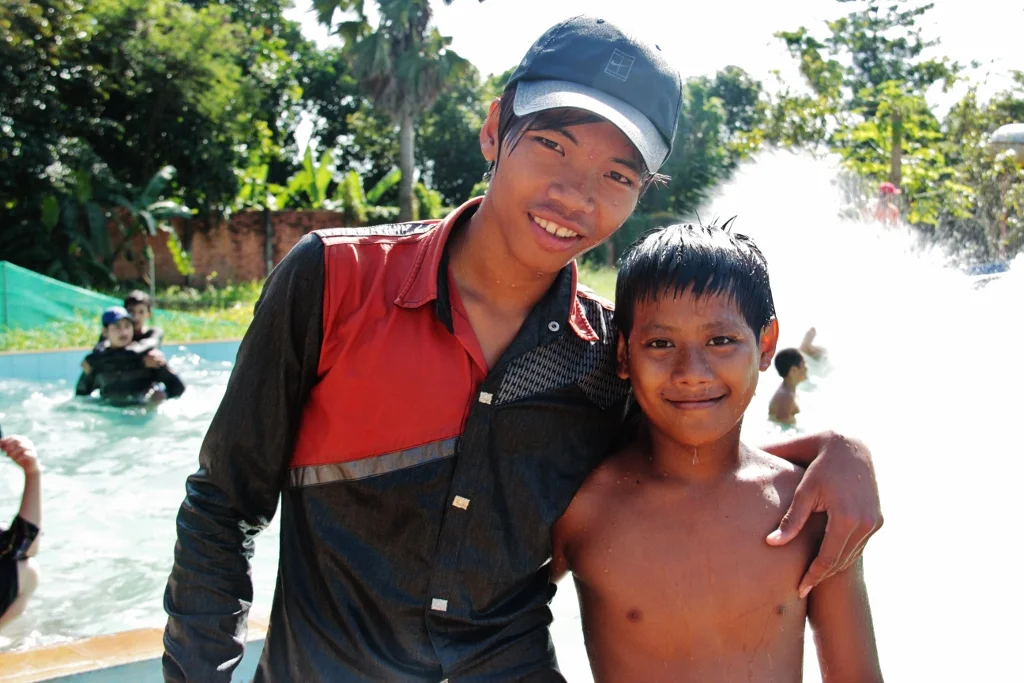
Phea and Virek swimming at a local water park.
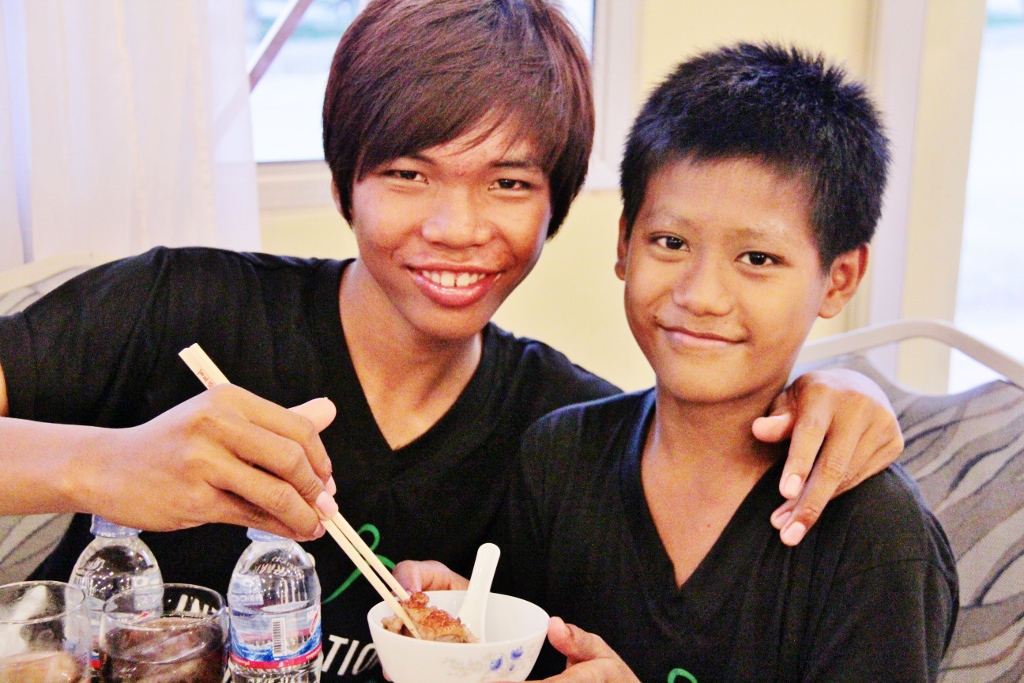
As his little brother, Phea chose a boy named Virek who had sometimes accompanied him collecting rubbish to sell. Virek's father died years ago, and his mother is living with a terminal illness. In addition to being very poor, even compared to other families in the slum, her sickness casts a stigma over her and her children. They stay with Virek's grandmother just up the alley from where Phea lives.
Having faced rejection, Phea knew Virek needed encouragement. Just around the corner from Virek's home is an Internet cafe where some boys gather who have dropped out of school. They work the streets a few hours each day and spend what money they earn or steal on video games, alcohol, and other diversions.
Life is hard in the slum, but it's most dangerous when youth lose hope and stop trying.
Through Phea's friendship and support, Virek returned to school. Now he is studying in the eighth grade. Though it's uncomfortable for him to talk about the future, he thinks about becoming a teacher.
So who really connects with the poorest of the poor?
Foreign workers, volunteers, and organizations are almost always on the outside looking in. Even local organizations are located, funded, and led from outside the places where the poorest of the poor live.
Virek is sensitive and reserved. His emotions are hidden. He's vulnerable and knows it. His story comes out slowly in two or three word phrases. I can imagine a foreign worker or volunteer being drawn to Virek, trying to unearth his mysteries, and coaxing out a smile or two.
Phea knows what goes on behind the smile. He knows the hurt. He connects deeply with Virek because he is alongside of Virek in every way.
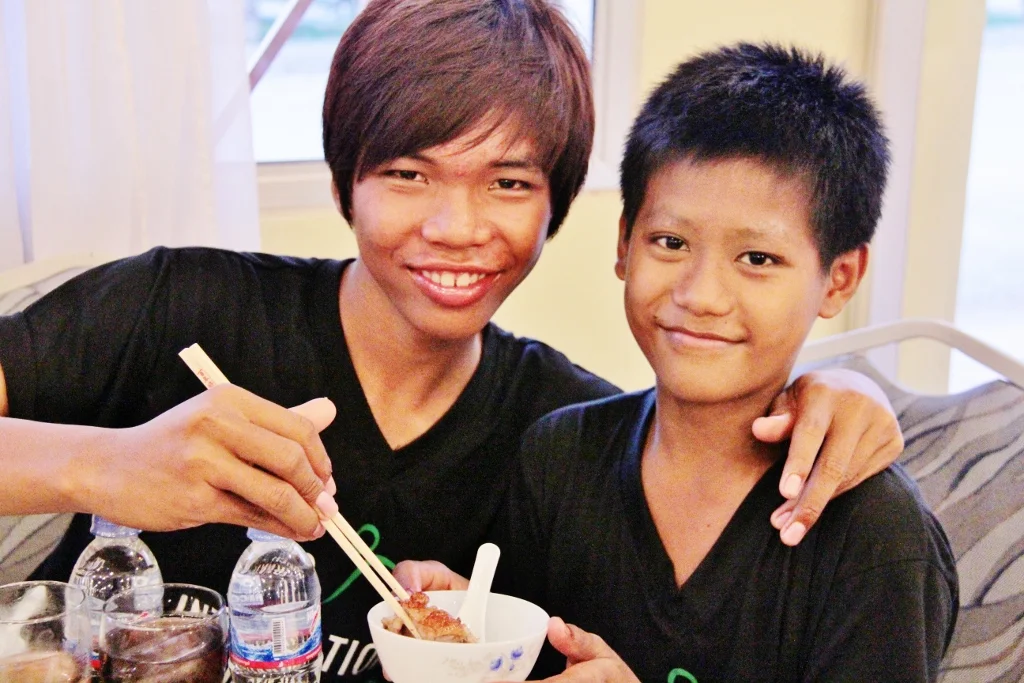
Phea and Virek enjoying a meal together.
Here at Alongsiders we say, "It takes a spider to repair it's own web."
The poorest of the poor are uniquely situated to connect with and support each other. They "get it" where others don't.
Sadly, there are divisions among the poor themselves: fault lines of mistrust, power, and fear. So the poor often feel alone and isolated even in their own communities.
Alongsider mentors like Phea are crossing those lines.
They connect with the poorest of the poor.
And they are not just connecting with their little brothers and sisters. They are connecting with families and building bridges of trust within their communities so that others can follow.
The ONE thing everyone overlooks about poverty
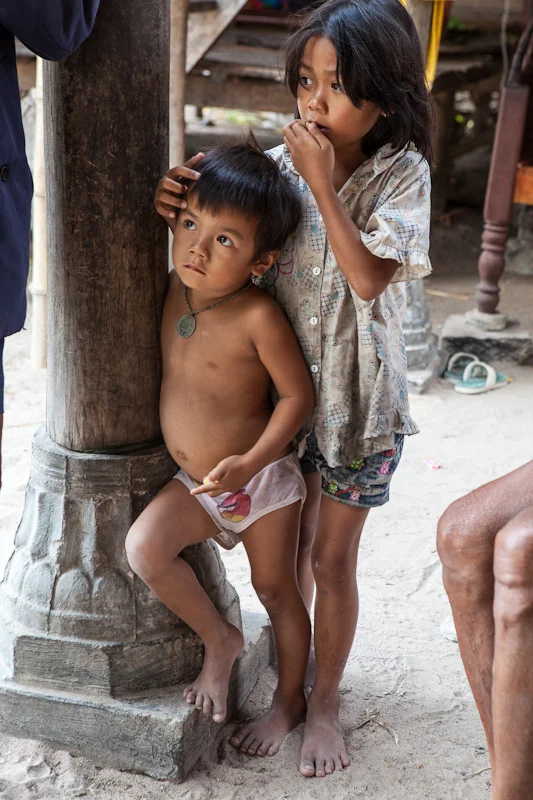
After hearing so many stories of children experiencing poverty, a recurring theme began to emerge - something most people overlook about poverty...
We listen to stories.
In particular, we listen to the stories of vulnerable children.
And after hearing so many stories of children in difficult circumstances, a recurring theme began to emerge - something most people overlook about poverty.
You may be thinking children's main experience of poverty, the thing that impacted them most, would be:
- a lack of money for basic necessities
- only a single set of clothes to wear
- skipped meals and feeling hungry, or
- having to work from a very young age
All these answers are true in given cases, but they only tell part of the story.
Poverty is bigger and deeper than what we see. It affects family and community relationships, and it can threaten to derail the most basic needs of children. The needs that, when met, help them grow into healthy adults. In particular, a sense of belonging and personal significance.
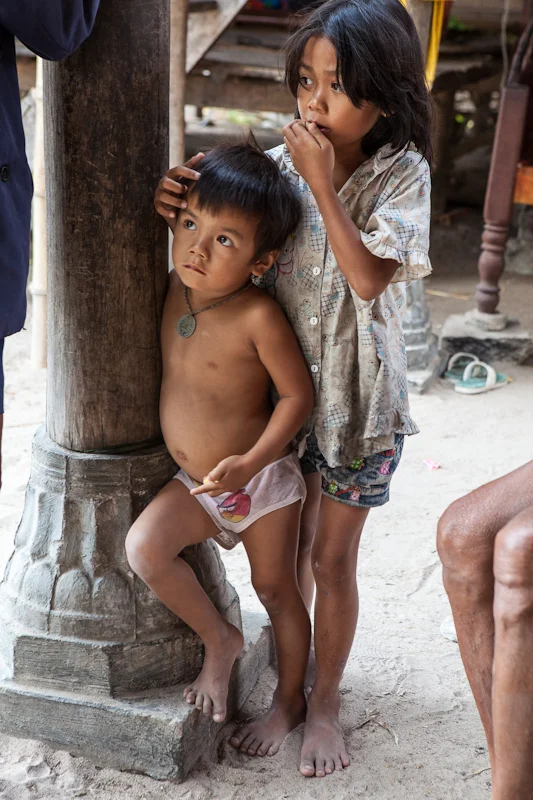
Isolation.
Rejection.
Exclusion.
These themes come up again and again in the stories we hear from young people who have grown up in poverty.
“I was alone.”
"I had no one I could trust."
“Nobody cared for me.”
“People looked down on me and treated me badly.”
The most hidden and misunderstood aspect of poverty is how it breaks and weakens relationships, leaving children (and adults) alone, rejected, fearful and emotionally wounded.
That's why the approach that Alongsiders takes to poverty is relational. The work that the Alongsider mentors are doing is transforming children and their families and communities on every level, including the level of emotional health, and it’s exciting to see in action.
Alongsider mentors are young adults who have themselves grown up in poor communities. They choose “little brothers and sisters” from their own communities - unrelated kids who are in vulnerable situations - and set out to love and mentor them as if they were family.
“The most important thing I learned from my Alongsider was love.
I know God loves me, because she loved me.”
--a former little sister, now an Alongsider mentor
We hear many stories about the impacts made by Alongsiders, and so many of them revolve around love and friendship overcoming isolation and rejection. But stories, even inspiring ones, are not hard to gather. We wanted to dig deeper and better understand how Alongsiders are changing the lives of little brothers and sisters.
Last year, we decided to survey a large group of little brothers and sisters from several provinces across Cambodia. The questions were carefully chosen and worded.
The same survey was given to an equal number of similar children in the same communities who are not being mentored by Alongsiders (a control group). All of this was done using objective research methods by an independent team.
What we learned was very encouraging. Having an Alongsider makes a significant difference in the lives of the little brothers and sisters. You can see the full report here.
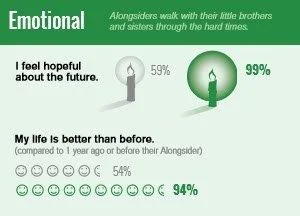
The little brothers and sisters clearly perceive a positive effect on their emotional wellbeing. We hoped so, since the work of Alongsiders is founded on loving relationships, and it was a welcome confirmation. This is just one snapshot of what is happening. Again, you can see all the numbers in our 2013 impact assessment here.
How encouraging that Cambodian youth are the ones changing the lives of Cambodian children! And it's not just children who are changing. Families, communities, churches, and the Alongsiders themselves are being transformed in the process. It's all the more encouraging that these youth, who have grown up in poverty, have become mentors empowered to serve out of their own experience of marginalization.
Why young people leave the church...it's not what you think.
Sure, young Americans are leaving the church, but young people in the developing world face very different pressures and challenges to their faith.
Statistics from North America suggest that large numbers of young people leave the church once they go to university. Some researchers estimate that between 61 and 88% of Christian youth in the United States leave the church in their early 20's.
(eg. "Barna study in 2006 -- "Most Twentysomethings Put Christianity on the Shelf...")
But young people in the developing world face very different pressures and challenges to their faith.
For many, those pressures are economic. They need to move far away from family and friends, and their church home, in order to seek work to support their impoverished families. Usually, that work will be low-paid with long hours - often 7 days a week - leaving no opportunity for fellowship with other believers.
One of our Cambodian Alongsiders, Bunhak, moved from his home town to Phnom Penh in search of work and study opportunities. Bunhak eventually found work at a fastfood restaurant. Long hours and a salary of around USD$80 a month, meant that Bunhak spent almost every waking hour either working or studying. There was little opportunity even to find local Christians in this big unfamiliar city, let alone join a church.
Urbanization is impacting developing nations all over the world, as young people - with fewer ties or responsibilities - move to the cities seeking economic opportunities. For many, this is a positive experience. But for others it can be disorienting, discouraging and even dangerous.
Alongsiders is seeking to learn more about their experiences and find ways to connect them into local churches on arrival in the city. With our wide network of partner churches - both rural and urban - we are uniquely placed to connect rural youth with local churches once they move to an urban center.