
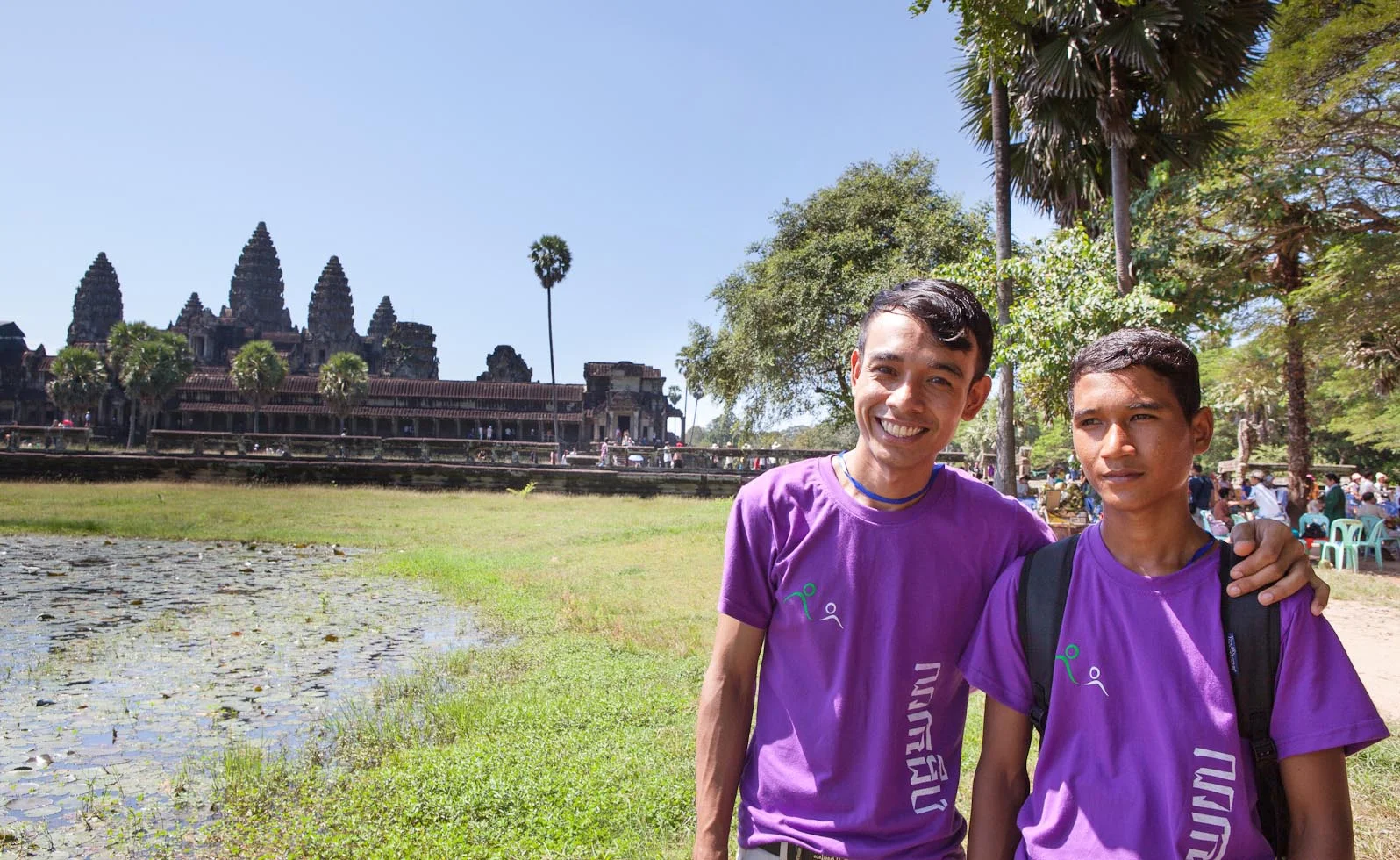
2 life lessons and a powerful challenge from a surprising source - but there's a catch
His story doesn't have a Hollywood ending, but you'll be surprised what you learn from this young man.
His story doesn't have a Hollywood ending, but you'll be surprised what you learn from this young man.
His name is Ni. People who are like him, living at the margins in extreme poverty, rarely fit into a clickable narrative. They're slogging along in process, unresolved, longing for a good surprise and hoping to avoid disaster. Actually, most of us can relate.

But here's the difference. Somebody chose Ni.
Four years ago, a 19 year old named Sothana signed up to be an Alongsider. He was living in Takeo, a rural province south of Phnom Penh.
Looking around his community he saw Ni, a 12 year old boy in one of the poorest families in the village.
Ni had dropped out of school, and his prospects were dim. So Sothana chose him, to be his "little brother".
One year later, Ni's father died. He drank himself to death, dying slowly of ulcers that ravaged his gut. The family spent what money they had on treatment. Perhaps he was drinking cheap rice wine made in the villages, laced with methanol. At any rate, it was a hard way to go, and the family was left without their main provider.
"He was a good father," says Sothana. Not perfect, obviously, but Ni felt loved.
In fact, Sothana adds, he wasn't Ni's biological father. These stories seldom unfold all at once; they are like peeling the rings of an onion. When Ni was young, his birth mother left him with her sister and her husband, and they raised Ni as one of their own.
Ni was the oldest child, so after his adoptive father died he went to work to earn money for the family. They don't own land of their own (which is why they have been among the poorest of the poor in that farming community).
For the past three years, Ni has been hiring himself out to work for other farmers, taking any and every job he can get.
Did having an Alongsider change anything?
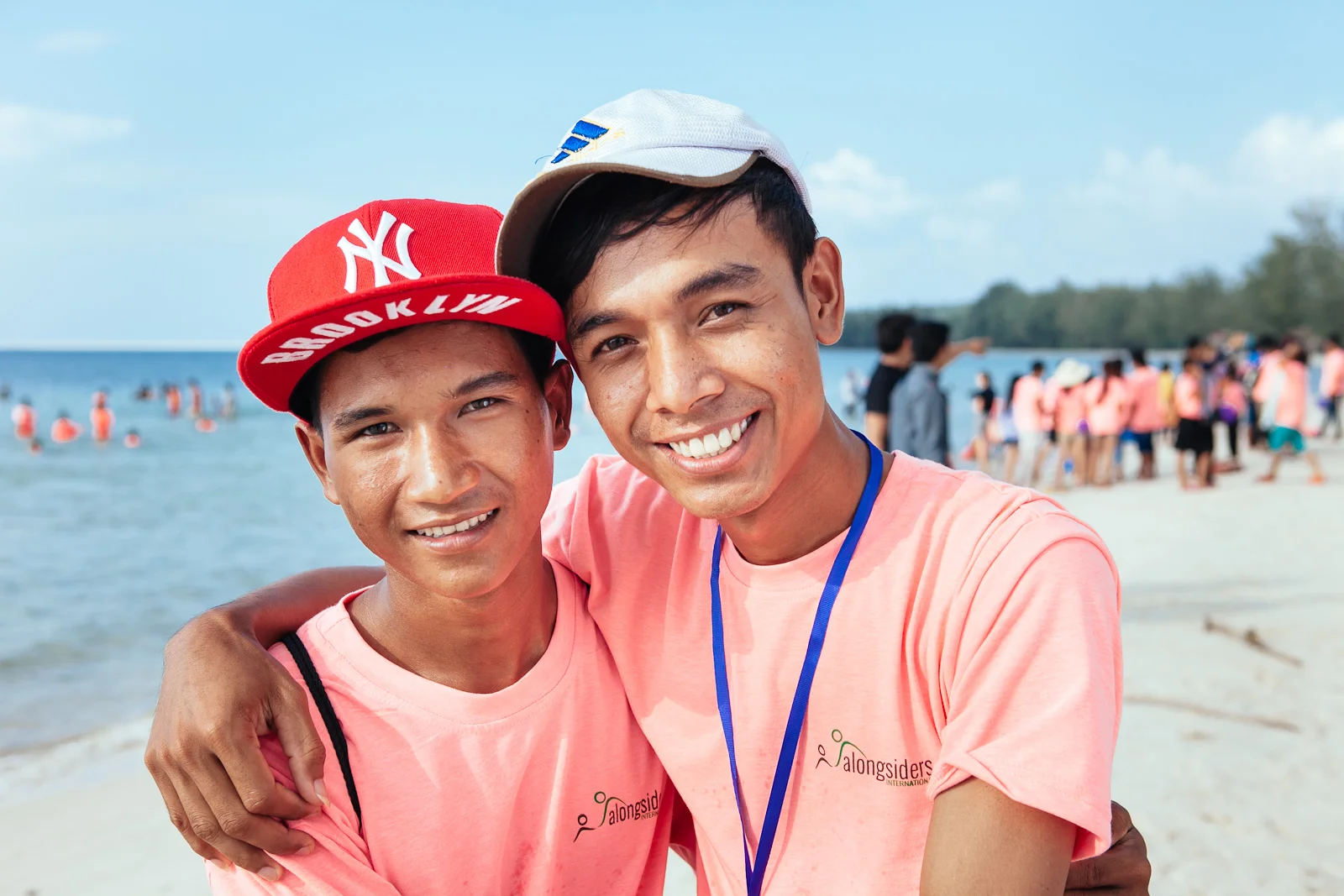
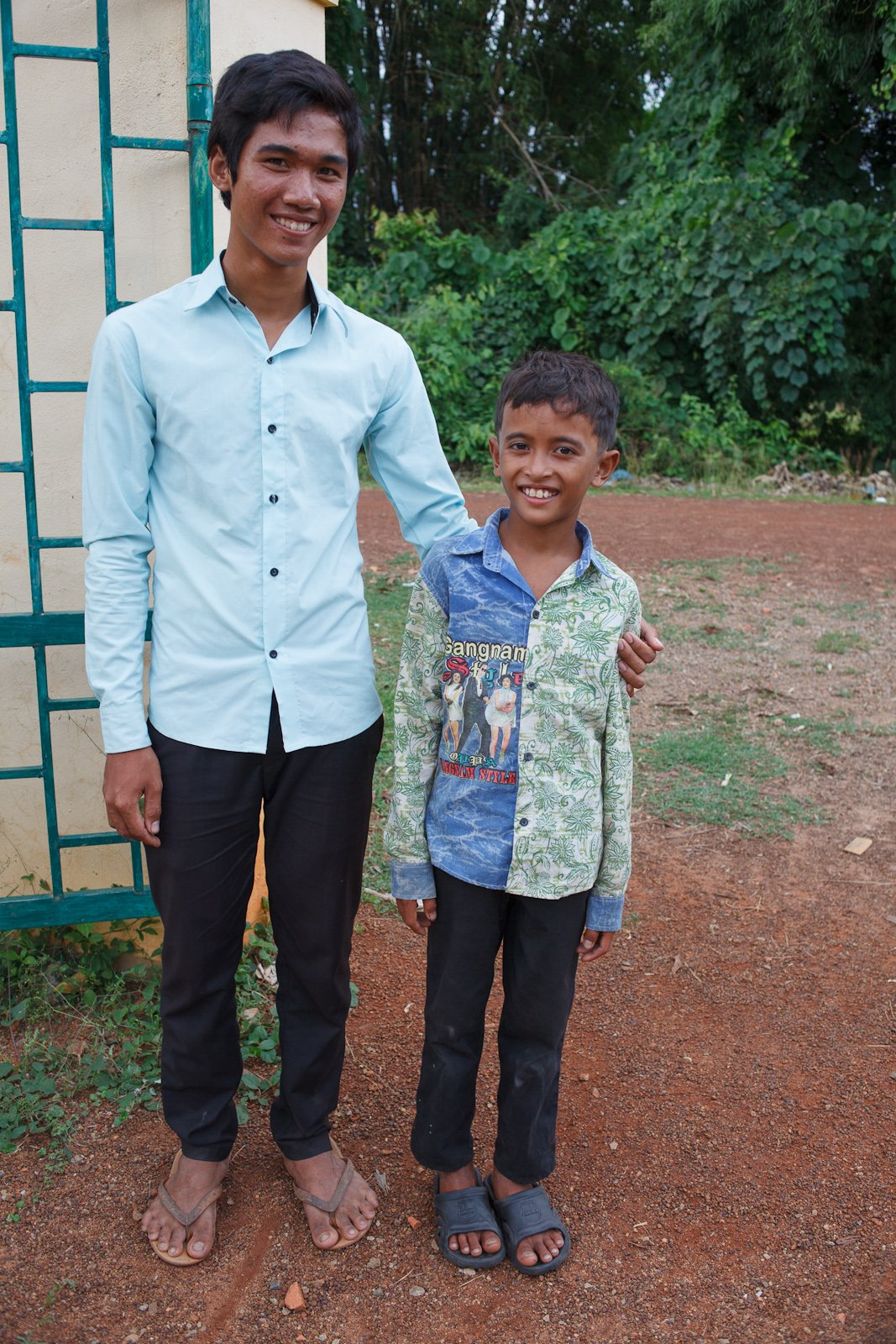
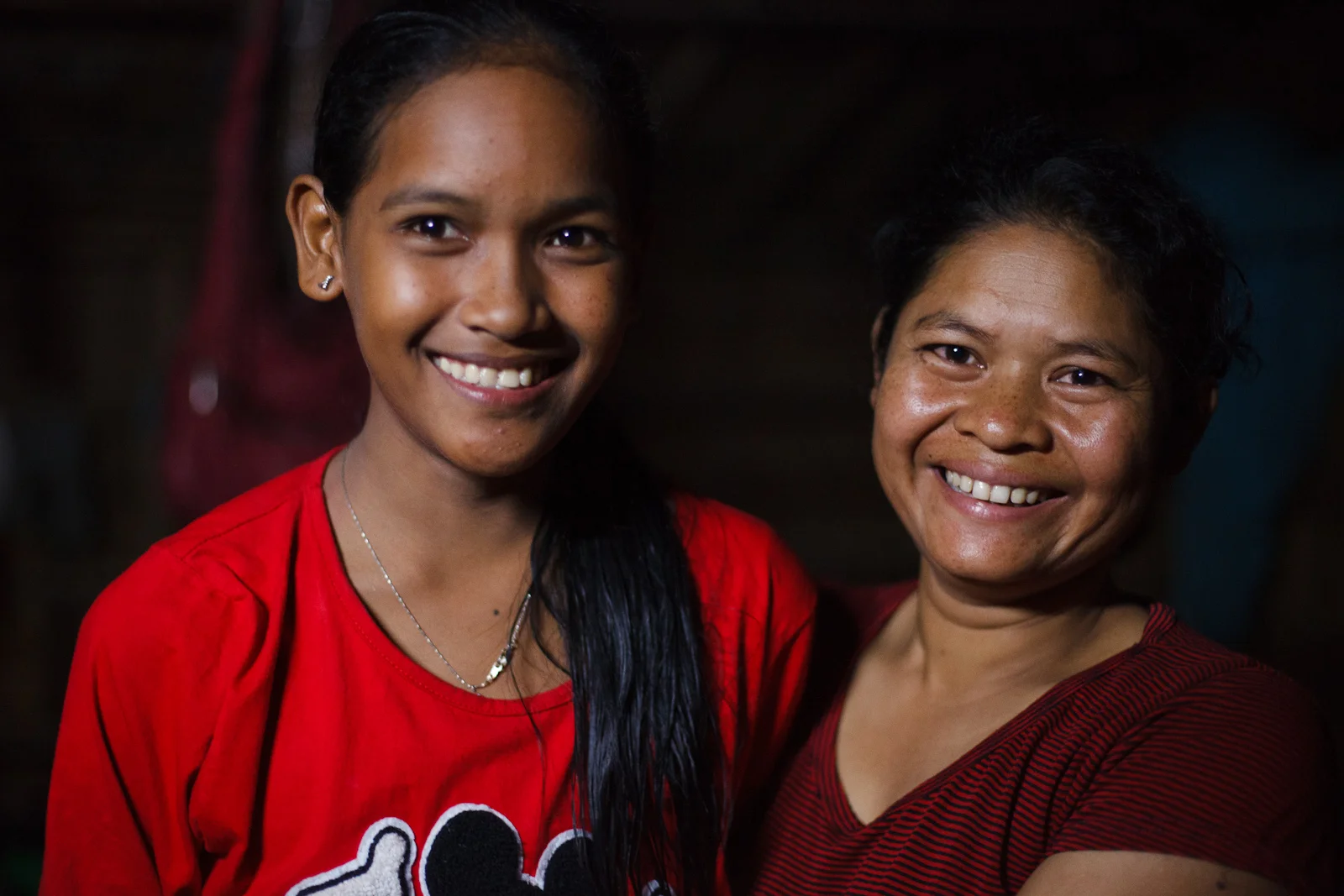
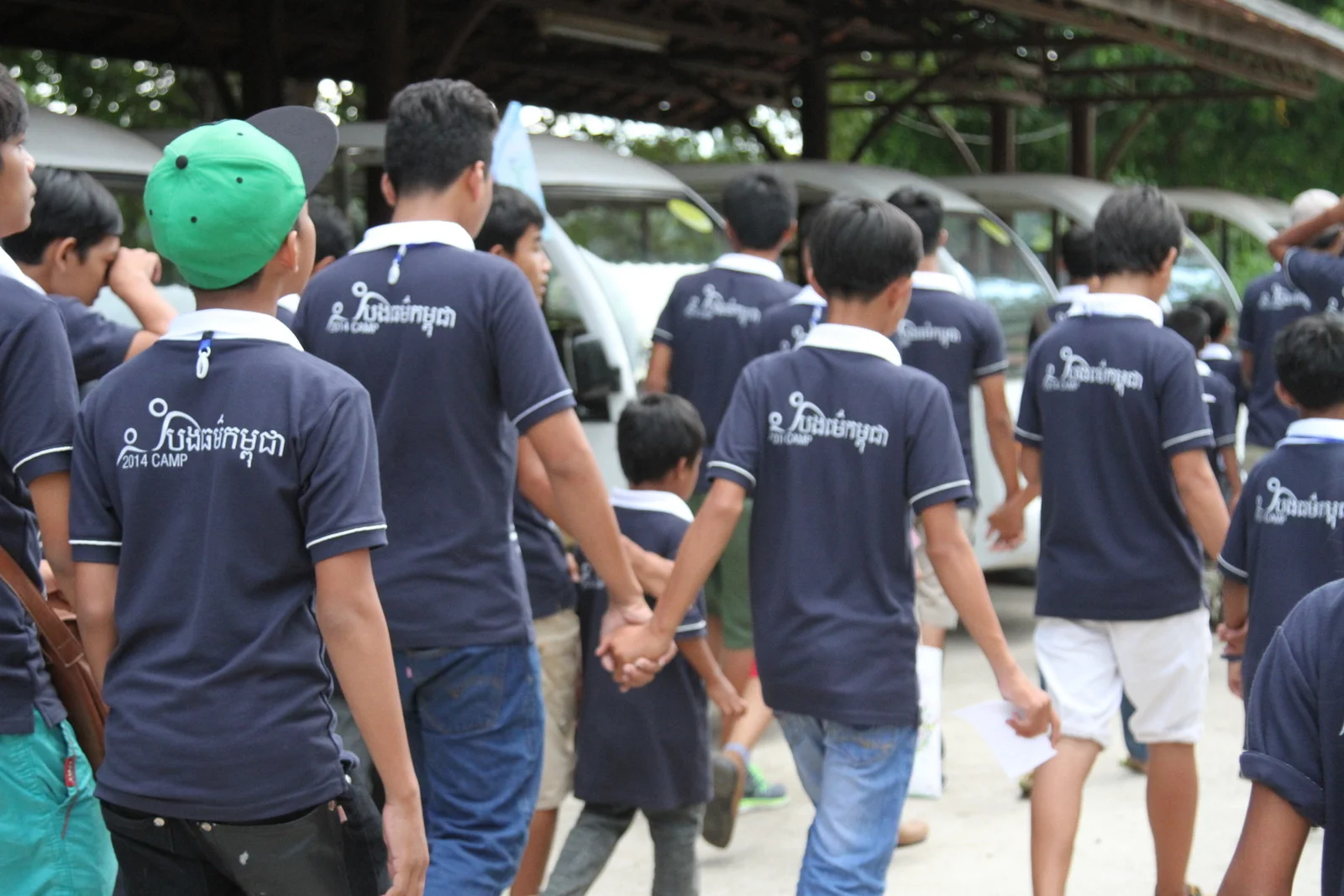
Ni (left) and Sothana (right) at the annual camp this month
Somehow, with encouragement from Sothana, Ni began attending school in his spare time. He's studying at the ninth grade level, but he can't afford any of the after-school classes that most students take. Those classes are important because the quality of teaching during school hours is low, and the students all have to pass exams eventually to graduate.
He's conscious of the fact that he doesn't have specialized skills that might help him find better work in the future. Even if an organization covered the cost of training, he would still have to consider how his family would get by without him. The trickle of money he makes is their lifeline right now, until his siblings get older.
Yet Ni says having an Alongsider and being part of Sothana's church has made a difference. It's kakadao (warm and loving), he says. It's a word rich in emotion, a word little brothers and sisters often use to describe their relationships with their Alongsiders.
"Before I didn't spend time with others," he says, "because in my heart I felt that I was poor. I was afraid and lonely."
One time when the roof of Ni's house collapsed during a torrential rain and ensuing flood, the church members came and helped repair it. All they could offer was a blue tarp roof, but it kept the family dry and helped them get through the crisis.
Last year Ni attended the Alongsiders annual camp for the first time. Previously he hadn't gone to camp because he worried about what would happen to his family if he was away for three days. "But when I went to camp," he says, "I saw lots of other kids like me. I got to know them, and I felt happy, so I wanted to come back again." This year was his second time to go.
Through it all he finds himself making more connections with others: with his Alongsider, with church members, with neighbors, and with other little brothers. It's a significant change for him, considering that he was so isolated before. Now he is sixteen, so he has started thinking about choosing his own little brother next year. But he worries about that, because he's still poor and lacking in viable skills. He feels like others still look down on him, and he questions whether he has anything valuable to offer a little brother.
At the top of this post, I started by saying you'd be surprised at what Ni could teach you. Have you learned anything surprising yet from Ni's story? Here are two lessons we at Alongsiders take from it.
- We know that real and lasting change is a process that plays out in the context of relationships. Those inspiring stories on Facebook often gloss over key details like: careers set aside, years of perseverance, untold hours in prayer, conflicts, emotional stress, and much more. If you want the fruit, you may have to plant the tree and care for it as it grows. (See this previous post about why we don't emphasize the speed of change: 3 Practical ways 'slow and steady' changes the world.)
- Ni has a list of reasons to doubt his capacity, but we believe strongly that he's qualified to serve as an Alongsider. You may doubt yourself; you may even doubt God. Admitting you don't have all the resources and answers is a great way to begin serving someone who is at the end of his or her rope: in a hospital, in a prison or juvenile hall, at a homeless shelter, or in a program for refugees.
You'd be surprised what you could learn from Ni if you walked alongside him and shared his journey.
But there's a catch...
You'd be surprised, inspired, shocked, amazed, confused, bothered, overwhelmed, and transformed, all these things! - IF - and possibly only if - you stuck with it.
Sothana, Ni's Alongsider, says that through sharing his own journey over the long haul with Ni, he knows "true love" in a way he never knew it just by attending church or even in his own family.
If you want all of that - ALL of it, the good and the bad - look around. God has a "Ni" already chosen for you, even as you breathe a prayer asking who it is.
You'll be surprised.
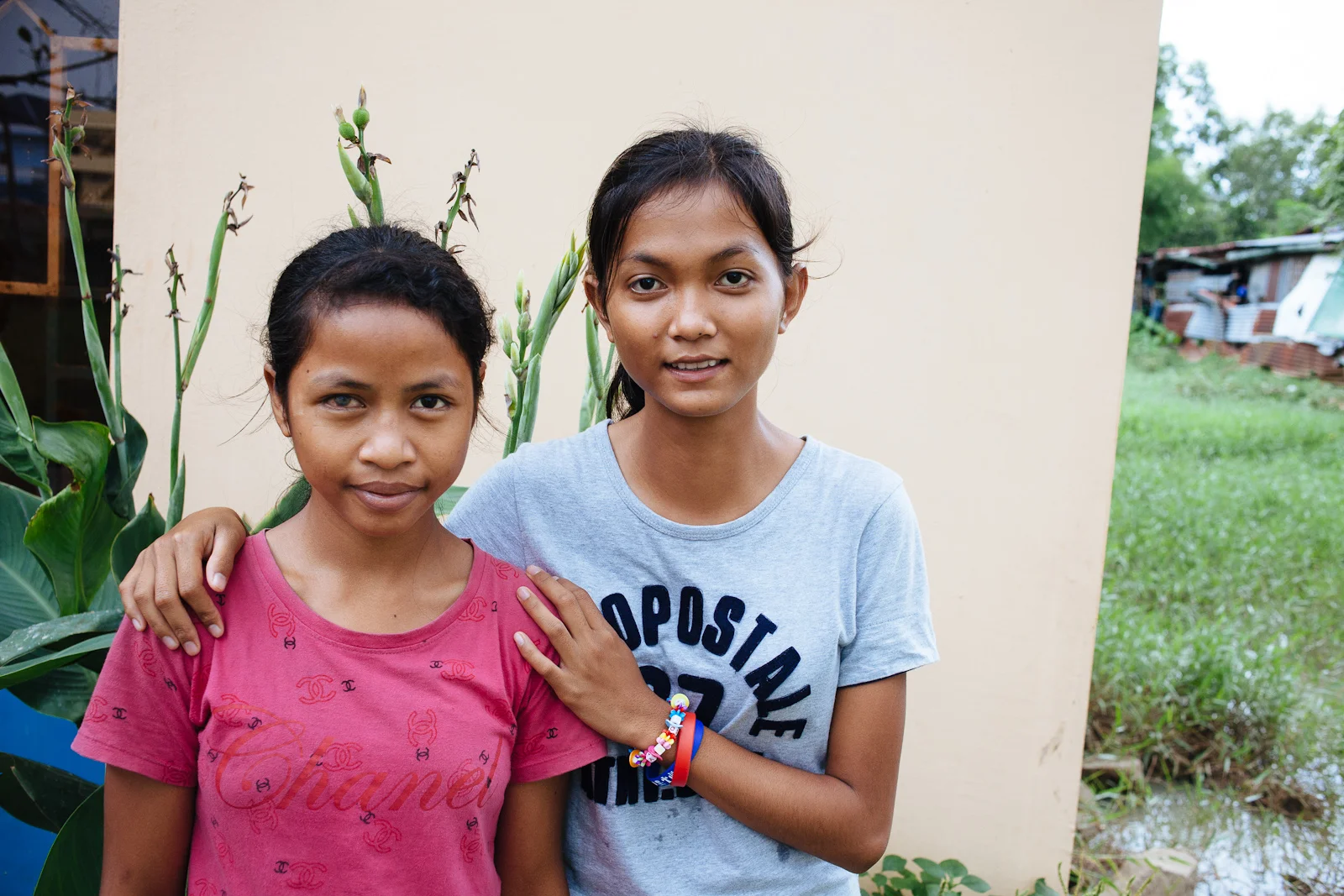
How the parents of this "little sister" came to faith
Saron says, "I saw her situation..."
“I saw her situation, and she was the same as me.”
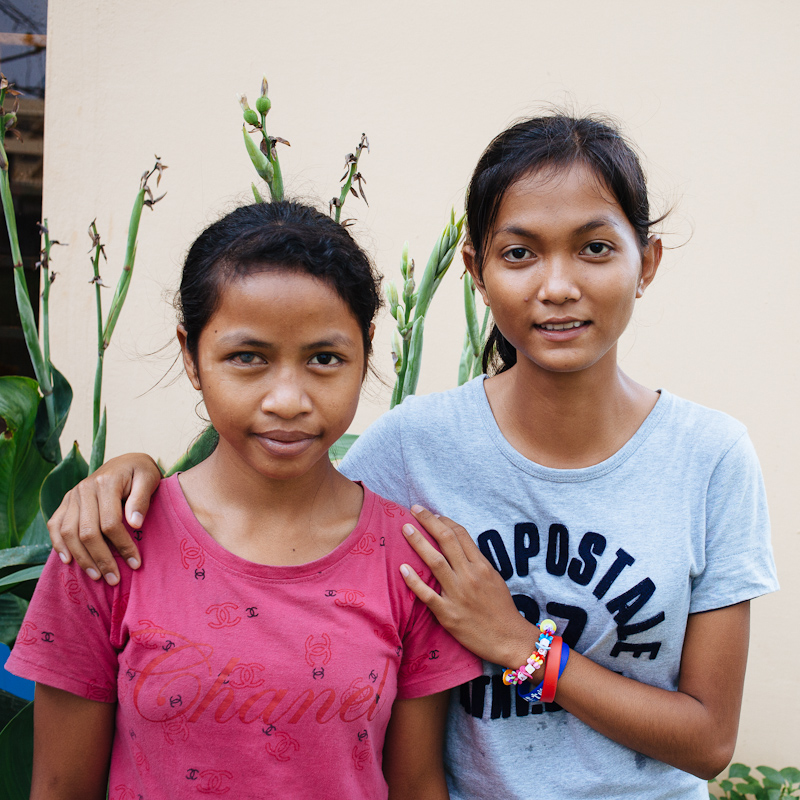
Minea is thirteen years old. She has a gentle smile and doesn't shy away from my questions. Looking into her eyes, nothing appears to be seriously wrong with them. One eye is too red, that's all. Years ago her little sister was playing with a knife. She threw it, and Minea has only seen from her good eye since then.
Minea's family has often been a place of turmoil and violence. That's why it's so exciting that things are beginning to change...
Saron is eighteen. She asked Minea to be her little sister just over a year ago. They were neighbors at the time, but then Minea's family moved to a new home thirty minutes outside the city. It's hard for Saron to go there, because she doesn't feel safe traveling that far alone, but she visits Minea as often as she can.
Usually they read the latest Alongsiders comic and talk about it. Minea says it helps her to learn more about Jesus, and she likes the practical lessons. She feels stronger now than she did a year ago and more aware of Jesus' love. In the future she hopes to work in a bank.
Saron says she chose Minea because, "I saw her situation, and she was the same as me."
It's a common thing for Alongsiders to say, and it's a powerful statement. Think about it. There are tens of thousands of vulnerable children in Cambodia, and each one is different. Every child has a unique story and individual challenges, and they live in thousands of local communities. How can we help them personally, wholistically and effectively?
That's a lot to hope for. There are some good organizations making a difference, but they can't work face-to-face with hundreds or thousands of children. But Alongsiders can, because Alongsiders live in the same local communities that the most vulnerable children call home - and most Alongsiders have faced similar challenges and vulnerabilities.
You may be asking, why did Saron identify with Minea?
Saron saw that Minea's parents were constantly fighting, hurling abuse at each other and also at Minea and her siblings. That's the same situation Saron grew up in, so she knew what Minea was enduring and wanted to walk through it with her.
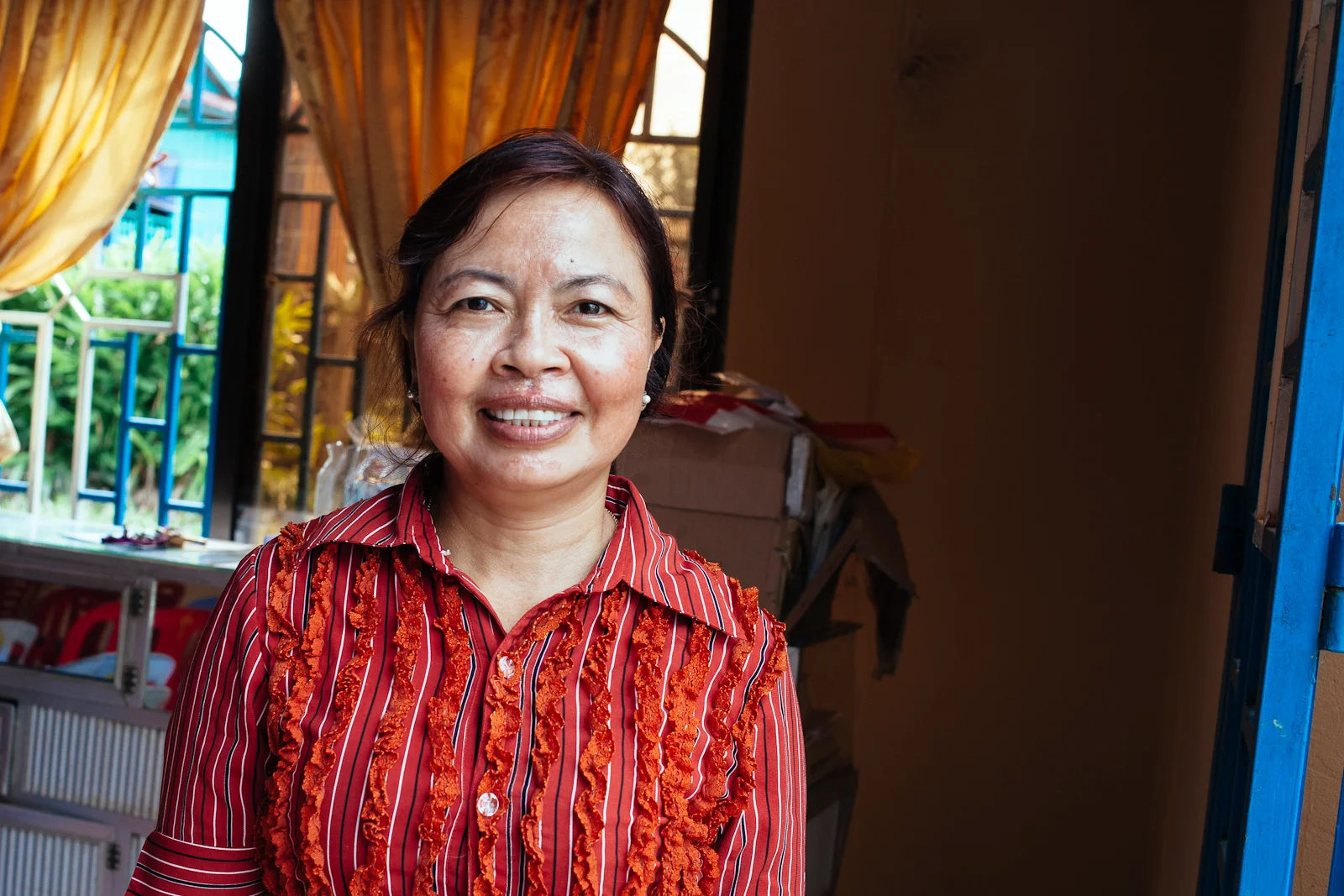
Saron's pastor is a gifted and compassionate leader
And here is the good news: Minea's parents have been changing. This year they came to faith in Jesus. In the past few months, they have been fighting less and less, and they treat Minea much better than before.
This isn't something Saron brought about alone. Members of the church had begun reaching out to Minea's parents before Saron ever became an Alongsider. In fact, Saron's pastor was the one who suggested that Saron consider asking Minea to be her little sister.For the past few months, Saron has been able to visit Minea by catching rides with her pastor - who has been going faithfully to visit the family.
Change and healing come through relationships. When a church community - and a family and neighbors and an Alongsider - come together in love, the results can be transforming!
Of course, some situations resist change.
On the day I met Saron, she had received the results of her high school final examination earlier that morning. The high school exam is extremely important, and she had passed! It's a big deal, so I congratulated her, but she was sad. Her grade was low, and she was afraid to go home and face her parents. They haven't come to faith, and her home is still an angry and abusive environment.
Saron hopes her passing grade will be enough to qualify her for a government sponsored nurse training program that educates tens of thousands of young Cambodian women each year.
I'm sure she would welcome your prayers, and Minea as well.
This Alongsider chose a "little sister" with unique challenges. The results are ordinary...and radical.
There was something I didn't realize about Kheing.
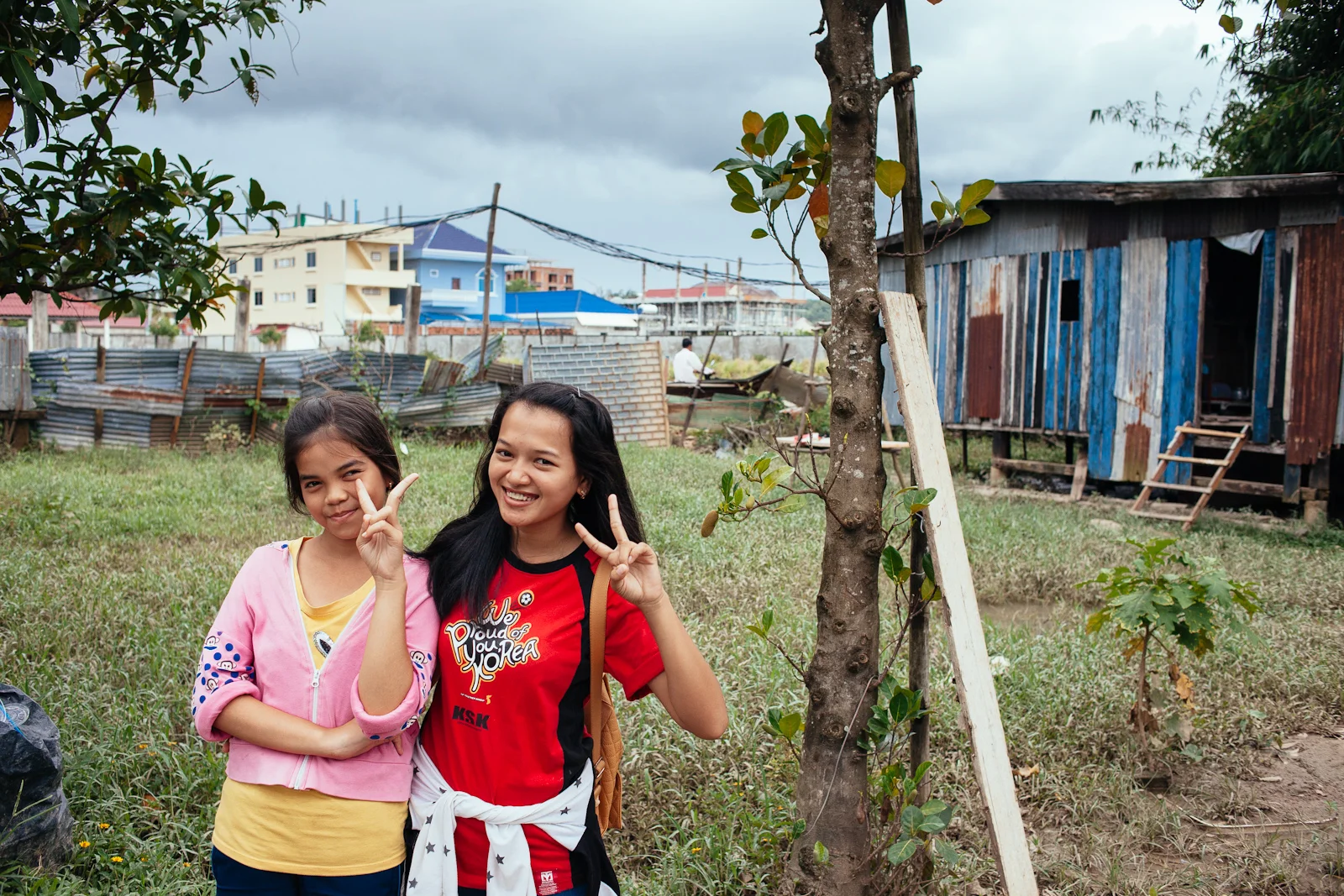
She has a winning smile, but Kheing Ly (13) has dealt with more and heavier challenges than most girls her age.
Being the daughter of a policeman in Cambodia has some advantages, like a stable income and a bit of respect in the community. Locals observing at a distance might even say Kheing is lucky in this way. But Kheing's father and mother fight whenever he is around, which is less and less, and Kheing has absorbed an unhealthy portion of their anger and verbal abuse.
Kheing hurts in other less hidden ways. For one thing, she suffers from exotropia, what many call being cross-eyed. Her eyes don't align properly. The condition affects her focus and depth perception, and it gives her an awkward appearance.
When I met Kheing for the first time, at the Alongsiders annual camp last November, I noticed that she didn't want to be in pictures. Every time I pointed my camera at her she looked upset, so I stopped (except when her friends pulled her into group shots). Later, when I was looking at my photos, I saw that she always posed with a peace sign in front of her face that covered up her wandering eye.
Even so Kheing was always with her Alongsider and her group of friends. Just a normal kid with problems, like all the other kids there.
But there was something I didn't know about Kheing until a few days ago when I visited her group of Alongiders at their church in Kampong Saom.
The church has about ten Alongsiders, and five of them had gathered to meet me. Kheing was surrounded by other little sisters, and her Alongsider, Paektra (21), sat next to her. Kheing was nervous but still smiling when I asked her my first question. Paektra looked straight at her, face-to-face, and repeated my words along with gestures until Kheing understood. And that's when I learned that Kheing is deaf.
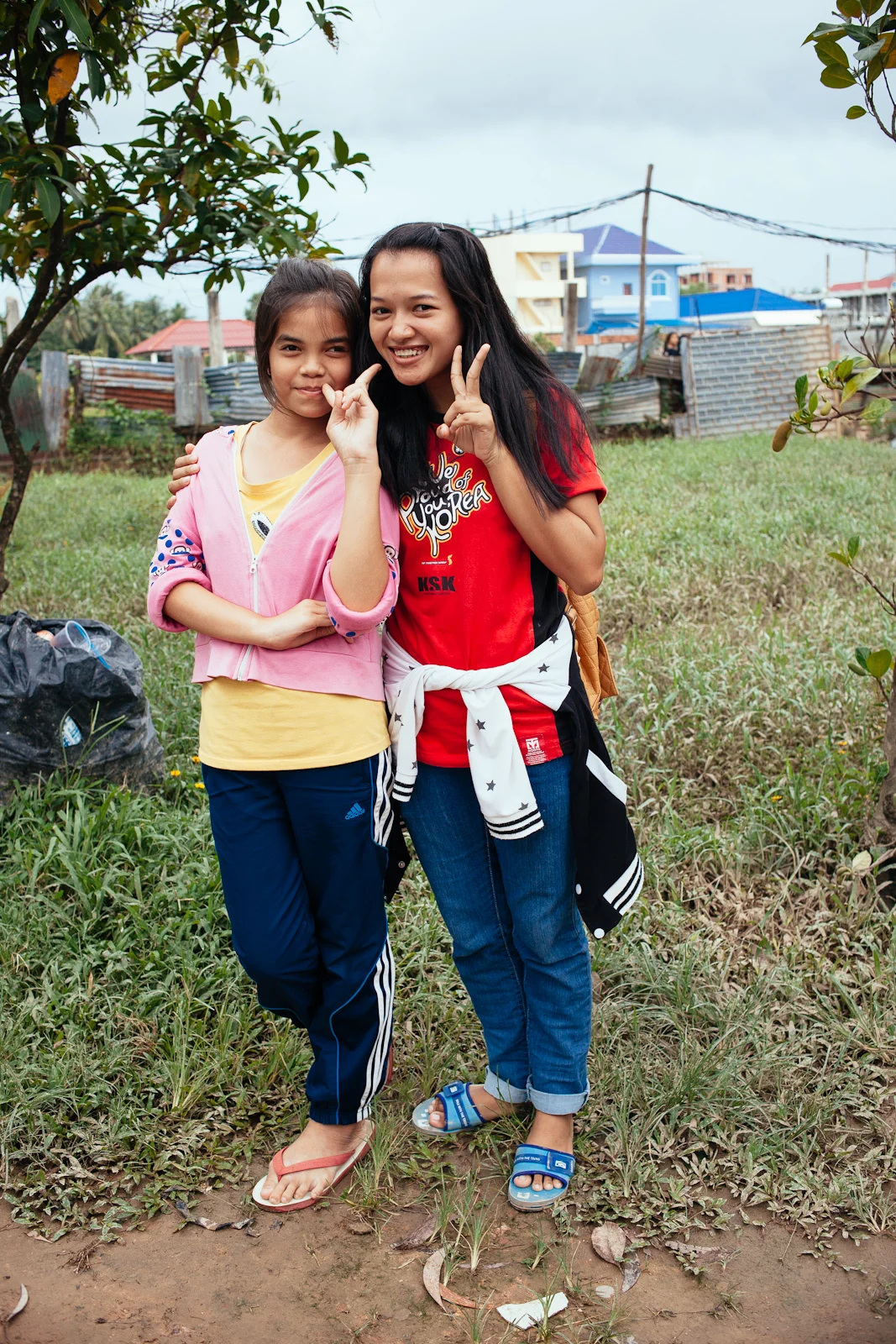
Kheing and Paektra
As you might imagine, there are limited services and resources for a deaf child in Cambodia. Deaf children are likely to be sent away or hidden and isolated. Ordinary Cambodians are not used to relating with them, or with people who have disabilities in general.
But here was Kheing and a crowd of peers talking and miming and doing whatever it took for them to relate.
She can read lips - a little. She's fortunate that there is a school for the deaf in Kampong Saom where she has been learning the lip reading as well as sign language.
Paektra asked Kheing to be her little sister just over a year ago, because she could see that Kheing really needed someone. "The other children would pick on her and call her names when she went down the street," says Paektra, "and she was always alone."
Paektra lives in Kheing's neighborhood, so they see each other almost every day. When they get together they ride bicycles, take walks, read the latest Alongsider comic, or go to the beach. Sometimes they pray, which Kheing acknowledges with her face turning red and a smile.
Later Paektra explains that the neighborhood kids don't pick on Kheing so much anymore. "I taught them how to treat her," she says. "They didn't know." So often the difference between being excluded or included is having a respected person stand up for you.
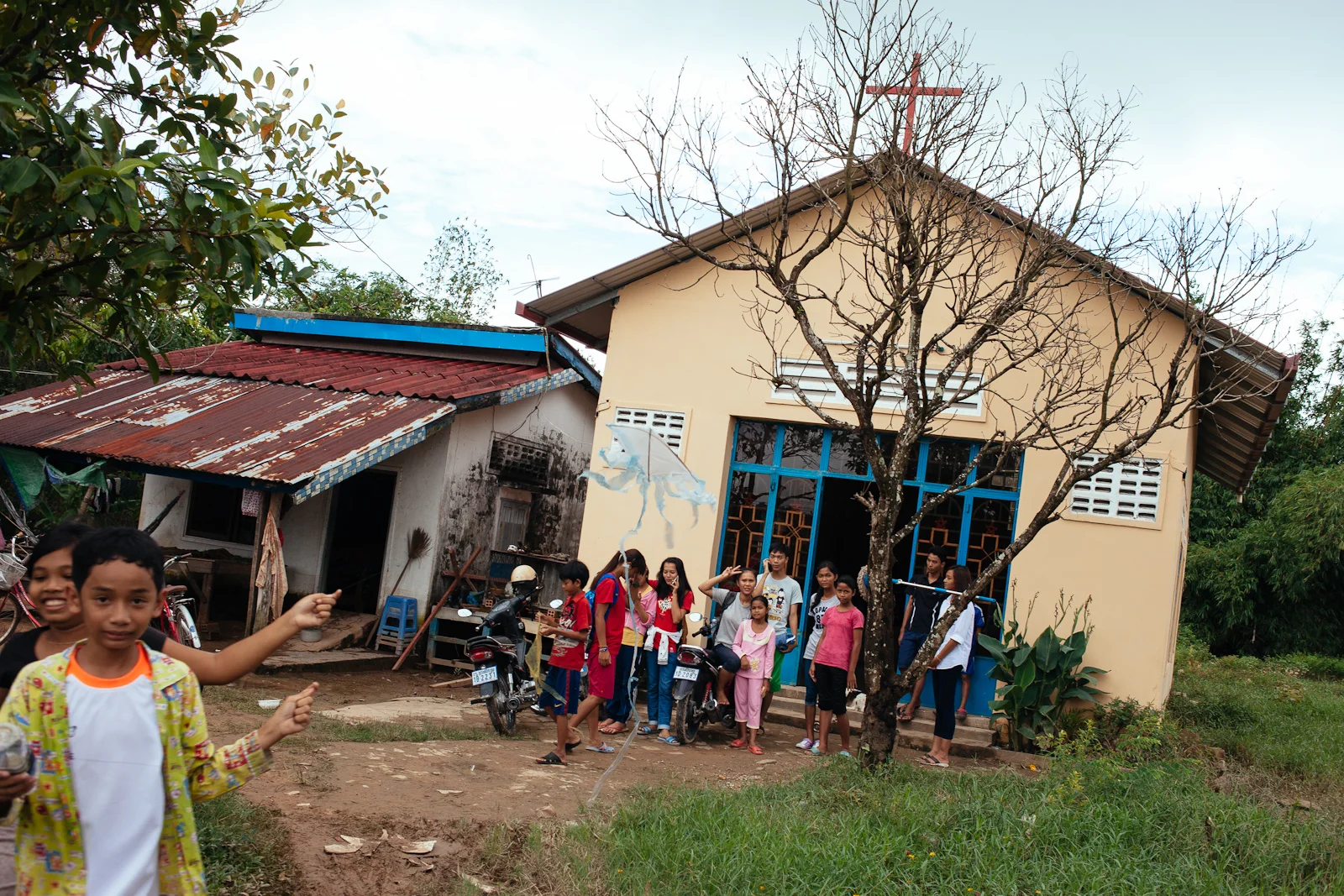
Two boys attempt to fly home made kites as some Alongsiders and their little brothers and sisters gather in front of the church. (Kampong Saom, Cambodia)
Kheing doesn't attend the Sunday church service. She can't understand the sermons, and the church is located in a different community. But Paektra is a living sermon, showing the way of Jesus to Kheing and bringing "church" to Kheing whenever they meet. "For where two or three are gathered in my name," says Jesus, "there am I among them."
The stories here, about Alongsiders and their little brothers and sisters, are beginning to show familiar patterns: loneliness and isolation overcome, encouragement and love given, courage and resilience gained, and the power of relationships in action. Perhaps the stories are becoming more "ordinary" with repetition, but I never get tired of them.
Shane Claiborne is an American Christian activist who challenges us, by word and example, to stand with people who are marginalized in society. He calls out Christians to follow Jesus as "ordinary radicals." To be radical, he says, is the ordinary state of one who is following Jesus. Ordinary people following Jesus change lives and change the world around them through their love in relationships.
“I think that’s what our world is desperately in need of - lovers, people who are building deep, genuine relationships with fellow strugglers along the way, and who actually know the faces of the people behind the issues they are concerned about.”
Paektra and many of the Alongsiders I've met are ordinary radicals.
It doesn't take special people to change the world, just ordinary ones who love others in the way Jesus taught and showed us.
What if that kind of love was the new ordinary for you?
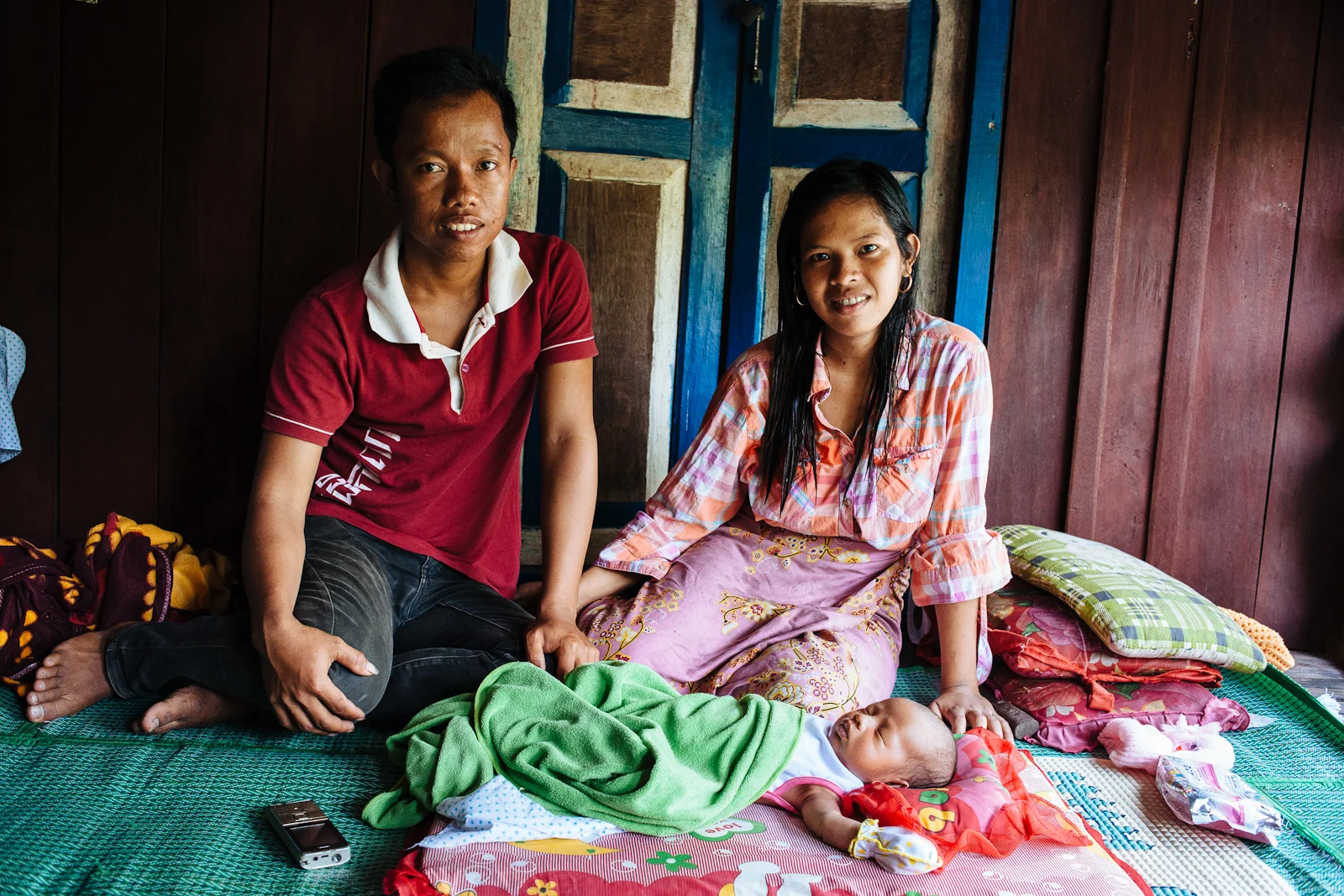
After 8 years he's looking for his third "little brother". You'll be surprised how ordinary he is.
Sorn may not seem like much. If you were looking for a leader, or a game changer, a guy like Sorn might not turn your head.
Sorn may not seem like much. If you were in his community looking for a leader, or a game changer, a guy like Sorn might not turn your head.
My guess is that ninety percent of us, if we passed Sorn on some dusty road in the province where he lives, wouldn't look twice - unless it was to dodge his slow moving cart filled with vegetables. It goes to show how much we miss.
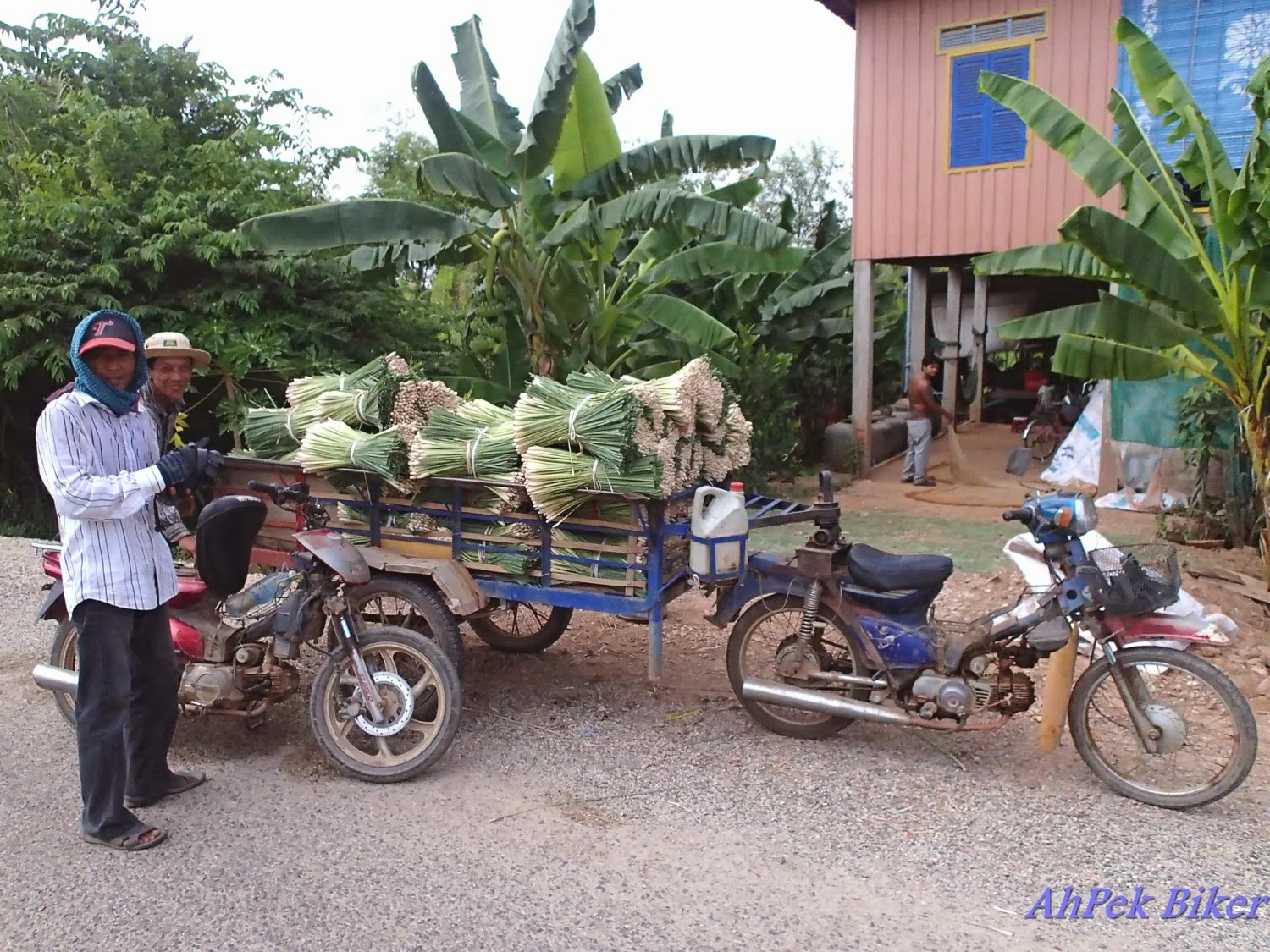
A Cambodian man (not Sorn) transporting produce to market
Every morning at 3:30 or 4:30am Sorn wakes up, hitches his cart to his motorcycle, and goes around to local farmers buying vegtetables. He takes them to one of the nearby village markets and sells them until 2 or 3 in the afternoon. Every day except Sunday.
I say it's hard work. He shrugs and says it's normal. People in rural Cambodia do what it takes to get by.
Unlike many of his peers, Sorn didn't move to one of the country's big cities after high school. He stuck around.
He doesn't give the details, but when he was young his father either left or died. Sorn's mother raised him with support from his grandfather, who is the pastor of their local church. His grandfather wanted Sorn to stick around, and he even helped Sorn find a wife who felt the same way. Two years ago they were married, and their first child was born fourteen days ago.
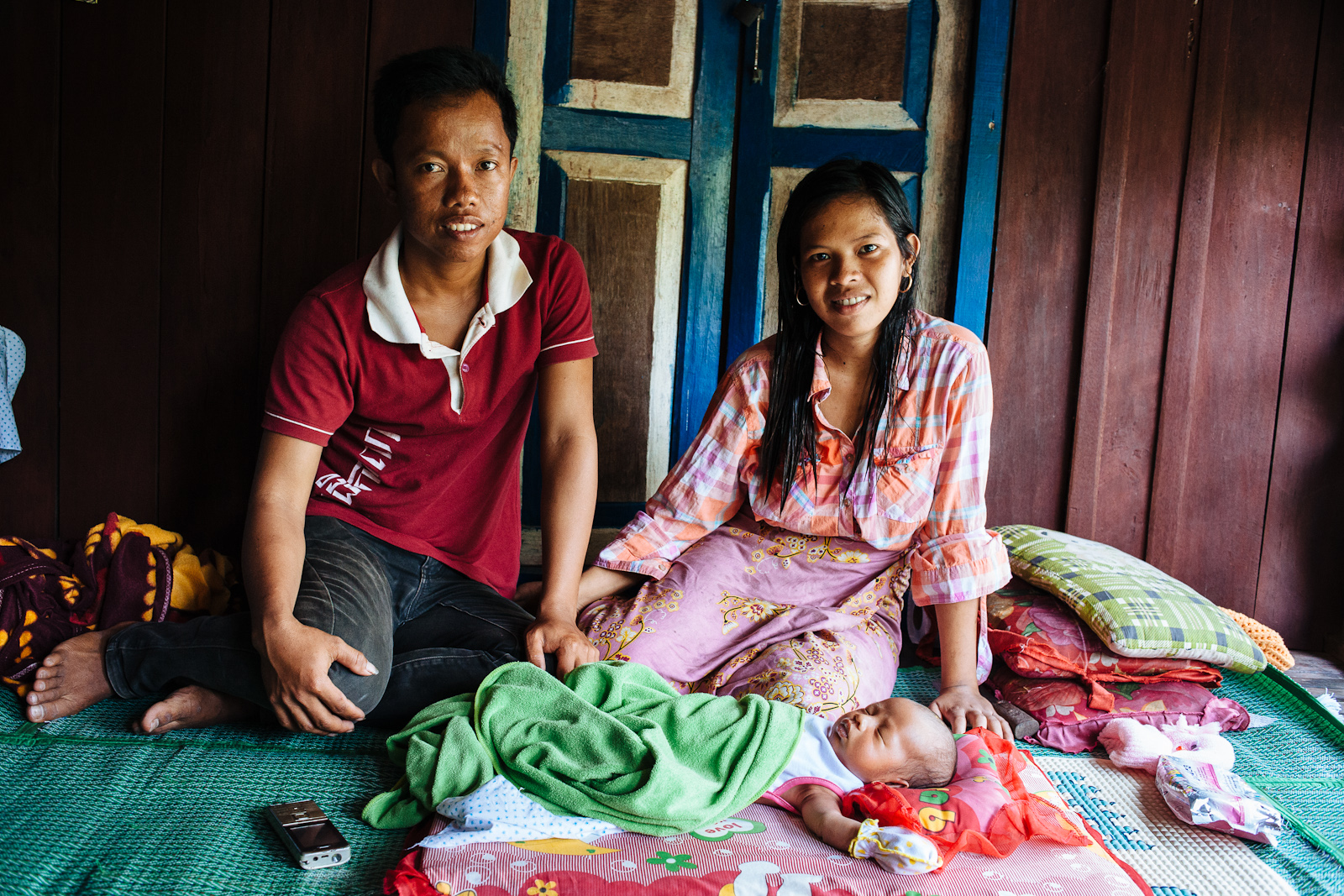
Sorn has been an Alongsider for eight years, since 2007, and he has had two little brothers. Both grew up and became Alongsiders themselves, and both are active in the church now. Sorn says he prayed carefully before choosing each one. He wanted to choose boys who would grow and mature into responsible, faithful adults. Both have done well. One had a brief problem with gambling but stopped after Sorn talked with him about it.
Now Sorn is praying and looking for a third little brother.
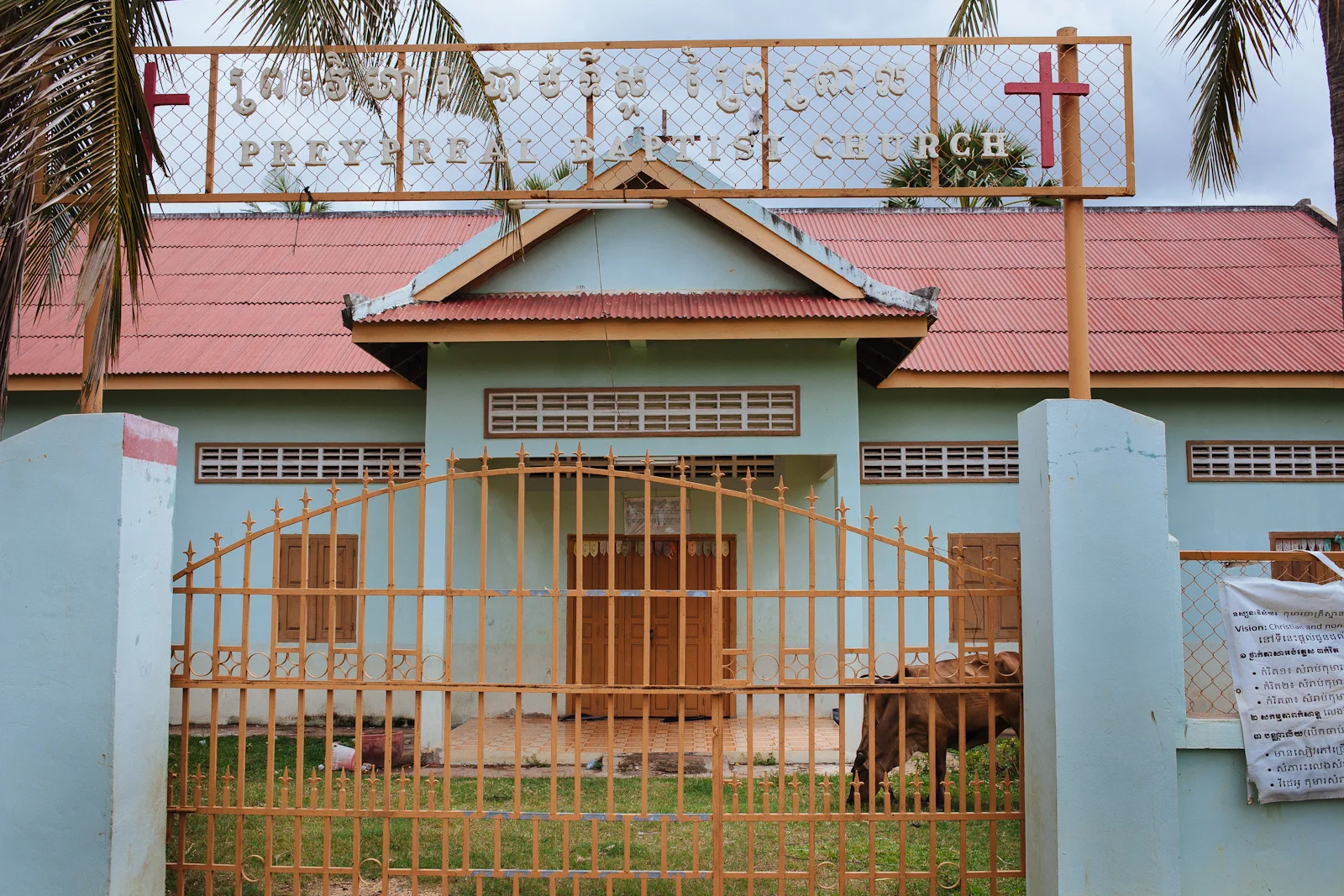
The country church in Kampong Thom that Sorn attends
Sorn has been a leader for the youth in the church for years, and now he is the leader of the Alongsiders group there. It's a challenge, as the majority of the young people grow up and leave for the cities.
It would be easy to tell Sorn's story in a way that depicts him as larger than life, to describe him in poetic terms. Rather, let's just respect him as a human being with a full range of emotions and choices to make in the circumstances of his life. It's because Sorn is an ordinary-extraordinary man in his community that he can bring hope and change starting from within it.
Sorn and others like him and their relationships - not a program or NGO - are making a difference. Our movement and the tools we develop are NOT intended to work through them, or despite them, but to support them, to engage them, and to set them loose.
The secret of Sorn's humanity (and ours) is this: God works through him in love. The key to our movement is this: to respect him, support and equip him, and then get out of the way.
9 things we can do to protect children from trafficking and abuse
Last week a little brother escaped a potentially dangerous situation...
Last week an Alongsider group leader calmly described how one of the little brothers, with help from his Alongsider, had avoided being molested by a man in his community. Other group leaders listening to the story nodded and said they have heard of similar incidents in their groups.
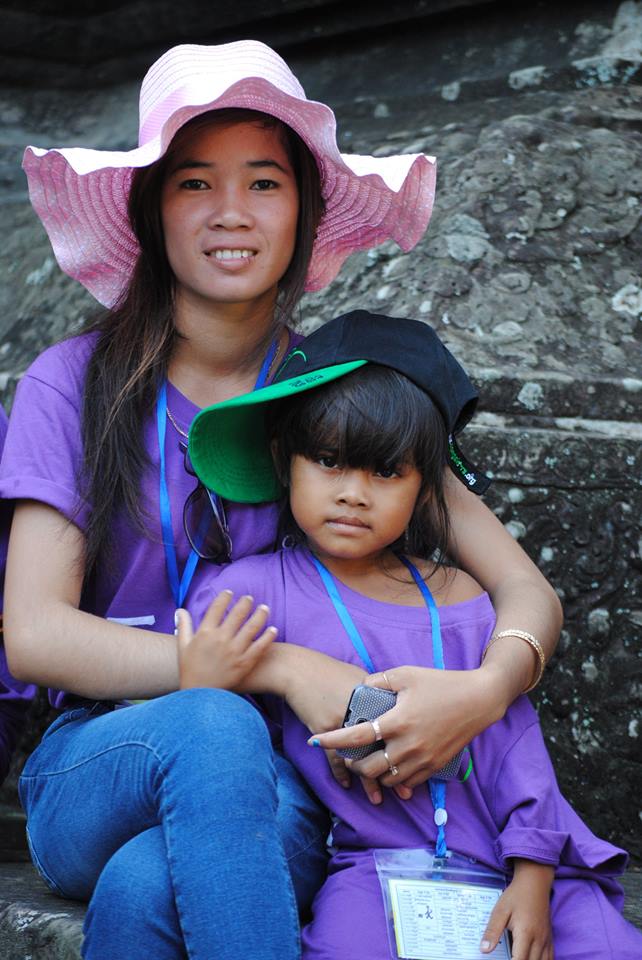
Alongsiders become mentors for the most vulnerable children in their communities. Children of economically poor families are vulnerable to malnutrition, social marginalization, child labor, and the loss of an education.
They can lack power to defend themselves and knowledge of the ways of the world; and they are often on their own while their parents are working. As a result, they are vulnerable to abuse: domestic and gang violence, molestation, rape and human trafficking.
Cambodian society has very rough edges where the powerless are concerned. The legacy of trauma is well-known.
Some say orphanages and shelters are needed for this very reason, even if the children housed inside aren't really orphans (80% aren't). But consider that hundreds of thousands of children in Cambodia are highly vulnerable. Orphanages could only care for a handful of them. On top of that, studies show children placed in orphanages are even more vulnerable to abuse and exploitation due to the isolation of children behind closed doors. Problem not solved.
Alongsiders doesn't remove children from their families. We believe that's a good thing. Yet we do make a difference in protecting and strengthening children.
- Before joining, Alongsider mentors study and sign a Child Protection Policy which outlines their commitment to a variety of protective measures for both the mentor and their little brother/sister.
- As part of their initial training, Alongsider mentors are taught how to spot abuse and exploitation of children and how to respond in appropriate ways, including reporting criminal activities and suspicions to authorities.
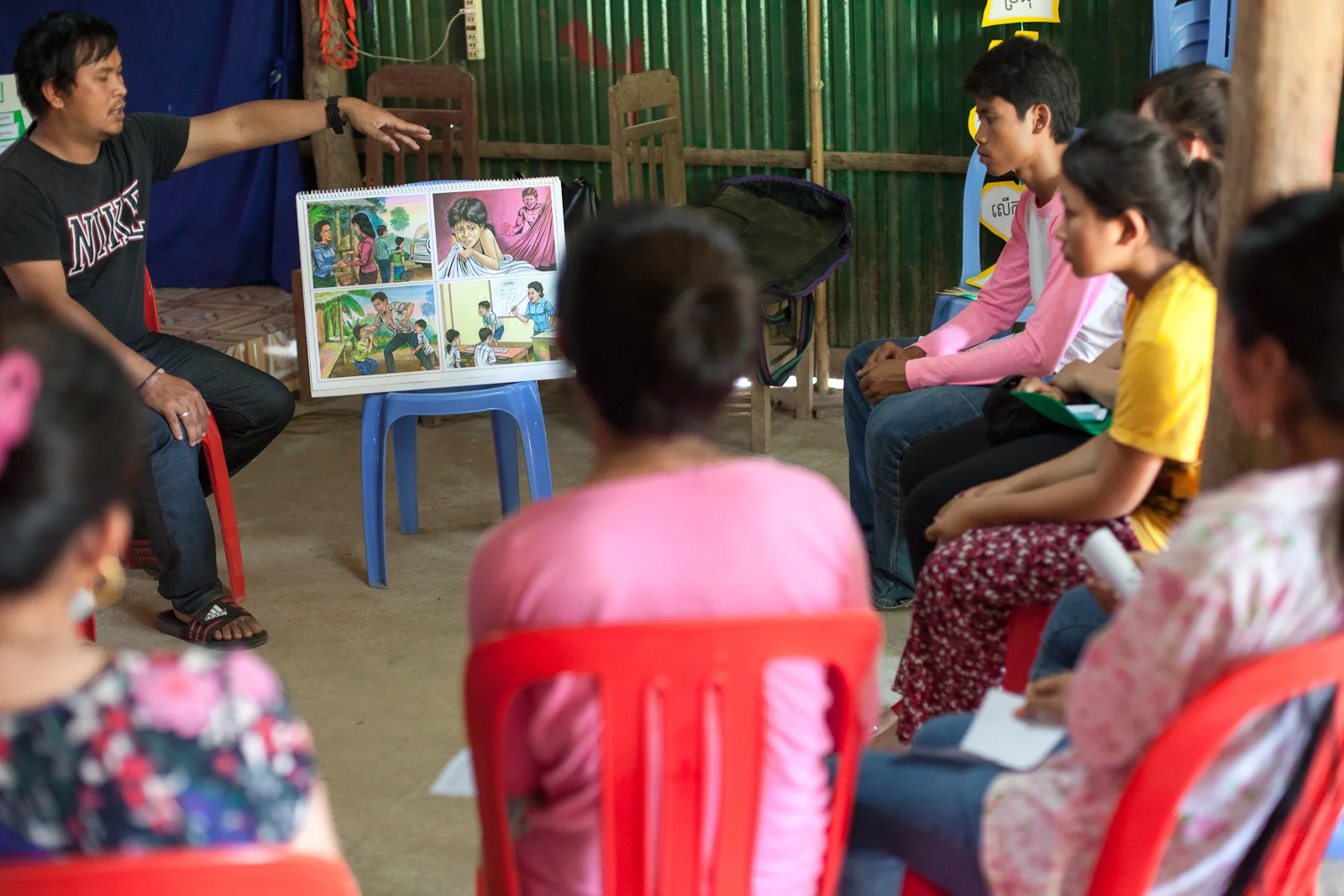
- An early comic book lesson in our curriculum addresses sexual abuse and the legal consequences for an abuser. Alongsider mentors are taught to discuss the story with their little brother/sister and report to us if any abuse is disclosed.
- As part of that Lesson, little brothers and sisters identify 5 trusted adults (counted on the fingers of one hand) that they can turn to in case of future abuse.
- Alongsider mentors and their little brothers and sisters learn the phone number for the Child Helpline - a crisis telephone line for support in case of danger or abuse.
- In the second year of the curriculum, we use our comic book lessons to address the issues of respecting girls and women and the problem of pornography.
- Alongsiders frequently speak up or even intervene when their little brothers or sisters are mistreated or neglected. By their actions and attitudes they are raising the standards of society around them.
- Alongsiders International has a dedicated Child Protection Officer, who ensures that all our partners and their staff have a solid Child Protection Policy and good training and systems in place to protect children.
- Perhaps most importantly, the little brothers and sisters have someone older who they can trust and talk to about their problems and fears. Someone is checking on them every week. They are no longer so alone or isolated. This simple fact makes them less vulnerable.
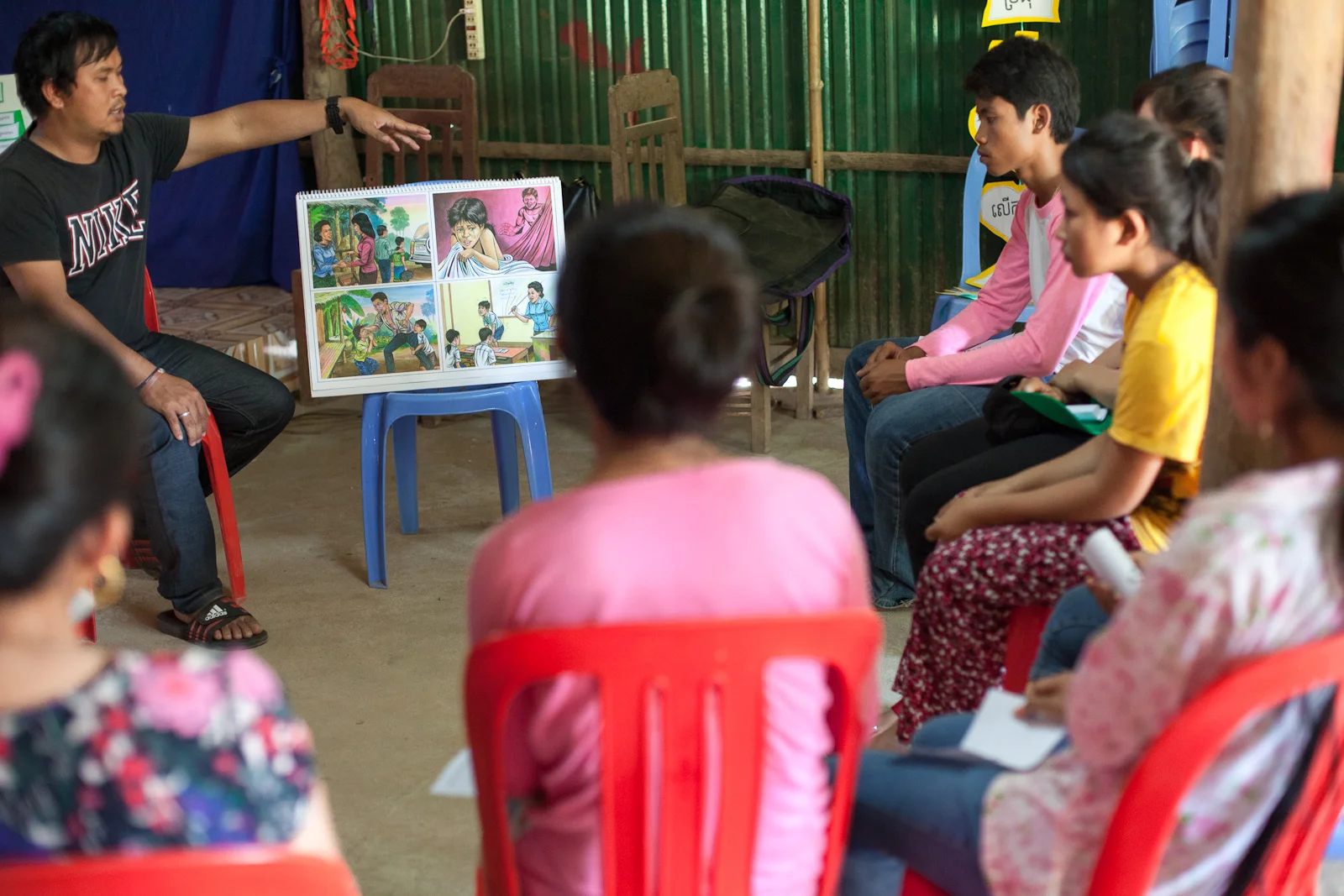
Phearom, Alongsiders Cambodia Coordinator, trains Alongsiders in Kandal Province to respond to child protection issues.
In the story mentioned at the top of this post, the little brother went to his Alongsider and told him that a man had invited him inside his house. The Alongsider knew about this man and his reputation. He warned his little brother to avoid him and even walk home by a different route in order not to pass in front of his house.
Sadly, there was little that the local authorities could have done to stop this man from preying on vulnerable children short of catching him in the act. But having an Alongsider made a difference for the little brother and his friends.
Alongsiders Cambodia has hundreds of little brothers and sisters living in diverse communities around the country, and it's growing as quickly as the staff sign up and train new groups. Even so the total cost of running Alongsiders Cambodia, including sending kids to camp each year, is less than the annual cost of running an average orphanage for a few dozen kids.
Alongsiders Cambodia isn't dramatically rescuing victims of abuse, exploitation, or human trafficking. We're grateful for organizations that do those things well.
What we're happy to say is that hundreds of Alongsiders are out in local communities protecting vulnerable children from experiencing these tragedies in the first place.
5 steps to creating a life-changing comic
What does it take to create a comic book simple enough for a semi-literate child to understand, but profound enough to spark change in that child's life?
What does it take to create a comic book simple enough for a child to understand, but profound enough to spark change in that child's life?
What does it take to put a brand new comic book like that in the hands of every Alongsider mentor each month?
Truly, a significant amount of thought and work goes into each comic. Here's the process...

Step 1: The Topic Meeting
A comic book lesson begins life in a Topic Meeting with members of the Curriculum Development Team.
Team leader, Hitomi Gray, and her assistant, Puthida Bou, undertake the preliminary research: gathering background information, considering how the topic normally plays out culturally and counter-culturally in Cambodia, and prayerfully considering relevant Bible themes, stories or verses.
All this background data is brought to the Topic Meeting for prayer and further brainstorming with the rest of the team. By the end of that meeting, we have agreed on the main objectives of the lesson, and we have a good sense of where we want to go with it.
Step 2: The Storytelling Circle
The next step is to form a Storytelling Circle. Alongsider mentors (some who were "little brothers or sisters" formerly) are central to this storytelling gathering. The non-Cambodians take a back-seat role. It’s not that Westerners can’t contribute, but the Cambodians know best what story elements are the most authentic and compelling in their own culture.
All of the comics are based on real-life experiences of poverty and struggle shared by the young people at this Storytelling Circle. Over the course of two or three hours, stories and lessons are crafted into engaging plots that can be told visually in just a few pages.
We make sure the story incorporates essential storytelling techniques such as conflict, drama, character development and clear messaging.
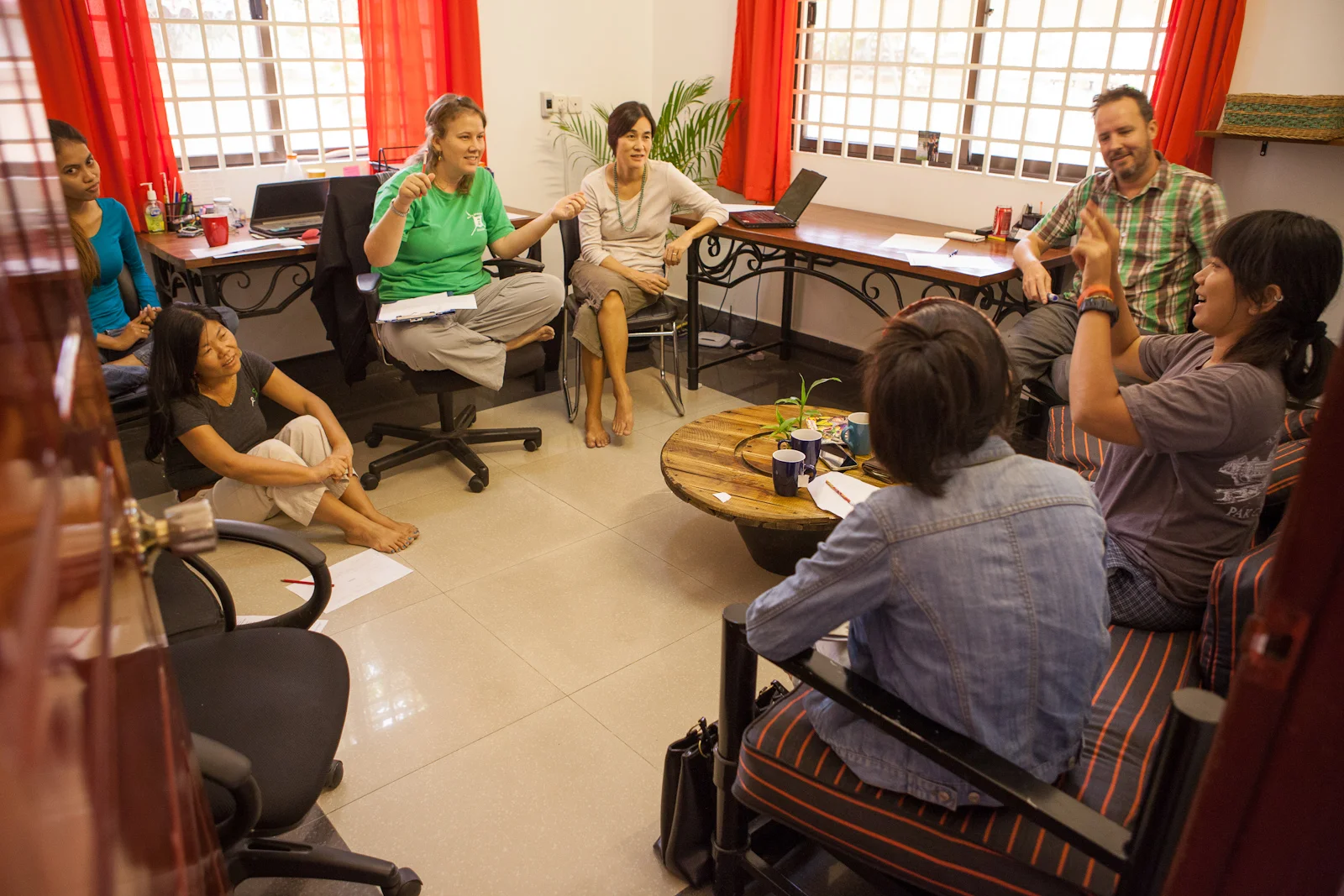
A recent story-telling circle in progress ... crafting a story on the topic of Fearlessness.
Step 3: The Artwork
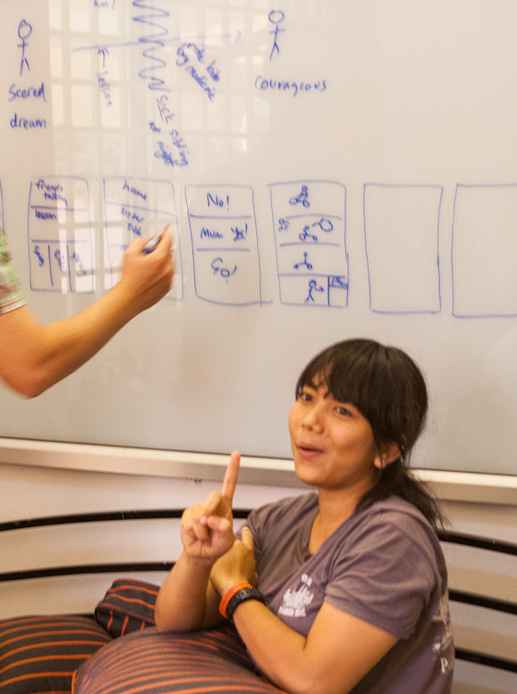
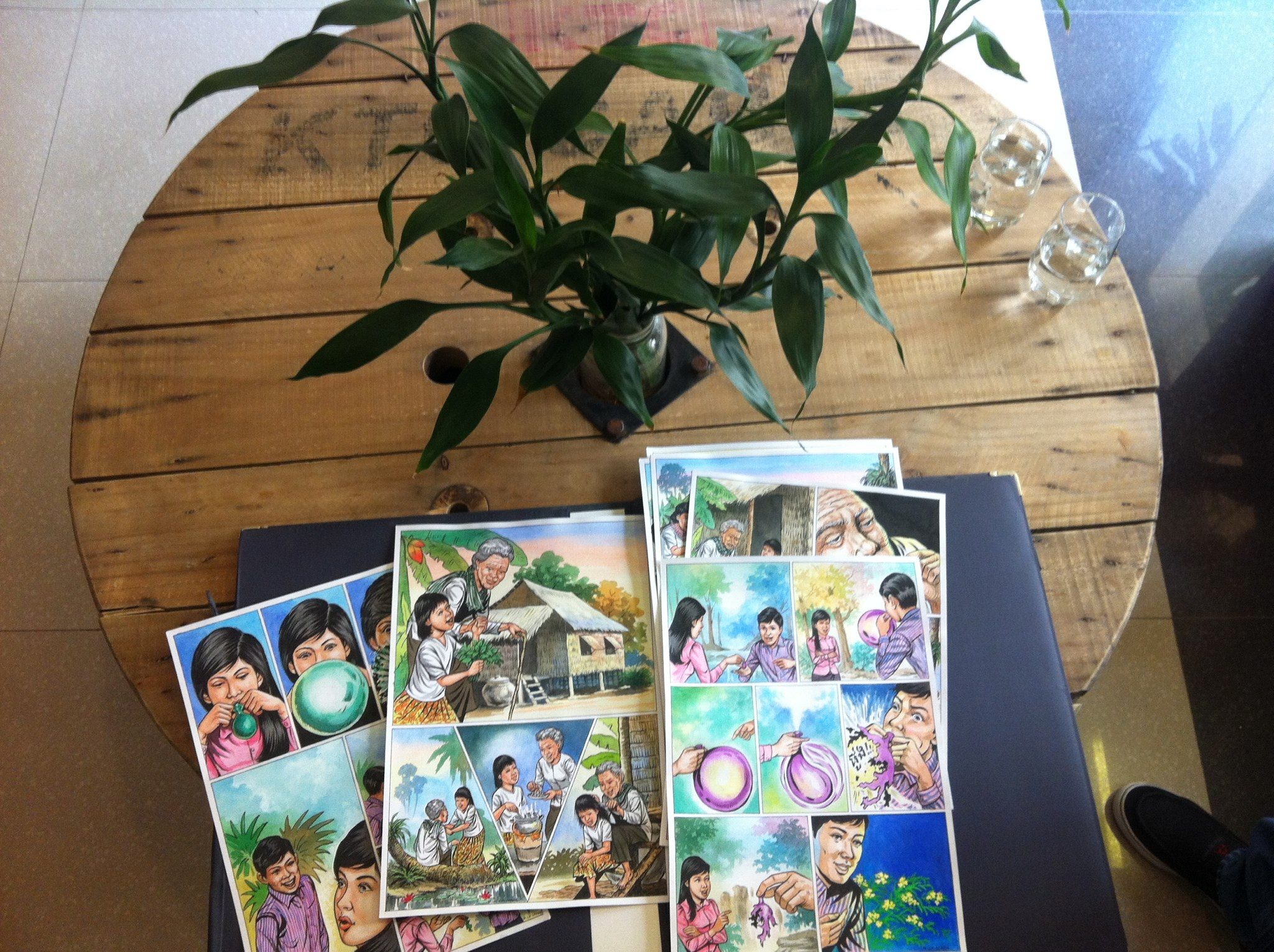
Once the rough story is outlined on a whiteboard, Puthida, an accomplished artist herself, takes a photo of what has been imagined by the group. She then hand-draws, using electronic paper and pen, a detailed storyboard of the 10 pages for the comic.
Finally, the story is ready for the artist, a Cambodian pastor named Met Sokha. Puthida meets with Pastor Sokha and goes through each page to make sure he understands the story and her drawings and notes.
Step 4: The Lesson Components
For the next week or so, while Pastor Sokha hand-paints each page (typically one day per page), Hitomi and Puthida develop relevant questions that the Alongsider mentors can discuss with their little brothers and sisters after reading the story. They also create one or two practical action steps to apply the lesson. These are essential, so that the lesson doesn't just remain as head knowledge.
For example:
1) with your Alongsider mentor write one short term goal and identify what you will need to sacrifice in order to attain it (in Perseverance, Lesson #10), or
2) list five adults who you can trust and who you will talk with if you are ever touched in an inappropriate way (in Good Touch/Bad Touch, Lesson #3).
Step 5: Design, Test Test Test and Print
When the artwork comes back from Pastor Sokha each page is carefully scanned in and edited using Adobe InDesign. Speech bubbles and story boxes are added and the various components laid out for printing.
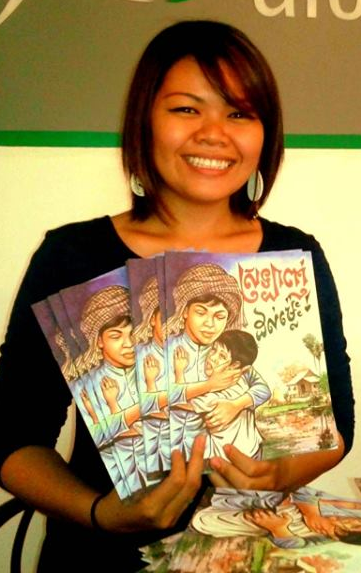
The final product!
The draft comic is now ready for testing and correcting. Puthida takes the comic out and about to test with neighborhood children. We also test it with a small selection of Alongsider mentors and a couple of proofreaders. Any errors will hopefully be picked up at this stage, but we are mostly checking that the main message and story is easily understood.
When everything is checked and signed off, we work with a local printer to print the comic. All going well, we have the comics, printed and delivered to us two weeks later, ready for training and distribution!
These comics are gaining a following. Other organizations are taking notice. One NGO reprinted 10,000 copies for distribution in schools and we're supplying free copies to various schools, churches and orphanages.
And of course, the curriculum is now being translated back into English, as well as developed and contextualized locally in other countries such as India and Indonesia.
All this effort, prayer and hard work is for one purpose: the transformation of young lives. So, join us in praying that the Spirit of God will work in and through us, and these comics, as they find their way into eager hands across Asia.
They might be giants
You'll be encouraged to see the significant progress a group of Alongsiders and their little brothers and sisters have made after four months...
Four months ago I traveled by bus, boat, and motorcycle to Kampong Leng, a remote farming community north of Phnom Penh, to witness a group of new Alongsider mentors signing up with their newly chosen little brothers and sisters. A few days ago I went back to check on their progress, and this is what I saw.
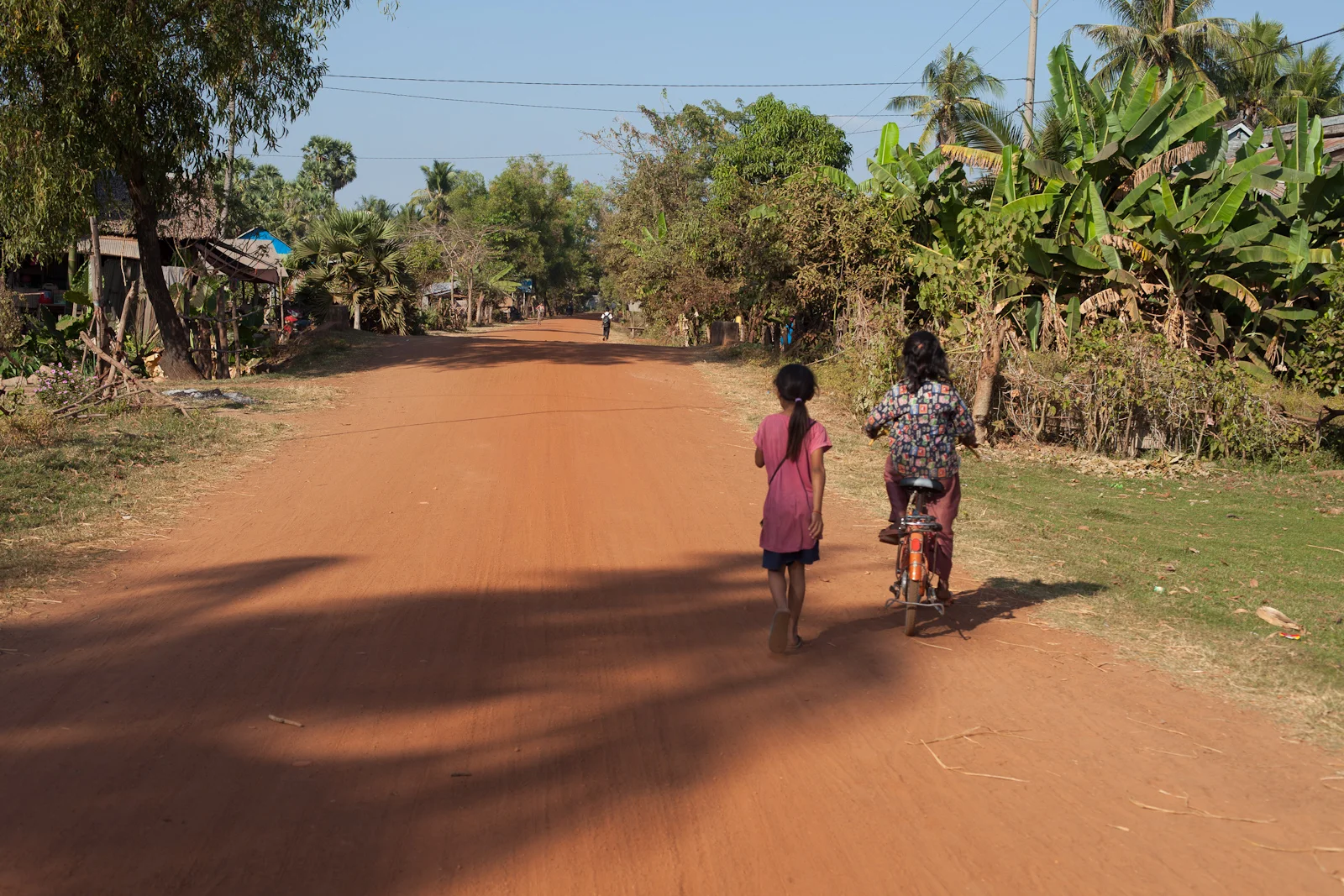
Even in the dry season, Kampong Leng is a lush, green country, especially for one accustomed to Phnom Penh's concrete skylines and motorcycle rivers. Most land in Kampong Leng that isn't covered in jungle or water is cultivated to grow rice and a dozen other crops. Fruit trees spring up everywhere, even on the school grounds.
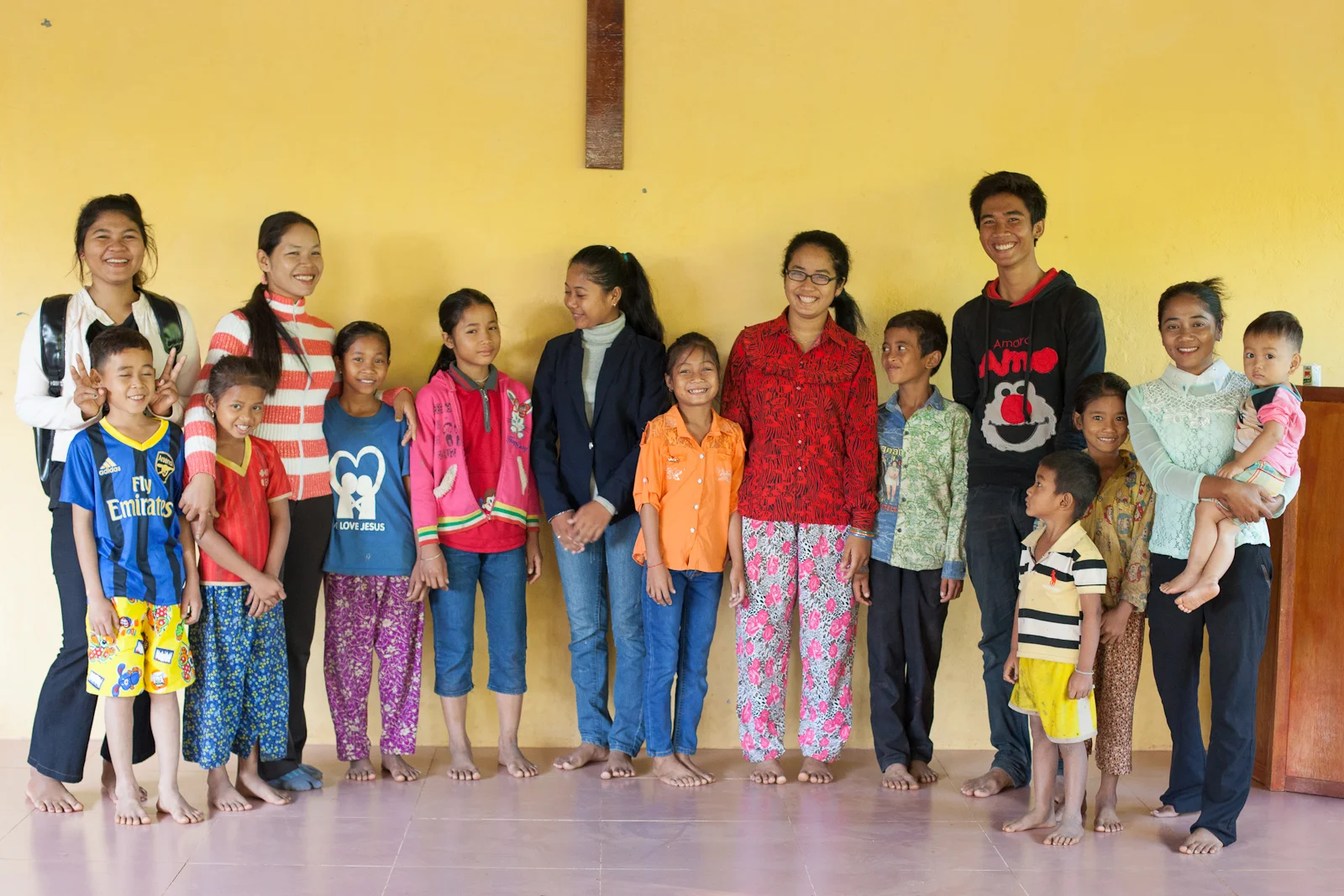
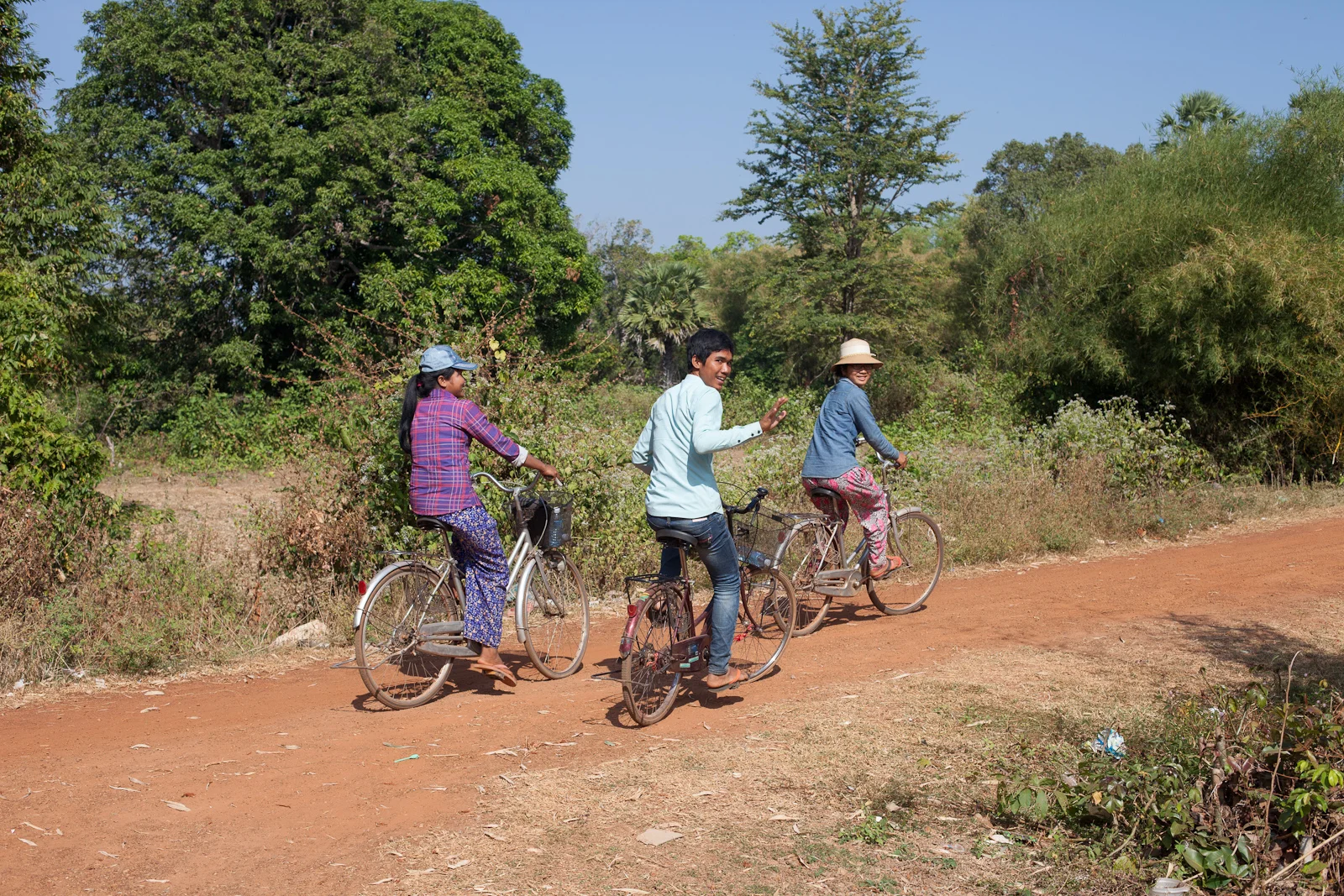
When I arrive at the local church, five of the Alongsider mentors are gathered to meet me with their little brothers and sisters. They have come from all directions, and one has traveled several miles on his bicycle.
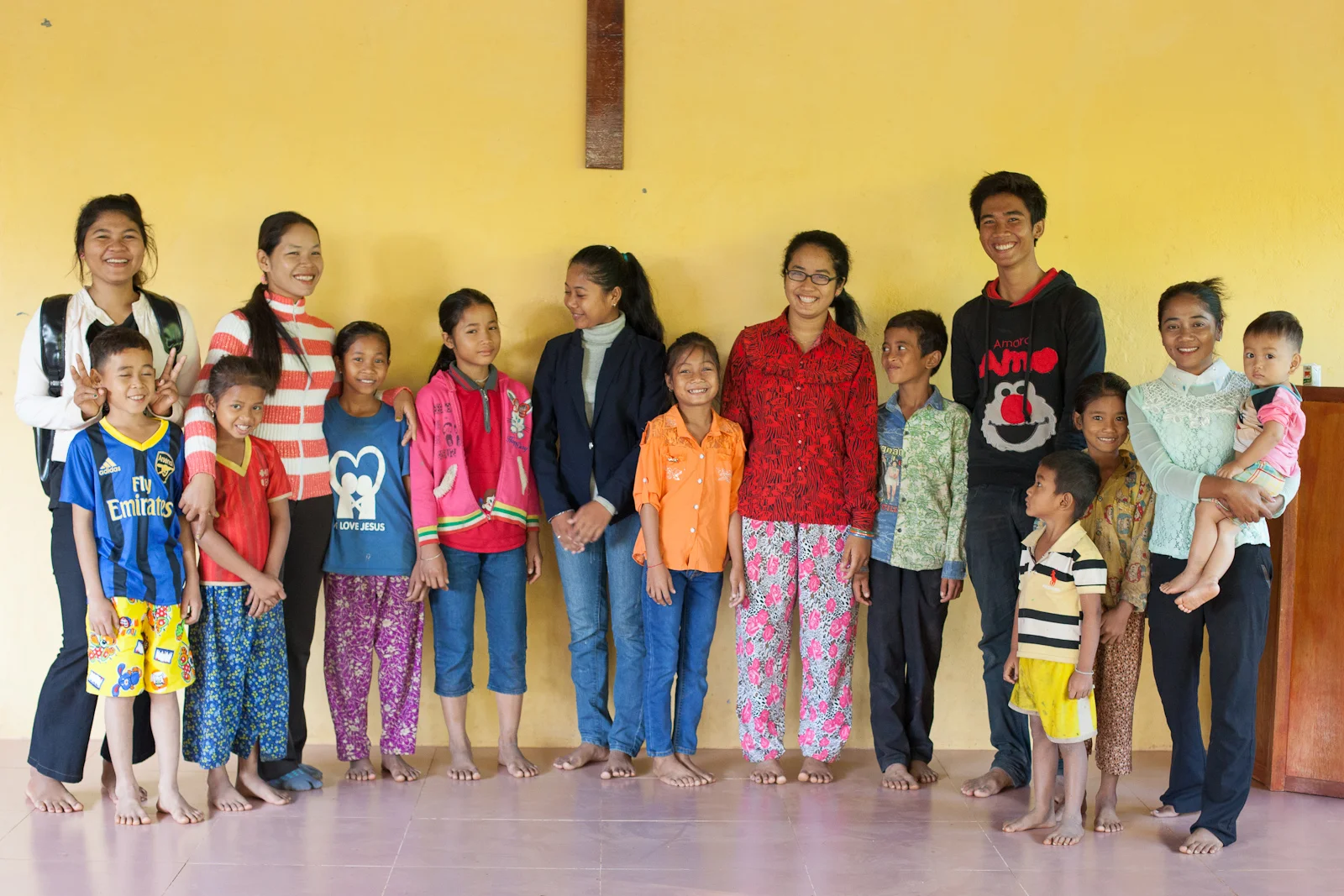
Alongsiders with their little brothers and sisters and a few extras. Chanthy is wearing orange and white stripes. Piya and her little brother are on the right in yellow.
For the past four months these new Alongsiders have been meeting with their little brothers and sisters once a week on average. I ask whether meeting regularly is a challenge, and I receive an education.
Most families in Kampong Leng are rice farmers, though many are diversifying as family members start businesses, work in factories, and (in dream scenarios) get educated and find salaried jobs. Those families that subsist on farming alone are very poor, usually earning less than $1 per day according to Chanthy, the Alongsiders group leader in the community.
Farmers in Kampong Leng work through the dry season. They can't use the fields near to their homes, so they travel (or relocate) to rented fields closer to the retreating Mekong River.
The little brothers and sisters all come from farming families, so their parents are on the move. Sometimes the children move with them.
The Alongsider mentors are also from farming families. Most are high school students. When they are not studying, they may attend extra classes to learn English or computer skills. Otherwise, if they have free time, they are expected to help their parents by working in the fields or at home.
Making time for their little brothers and sisters, even once a week, is a significant gift - and an effective one!
After my last visit I wrote about Piya, an 11 year-old who cares for three younger siblings every day while her parents are away working. Recently, Piya has started attending school about three days a week. In order for her to study, her mother will stay home in the mornings until Piya returns to look after her siblings.
Piya's mother wants her daughter to attend school. The greatest obstacle for Piya isn't time or even money: it's the shame.
Chanthy says, "Cambodians don't like poor children." She repeats the words, to make sure I understand, and adds, "Only the Christians love poor children, but not all the Christians do."
Piya, like many of the poorest children, doesn't have a school uniform, just a set or two of worn out clothes, plus she lacks basic school supplies like notebooks and pens.
When she attends school without a uniform or proper materials, the other children treat her with contempt, so she doesn't want to go. She has only started attending recently due to her Alongsider's strong encouragement.
I had thought that Piya's circumstances were unique, but as I listen to the Alongsiders share, I realize most of their little brothers and sisters face similar challenges. Most would not be attending school regularly without the support of their Alongsiders.
One little sister goes to school, then she walks one-and-a-half hours to join her parents at their rented rice field. They walk home together in the evening.
So what do the Alongsiders do with their little brothers and sisters? Most spend two or three hours together and do similar activities.
- They eat together.
- They help with homework and reading and writing Khmer.
- Some read the Bible together.
- Most of the Alongsiders have taken their little brothers and sisters to buy school supplies using their own money.
- Most of the Alongsiders help their little brothers and sisters to thoroughly clean themselves and wash their clothes.
- All the Alongsiders pray for their little brothers and sisters in their personal prayer times, and some pray for them directly.
Some Alongsiders have been able to bring their little brothers and sisters to church, but for many this is not yet possible. The distance is great, and the parents of the children (who are not Christians) work on Sundays and need their children at home or in the fields.
But through their actions and prayers, they are extending the Body of Christ to their little brothers and sisters where they are.
I leave with an enlarged vision, inspired and challenged by these amazing Alongsiders. In the eyes of the world - and even in their own eyes - they are marginalized. Yet they are most significant and central in the eyes of God, giants in the real Kingdom.
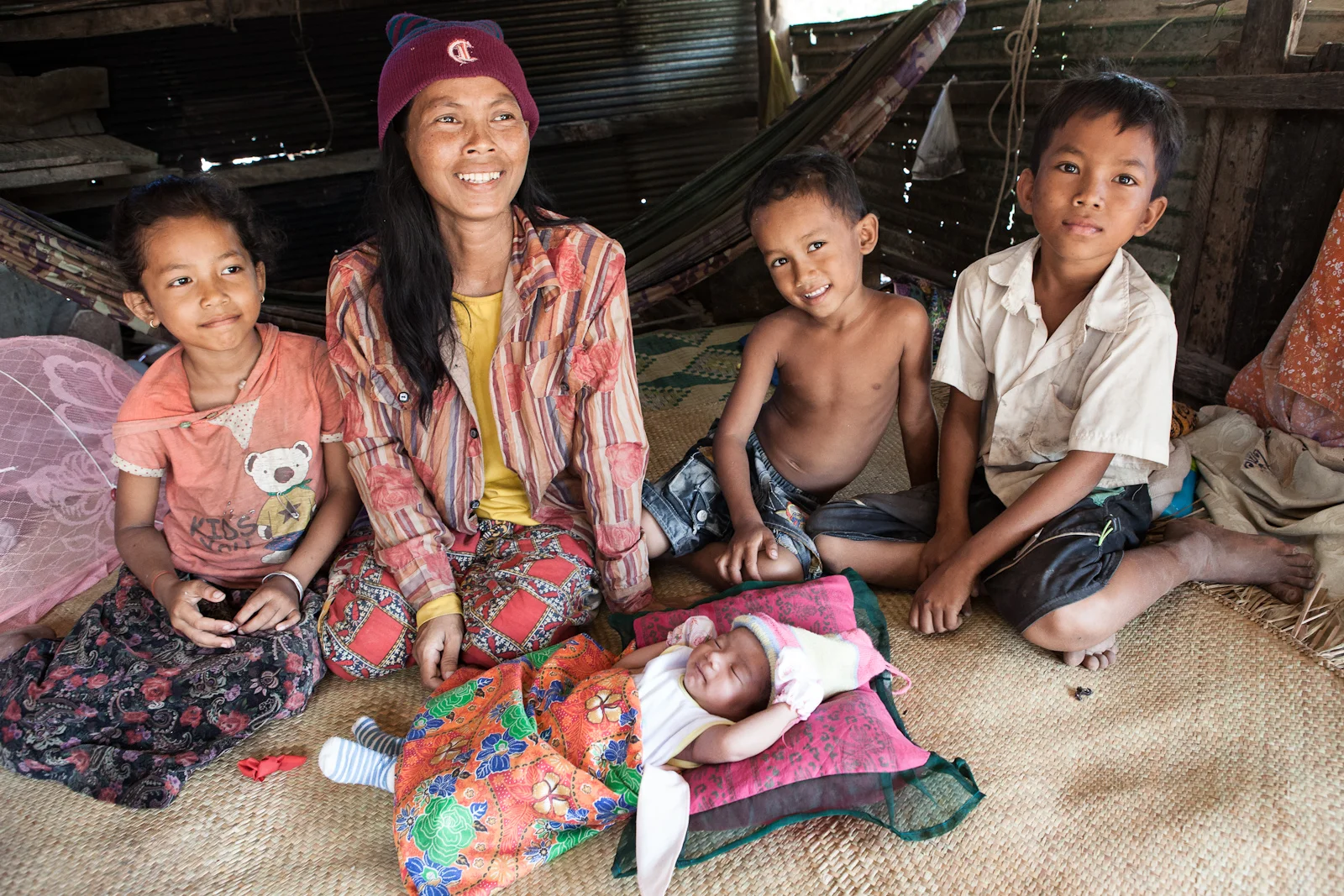
By knowing how to heal the family, I know how to heal the world.
How do we begin to address brokenness, violence, alcoholism and neglect within families?
“I hope one day my little brother will be a good father. If I’m a good example, he can learn from me.
”
A little brother with his new Alongsider mentor
During the 1970's, the Khmer Rouge set out to destroy the family as an institution in Cambodia. They separated children from their parents; young adults were forced to marry partners selected by the state; and countless fathers were led away and never returned. The state, in it's role as father and mother, enforced order with violence.
That was two generations ago, but dig beneath the surface today and nearly every Cambodian seems to have a heart-wrenching story involving family relationships, including those who grew up after the Khmer Rouge. The problem is no longer what happened 40 years ago, but what is happening today.
We see two prevailing challenges: domestic violence and a shortage of parental care.
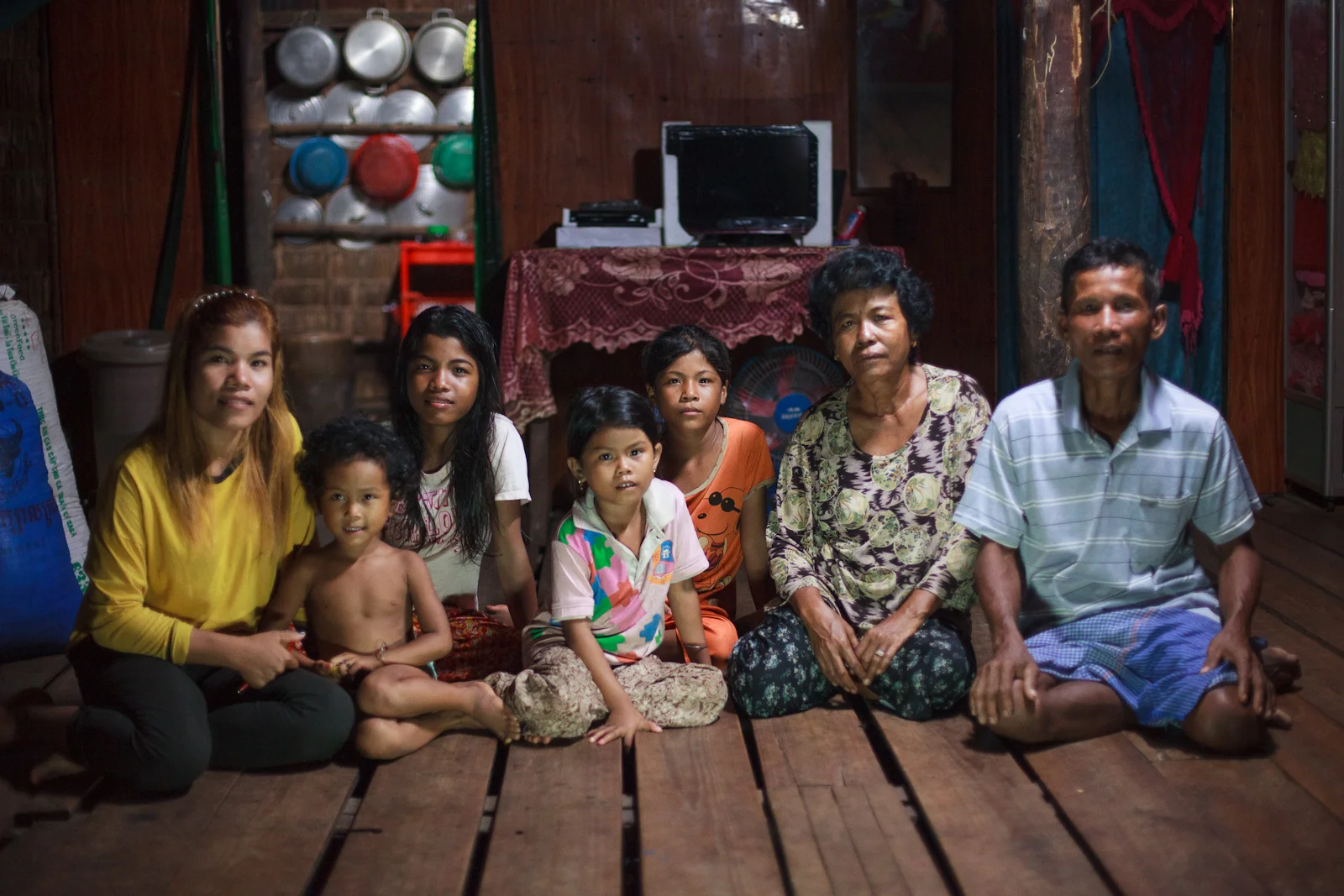
“In poor families, one problem is violence. The husband and wife are under stress. Some people use alcohol or drugs and fight every day, especially the husband. He doesn’t earn enough to support the family and feels frustrated.
Another problem in poor families is that both parents are busy. They have to work long hours and there is no one to look after the children, so they are at high risk.”
What can Alongsider mentors do in the face of such needs? They offer themselves as a go-between, and they come with new ways of thinking and acting.
In last year's impact assessment, half the little brothers and sisters reported receiving help with conflict or discrimination within their family or community. This compared with less than a quarter of similar children without Alongsiders in their communities.
Our research shows that many Alongsider mentors intervene in practical ways in these situations. This is in addition to other important forms of support, such as prayer and encouragement.
Alongsider mentors also introduce new ways of thinking. The most direct way they do this is by using the comic book curriculum.
The stories and images in the comic books portray alternatives to violence and new ways of looking at relationships. But it's not just the comic books that matter, it's also the process of using them that can make a difference.
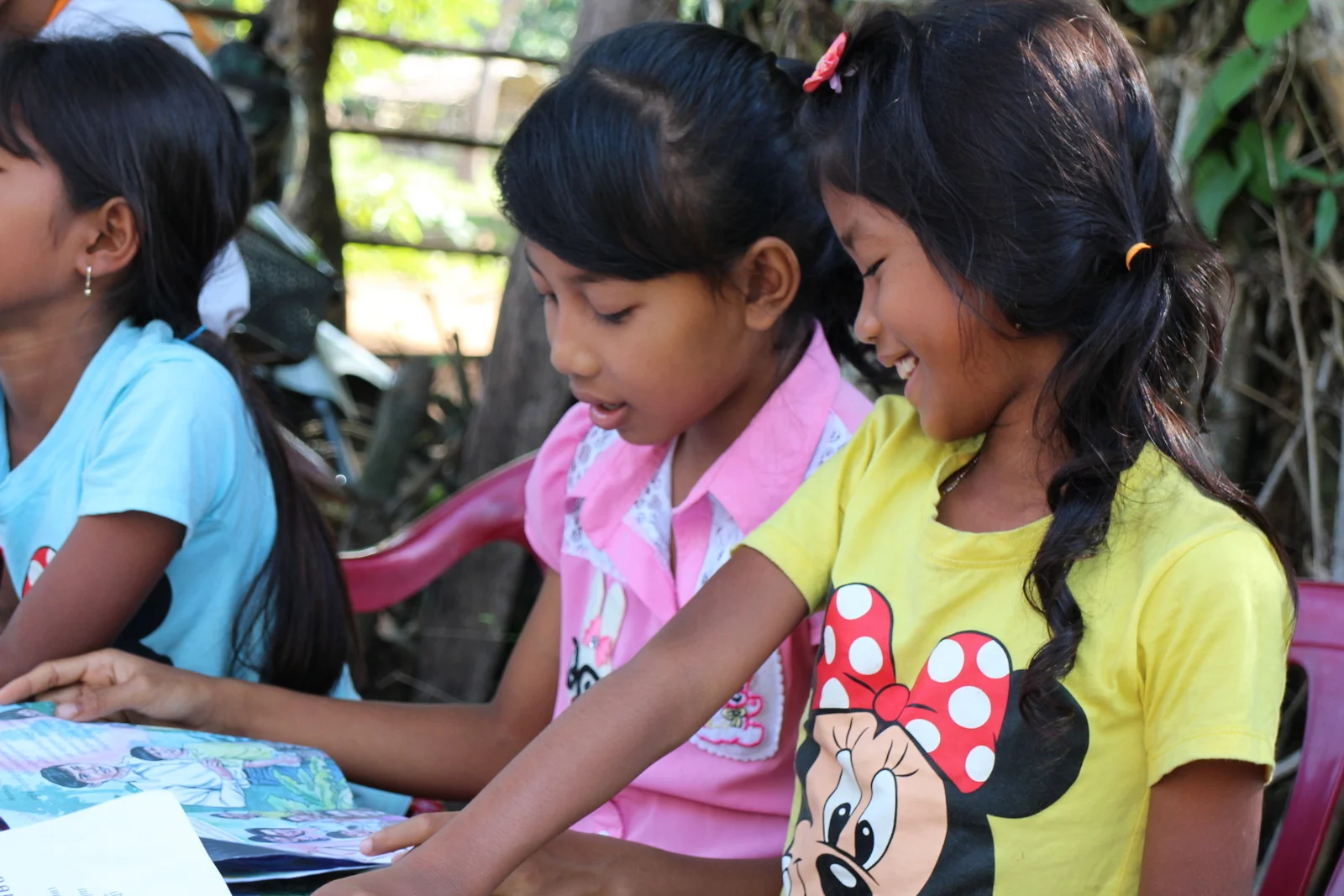
Little sisters enjoying the latest comic
“Adults don’t know how to sit a child down and talk through problems. They just say what is right or wrong. If a child does wrong, the parents pinch them or hit them with a switch.”
Alongsider mentors are being trained to read and discuss the stories in the comic books with their little brothers and sisters. Discussion, reflection, and evaluation of conflicts and behaviors is an important discipline for growth in relationships. Simply working through this process together is a learning experience.
Then the lessons contain powerful insights. Forgiveness is revolutionary in any context, but especially in communities where forgiveness is not a cultural value. Even a normal practice, such as saying thank you, can take on new dimensions. Often, Cambodian children are taught to thank people outside their families, but they rarely thank members of their own family. Our story about "Thankfulness" brings expressions of gratitude home to the family.
And the comic books don't necessarily stop at the first reading.
“My little brother read the comic with his sister and his cousin. Later I heard some kids repeating the words from the story, so I asked them about it. They said, ‘Oh, I liked this,’ or ‘I liked that.’”
But there are challenges.
Many Alongsider mentors develop good relationships with the families of their little brothers and sisters, but others struggle. As a younger person it can be difficult to communicate with older family members in a hierarchical society. Thus the engagement with families may be limited by cultural dynamics.
Most mentors read and discuss the comic books faithfully and carefully with their little brother or sister, but some struggle to find the time or don't follow the correct process.
These are growth challenges. They shouldn't be surprising in a country where few people reach outside their trusted circles of family and friends, and most people don't read or have discussions about what they've read.
But when Alongsider mentors visit their little brothers and sisters at home and develop relationships with their families, good things happen. We've seen entire families come to faith and behaviors start to change.
The changes we hope to see may take a generation to emerge. But families are the foundation of society. Better to start at the cracked foundation and restore that first.
In the words of famed American social worker and author Virginia Satir, known especially for her innovative approaches to family therapy:
“The family is a microcosm. By knowing how to heal the family, I know how to heal the world.”
This action seems insignificant at first, but look at the impact on a child's education
What can Alongsiders do to ensure that EVERY child has a chance to learn?
The face of a courageous young girl named Malala is burned forever in our minds.
These are her words:
“I don’t mind if I have to sit on the floor at school, I want an education, and I am afraid of no one.”
Malala took a bullet in the head for her resolve, and even that couldn’t stop her.
Malala’s courage is extraordinary; but her desire to learn shouldn’t be so surprising. Across the developing world children are hungry for an education. Their hunger is evident to anyone who has ever visited a functioning school classroom or after-school program.
Last week, a story in the Cambodian papers ended with an ironic twist.
A young athlete, Sorn Seavmey, won Cambodia’s first ever gold medal in the Asian Games. She was naturally showered with praise and gifts on her return – plus one more thing...
It turns out she was one of many high school seniors this year who failed their graduation exams, so she was slated to take them again like all the rest who didn't pass. But Prime Minister Hun Sen declared that she will be granted an automatic passing grade.
This story captures one of the dilemmas with education in much of the developing world: the system favors some people over others. It’s not just about studying hard or ability; it’s also about power, money, and connections. People at the margins are on their own, and it's not a level playing field.
We know that getting educated is a proven way out of poverty. Improving schools and increasing access to them are staples of poverty reduction programs.
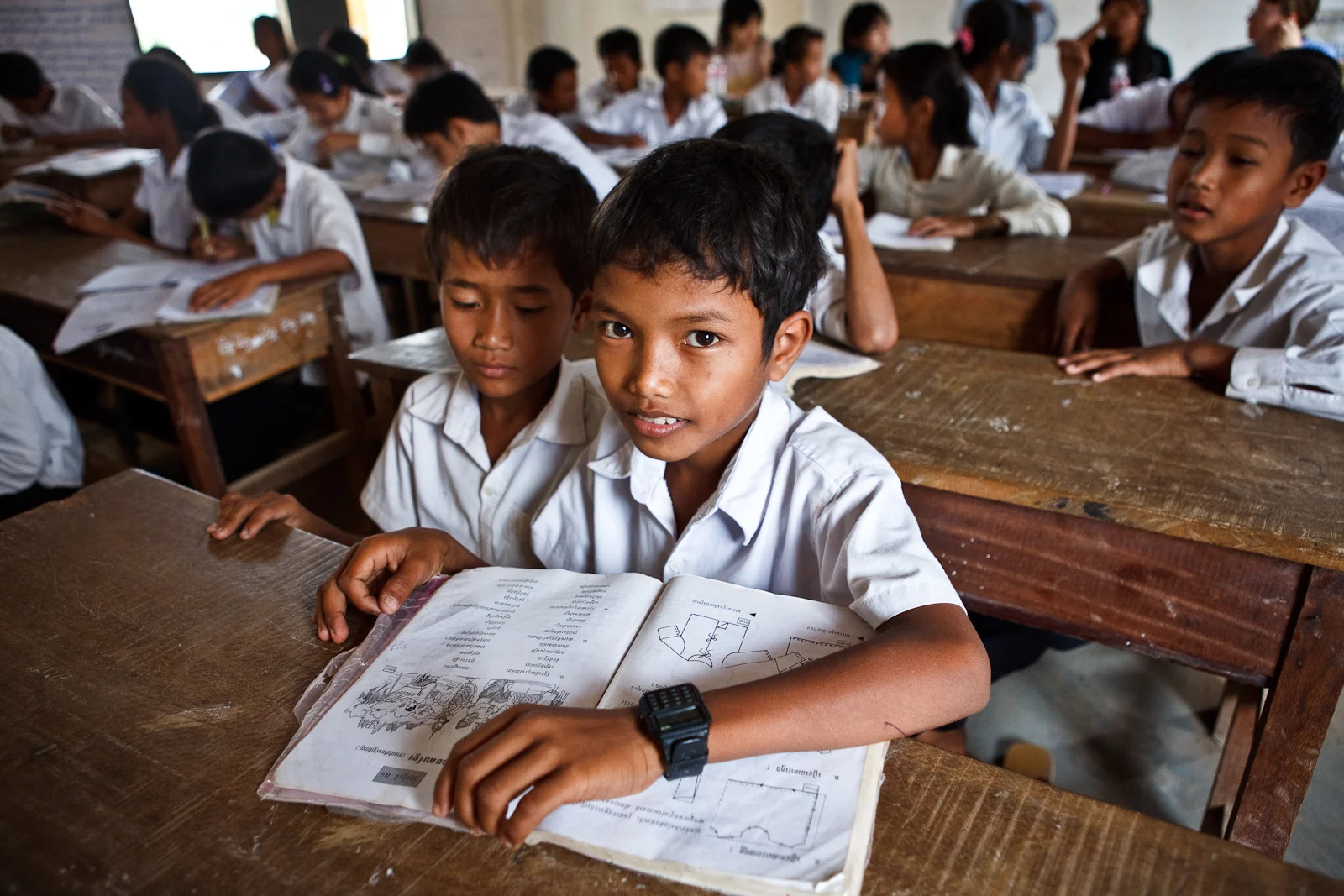
Most of the "little brothers and little sisters" in the Alongsiders movement come from the poorest families. Some simply cannot attend school due to lack of finances or, in some cases, because they must stay home to work or look after siblings.
What can Alongsiders do to ensure EVERY child has a chance to learn?
It may seem small - insignificant even - but simple ongoing acts of one-on-one coaching can significantly impact the education of a boy or girl in poverty.
In practice it looks like this: Alongsider mentors regularly help their little brothers and sisters with their homework, encouraging them to stay in school, and continuing to walk alongside them over the long haul. Sometimes they reach into their own pockets to buy a little brother or sister a notebook or pen that's needed.
In the words of one Alongsider mentor:
“My little brother goes to a school in the countryside where the teachers don’t require extra payments, because most of the families are too poor. The teachers have private classes after school, but he doesn’t attend those because he can’t afford them. But I encourage him, and he studies on his own every day. He can’t study a lot, because he has responsibilities like taking care of the cow and watching his brothers and sisters. But he studies enough.”
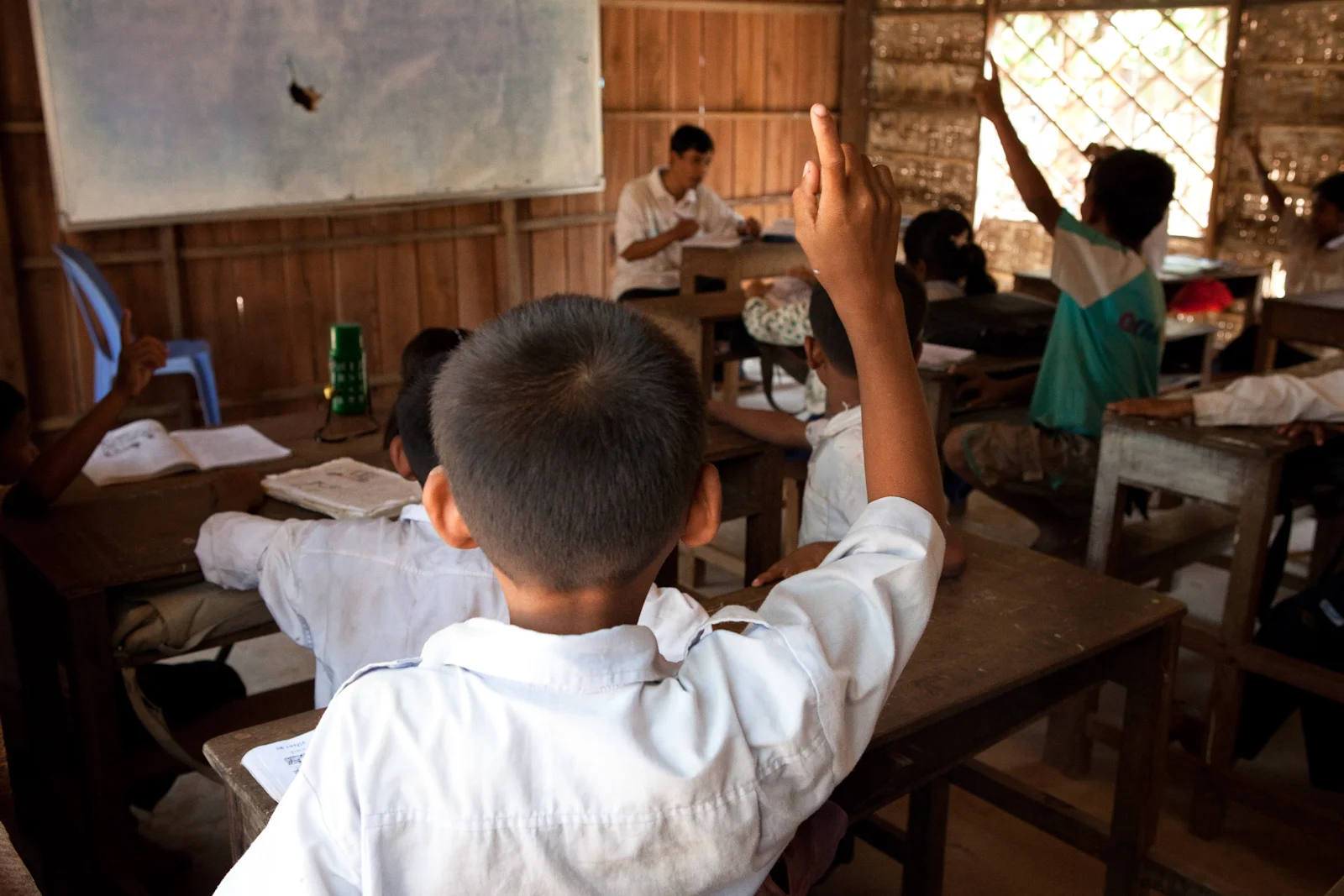
In our impact assessment, 97% of the "little brothers and sisters" in the Alongsiders movement reported that they receive help with their studies. Around half of them said that their Alongsider mentor was the MAIN person who helped them with their homework. Many also reported that their mentors had bought them school supplies or paid school fees at their own expense.
And look at the results:
“99% of little brothers and sisters surveyed are attending school, versus 55% of children of a similar demographic in the same neighborhoods. ”
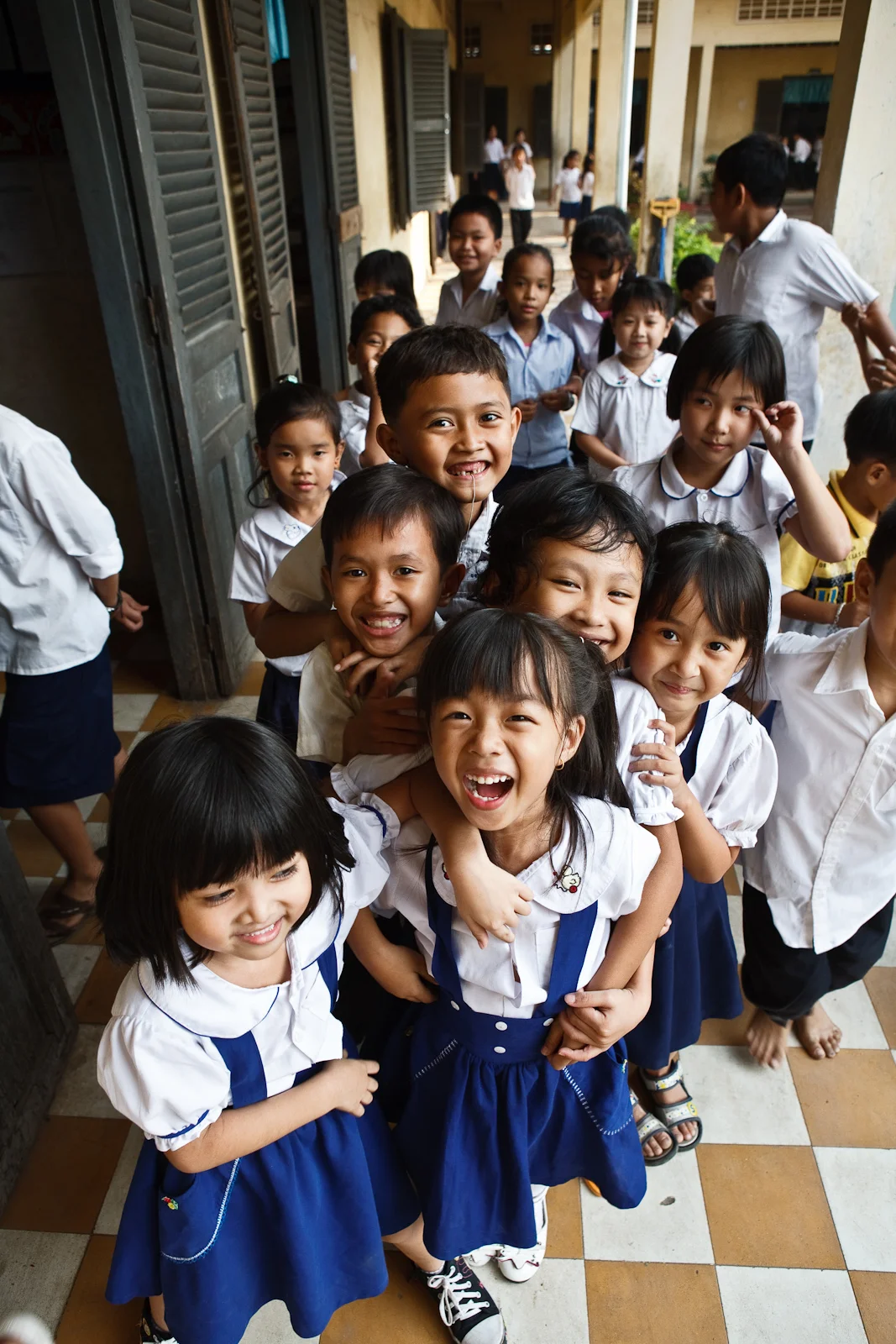
Impoverished students want to learn. It takes great determination to persevere, but it can be done. Every bit of encouragement and support and prayer from an Alongsider mentor helps them to find the strength inside themselves.
In the words of Malala, “One child, one teacher, one book, one pen can change the world.”
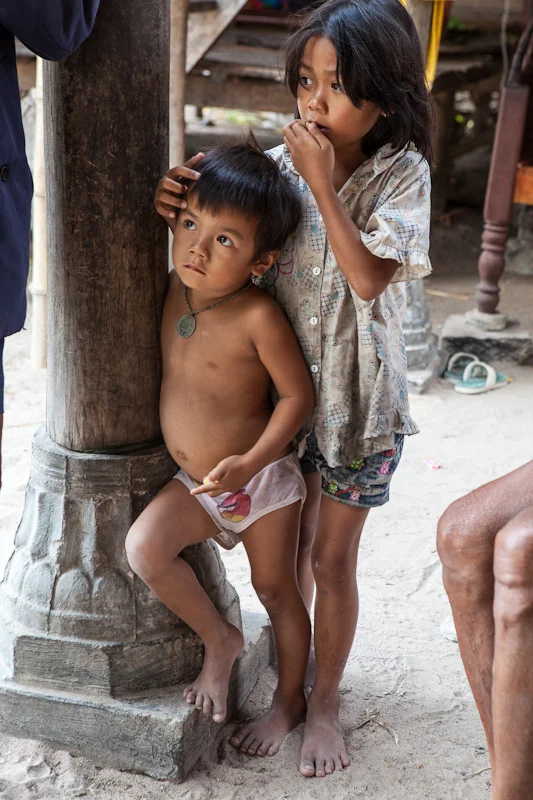
The ONE thing everyone overlooks about poverty
After hearing so many stories of children experiencing poverty, a recurring theme began to emerge - something most people overlook about poverty...
We listen to stories.
In particular, we listen to the stories of vulnerable children.
And after hearing so many stories of children in difficult circumstances, a recurring theme began to emerge - something most people overlook about poverty.
You may be thinking children's main experience of poverty, the thing that impacted them most, would be:
- a lack of money for basic necessities
- only a single set of clothes to wear
- skipped meals and feeling hungry, or
- having to work from a very young age
All these answers are true in given cases, but they only tell part of the story.
Poverty is bigger and deeper than what we see. It affects family and community relationships, and it can threaten to derail the most basic needs of children. The needs that, when met, help them grow into healthy adults. In particular, a sense of belonging and personal significance.
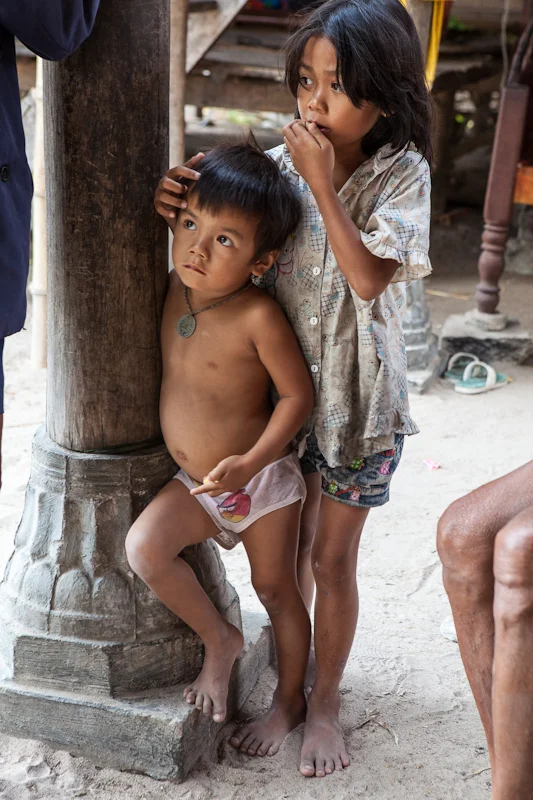
Isolation.
Rejection.
Exclusion.
These themes come up again and again in the stories we hear from young people who have grown up in poverty.
“I was alone.”
"I had no one I could trust."
“Nobody cared for me.”
“People looked down on me and treated me badly.”
The most hidden and misunderstood aspect of poverty is how it breaks and weakens relationships, leaving children (and adults) alone, rejected, fearful and emotionally wounded.
That's why the approach that Alongsiders takes to poverty is relational. The work that the Alongsider mentors are doing is transforming children and their families and communities on every level, including the level of emotional health, and it’s exciting to see in action.
Alongsider mentors are young adults who have themselves grown up in poor communities. They choose “little brothers and sisters” from their own communities - unrelated kids who are in vulnerable situations - and set out to love and mentor them as if they were family.
“The most important thing I learned from my Alongsider was love.
I know God loves me, because she loved me.”
--a former little sister, now an Alongsider mentor
We hear many stories about the impacts made by Alongsiders, and so many of them revolve around love and friendship overcoming isolation and rejection. But stories, even inspiring ones, are not hard to gather. We wanted to dig deeper and better understand how Alongsiders are changing the lives of little brothers and sisters.
Last year, we decided to survey a large group of little brothers and sisters from several provinces across Cambodia. The questions were carefully chosen and worded.
The same survey was given to an equal number of similar children in the same communities who are not being mentored by Alongsiders (a control group). All of this was done using objective research methods by an independent team.
What we learned was very encouraging. Having an Alongsider makes a significant difference in the lives of the little brothers and sisters. You can see the full report here.
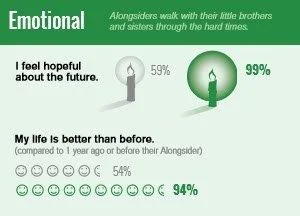
The little brothers and sisters clearly perceive a positive effect on their emotional wellbeing. We hoped so, since the work of Alongsiders is founded on loving relationships, and it was a welcome confirmation. This is just one snapshot of what is happening. Again, you can see all the numbers in our 2013 impact assessment here.
How encouraging that Cambodian youth are the ones changing the lives of Cambodian children! And it's not just children who are changing. Families, communities, churches, and the Alongsiders themselves are being transformed in the process. It's all the more encouraging that these youth, who have grown up in poverty, have become mentors empowered to serve out of their own experience of marginalization.
No-one ever washes a rental car
Seth Godin points out that no-one ever bothers to wash a rental car. The reason why is of critical importance to Alongsiders.
Seth Godin points out that no-one ever bothers to wash a rental car. Why? Because there's no sense of ownership. And a sense of ownership is required in order for someone to go the extra mile.
In Alongsiders, we are serious about fostering a sense of ownership amongst those in the movement. It's not just lip-service. We build it in from the ground up.
Here is one of the key ways we try to do that:
Alongsider mentors choose their own little brother or little sister.
Rather than matching up mentors with kids that have been previously selected by some outside group or organization, the Alongsider mentors themselves prayerfully discern which child they will personally walk alongside. They select a vulnerable child from nearby their own house, in the same community. For some, this is a several months-long process of discernment.
And the result? Alongsider mentors are more likely to take the relationship seriously, have a sense of ownership of that relationship, and go the extra mile. We have some mentors who have been faithfully walking alongside their little brother or sister for more than a decade.
Cambodians have a proverb - it takes a spider to repair its own web. In other words, it is going to take insiders to transform a society.
In order to be motivated to work for this kind of deep transformation, those insiders need to own the work. They need to lead the charge. They need to have a sense that they are responsible for the change that needs to take place. They need to deeply commit. And that only happens when they are given ownership.
But here's the catch. Empowering young people, giving them ownership, means having less control. And this is the core issue we have to face in our movements and organizations. Sure, we want to empower and give ownership. BUT....
...are we willing to give up control?
No-one ever washes a rental car. No-one pours out their heart and soul for something they don't truly have a sense of ownership or responsibility for.
So which path will you choose?
Control or transformation?