
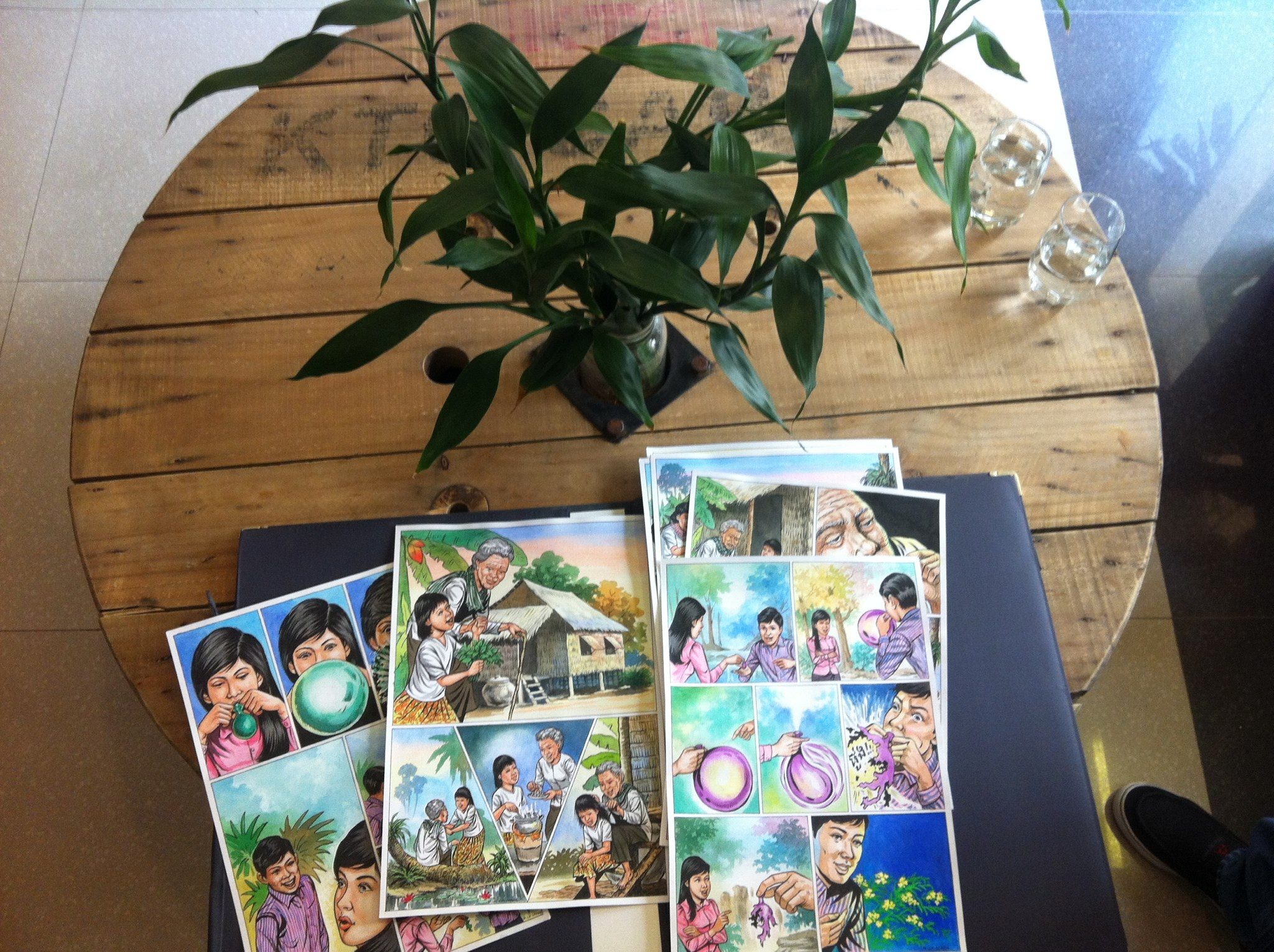
5 steps to creating a life-changing comic
What does it take to create a comic book simple enough for a semi-literate child to understand, but profound enough to spark change in that child's life?
What does it take to create a comic book simple enough for a child to understand, but profound enough to spark change in that child's life?
What does it take to put a brand new comic book like that in the hands of every Alongsider mentor each month?
Truly, a significant amount of thought and work goes into each comic. Here's the process...

Step 1: The Topic Meeting
A comic book lesson begins life in a Topic Meeting with members of the Curriculum Development Team.
Team leader, Hitomi Gray, and her assistant, Puthida Bou, undertake the preliminary research: gathering background information, considering how the topic normally plays out culturally and counter-culturally in Cambodia, and prayerfully considering relevant Bible themes, stories or verses.
All this background data is brought to the Topic Meeting for prayer and further brainstorming with the rest of the team. By the end of that meeting, we have agreed on the main objectives of the lesson, and we have a good sense of where we want to go with it.
Step 2: The Storytelling Circle
The next step is to form a Storytelling Circle. Alongsider mentors (some who were "little brothers or sisters" formerly) are central to this storytelling gathering. The non-Cambodians take a back-seat role. It’s not that Westerners can’t contribute, but the Cambodians know best what story elements are the most authentic and compelling in their own culture.
All of the comics are based on real-life experiences of poverty and struggle shared by the young people at this Storytelling Circle. Over the course of two or three hours, stories and lessons are crafted into engaging plots that can be told visually in just a few pages.
We make sure the story incorporates essential storytelling techniques such as conflict, drama, character development and clear messaging.
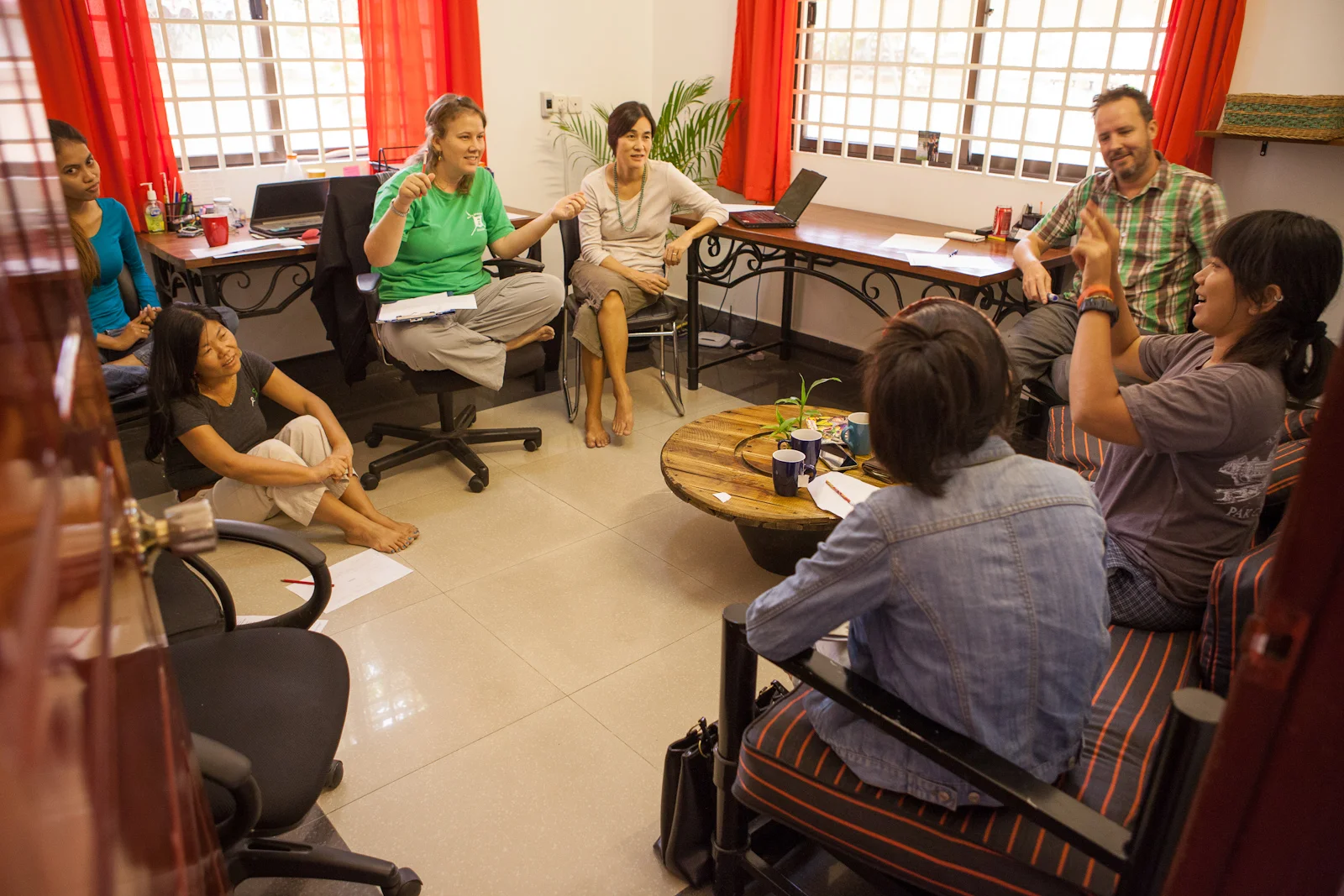
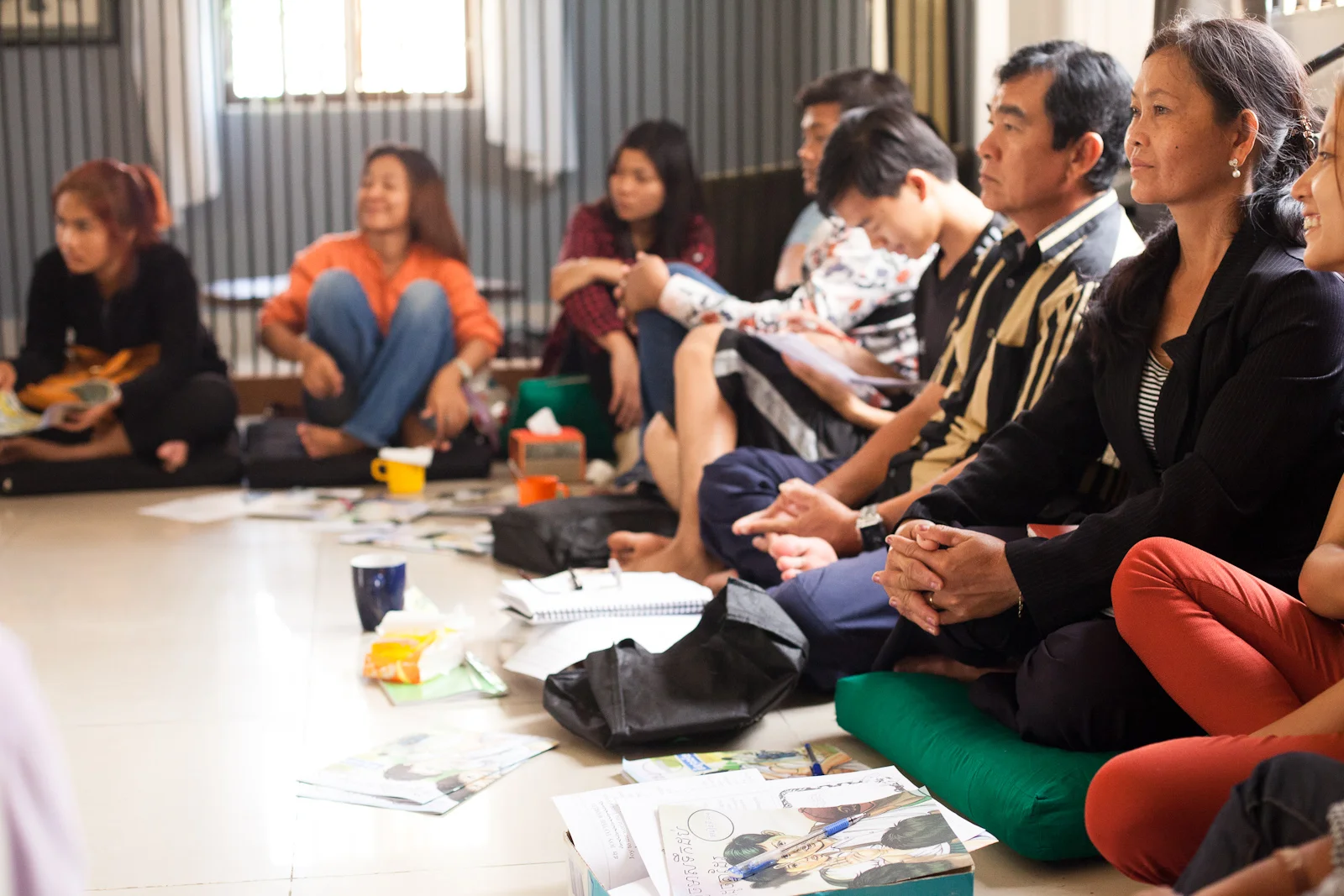
A recent story-telling circle in progress ... crafting a story on the topic of Fearlessness.
Step 3: The Artwork
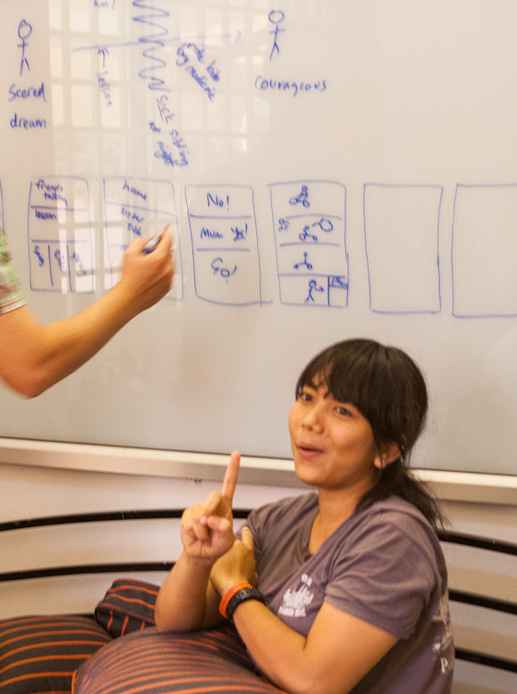
Once the rough story is outlined on a whiteboard, Puthida, an accomplished artist herself, takes a photo of what has been imagined by the group. She then hand-draws, using electronic paper and pen, a detailed storyboard of the 10 pages for the comic.
Finally, the story is ready for the artist, a Cambodian pastor named Met Sokha. Puthida meets with Pastor Sokha and goes through each page to make sure he understands the story and her drawings and notes.
Step 4: The Lesson Components
For the next week or so, while Pastor Sokha hand-paints each page (typically one day per page), Hitomi and Puthida develop relevant questions that the Alongsider mentors can discuss with their little brothers and sisters after reading the story. They also create one or two practical action steps to apply the lesson. These are essential, so that the lesson doesn't just remain as head knowledge.
For example:
1) with your Alongsider mentor write one short term goal and identify what you will need to sacrifice in order to attain it (in Perseverance, Lesson #10), or
2) list five adults who you can trust and who you will talk with if you are ever touched in an inappropriate way (in Good Touch/Bad Touch, Lesson #3).
Step 5: Design, Test Test Test and Print
When the artwork comes back from Pastor Sokha each page is carefully scanned in and edited using Adobe InDesign. Speech bubbles and story boxes are added and the various components laid out for printing.
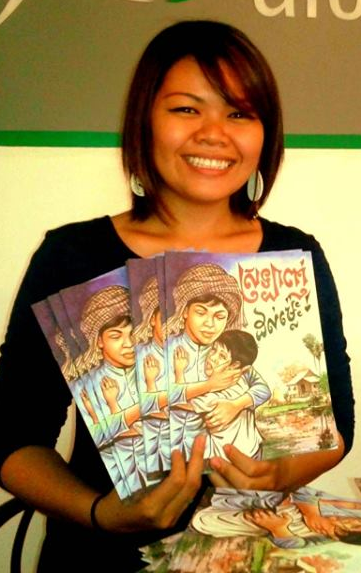
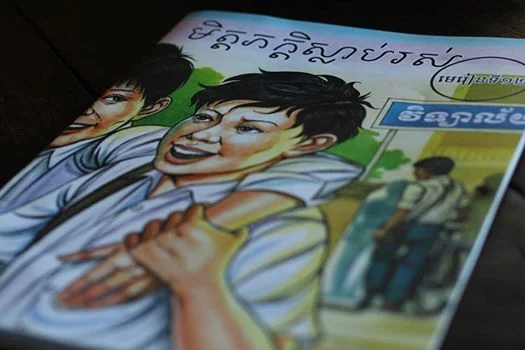
The final product!
The draft comic is now ready for testing and correcting. Puthida takes the comic out and about to test with neighborhood children. We also test it with a small selection of Alongsider mentors and a couple of proofreaders. Any errors will hopefully be picked up at this stage, but we are mostly checking that the main message and story is easily understood.
When everything is checked and signed off, we work with a local printer to print the comic. All going well, we have the comics, printed and delivered to us two weeks later, ready for training and distribution!
These comics are gaining a following. Other organizations are taking notice. One NGO reprinted 10,000 copies for distribution in schools and we're supplying free copies to various schools, churches and orphanages.
And of course, the curriculum is now being translated back into English, as well as developed and contextualized locally in other countries such as India and Indonesia.
All this effort, prayer and hard work is for one purpose: the transformation of young lives. So, join us in praying that the Spirit of God will work in and through us, and these comics, as they find their way into eager hands across Asia.
A comic way of developing our greatest gift
Grassroots leaders in Cambodia are using an innovative approach to training...
Every three months Alongsider group leaders from several provinces around Cambodia gather at the office in Phnom Penh for training. These are moments to reconnect - and to equip, listen and provide them with fresh encouragement and direction.
“I came with my pastor. When we go back he will have a meeting with the other Alongsiders and teach them how to read the books with their little brothers and sisters.”
It's at these meetings that staff distribute the curriculum: always three new issues of our comic books for Alongsiders. The leaders look at each story and discuss how mentors can read them most effectively with their little brothers and sisters. Then they take them back to their groups to use for the next three months (1 comic book per month).
Each book comes with discussion questions and one practical way to act on the lesson in the story.
In a society that still struggles to provide most citizens with a meaningful education, it's no small step for an Alongsider to read and learn together with her little sister. We can't take it for granted that she'll know what to do or feel confident if we just put materials in her hands, so the training is vitally important.
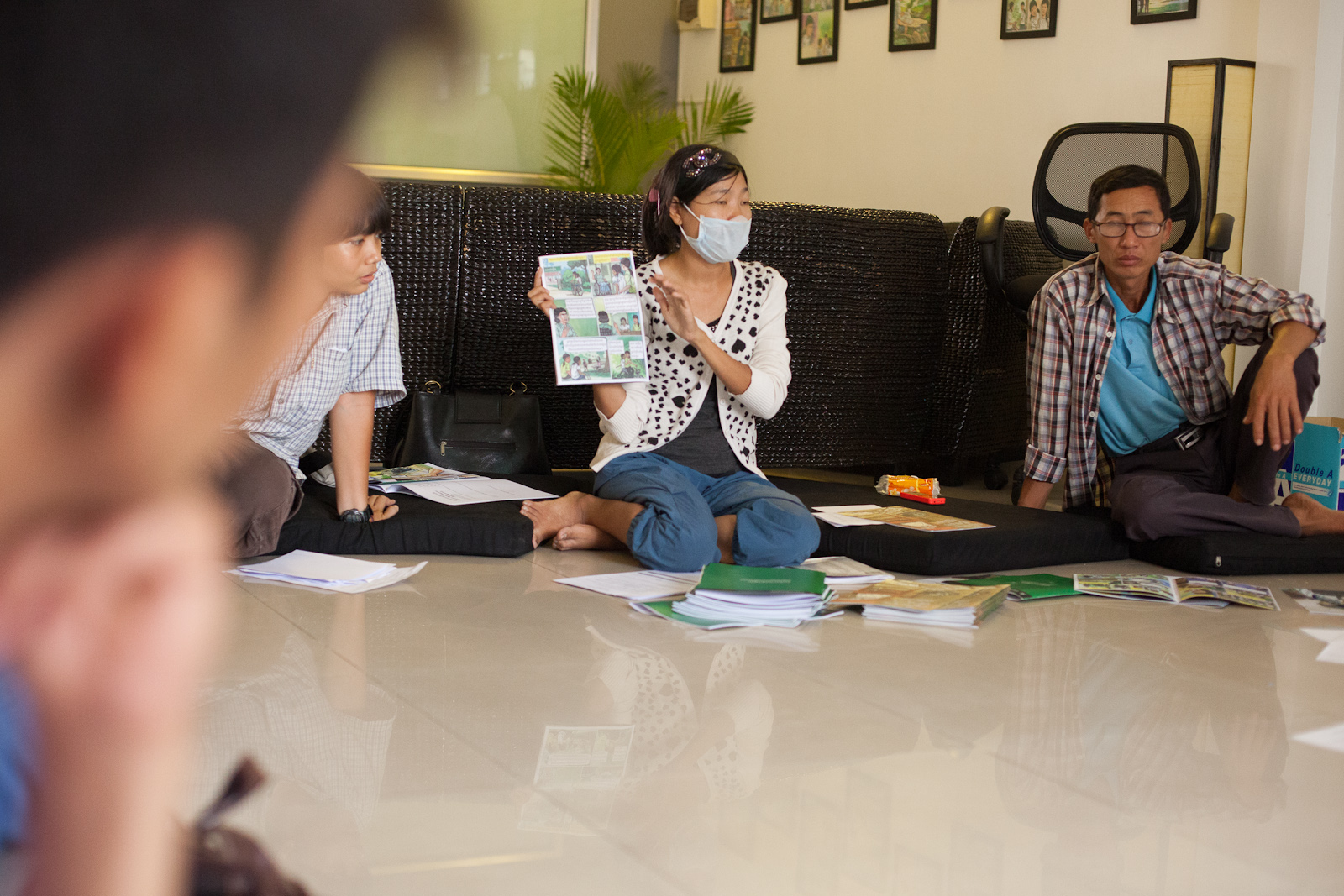
Typically part of the training consists of the coordinators role playing how to read through the comic - eliciting questions and observations from the "little brother". These sessions are becoming increasingly interactive. There is always lots of discussion about the topic (whether drugs, gender, grace or some other Biblical theme). The recent meeting included lots of discussion in pairs.
“I like the comics. The pictures are pretty and the stories are meaningful. They relate to real social issues and problems, and they lead the kids to learn and relate to God.”
Each comic has an insert with questions to discuss and one suggestion to act on the embedded lesson.
One of the comic books introduced last week focuses on how boys and girls are often valued differently and treated with different standards. The two main characters are twins, a boy and a girl. The conflict arises when the girl is treated badly by some boys who are (it is implied) looking at illicit images on a mobile phone.
The story resolves as the boy comes to realize that his sister and mother do most of the household work and deserve, at the very least, his respect and help. Then he begins to change his own actions accordingly.
The application activity encourages readers to compose letters of appreciation to their mother or female guardian. The supporting Bible passage is Psalm 139:14: "I praise you because I am fearfully and wonderfully made. Your works are wonderful, I know that full well." We are all, male and female alike, wonderfully made by God and deserving of value and respect.
As movements go, there is no explicit call for revolution here. Yet, as in the gospels, seeds are being planted with the potential to transform not just lives but families and society as well.
We often say that Alongsiders is a movement. Some movements are headed by high profile leaders. Others have flashy programs and structures. But Alongsiders is low key; our leaders come from the margins themselves; and our methods are so simple it's hard to spot them. This gathering of "unremarkable" leaders from "out of the way" places is about as "big" as it normally gets.
The most tangible material assets we work with, comic books, are disposable (albeit strategic and lovingly developed) tools - but they feed and nurture our real strength: transforming relationships.
We're proud of our comic books. We're especially proud of the people who read them together.
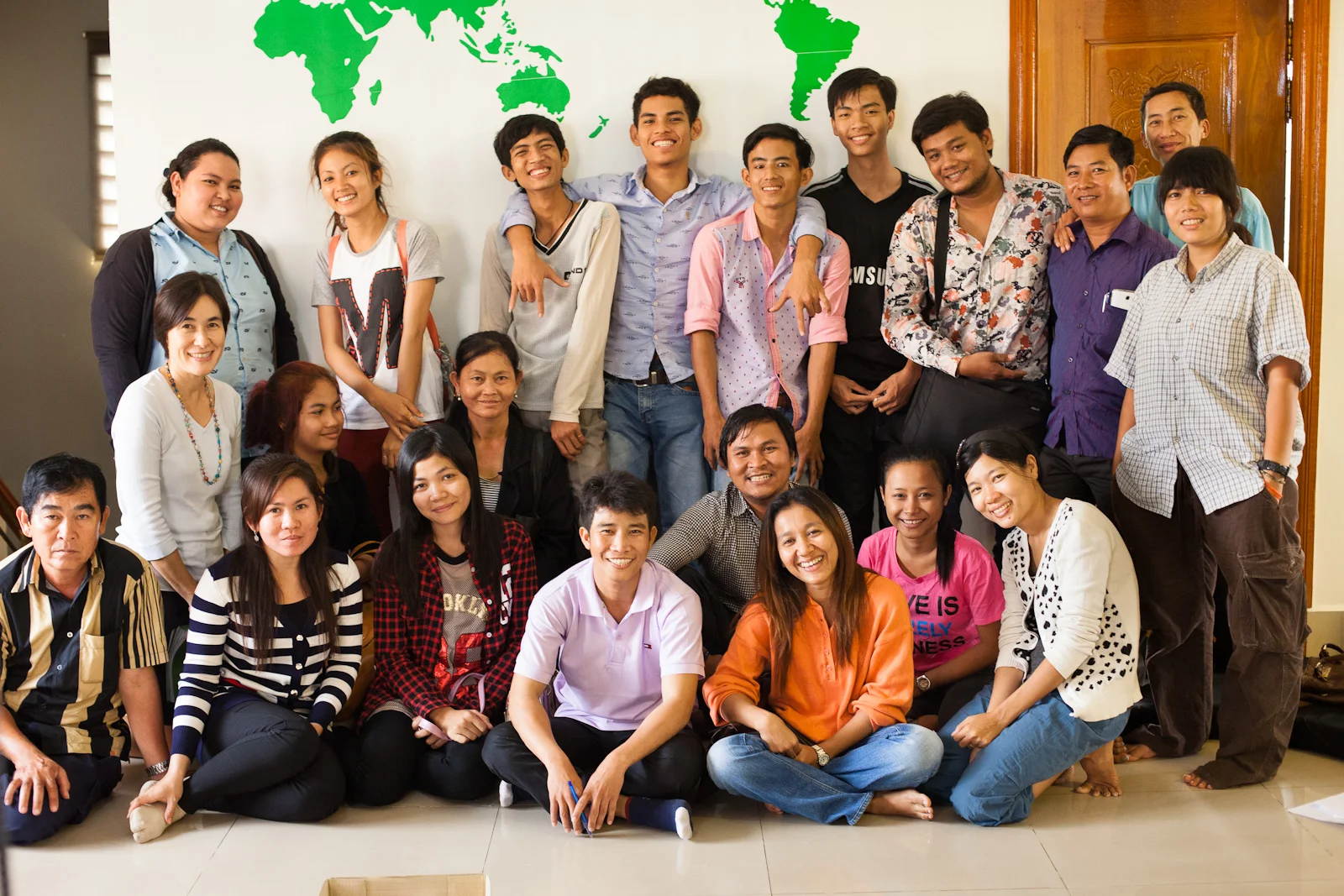
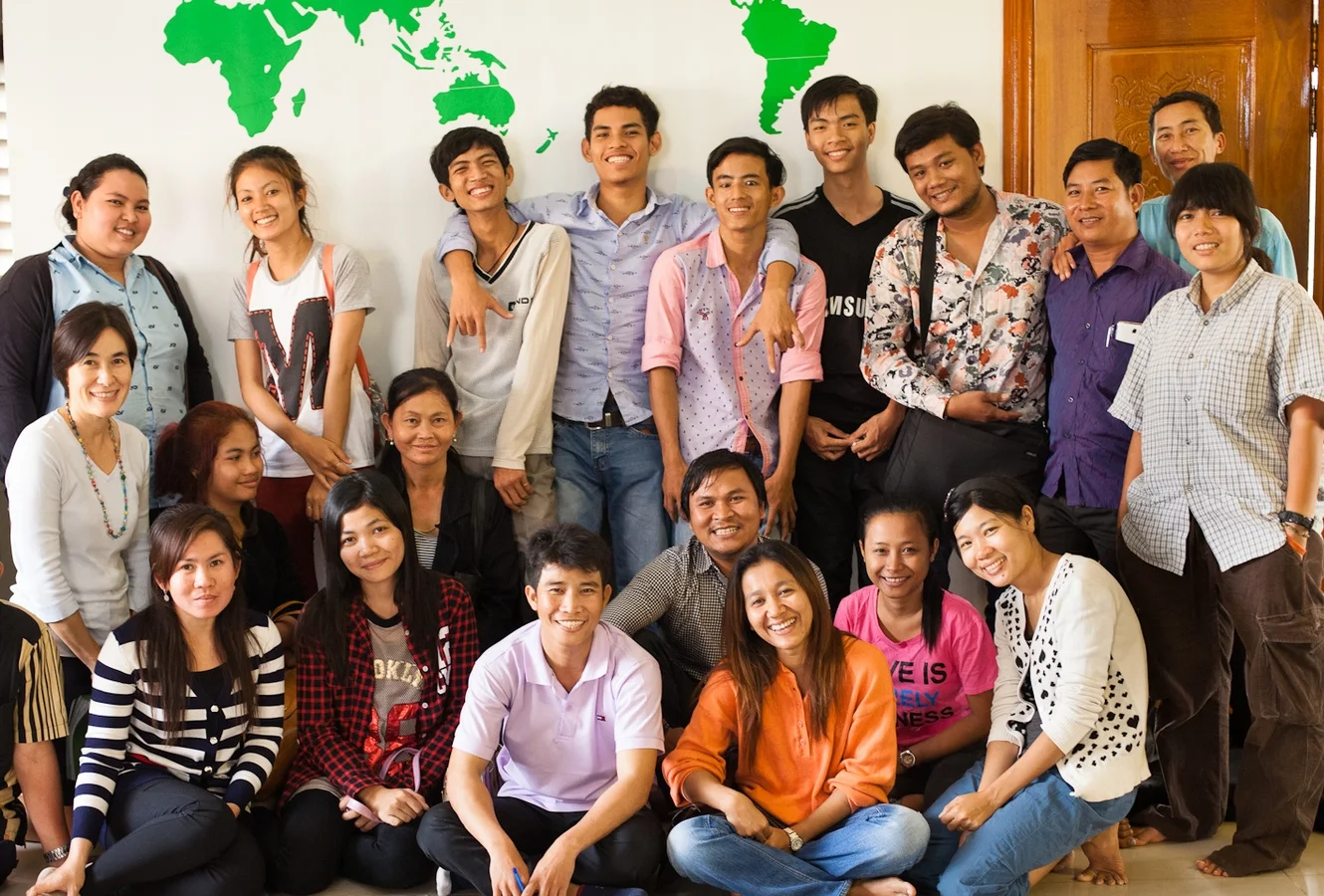
Group leaders and Alongsiders at the training last week