
How to keep a movement going
Keeping a movement growing and thriving is not an easy task. But these two leaders have figured some things out...
Movements that change society emerge and grow in villages, neighborhoods, streets, and workplaces as regular people actively take their parts. Organizations may tend to centralize leadership and power, but movements must allow leadership and power to reside at the (human) edges.
Our goal at Alongsiders is to empower and release movements of young people who make long term commitments to walk alongside the most vulnerable children in their own communities. Such movements would transform individuals, churches, and society.
Big words. But these high hopes boil down to lots of young people in scattered communities at the margins of society and what they do with the vision entrusted to them.
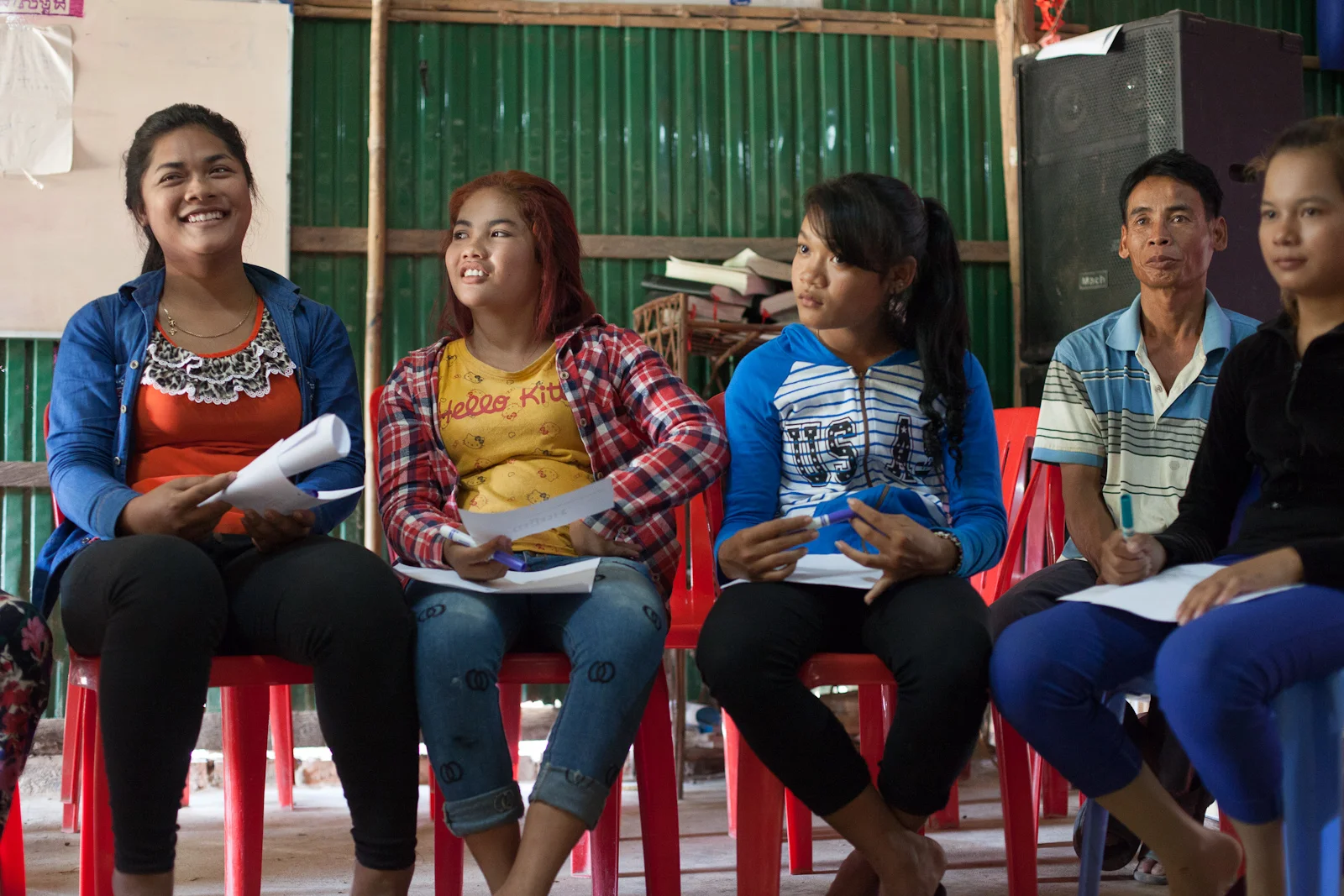
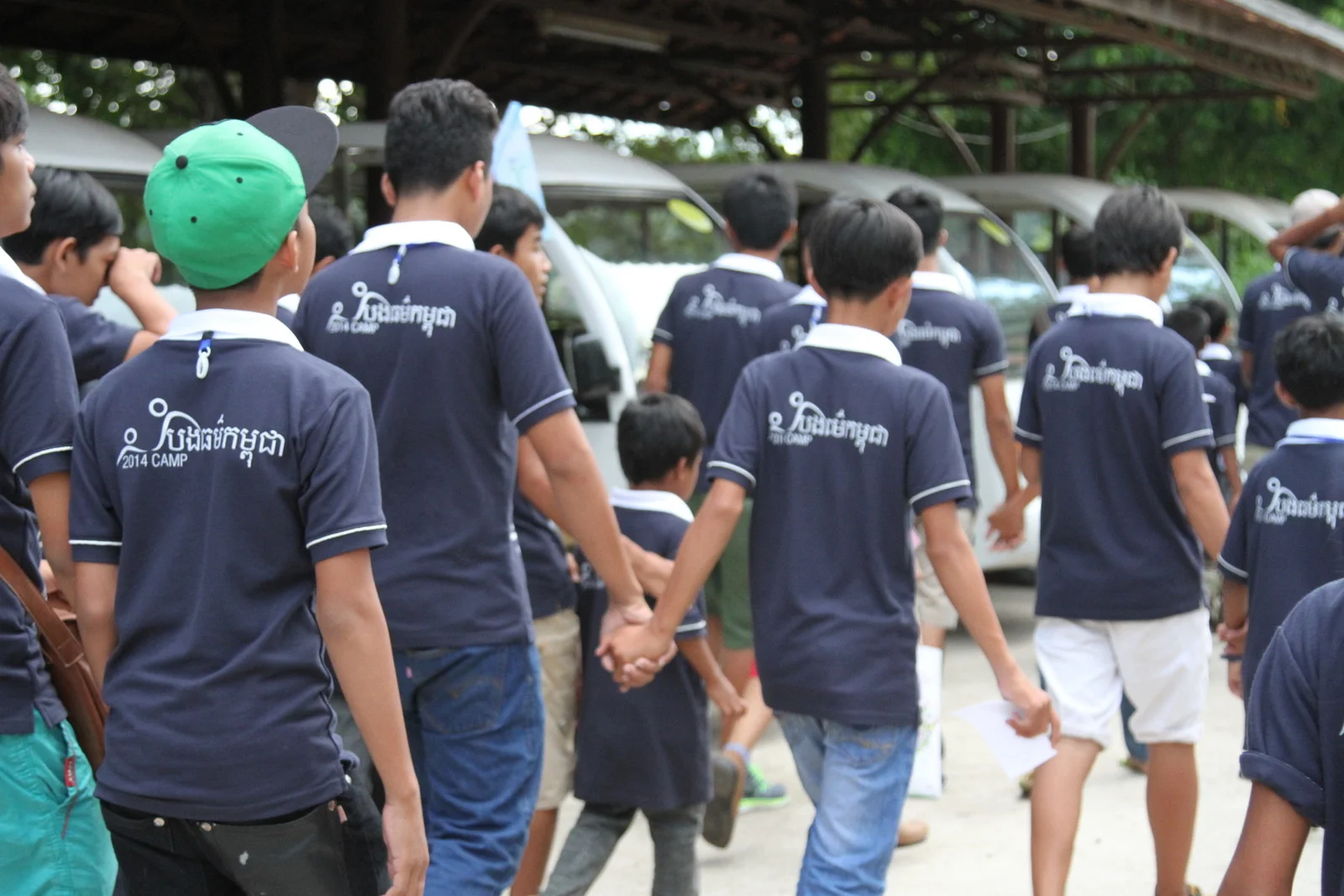
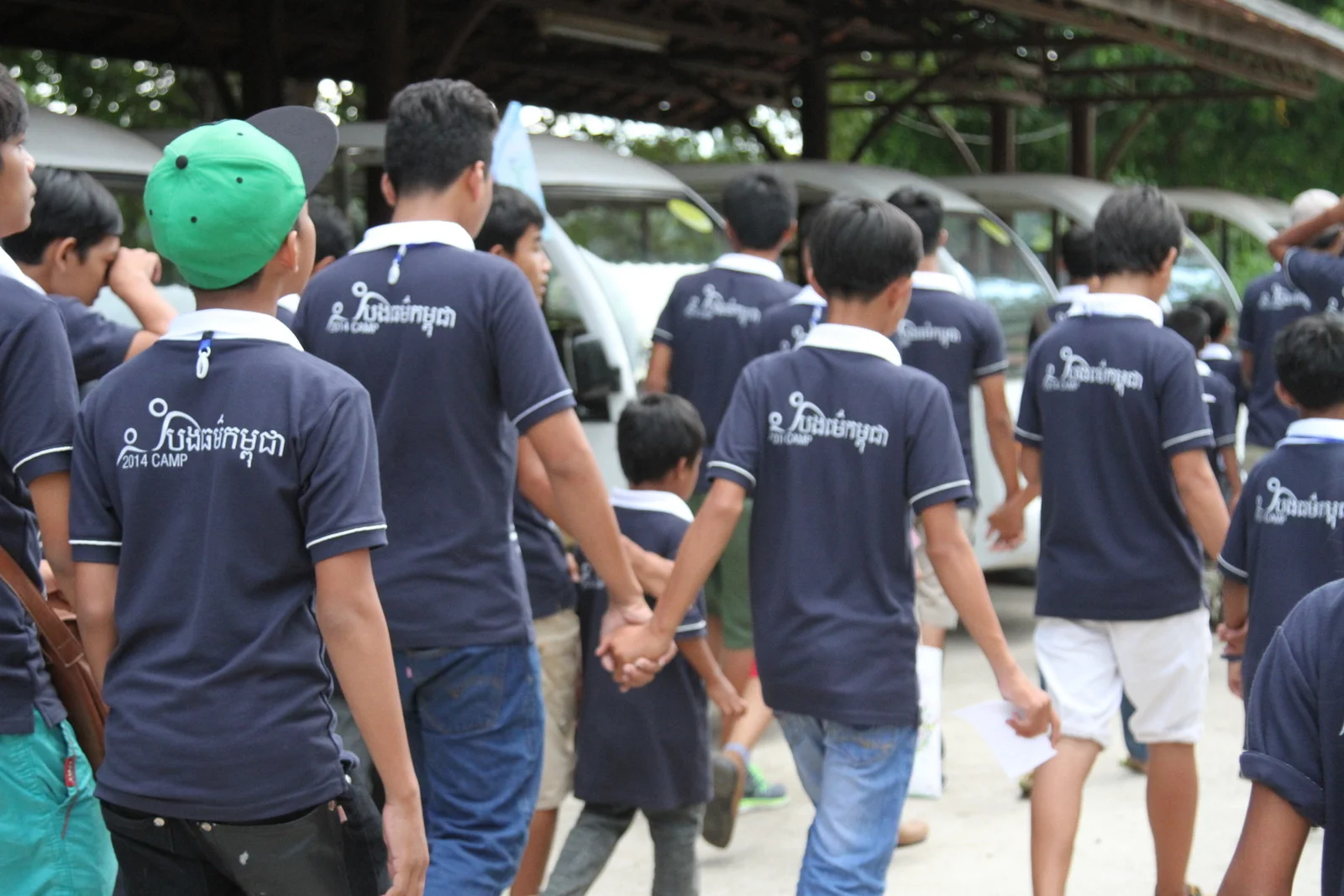
Last week both Serey and Phearom, who direct and coordinate Alongsiders Cambodia, went to a village in Kandal Province to meet with a group of Alongsiders who joined about a year ago. The main purpose was follow-up, and also to orient some new Alongsiders.
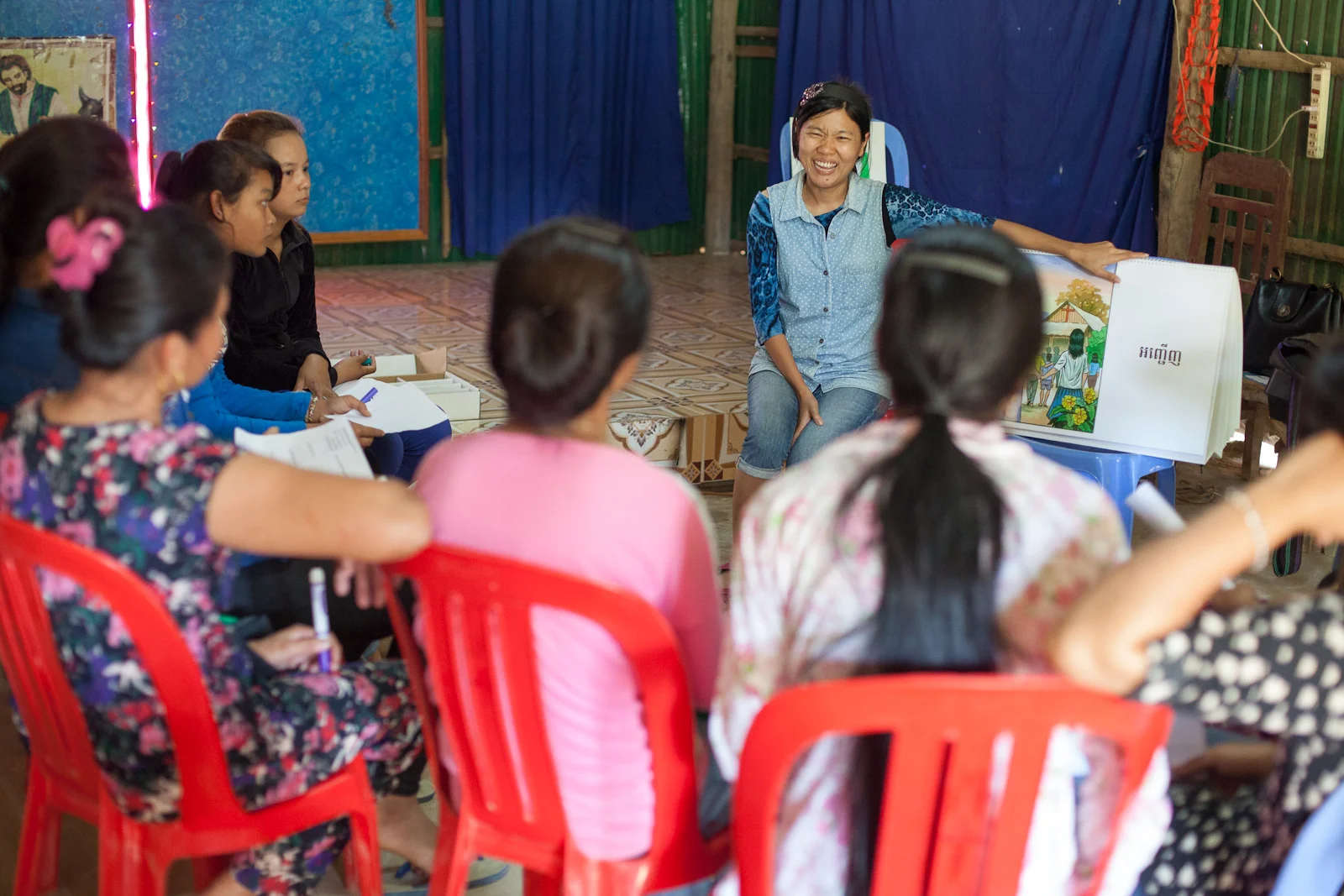
Serey teaches the 8 commitments of an Alongsider - using a flipchart
Becoming an Alongsider is a long-term commitment based on trust. Most of the time no one is looking over their shoulder to see if they spend time with their little brothers and sisters each week. They aren't paid or rewarded, except for an invitation to national camp each year. What they do flows out of motivation and character qualities like faithfulness, generosity, and a willingness to share as they learn and grow - all rooted in the love of Christ.
Yet most Alongsiders are young people whose character is still forming. It's a process of discipleship for them. They need words of encouragement and refreshment of the vision, plus examples to follow. That Sunday afternoon, Serey and Phearom took time to travel to the village and meet face-to-face. They carefully reviewed what Alongsiders is all about and talked honestly.
“When we meet with a group that has been going for six months or a year, we remind them of why they became Alongsiders and encourage them. They also hear what the others in their group are doing. That’s important, because they may not realize all that can be done. Many of them do better after we visit. Follow-up is really important, but it’s also a challenge as we grow.”
Serey was an Alongsider herself for years before she became the national coordinator. She epitomizes faithfulness in her leadership and in her ongoing relationship with her own little sister. She earnestly desires Alongsiders to be committed and faithful.
Phearom came to Alongsiders after serving in a national youth organization. He is passionate about education and mentoring. He hopes Alongsider mentors will be a potent force for education and change in Cambodian lives and society.
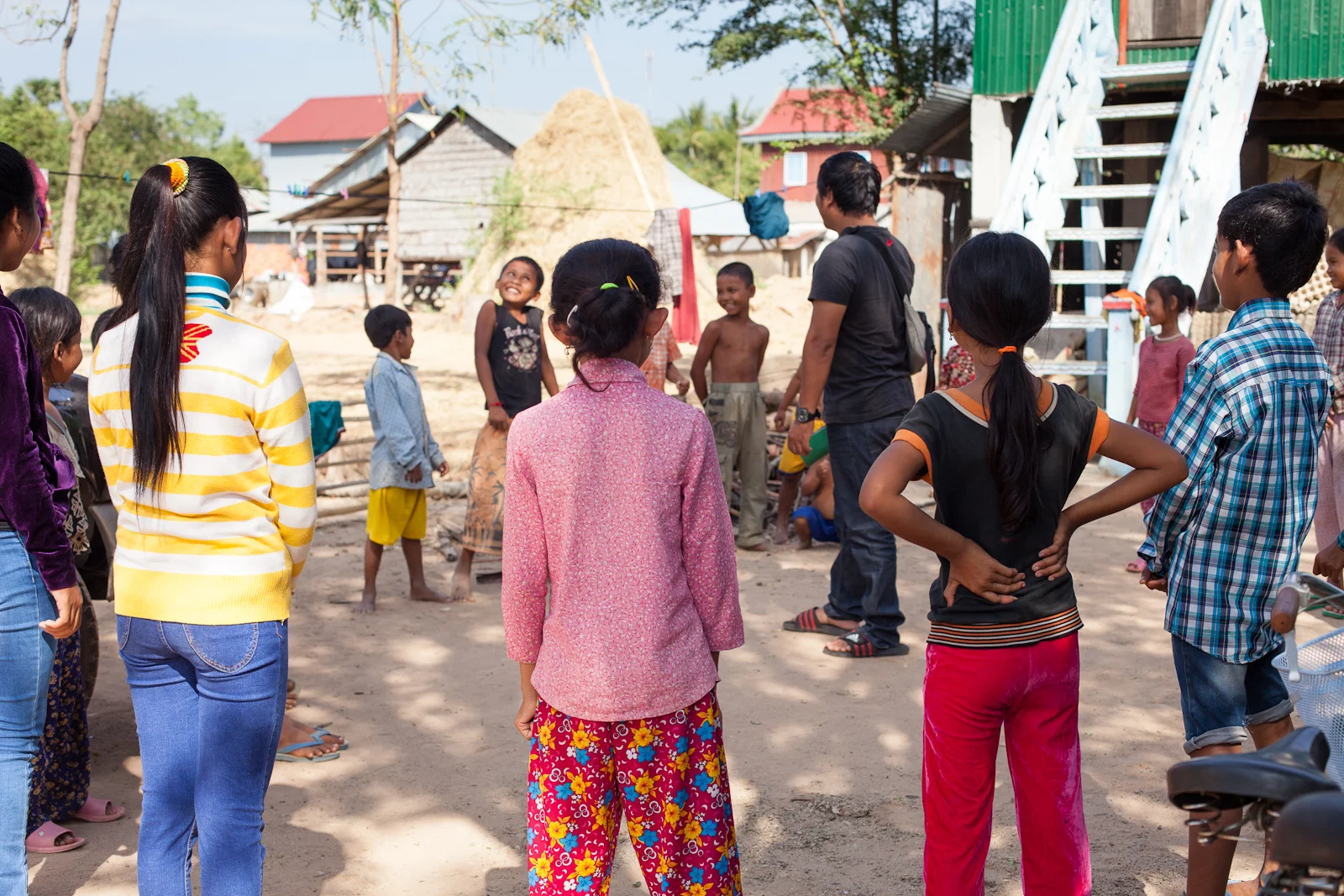
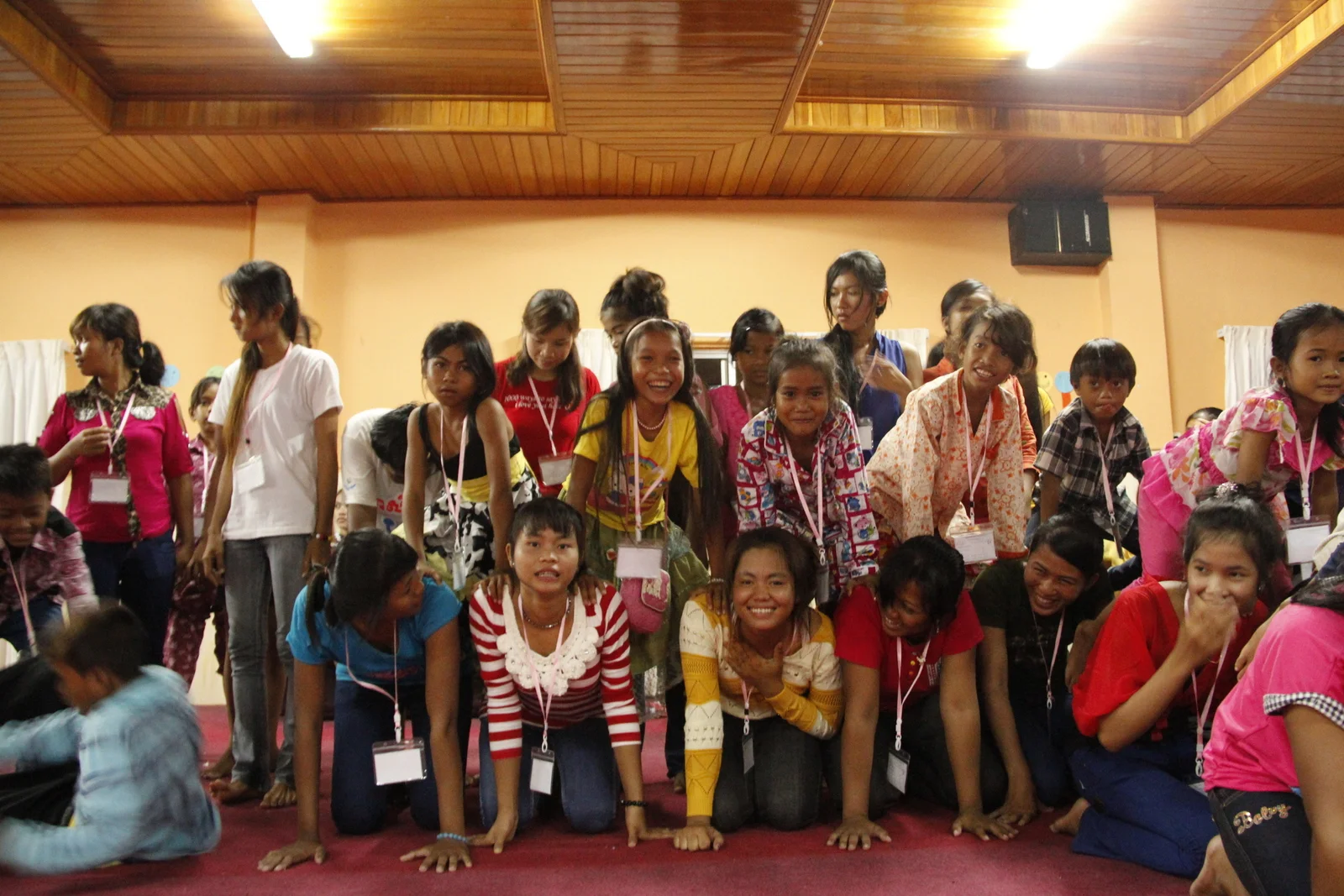
Phearom leads a group of little brothers/sisters in a warm up game
On this day, they trade off roles. Serey goes through the vision and expectations in all seriousness, while Phearom goes outside and organizes fun games for a group of little brothers and sisters and their friends. Later he comes inside and leads a discussion about child protection issues, and he encourages the Alongsiders in his own humorous way.
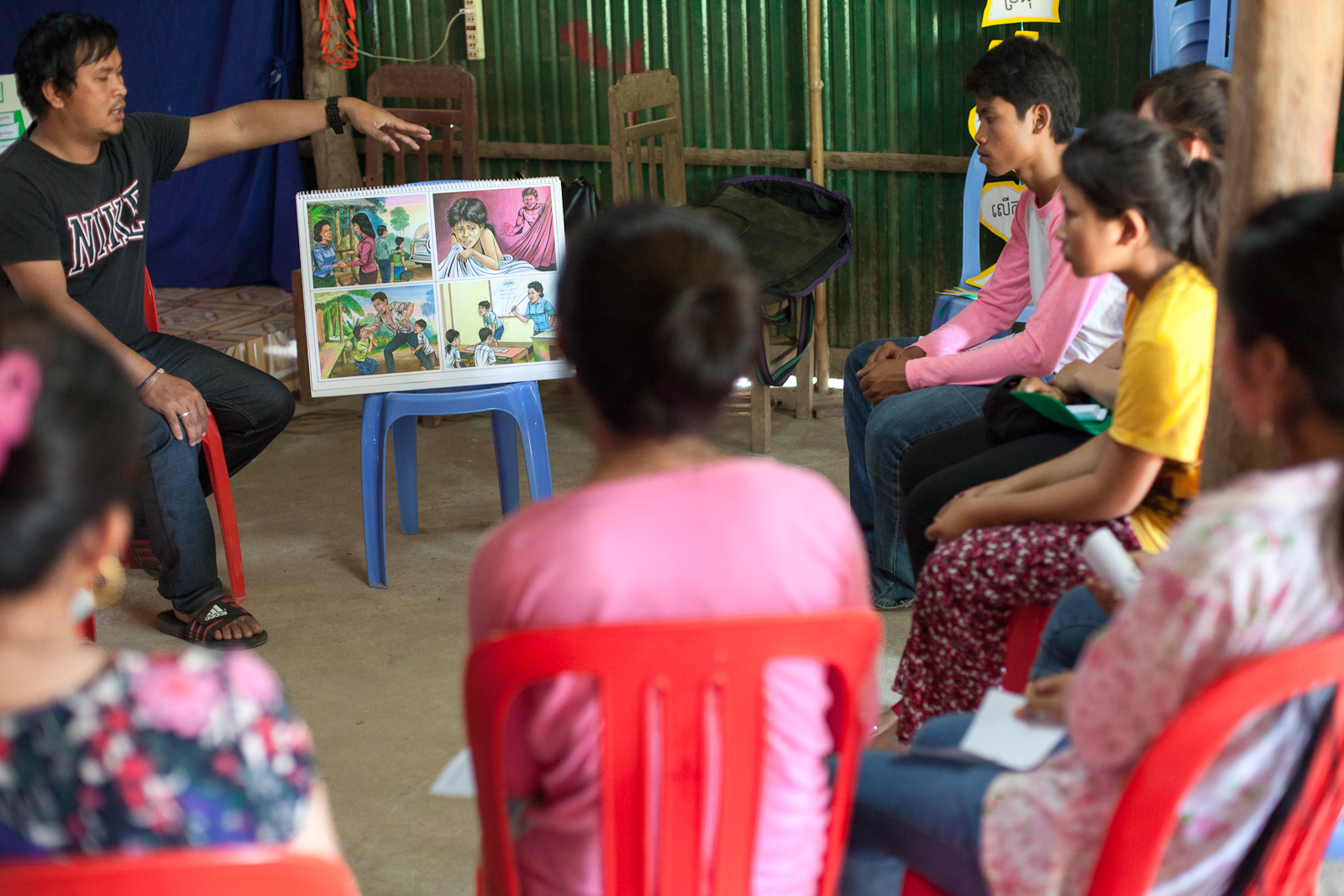
Phearom teaches on how to recognize trafficking or abuse... and how to respond.
The two compliment each other: Serey's stability and Phearom's zeal. They are both very earnest about Alongsiders. Afterwards they offer candid assessments: two or three in the group seem very dedicated, a couple are less sure. But it was a good meeting.
And then it's time to go and release the movement back into the hands of these young people. And trust God.
The Body of Christ is moving.
No-one ever washes a rental car
Seth Godin points out that no-one ever bothers to wash a rental car. The reason why is of critical importance to Alongsiders.
Seth Godin points out that no-one ever bothers to wash a rental car. Why? Because there's no sense of ownership. And a sense of ownership is required in order for someone to go the extra mile.
In Alongsiders, we are serious about fostering a sense of ownership amongst those in the movement. It's not just lip-service. We build it in from the ground up.
Here is one of the key ways we try to do that:
Alongsider mentors choose their own little brother or little sister.
Rather than matching up mentors with kids that have been previously selected by some outside group or organization, the Alongsider mentors themselves prayerfully discern which child they will personally walk alongside. They select a vulnerable child from nearby their own house, in the same community. For some, this is a several months-long process of discernment.
And the result? Alongsider mentors are more likely to take the relationship seriously, have a sense of ownership of that relationship, and go the extra mile. We have some mentors who have been faithfully walking alongside their little brother or sister for more than a decade.
Cambodians have a proverb - it takes a spider to repair its own web. In other words, it is going to take insiders to transform a society.
In order to be motivated to work for this kind of deep transformation, those insiders need to own the work. They need to lead the charge. They need to have a sense that they are responsible for the change that needs to take place. They need to deeply commit. And that only happens when they are given ownership.
But here's the catch. Empowering young people, giving them ownership, means having less control. And this is the core issue we have to face in our movements and organizations. Sure, we want to empower and give ownership. BUT....
...are we willing to give up control?
No-one ever washes a rental car. No-one pours out their heart and soul for something they don't truly have a sense of ownership or responsibility for.
So which path will you choose?
Control or transformation?
Movement vs Monument - which one are you building?
Alongsiders has a different DNA. That's why we shy away from terms like "charity" or "non-profit" or even "ministry". But what makes us a movement?
Alongsiders has a different DNA. That's why we shy away from terms like "charity" or "non-profit" or even "ministry". Every aspect of what we do is designed to be more Movement than Monument. This is not just clever rhetoric, but impacts everything we do.
Here are a few ways this plays out:
Goal
The goal of a Monument is to entertain a larger audience and pull a bigger crowd. The goal of a Movement is to equip an army of people. The former places the emphasis and spotlight on the organization. The latter places the emphasis on what God is doing in people, especially the poorest.
Influence
A Monument is about more people hearing OUR message. The Alongsiders movement, in contrast, is about more people being heard. It's about vulnerable children having a voice and being listened to, knowing they are loved, cherished and valued by God.
Leadership
A Monument seeks to ordain a select few - the elites, the gifted, the special ones - Leaders! The Alongsiders movement, in contrast, works to ordain and empower the ordinary masses, believing that everyone has something to offer - even the poorest, the least educated, especially the ones who have been labelled "victims".
Growth
A Monument grows through better, more efficient and clever programming. It is primarily organizational growth. A Movement grows organically, because it seeks to inspire better DNA in each person. A Monument grows through steady addition. A Movement grows exponentially through multiplication.
Control
Monuments seek to maintain order and control the outcomes. Movements value order and structure but do not seek to control the outcome. Authority in a Monument is delegated from the top. In a Movement, authority is delegated out toward the margins.
Style
In a Monument, complexity secures the organization's place at the center of things. The organization specializes in order to become indispensable. In contrast, a Movement is simple yet profound. It can be easily understood and easily replicated by anyone - yet the impact is deep and long-lasting.
Training
A Monument relies on inspiring teaching events to train people. The Alongsiders movement seeks to empower everyone to be a trainer in different contexts, learning as they themselves teach others.
Results
The end result of a monument is dependence. The fruit of a true movement is empowerment.
So, which are you investing in? Are you building a monument or a movement?