

This Alongsider chose a "little sister" with unique challenges. The results are ordinary...and radical.
There was something I didn't realize about Kheing.
She has a winning smile, but Kheing Ly (13) has dealt with more and heavier challenges than most girls her age.
Being the daughter of a policeman in Cambodia has some advantages, like a stable income and a bit of respect in the community. Locals observing at a distance might even say Kheing is lucky in this way. But Kheing's father and mother fight whenever he is around, which is less and less, and Kheing has absorbed an unhealthy portion of their anger and verbal abuse.
Kheing hurts in other less hidden ways. For one thing, she suffers from exotropia, what many call being cross-eyed. Her eyes don't align properly. The condition affects her focus and depth perception, and it gives her an awkward appearance.
When I met Kheing for the first time, at the Alongsiders annual camp last November, I noticed that she didn't want to be in pictures. Every time I pointed my camera at her she looked upset, so I stopped (except when her friends pulled her into group shots). Later, when I was looking at my photos, I saw that she always posed with a peace sign in front of her face that covered up her wandering eye.
Even so Kheing was always with her Alongsider and her group of friends. Just a normal kid with problems, like all the other kids there.
But there was something I didn't know about Kheing until a few days ago when I visited her group of Alongiders at their church in Kampong Saom.
The church has about ten Alongsiders, and five of them had gathered to meet me. Kheing was surrounded by other little sisters, and her Alongsider, Paektra (21), sat next to her. Kheing was nervous but still smiling when I asked her my first question. Paektra looked straight at her, face-to-face, and repeated my words along with gestures until Kheing understood. And that's when I learned that Kheing is deaf.
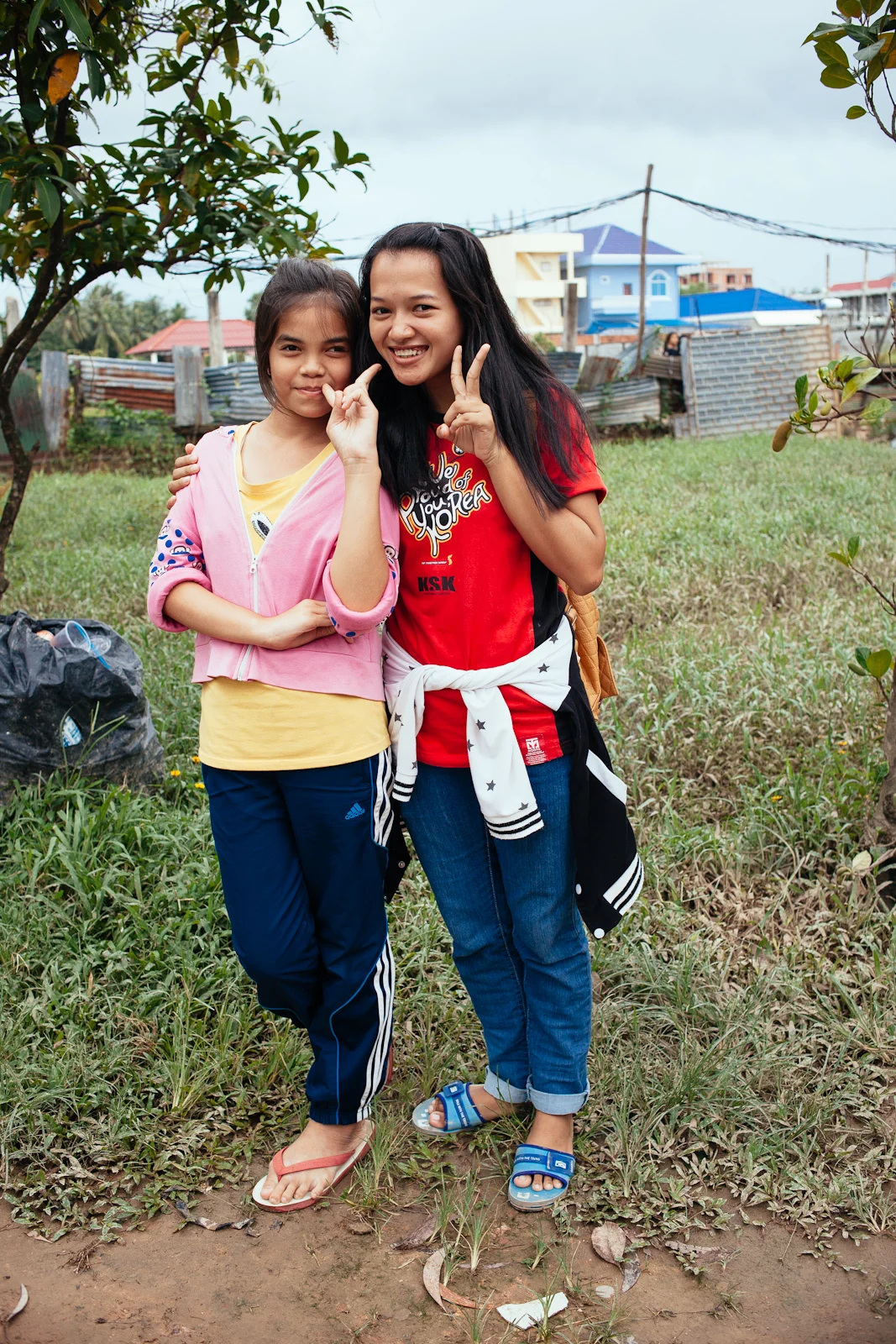
Kheing and Paektra
As you might imagine, there are limited services and resources for a deaf child in Cambodia. Deaf children are likely to be sent away or hidden and isolated. Ordinary Cambodians are not used to relating with them, or with people who have disabilities in general.
But here was Kheing and a crowd of peers talking and miming and doing whatever it took for them to relate.
She can read lips - a little. She's fortunate that there is a school for the deaf in Kampong Saom where she has been learning the lip reading as well as sign language.
Paektra asked Kheing to be her little sister just over a year ago, because she could see that Kheing really needed someone. "The other children would pick on her and call her names when she went down the street," says Paektra, "and she was always alone."
Paektra lives in Kheing's neighborhood, so they see each other almost every day. When they get together they ride bicycles, take walks, read the latest Alongsider comic, or go to the beach. Sometimes they pray, which Kheing acknowledges with her face turning red and a smile.
Later Paektra explains that the neighborhood kids don't pick on Kheing so much anymore. "I taught them how to treat her," she says. "They didn't know." So often the difference between being excluded or included is having a respected person stand up for you.
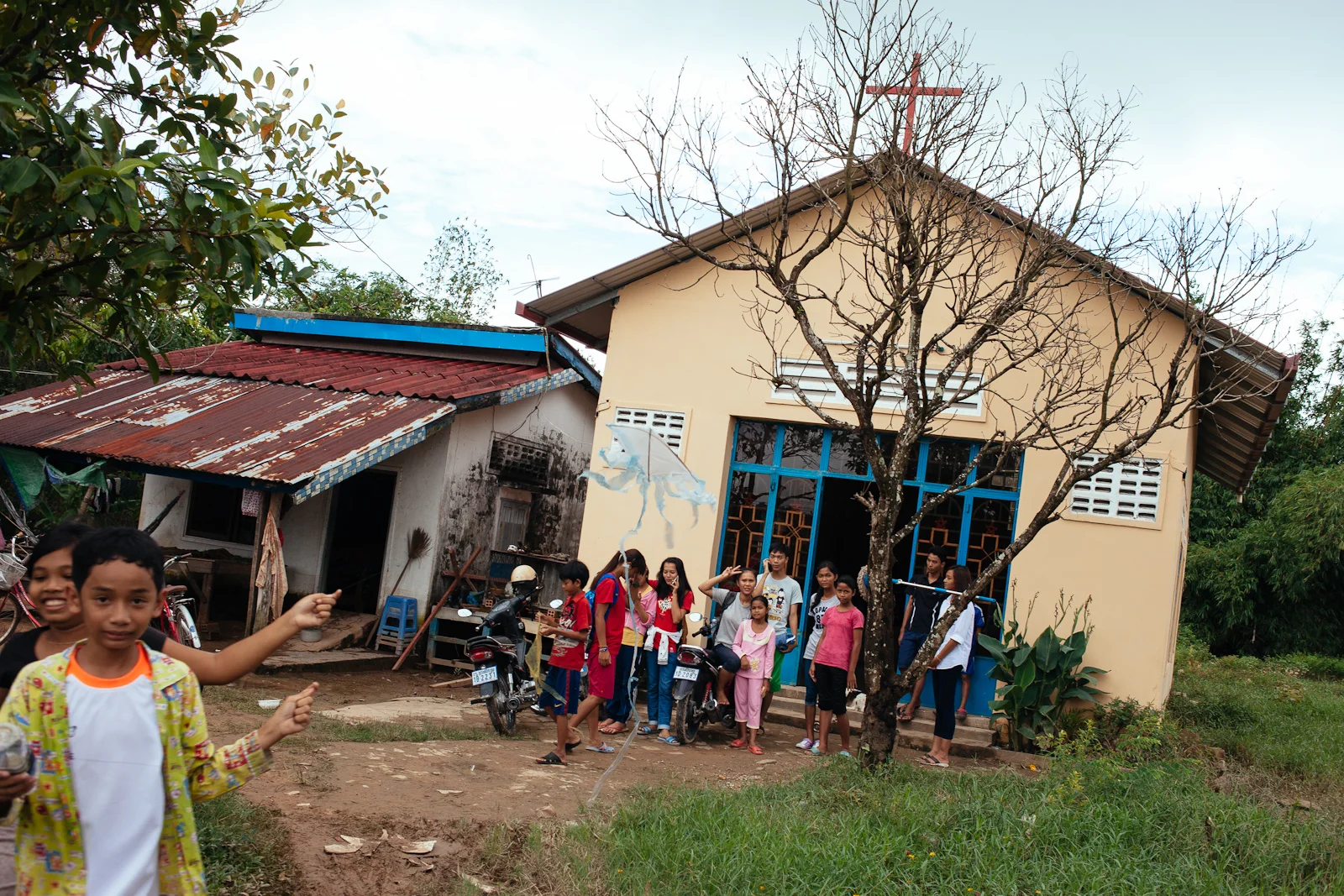
Two boys attempt to fly home made kites as some Alongsiders and their little brothers and sisters gather in front of the church. (Kampong Saom, Cambodia)
Kheing doesn't attend the Sunday church service. She can't understand the sermons, and the church is located in a different community. But Paektra is a living sermon, showing the way of Jesus to Kheing and bringing "church" to Kheing whenever they meet. "For where two or three are gathered in my name," says Jesus, "there am I among them."
The stories here, about Alongsiders and their little brothers and sisters, are beginning to show familiar patterns: loneliness and isolation overcome, encouragement and love given, courage and resilience gained, and the power of relationships in action. Perhaps the stories are becoming more "ordinary" with repetition, but I never get tired of them.
Shane Claiborne is an American Christian activist who challenges us, by word and example, to stand with people who are marginalized in society. He calls out Christians to follow Jesus as "ordinary radicals." To be radical, he says, is the ordinary state of one who is following Jesus. Ordinary people following Jesus change lives and change the world around them through their love in relationships.
“I think that’s what our world is desperately in need of - lovers, people who are building deep, genuine relationships with fellow strugglers along the way, and who actually know the faces of the people behind the issues they are concerned about.”
Paektra and many of the Alongsiders I've met are ordinary radicals.
It doesn't take special people to change the world, just ordinary ones who love others in the way Jesus taught and showed us.
What if that kind of love was the new ordinary for you?

A unique home situation kept this boy coming back to camp 8 times in a row
Narith is slow to reveal the details of his story, especially the challenges in his life, as though they are commonplace and hardly worth mentioning.
Narith is slow to reveal the details of his story, especially the challenges in his life, as though they are commonplace and hardly worth mentioning. He has a calm, quiet presence. He's the sort of person you might overlook in a gathering of nearly 300 excited children and youth.
That was the scene last week at the Alongsiders Cambodia annual camp for mentors and their little brothers and sisters.
Narith was there attending for the eighth consecutive year. He was chosen as a little brother at the age of nine. Now at seventeen years old he is one of the oldest "little" brothers. And he is a good example of why we have an annual camp.
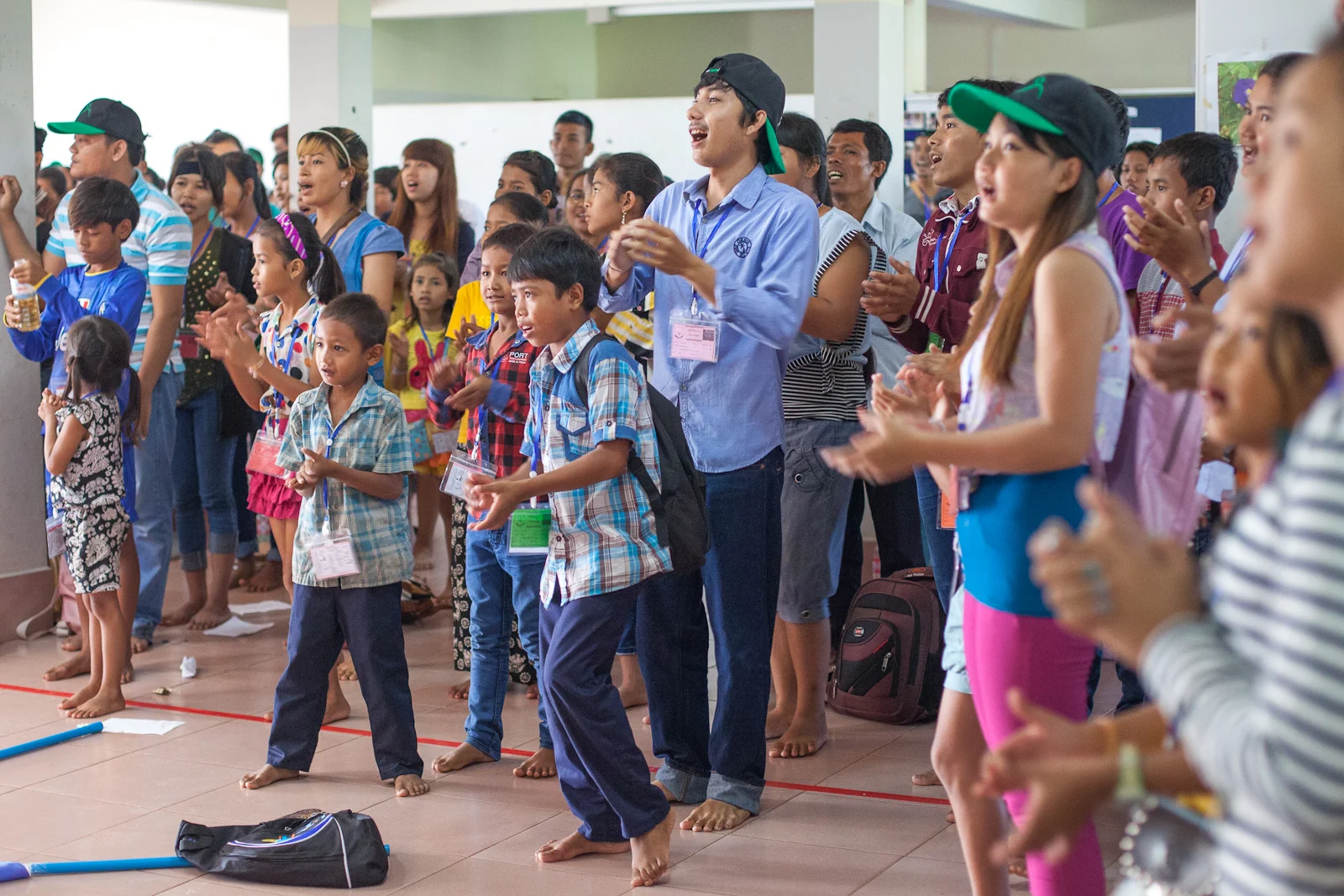
Worship, music and even dance are important parts of camp
What he enjoys about camp, he says, are the worship and teaching times. But most of all he loves being part of the community: the big gatherings, the shared energy, the group activities, and the sense of movement together.
As he keeps talking, it's clear why the community experience is so important to him.
He starts by saying his mother has been "low in energy" for as long as he can remember. His father, he adds, died when he was very young.
Narith's mother has worked for many years in a garment factory as a seamstress seven days a week. So she's away from home and Narith does many things for himself. Mostly he studies.
He's an only child, he says. His mother never remarried. She has worked hard all these years so that he can get an education, and now he is on track to graduate from high school, thanks to her sacrifices.
Being in the Alongsiders movement, not surprisingly, has had a significant impact on his life. After he was chosen as a little brother, his Alongsider mentor used to visit all the time to encourage and pray for him. They still meet frequently. Narith himself came to faith and joined a local church.
His mother also came to faith along the way. As he says this, Narith makes a curious gesture with his hands motioning toward his heart, as if he's trying to show his mother's faith because words aren't enough to describe it.
There is one more detail to the story.
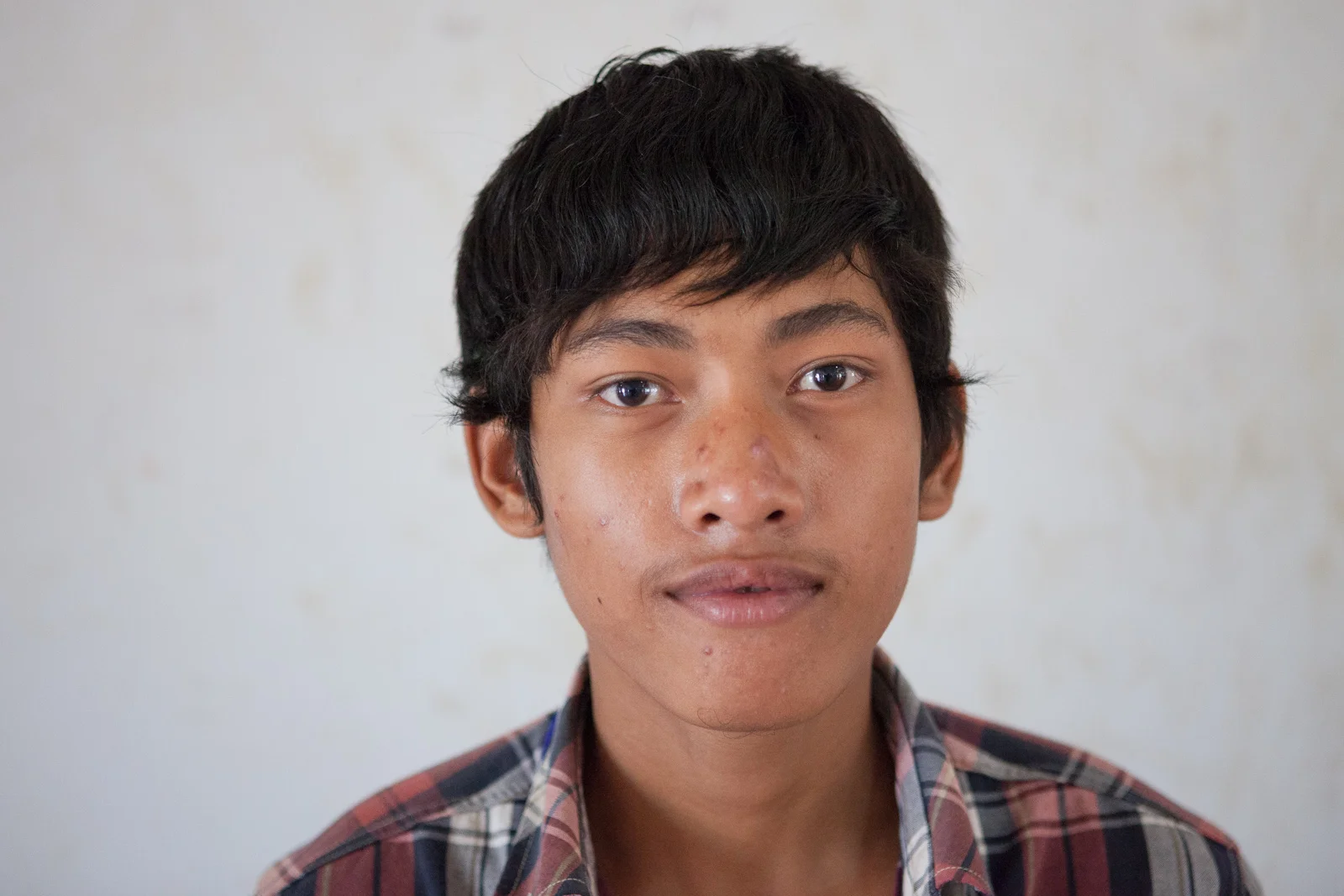
Narith has been a "little brother" since he was 9 years old.
Perhaps it's out of respect for her that he leaves this point until the end, because she has not let it define her. Narith's mother is deaf and she can't speak. They share a sign language they developed together over the years.
It's no wonder Narith loves the community life at camp! No wonder he is drawn to the volume and energy. No wonder he participates in every activity wholeheartedly, even craft projects designed for younger children. At home he is most often alone or, when his mother returns from a long day of work, in silence.
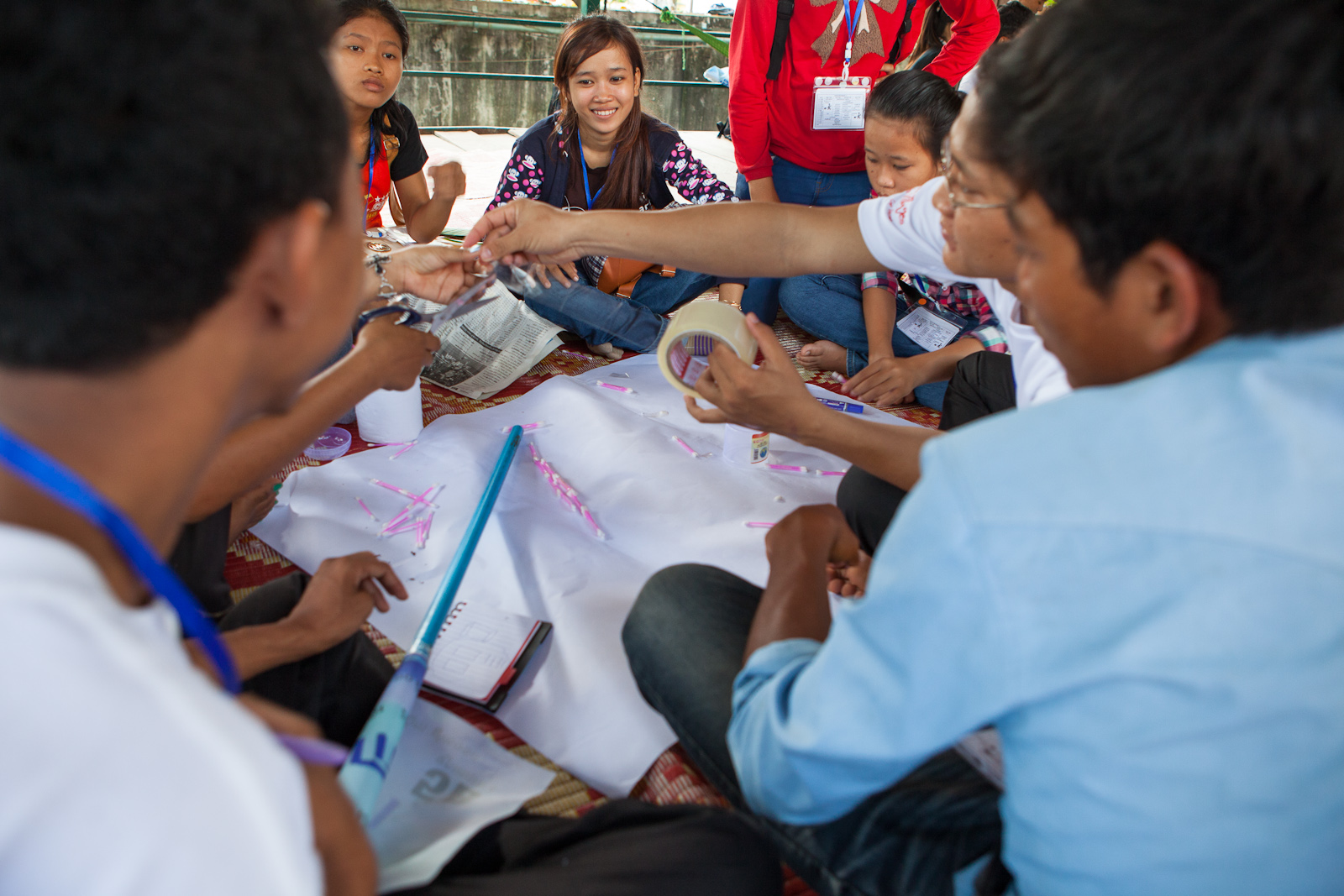
Workshop learning and fun
Isolation is the essence of poverty. Many of the little brothers and sisters have lost one or more parents, and many take care of themselves while their parents or guardians go to work. Alongsiders is overcoming isolation through relationships.
At the annual camp, little brothers and sisters see they are not alone. Mentors learn from each other. It's a time of renewing, recharging, and sharing vision. It's for everyone to recognize they are part of a movement, and that it's from God.
Next year Narith will likely return to camp for the ninth time as an Alongsider mentor himself.
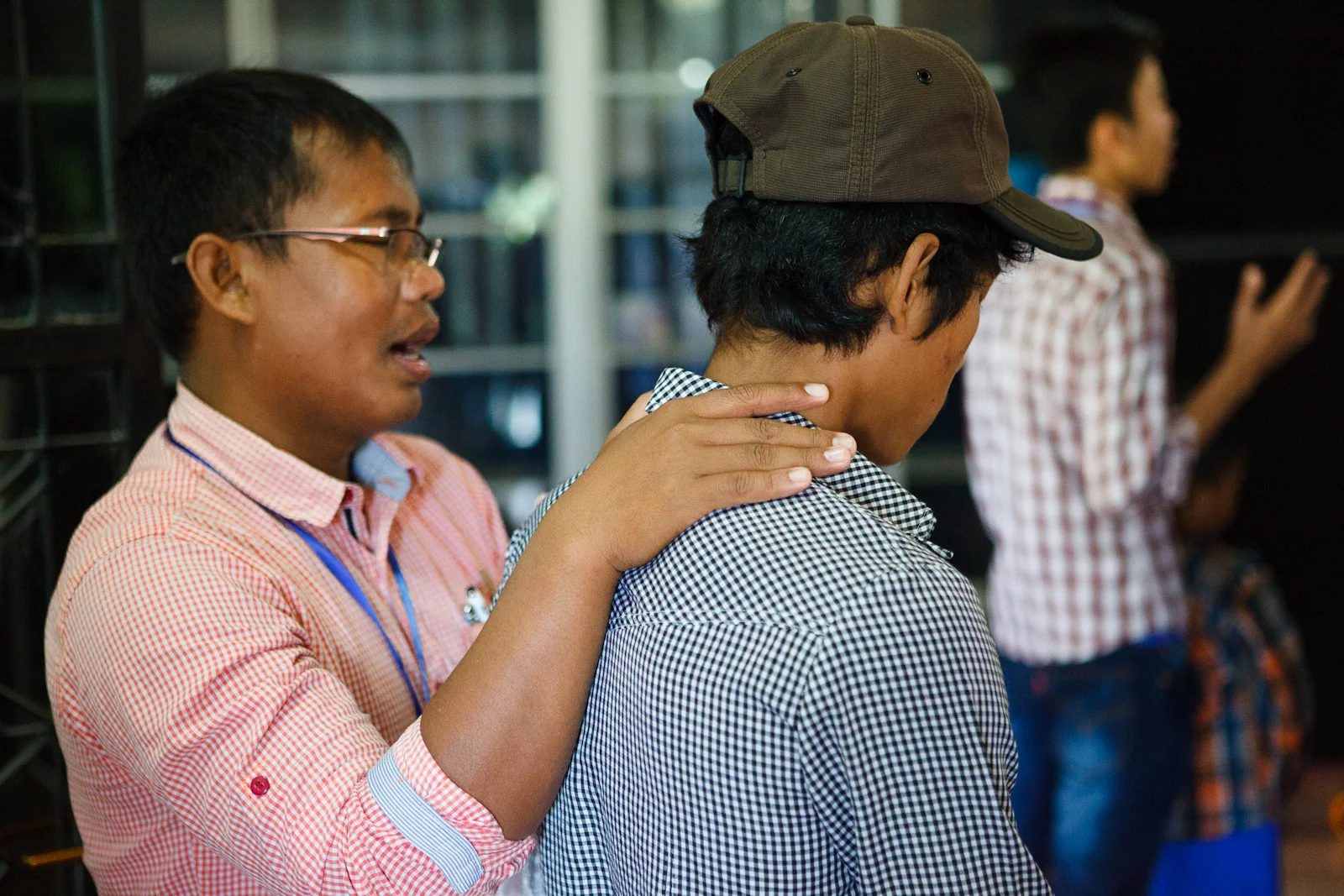
Narith's Alongsider mentor, Kimyan, praying for him at camp
"I know because of my own experience. My Alongsider mentor always showed me love. I want to give my love to another little brother like he did for me."
As Narith speaks, music is playing upstairs and a voice is peeling through a microphone calling everyone together. It's time to go and join the movement again.