
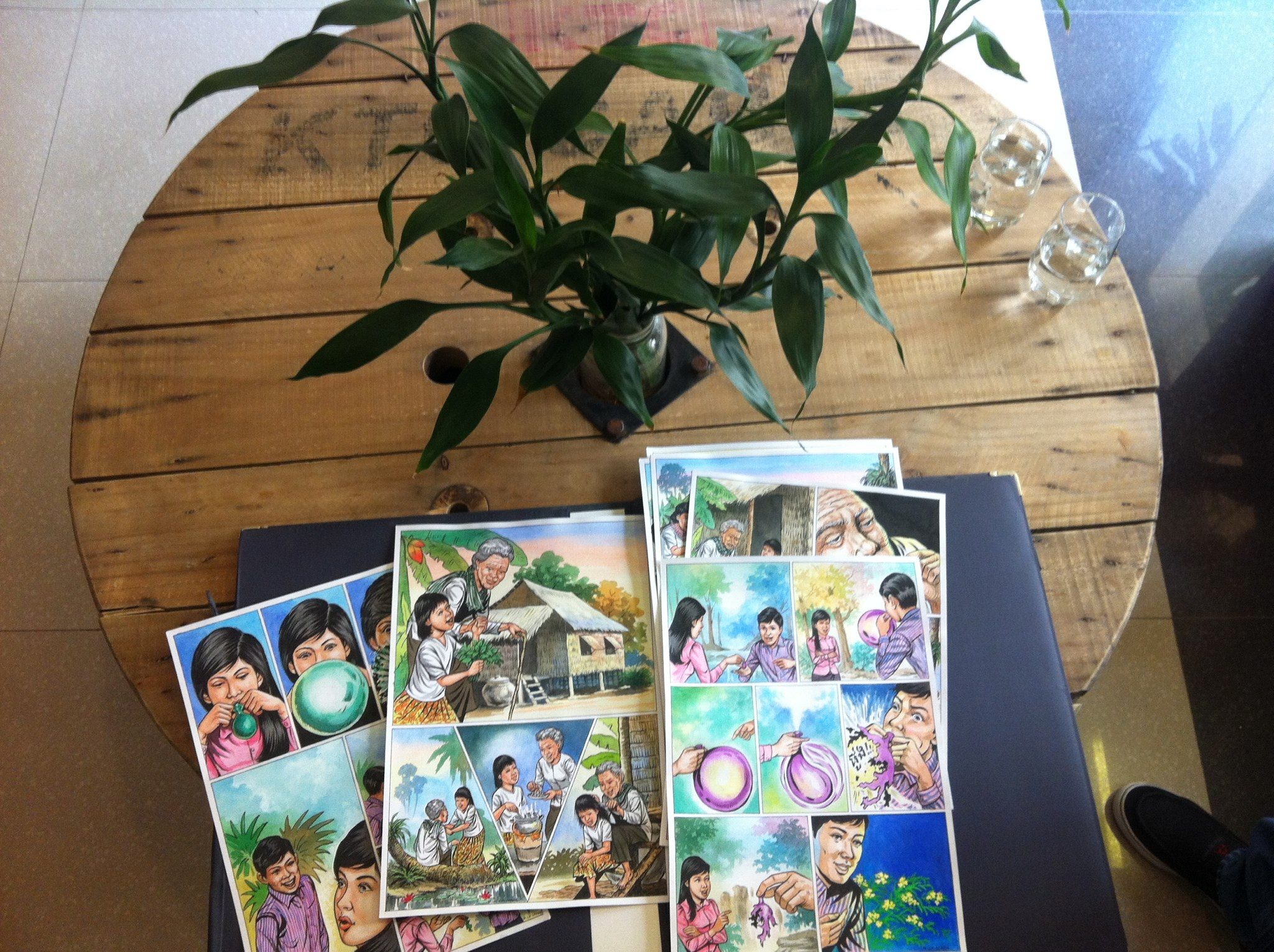
5 steps to creating a life-changing comic
What does it take to create a comic book simple enough for a semi-literate child to understand, but profound enough to spark change in that child's life?
What does it take to create a comic book simple enough for a child to understand, but profound enough to spark change in that child's life?
What does it take to put a brand new comic book like that in the hands of every Alongsider mentor each month?
Truly, a significant amount of thought and work goes into each comic. Here's the process...
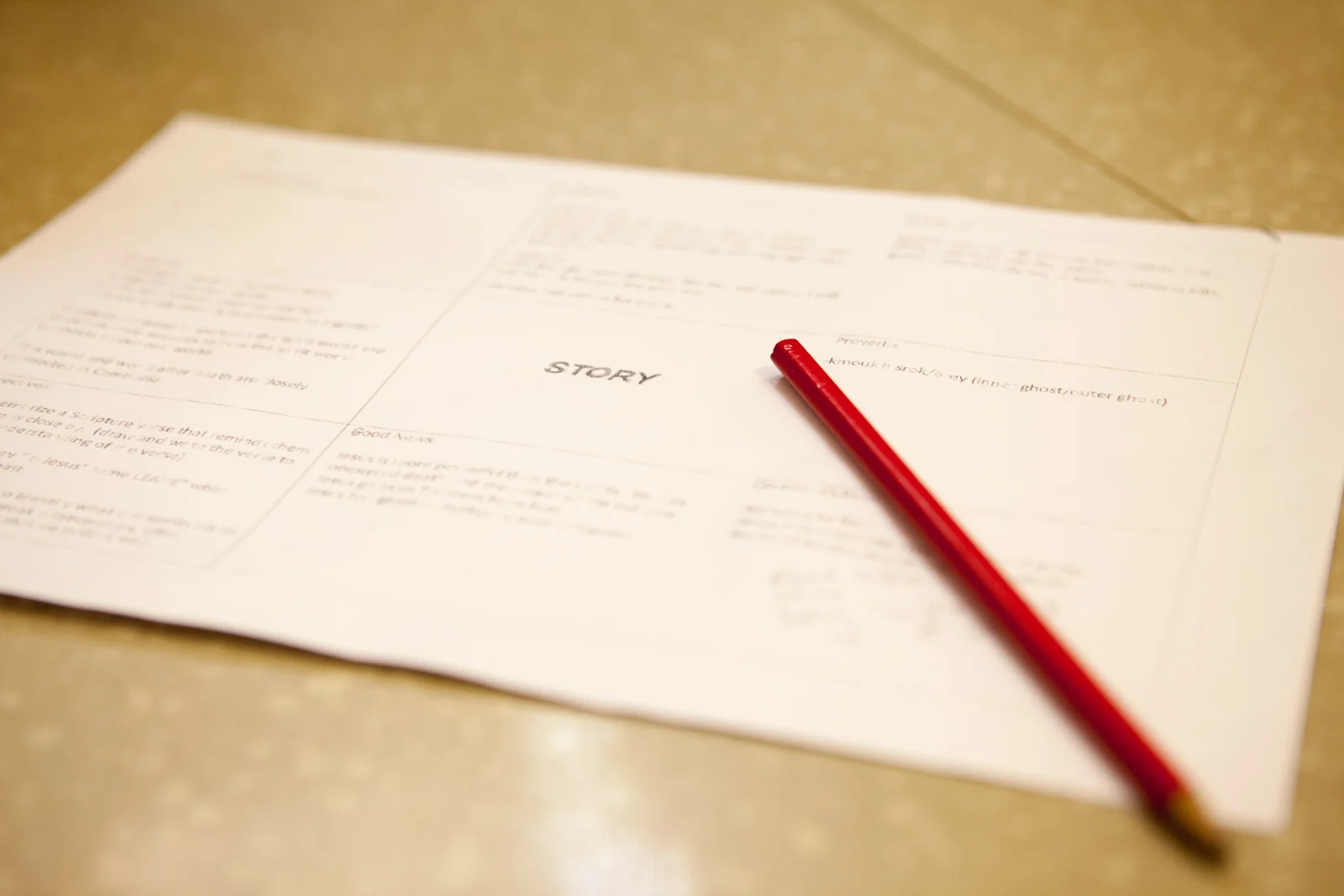
Step 1: The Topic Meeting
A comic book lesson begins life in a Topic Meeting with members of the Curriculum Development Team.
Team leader, Hitomi Gray, and her assistant, Puthida Bou, undertake the preliminary research: gathering background information, considering how the topic normally plays out culturally and counter-culturally in Cambodia, and prayerfully considering relevant Bible themes, stories or verses.
All this background data is brought to the Topic Meeting for prayer and further brainstorming with the rest of the team. By the end of that meeting, we have agreed on the main objectives of the lesson, and we have a good sense of where we want to go with it.
Step 2: The Storytelling Circle
The next step is to form a Storytelling Circle. Alongsider mentors (some who were "little brothers or sisters" formerly) are central to this storytelling gathering. The non-Cambodians take a back-seat role. It’s not that Westerners can’t contribute, but the Cambodians know best what story elements are the most authentic and compelling in their own culture.
All of the comics are based on real-life experiences of poverty and struggle shared by the young people at this Storytelling Circle. Over the course of two or three hours, stories and lessons are crafted into engaging plots that can be told visually in just a few pages.
We make sure the story incorporates essential storytelling techniques such as conflict, drama, character development and clear messaging.
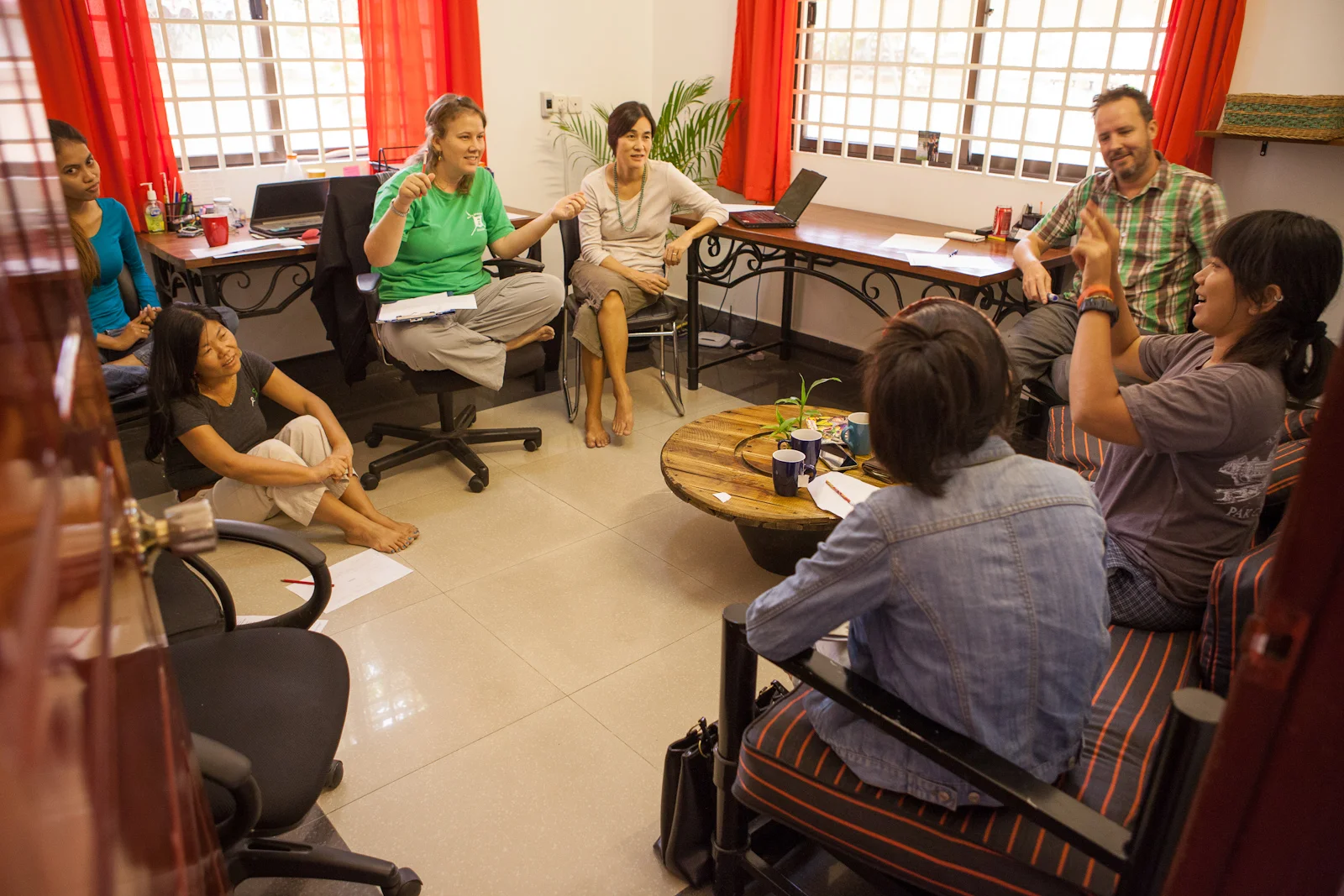
A recent story-telling circle in progress ... crafting a story on the topic of Fearlessness.
Step 3: The Artwork
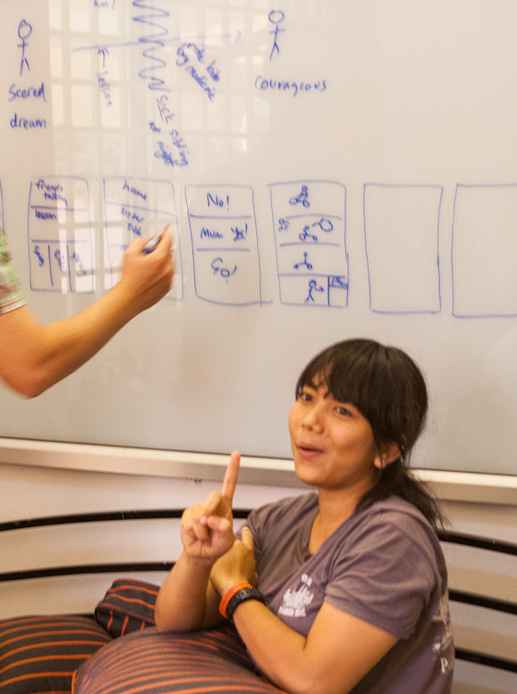
Once the rough story is outlined on a whiteboard, Puthida, an accomplished artist herself, takes a photo of what has been imagined by the group. She then hand-draws, using electronic paper and pen, a detailed storyboard of the 10 pages for the comic.
Finally, the story is ready for the artist, a Cambodian pastor named Met Sokha. Puthida meets with Pastor Sokha and goes through each page to make sure he understands the story and her drawings and notes.
Step 4: The Lesson Components
For the next week or so, while Pastor Sokha hand-paints each page (typically one day per page), Hitomi and Puthida develop relevant questions that the Alongsider mentors can discuss with their little brothers and sisters after reading the story. They also create one or two practical action steps to apply the lesson. These are essential, so that the lesson doesn't just remain as head knowledge.
For example:
1) with your Alongsider mentor write one short term goal and identify what you will need to sacrifice in order to attain it (in Perseverance, Lesson #10), or
2) list five adults who you can trust and who you will talk with if you are ever touched in an inappropriate way (in Good Touch/Bad Touch, Lesson #3).
Step 5: Design, Test Test Test and Print
When the artwork comes back from Pastor Sokha each page is carefully scanned in and edited using Adobe InDesign. Speech bubbles and story boxes are added and the various components laid out for printing.
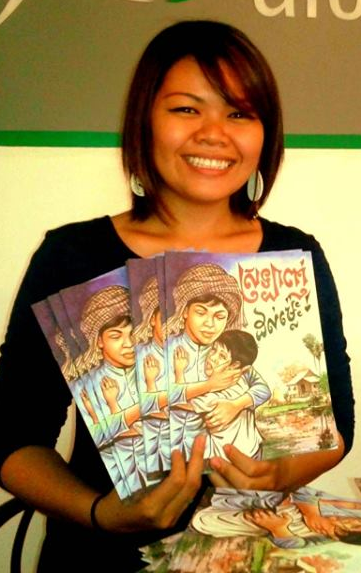
The final product!
The draft comic is now ready for testing and correcting. Puthida takes the comic out and about to test with neighborhood children. We also test it with a small selection of Alongsider mentors and a couple of proofreaders. Any errors will hopefully be picked up at this stage, but we are mostly checking that the main message and story is easily understood.
When everything is checked and signed off, we work with a local printer to print the comic. All going well, we have the comics, printed and delivered to us two weeks later, ready for training and distribution!
These comics are gaining a following. Other organizations are taking notice. One NGO reprinted 10,000 copies for distribution in schools and we're supplying free copies to various schools, churches and orphanages.
And of course, the curriculum is now being translated back into English, as well as developed and contextualized locally in other countries such as India and Indonesia.
All this effort, prayer and hard work is for one purpose: the transformation of young lives. So, join us in praying that the Spirit of God will work in and through us, and these comics, as they find their way into eager hands across Asia.
4 lessons about vulnerability from an unlikely source
A disabled girl and her struggle for education teaches us some important lessons about vulnerability.
Sreymao pressed forward. Step-by-step. Hardly stopping to rest. The road stretched out ahead, full of challenges: hard clay ridges and rain-slickened ruts that might catch the foot of her crutch or send her sliding.
Two hundred meters to go. It had been a long morning at school and she just wanted to be home.
Suddenly a group of boys came running up the road behind her, shouting and swinging their school bags around their heads like helicopter blades. She didn’t have time to brace herself. The first one shouldered her as he went by, and then the swinging bag of the third one crashed down on her arm just as her weight shifted.
The crutch slipped sideways and she fell off the side of the road into a muddy hole.
A farmer, unfortunately, had started digging a pond on that spot. It was empty except for two or three inches of rainwater and mud at the bottom. At least it was a soft landing. She found her crutch and shook it free of water and muck.
As she picked herself up and attempted to wipe clay off her navy blue skirt and white school shirt, she realized with a sickening dread that the lip of the pond was nearly eye-level.
She couldn’t pull herself out.
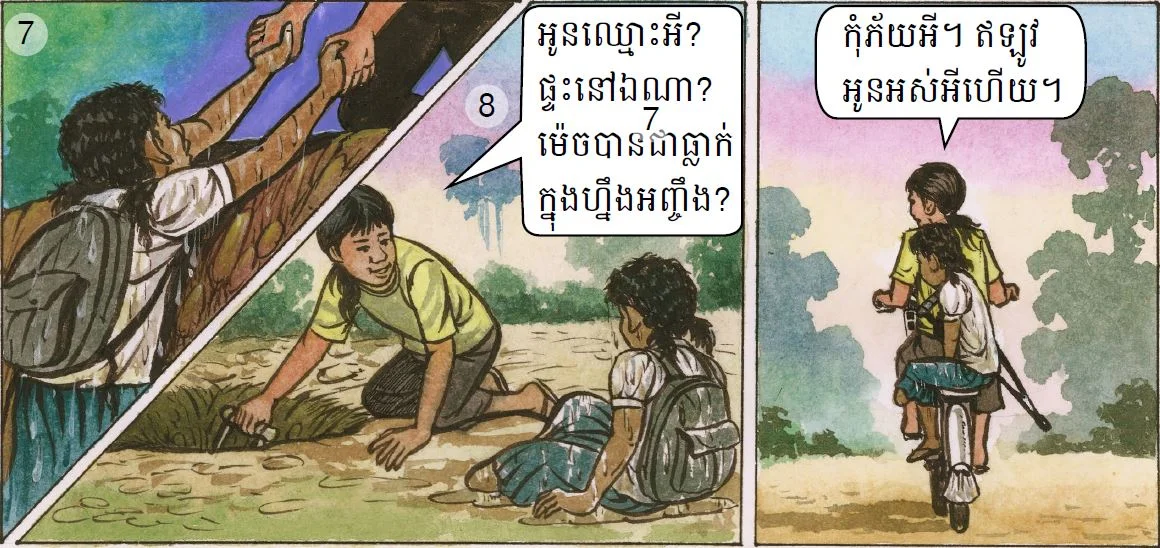
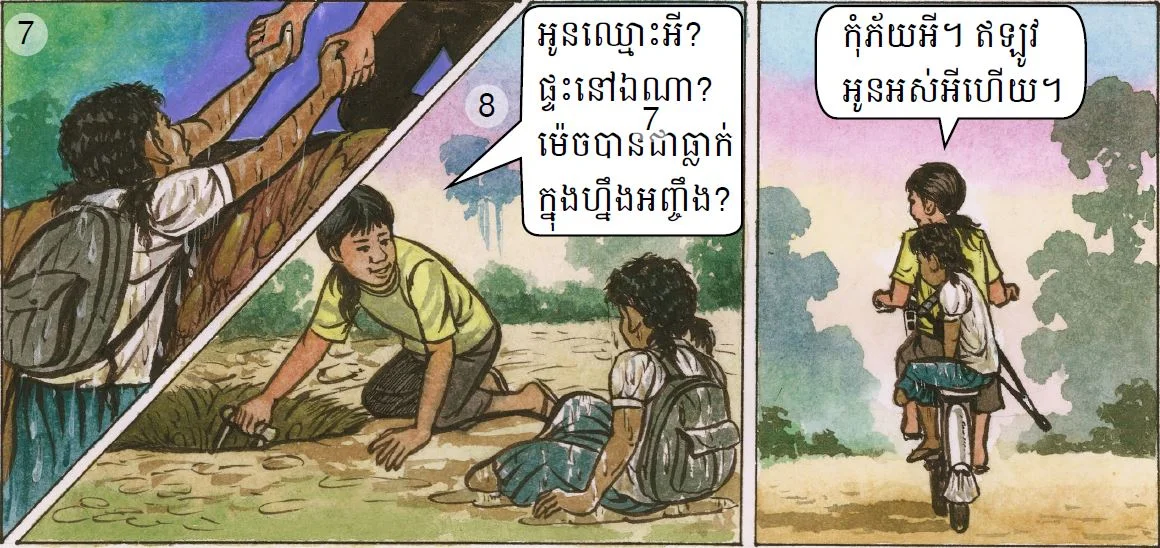
In that moment she heard a bicycle approaching. She called out for help and braced herself for the shame of discovery. But her eyes lit up as the rider appeared. It was Karuna, her ally – her Alongsider “big sister!”
Karuna took Sreymao’s hands, pulled her up, and gave her a ride home on the back of her bicycle. At the house Karuna explained to Sreymao’s mother what had happened. From inside the house they heard a crash. When Karuna entered she found a muddy school bag in a heap.
And then, Sreymao finally let the tears come out.
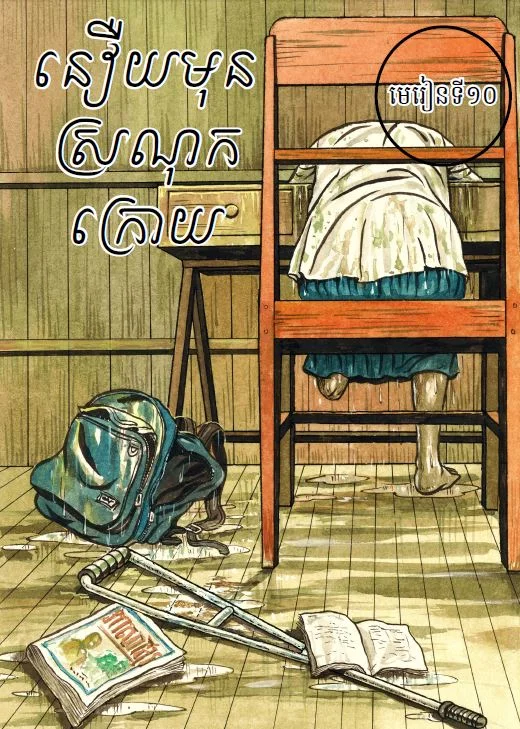
The cover image: Sreymao after returning home
This isn’t a true story in the historical sense, but it will be very “real” for many young Cambodians who read it. It’s the first couple of pages of the story told in our latest comic book, which has already been delivered to the printer.
We are creating culturally aware comic books with engaging stories and simple, practical lessons. They form the core of our curriculum.
Every month Alongsiders group leaders distribute copies of the newest comic to the Alongsider mentors who in turn read through them interactively with their little brothers and sisters.
Alongsiders Cambodia is empowering a movement of mentors at the social and economic margins. These comic books provide a simple structure and an effective means to communicate vision, equip leaders, and enable learning together.
Comic books don't transform people, but Alongsider mentors reading them interactively with their little brothers and sisters in growing relationships is transforming.
Now let’s return to the story. What will the Alongsider mentors and their little brothers and sisters take away from it? Following are four lessons this comic directly and indirectly conveys.
1. We choose to see the most vulnerable people in our midst.
There are many poor and vulnerable children in Cambodia. In this comic the team deliberately set out to tell a story about someone who is more vulnerable than most. Most of us are pretty good at spotting people in need from a distance, but in some insidious way, we (many of us) are adept at filtering out the most vulnerable people in our own neighborhoods and communities. The same thing happens in Cambodia.
When Alongsider mentors read this comic with their little brothers and sisters, it’s a reminder of the vision and calling they responded to. When young adults sign up to become mentors, they agree to: 1) choose a little brother or sister who lives in their own community, 2) choose someone of the same gender, 3) choose someone who is most vulnerable, 4) choose someone who is NOT a relative, family friend, or church member, and 5) pray about the decision.
Alongsider mentors are learning to see and value people who most others overlook!
2. It takes discipline and perseverance to succeed.
This is the direct message in the story. It's not really a story about disability; it's about a girl developing the kind of character it takes to succeed in education and life.
Sreymao is ready to give up, but Karuna encourages her to stick with it. They study together and work hard, and as a result Sreymao's grades and attitude improve. It's a simple message, but it's part of a series of lessons that build on one another, and this one can make a difference in a child's life - especially if the Alongsider mentor follows Karuna's example!
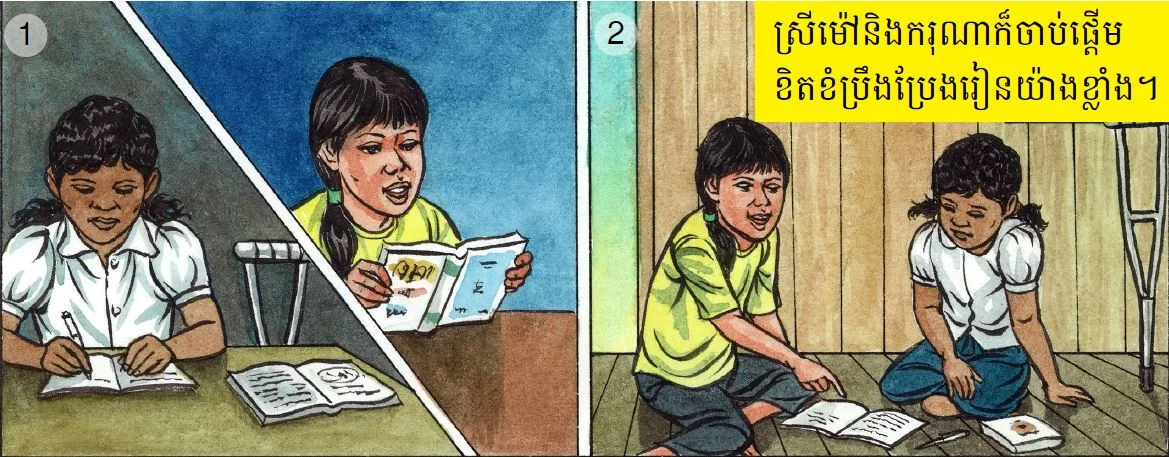
Sreymao and Karuna each study hard for school independently and together
3. We are defined by our choices, not by our weaknesses.
We are all vulnerable, but we don't want to be defined by what we lack.
This story doesn't treat Sreymao like a condition to be solved, and her fall does not warrant a full scale rescue operation. She just needs some help to get back on the road, and with thanks to Karuna, her dignity emerges intact.
Too often helping organizations send out the message, “We will solve your problems (on our terms).” The message of Alongsiders is, “You have what it takes to succeed already and we'll find it together."
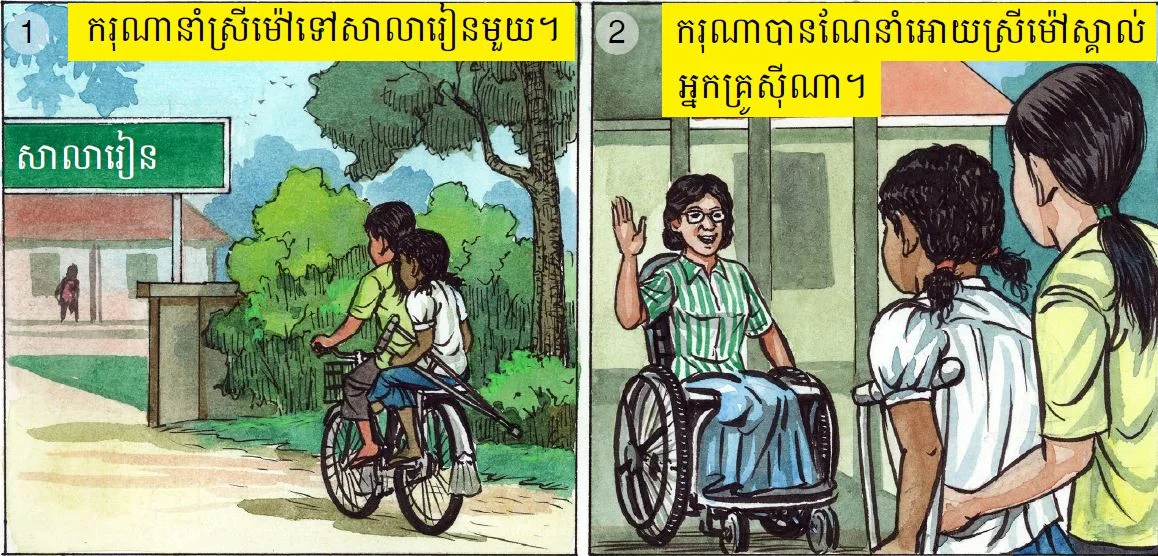
Karuna takes Sreymao to visit an older woman who has become a teacher despite being confined to a wheelchair, so Sreymao begins to see that she has choices about her future.
4. Prayer and engagement in life go naturally together.
When confronted with suffering, many people react with the "fight or flight" reflex. "Fighting" may mean trying to fill in for God (in his apparent absence) in order to solve the problem. "Flight" may mean escaping into distraction or a safer place. The alternative, being present in a relationship without easy answers, requires trust in God.
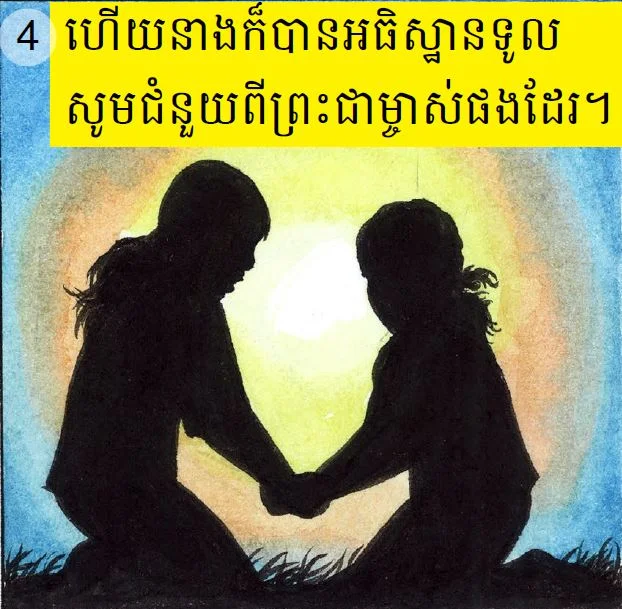
The theme of the story above is the need for discipline and perseverance, but there's a moment when Karuna and Sreymao stop to pray in the midst of all their activity. Such prayer is natural; it's not forced ritual, nor passive resignation, nor an after-thought. It stems from faithful engagement in the realities of life.
In the face of poverty and vulnerabilities and an unknown future, Alongsider mentors don't have many answers. They often have their own daunting problems. If they want to stay on the journey with their little brothers and sisters, they need to trust God, and so they will pray.