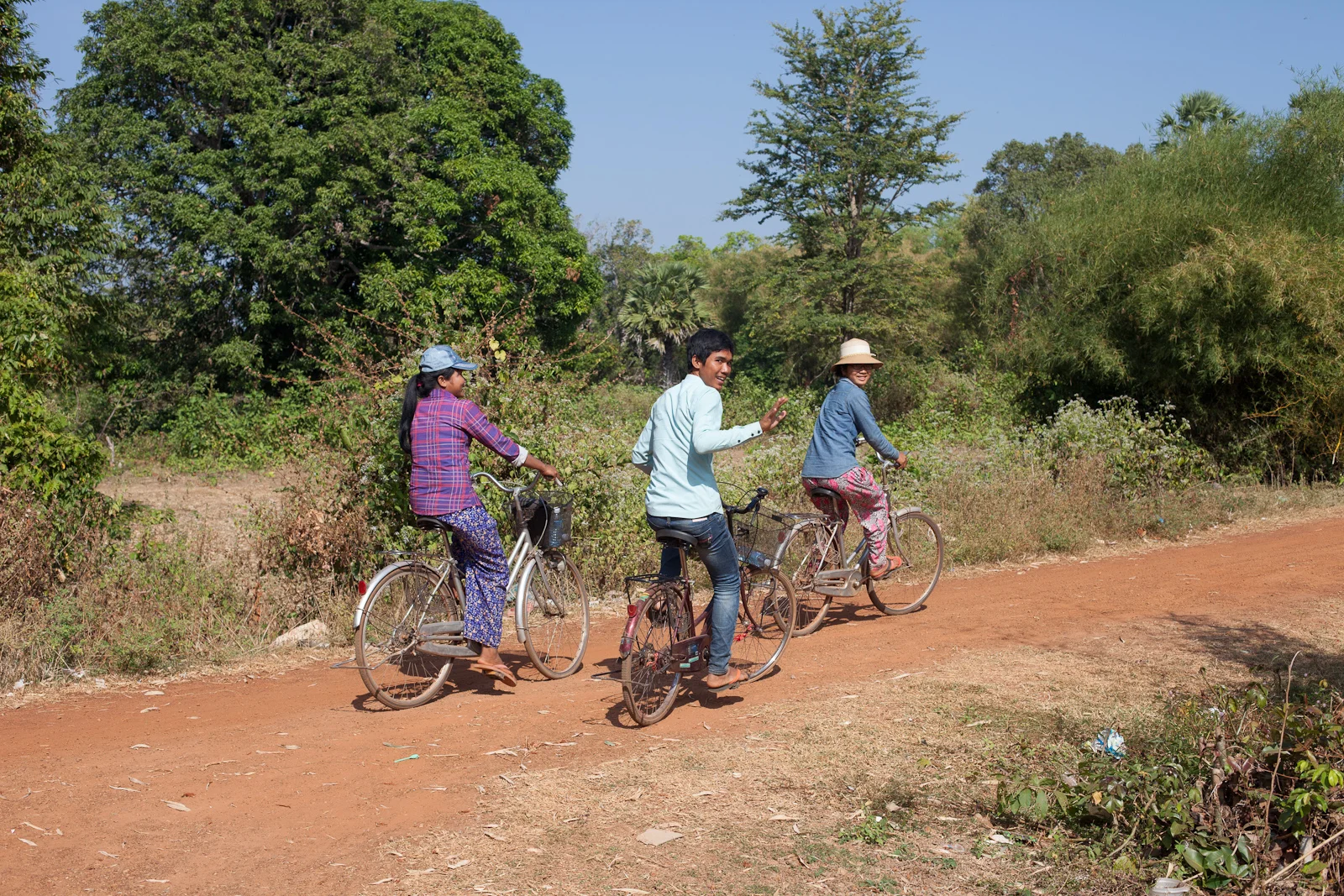
The Sunday School Movement transformed the lives of poor kids. It's time for another movement...
Sunday School wasn't always a thing...
Sunday Schools were not always a thing.
The very first Sunday Schools were established in England in 1780 to reach out to poor, illiterate children working under brutal conditions in factories. These classes taught basic reading and writing, as well as Biblical principles. Millions of children were reached.
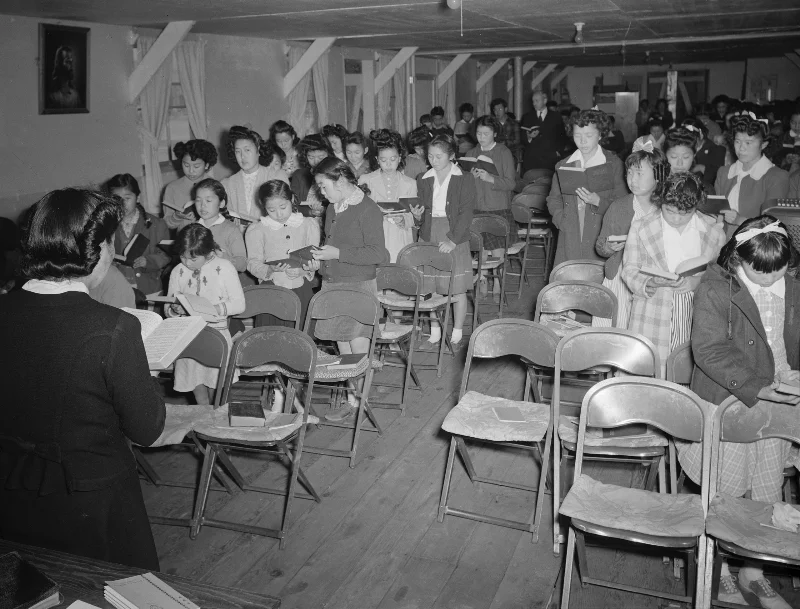
The Industrial Revolution was in full swing. So most lower class children spent all week toiling in factories. Working hours were long and it wasn't until 1802 that a law was passed restricting the amount of time a child could work each day to just 12 hours!
Saturday was part of the regular work week, so Sunday was the only available time for poor children to gain some education. At this time there was no public school system.
Out of this desperate need, came something beautiful.
Two Christian men, William King and Robert Raikes, wanted to help these kids, and so they started the first Sunday Schools in their own home towns, Dursley and Gloucester.
As they spread the word, more churches caught the vision and energetically began to create Sunday schools. Within a short space of time, the movement had become extremely popular. The movement reached 250,000 children across England within 5 years, and over the next 50 years more than 2 million kids attended Sunday School as the movement spread to the US and beyond.
Sunday Schools quickly became a core part of almost every church program. By the mid-19th century, Sunday school attendance was a near universal aspect of childhood. Even parents who did not regularly attend church themselves generally insisted that their children go to Sunday school.
Impoverished families were grateful for an opportunity to receive an education. They also enjoyed annual highlights such as prize days, parades, and picnics, which came to mark the calendars of their lives as much as the traditional seasonal holidays.
This was truly a movement that arose within the church to bless and serve vulnerable children.
Its legacy continues today, though the universal expectation that children would attend Sunday School has faded over the past few decades.
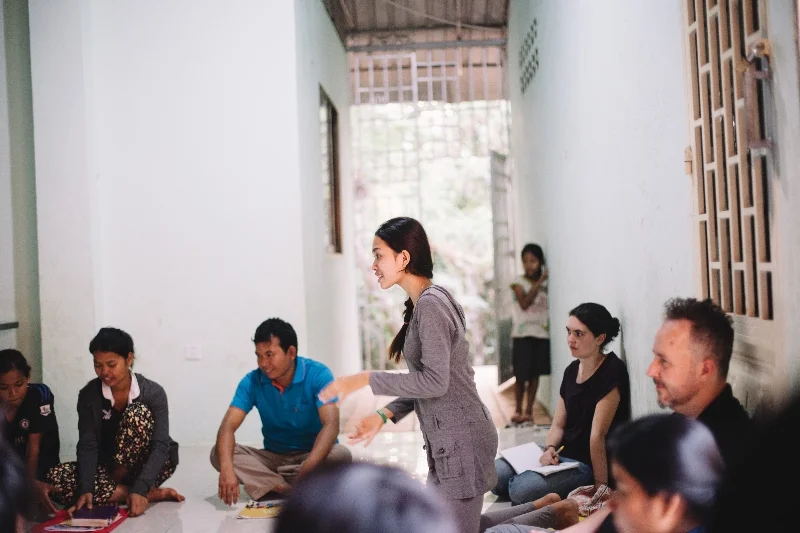
An Alongsiders meeting in Cambodia - a fast growing new movement to equip youth to reach out to vulnerable children.
As I've studied the history of the Sunday School movement, it strikes me that the world desperately needs another church-led movement for children.
The church desperately needs a new strategy and simple tools to reach its neighbours.
And that's where the Alongsiders movement comes in...
With the simple, yet powerful idea that EVERY young Christian could walk alongside a vulnerable child in their own community...
That these young Christians would form themselves into groups and call themselves "Alongsiders"...
What we need today is another movement of the Spirit for our most vulnerable kids.
A movement that might just change the world.
As the Alongsiders discipleship movement spreads through Asia and Africa, and now into Central America and the Middle East, join us in praying that more children would be reached.
The time is now.
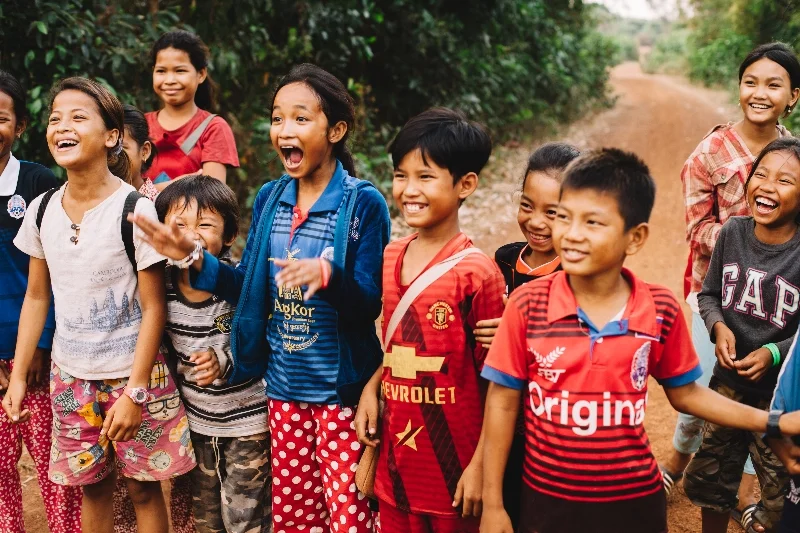

Why you might need to think smaller
We all love the part where Jesus says, "Let the children come to me." It's a comforting line, and a good passage for a devotional, but do you ever wonder what it has to do with getting things done in mission/ministry?
We all love the part where Jesus says, "Let the children come to me."
It's a comforting line, and a good passage for a devotional, but do you ever wonder what it has to do with getting things done in mission/ministry?
Because we're busy with many things, and one of them (the most important, said Jesus) is seeking the Kingdom of God.
When we talk about the Kingdom of God, we're talking about the world changing: every relationship set right, broken people healed, and a new community born in Christ - way beyond what words like justice, healing, and morality individually express.
It's a lot to hope for, and work for, given the state of the world.
What does Jesus allowing kids to sit on his lap have to do with that?
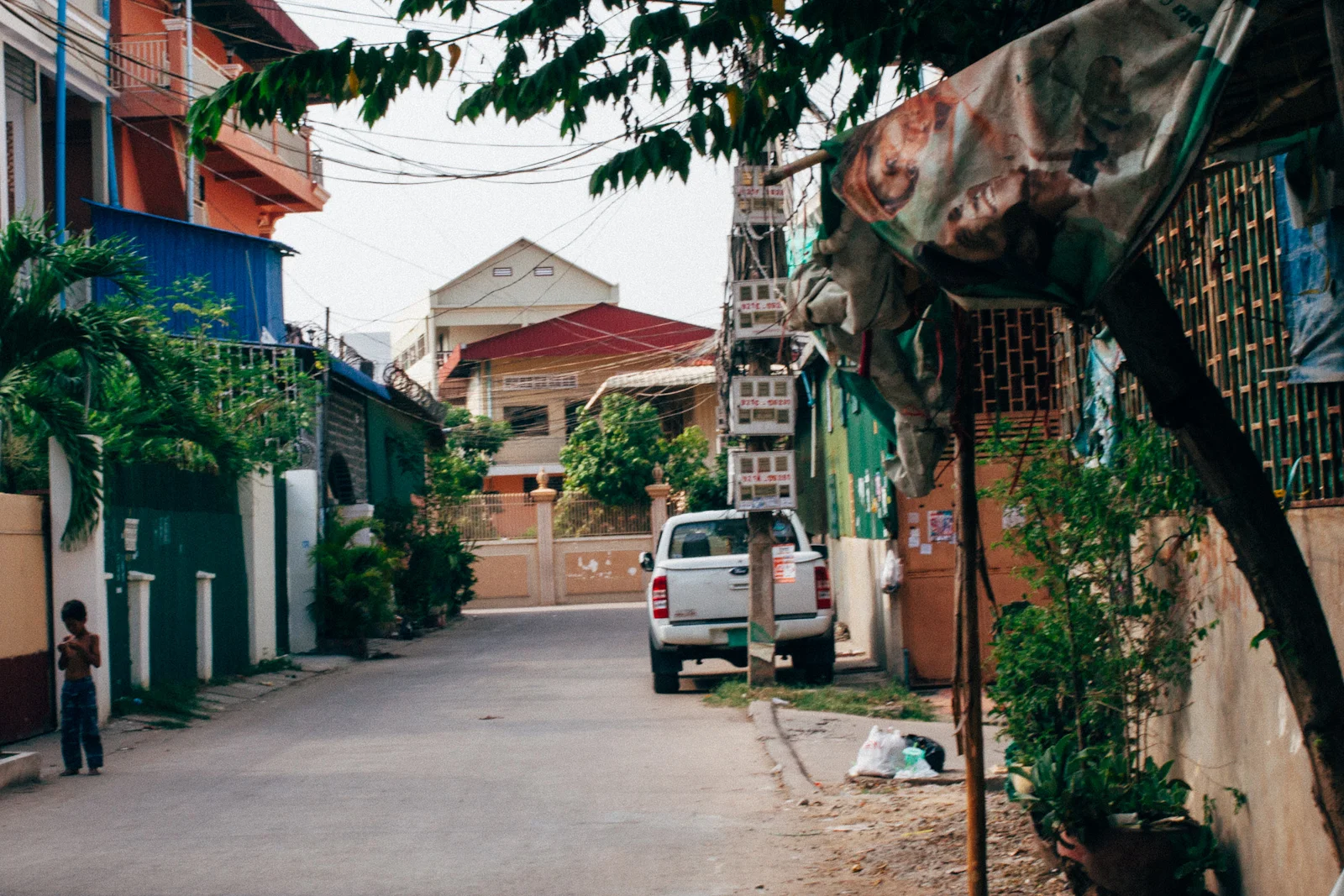
Jesus often let himself to be interrupted while doing "more important" things. He stopped an entire procession for a blind beggar crying out to him, who his own disciples tried to quiet down. When he was on the way to save the life of a little girl (with a very well-connected father), he inexplicably stopped for an anonymous woman who had a chronic menstrual disorder. While having dinner with prominent religious leaders, he paused while a prostitute "washed his feet with her tears." And once when crowds of people had turned out to see him enter their town, he saw that a tax collector had climbed a tree to see him. In front of all those people, who must have despised the man, Jesus stopped and invited himself to dinner at his house.
These are just a few recorded moments that made it into the gospels. Judging by the number and pattern of them, we have to conclude that Jesus acted this way all the time!
And it wasn't just a case of Jesus relaxing after hours, or taking some time out on the side. This was Jesus when he was focused.
Think about it. When Jesus was most focused he saw the child being turned away, the beggar at the side of the road, the quietly desperate woman trying not to be noticed, and the hated man.
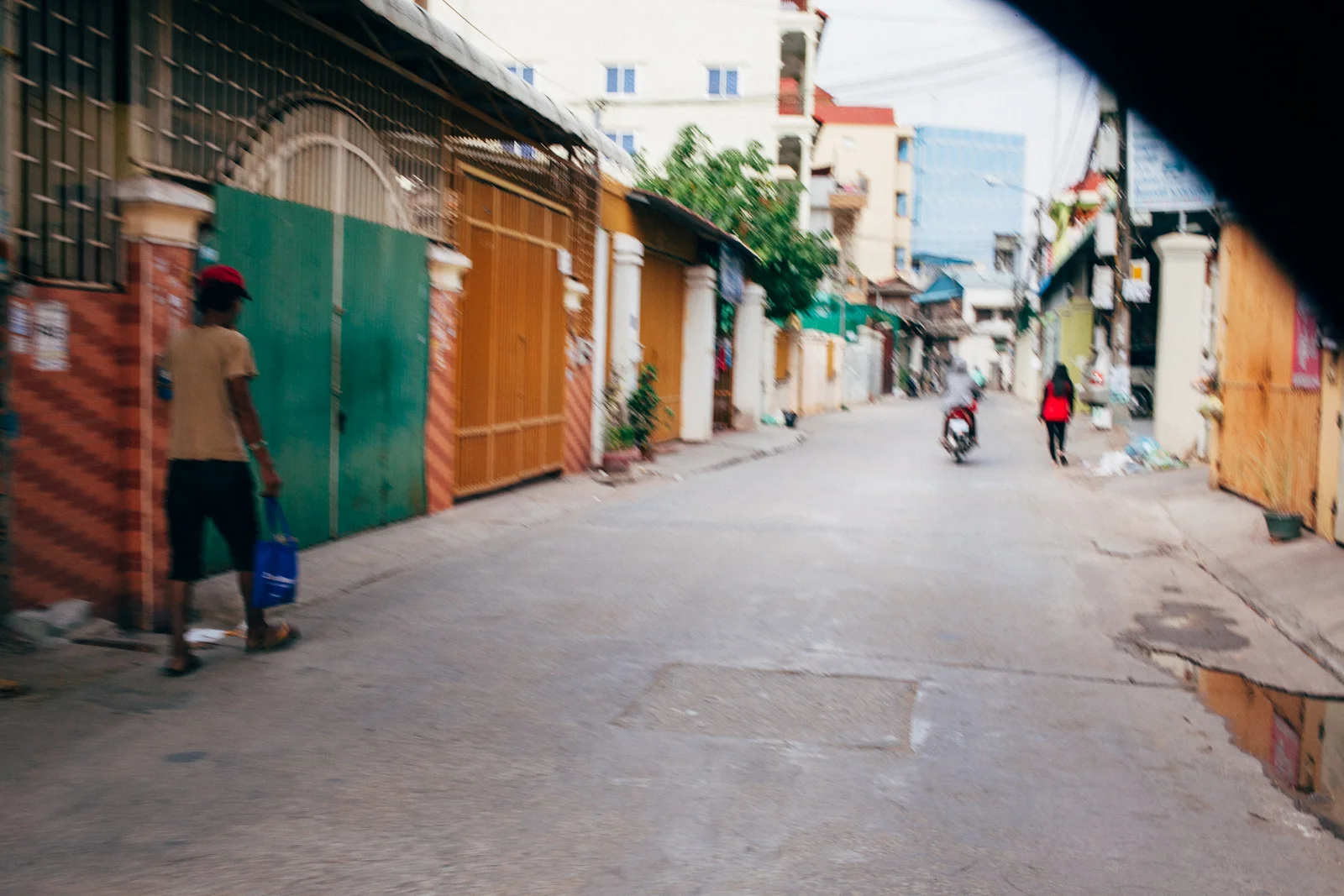
So people tried to help him refocus: Peter, the pharisees, the crowds. They prompted him for a vision promising success, for signs and assurances, or a movement of change.
But Jesus held onto the "foolish" vision of the Cross, where he sealed his fate alongside the least and the rejected.
And back to that moment when Jesus let the children interrupt him, he didn't leave it there. He said, "The Kingdom of God belongs to such as these" and "anyone who will not receive the Kingdom of God like a little child will never enter it." And...
We have to think small.
We can't be distracted so much by the big things.
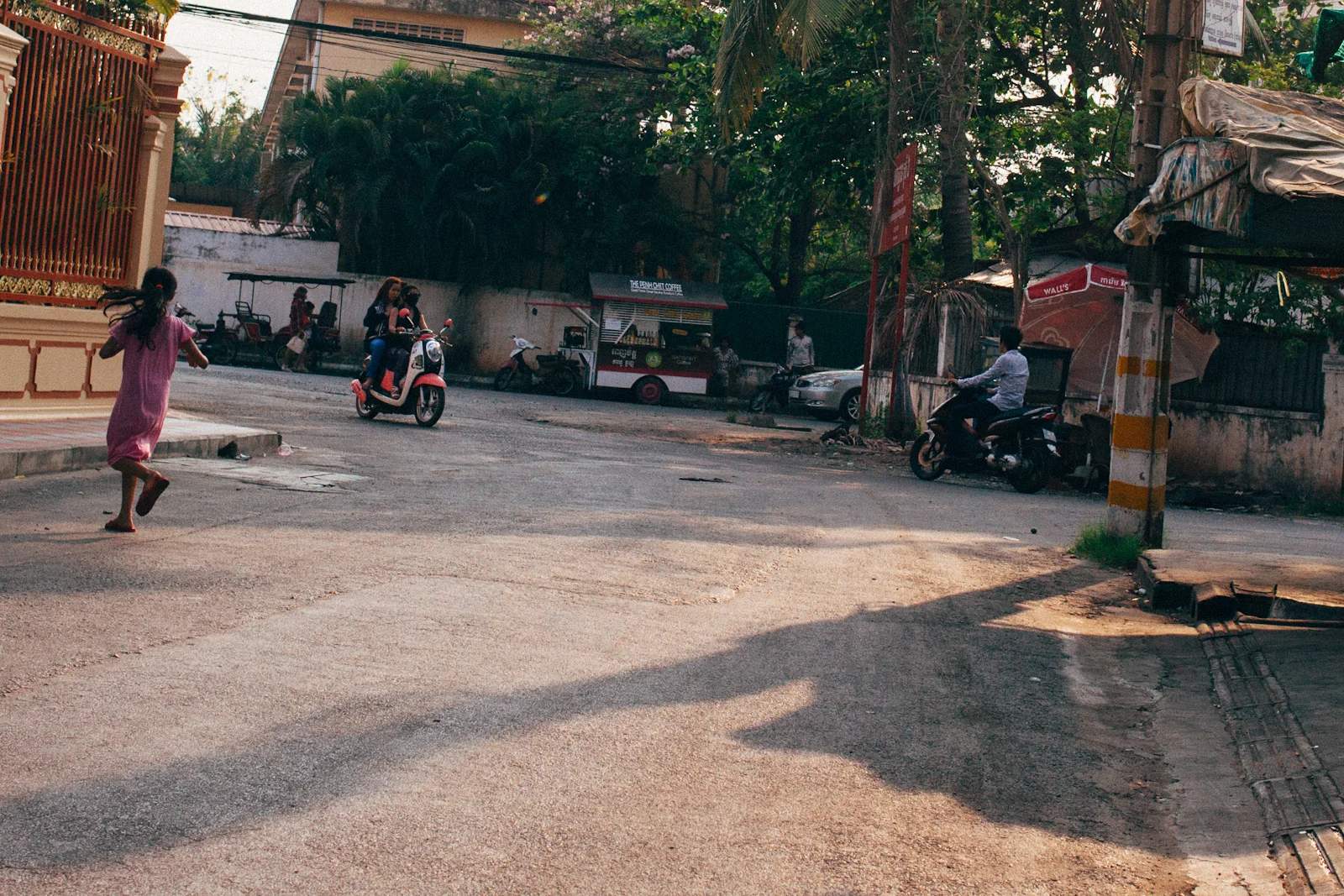
This is, after all, the same Jesus who said the greatest in the Kingdom of God will be the servant of all. Who said those who know him will give attention to people who are marginalized: hungry and thirsty people, strangers, people without clothes, and prisoners.
Jesus had a huge vision set before him, but it belonged to the Father. He was neither anxious about it nor obsessed by it. He did what he saw his Father doing.
And it led him down, down, down.
Last week I wrote about how Alongsiders can change thousands of lives and impact societies. That vision and movement are in the Father's hands. We take a risk each time we TALK about VISION.
What we can best serve and celebrate right now is each individual Alongsider who will stop what he or she is doing this week to love and spend time with a boy or girl who others deem unimportant.
That is focus worthy of the Kingdom.
When we talk of vision and movement we would well learn from them and do the same.

They might be giants
You'll be encouraged to see the significant progress a group of Alongsiders and their little brothers and sisters have made after four months...
Four months ago I traveled by bus, boat, and motorcycle to Kampong Leng, a remote farming community north of Phnom Penh, to witness a group of new Alongsider mentors signing up with their newly chosen little brothers and sisters. A few days ago I went back to check on their progress, and this is what I saw.
Even in the dry season, Kampong Leng is a lush, green country, especially for one accustomed to Phnom Penh's concrete skylines and motorcycle rivers. Most land in Kampong Leng that isn't covered in jungle or water is cultivated to grow rice and a dozen other crops. Fruit trees spring up everywhere, even on the school grounds.
When I arrive at the local church, five of the Alongsider mentors are gathered to meet me with their little brothers and sisters. They have come from all directions, and one has traveled several miles on his bicycle.
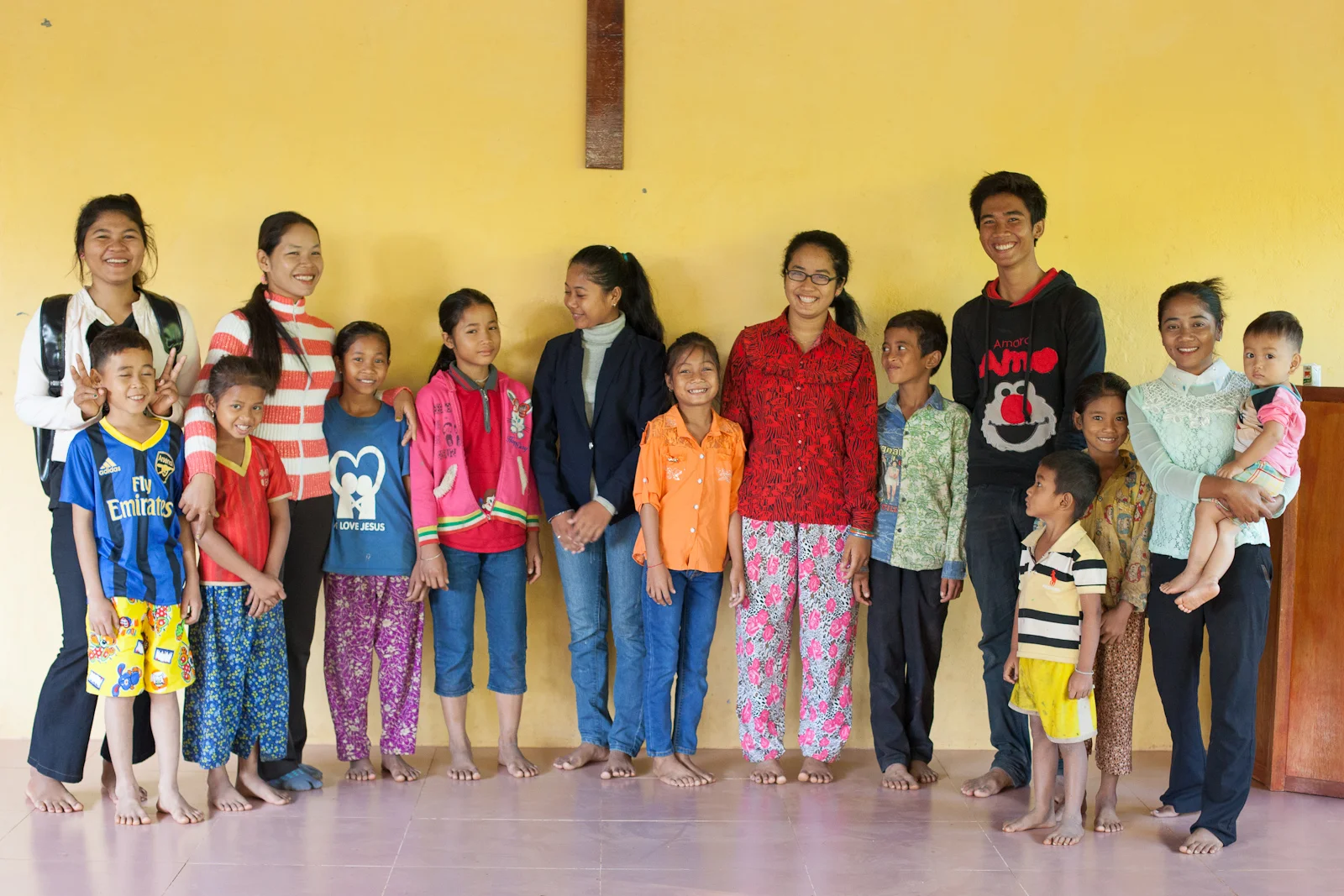
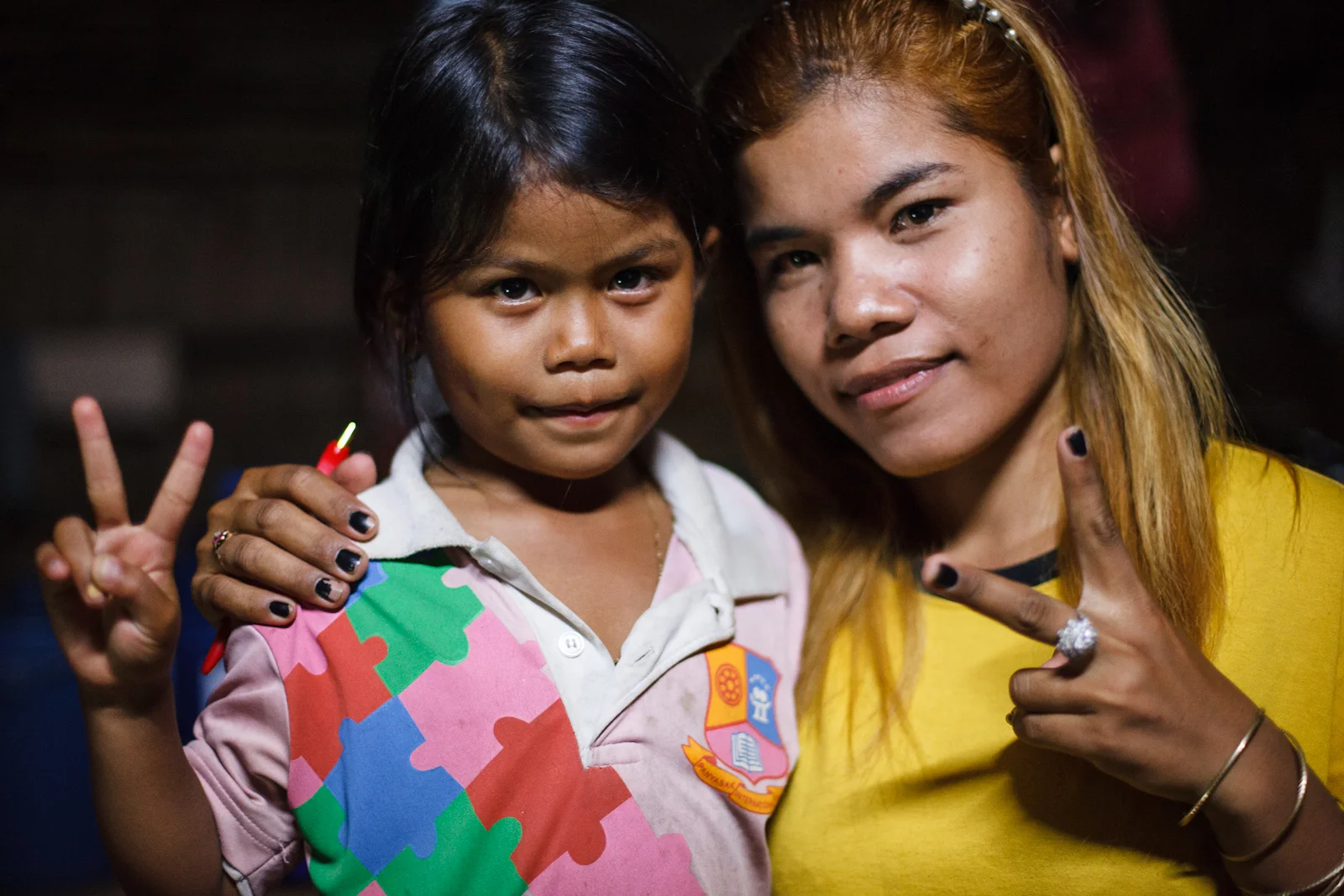
Alongsiders with their little brothers and sisters and a few extras. Chanthy is wearing orange and white stripes. Piya and her little brother are on the right in yellow.
For the past four months these new Alongsiders have been meeting with their little brothers and sisters once a week on average. I ask whether meeting regularly is a challenge, and I receive an education.
Most families in Kampong Leng are rice farmers, though many are diversifying as family members start businesses, work in factories, and (in dream scenarios) get educated and find salaried jobs. Those families that subsist on farming alone are very poor, usually earning less than $1 per day according to Chanthy, the Alongsiders group leader in the community.
Farmers in Kampong Leng work through the dry season. They can't use the fields near to their homes, so they travel (or relocate) to rented fields closer to the retreating Mekong River.
The little brothers and sisters all come from farming families, so their parents are on the move. Sometimes the children move with them.
The Alongsider mentors are also from farming families. Most are high school students. When they are not studying, they may attend extra classes to learn English or computer skills. Otherwise, if they have free time, they are expected to help their parents by working in the fields or at home.
Making time for their little brothers and sisters, even once a week, is a significant gift - and an effective one!
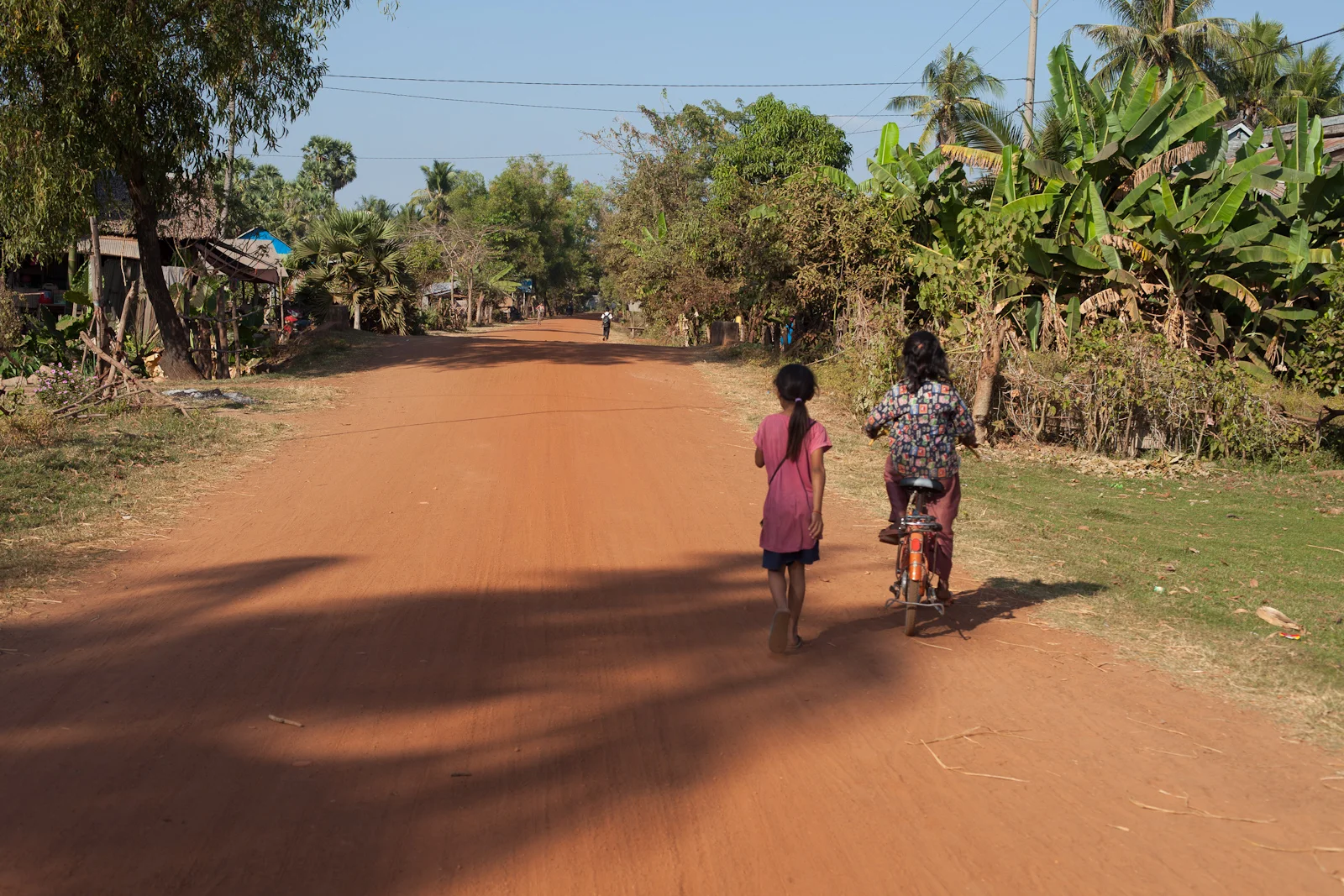
After my last visit I wrote about Piya, an 11 year-old who cares for three younger siblings every day while her parents are away working. Recently, Piya has started attending school about three days a week. In order for her to study, her mother will stay home in the mornings until Piya returns to look after her siblings.
Piya's mother wants her daughter to attend school. The greatest obstacle for Piya isn't time or even money: it's the shame.
Chanthy says, "Cambodians don't like poor children." She repeats the words, to make sure I understand, and adds, "Only the Christians love poor children, but not all the Christians do."
Piya, like many of the poorest children, doesn't have a school uniform, just a set or two of worn out clothes, plus she lacks basic school supplies like notebooks and pens.
When she attends school without a uniform or proper materials, the other children treat her with contempt, so she doesn't want to go. She has only started attending recently due to her Alongsider's strong encouragement.
I had thought that Piya's circumstances were unique, but as I listen to the Alongsiders share, I realize most of their little brothers and sisters face similar challenges. Most would not be attending school regularly without the support of their Alongsiders.
One little sister goes to school, then she walks one-and-a-half hours to join her parents at their rented rice field. They walk home together in the evening.
So what do the Alongsiders do with their little brothers and sisters? Most spend two or three hours together and do similar activities.
- They eat together.
- They help with homework and reading and writing Khmer.
- Some read the Bible together.
- Most of the Alongsiders have taken their little brothers and sisters to buy school supplies using their own money.
- Most of the Alongsiders help their little brothers and sisters to thoroughly clean themselves and wash their clothes.
- All the Alongsiders pray for their little brothers and sisters in their personal prayer times, and some pray for them directly.
Some Alongsiders have been able to bring their little brothers and sisters to church, but for many this is not yet possible. The distance is great, and the parents of the children (who are not Christians) work on Sundays and need their children at home or in the fields.
But through their actions and prayers, they are extending the Body of Christ to their little brothers and sisters where they are.
I leave with an enlarged vision, inspired and challenged by these amazing Alongsiders. In the eyes of the world - and even in their own eyes - they are marginalized. Yet they are most significant and central in the eyes of God, giants in the real Kingdom.