

Was Jesus vulnerable?
Was Jesus vulnerable? Not merely in the cute, helpless way that every baby is vulnerable, but vulnerable in the way that children in Allepo, Syria are vulnerable to violence?
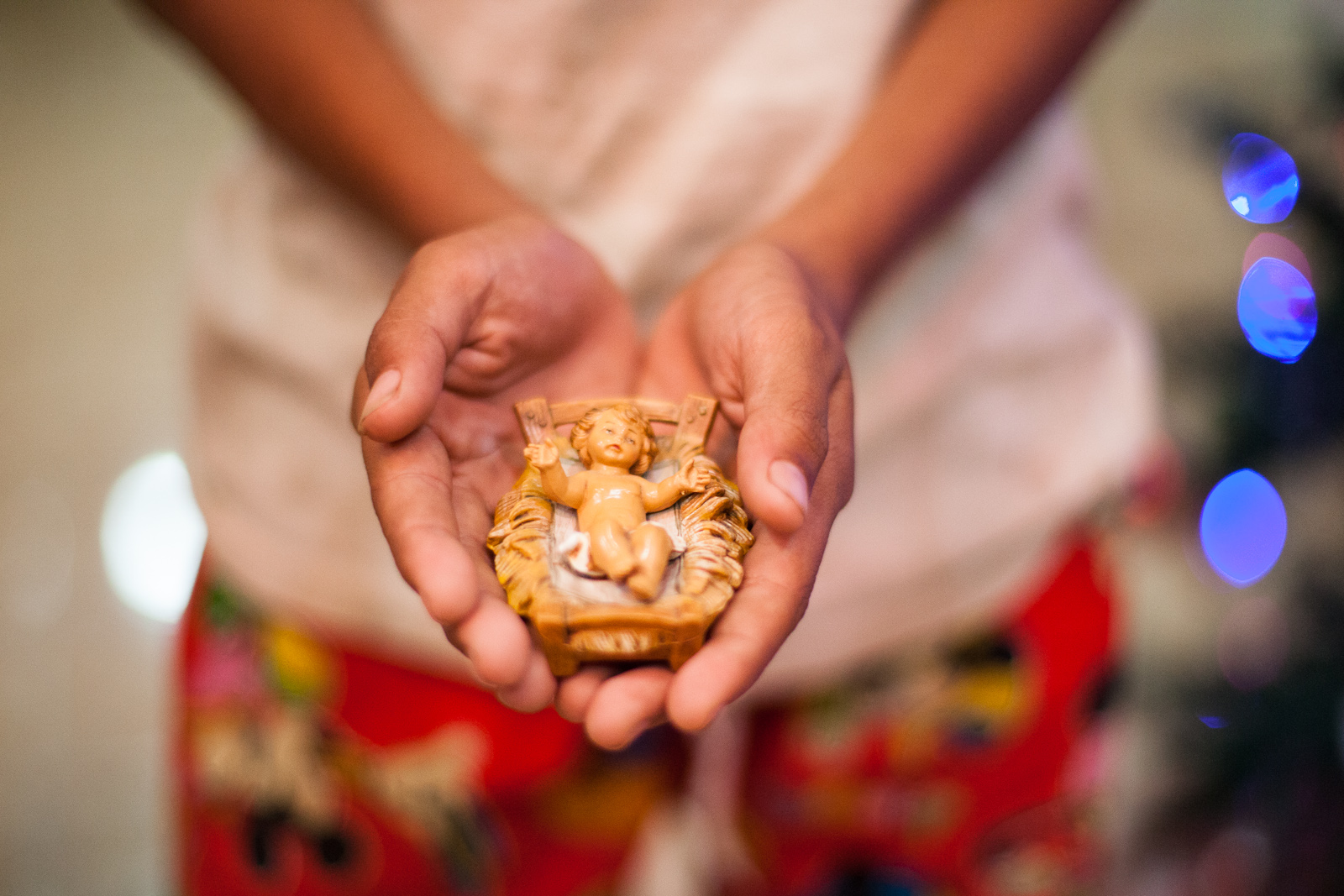
Was Jesus a vulnerable child?
Not merely in the cute, helpless way that every baby is vulnerable, but vulnerable in the way that children in Allepo, Syria are vulnerable to violence?
Vulnerable to prejudice and exclusion like children of immigrants?
Vulnerable to hunger and illness like children of the homeless?
The simple answer is Yes.
We know that Jesus was vulnerable in these ways, but most of our songs and traditions gloss over those parts of the Christmas story.
True confession:
I love The Christmas Song...
Chestnuts roasting on an open fire,
Jack Frost nipping at your nose.
It's about being warm even when it's cold outside, good food and happy children, and being merry all-around. Christmas for many people really is a most wonderful time of the year.
But it's not that way for everyone, and it doesn't match the whole story.
Just take a couple of minutes to review what happened.
Matthew begins the story of Christmas by intentionally pointing out that Jesus' lineage includes a prostitute (Rahab) and a homeless immigrant (Ruth), and neither of them was Jewish. Although Jesus descended from David, Matthew clarifies that it was from David's adulterous and murderous affair with Bathsheba. Finally, Jesus' family tree ends with his mother, not with Joseph, because she was pregnant before she married him.
Sure, Mary was with child by the Holy Spirit, as we read now, but that's not how the neighbors saw it. More likely they said Joseph was a kind and gentle man for enduring the shame rather than leaving her.
This was, to say the least, a blended family.
Next consider the characters who gathered around "yon virgin and child." The shepherds were dirty, unwashed, poor men who slept in the fields, apart from their wives if they were married. The wise men were foreigners who practiced astrology. Pagans.
If a nativity scene had been set up at the time, it would have looked like a vicious parody: the King of the Jews welcomed by nobodies and pagans.
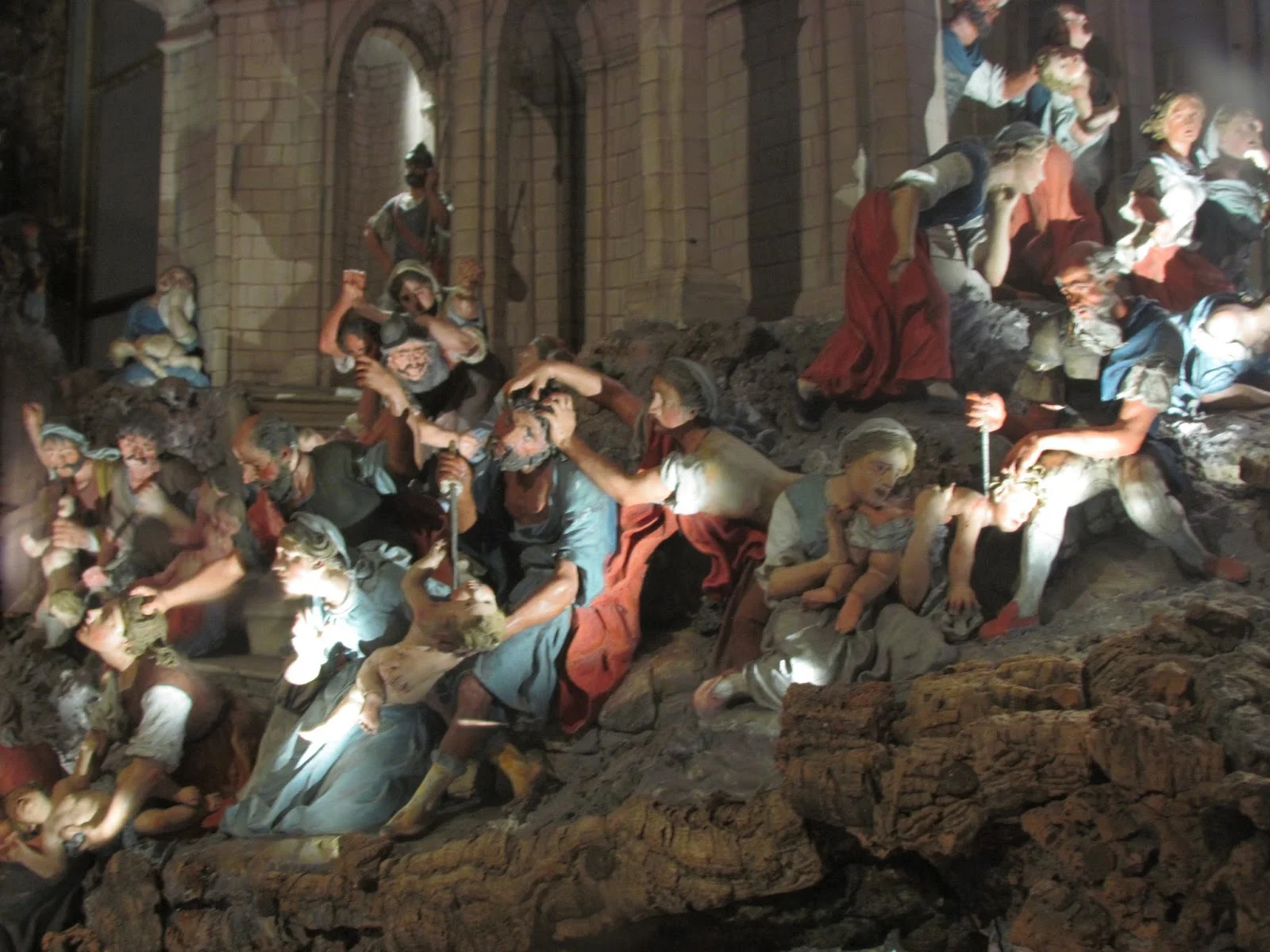
An 18th Century nativity in Portugal depicts the slaughter of the innocents.
And faster than you can say, "Holy infant so tender and mild" the story jumps from the baby in a manger to a power hungry man ordering the slaughter of innocent children and Jesus' family fleeing for their lives to Egypt.
Can you imagine that verse inserted into a carol, or that scene in a nativity play?
What became of the family in Egypt? They were immigrants who couldn't speak the language, unwanted refugees, homeless and poor, or cheap labor.
The purpose here is not to spoil the warm glow of Christmas - if that's how you experience it. Be thankful for family and safety and simple comforts if you have those blessings.
But let's also open our eyes and see the whole story, including the parts that don't make it into most carols and nativity scenes.
Consider that the story we celebrate is still unfolding even now.
To be alive in the story of Christmas today, look and see the vulnerable children and families in the world around us and, as we are able, welcome them. They are both far and near, and they have more to do with the original Christmas than feasts and silver bells.
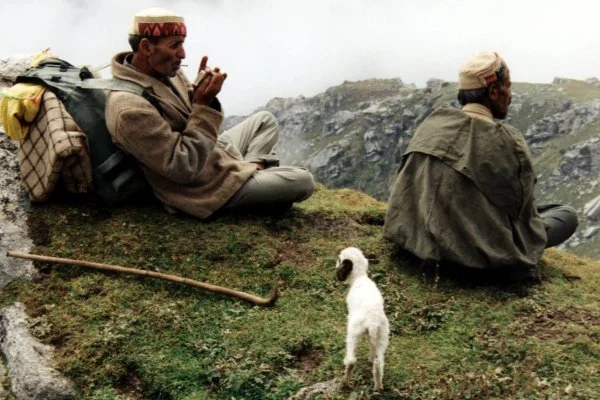
Let the shepherds and wise men be our examples.
What we all have in common - whether in vulnerability or comfort - is God's gift to us all in Christ, born into a world of poverty, politics, and violence. Born into an imperfect but loving family.
Young and old, foreigners and locals, citizens and immigrants, happily married men and women and prostitutes and adulterers: the gift of Christ draws us together.
Merry Christmas! Christ is born.
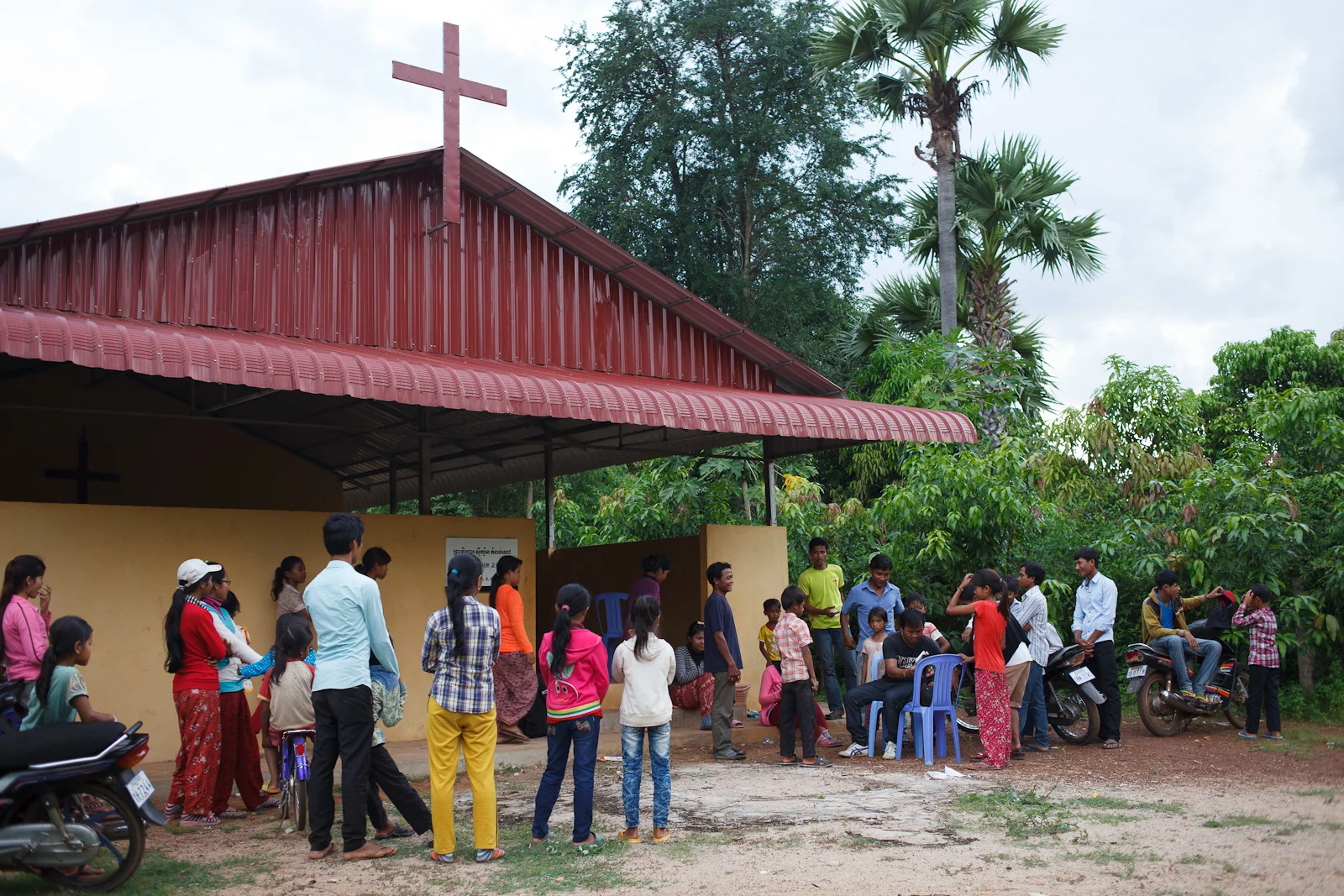
Why we work with churches, even when it gets uncomfortable
We work with local churches. If you’re nodding your head, or shaking it in concern, keep reading. Some of our reasons may surprise you.
We work with local churches.
If you’re nodding your head, or shaking it in concern, keep reading. Some of our reasons may surprise you.
Alongsiders doesn’t just work ON or FOR local churches; we work within them. We equip young church members, and they do the most important work of being Alongsiders. Most of that is done outside the view and control of our movement leaders who are in supporting roles.
Here are four reasons why we do it this way, starting with the easy ones.
1. Local churches are present in local communities almost everywhere.
Local churches are spread out all over the countries we work in. For example, in India we partner with a network of 3000 churches. What organization can claim to have offices and staff in so many places? Especially in places where the poorest of the poor really live? If there is such an organization, then it must spend a fortune on staff and overhead.
To reach thousands of vulnerable children we need a presence in thousands of local communities. Grassroots movements depend on grassroots structures and networks. Working with local churches means the structures we need are already in place where we need them.
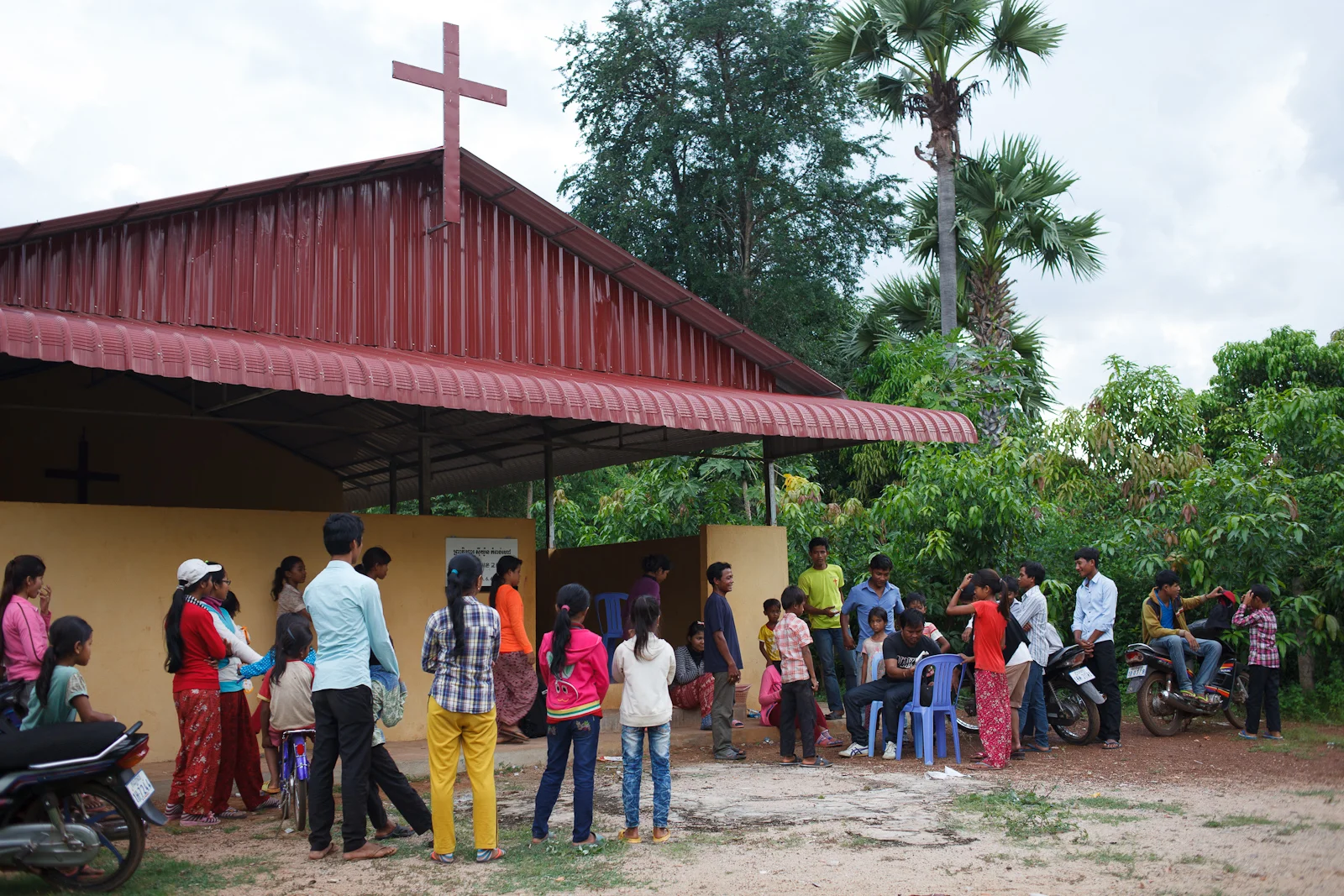
2. Local church relationships are an important support network.
Most mentors are singles in their twenties. They may lack the wisdom and experience to respond to all the needs their little brothers and sisters may face. Family problems, abuse or entrenched poverty may require intervention by wise older adults. Mentors who are part of healthy local churches have a support network already in place to stand with them.
And that support network becomes a blessing and source of strength for the little brothers and sisters and their families too. Vulnerable children are often isolated and disconnected. By welcoming them into the local church, children gain an important support network which will be there to help them face the challenges of life.
In Alongsiders we often quote the Cambodian proverb: It takes a spider to repair its own web. In real life it often takes a community of spiders.
3. We believe in the gospel.
When Jesus started his ministry, he declared “good news (or the gospel) to the poor” and said:
(God) has sent me to proclaim freedom to the prisoners and recovery of sight to the blind, to set the oppressed free, to proclaim the year of the Lord’s favor.
We already speak a common language with the local churches. Or do we not?
Some Christians and churches have taken this gospel and spiritualized it as solely a message of salvation from sin. They interpret “poverty” and “blindness” and “captivity” entirely as metaphors for spiritual conditions.
Others believe Jesus addresses both spiritual and material poverty, disability, and oppression (and other dimensions besides), but they have struggled to communicate and live out a more complete (wholistic) gospel in their local churches.
As a result, many Christians concerned about the poor have supported Christian organizations which focus on compassion and social justice, while their local church attends to the "more spiritual" tasks.
But should a wholistic gospel be divided up this way?
If we believe Jesus announced such an all-encompassing gospel – that every relationship on earth and in heaven is being put right with forgiveness, healing, and justice – and if we believe Jesus is the Head of the Church, then can't we hope that the Spirit of Christ will guide us into the fullness of the gospel together?
So for the sake of the good news for the poor, Alongsiders as an organization is returning initiative and power to local churches through their members, entrusting them with a wholistic gospel message for the vulnerable, the disabled, and the captives among them, and empowering them to live it out.
4. We want to see local churches transformed.
Alongsiders works through local churches. And very often the mentors themselves, and even whole churches, are transformed along the way. This is not always a comfortable process for those in entrenched positions of leadership. The contribution of younger people is not always valued. But Jesus was a master at turning things upside-down and challenging the prevailing culture.
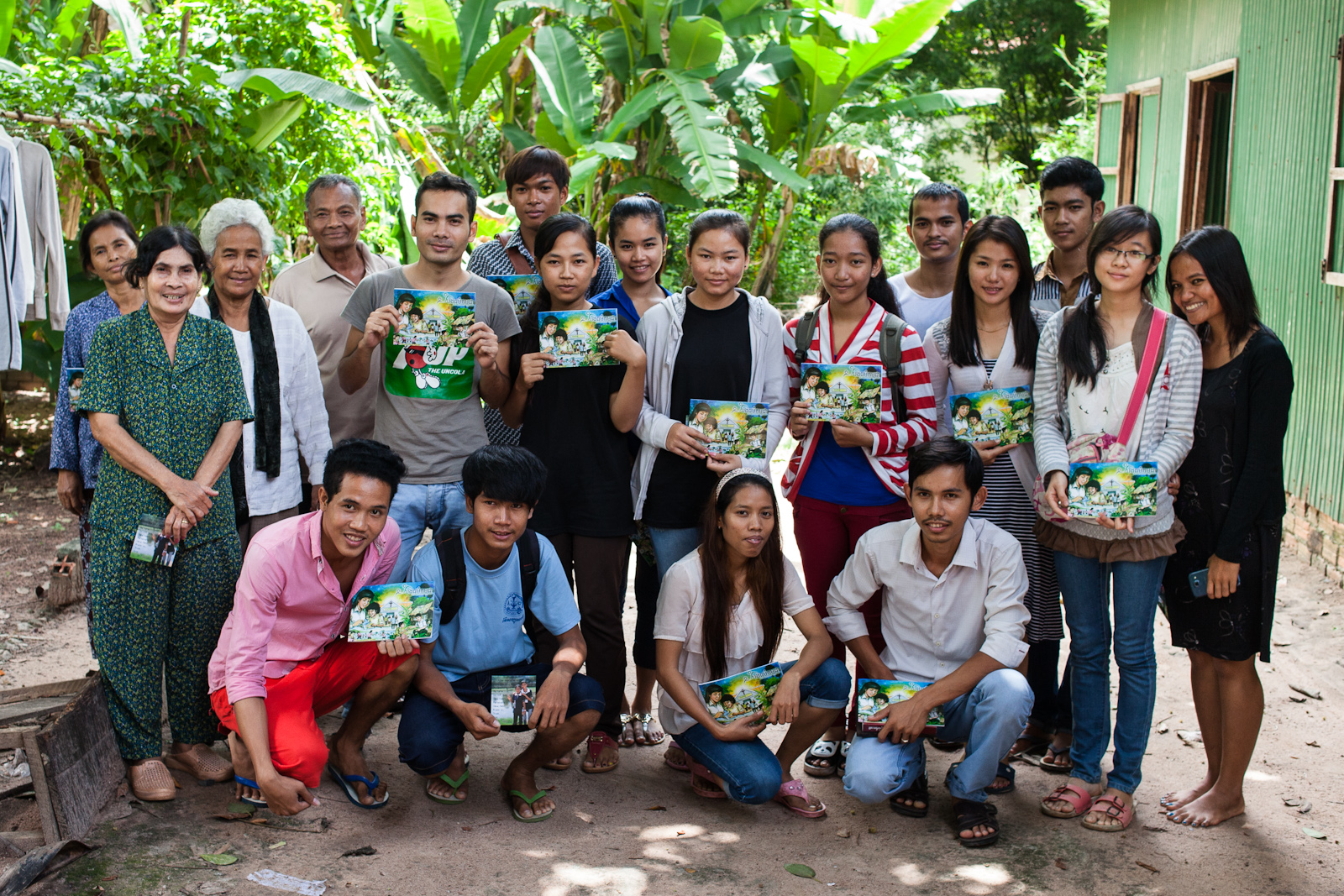
Church elders and leaders with a new batch of Alongsiders
The Alongsiders movement is not merely a movement to bring love and encouragement and discipleship to vulnerable children. It is also a movement of young people being transformed. We believe that in reaching out the poor, it is often WE who are most deeply impacted, OUR faith that is stretched, and OUR capacity for love that is enlarged. It is counter-intuitive, but central to the gospel, that when we lay down our lives for others we will actually find life ourselves. This is what we are seeing everyday in the lives of the Alongsider mentors. This is what is transforming the church.
Christ loved the church - to the point where He laid down his life for it (Eph 5:25). Despite all the problems and challenges of loving sinful human beings, we are called to do the same.
There are MANY more reasons we work through local churches, but most of all we long to see the Kingdom that Jesus announced being fulfilled...
On earth as it is in heaven.