

4 ways our new Discipleship Training Manuals will be a game-changer
There is a lot of excitement this month in the Alongsiders International office as we launch the brand new Discipleship Training Manuals
There is a lot of excitement this month in the Alongsiders International office as we launch the brand new Discipleship Training Manuals (DTM).
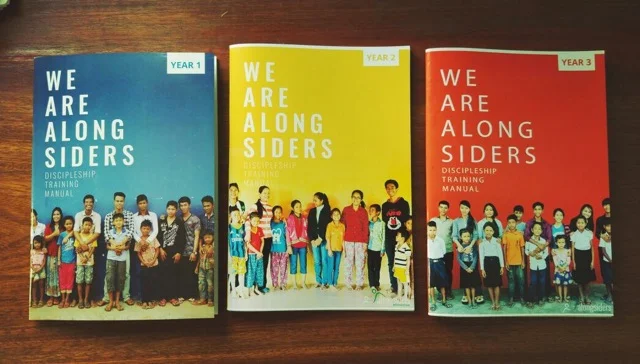
These 3 manuals (one per year) will accompany our 3 year comic book curriculum.
Each DTM is designed to help the Alongsiders grow in their relationship with Jesus and become better at not only discipling their own Little Brothers and Sisters (LBS), but also creating change in their communities. The Alongsiders will work through the manual during their regular meetings together.
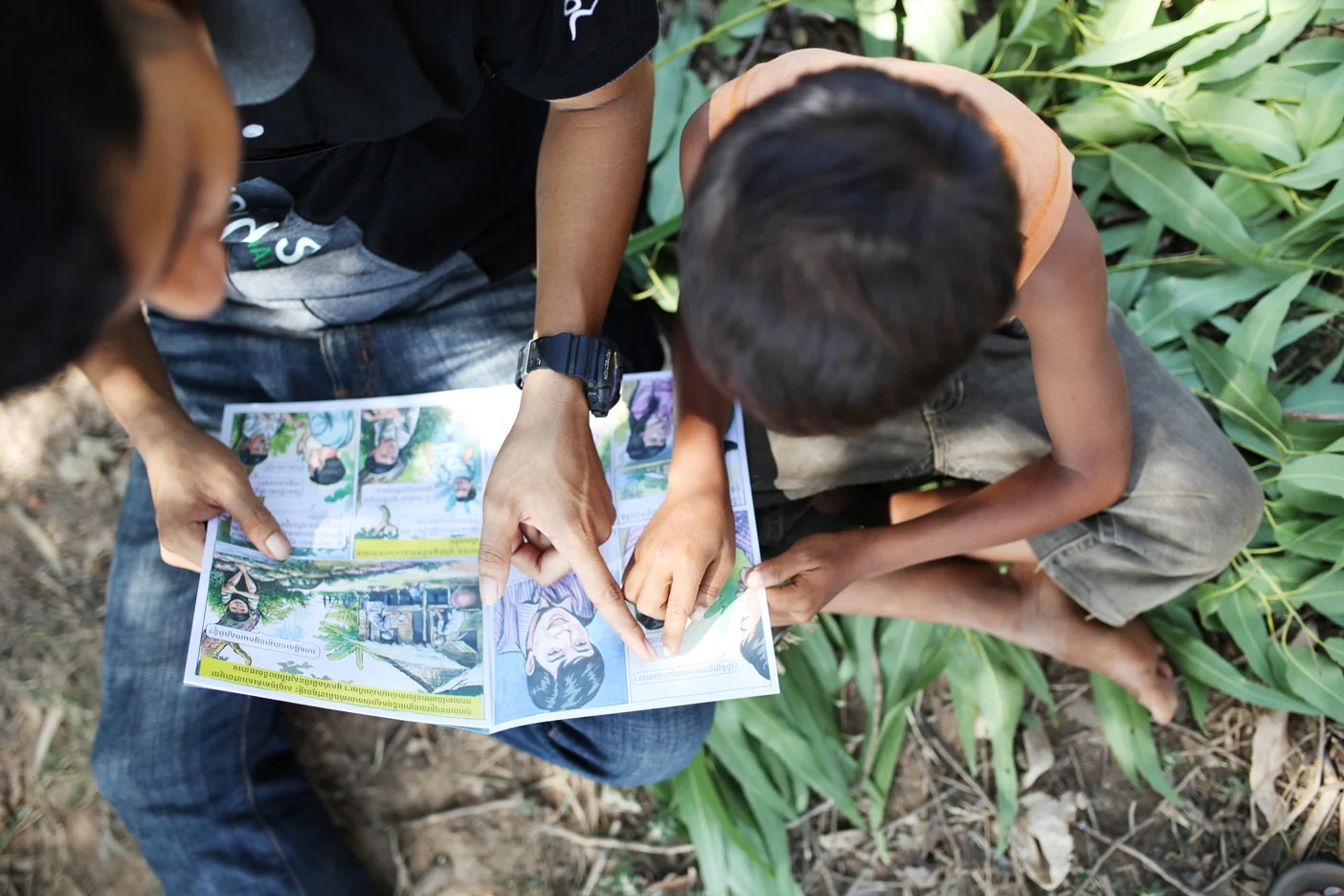
These manuals take them deeper into the theme covered in that month’s comic book. They help the Alongsiders grow in the areas they are learning about, and help them gain a thorough understanding of the topic before they teach their Little Brother or Sister using the comic.
This tool will help them grow as followers of Jesus and as Alongsiders. Here are four ways we see the DTM as a game-changer in the Alongsiders movement...
1. The DTM is empowering
Rather than an outsider coming into a community, and telling them what needs to change, this resource helps Alongsiders and their Little Brothers and Sisters identify issues in their own lives, families and communities. It helps them come up with their own solutions and empowers them to act.
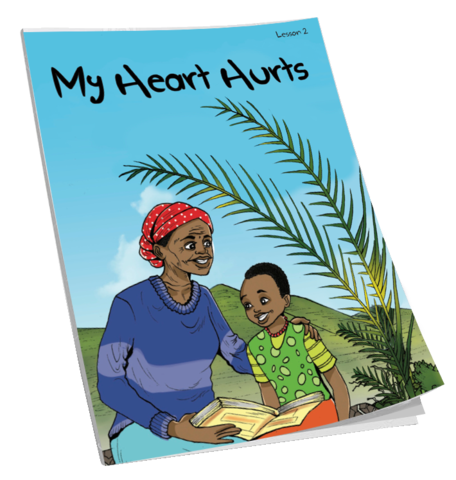
This is the Rwanda-made comic on dealing with emotions.
For example, in the Year 1 DTM manual, there is a lesson called “My Heart Hurts,” which explores different feelings that people experience. At the end of the chapter, it includes advice on how to walk alongside people who are grieving, and the Alongsiders are asked to come up with one way they can care for “hurting hearts” in their family or community.
The lesson on abuse asks the Alongsiders to come up with 3 ways they can help children in their family or community protect themselves from abuse and stay safe.
In the Year 3 DTM manual, one lesson walks the Alongsiders and their Little Brothers and Sisters through creating their own community project - choosing areas that they think require change, identifying resources within their community, and coming up with ways that they can work together to bring transformation.
The DTM empowers Alongsiders and their Little Brothers and Sisters to make a difference in their own communities.
2. The DTM is practical
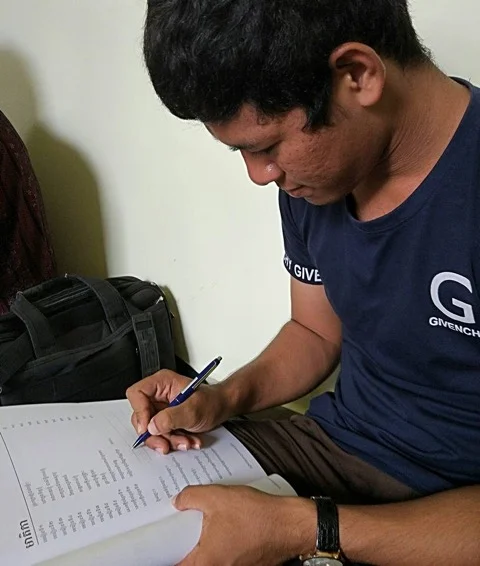
The new DTM manuals provide the Alongsiders with accountability and help them achieve their goals. Each lesson has a “monthly check up” which helps the Alongsiders hold each other accountable about how often they met up with their Little Brother or Sister, how their Little Brother or Sister is going and how they walked alongside them.
The manual also has a section for annual goals, and an opportunity to review those goals and reflect on the year.
Every lesson also has an application section - the Alongsiders not only learn about Jesus, but also how to put what they learn into practice.
3. The DTM is accredited
The DTM is also practical in another way. If the Alongsiders complete all 3 years, they can receive a Bachelor Degree in Professonal Studies. This qualification is being offered by our UK-based partner, The Global University of Lifelong Learning.
For young Christians in poorer countries, many of whom may not have an opportunity to attend a local university - this is a helpful qualification.
It is also a recognition of all their hard work over several years in learning, and walkng alongside their Little Brother or Sister.
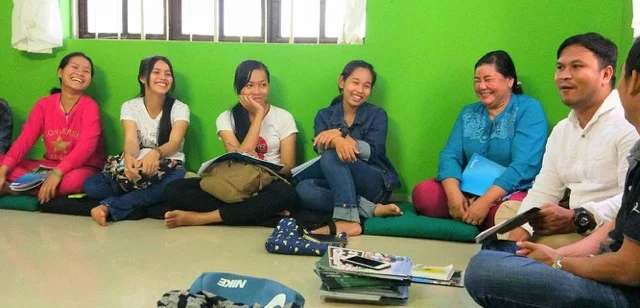
Group Leaders learn about the DTM, in order to bring the curriculum back to their own groups.
4. The DTM goes deep
This is no ordinary bible study tool. It doesn’t just have a bible passage and a list of comprehension questions. The study encourages the Alongsiders to think and pray deeply about what the Bible says about everyday issues, how they can make changes in their own life, how they can help their Little Brother or Sister deal with those issues, and how they can help their community towards change.
For example, one of the lessons asks the Alongsiders to read a bible passage and then think about what they learnt about themselves, what they learnt about God’s love for them, and what they learnt about the world we live in.
Another lesson on having a relationship with Jesus and spending time with Him, walks the Alongsiders through having time with Jesus and experiencing His presence in different ways.
We are excited to see how the Alongsiders use this resource to enhance their relationship with Jesus, the lives of their little brothers and sisters and their community!
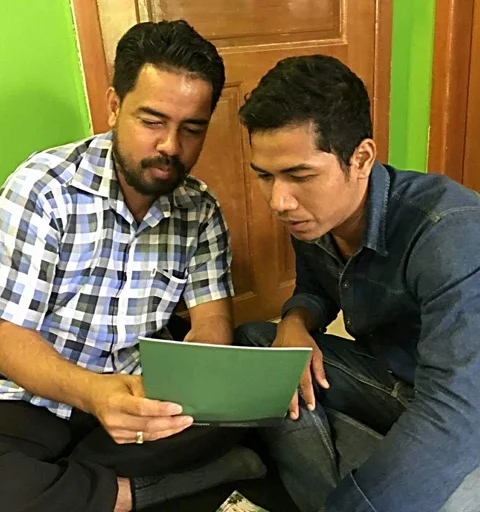
Pray with us as we roll out this new curriculum in Cambodia, Indonesia, Rwanda and Kenya, this month. More countries will follow soon after.
[Written by Sarita Hales a community development graduate interning in our Phnom Penh office for six months.]

3 keys for longevity in a discipleship movement
The story of Serey Choeng, one of the earliest leaders of Alongsiders in Cambodia, embodies many of the lessons we have learned.
The Alongsiders discipleship movement in Cambodia has been growing for more than 12 years. During that time we have learnt a number of lessons about what it takes to grow and sustain such a movement.
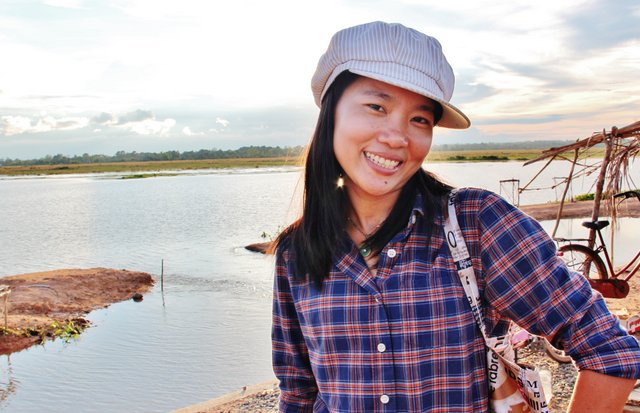
Serey Choeng, leader of the Alongsiders Cambodia movement
One of the earliest leaders in the movement, Serey Choeng, has embodied many of those lessons in her own journey. So, let's examine her life growing up in a Phnom Penh slum community and from there, share some lessons learned along the way.
The community where Serey grew up shares a narrow alley with houses packed tightly on either side. When she was a child, the floodwater during the rainy season mixed with sewage from an open channel just behind the last houses. The fouled water would rise above her head and flow into the homes from below. The neighbors would build rickety walkways over it, but you couldn't avoid it. You waded in it; some children swam in it.
Life in the slum was messy.
![Serey's community [Photo taken in 2005]](https://images.squarespace-cdn.com/content/v1/6a28e0eeb1734d7d91985b22/1781064623060-SAXDD1R7DBPA4D2NIGSV/image-asset.jpeg)
Serey's community [Photo taken in 2005]
Drugs were bought and sold in the shadows, and neighbors drank and gambled outside in the evenings. The pathway forked at a point near Serey's home, and one way led to a row of brothels, of which one or two remain today. Most of the people were simply working hard to feed their families, trying to get ahead if they could. They worked construction, ran micro-businesses, or labored in factories.
Three days a week, during the hours when she wasn't in school, Serey would throw an empty rice sack over her shoulder and walk the streets, gathering items from the trash that she could sell to the recyclers: mainly cardboard, plastic bottles, and cans. Her mother went house-to-house every day, pulling a cart that got heavier by the kilometer. She bought old and broken appliances, housewares, and anything else that she could sell, including whatever the recyclers were buying.
Serey's auntie, who lived a few houses away, worked as a housekeeper for a foreign family. She was unmarried, had a reliable income, and owned her house. She saw the plight of her sister's family and decided to help, so she took Serey into her home. She was very strict and critical, and Serey felt like it was a hard life living there. She went with her auntie to work sometimes, and she learned how to clean houses and cook. When she was sixteen, she got her own job as a housekeeper, and she impressed the foreign lady who employed her with her hard work.
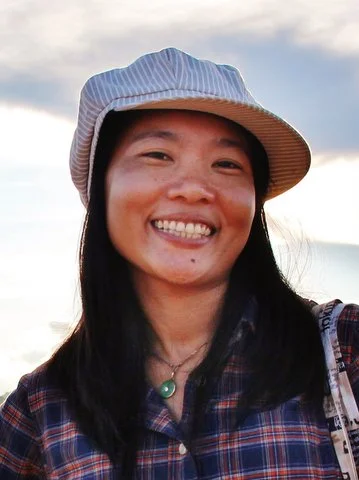
Serey was the first one in her family to come to faith. She began attending a church that only had five or six members. They met in one small room of a home along the alley. That's where she first heard of Project HALO.
The letters stood for Hope, Assistance, and Love for Orphans. It was a ground-breaking program that tried to keep children orphaned by AIDS together with their remaining families (with a surviving parent, grandparents, or other relatives). They also had one of the first foster care programs in Cambodia.
When the representative came to Serey's church, he said they were looking for Christian youth to serve as mentors, to be like “big brothers and sisters” for orphaned children. By that time, the little church had about ten youth, and most of them signed up. “At first I joined to have fun,” Serey says. “But later it was because I wanted to help, because I knew how the kids felt.”
Serey was one of the first Alongsiders, and part of the second wave of youth who joined the movement. Previously, the leaders had asked youth living outside the slum to become mentors, but those mentors had really struggled. For one thing, they were afraid that their motorcycles would be stolen while parked in the alley. They were essentially middle class Cambodians, and the slum was a foreign place to them.
But for Serey, the slum was her home, and she had a better idea what the kids in Project HALO were going through.
When Serey first became a mentor, she was assigned to a girl whose mother had AIDS. “I tried to get to know her,” she says, “but she was withdrawn and didn't speak much. One time we went to camp, and I felt like I got to know her better through that. She really suffered at home, because her mother was sick and they had so little support.” Serey never formed a strong bond with this first little sister, and then the girl and her mother moved away.
This was another lesson the leaders of Alongsiders learned in those days. It was better if youth joining the movement chose their own little brothers and sisters. The Alongsiders needed more freedom to find a child they could relate to, and it was important for them to own the relationship.
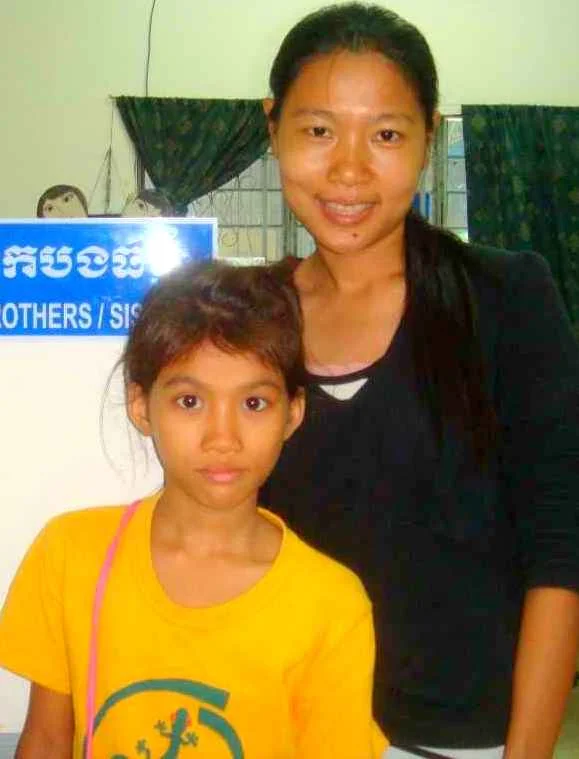
Serey and Neang early in their relationship
Serey wanted to continue being an Alongsider, so she prayed about who to choose next. She saw many needy children, but she finally picked the one who was “most like me.” Neang was six years old. She lived with her mother and grandmother just a few houses down. They were very poor, as were most of the local children. What caught Serey's attention was that Neang didn't have any friends. She was very quiet and lonely.
Serey naturally saw Neang every day, and two or three times per week, she would sit down and talk with her. When she was eleven, Neang came to faith. By that time, Serey's parents and auntie had all come to faith, and they had all joined the local church. Neang's older sister, who had an Alongsider mentor as well, became a Christian, too.
In July of 2006, Serey was invited to became the third leader of the Alongsiders Cambodia movement. She was still working as a housekeeper with proven integrity, and she had become a faithful and capable leader in her church. Most importantly, she personally understood what Alongsiders was about. She prayed for three weeks before accepting the position. A co-worker was hired at the same time, and the two worked well together. The movement started to grow, and within two years they had mobilized nearly three hundred Alongsiders plus an equal number of little brothers and sisters.
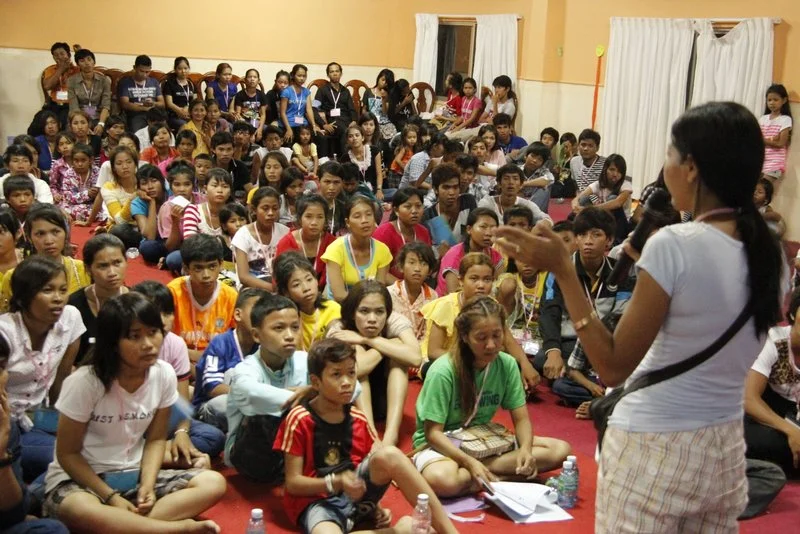
Serey training Alongsiders and their little brothers and sisters at an Alongsiders camp
It's good to reflect on our history. We're grateful to celebrate leaders like Serey, and it helps us remember why we do things the way we do. Reflecting on where we have come from also allows us to distill lessons learned along the way so that others can avoid making the same mistakes. So, here are 3 key lessons from Serey's story...
1. The Principle of Prayer
In Matthew 9, it says Jesus went out into the towns and villages, and crowds of people showed up, but they were "like sheep without a shepherd." So he told the disciples to pray for workers, because the harvest was plentiful. Where do the workers come from? We believe the workers are there, in the towns and villages and slums, and we're praying that God will raise them up because that is how He commanded us to approach the task. And God is doing that as we mobilize, equip, and release Alongsiders.
From early on, Serey recognized the power of prayer, first in her own life as she prayed for God to show her who to choose as her little sister, and then later as she rose to lead the movement, as she prayed for guidance and more Alongsiders.
2. The Principle of Proximity
A major turning point came when the early leaders chose to mobilize Alongsiders from local churches inside the communities, rather than recruiting mentors from outside the community who would travel in. If we want to see young people who know how to follow Jesus in everyday life, we need to disciple them in everyday life. That's why proximity is a key. Little brothers and sisters need to see their Alongsiders in action, in every day situations - not just parachuting into the community for a classroom discipleship experience.
Serey herself was part of the new wave of Alongsiders recruited to serve within their own communities. She saw firsthand the fruit of that approach and has applied that lesson to help the movement grow.
3. The Principle of Empowerment
Likewise, it made all the difference when Alongsiders were allowed to choose their own little brothers and sisters. Besides allowing them to own the relationships, we've recognized that young people becoming mentors need to make choices and take responsibility. This is good for the movement, and it's part of their own growth and development as humans and disciples. Like Serey, many have embraced this process. We've often heard about new Alongsiders praying for days or even weeks before choosing a little brother or sister.
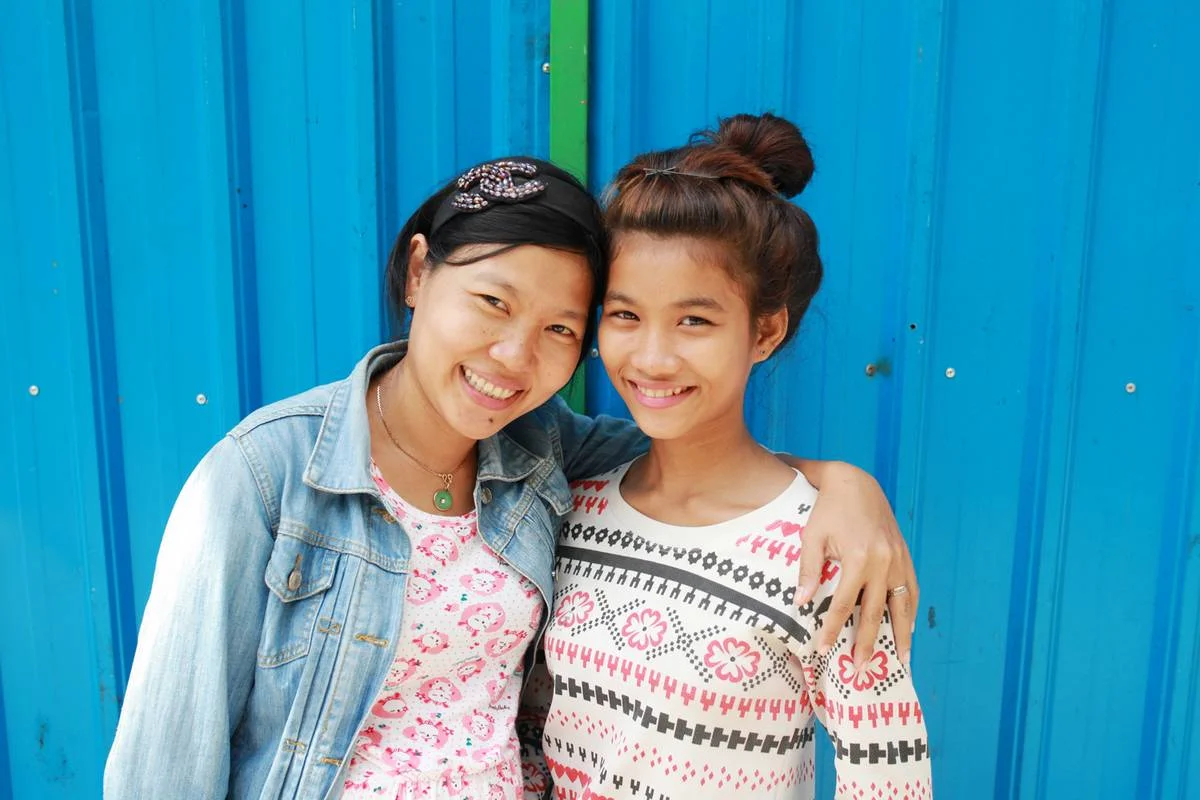
Serey and Neang today
Taken together, these keys to longevity were essential for Alongsiders to change from being a centrally planned, managed, and scripted project to being a movement owned, powered, and initiated by leaders and disciples at the margins.
How might these lessons inform the discipleship movement you are part of?

2 life lessons and a powerful challenge from a surprising source - but there's a catch
His story doesn't have a Hollywood ending, but you'll be surprised what you learn from this young man.
His story doesn't have a Hollywood ending, but you'll be surprised what you learn from this young man.
His name is Ni. People who are like him, living at the margins in extreme poverty, rarely fit into a clickable narrative. They're slogging along in process, unresolved, longing for a good surprise and hoping to avoid disaster. Actually, most of us can relate.

But here's the difference. Somebody chose Ni.
Four years ago, a 19 year old named Sothana signed up to be an Alongsider. He was living in Takeo, a rural province south of Phnom Penh.
Looking around his community he saw Ni, a 12 year old boy in one of the poorest families in the village.
Ni had dropped out of school, and his prospects were dim. So Sothana chose him, to be his "little brother".
One year later, Ni's father died. He drank himself to death, dying slowly of ulcers that ravaged his gut. The family spent what money they had on treatment. Perhaps he was drinking cheap rice wine made in the villages, laced with methanol. At any rate, it was a hard way to go, and the family was left without their main provider.
"He was a good father," says Sothana. Not perfect, obviously, but Ni felt loved.
In fact, Sothana adds, he wasn't Ni's biological father. These stories seldom unfold all at once; they are like peeling the rings of an onion. When Ni was young, his birth mother left him with her sister and her husband, and they raised Ni as one of their own.
Ni was the oldest child, so after his adoptive father died he went to work to earn money for the family. They don't own land of their own (which is why they have been among the poorest of the poor in that farming community).
For the past three years, Ni has been hiring himself out to work for other farmers, taking any and every job he can get.
Did having an Alongsider change anything?
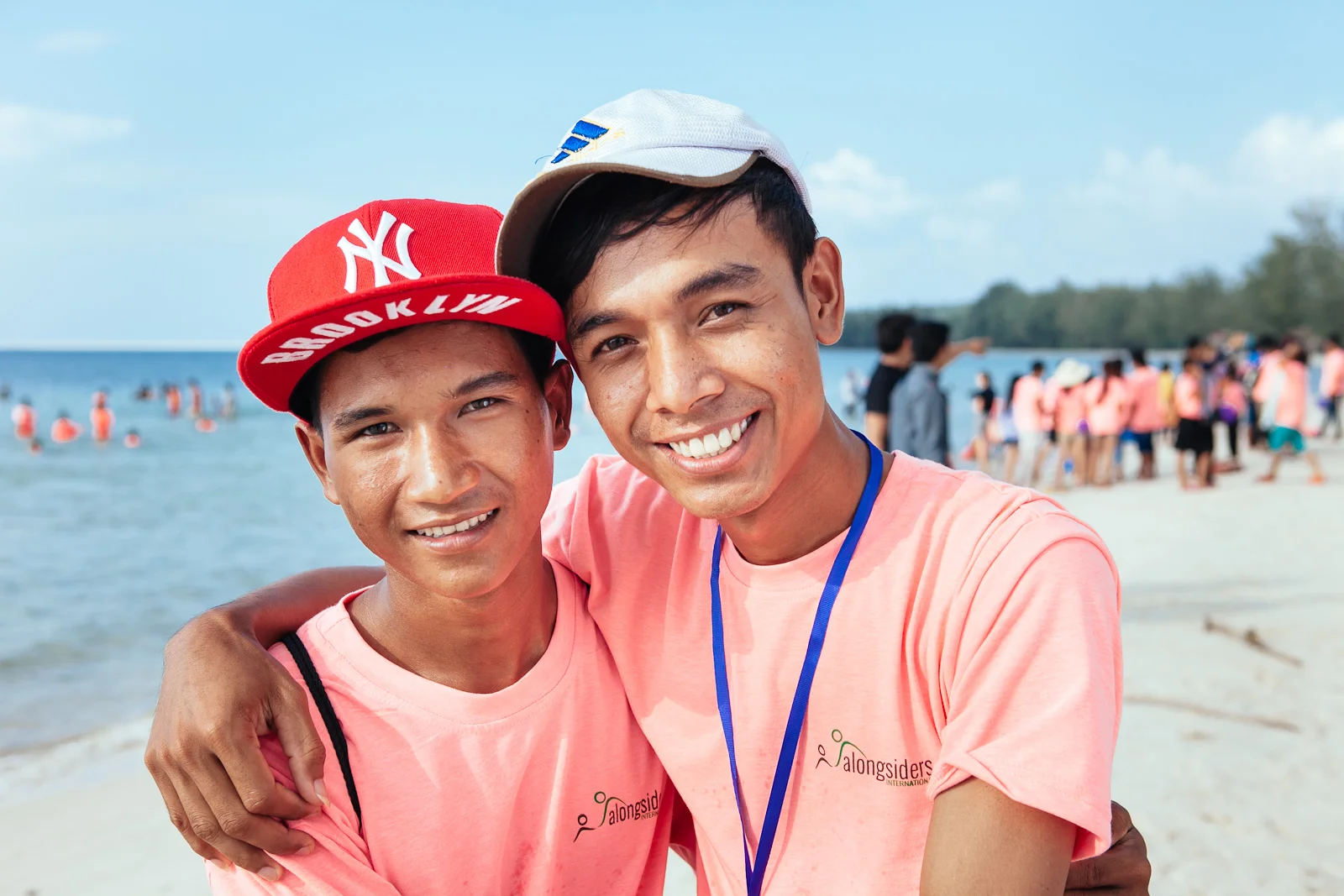
Ni (left) and Sothana (right) at the annual camp this month
Somehow, with encouragement from Sothana, Ni began attending school in his spare time. He's studying at the ninth grade level, but he can't afford any of the after-school classes that most students take. Those classes are important because the quality of teaching during school hours is low, and the students all have to pass exams eventually to graduate.
He's conscious of the fact that he doesn't have specialized skills that might help him find better work in the future. Even if an organization covered the cost of training, he would still have to consider how his family would get by without him. The trickle of money he makes is their lifeline right now, until his siblings get older.
Yet Ni says having an Alongsider and being part of Sothana's church has made a difference. It's kakadao (warm and loving), he says. It's a word rich in emotion, a word little brothers and sisters often use to describe their relationships with their Alongsiders.
"Before I didn't spend time with others," he says, "because in my heart I felt that I was poor. I was afraid and lonely."
One time when the roof of Ni's house collapsed during a torrential rain and ensuing flood, the church members came and helped repair it. All they could offer was a blue tarp roof, but it kept the family dry and helped them get through the crisis.
Last year Ni attended the Alongsiders annual camp for the first time. Previously he hadn't gone to camp because he worried about what would happen to his family if he was away for three days. "But when I went to camp," he says, "I saw lots of other kids like me. I got to know them, and I felt happy, so I wanted to come back again." This year was his second time to go.
Through it all he finds himself making more connections with others: with his Alongsider, with church members, with neighbors, and with other little brothers. It's a significant change for him, considering that he was so isolated before. Now he is sixteen, so he has started thinking about choosing his own little brother next year. But he worries about that, because he's still poor and lacking in viable skills. He feels like others still look down on him, and he questions whether he has anything valuable to offer a little brother.
At the top of this post, I started by saying you'd be surprised at what Ni could teach you. Have you learned anything surprising yet from Ni's story? Here are two lessons we at Alongsiders take from it.
- We know that real and lasting change is a process that plays out in the context of relationships. Those inspiring stories on Facebook often gloss over key details like: careers set aside, years of perseverance, untold hours in prayer, conflicts, emotional stress, and much more. If you want the fruit, you may have to plant the tree and care for it as it grows. (See this previous post about why we don't emphasize the speed of change: 3 Practical ways 'slow and steady' changes the world.)
- Ni has a list of reasons to doubt his capacity, but we believe strongly that he's qualified to serve as an Alongsider. You may doubt yourself; you may even doubt God. Admitting you don't have all the resources and answers is a great way to begin serving someone who is at the end of his or her rope: in a hospital, in a prison or juvenile hall, at a homeless shelter, or in a program for refugees.
You'd be surprised what you could learn from Ni if you walked alongside him and shared his journey.
But there's a catch...
You'd be surprised, inspired, shocked, amazed, confused, bothered, overwhelmed, and transformed, all these things! - IF - and possibly only if - you stuck with it.
Sothana, Ni's Alongsider, says that through sharing his own journey over the long haul with Ni, he knows "true love" in a way he never knew it just by attending church or even in his own family.
If you want all of that - ALL of it, the good and the bad - look around. God has a "Ni" already chosen for you, even as you breathe a prayer asking who it is.
You'll be surprised.

It would be so easy to use money to solve this problem, but we won't. Here's why.
We want to be very clear about how God has called us to serve.
Sometimes all it takes to solve a problem, with the possibility of changing a child's life, is just a little bit of money. If you've got it, why not give it?
But we want to be very clear about how God has called us to serve, as a discipleship movement. And not try to be all things to all people - or to try to solve every problem that a community faces. This is why we need the wider body of Christ.
Not long ago, I was following a small group of Alongsiders and their little sisters on the backroads of a popular tourist city here in Cambodia. We walked along a dirt road, dodging sections flooded by a flurry of rain, and we came to a community of the working poor.
The group stopped and two little sisters pointed out the places where they live. One of the girls, Bourmey (13), beckoned me to her home a few feet off the road and introduced me to her grandmother, who was sitting outside. Theary (19), who is Bourmey's Alongsider, then took a moment to tell me Bourmey's story...
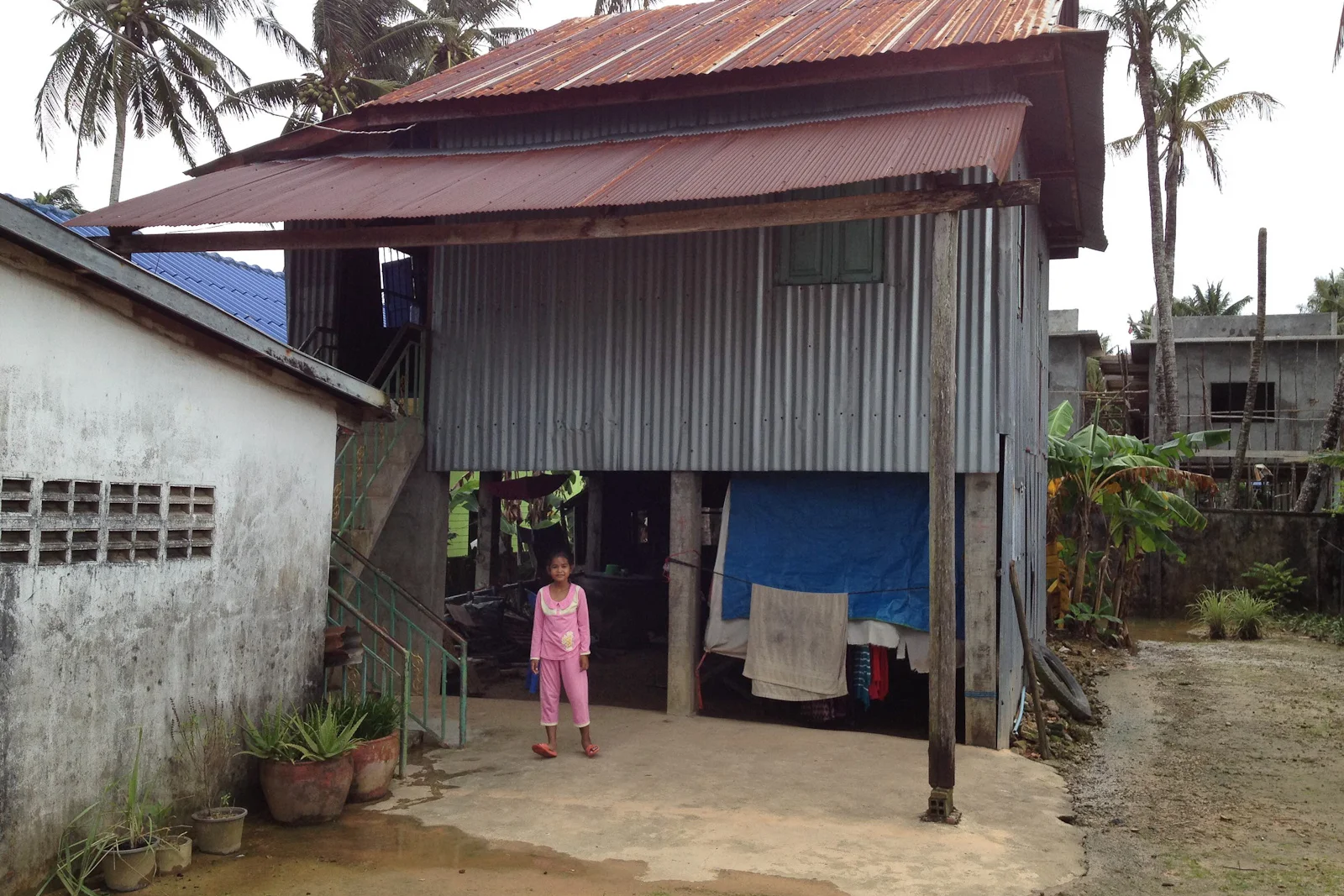
Bourmey standing in front of her house
Bourmey lives with her mother, grandmother, and two sisters. Her father divorced her mother and left the family three years ago, when Bourmey was ten. Bourmey's mother works at a hotel where she earns about $150 per month. Her older sister is also working, but her ailing grandmother can't work anymore. The five of them live on less than $2 per day each. That amount might be sufficient for rice farmers in the countryside, but they live in an urban tourist center with a higher cost of living and no way to raise their own food.
Theary finished by stating, matter-of-factly, that soon Bourmey will have to drop out of school. The family simply can't afford the cost, and they would like her to go to work somehow.
So there it was, the unspoken question: Can Alongsiders (as an organization) help Bourmey?
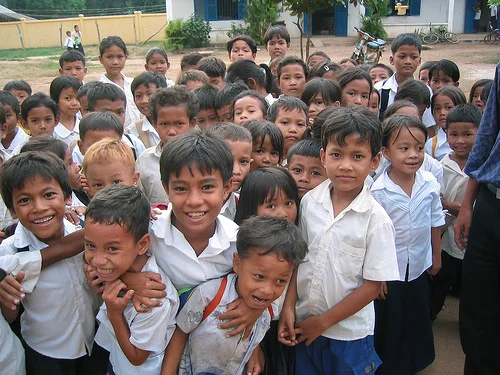
This photo of Cambodian school children was posted online with a request for $10 donations to a respected organization in order to "send a child to school."
It wouldn't take much to make a difference, just a few dollars (or a few kilograms of rice) every month to take the pressure off the family. That's all it would take for Bourmey to stay in school and on track for a better life. If only it were that simple.
In the Alongsiders movement, many little brothers and sisters are among the poorest of the poor economically. Many of their lives seem to hang in the balance for lack of a few dollars a month. I've written here on the blog about Piya who is ashamed to attend school because she can't afford a uniform, and more recently about Saron, a compassionate Alongsider who feels like her future is in jeopardy if she can't get into a free nurse training program.
Surely we could raise money for children and Alongsiders in need, and many people would gladly contribute. Why not?
Here are three important reasons we have decided not to use funds in this way:
1. The most important reason that we are cautious about bringing in outside funds is that many young people who serve as Alongsiders would no longer see any need to give from their own, seemingly meager, resources to support their little brothers and sisters. They would lose the opportunity to be generous and part of the solution, not to mention the chance to grow in faith (hint: think about what Jesus did with 5 barley loaves and 2 small fish). Generosity is an important aspect of discipleship that we want to nurture - but outside funds usually overpower rather than empower.
2. Future Alongsiders would be under pressure to pick relatives and friends as their little brothers and sisters, rather than being motivated primarily by love and choosing the most vulnerable children. It's simply expected, when you come from a family that is struggling with poverty themselves, that you share lucrative connections and opportunities with family and friends first.
3. The majority of little brothers and sisters come from very poor families, so many of them have clear and pressing needs. Once the word got out that Alongsiders was helping financially, the Alongsiders staff would be flooded with requests. And if requests were not met, or if some families received more than others, there would be jealousy and anger. To meet the requests fairly, each situation would have to be investigated, analyzed, and administrated. Soon Alongsiders as an organization would be running a centralized program based on distributing money. It would no longer be a grassroots discipleship movement with nearly unlimited growth potential.
It's not hard to read the list above and agree with the reasoning in principle. Though the Alongsiders movement is having a widespread impact, it should still be clear that Alongsiders is not a "magic bullet" that solves every problem under the sun. We don't drill wells where there is a lack of water. We don't build houses or schools or factories. And we don't give school fees. There are many good NGO's who do those things - and together we make up the body of Christ.
Still, it's another thing to face Bourmey knowing that the organization could help financially, but it won't.
But understand the story doesn't end there. We must give credit for what people even in hard circumstances can do to help each other. And we need to have faith.
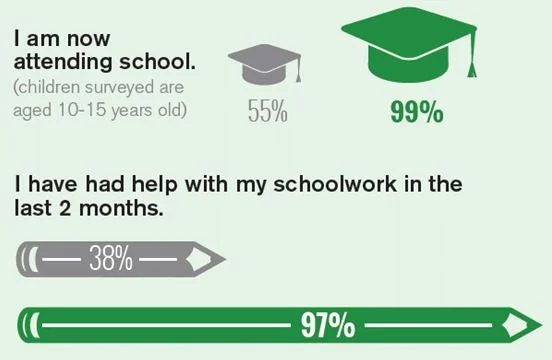
In 2013, Alongsiders International worked with an independent research team to measure the impact that Cambodian Alongsiders were having in the lives of their little brothers and sisters.
One of the most surprising findings was that 99 percent of the little brothers and sisters reported they were attending school. That was much higher than the percentage of their peers in the same communities attending school. It shows the power of the relationships that Alongsiders have with their little brothers and sisters and their families.
Alongsiders is an exciting, growing movement that empowers people at the margins. It is raising up disciples of Jesus who act in love and faith. And they are making a significant impact on hundreds of children and families in Cambodia - and now in other countries, too.
Can you see why we would want to protect this movement by not getting into the money distrubution and management business? (For the record, there ARE admirable organizations working with Cambodian families and providing school uniforms and other subsidies to help keep children in school. The intent here is not to say we should never give money.)
It may seem unsatisfying to not know how Bourmey's story will end. Often blog posts like this one finish on a happy note. Know this: Bourmey is well loved and her story is far from over.
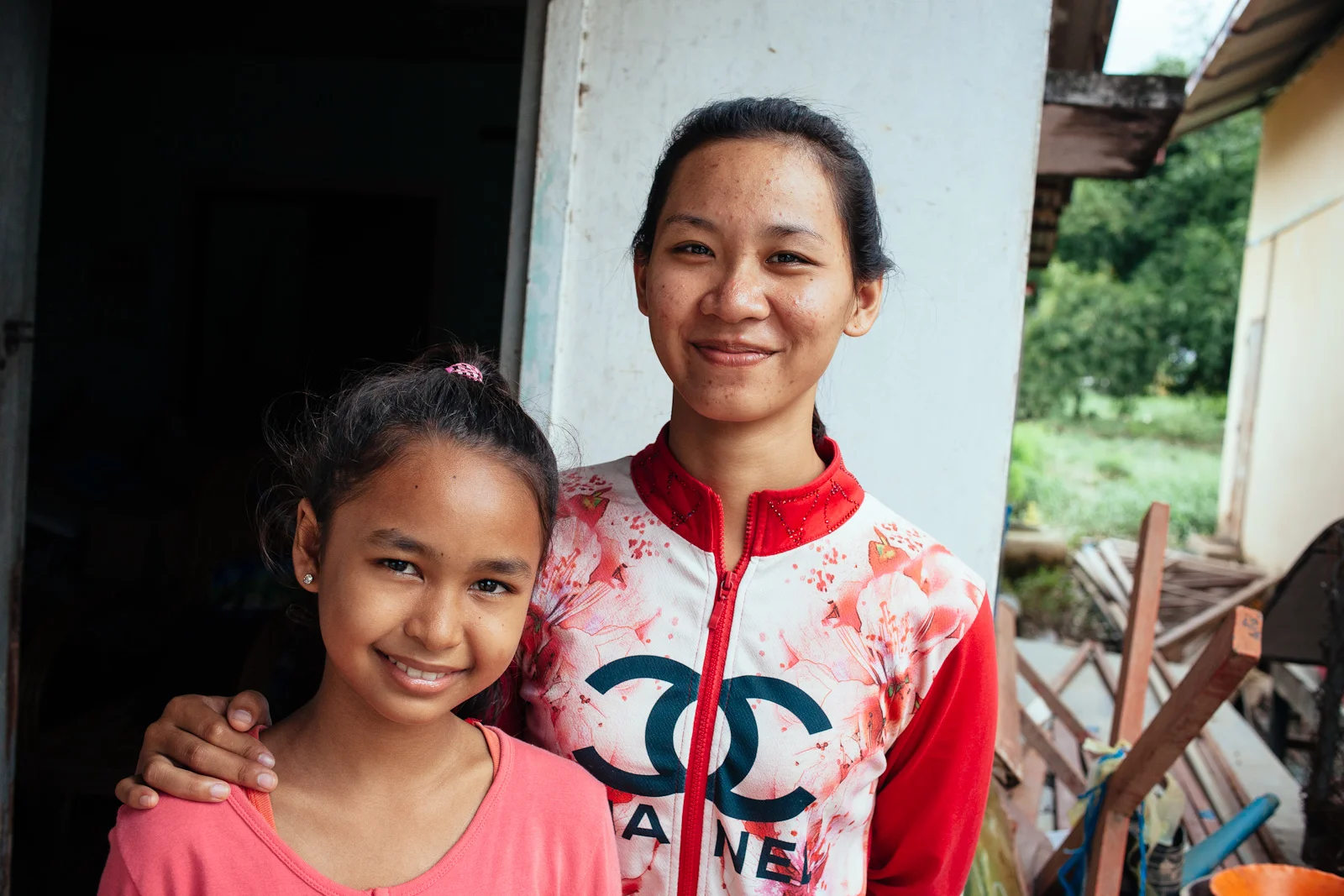
Theary and Bourmey
I want to end with a final word about money and how it's given.
It's been said here before that many Alongsiders use their own money to help support their little brothers and sisters in amazing acts of faith and generosity. We have MUCH to learn from them. As I was writing this post, I heard the following story, and I want to finish with it.
Phearom is one of the coordinators of Alongsiders Cambodia, and he is an Alongsider himself. When I asked about giving money to others, he used himself as an example. I know he earns a modest salary, and I know most of it goes to support his parents and siblings. But he started by simply saying he never gives money to anyone unless he has a relationship with the person first. I wish that more organizations and ministries could say the same. Then he gave this example:
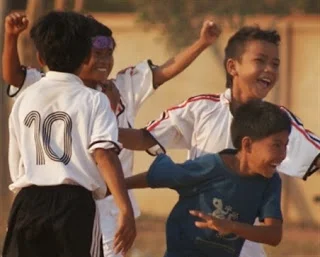
My little brother joined a soccer team and so he wanted to get a soccer uniform, but he didn't have enough money. I said that I would help him buy a uniform, but first he had to go to school, study hard, and rise to number one in his class. He has been going to school every day, and he has been studying hard. It's been nearly a year already, and he is almost number one in his class. I think he'll get the uniform soon.
As you think about this very simple story, ask yourself: How much money is he talking about, and is it "a lot" or "a little"? What will be the results of giving it? What is his sense of urgency? What can you learn from this?

How the parents of this "little sister" came to faith
Saron says, "I saw her situation..."
“I saw her situation, and she was the same as me.”
Minea is thirteen years old. She has a gentle smile and doesn't shy away from my questions. Looking into her eyes, nothing appears to be seriously wrong with them. One eye is too red, that's all. Years ago her little sister was playing with a knife. She threw it, and Minea has only seen from her good eye since then.
Minea's family has often been a place of turmoil and violence. That's why it's so exciting that things are beginning to change...
Saron is eighteen. She asked Minea to be her little sister just over a year ago. They were neighbors at the time, but then Minea's family moved to a new home thirty minutes outside the city. It's hard for Saron to go there, because she doesn't feel safe traveling that far alone, but she visits Minea as often as she can.
Usually they read the latest Alongsiders comic and talk about it. Minea says it helps her to learn more about Jesus, and she likes the practical lessons. She feels stronger now than she did a year ago and more aware of Jesus' love. In the future she hopes to work in a bank.
Saron says she chose Minea because, "I saw her situation, and she was the same as me."
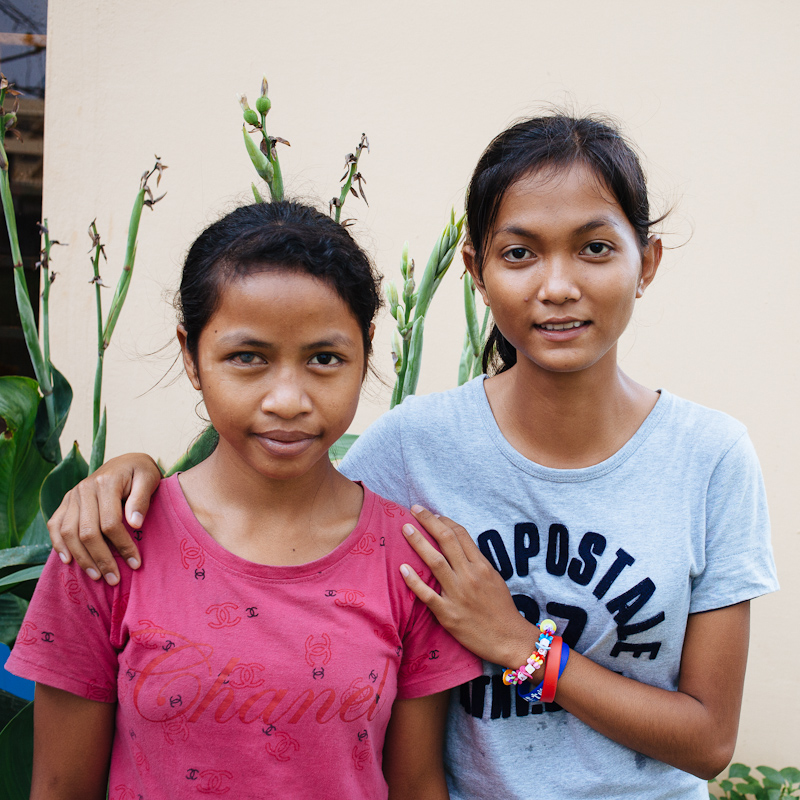
It's a common thing for Alongsiders to say, and it's a powerful statement. Think about it. There are tens of thousands of vulnerable children in Cambodia, and each one is different. Every child has a unique story and individual challenges, and they live in thousands of local communities. How can we help them personally, wholistically and effectively?
That's a lot to hope for. There are some good organizations making a difference, but they can't work face-to-face with hundreds or thousands of children. But Alongsiders can, because Alongsiders live in the same local communities that the most vulnerable children call home - and most Alongsiders have faced similar challenges and vulnerabilities.
You may be asking, why did Saron identify with Minea?
Saron saw that Minea's parents were constantly fighting, hurling abuse at each other and also at Minea and her siblings. That's the same situation Saron grew up in, so she knew what Minea was enduring and wanted to walk through it with her.
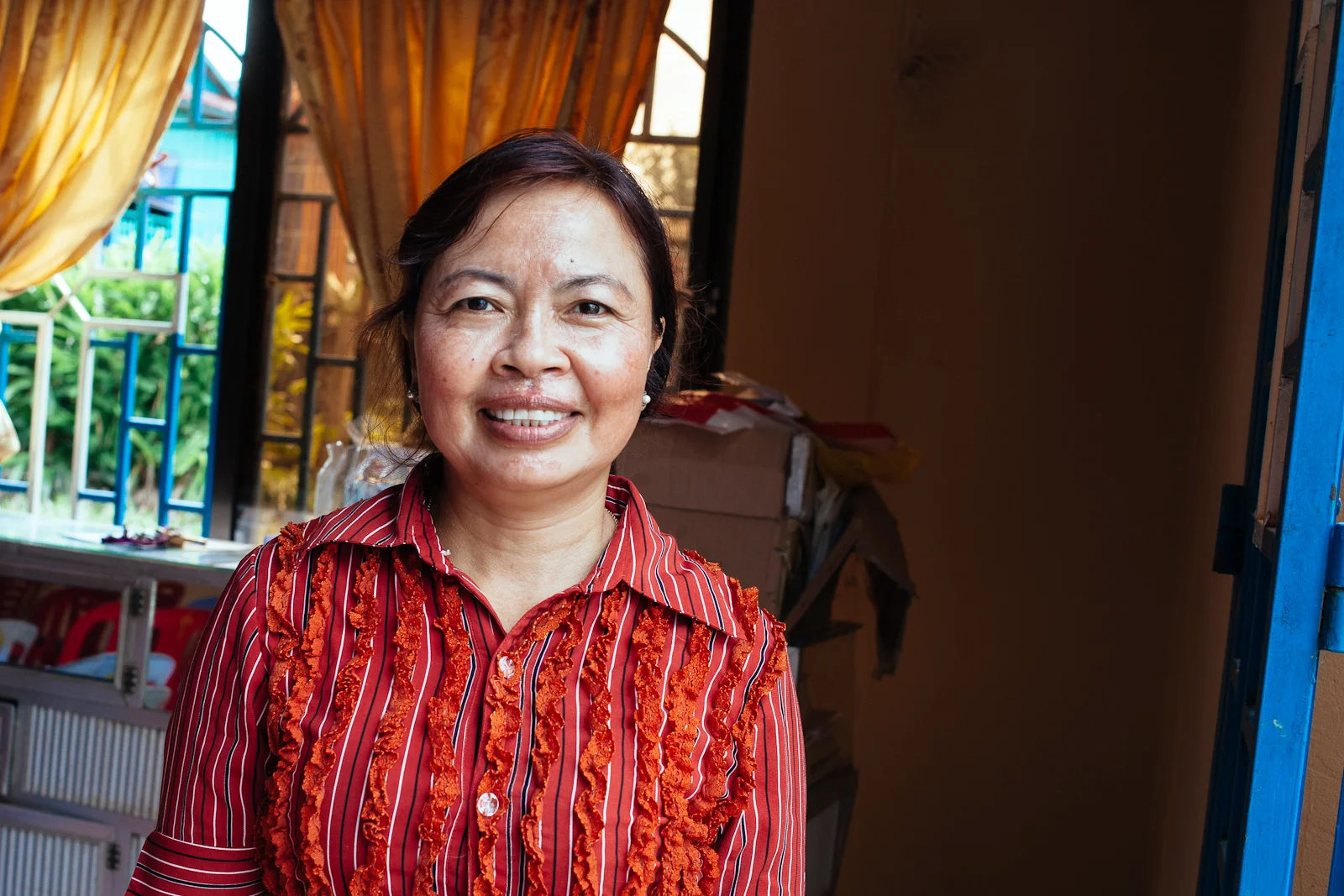
Saron's pastor is a gifted and compassionate leader
And here is the good news: Minea's parents have been changing. This year they came to faith in Jesus. In the past few months, they have been fighting less and less, and they treat Minea much better than before.
This isn't something Saron brought about alone. Members of the church had begun reaching out to Minea's parents before Saron ever became an Alongsider. In fact, Saron's pastor was the one who suggested that Saron consider asking Minea to be her little sister.For the past few months, Saron has been able to visit Minea by catching rides with her pastor - who has been going faithfully to visit the family.
Change and healing come through relationships. When a church community - and a family and neighbors and an Alongsider - come together in love, the results can be transforming!
Of course, some situations resist change.
On the day I met Saron, she had received the results of her high school final examination earlier that morning. The high school exam is extremely important, and she had passed! It's a big deal, so I congratulated her, but she was sad. Her grade was low, and she was afraid to go home and face her parents. They haven't come to faith, and her home is still an angry and abusive environment.
Saron hopes her passing grade will be enough to qualify her for a government sponsored nurse training program that educates tens of thousands of young Cambodian women each year.
I'm sure she would welcome your prayers, and Minea as well.

After 8 years he's looking for his third "little brother". You'll be surprised how ordinary he is.
Sorn may not seem like much. If you were looking for a leader, or a game changer, a guy like Sorn might not turn your head.
Sorn may not seem like much. If you were in his community looking for a leader, or a game changer, a guy like Sorn might not turn your head.
My guess is that ninety percent of us, if we passed Sorn on some dusty road in the province where he lives, wouldn't look twice - unless it was to dodge his slow moving cart filled with vegetables. It goes to show how much we miss.
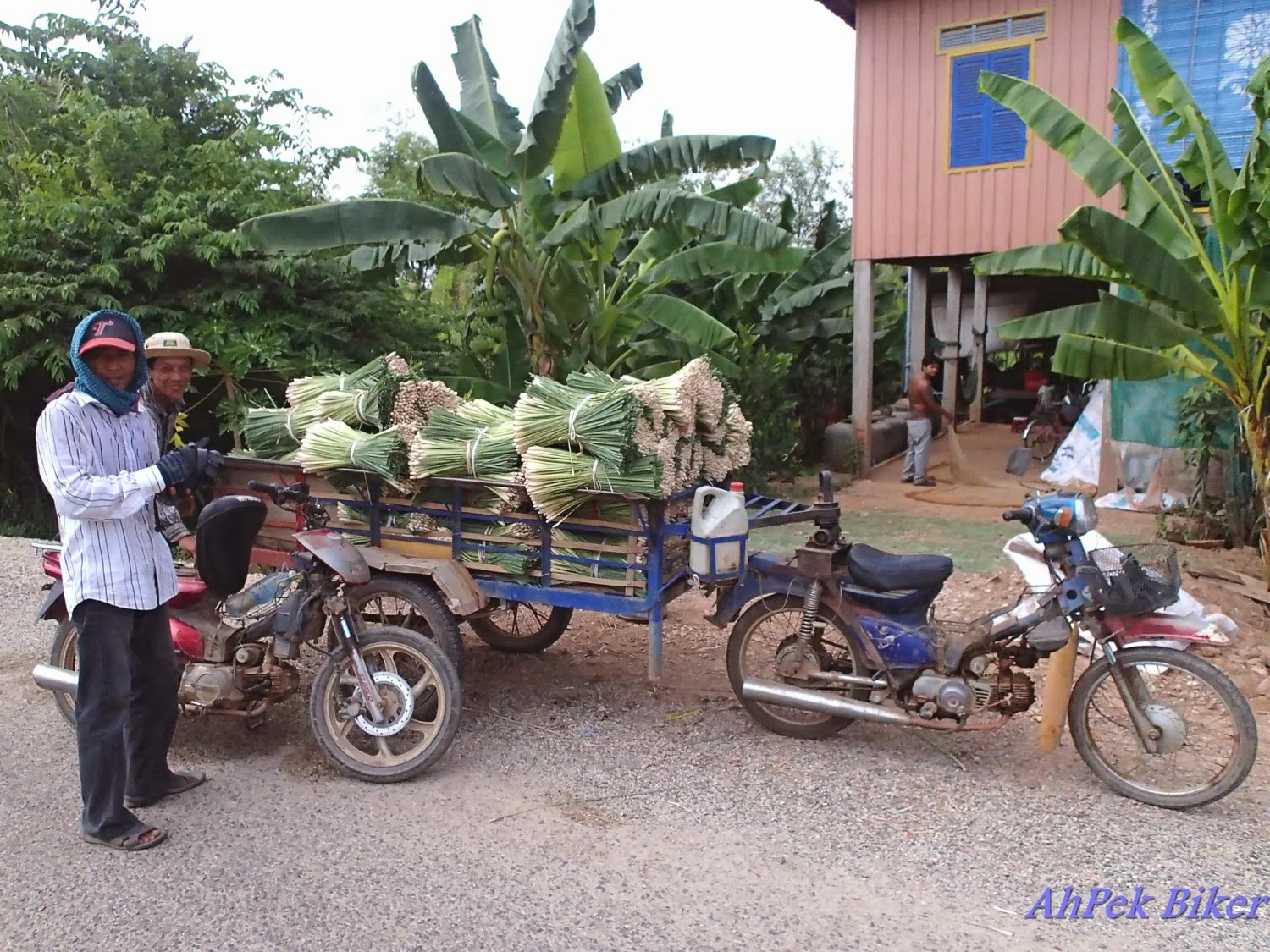
A Cambodian man (not Sorn) transporting produce to market
Every morning at 3:30 or 4:30am Sorn wakes up, hitches his cart to his motorcycle, and goes around to local farmers buying vegtetables. He takes them to one of the nearby village markets and sells them until 2 or 3 in the afternoon. Every day except Sunday.
I say it's hard work. He shrugs and says it's normal. People in rural Cambodia do what it takes to get by.
Unlike many of his peers, Sorn didn't move to one of the country's big cities after high school. He stuck around.
He doesn't give the details, but when he was young his father either left or died. Sorn's mother raised him with support from his grandfather, who is the pastor of their local church. His grandfather wanted Sorn to stick around, and he even helped Sorn find a wife who felt the same way. Two years ago they were married, and their first child was born fourteen days ago.
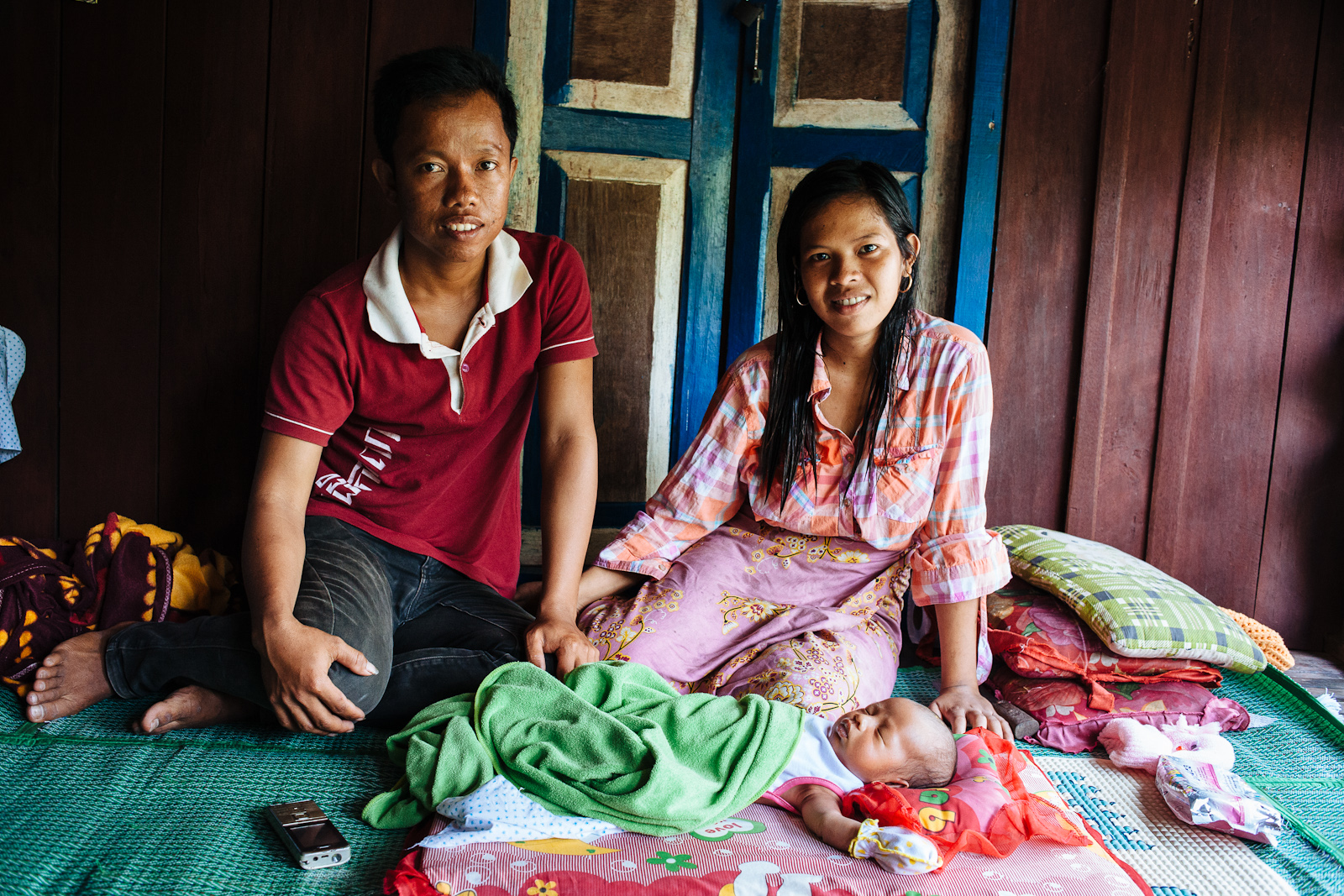
Sorn has been an Alongsider for eight years, since 2007, and he has had two little brothers. Both grew up and became Alongsiders themselves, and both are active in the church now. Sorn says he prayed carefully before choosing each one. He wanted to choose boys who would grow and mature into responsible, faithful adults. Both have done well. One had a brief problem with gambling but stopped after Sorn talked with him about it.
Now Sorn is praying and looking for a third little brother.
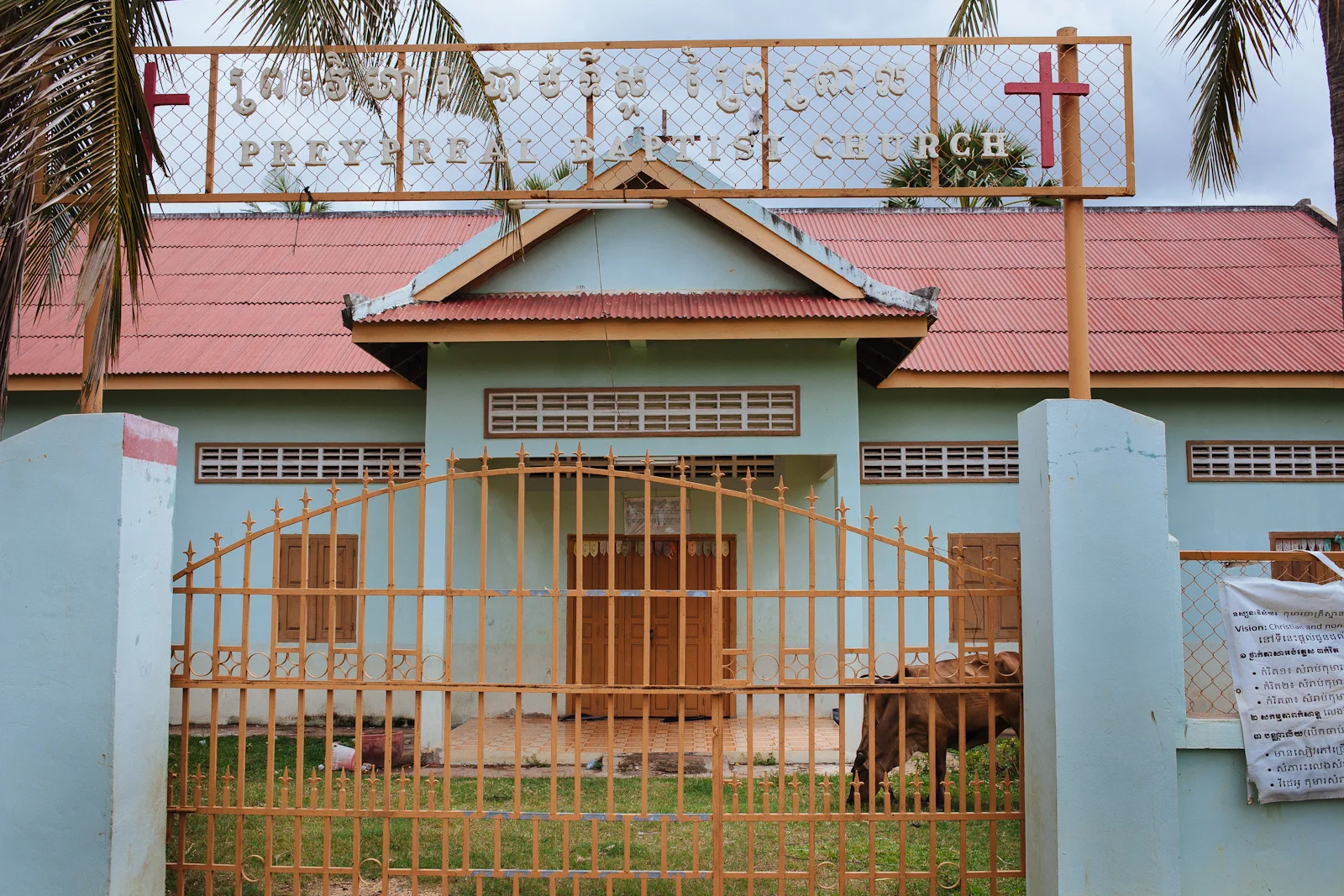
The country church in Kampong Thom that Sorn attends
Sorn has been a leader for the youth in the church for years, and now he is the leader of the Alongsiders group there. It's a challenge, as the majority of the young people grow up and leave for the cities.
It would be easy to tell Sorn's story in a way that depicts him as larger than life, to describe him in poetic terms. Rather, let's just respect him as a human being with a full range of emotions and choices to make in the circumstances of his life. It's because Sorn is an ordinary-extraordinary man in his community that he can bring hope and change starting from within it.
Sorn and others like him and their relationships - not a program or NGO - are making a difference. Our movement and the tools we develop are NOT intended to work through them, or despite them, but to support them, to engage them, and to set them loose.
The secret of Sorn's humanity (and ours) is this: God works through him in love. The key to our movement is this: to respect him, support and equip him, and then get out of the way.

Reflections from an intern: "What the slum taught me about changing the world"
How could I possibly love a family and community so much and still walk away?
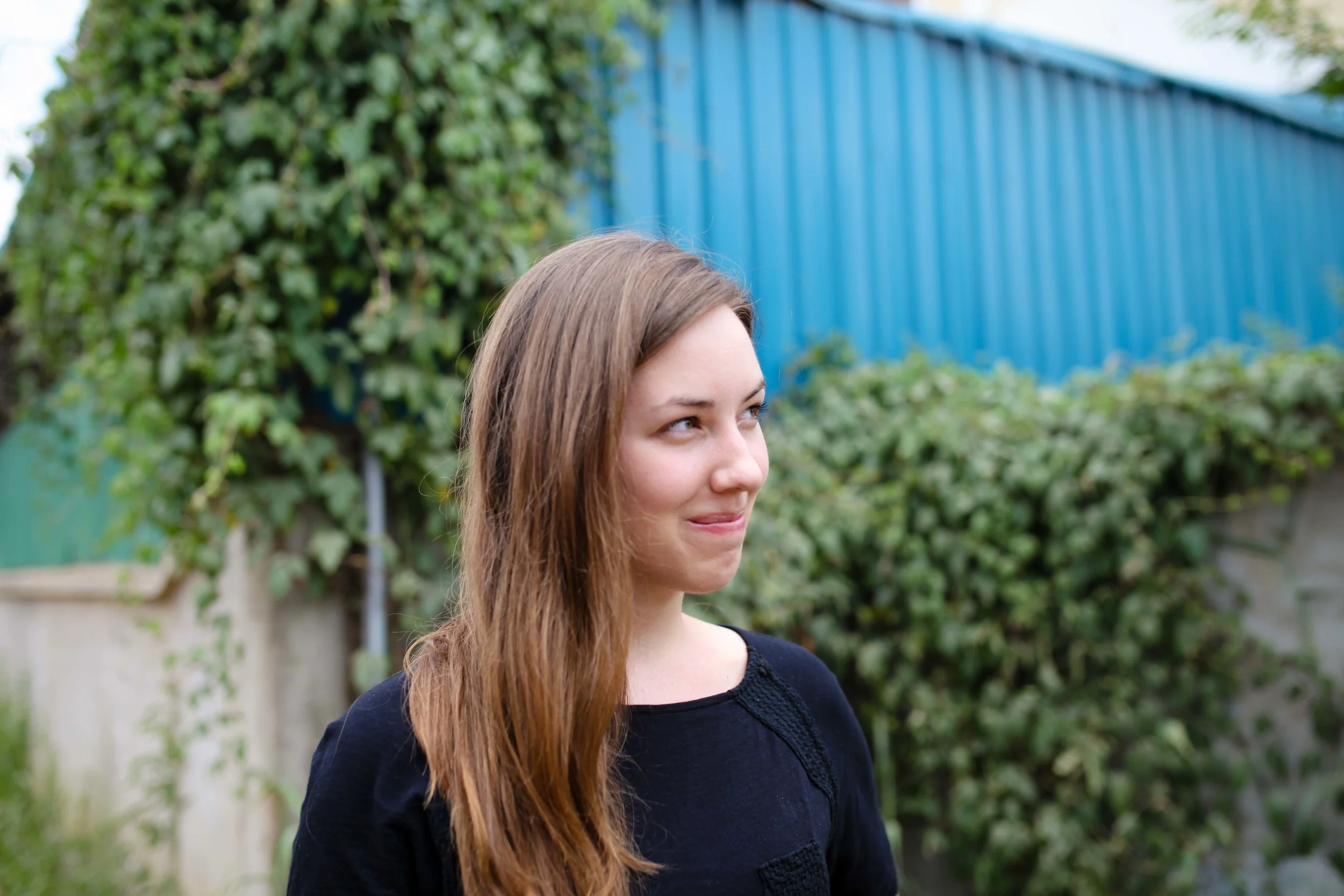
Whenever anyone asked me what I wanted to do when I grew up, I answered, "Change the world."
As an intern for Alongsiders International, I was excited to travel to different Cambodian provinces to conduct interviews, write for the blog, and live in a Phnom Penh slum. I was sure I would see God working in incredible ways in my slum community.
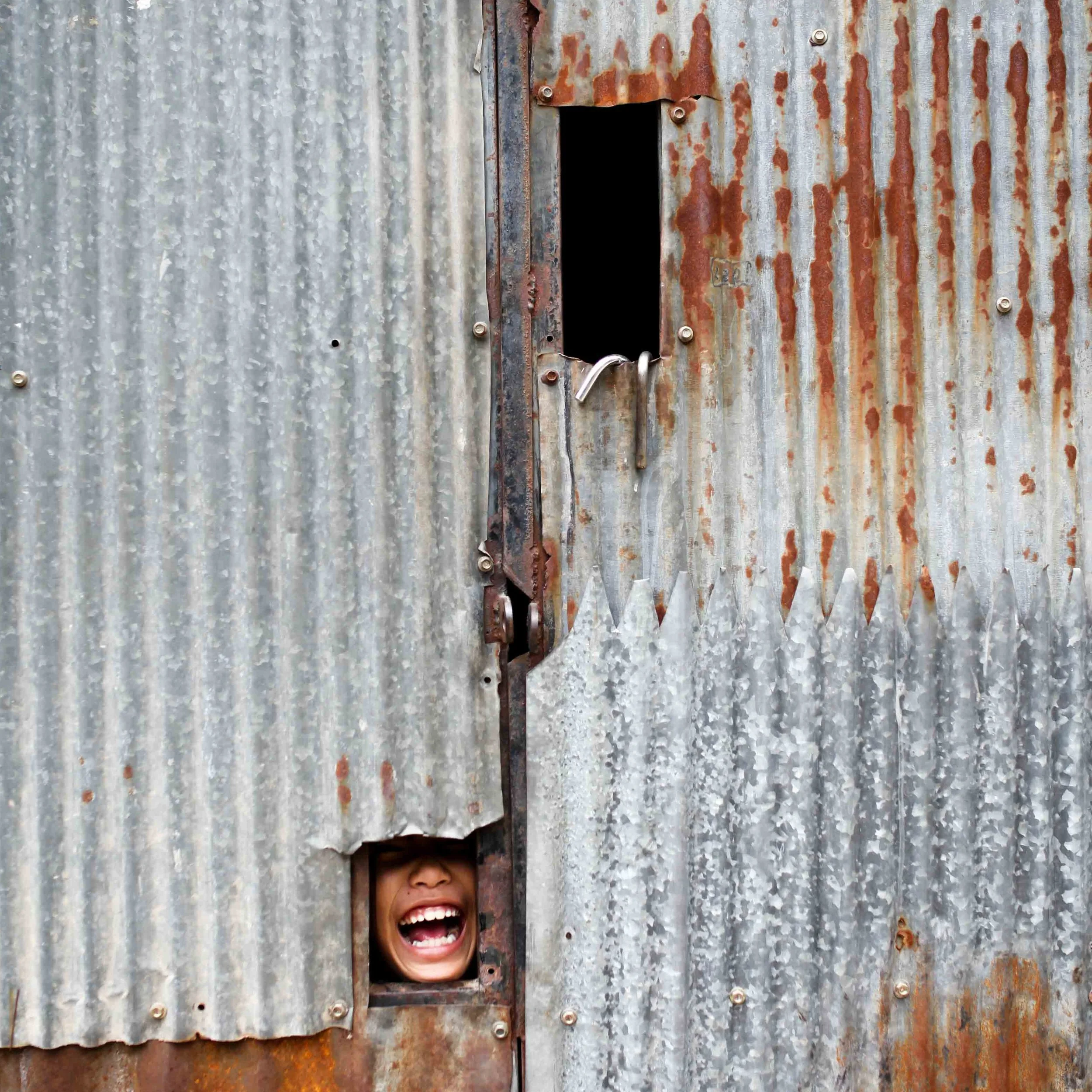
I moved into an extended family of eight people, a dog, several pesky rats, and a million mosquitoes. I took bucket showers and slept under a mosquito net. I ate rice three times a day and tried hard not to get food poisoning. I went with Ming to the market to buy live frogs and helped her and her son cut them up and cook them. I biked to work in crazy traffic and learned to ring the bell on my bicycle when turning corners to alert other drivers to my presence.
Most importantly, I fell in love with my host family and neighbors. I'll never forget the night I carried the baby outside the slum to a sand dune to watch the sunset, while she laughed and clapped her hands. Or the night that Theary and I read Alongsiders comic books for hours. Or all the days spent playing Moan, Moan, Tia with the neighbor kids (Cambodian duck, duck, goose). Or rocking in a hammock while eating green mangoes dipped in chili powder and salt, trying to communicate with my host family using my limited Khmer.
But I also can't forget the hard things: the nights I ran to the bathroom with food poisoning. The day a drunk man shook Ming, and her terrified little granddaughter tried to slash him with a wire hanger. The meals when I looked down to see yet another plate of boiled, fatty fish and steeled myself to choke it down again. The neighbor lady who would slap her her little daughter. The food offerings made to ancestors by people who could hardly afford three meals a day. The rubbish and the stench everywhere.
Most of all, I can't forget the way I had to leave. One of the sons had a party, and eight hungover men sprawled in the living room later, my time in the slum came to a screeching halt. I cried to leave, choked back tears when Ming asked if I still respected her family. How could I possibly love a family and community so much and still walk away?
Because I had money and a support network, I could walk away and find new housing. The young granddaughters staying with Ming weren't so fortunate.
I had spent three weeks living beside them, playing with them every day, and now I had nothing to show for it but a broken heart and a lot of memories that were suddenly more bitter than sweet. I had read the story of changing the world, and this wasn't how it was supposed to go-- was it?
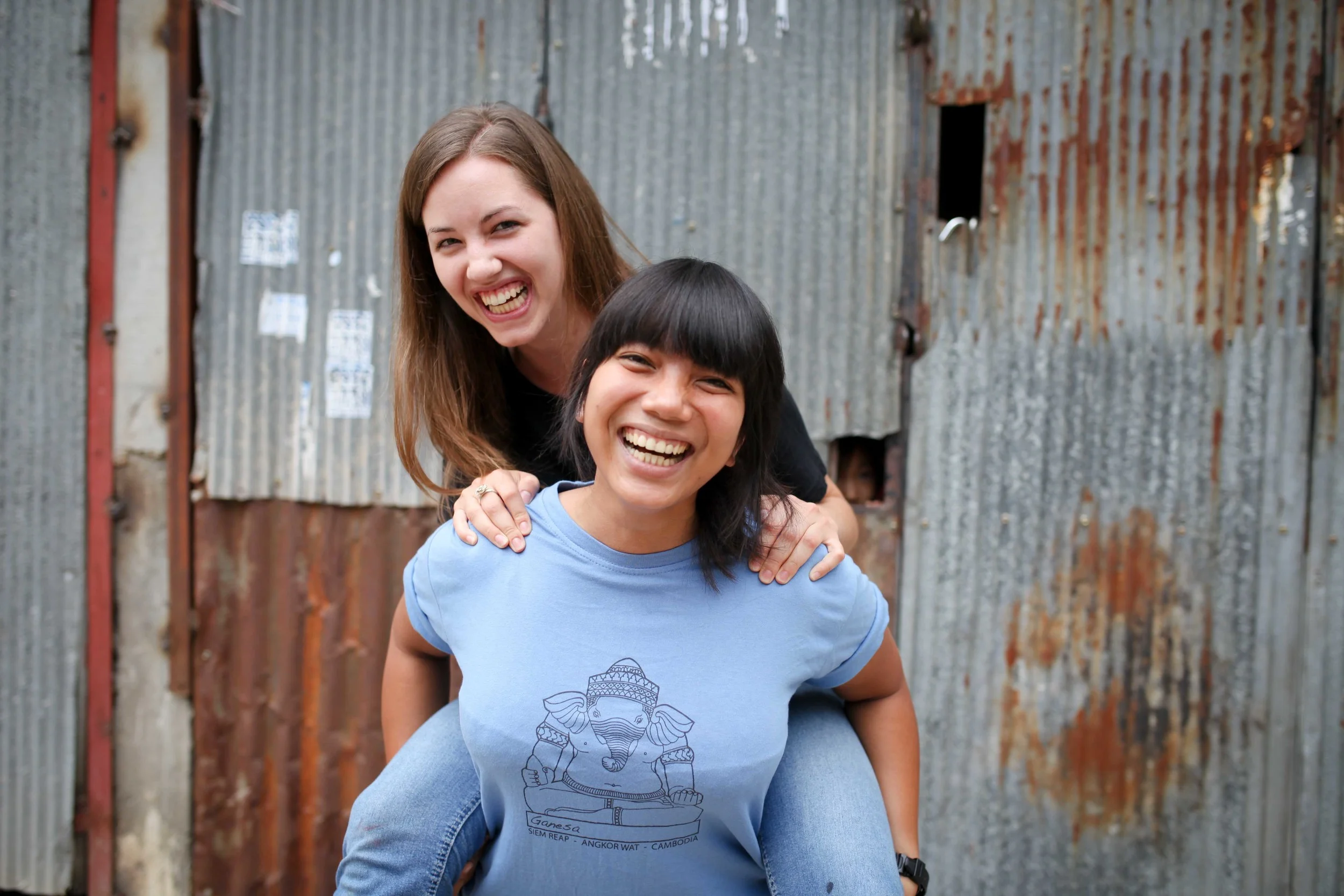
As I tearfully told the story to a friend, she stopped me. "What if living in the slum wasn't about you changing the slum but about the slum changing you?"
During our listening prayer time at Alongsiders the next day, I closed my eyes and told God how much it hurt to have fallen in love with my slum community, invested wholeheartedly in it, and then been forced to leave it unchanged. I poured out my prayer, and waited for His response.
He said simply, Listen.
“You are anxious and troubled about many things, but one thing is necessary. Mary has chosen the good portion, which will not be taken away from her.”
Over the next few weeks, I began to listen to God. At my new house, there was nothing for me to help with, so I found myself with a whole lot of silence and spare time. In the stillness I realized why it had hurt so badly to leave the slum: my identity had gotten wrapped up in making a difference. I was basing my worth as a person on 'changing the world,' at least in my Cambodian slum. Yet I myself had loved the people in the slum for who they were, not for anything they did.
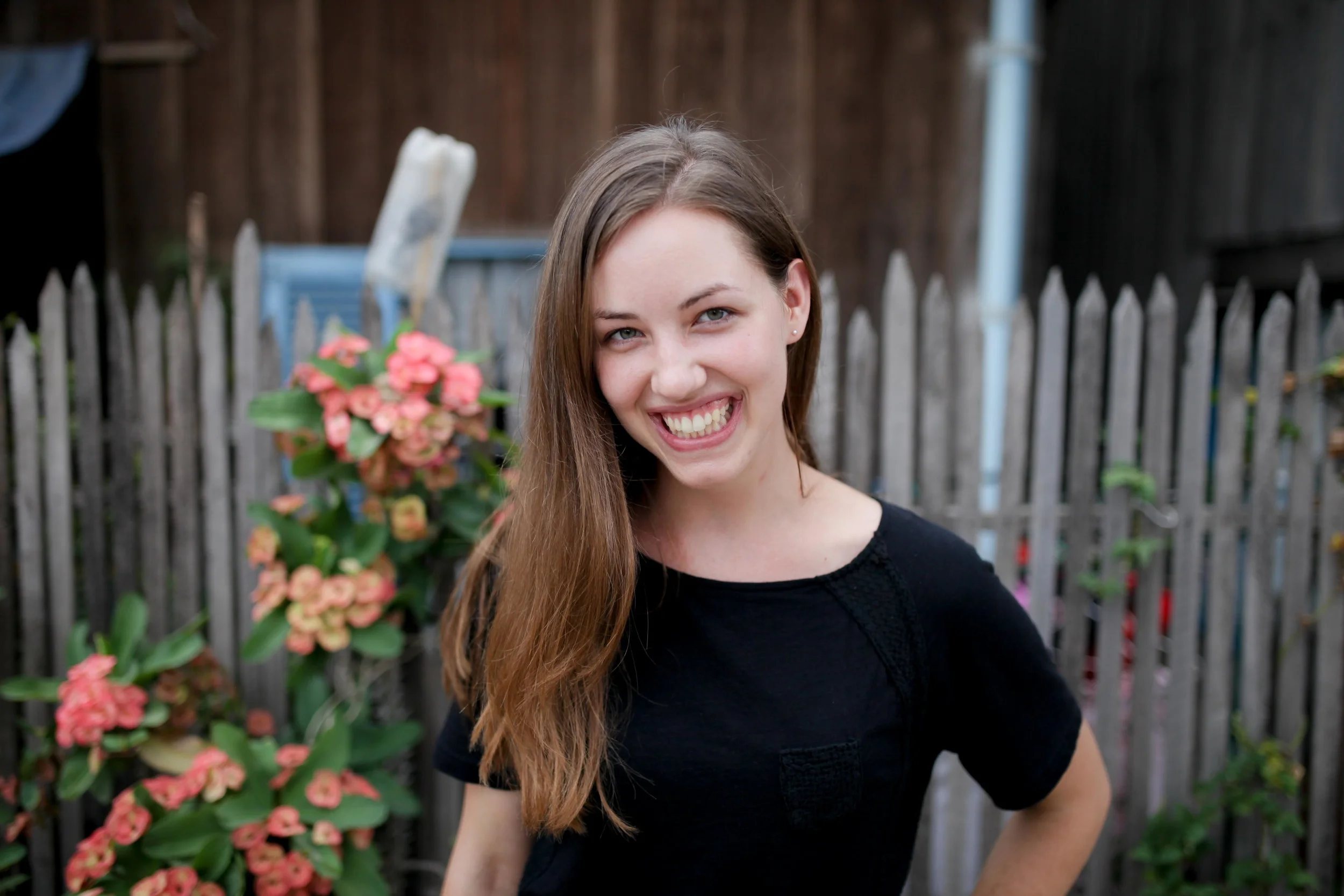
The week I left the slum, I re-learned two important things: I am not the savior and my worth is wholly in the Savior. Ultimately, I learned that changing the world starts with being changed.
Three weeks later I got a text from the son: "I want to know that you feel safe now. I am sorry for the inconvenience. Our family would like to say goodbye before you leave."
So I head back to the slum one last time, to say goodbye to the community I've laughed and cried with, the community that taught me that worth is in being not in doing. As I walk back down my old street, the children come running. "Hello!" they cry. "Hello!" I enter the gate and Ming comes out and gives me a hug. My heart begins to heal as I greet her in Khmer.
It wasn't exactly the incredible summer of changing the world that I'd planned on. But I don't regret it for a second.
“When life is sweet, say thank you and celebrate. And when life is bitter, say thank you and grow.”
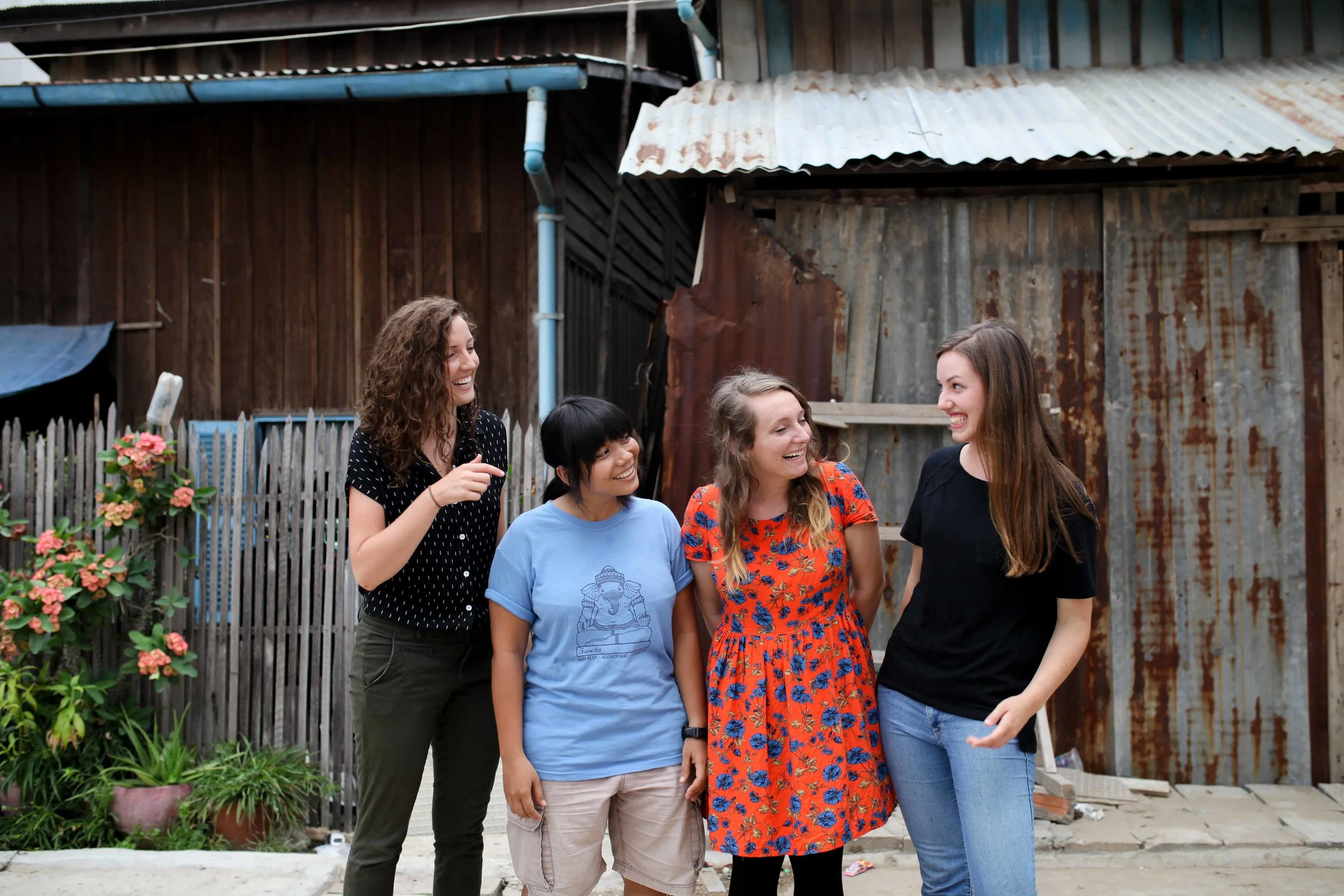

The story of an intern, an Alongsider and a bowl of rice
This is what happens when two young women step out of their comfort zones.
“Charity is simply giving someone crumbs off your table. Justice is giving someone a seat at your table.”
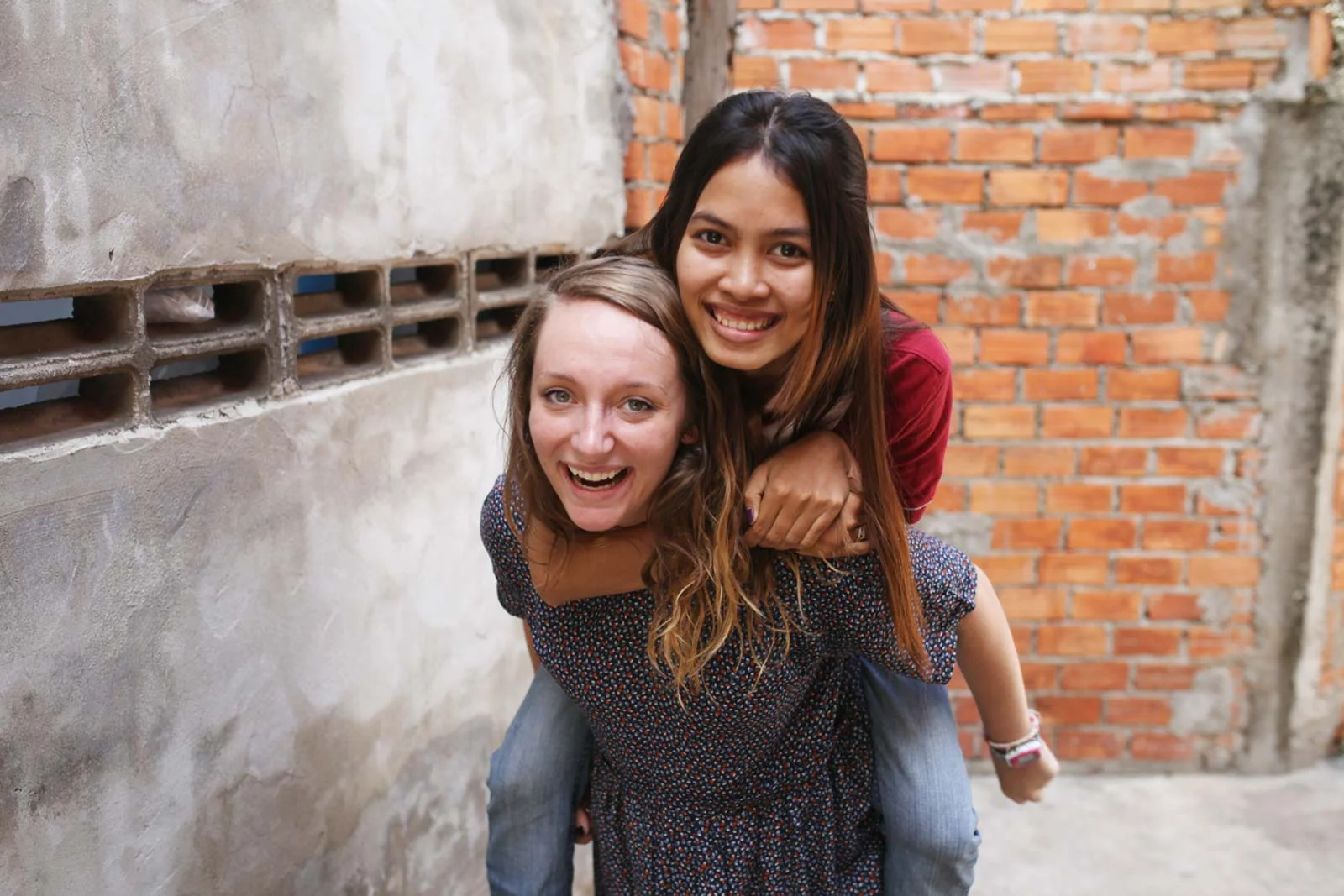
For Karuna Seng and Brooke Hill, it's been an unforgettable summer. Both twenty-one year olds have had the opportunity to travel to a different country through their work with Alongsiders International. Along the way, they've been learning what it means to serve people as their equals.
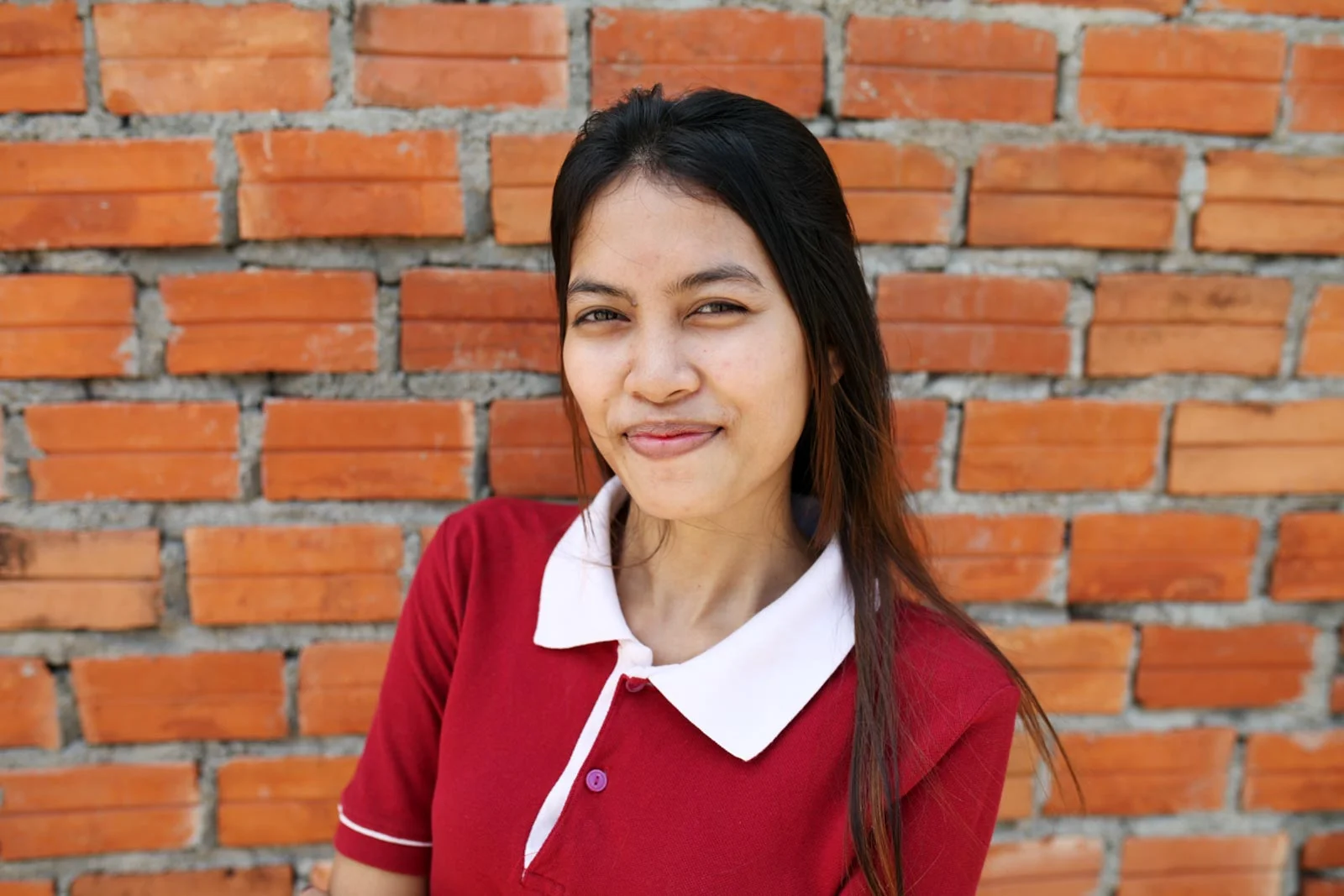
Karuna Seng grew up in the Chak Angre Leu, a slum community in Phnom Penh. Her father died in an accident when she was ten, leaving her, her mother, and sisters living with their grandmother. After his death, a woman in her community invited her family to worship at a local church.
Karuna didn't understand the service, but she was warmly greeted and welcomed by everyone there. Her heart filled with happiness as they shared some cake together.
Shortly afterwards, a woman in the youth group invited Karuna to become her little sister in the Alongsiders movement.
Karuna didn't understand what Alongsiders even was, but she was so excited to be invited by Somaly that she quickly agreed. Somaly took Karuna to Sunday school each week, and eventually Karuna became a Christian. Somaly taught her many important lessons, including how to clean herself and how to study hard so that she could get a good job later.
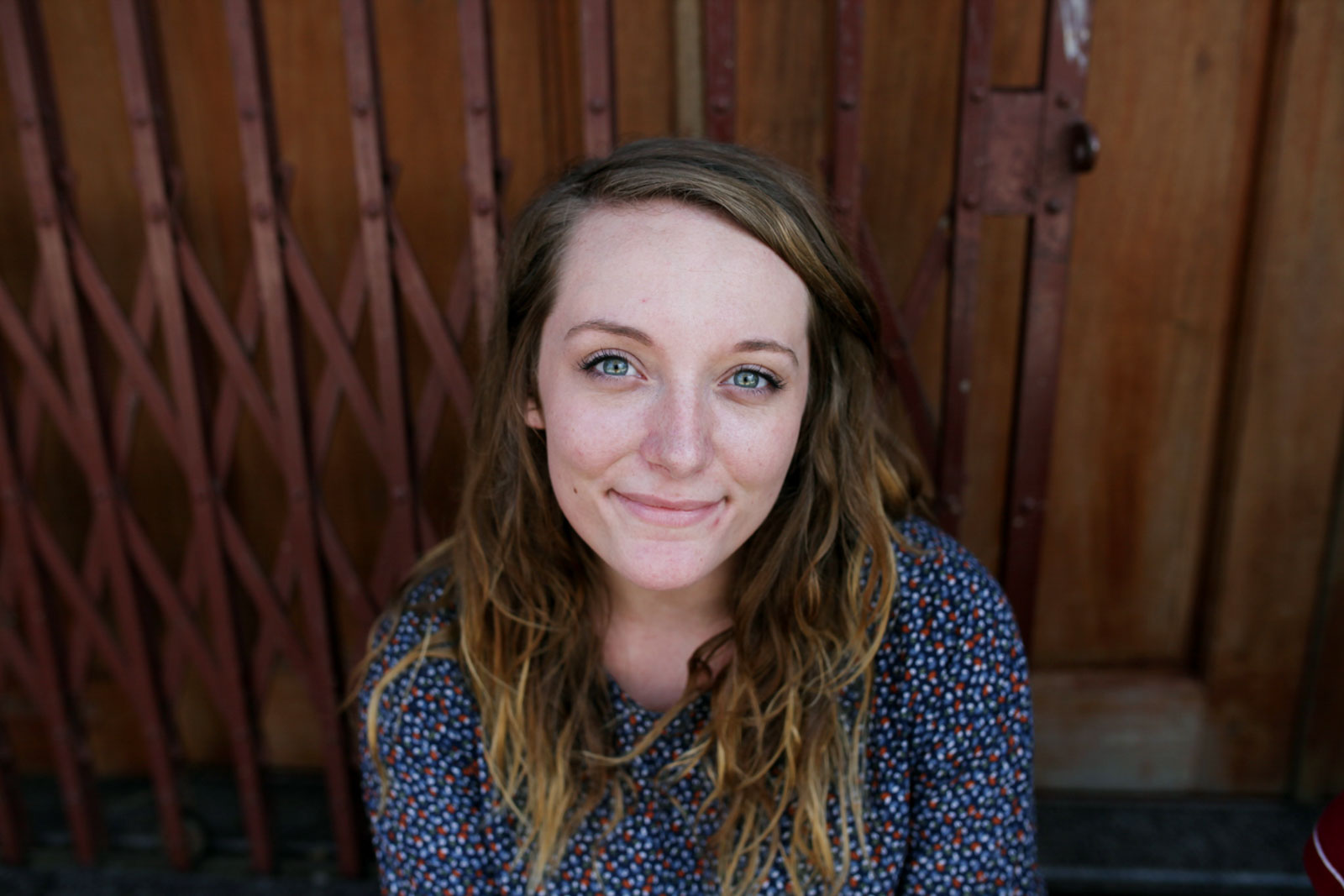
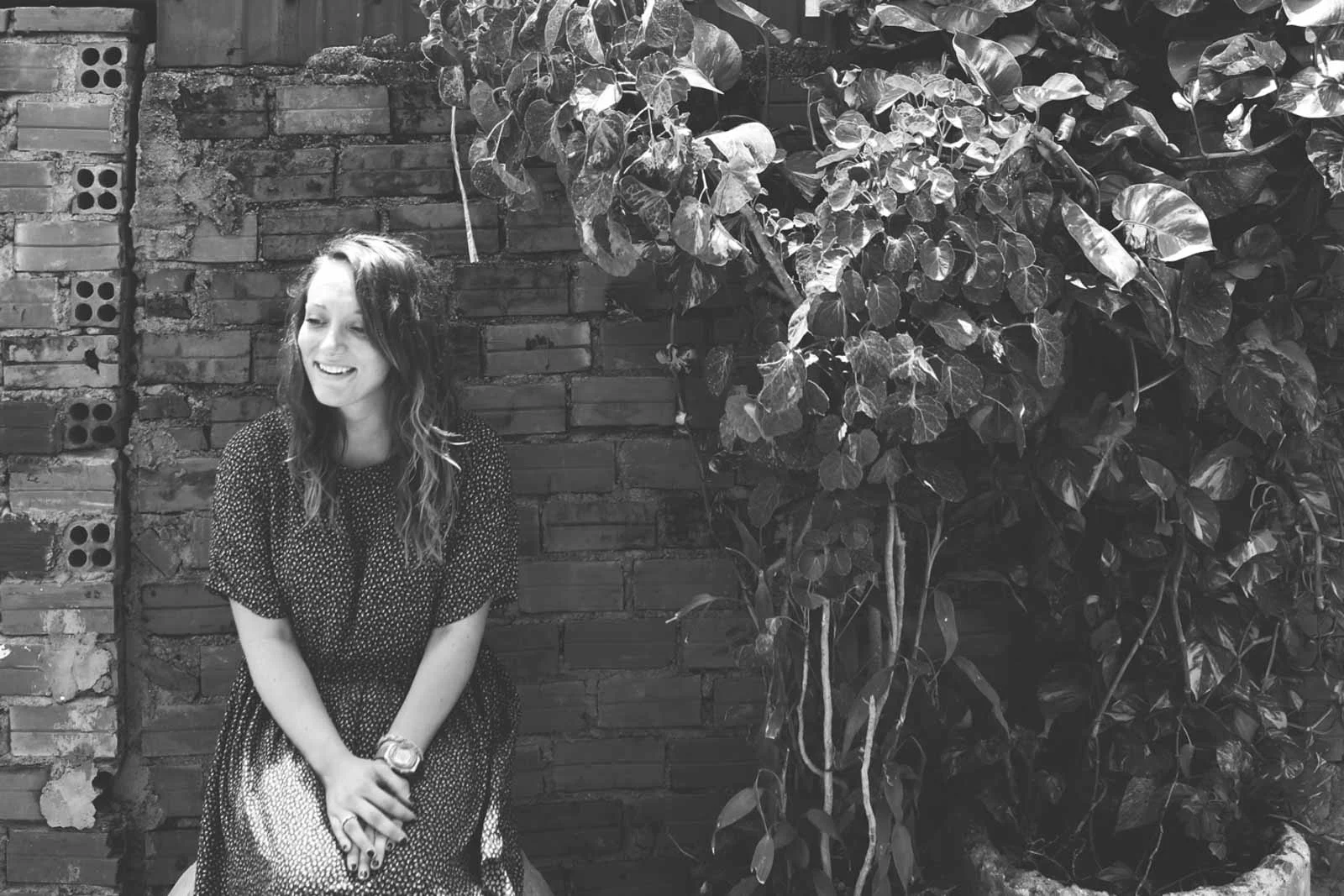
On the other side of the world, Brooke Hill was growing up in a small agrarian town in Missouri, USA. Growing up in a broken home, Brooke did not understand the depth offered in community.
Like Karuna, Brooke lived with her mom, and often missed her dad. As a representation of many American families, Brooke's family usually did not eat dinner together.
Also, like Karuna, Brooke discovered fellowship with local Christians. When she was at her friend's house, at age twelve, she saw a picture of kids at Christian camp. She thought it looked like a lot of fun, so she asked her mom if she could go. During an incredible week being welcomed by many loving people at the camp, she became a Christian. At the age of 16, she heard about missions at a Christian conference and was fascinated by the thought that some people spend their lives helping other people.
After a few shorter mission trips, Brooke decided to combine her love for the Lord, her heart for people, and her skill at photography in a summer internship with Alongsiders. In May 2015, she moved into Chak Angre Leu, right down the alleyway from Karuna.
For the past two months, Brooke has slept under a mosquito net, taken bucket showers, and eaten lots and lots of rice. Through laughter and language learning, Brooke has built relationships with her host mother and new neighborhood.
One of the first things Brooke noticed is the way everyone in the community looks out for each other. The most commonly asked question is "Have you eaten rice yet?" Her host mother feeds everyone who answers no. Many elderly women without steady income stop by regularly for meals. Meals are a time of fellowship and unity for Brooke and her community.
When Brooke first arrived in Cambodia, a little girl named Dali came over to the house and asked her name. Since then, Dali has come over every day to play with Brooke.
Every evening she walks in asking, "Hello Brooke, how are you?" Brooke loves to listen to Dali sing "Open the Eyes of My Heart."
Brooke reflects: "Dali has the purest form of faith I have ever witnessed. [She teaches me] that life is much bigger than myself. Dali has reminded me of the importance of praising God regardless of circumstances. When I return back to the States and my heart is aching for the people I have met in Cambodia, I pray that I will ask God to open the eyes of my own heart, that I may be open to sharing this same love and faith with those I encounter, just as Dali has done for me."
When she's not spending time with Dali or others in her community, Brooke works as an intern photographer for Alongsiders. She rides with Karuna on her moto to the Alongsiders office, where Karuna works as the receptionist.
Karuna is now an Alongsider herself, walking beside her little sister Vegegar in Chak Angre Leu. Karuna recently traveled to Singapore to share her story at an Alongsiders fundraising banquet. It was her first time outside of the country, and what she saw changed her.
Singapore was clean, beautiful, and organized. Cars obeyed the traffic laws and people waited in lines. Karuna couldn't believe that there was such a thing as a bus timetable, as she was used to waiting for the bus until it eventually showed up at an unspecified time. "When I saw that, I was so proud of their wisdom," she reflected. Her time in Singapore gave her a vision for her own country.
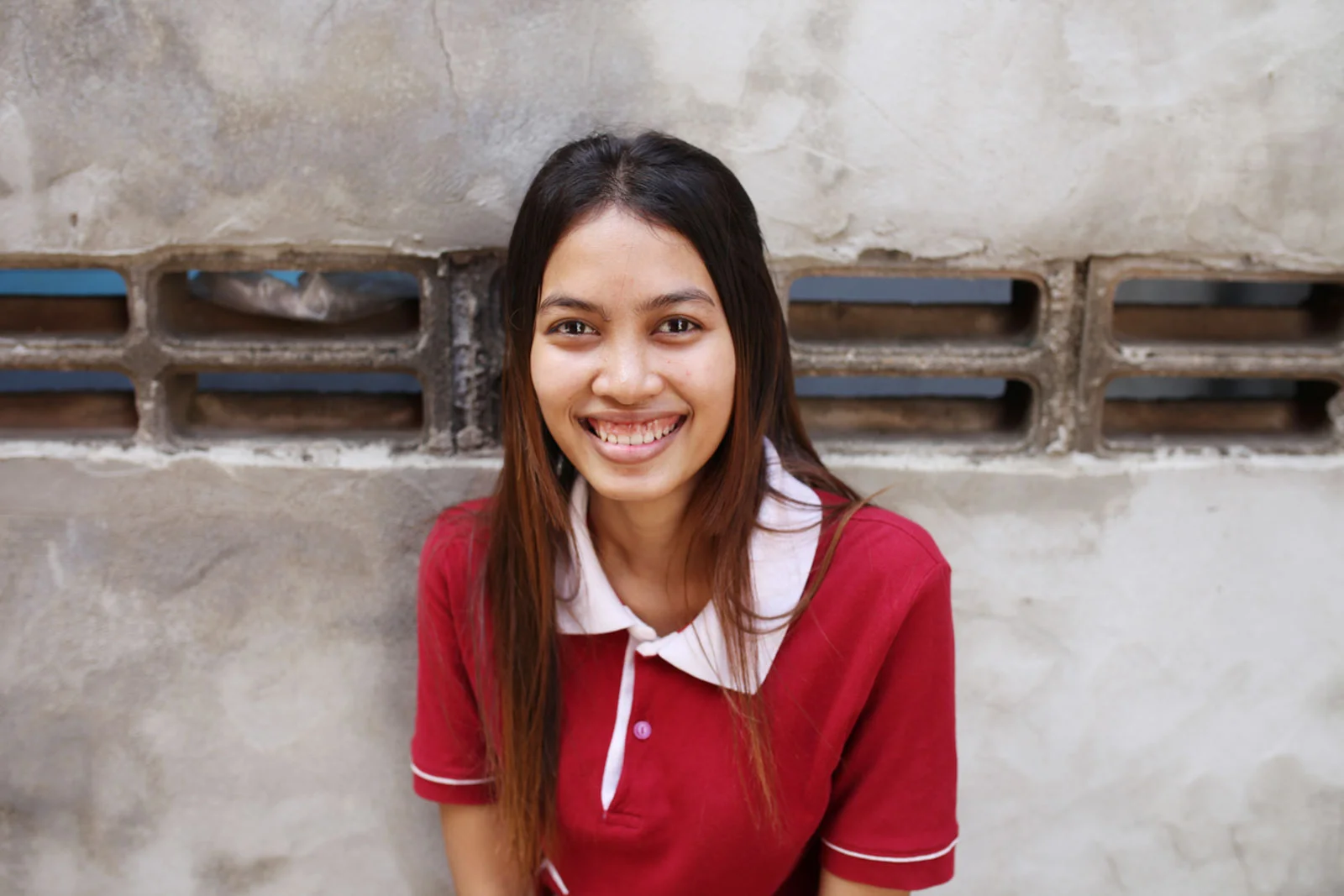
One of the most poignant moments was the prayer time at a Singaporean church they visited.
Karuna and the other Alongsiders present were intercessors at the end of the service for anyone who wanted to ask for prayer.
As an older man came forward to ask Karuna to pray for him, she hesitated. "He was rich and older than I, so why did he want me to pray for him?" Karuna asked herself. In that moment, God spoke to her heart that He had lifted her up to pray for these people. Tears streamed down her face as she prayed from her heart in Khmer for the Singaporean man.
Next she prayed for a woman who cried with her. It was a moment Karuna will never forget. "I hope God was working through me then," she said earnestly.
Back in Cambodia, Karuna shared about her experience in Singapore during the Alongsiders' Office devotional time. "May God open the eyes of my generation so that we can transform our country," she prayed. In the future, Karuna hopes to see three changes in her country.
- Justice for the poor
- An end to government corruption
- Respect for all people
"Someday, I want everyone to have rice together," Karuna dreamed. "No one will hold onto their position and use their power to set themselves above each other. We will all have rice together."
It's been a summer of learning to walk alongside those who are richer or poorer than themselves as equals. For Karuna, it's meant sharing her story and offering prayer for the people in Singapore. For Brooke, it's meant building friendships with people in her slum community. But for both of them, it's meant eating lots and lots of rice.
“My soul magnifies the Lord,
and my spirit rejoices in God my Savior....
He has shown strength with his arm;
he has scattered the proud in the thoughts of their hearts;
he has brought down the mighty from their thrones
and exalted those of humble estate;
he has filled the hungry with good things,
and the rich he has sent away empty.”

Rewriting Cinderella: how we tell the story matters
Why Alongsiders is telling narratives of poverty differently.
Recently, I met some short term missionaries who were handing out fashion sandals to rural villagers. After Sally, one of the women on the team, fastened the flimsy sandals onto the feet of a local woman, she took a selfie with her. “I hope she feels like Cinderella, with this new pair of shoes!” she squealed.
For Sally, helping people in poverty meant acting as a fairy godmother, handing out the metaphorical glass slipper.
And largely, that’s become the poverty narrative told by the West. Give your money or your sandals, donate your gently used clothing, volunteer for a week at an orphanage, and you will change someone’s life.
But the West is not the savior, and villagers in the developing world are not Cinderella. It's time to get the story right.
Consider the story’s characters. Research demonstrates that the words we use to describe people influence how we treat them. If we define them as Cinderellas, then we’ll characterize them as dependent, helpless, and in need. Accordingly, our response will be to pity and patronize, giving financial gifts and instruction. We'll place ourselves on a plane above them, as the fairy godmother was more powerful than Cinderella.
Or, if on our quest to serve the poor we encounter youth who seem harder to serve, we will label them as deviant, dysfunctional, and disobedient. And based on these labels, we will either punish or ignore them.
In Reclaiming Youth At Risk, authors Brendtro, Brokenleg, and Van Bockern encourage readers to consider another solution: the "Reclaiming Environment".
The foundation of the Reclaiming Environment is a relationship. It's not about handing out shoes to people you’ll never see again. Reclaiming Youth at Risk is retelling flawed narratives of poverty and "troubled" youth. It's a book that gets the story right.
The Reclaiming Environment begins when we give empathizing labels. Rather than characterize youth as disobedient and deviant, we place ourselves in their shoes and ask “How did they end up in this place?” This mindset will help us characterize at-risk youth as rejected or discouraged, and feel concern and sympathy for them. The corresponding reaction will be to befriend and encourage them.
“He drew a circle to shut me out.
Heretic, rebel, a thing to flout.
But love and I had wit to win.
We drew a circle that took him in.”
The idea of a Reclaiming Environment stems from a Native American philosophy of child development. The authors draw from this rich legacy, integrating contemporary research in the field of psychology. The goal of the reclaiming environment is to welcome children into a circle of courage, with four main values: belonging, generosity, independence, and mastery. Youth who are connected to others in strong, stable relationships learn to live selflessly, succeed at new skills, and develop a healthy sense of autonomy. These four items encourage youth at risk--hence creating a circle of courage.
The Reclaiming Environment involves walking alongside at-risk youth and investing in their lives long-term. The time and love involved make it a far more costly gift than a pair of fashion sandals. But it's a gift that is far more likely to transform a life.
Because that's the real moral of Cinderella: that relationships can transform us. Flawed as the story is, we still cheer when Cinderella is with the prince that she loves.The true beauty of the story is the relationship, not the pretty dress or glass slippers from the fairy godmother.
At Alongsiders, that's the ending we're looking for. We're committed to empathizing with and walking beside those who are alone. We can't be the savior, but we'll be agents of love.
It's time to get the story right.
For further reading: Brendtro, Larry K., Martin Brokenleg, and Steve Van Bockern. Reclaiming Youth at Risk: Our Hope for the Future. Bloomington, Ind.: National Educational Service, 2002. Print.

The sting of being excluded - and how to address it
Opening gates for excluded children...
Everyone needs to be part of a community: to be accepted, to belong, to contribute. And we all know what it feels like to be excluded and marginalized, how it threatens our well-being to the core.
Consider this story told by a Cambodian friend (in her words as I remember them).
Growing up I was very poor. One of the poorest children in a poor village. Everyone looked down on me. The other children called me names, and I felt dirty and ashamed. When I got older, I had to drop out of school and work. Someday my dream is to drive into my old village in a big, expensive car. They'll all see me and say, "She made it." The poorest children will think, "If she could do it, I can do it." I want to open a school there and use my money to help others, because that's the responsibility you have if you are rich.
Like many children in the developing world, my friend's community of origin was a rural village. It's a place where everyone knows everyone else. Despite its shortcomings, it still helped to shape and guide her. Years later, having finally gotten her high school degree, she still wanted to return and be validated by the people there.
Her home community was not just important to her for emotional reasons. Besides family, local community relationships play an important role in shaping our lives as we grow up. Here are some examples of what children need to learn while growing up in a Cambodian village:
- Culturally appropriate manners in various relationships
- Verbal and non-verbal communication abilities
- Work habits and credibility
- Respect for community values and traditions
- How to navigate vital customs like courtship, marriage, and property ownership
Of course, communities (and families) don't always function as well as we wish they would.
My friend's story demonstrates a sad truth: that even in poor villages the poorest and most vulnerable children and families are often treated badly and further marginalized.
How can they benefit from growing up in the village community if they are excluded?
There's a moment in our Alongsiders video (see below at 0:53) in which a little girl is watching a group of children play. She is standing outside a gate, looking in with longing in her eyes to join in. Then her Alongsider comes and takes her by the hand. She helps her little sister join the group and they all play together. In a moment this little sister moves from excluded to included. She is no longer on the outside looking in: she has been chosen and loved.
My friend from the opening story wanted to be included, wanted to be seen differently, but it didn't stop there. She wanted - and still wants - to contribute. To be part of a community and respected within a community is not just about receiving benefits, it's also about participating and giving.
So here's another side to that moment in the video. The Alongsider was once a little sister herself. She was once the one outside the gate; now she is opening the gate for someone else.
Perhaps other gatekeepers in her community - or readers here - will see her example and begin to change.
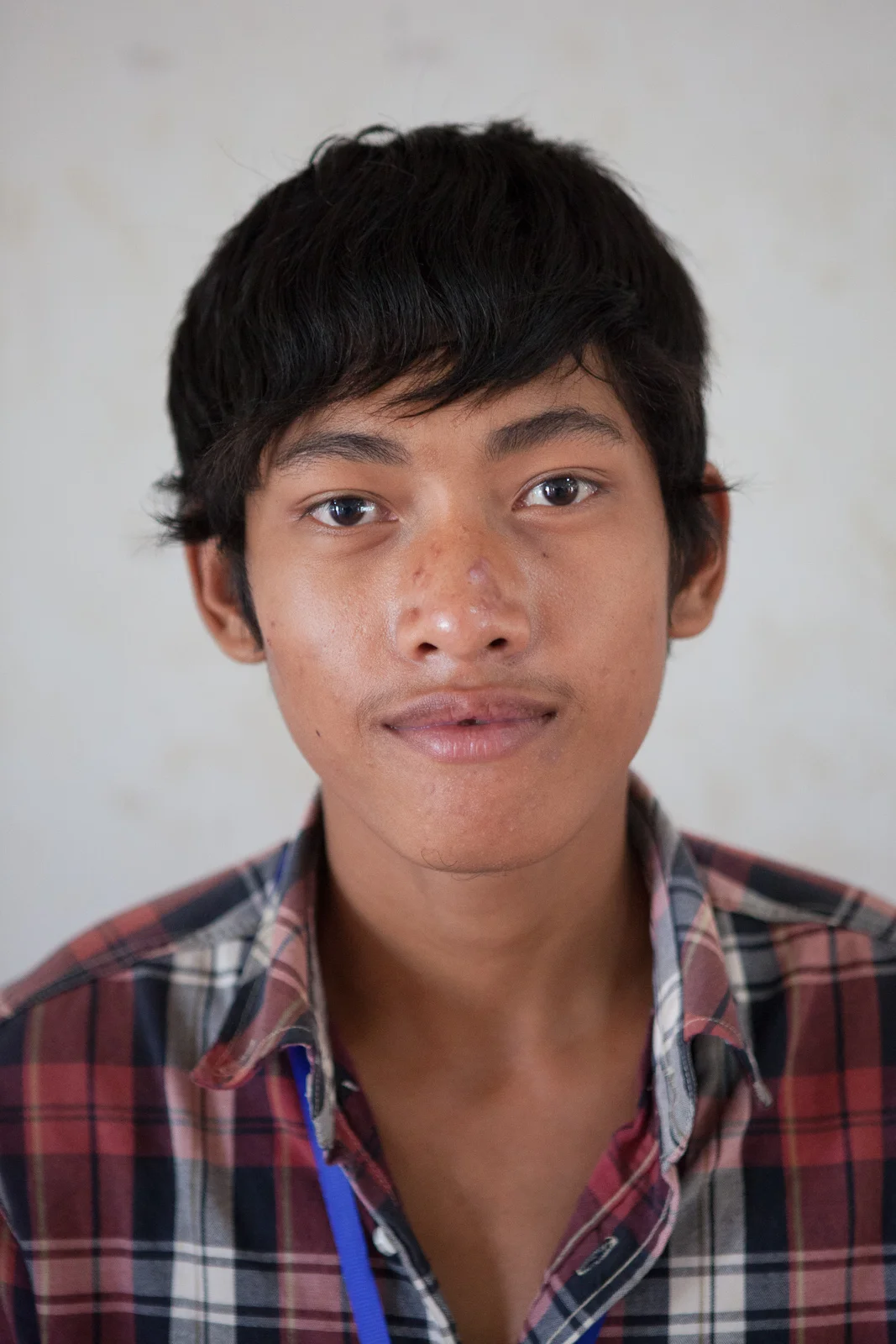
"My Alongsider showed love to me, and now I want to show my love to my own little brother." (Narith, Age 17)
Many Alongsiders have been at the bottom and felt the sting of being excluded. To be sure, many are still struggling to find a way forward economically.
But as Alongsiders they are no longer mere victims or numbers, they are servant leaders and agents of change.
In another vocabulary, they are disciples of Jesus - who himself was marginalized, who identified with people outside the gates.
The community in which the little sister in the video lives isn't perfect, but it has so much to offer. She needs to be included in it for her own learning and development. And it needs her and what she can give. The same is true for many thousands of boys and girls in Cambodia (and in whatever country you may name).
Fortunately, there are many thousands of potential Alongsiders in Cambodia (and in India, Indonesia, China, and a growing list of countries), and they already make their homes in countless rural villages and urban slums where the most vulnerable children live.
Alongsiders see the excluded ones, bring them inside the gates, and walk with them until they can do the same for others.

How This Khmer Word Shapes The Alongsiders Movement
Encouragement starts with a relationship.
“He understands my heart,” Somnang explained with a huge smile as he looked at his new Alongsider, “and he always encourages me.”
Somnang and his Alongsider Chantrea are some of Kampong Leng’s newest Alongsiders. Alongsiders began in this part of Cambodia a little over a year ago, and last week a dozen new pairs registered, excited to begin a mentor relationship. When asked why they wanted to be Alongsiders, the older brothers and sisters replied that they wanted to encourage their younger brothers and sisters.
In Khmer, the word for encourage is leuk tuk chet—three smaller words put together which literally translate to lift, water, and heart. To encourage another person in Khmer culture means to lift up and refresh their heart.
Many of the children where Alongsiders works are downtrodden and downcast. Society has marginalized them, leaving them vulnerable and discouraged.
That's why leuktukchet is at the heart of the Alongsiders movement. Encouragement is the blessing that poor communities can offer their orphans and vulnerable children. It doesn’t require money, expertise, or a particularly winning personality. It’s the choice to build another person up (1 Thessalonians 5:11).
From the start, Chantrea has lifted his little brother’s spirits. They met when he found Somnang crying outside the village. “What’s wrong?” he asked.
Somnang shyly explained that he was angry with his mother, who had beaten him. Chantrea sat with Somnang, advising and encouraging him. Somnang was comforted by Chantrea’s understanding presence, and was thrilled when Chantrea gave him a ride home on his bicycle. It was the first of many bicycle rides for these new friends.
Chantrea hasn’t rescued Somnang from the situation, but he’s given him the confidence to cope with it by walking alongside him even when he is downcast. Somnang can count on Chantrea’s support to lift him up and refresh his heart, and that changes everything.
Another little brother in Kampong Leng, Udom, also shared how encouraging his older brother was. “My favorite thing about Buntern is his kindness and gentleness,” Udom said.
Like the other Alongsiders in Kampong Leng, Buntern encourages his little brother to stay in school. Many families rely on their children to tend the cows and help in the rice fields. Udom’s family complains when he goes to school, since education will not put food on their table that night.
But Buntern makes sure that Udom attends school whenever possible, because he knows that education will bear fruit in the long run. He answers Udom’s questions and helps him study his lessons. It’s good practice for the future, when Buntern hopes to be a teacher.
Chantrea & Somnang
Other days Buntern and Udom help their families plant rice. The rice is planted as a seed in a dry place until it reaches about thirty centimeters. Then it is transplanted to the rice paddies to reach its final height of about one meter. Buntern waits for the end of the rainy season, when his family will harvest the rice.
As he watches the rice grow strong in the watery paddy, he hopes that he can likewise nourish his little brother. Buntern repeats the word leuktukchet. “I want to encourage Udom.” The middle word, tuk, means water, life-blood in the oppressive June heat.
The rice will be ready around October, but Udom’s education will take many more years. Buntern takes it one day at a time, walking beside his little brother as they tend their cows and study their lessons.
For encouragement isn’t about one miracle or intervention. Encouragement starts with an uplifting relationship: Buntern and Chantrea walking beside their little brothers from the village to the rice fields, and refreshing their hearts.

Why work with local churches?
I went to a rural church to follow-up with a group of Alongsiders, and I asked them how they chose their little brothers and sisters from all the children in the community. One of the young women started to cry as she answered...
I went to a rural church to follow-up with a group of Alongsiders, and I asked them how they chose their little brothers and sisters out of all the children in the community. One of the young women started to cry as she answered, and she said:
“I saw that one of the families in our community was suffering. The mother died, and the father went to Thailand to work and save money. Now the grandmother is raising all six children. I really wanted to help them, but I didn’t know what to do. After I heard about Alongsiders, I went and talked to the grandmother. I told her that I wanted to choose one of the girls to be my little sister, and she immediately said, ‘Yes!’”
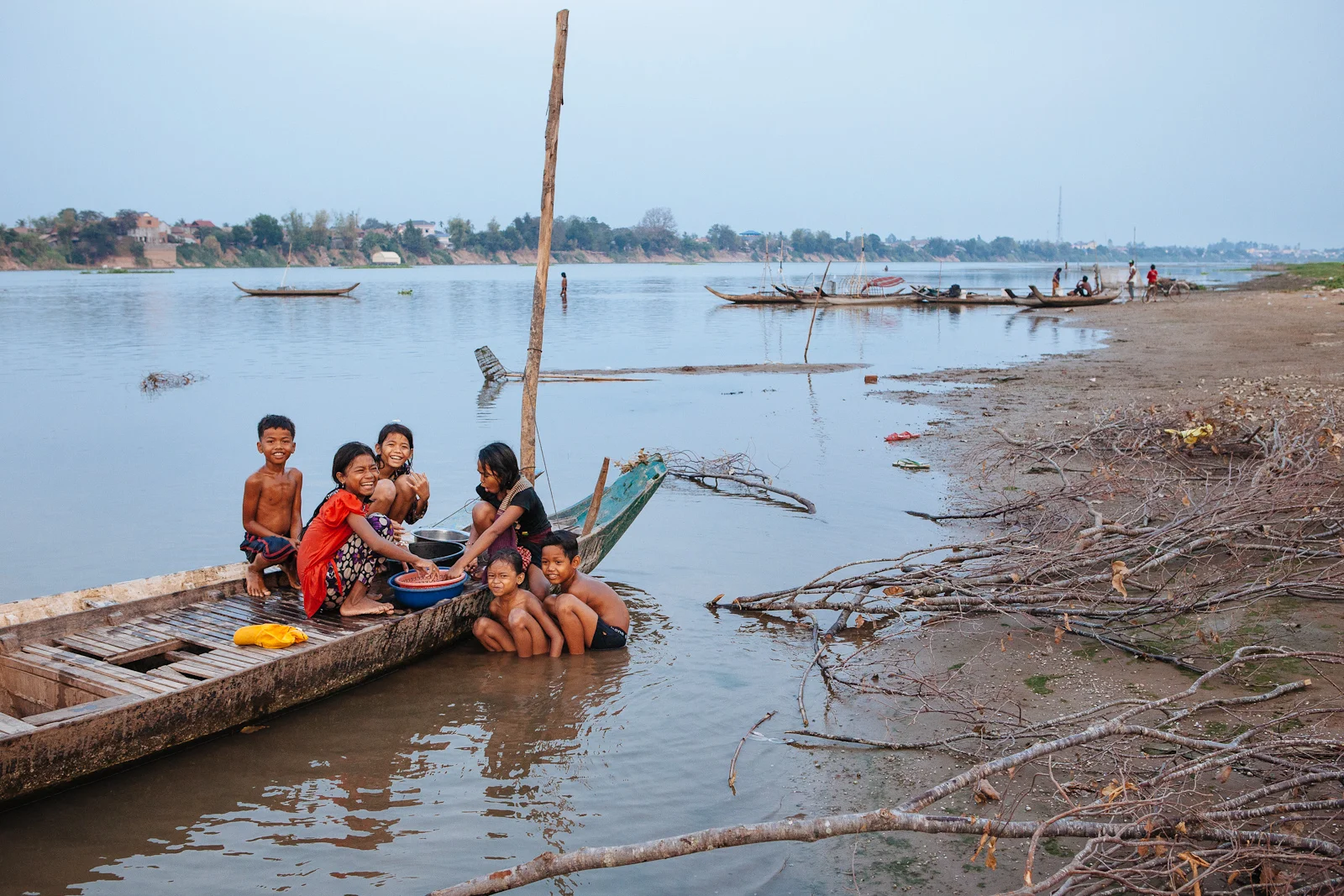
Community children in a riverside village play and do chores at dusk.
Phearom relates this story. He's one of the national coordinators for Alongsiders Cambodia, and he's constantly networking with pastors and visiting churches to invite the youth to join the movement.
His story is an illustration of why we work with local churches.
The young woman had a heart of compassion, and she was already connected in her own village and aware of people in need there. She was poised to act, but she was waiting for an opening.
There are others like her, and there are many, many remote villages in Cambodia. How can an organization based in the capital reach and mobilize them?
The answer that makes the most sense, especially for a Christian organization, is to work through local churches. Local churches are already in place in hundreds of remote villages, and their members already have relationships and local knowledge that organizations coming from outside dream of having. And the local churches come with leaders and structures included.
They are resources hidden in plain site, often overlooked because they are - like their communities - small and seemingly isolated.
Local churches aren't just gateways to villages, they provide critical backup for the Alongsiders. The little brothers and sisters don't just get the support and attention of one person, but they gain access to a community with varied gifts, wisdom, and resources.
When we work with a local church, the local church benefits.
Local churches are people, the Body of Christ with faces and names. Partnering with Alongsiders helps them practice evangelism in the truest sense: by embodying and proclaiming good news for people who are struggling and alone in their own communities.
Alongsiders is also discipleship in action, starting with the youth and young adults who participate (who are the majority in their churches). The young woman in the story above just needed encouragement to do something. As regular people like her take risks in faith and love, they will grow in Christ - and local churches will grow in healthy ways.
Finally, the communities benefit. Strengthening ties, building trust, and helping local people to face local problems together are all good development practices. Local churches can play a key role in serving their whole communities.
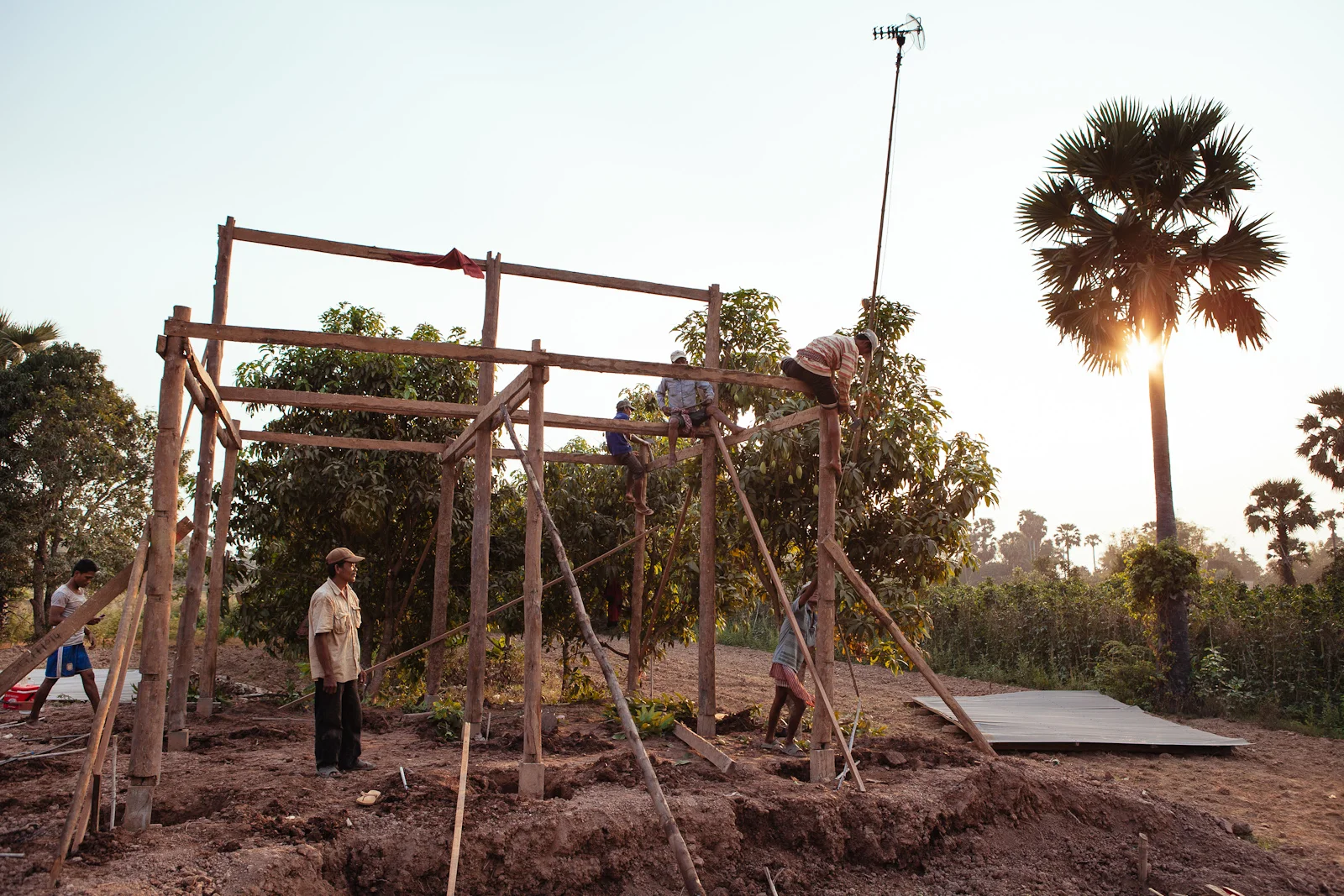
Local men in a remote village work together to build a simple house.
Despite all of the big words, what Alongsiders actually do for their little brothers and sisters is simple, and simply transforming.
And...you can do it, too.
Does your Christian community divide evangelism, discipleship, justice, and compassion into separate categories? Neglect one or more of them? Or put them off by calling them specialized roles?
Put them all together in love by coming alongside someone isolated and in need of a friend or mentor. You can be a light at the margins of your community, and no need to go alone. Invite others to join in!
There are also challenges in working with local churches. That sticky topic will be addressed in the next post!

The most effective tool for fighting Human Trafficking is right where we need it to be
"I want to work in Korea", he said
"I want to work in Korea", he said.
We were standing along a dusty road lined with wooden homes and plots of dried rice stalks, dormant until the next rainy season, loosely called a village. The nearest town was a cluster of businesses along the highway a kilometer away. He was a farmer's son, maybe fifteen, who had probably never traveled further than Phnom Penh, two hours up the highway. Korea seemed another world away.
But it wasn't surprising, not at all. I neither doubted his intention nor the possibility he might go. He probably already had a connection who could make it happen.
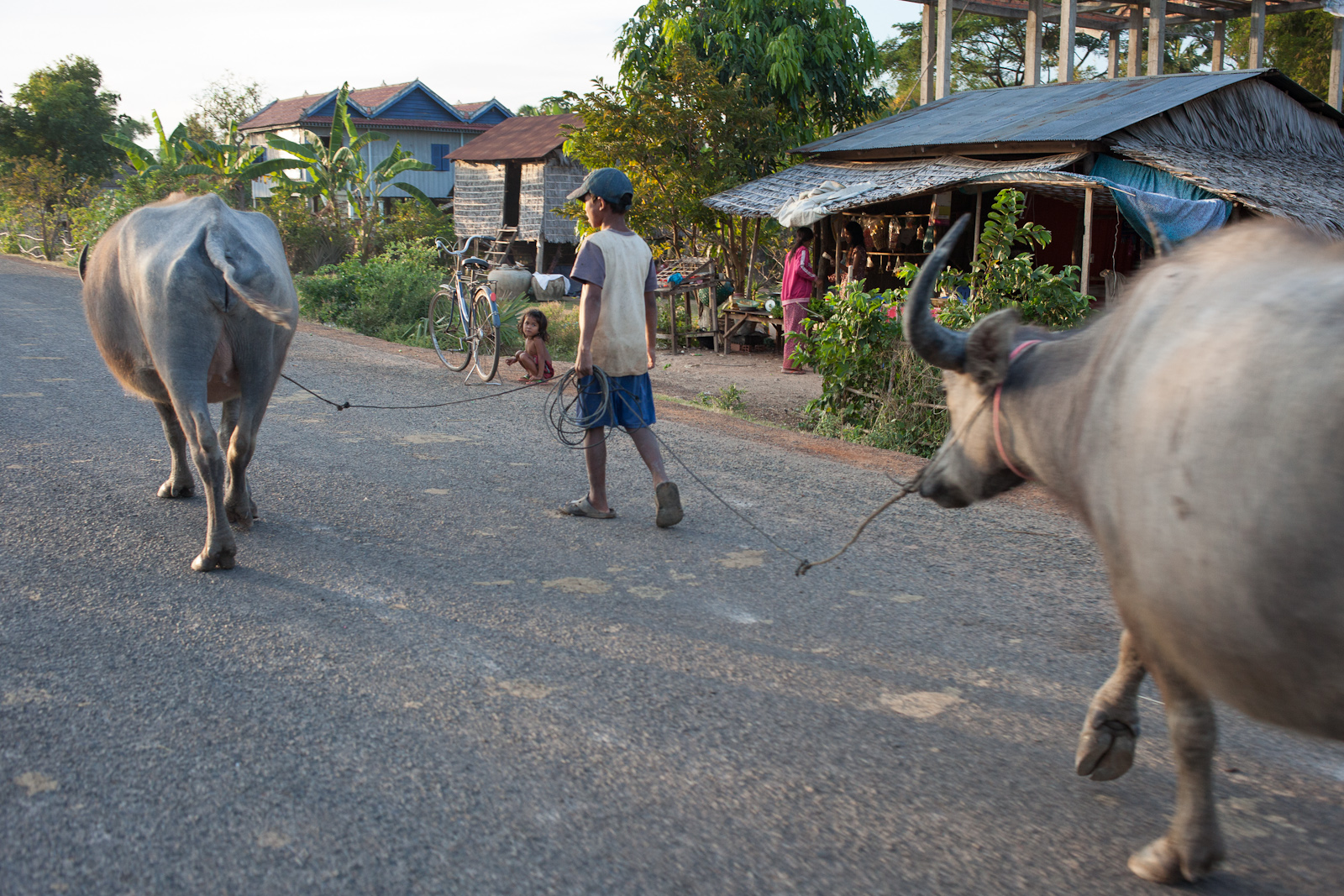
In rural Cambodia, and in the slums of the major cities, you can bet every young person is thinking about a way to make his or her fortune and choosing from options such as: go to a university and get an office job, work in a factory, become a famous singer, become a hairdresser, or take a chance in another country.
Most choose the factory; it's most accessible and anybody can do it. But factory work is exhausting and hardly pays a living wage. It's a way to survive and not much more.
Enter the recruiters.
The recruiters are people who show up in the village talking about opportunities: a dream job in Phnom Penh, a "good" company in Thailand, Malaysia, or Korea that pays five or ten times the wages of factories in Cambodia, or a rich and generous family looking for a domestic worker.
These recruiters, who hold out these visions, are often relatives or "friends" living in the community, and there is a seed of truth in what they say. Indeed, many Cambodians have changed their lives by working abroad or by connecting with a generous employer.
One of our Alongsider leaders, mentioned in a previous post, took a job as a domestic worker in Malaysia as a teenager. She was employed by a family who treated her well, and she saved enough money to buy her family a house when she returned.
But in hundreds of cases, Cambodians who respond to these great "opportunities" are exploited: passports confiscated, paychecks withheld, yelled at and beaten, and forced to work brutally long hours.
Another Alongsider has a different story. When she went to Malaysia her passport was taken and she was forced to work twenty hours a day, seven days per week as a seamstress at a factory.
And worse things than that happen.
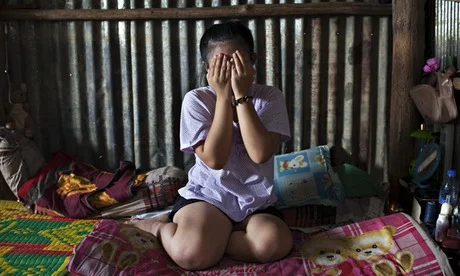
The UN reports that most Cambodian children who are officially repatriated from Thailand and Vietnam have been forced to beg and sell things on the streets. Within Cambodia, many young children and youth are sold or tricked into lives of sexual exploitation.
Where does Alongsiders come in? Truth is, we are well situated to prevent trafficking of the children whose lives we touch.
Most organizations working to prevent human trafficking are waging educational campaigns: making videos and other media, distributing written materials, and sending speakers to schools. Or they are rescuing people who are already victims.
These are all important activities, but let's be honest about the shortcomings. Research shows that most human trafficking victims in Cambodia come from specific places: isolated rural areas in Kampong Cham, Prey Veng, Kandal, Takeo, and Battambang and urban slums in Phnom Penh. And in those places, most victims of human trafficking are less than sixteen years old.
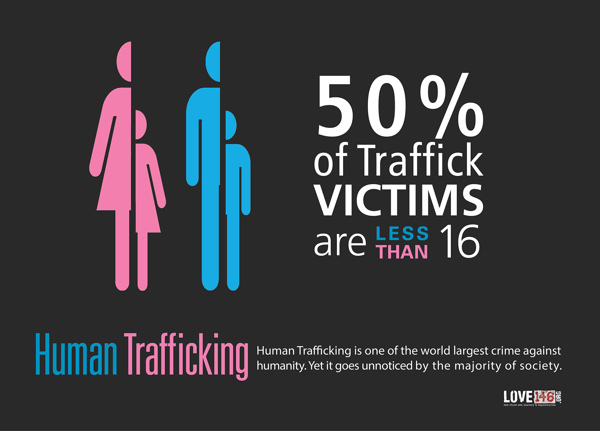
But the educational campaigns originate from Phnom Penh and other cities where organizations keep their offices, and if they connect with likely victims, it's from a distance and indirectly. Even so, how many fifteen year old youth make decisions based on what they read or because of what far away adults are saying?
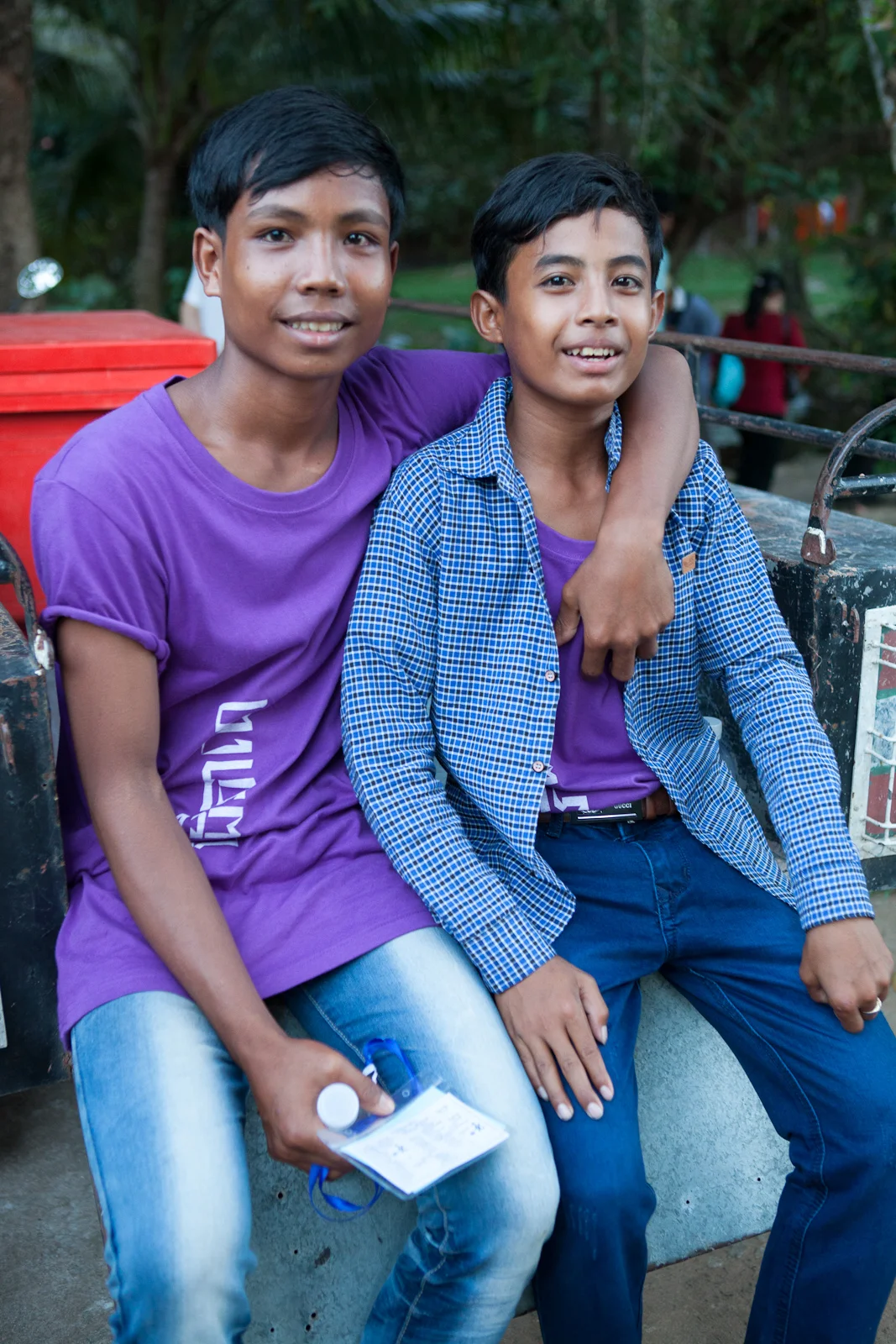
Alongsiders aren't touching thousands - not yet - but we have active groups in most of the vulnerable provinces listed above, and also in Phnom Penh slums. Alongsiders live in those communities, and every Alongsider connects with a little brother or sister, who is less than sixteen years old, and builds a trusting relationship.
As a previous post explains, we take concrete steps to train our leaders to prevent abuse and human trafficking. But it's not just tactics that make a difference, it's the power of relationships.
What makes children most vulnerable to human trafficking is, first of all, their real and imagined insecurities and needs, and yet it's even more than that. It's also about being unnoticed and unconnected.
It's much harder to traffic a child who has someone watching him or her; to take advantage of a child who has a true advocate; or to trick a child who is connected to a network of people who talk to each other.
That fifteen year old boy with a plan to work in Korea is standing on the verge of a precipice, or it may be a launch pad.
Who is he connected to?

The movement needs waypoints: 5 reasons we do camp
Something powerful happens when hundreds of young people gather together for camp...
Last week nearly 300 Alongsider mentors with their little brothers and sisters, plus staff and other leaders, traveled from six provinces and converged in Siem Reap for the Alongsiders annual camp.
Their ages ranged from about 5 to 35. The event lasted for two full days, with travel days on each end; it was enough to burn through even this group's abundance of youthful energy.
As for the staff and older leaders, they were exhausted. It was a lot of work! And this was really just one HALF of the annual camp. Alongsiders Cambodia has grown to the extent that it's difficult to gather everyone together at the same time, so the annual camp is split in two. The other half experienced camp in May.
Besides taking a tremendous amount of preparation, leadership, and energy to pull off, the annual camp is also the single greatest expense for Alongsiders Cambodia.
You may well ask why we do it.
Following are five reasons why we have an annual camp along with some colorful pictures to illustrate.
1. The annual camp is a rallying point for the movement.
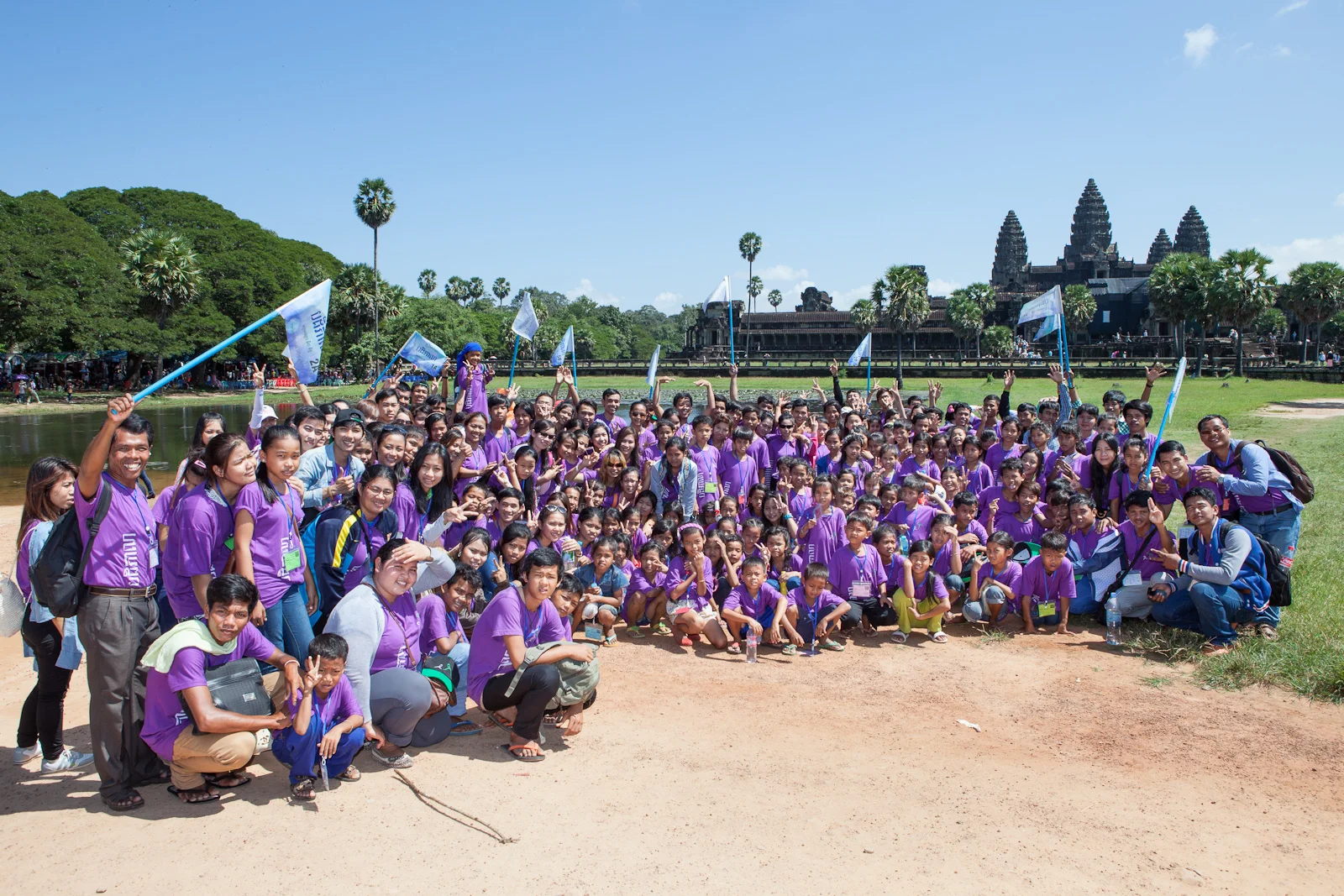
Alongsiders Camp 2014 at Angkor Wat
Throughout the year Alongsider mentors and their little brothers and sisters are dispersed throughout the country. Provincial leaders provide limited supervision and training, but most of the time mentors are meeting with their little brothers and sisters on their own. They may not feel like much is changing, but the movement as a whole is on the move and growing and changing as it goes.
When dispersed groups are on the move, they need rallying points in order to keep moving together. Otherwise people drift away or get left behind. Actually, the four points below all follow from this one.
2. Camp puts things in perspective.
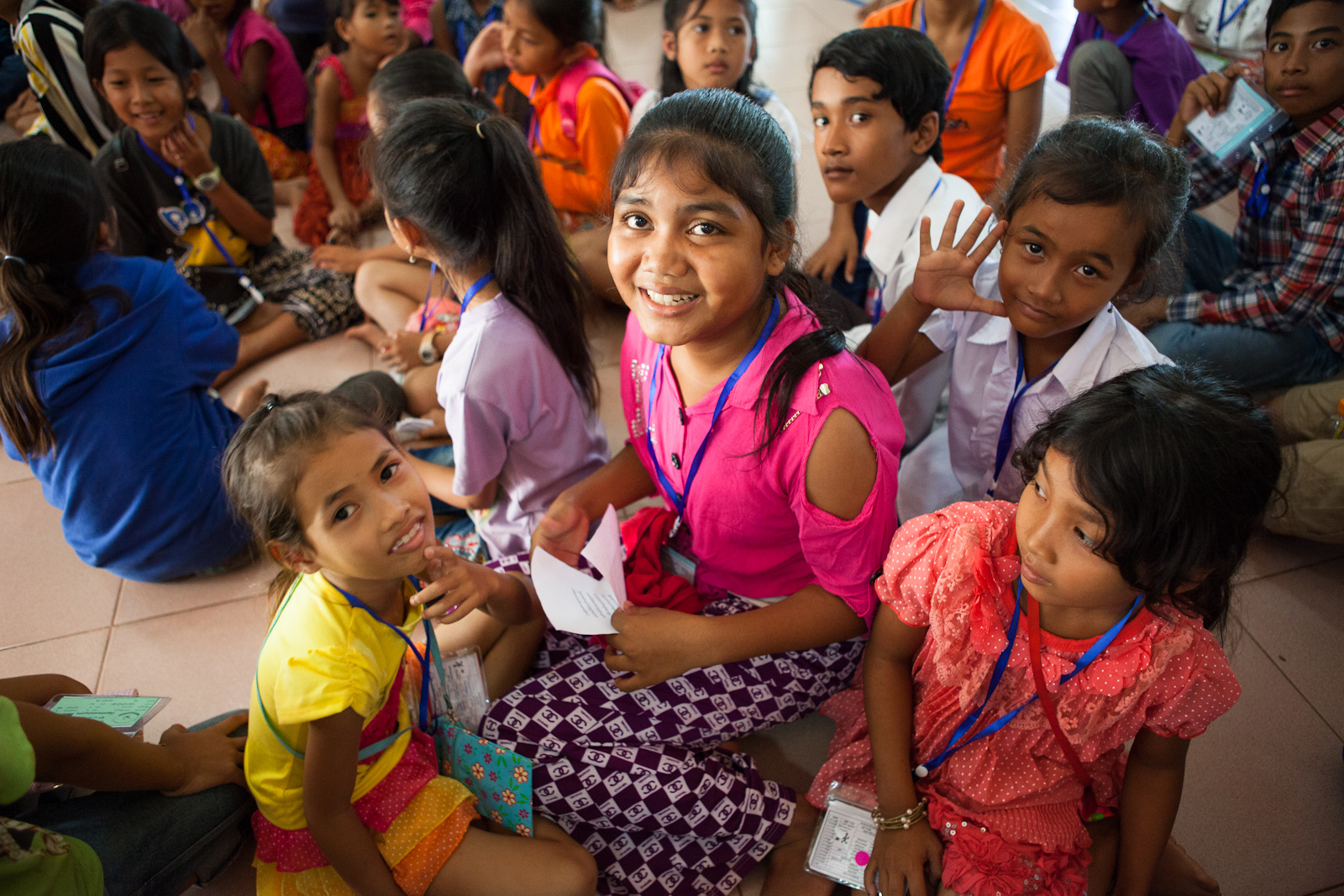
Mentors see other mentors. They learn from each other, and some stand out as inspiring examples. Others may realize the need to make corrections. The little brothers and sisters also meet each other, and they can see in a new way they are far from alone. There are other children all over Cambodia who have found big brothers and sisters, too. All the people gathered can see that they are part of something exciting - a movement of like-minded people that is bigger than themselves.
3. Camp is an opportunity to empower the Alongsider mentors.
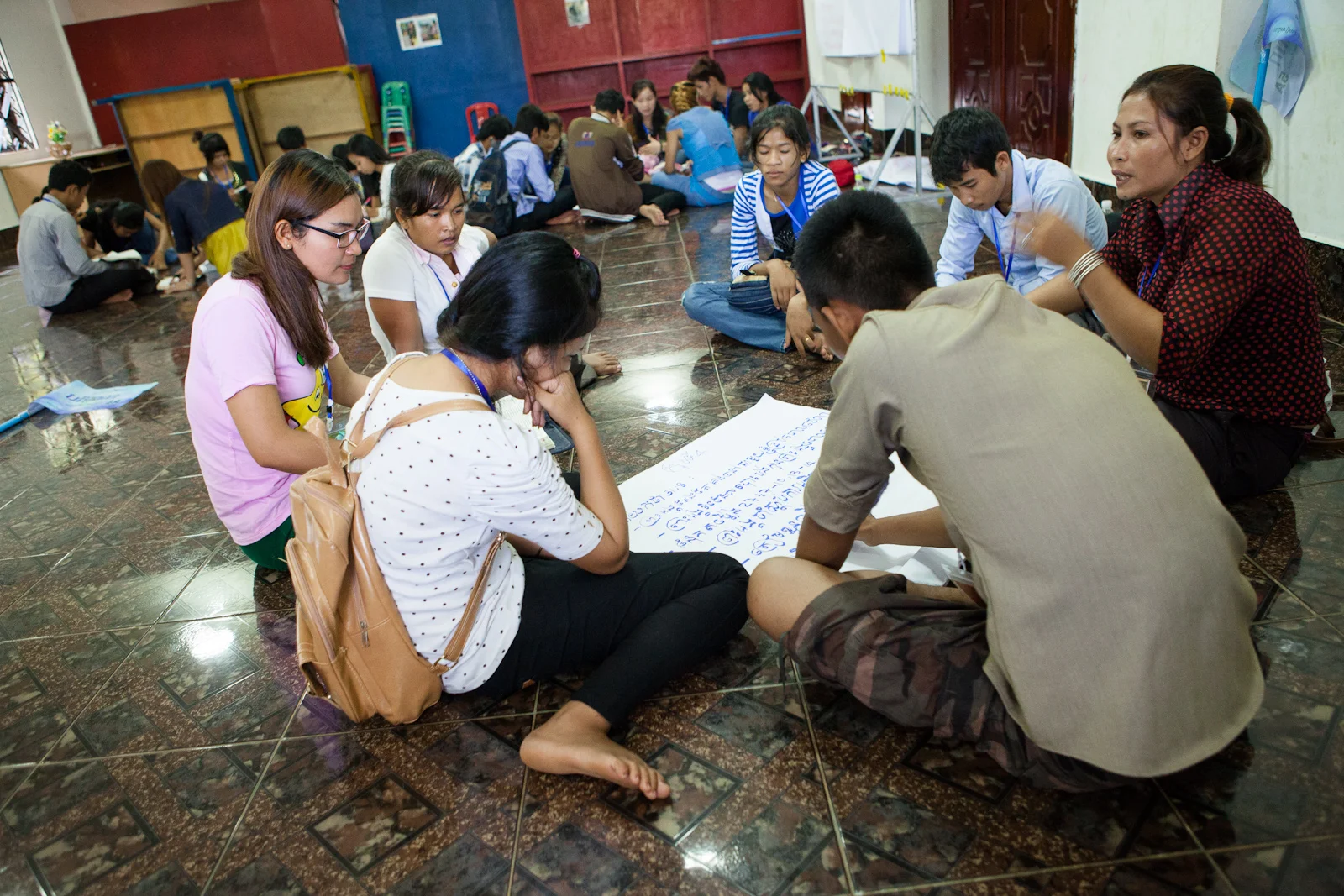
Alongsider mentors in a facilitated workshop about growing in intimacy with God
This year, while the little brothers and sisters joined in a day of fun educational activities, the mentors got to choose from three one-day workshops: finding your spiritual gifts, growing in intimacy with God, and team building. The workshops were run by volunteers and Cambodian leaders who came to serve the mentors. Afterwards, one mentor said, "For the first time, I think I know what my spiritual gifts are." Another said, "I love God more than I did before." We focus heavily on the little brothers and sisters, but the vision of Alongsiders actually relies on empowering and transforming the mentors:
We equip compassionate young Christians in poor nations to walk alongside those who walk alone: to love, welcome and encourage the most vulnerable children and orphans, in their own communities.
4. Camp is a time to celebrate how far we've come.
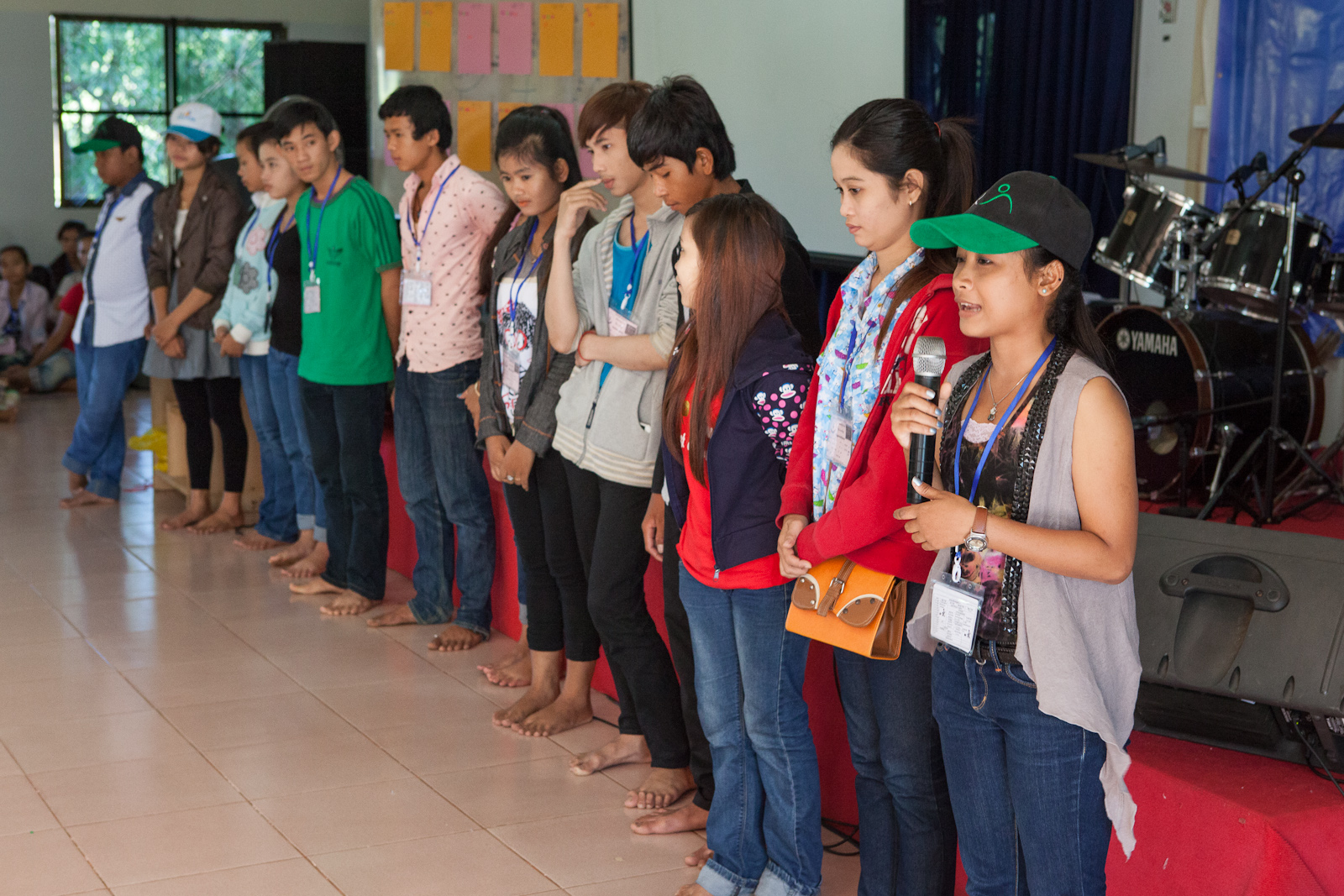
Second generation Alongsider mentors are recognized at camp every year.
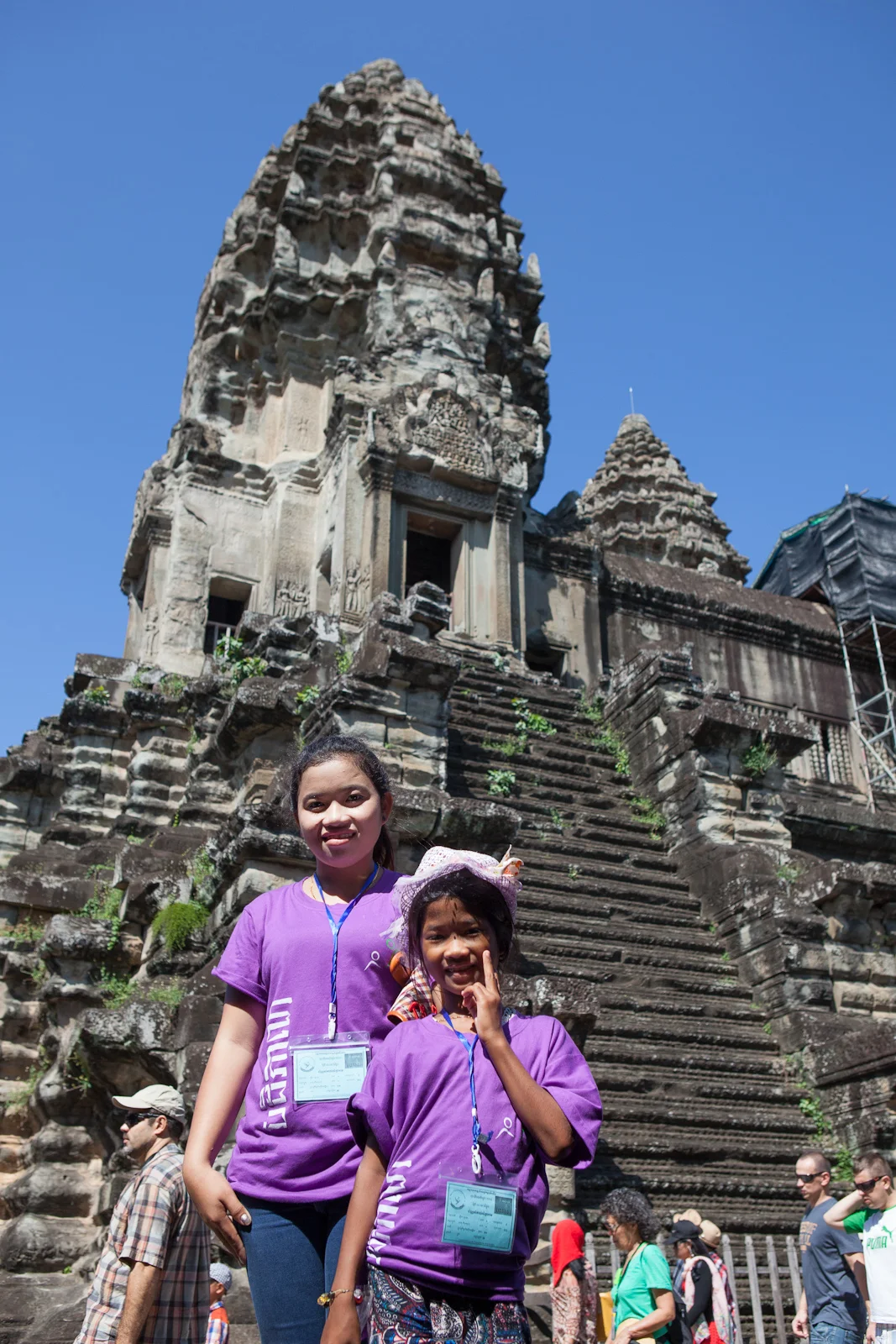
Camp is fun. We eat good food. We visit interesting places. We have raucous meetings and creative activities. All of these are forms of celebration, the sort of things you might do at a party.
This year everyone who attended camp went to see Angkor Wat and had a great evening at the Cambodian Cultural Village in Siem Reap. We also celebrated in more formal ways, like recognizing all the second generation Alongsider mentors (former little brothers and sisters who have become Alongsiders themselves) and affirming what they've done.
In celebration we rest, recharge, and renew vision. People who don't know how to stop and celebrate won't travel far together.
5. It is a time of extended worship and prayer.
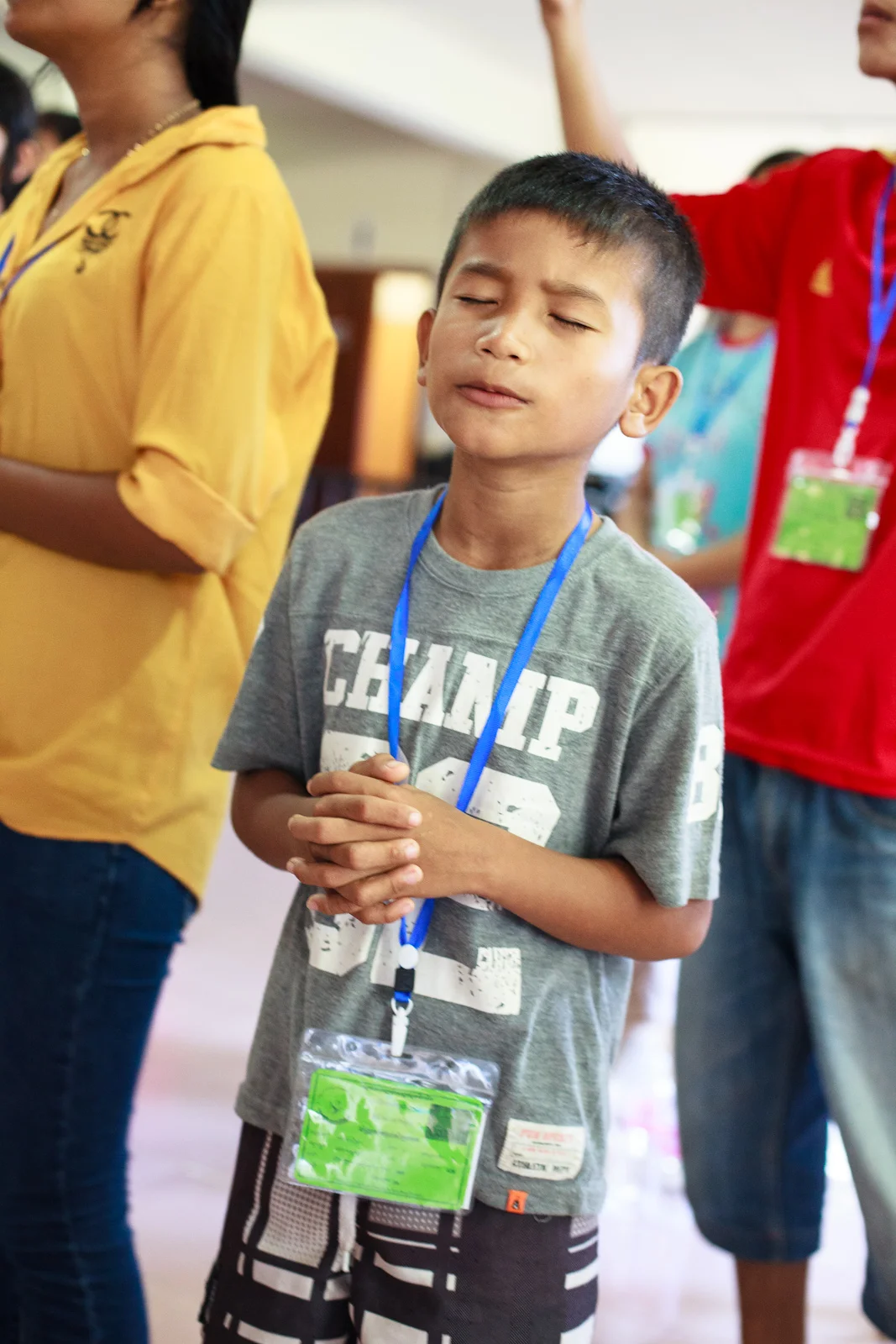
Christian movements throughout history have grown as participants have turned toward God in worship and prayer.
We believe God is the source of the transformation we seek in this country and around the world. We long for the Kingdom Jesus announced: of forgiveness and reconciled relationships, peace overcoming violence, and justice for the poor and oppressed. And we are drawn to his grace personally.
For all these reasons we worship and pray. Alongsider mentors pray with the little brothers and sisters all the time. Once a year they join to worship and pray together, and it's powerful.
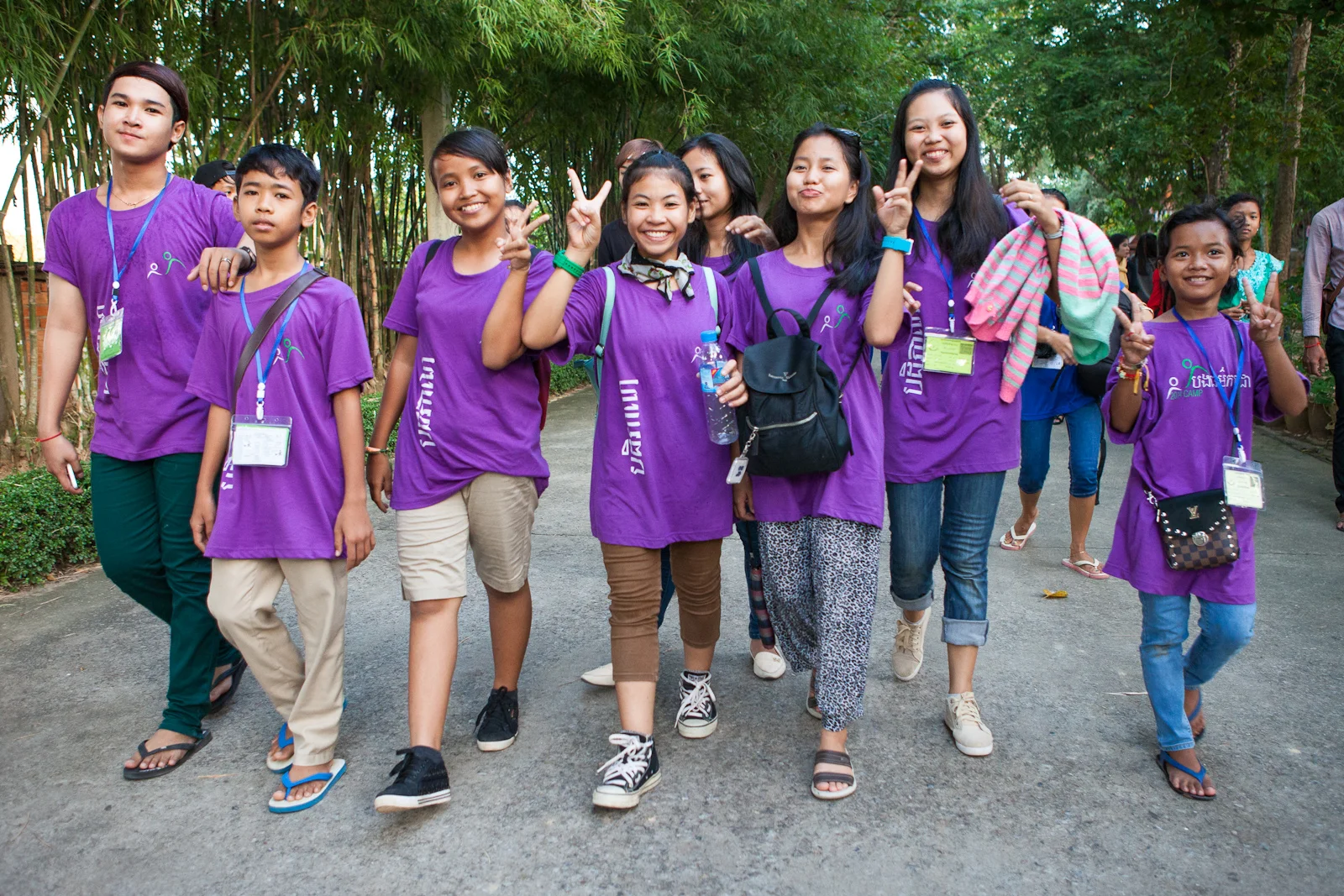
Alongsiders at the Cambodian Cultural Village in Siem Reap

Who REALLY connects with the poorest of the poor? You'll be surprised by the answer...
Here at Alongsiders we say, "It takes a spider to repair it's own web." Here's the secret.
Discarded himself. Phea knows the value of things others see fit to discard.
Every day he took to the streets with a rice sack slung over his shoulder looking for rubbish that he could sell: plastic bottles, cardboard, cans, scrap metal, or broken items that could be repaired.
Some called him names as he made his rounds. Others physically accosted him. They didn't see value of a kid in tattered clothes sifting through the garbage.
One day as he worked he came across a group of excited children and youth. They were Alongsider mentors with their little brothers and sisters waiting for transportation to the annual Alongsiders camp. Phea saw that some were neighbors, not unlike himself, and he asked if he could go with them. They said he had to have an Alongsider mentor, and it was too late for that. But someone invited him to the local church to learn more.
Phea went to the church. He says, "I never got my own Alongsider - I was too old. But instead I found faith." So, he kept attending the church, and when he turned 18 he applied to become an Alongsider mentor himself.
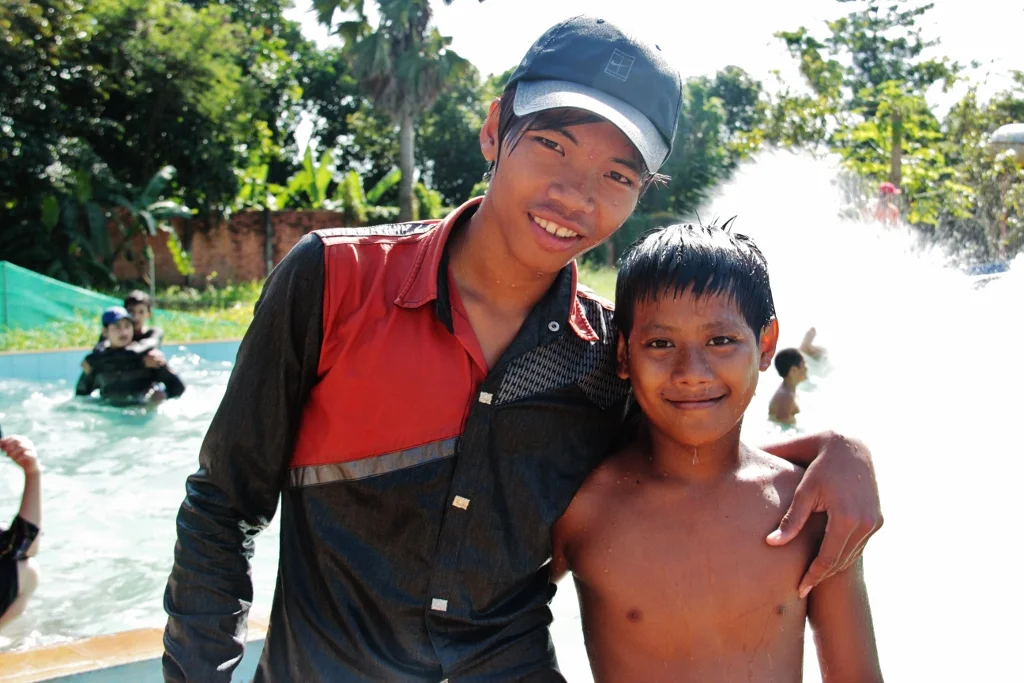
Phea and Virek swimming at a local water park.
As his little brother, Phea chose a boy named Virek who had sometimes accompanied him collecting rubbish to sell. Virek's father died years ago, and his mother is living with a terminal illness. In addition to being very poor, even compared to other families in the slum, her sickness casts a stigma over her and her children. They stay with Virek's grandmother just up the alley from where Phea lives.
Having faced rejection, Phea knew Virek needed encouragement. Just around the corner from Virek's home is an Internet cafe where some boys gather who have dropped out of school. They work the streets a few hours each day and spend what money they earn or steal on video games, alcohol, and other diversions.
Life is hard in the slum, but it's most dangerous when youth lose hope and stop trying.
Through Phea's friendship and support, Virek returned to school. Now he is studying in the eighth grade. Though it's uncomfortable for him to talk about the future, he thinks about becoming a teacher.
So who really connects with the poorest of the poor?
Foreign workers, volunteers, and organizations are almost always on the outside looking in. Even local organizations are located, funded, and led from outside the places where the poorest of the poor live.
Virek is sensitive and reserved. His emotions are hidden. He's vulnerable and knows it. His story comes out slowly in two or three word phrases. I can imagine a foreign worker or volunteer being drawn to Virek, trying to unearth his mysteries, and coaxing out a smile or two.
Phea knows what goes on behind the smile. He knows the hurt. He connects deeply with Virek because he is alongside of Virek in every way.
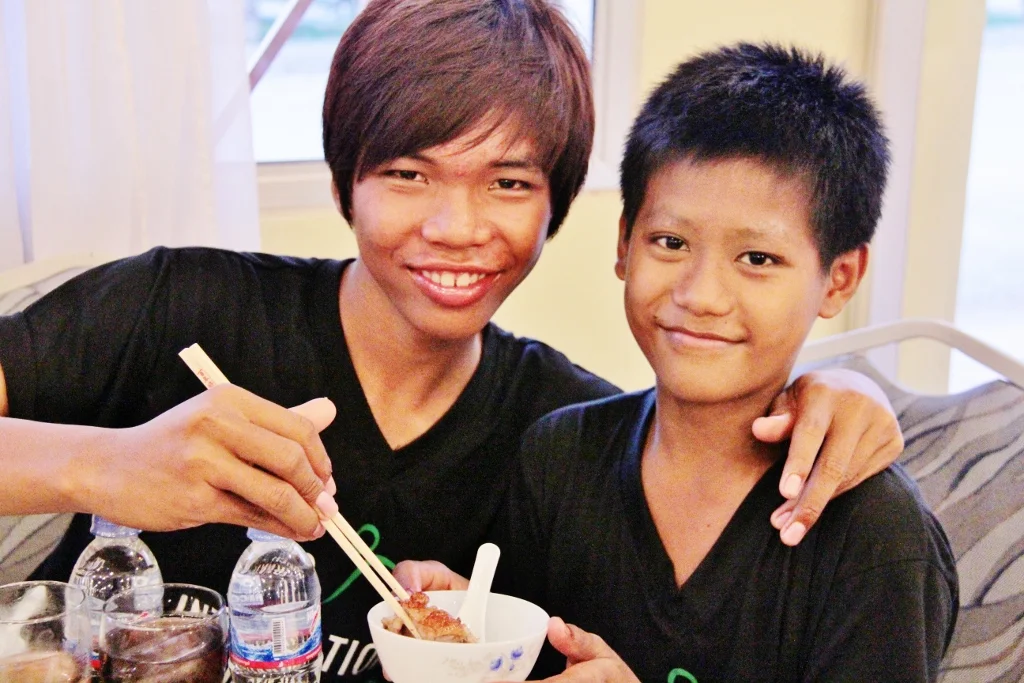
Phea and Virek enjoying a meal together.
Here at Alongsiders we say, "It takes a spider to repair it's own web."
The poorest of the poor are uniquely situated to connect with and support each other. They "get it" where others don't.
Sadly, there are divisions among the poor themselves: fault lines of mistrust, power, and fear. So the poor often feel alone and isolated even in their own communities.
Alongsider mentors like Phea are crossing those lines.
They connect with the poorest of the poor.
And they are not just connecting with their little brothers and sisters. They are connecting with families and building bridges of trust within their communities so that others can follow.

Six months in a slum – an intern’s perspective
In the days following her mother’s death, I remember longing to know how Dai, my 8 year old neighbor in this Phnom Penh slum, was doing.
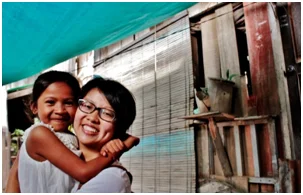
In the days following her mother’s death, I remember longing to know how Dai, my 8 year old neighbor in this Phnom Penh slum, was doing.
You can only imagine how I felt, when after the death, I heard a familiar voice cry my name, “Han-NA”!
Turning around quickly, I received the emphatic hug of a small friend, whose presence perhaps provided as much comfort to me as it might have provided to her.
When I think about Dai’s future, I cannot help but wish that someone would guide her in the coming years—someone who shares the language and background, someone committed to her in the difficult time ahead without a mother, someone who will point her to an ever-present hope in God.
Dai is one of a significant number of children, in my community alone, that could use such a person in their life... someone to walk alongside.
As children face the brunt of neglect and injustice in most of the world, the Church is called to respond. Perhaps then, rather than fighting the wrong battles, the Church can be the kind of people who live like Jesus, in coming alongside the forgotten— communicating to the world, thus, that the ones the world has rejected… are loved, valuable, and absolutely worthwhile.
I am still not quite sure how I got connected with Alongsiders exactly, but the connection was a God-send, undoubtedly. My deep-seated desire to see local churches actively engaging in the reconciliation and redemption of lives in their community, particularly through discipleship and education, is exactly what I found happening in Cambodia, through Alongsiders.
As a fourth year student at Wheaton College, Illinois, getting to be a part of what is happening in Cambodia through a six-month internship, is an absolute privilege. These crucial six months are an opportunity to glimpse of what God is doing in the world, in the heart of marginalized communities, and a time to experience the difficult tension between the “Developed” and “Developing” Worlds.
The experience provides a platform to
question, what it means to live, responsibly, as a Christian in a divided
world, and further, to think through principles that I will carry with me for the
rest of my life.
Every so often, one gets the opportunity to witness something in life that
makes the heart come alive, that is so obviously steeped in God’s presence that
it brings us to our knees, that is so extraordinary that it can only be the
Kingdom of God.
Within the last two months in Cambodia, I have experienced a few of these moments, in places, perhaps, least expected. Some of these have been with my Cambodian family in our urban slum—moments of deep grace when I had nothing to offer, but a throbbing head, a lingering fever, and a few Khmer words.
I have also had the privilege to bear witness to an extraordinary group of local young people committed to the life of one vulnerable child each, at the epicenter of the system’s injustices.
I have been able to see a Church alive and active, in the discipleship of their community’s at-risk children.
Quite frankly, the Life—in every sense of the word— that is being shared, is nothing short of remarkable.
It is that Life that I wish for my friend, Dai
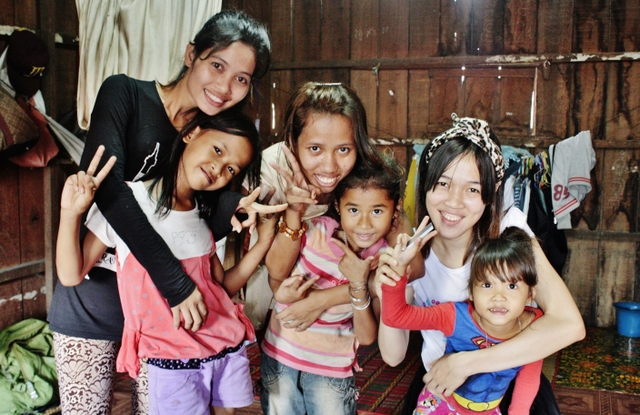
[Written by Hanna Tzou, currently interning with Alongsiders in Cambodia. Contact us for more information about internship opportunities in 2014.]

Now a youth leader - Theara's Story
We first met Teara and his siblings when their mother was dying. The last few months of her life were hard and they struggled to survive in a tiny shack that had a broken roof and walls.
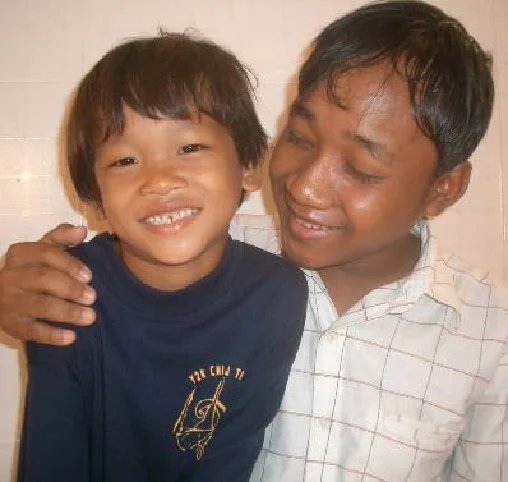
Teara and his "little brother"
We first met Teara and his siblings when their mother was dying. The last few months of her life were hard and they struggled to survive in a tiny shack that had a broken roof and walls.
Together with neighbors their home was rebuilt. Teara was so proud of the simple structure. Finally they had a home they could call their own.
But tragedy struck the first night they slept in their new home. A huge fire swept through the slum and they lost everything, including the only photos of their mother who had died a month before.
Eventually, Teara
and his siblings moved in with a Christian lady who opened her home to them and provided
guidance and love. They were matched up with mentors from Alongsiders Cambodia. Things finally were beginning to look up.
Over the years Teara became a keen member of the local church, eventually being entrusted with leadership amongst the youth.
Now, at 21 years old, Teara has officially become an mentor himself to an orphaned boy in the community, through the Alongsiders movement. He shared with us how he spent three months praying that God would show him which boy to choose out of his village.
When I visited Teara recently, I sat on the floor of his tiny home, eating rice and fish with Teara and his "little brother". They talked and laughed and I could see how much joy Teara's mentoring brought to this little boy.
Teara spoke of how he understood the challenges of beig orphaned, and how it was time to pass on some of the love he has received by being welcomed into the church family.

The second generation - Sros' Story
“I grew up without a father and we were very poor and it was difficult to get by. One day, a young man, Lee, who was older than me, asked me if I wanted to become his little brother…
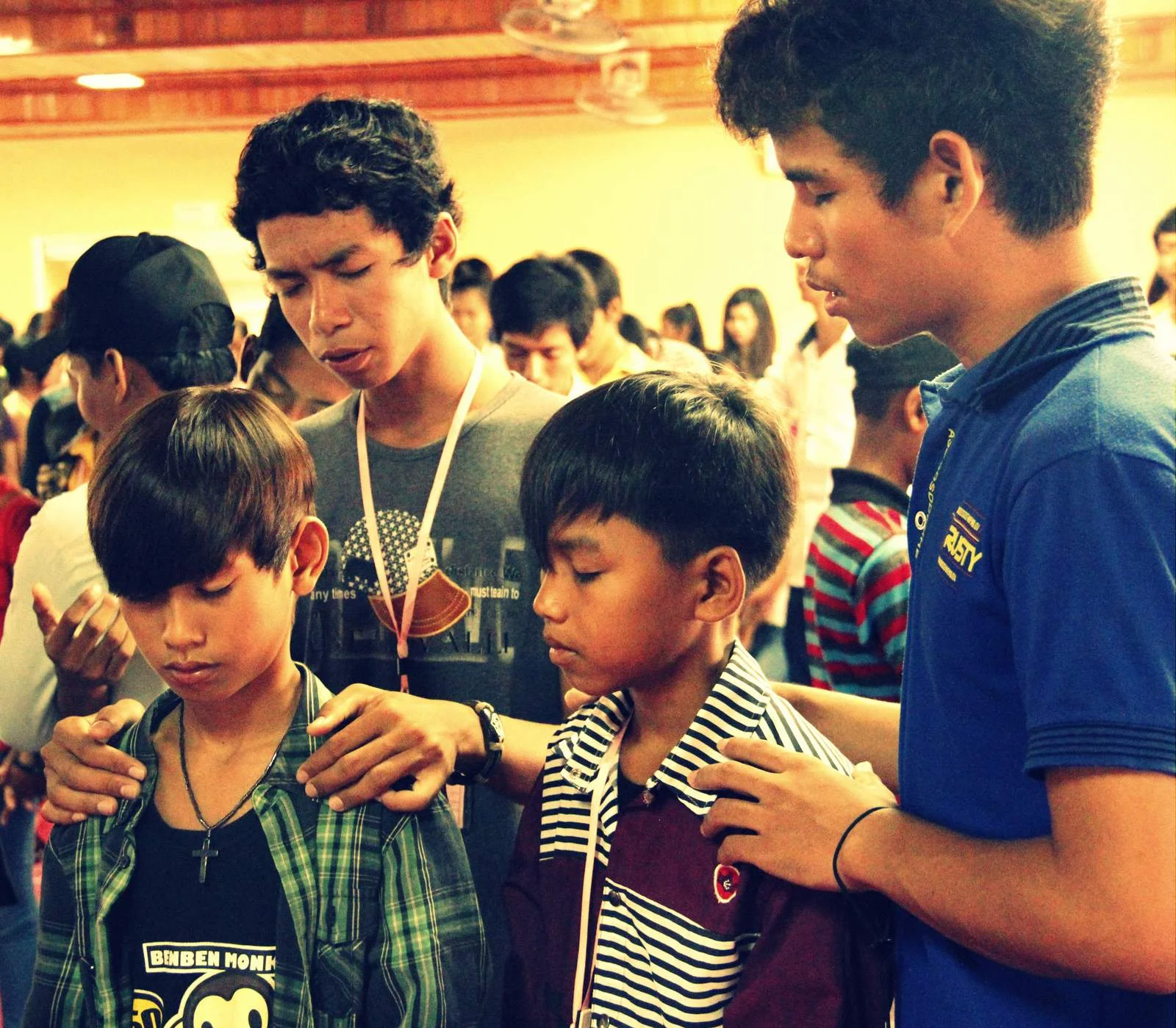
Sros (in blue) and Piset at an Alongsiders camp prayer time.
“I grew up without a father and we were very poor and it was difficult to get by. One day, a young man, Lee, who was older than me, asked me if I wanted to become his little brother…
Lee encouraged me to study hard, not to lose hope, and listen to my mom. He was always warm and friendly to me, just like my dad used to be. He invited me to attend church with him and when I believed in Jesus, my whole life changed. My studies at school, character, and obedience to my mom all improved.
Now I have my own little brother, Piset who is 12 years old. I believe this is the plan of God that God had me take on this boy as my little brother. I plan to fulfil my duties as a mentor to the best of my abilities and encourage, visit, and spend time with him, and follow up on his studies.
I really want to express my thanks for Alongsiders where I first received love, especially the love of Jesus.”