

How to transform suffering: one young man's inspiring story
Believe, when you are most unhappy, that there is something for you to do in the world.
“We belong to the largest company in all the world, the company of those who have known suffering. When it seems that our sorrow is too great to be borne, let us think of the great family of the heavy-hearted into which our grief has given us entrance, and inevitably, we will feel about us their arms, their sympathy, their understanding.”
As a Christian living in a predominantly Buddhist culture, Darath was marginalized by many in his family and community.
When he refused to offer sacrifices to his ancestors, his relatives treated him as a traitor to his culture, saying that to be Cambodian is to be Buddhist. Darath began to feel that he was not a true Cambodian. “It was a difficult, painful, broken time,” he reflects.
In the midst of suffering, Darath learned the power of forgiveness and patience through two relationships. His pastor talked about Jesus' forgiveness on the cross when he said “Father, forgive them.” And his friend Phearom encouraged him to have patience. From Phearom’s example, and the experience of daily persecution, Darath learned to be patient and show love to his family.
Darath forgave his family, saying “they did not know what they were doing when they were angry with me." Darath found peace when he forgave them.
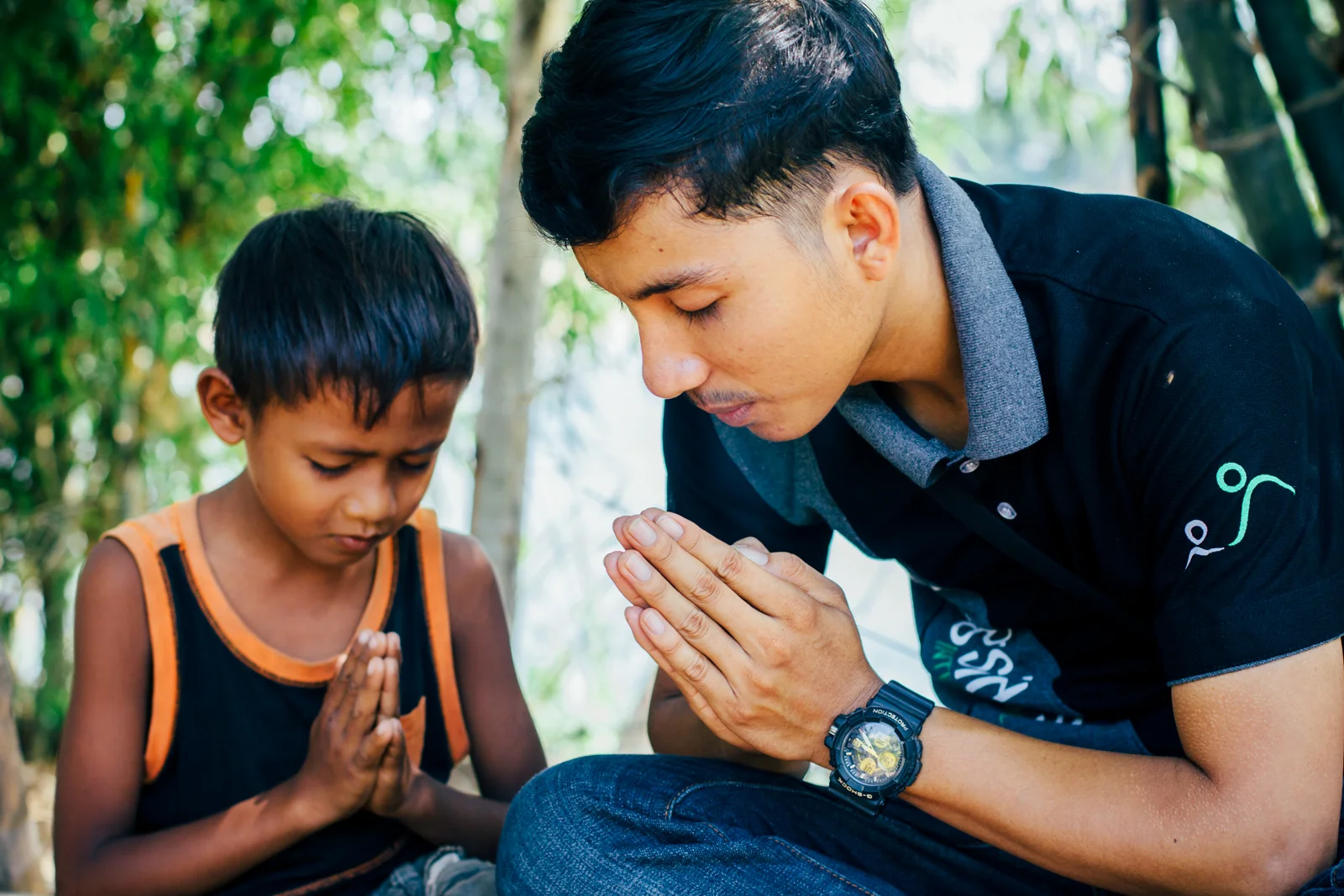
Darath praying with his "little brother" Suey Kong
Darath didn't realize at the time, but his experience with persecution had welcomed him into what Helen Keller called, "the largest company in all the world." He learned to see the people around him with eyes of compassionate understanding. This empathy prepared him to choose a little brother through Alongsiders International several years later.
“Believe, when you are most unhappy, that there is something for you to do in the world.
So long as you can sweeten another’s pain, life is not in vain.”
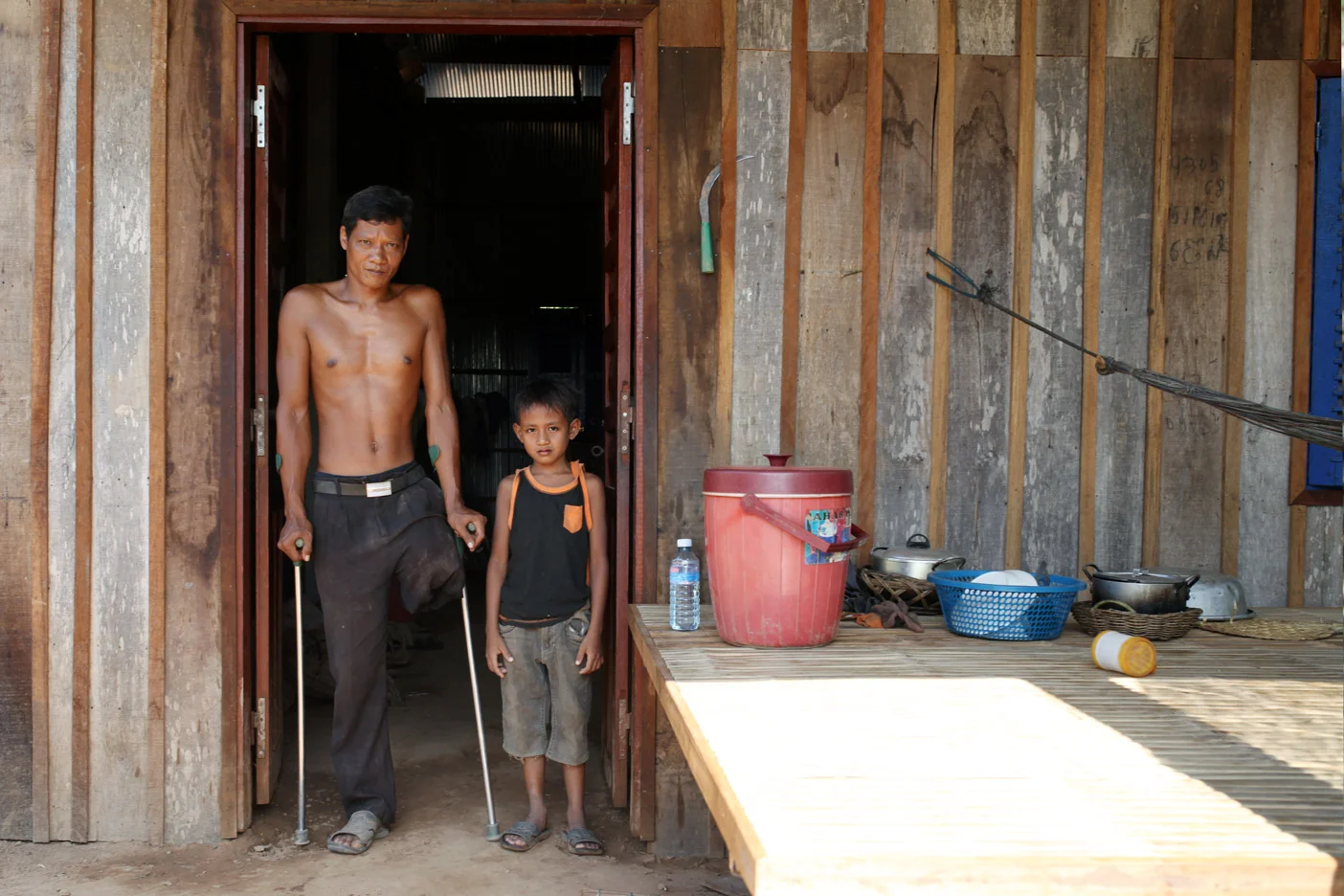
Suey Kong and his father
While serving with a mission team in his home village, Darath met a little boy named Suey Kong, who lived with his father and sister in a rickety house. Suey Kong’s father only had one leg, which prevented him from working. His mother, tired of having to be the bread winner, had left the family. Unable to afford books for school, Suey Kong wrote out his lesson on scraps of paper he found in the rubbish. Suey Kong longed to make friends and be part of his school and community, but he was isolated and lonely.
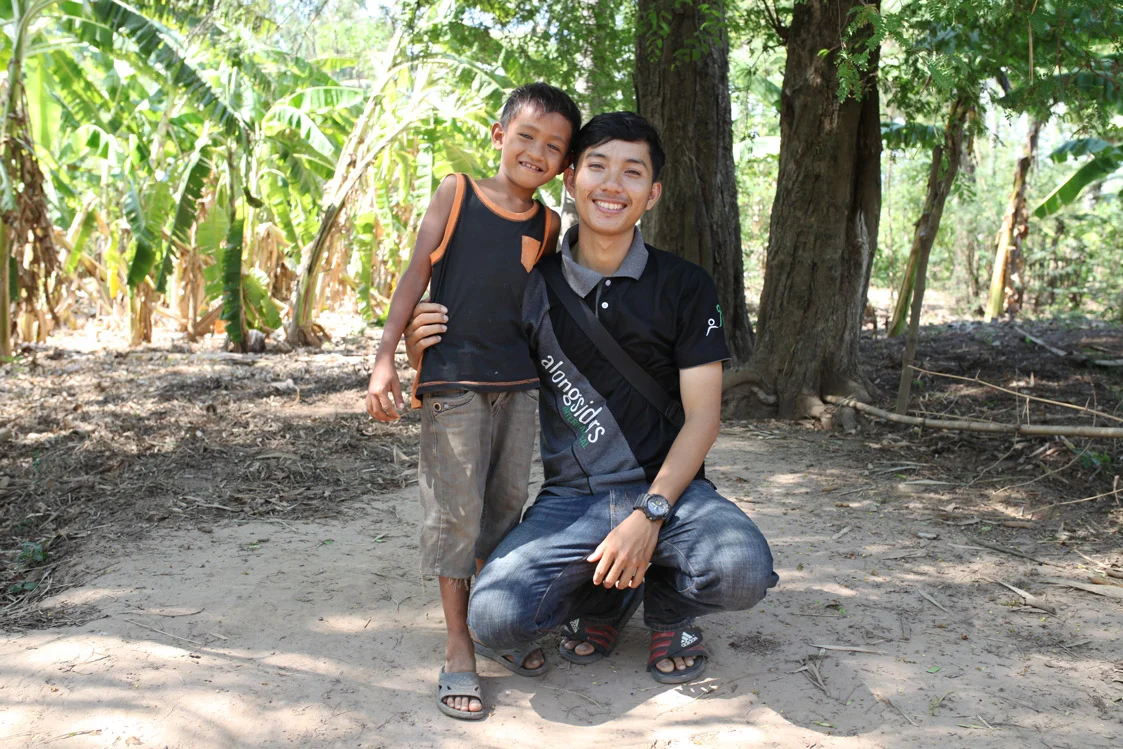
Darath and Suey Kong in their village
Since Darath understood the pain of loneliness from his experience as a poor Christian in a Buddhist village, he knew in his heart that Suey Kong should be his little brother. After he asked the father for permission, he invited Suey Kong to be his little brother. Suey Kong was thrilled.
So Darath welcomed Suey Kong into his life, also inviting him into a family with a loving Heavenly Father who longs to gather us under His wings.
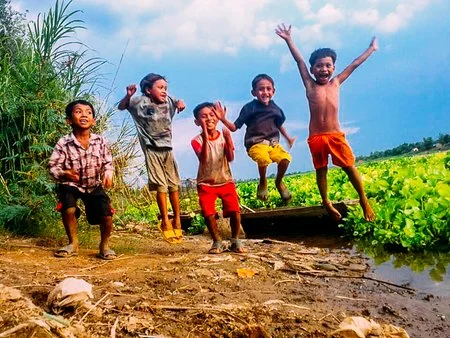
Suey Kong playing with friends
Suey Kong is thriving in the company of this new family. He's been surrounded by new friends and mentors at Darath's church. His health has improved and he's excelling in school, one of the top four in his class.
Today Darath’s dream is that someday his little brother will become an Alongsider too.
As Christians, we are called to share in Christ's sufferings. Our model is this High Priest who teaches us to empathize with weakness. Jesus was a man of sorrows, acquainted with grief. How can we hide behind strength and power when our Lord walked alongside the heavy-hearted?
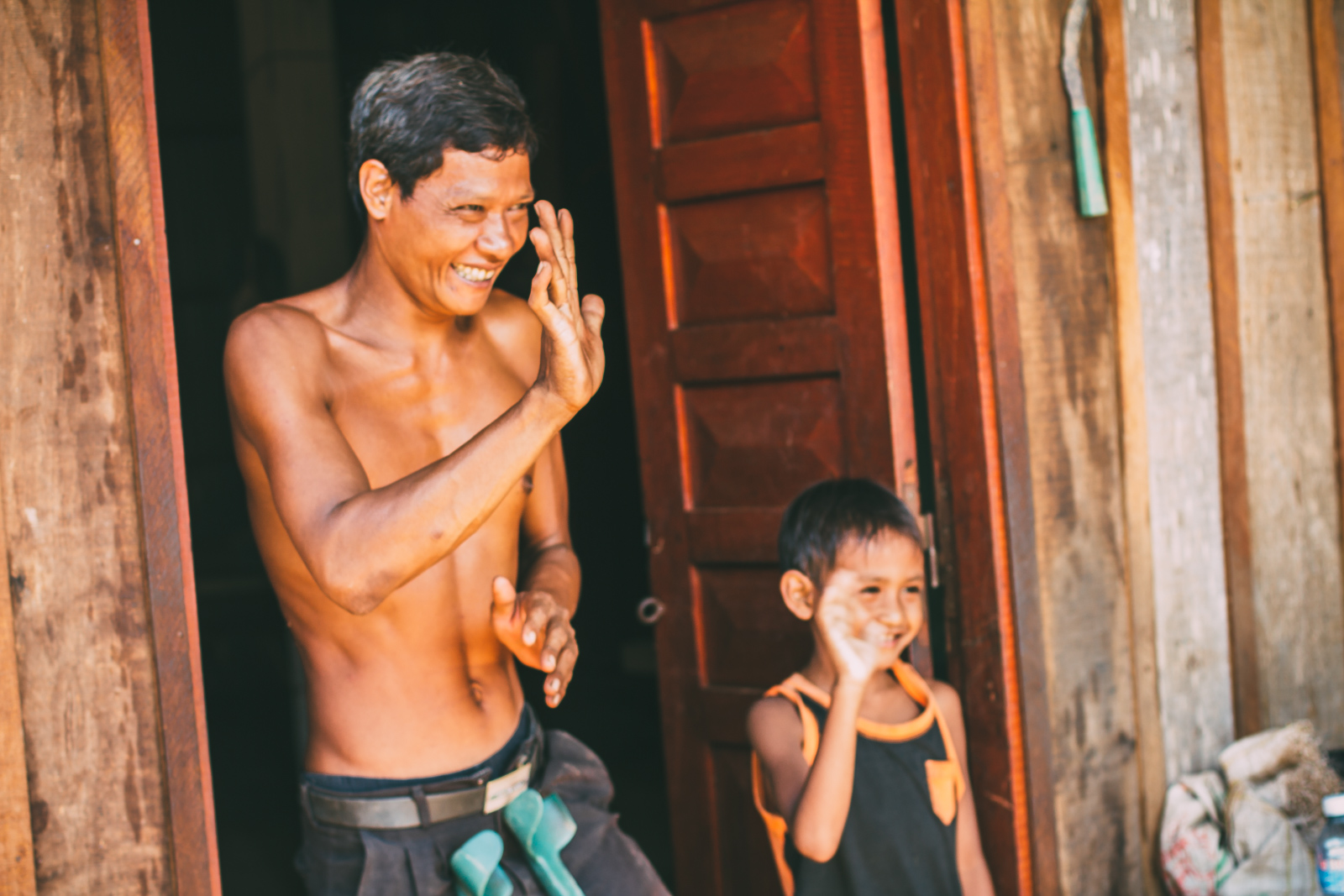
Suey Kong and his father waving goodbye to Darath

How This Khmer Word Shapes The Alongsiders Movement
Encouragement starts with a relationship.
“He understands my heart,” Somnang explained with a huge smile as he looked at his new Alongsider, “and he always encourages me.”
Somnang and his Alongsider Chantrea are some of Kampong Leng’s newest Alongsiders. Alongsiders began in this part of Cambodia a little over a year ago, and last week a dozen new pairs registered, excited to begin a mentor relationship. When asked why they wanted to be Alongsiders, the older brothers and sisters replied that they wanted to encourage their younger brothers and sisters.
In Khmer, the word for encourage is leuk tuk chet—three smaller words put together which literally translate to lift, water, and heart. To encourage another person in Khmer culture means to lift up and refresh their heart.
Many of the children where Alongsiders works are downtrodden and downcast. Society has marginalized them, leaving them vulnerable and discouraged.
That's why leuktukchet is at the heart of the Alongsiders movement. Encouragement is the blessing that poor communities can offer their orphans and vulnerable children. It doesn’t require money, expertise, or a particularly winning personality. It’s the choice to build another person up (1 Thessalonians 5:11).
From the start, Chantrea has lifted his little brother’s spirits. They met when he found Somnang crying outside the village. “What’s wrong?” he asked.
Somnang shyly explained that he was angry with his mother, who had beaten him. Chantrea sat with Somnang, advising and encouraging him. Somnang was comforted by Chantrea’s understanding presence, and was thrilled when Chantrea gave him a ride home on his bicycle. It was the first of many bicycle rides for these new friends.
Chantrea hasn’t rescued Somnang from the situation, but he’s given him the confidence to cope with it by walking alongside him even when he is downcast. Somnang can count on Chantrea’s support to lift him up and refresh his heart, and that changes everything.
Another little brother in Kampong Leng, Udom, also shared how encouraging his older brother was. “My favorite thing about Buntern is his kindness and gentleness,” Udom said.
Like the other Alongsiders in Kampong Leng, Buntern encourages his little brother to stay in school. Many families rely on their children to tend the cows and help in the rice fields. Udom’s family complains when he goes to school, since education will not put food on their table that night.
But Buntern makes sure that Udom attends school whenever possible, because he knows that education will bear fruit in the long run. He answers Udom’s questions and helps him study his lessons. It’s good practice for the future, when Buntern hopes to be a teacher.
Chantrea & Somnang
Other days Buntern and Udom help their families plant rice. The rice is planted as a seed in a dry place until it reaches about thirty centimeters. Then it is transplanted to the rice paddies to reach its final height of about one meter. Buntern waits for the end of the rainy season, when his family will harvest the rice.
As he watches the rice grow strong in the watery paddy, he hopes that he can likewise nourish his little brother. Buntern repeats the word leuktukchet. “I want to encourage Udom.” The middle word, tuk, means water, life-blood in the oppressive June heat.
The rice will be ready around October, but Udom’s education will take many more years. Buntern takes it one day at a time, walking beside his little brother as they tend their cows and study their lessons.
For encouragement isn’t about one miracle or intervention. Encouragement starts with an uplifting relationship: Buntern and Chantrea walking beside their little brothers from the village to the rice fields, and refreshing their hearts.

Alongsiders: the movement spreads
In the past month, we have signed partnership agreements for two of the largest countries in Asia.
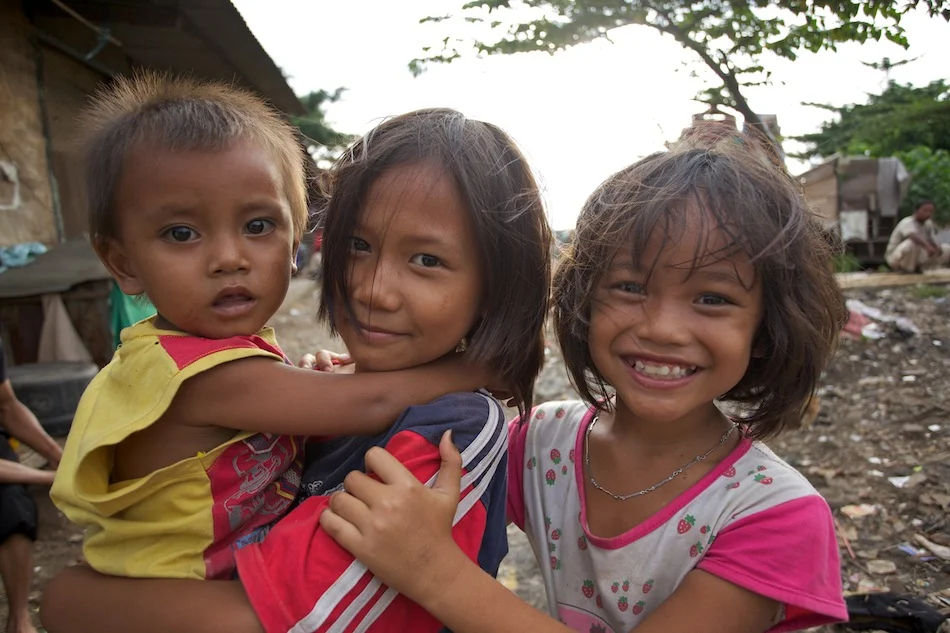
Children in an Indonesian slum.
In the past month, we have signed partnership agreements for two of the largest countries in Asia: Indonesia and India - representing hundreds of millions of vulnerable children that need love, mentoring, discipleship and encouragement.
Our strategy is to partner with large church networks in each country, so that the movement is "owned" and run by local Christian leaders.
So, rather than coming in as a foreign NGO, setting up administrative offices, hiring administrative staff and building an infrastructure from ground up, - we partner and we come in under local leadership.
This is pretty core to our strategy.
You see, it takes a spider to repair its own web.
And it is going to take local Christians to transform these nations.
Our role is to walk alongside those who walk alongside.
Join us in praying for these movements as we begin to lay the foundations to equip one generation to reach the next.
[Photo credit: Christin Gilbert]

Key appointment in drive to do short term mission differently
Short term mission is broken. Its time for a change, and we know just the person to help.
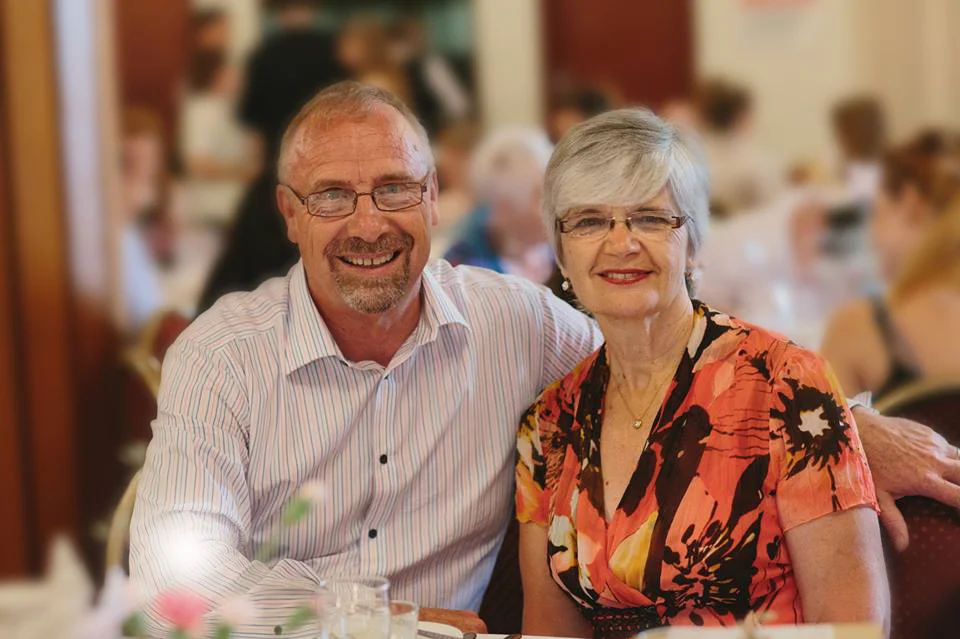
Andrew and Janice Collins
The Alongsiders International team is excited to welcome Andrew and Janice Collins, who will be relocating to Phnom Penh, Cambodia to work from our head office.
Andrew is a sought after trainer of short term mission groups - bringing insight and wisdom from his 17 years of service as the Australian Director of International Teams. He has consulted with churches all over Australia and beyond, helping Christians engage with the poor in more meaningful and sustainable ways.
Andrew will work closely with church partners and supporters from outside the developing world, to help them engage with the Alongsiders movement and journey deeper in their faith and engagement with poverty and justice issues.
An outdoorsman, he is a keen cyclist and walked 800km across Spain in 2008 on El Camino (a world famous pilgrimage). Andrew is also a fine cook, loves blue cheese, and is known for his delicious pancakes.
Janice Collins also brings a great deal of experience and giftedness to the team. A gifted administrator, Janice has served in government, seminary and more recently missions, leading International Teams in Australia after Andrew stepped down.
Janice is known for being efficient and focused, but beneath that is a heart of growing engagement with God's unceasing love. She is a wife, mother and grandmother of three (Harrison, Immanuel and Jemima). Janice enjoys walking, classical music - and a good cup of strong coffee.
We welcome Andrew and Janice to the team in August and look forward to their service to the wider movement.