
Welcome to the team
Thank you for giving your time to help make the shop a success. Everything you need for a Saturday shift is on this page.
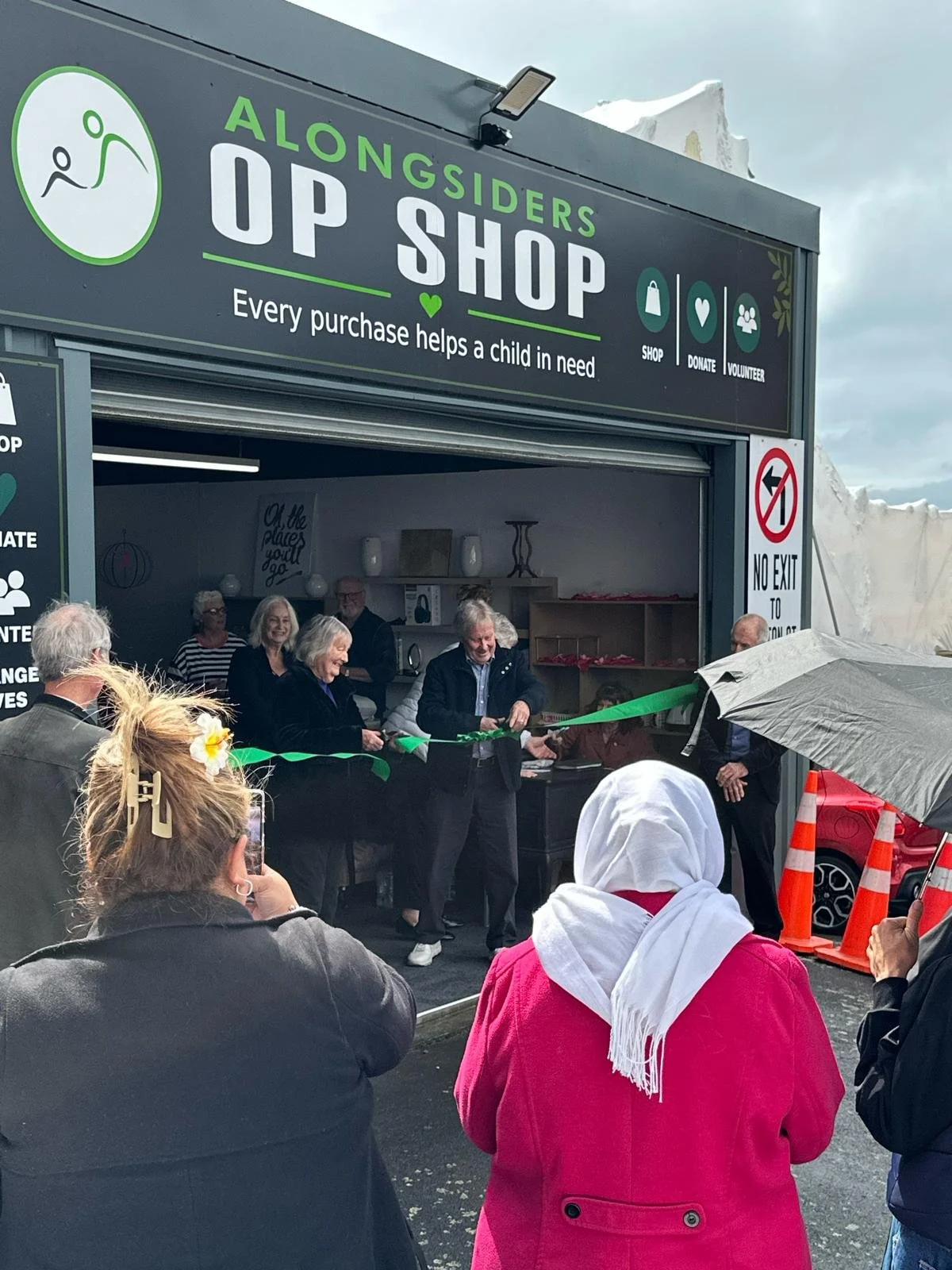
Every purchase helps a child in need
The purpose of the shop is not only to raise funds for Alongsiders, but also to provide a welcoming and friendly place for people in our community. Your donated time is helping vulnerable children, and creating a place where people who want to chat or feel more connected can find that.
Opening hours
Saturdays, 8:30am to 1pm or 2pm, or later if you're happy to stay.
Where we are
In the car park behind Howick Community Church (HCC), 120 Picton Street, Howick.
Who to ask
Kathy Parker runs the shop and the roster: 027 300 7443 or 09 537 1009. Anything unusual or unsafe, contact Kathy before opening.
Opening, serving, closing
A Saturday in three parts. Lockbox, alarm and wifi codes are deliberately not on this page. Kathy will give them to you.
Opening the shop
- 1Unlock the shop (bottom lockbox; Kathy will give you the code) and turn on the lights.
- 2Put out the sandwich boards at the Picton and Selwyn entrances.
- 3Put out the cones in the corner car park and in front of the shop.
- 4Make sure the entrance and walkways are clear. Put the clothing rack outside.
- 5Check the EFTPOS and checkout area is ready (instructions on the desk, and below).
- 6Anything unusual or unsafe? Deal with it before opening, or contact Kathy.
During the morning
- 1Welcome customers and make them feel comfortable. Help when needed, but let people browse without pressure.
- 2Keep an eye on the shop so clothing and other items stay reasonably tidy.
- 3Keep the checkout organised. The cash box stays in the drawer at all times.
- 4Write down what is sold and whether it was cash or EFTPOS, using the number system in the front of the book.
- 5Thank customers for supporting Alongsiders, chat if you can, and give them a card.
- 6Accept suitable donations (see below). Online sale pickups: ring Kathy. Tell Kathy if furniture sells, as it may also be listed online.
- 7Quiet moment? Sort donations: higher value for the shop, suitable for Two Coats, or to the bin. Put them under the table, or on the back shelves in the shed if there's too much.
Closing the shop
- 1Tidy clothing, shelves and displays as much as you reasonably can. New donations go under the table.
- 2Put the locked cash box in the top right drawer with the EFTPOS machine (turned off) inside. Key in the top left drawer. Malika will collect it.
- 3If you have time, text Kathy the amount sold on the WhatsApp group, or to 027 300 7443.
- 4Turn off the lights (switch on the wall in the dressing room).
- 5Bring in the two sandwich boards and the cones.
- 6Close and lock all doors. Return the keys to the lockboxes.
How to use the EFTPOS machine
- The middle black button on the side turns it on.
- Enter the amount to pay on the first screen and press Continue.
- Tap the card. If there's no chip, slide it in or swipe it sideways, whichever works. It makes a noise when it has worked.
- If the customer wants a receipt, they type their email on the last screen.
- At the end of the day, leave it on charge if the battery is flat. The plug is on the back wall; the charger is in the top left desk drawer.
Keys, toilets, shed and alarm
- The top lockbox holds the black plastic key swipe for the toilets inside HCC and the key for the shed and back yard gate (one key for both). Kathy will give you the codes.
- Turn the building alarm off when you go in and on when you leave. The building is usually open anyway.
- Please return the keys when you're finished, and lock the shed and yard.
- You can use the public toilets by the information centre if you prefer.
- Church wifi for your own phone: ask Kathy for the network name and password.
What we can take
Only suitable goods, please. Nothing broken, marked clothing, or anything unrepairable. No electrical items. The full list is on the desk.
Yes, please
- Clean clothing in good condition
- Home décor and tools
- Books, homewares and other saleable goods: put them under the table
- Wooden furniture to be done up, but send Hean a photo before accepting it
No, sorry
- Anything broken or unrepairable
- Marked or stained clothing
- Electrical items
- Melteca furniture, unless it's immediately saleable and fits the space in the shop
Furniture: if you can, take it to Hean afterwards, or ask her to pick it up. Kathy will give you Hean's number and address.
Saying no kindly: "Thanks so much for thinking of us. We're not able to take that one, but hopefully you can recycle it. Is there anything else you'd like to drop off?" Never sort a bag in front of the donor, and never comment negatively on what they've brought.
Returns: please choose carefully, as we do not offer refunds or exchanges if you change your mind. If an item is faulty, we will fulfil our obligations under the Consumer Guarantees Act.
Look after yourself and others
A separate Health and Safety Manual has the full detail. Please read it before your first day. The short version:
Inside the shop and out front. A tidy shop also means fewer trips and falls.
Ask for help with anything heavy. Don't be the person lifting the heaviest table.
If something looks unsafe, leave it and contact Kathy. Nobody is expected to put up with abuse: step away, call for help, or call 111.
The first aid kit is inside the garage by the admin desk. The register and report forms are in it. Record every injury, near miss or concern.
Fire, ambulance or police. The address is 120 Picton Street, Howick Village. Within 24 hours, tell Kathy.
Walk to the nearest exit, take visitors with you, leave belongings. Meet at the marked assembly point in the car park near the skip bin.
Anywhere on the church buildings or grounds.
Current licence, legal and insured car, no phone in hand, never after drinking.
Lights and heaters off, garage door locked, keys back in the lockbox.
Take a break every couple of hours, say if you're tired or in pain, and don't overdo it.
Read the full Health and Safety Manual
Blank forms, registers and checklists in the manual are noted but not reproduced here. They can be printed from the original document.
Health and Safety Statement
Alongsiders believes that an effective health and safety management system is the key to a successful organisation; ethically, morally, spiritually, legally, and financially. Through our active commitment to legislative compliance and most importantly, ensuring our workers and Church are safe, we will continuously look for opportunities to improve our performance and system whilst still following our values.
We aim to actively promote improvement through ensuring our staff, volunteers and leadership are equally committed, involved and supportive of our health and safety practices.
To achieve this we will ensure all workers and visitors are:
- Working together; taking reasonably practicable steps to ensure that any significant risks or hazards to workers are minimised, and workers are protected, where elimination is impracticable
- Involved in identifying and controlling new and existing hazards and regularly monitoring these hazards within our facilities
- Informed about accident and emergency procedures
- Aware of their responsibilities to themselves, their fellow workers and the general public
- Utilising the systems in place to record all incidents, near misses or injury
- Promoting the provision of advice, information, education and training in relation to work health and safety
Authorised by:
Full Name: ____ Signed: ____ Position: ____ Date: 27/08/2026 ____
Worker Health and Safety Policy
Policy Statement
Alongsiders is committed to providing and maintaining a safe and healthy workplace for all workers, and to provide the information, training and supervision needed to achieve this (joining church training as appropriate)
.
Purpose
Alongsiders will take responsibility for health and safety procedures, however, workers need to be aware of their responsibilities and comply with Alongsiders health and safety policy.
Definition
Worker: Alonsiders is committed to supporting paid staff and volunteers equally, therefore all references to workers include both paid staff and volunteers unless stated otherwise.
Responsibilities
Each worker is encouraged to play a vital and responsible role in maintaining a safe and healthy workplace through:
- Being involved in the workplace health and safety system
- Abiding by the correct procedures and using the correct equipment to carry out tasks
- Reporting any pain or discomfort as soon as possible and ensuring all accidents and incidents are recorded on a register held in the office
- Helping new employees, trainees and visitors to the workplace understand the right safety procedures and why they exist
- The immediate reporting of any health and safety concerns to the Kathy Parker
- Keeping the work place tidy to minimise the risk of any trips and falls Your participation is much appreciated.
Our Health and Safety Representative is: ____ Our Health and Safety Team is: ____ ____
____ ____
Discomfort Pain Injury (DPI) Prevention Policy
Policy Statement
Discomfort Pain Injury (DPI) is a collective term for a range of conditions (including injury) characterised by discomfort or persistent pain in muscles, tendons and other soft tissues. Every case of DPI has the potential to be classified as a significant hazard because the condition may cause ‘Serious Harm’. Therefore the risk factors for DPI need to be controlled by eliminating the hazard if at all possible, or else by isolating or minimising the hazard.
Purpose
To provide systems and procedures for proactively managing the risk factors that may contribute to a range of occupational overuse type conditions.
Responsibilities
The leadership team is responsible for:
- Taking all practical steps to ensure that there is compliance with the ‘WorkSafe NZ Code of Practice (COP) for Visual Display Units’
- Ensuring all workers at risk are made aware of the potential of DPI and its causes within their first month of employment
- Encouraging workers to report any work-related pain to the Health and Safety Representative as early as possible
- Ensuring the work environment of any workers who do develop symptoms is monitored and all practicable steps are taken to remedy any deficiencies
- Facilitating an early return to work for any worker who has been absent through a DPI related injury where possible
Workers are responsible for:
- Reading the DPI awareness information and attending training where required
- Adjusting workstation equipment to maintain a comfortable body position
- Taking breaks away from the workstation and practicing micro-pauses as appropriate
- Reporting early symptoms to the leadership team – preferably before visiting a doctor
- Participating in an early return to work program if applicable
Procedure
Individual workers should adjust their own workstation to maintain a comfortable working position, vary tasks, practice micro-pauses and take other breaks. They must report any problems to the health and safety representative, who in turn may request a full workstation assessment from a properly trained workstation assessor. The workstation assessor will work with the worker to recommend changes or adjustments and will provide a brief summary of findings to the worker and the leadership team.
Early warning symptoms should not be ignored in the hope that the pain will go away. If discomfort during work activities persists for more than a few days, action should be taken. By taking action, individuals will be making important progress with regards to stopping the symptoms from worsening and developing into a possibly serious and long-term condition.
Guidelines
ACC Approved Code of Practice for the Use of Visual Display Units in the Place of Work
Stress at Work
Overview
Alongsiders recognises its responsibility to actively reduce and manage stress in the workplace. Stress may arise from both personal and organisational sources. Alongsiders clearly has a degree of control only over the latter, and these guidelines provide a framework for stress management in the workplace.
Purpose
To assist all workers to understand the causes of stress, and work together in ways that encourage positive responses to work demands. To enable workers to identify indicators or symptoms of stress and to assess the extent to which they or other individuals are responding positively or negatively. To encourage the leadership team and workers to seek information and early assistance in managing their own stress in a constructive way. To provide information and advice regarding the causes and impact of stress in the work environment, and offer ways for managing stress positively. To have procedures for dealing with negative stress or distress effectively.
Responsibilities
The leadership team are responsible for:
- Facilitating training (possibly in conjunction with the church)and information from the leadership team in effective management practices and styles, covering the nature of stress, and promoting responsible prevention and rehabilitation attitudes towards it as determined by the leadership team
- Providing up to date and accessible information on stress
- Adjusting the physical environment, the workload, task design, pacing of work and work schedules to alleviate significant stress/distress for an individual, in full consultation with the individual concerned
All workers are responsible for (where applicable):
- Managing your time and realistically prioritising tasks
- Taking regular, necessary breaks during the day
- Taking leave accrued as time in lieu as soon as practicable
- Not working excessively long hours
- Discussing with the leadership team the issues that are causing you stress, along with any suggested solutions
- Seeking advice and help from others – talk to spouses, friends, colleagues, a professional counsellor or the leadership team where possible
Background information for workers
*“Stress arises when a person’s capabilities are overwhelmed by demands”*
Every day, individuals are confronted with a variety of demands or ‘stressors’. These may arise from either personal sources (e.g. ill-health, marital discord, family problems, financial uncertainty, or from institutional sources such as work overload or under-load, role conflict, lack of control or physical environment). Stressors produce a biochemical response in the body which prepare the body to do what is essential during a stressful situation (in preparation for fight or flight).
The stress response is highly functional and can lead to elevated performance, through constructive and creative responses, increased and well-directed energy, improved morale and motivation, and increased efficiency and effectiveness. Where an individual is exposed to demands that are too intense, frequent or chronic, the stress response can create unhealthy, destructive outcomes (e.g. cardiovascular disease or depression).
There are wide individual differences in the way we each respond to stressors, and therefore the optimum stress load that maximises performance varies by individual and by task.
Common signs
Some common signs of stress in individuals:
- Headaches, feeling tired, or having difficulty sleeping
- Worrying a lot, feeling anxious and tense for no explained reason
- Having difficulty concentrating, finding it hard to make decisions
- Lower level of confidence, making mistakes, forgetting things
- Feeling impatient and irritable
Categories
Organisational stressors can be grouped into four categories:
Physical: The physical environment in which one works (e.g. temperature, office design, noise, lighting).
Task: The nature of the work itself, the specific activities assigned to the worker.
Role: The expectations that others have of one’s role and its function within the organisation.
Interpersonal: The social, personal and working relationships that exist.
Prevention
- Allow workers to participate in collaborative decision making
- Allow workers to exercise as much autonomy and control as is practical
- Provide training to enable work to be done most effectively
- Consider job design, job descriptions and performance targets with the aim of reducing unnecessary stressors
- Consult with workers to identify stressors in the workplace
- Promote activities that make the workplace healthier, more stimulating and more fun
- Carefully match people to jobs by considering their individual skills, capabilities and needs
Early intervention
- Act immediately if a worker seems overly stressed
- Explore whether their stress is in any way job related, discuss ways of alleviating it in the short term initially, and then focus on the sources of stress to consider long-term solutions
- Short-term solutions could include sharing tasks amongst other workers, taking leave, or adopting flexible or reduced hours
- Long-term solutions should aim to eliminate or minimize the cause of stress where possible – the preventative strategies outlined above should be used
Guidelines
Worksafe NZ Stress in the Workplace
Employment New Zealand Stress Leave
Fatigue at Work
Overview
[Church] is responsible for providing safe systems of work. All workers share in the responsibility to minimise and manage the adverse effects of work related fatigue.
Purpose
Ensure a safe and healthy working environment free of work-related injury or illness; establish appropriate steps to manage persons who are affected by fatigue; and encourage persons affected by fatigue to seek assistance.
Responsibilities
The leadership team are responsible for:
- Establishing and maintaining a fatigue management framework to ensure that personnel are fit for duty
- Preventing or minimising the effects caused by workload
- Maintaining the privacy and confidentiality of those participating in fatigue management programs
Workers are responsible for:
- Workers at all levels within Alongsiders are responsible for the implementation of this policy
- Workers, contractors and all others described as workers are responsible for ensuring they are fit for duty by complying with this policy and the procedures
- Ultimately, to successfully control the risks associated with fatigue in the workplace, it is up to each individual to recognise the symptoms of fatigue, obtain adequate sleep and ensure they and others affected by fatigue seek assistance
- Workers are obligated to let the Health and Safety Representative or the leadership team know if fatigue is occurring at any given time
Information for workers
Fatigue, also referred to as tiredness, exhaustion, lethargy, and listlessness, describes a physical and/or mental state of being tired and weak. Although physical and mental fatigue are different, the two often exist together – if a person is physically exhausted for long enough, they will also be mentally tired. When somebody experiences physical fatigue, it means they cannot continue functioning at their normal levels of physical ability. Mental fatigue, however, is more slanted towards feeling sleepy and being unable to concentrate properly.
Types of fatigue
Physical fatigue: Physical fatigue is when a person’s muscles cannot do things as easily as they used to. Climbing stairs or carrying laden supermarket bags may be much harder than before. Physical fatigue is also known as muscle weakness or lack of strength.
Psychological (mental) fatigue: Psychological fatigue makes concentrating much harder. When symptoms of mental fatigue are severe, the person affected might not want to get out of bed in the morning or perform his/her daily activities. Mental fatigue often appears together with physical fatigue, but not always. People may feel sleepy, have a decreased level of consciousness, and in some cases show signs similar to that of an intoxicated state. Mental fatigue may be life threatening, especially when the sufferer has to perform tasks, such as driving a vehicle or operating heavy machinery.
Contributing factors
A person’s level of fatigue may be compromised or heightened by:
- Spending long periods of time awake
- Inadequate or insufficient quality of sleep over an extended period
- The type of work performed and work environment
- Workload, length of the shift and previous shifts worked
- The time of day or night worked
- The time taken to travel to and from work
- Their general level of fitness and/or medical condition/or age
- Stress
Alcohol, Smoking/Vaping and Drugs Policy
Policy Statement
Alongsiders recognises that the abuse of alcohol and the use of tobacco, vaping and non medical drugs presents a health hazard that can have serious implications and may result in life-long adverse consequences, addiction, diseases and greatly impair the ability and judgement of the individual.
Purpose
Alongsiders supports and encourages a safe and healthy environment for all.
Responsibilities
This policy is applicable to all persons involved in shop activities/events held both on site and offsite..
The leadership team is responsible for:
- The maintenance of smoke and vaping free signage
All workers and visitors are responsible for:
We will ensure all workers and visitors are aware of the following:
- Medication should be taken only by the person for whom it has been prescribed. Written consent to administer medication to children (if required) should be sought from parents/guardians
- Alongsiders is committed to maintaining a drug, smoking/vaping and alcohol free environment within the church premises and its grounds
- All reasonable and practicable steps are to be taken to ensure that no person consumes drugs or alcohol within [Church] or its grounds at any time or any day.
- Organisations or individuals using church facilities must agree to comply with this policy as a condition of use
In the case of breaches to this policy, then in the first instance notify the designated leader in charge. The leader is required to report this matter to leadership.
All church buildings and grounds are strictly NO SMOKING OR VAPING.
Lock Up Procedures
Overview
Howick Community Church is responsible for providing a safe working environment and protecting the assets of the church. All workers share in the responsibility to minimise and manage theft or damage.
Purpose
To provide consistent procedures for securing the premises when locking up.
Responsibilities
Workers are responsible for:
- Ensure individual heaters and lights are switched off in each room
- Lock the external garage door and put keys in bottom lockbox.
It is deemed that the last person leaving the building holds the responsibility of ensuring that the above stated procedure is followed to a complete and satisfactory manner.
Safe Driving Policy
Policy Statement
Howick Community Church] is responsible for providing a safe environment for all workers and any one engaging in activities or events run through the church. All workers share in the responsibility to adhere to safe driving procedures to support this.
Purpose
To ensure that workers who drive vehicles for Alongsider activities or events demonstrate safe, efficient driving skills and other good road safety habits at all times and to maintain all vehicles in a safe, clean and roadworthy condition to ensure the maximum safety of the drivers, occupants and other road users as well as reduce the impact of the vehicles on the environment.
The policy is applicable to all workers driving personal vehicles for church activities or events.
Responsibilities
The driver is responsible for safe driving by:
- Not using mobile phones in vehicles while driving, except when using hands free devices
- No smoking or vaping in the vehicle while taking passengers
- Taking regular breaks while driving
- Holding a current drivers licence for the class of vehicle they are driving and this licence is carried when driving
- Paying for any speeding or infringement fines obtained
- Never driving under the influence of alcohol or drugs, including prescription and over the counter medication if they cause drowsiness
- Avoiding distraction when driving – the driver will adjust car stereos/navigation devices/mirrors etc before setting off, or pull over safely in order to do so
- The car must be legally registered, warranted and insured – the driver must show evidence of this on request
- The driver must not carry loads for which the vehicle is unsuited, nor may they carry more passengers than for whom there are seat belts
Disruptive Persons
Overview
Alongsiders is responsible for providing a safe working environment and protecting all users of the church facilities, from physical, emotional and spiritual harm. All workers share in the responsibility to minimise and manage disruption.
Purpose
Workers are to understand how to protect themselves if a situation, beyond their control, arises.
Responsibilities
The leadership team are responsible for:
- Ensuring workers are aware that this kind of behaviour will not be tolerated and they are to feel that their safety and health is paramount to the church
- Taking reasonably practicable steps to ensure workers are aware of what to do to protect themselves should the need arise
- Providing assistance as required at the time of an incident and during rehabilitation, as required
Workers are responsible for:
- Ensuring their own actions or inactions do not harm themselves or others
- Being aware of policy and who to gain assistance from when required
- Providing information if they feel unsafe with any one within the context of their work or at a premises associated with their work
- Reporting any incident that occurs and completing incident forms for the Health and Safety register and advising the leadership team as soon as practicable
Information for workers
Protecting Staff from Public Aggression
- Assess the environment: Check meeting locations or home visits beforehand to plan safe parking and exits.
- Use safety tools:Ensure you have a charged mobile phone available.
- Trust instincts: Allow staff to step back or leave a situation immediately if a member of the public acts aggressively or feels unsafe.
Workers are not expected to take verbal or physical abuse from any person. If a situation arises within the workplace boundaries, you are to follow the procedures outlined below:
- Remove yourself from the incident and get into a safe position; and/or
- Call for help; and/or
- Call 111 for Police assistance (or ambulance if required)
Guidelines
Active Armed Offender Plan - Leave the area if safe to do so and if directed by the police. Otherwise close the garage door and stay inside until the incident is finished.
First Aid Policy
Policy Statement
Alongsiders has a responsibility to take reasonably practicable steps in providing effective first aid arrangements.
Purpose
To ensure safe, consistent and immediate care is taken when first aid may be required.
Responsibilities
The [Staff role] is responsible for:
- Ensuring appropriate first aid supplies are provided at the shop.
- Ensuring that first aid supplies are accessible to workers at the shop. Being the designated first aid representative for Alongsiders
- Ensuring a first aid register form and incident and accident register is completed in the event that first aid is rendered
First Aid Procedures
A copy of these procedures should be placed in all first aid kits.
- Wash hands and lower arms thoroughly before and after treating patient
- Surgical gloves must be worn before dealing with any wound involving blood
- Gloves and other materials that have come into contact with blood should be placed in a plastic bag, sealed and placed in appropriate rubbish bin
- Wash wounds
- Cover wound as necessary
- Record all first aid administered in the first aid notebook (one in each kit)
First aid kits are kept:
- Admin Office
- Minerva Room cupboard
- Mana Kitchen cupboard
- Resources/Giving Station in the church lobby
- Inside of garage by the admin desk
First aid kits should be kept up to date.. Please let Kathy know if supplies are low. A stock take will be completed every 6 months..
[Form or table: see the full document in Google Docs]
First Aid Register
Use this form to record details when first aid treatment is given
[Form or table: see the full document in Google Docs]
Hazard Identification
Risk Assessment
A risk assessment category (critical, high, moderate or low) for each hazard is compiled by using the chart below. Hazards with the highest rating are given priority.
Any risk scale greater than moderate is deemed to be a significant hazard.
Impact x Likelihood = Priority
Hazard Notification Form
[Form or table: see the full document in Google Docs]
Health and safety representative report including analysis and action taken: Impact ____
X
Likelihood ____
=
Priority ____
[Form or table: see the full document in Google Docs]
Any worker who identifies a risk should complete this form, for example a new risk that is not entered into the risk register or an existing risk that has been entered into the risk register that has not been correctly managed to eliminate or mitigate risk.
Risk Identification Table
It is important that we consider any harm that may occur or affect the health of people over a long time period as well as identify any risks so we can then proceed with the next steps to analyse and identify appropriate controls for them.
[Form or table: see the full document in Google Docs]
Working Bee Checklist
Prepare before the day:
- What work is required to be done?
- Do you have sufficient people?
- Do you have the correct tools for the jobs?
- Is any special protective gear required?
- Do you need specialist tradespeople – are these in your volunteers?
- How long will each job take?
- How skilled do volunteers need to be?
- Is there equipment being used that requires training (e.g. cherry picker)?
- Is there a skip for rubbish disposal or some other means?
- Is there a need for Police Vetting?
- Is supervision of children necessary and if so, has this been arranged?
- Is food and refreshments to be provided and if so, has this been arranged?
- If the working bee is cancelled, how will you communicate this?
On the day:
- Have all volunteers been briefed?
- Thanking them, advising jobs required, advising safety requirements; including any hazards, what is required for the day, who to report to, how to fill out incident reports, where the first aid kit is and who is first aid trained.
- Have you ensured volunteers are fit for the job they are doing?
- E.g. the oldest volunteer shouldn’t be lifting the heaviest table/equipment
- Have you ensured volunteers understand what is required?
- Have supervisors been delegated to ensure their training, safety and understanding?
- Are regular breaks scheduled and are fluids available?
- Has sunscreen been provided for those working outside?
- Are you consulting, cooperating and coordinating with volunteers throughout the day?
End of day:
- Has a debrief been organised with volunteers?
- E.g. talk about what was achieved, any issues etc
- Review practices – what could be done differently?
- Has a record been kept so improvements can be made next time?
- Continuous improvement is the catch phrase and needs to be documented
Activity Checklist
Purpose
The following checklist is to be used in the process of organising all activities onsite and offsite for all ages and ministries.
Prepare before the day:
- Will suitable people be leading the activity?
- Will there be any vehicles/drivers involved – if so, are they aware of the Safe Driving Policy?
- Have all leaders been Police Vetted if needed?
- If the activity involves minors, have all leaders read the Child Protection Policy?
- Have you told someone of your intentions?
- Have you entered your activity of event onto the notification form in the office?
- Have you informed parents that they are welcome to be present for activities?
On the day:
- Do you have a sensible adult/child ratio and suitable gender ratio?
- Have you got a means of communication?
- Is there a first aid kit available?
- Does everyone have suitable gear for the activity?
Activities and Events Notification
All activities or events need to be recorded on this list prior to the starting.
Regular occurring activities and events
[Form or table: see the full document in Google Docs]
One off activities and events or changes of location or date
[Form or table: see the full document in Google Docs]
Evacuation Plan Testing Record
[Form or table: see the full document in Google Docs]
Accident and Emergency Procedure
Accident or emergency?
Ensure the safety of people, including any injured, without risking your own safety.
Contact appropriate emergency services (dial 111)
Provide first aid where needed, until emergency services arrive, or injured parties are recovered and a safe
situation has been restored.
Where practicable, avoid direct contact with blood or blood spills. Use latex gloves for tending wounds and/or
cleaning blood spills.
*Within 24 hours contact/inform:*
*-* Health and Safety Representative or Leadership Team
- The parents/caregivers, if appropriate - Police, if appropriate
- WorkSafe, if appropriate
*Within 7 days:*
- Debrief incident with the Health and Safety Representative
- Complete an Incident Reporting Form
Contacting Emergency Services
For emergency services dial 111 and ask for the service you require:
FIRE AMBULANCE POLICE
Stay calm, give your name, details of the emergency, and street address. You are at the address:
120 Picton St, Howick Village
FIRE
If you discover a fire:
- Activate the alarm and dial 111
- Alert people in your area and the warden, worship leader or person in charge of the event
- Do not extinguish the fire unless there is no personal danger to you or anyone else
- If time permits and there is no danger, close all doors and windows
- Evacuate the building following the evacuation procedure
- After evacuation, meet at the assembly point in the [enter assembly area]
If the fire alarm sounds:
- Walk quickly to your nearest exit
- Make sure any visitors leave the building with you
- Do not stop to take personal items with you
- Meet at the assembly area – [enter assembly area]
Incident Management
Overview
Incident Management covers the process to record and investigate any incidents that have occurred. These incidents may be accidents, incidents or near misses.
Accident
Any unexpected, unplanned or undesired event or circumstance that has a negative implication; it results in harm to people, loss of life (notifiable events), or damage to property.
Near Miss
An unexpected and unplanned event or series of events that did not result in injury, illness, or damage to property, equipment, materials or the environment – but had the potential to do so under slightly different circumstances. Only a fortunate break in the chain of events prevented an injury, fatality or damage.
Incident
An event or series of events that has taken place or occurred which may or may not have resulted in a near miss or accident.
Key different
All accidents are incidents, and all near misses are incidents, but not all incidents result in near misses or accidents.
Summary
All incidents, including the near misses must be investigated and followed up. Research has proven that near misses, can result in the build up to an incident that causes incidents to become a higher risk, with higher damage or more severe injuries.
Notifiable Event, Incident, Injury or Illness
Overview
A safe and healthy church environment is fostered through a partnership where all involved combine their efforts and share the responsibility for personal injury prevention and management. Early reporting is essential to this process and [Church] has a specific accident reporting and investigation form (Hazard/Incident/Near Miss/Complaint Report) that must be used in the event of all accidents and incidents.
Purpose
To provide consistent procedures for recording and investigating church related incidents and accidents.
Responsibilities
The leadership team are responsible for:
- Preventing accidents and injury by providing a safe and healthy environment
- Taking all reasonable practicable steps to see that all congregation members are aware of this accident reporting system, know where to obtain the appropriate form and how to report such events when they occur
- Acting as the health and safety representative, including liaison with ACC and investigation of an injury or accident if required
All workers are responsible for:
- Observing any established health and safety procedure
- Participating in relevant health and safety training (if required)
- Accurately reporting and documenting all accidents, incidents and observed risks to the Health and Safety Representative
Procedures
Record of Accident/Incident/Serious Harm
The Health and Safety at Work Act 2015 places requirements on PCBUs to record and investigate accidents. “Serious harm” accidents must be reported, in writing, using the prescribed form, to the Occupational Safety and Health Service of WorkSafe NZ as soon as possible.
The purpose of the investigation procedure is to determine actual causes of an accident/incident and to put in place procedures or controls to minimize the chances of a recurrence.
The Alongsiders ‘Hazard/Incident/Near Miss/ Complaint Report’ form acts the same as the WorkSafe NZ Notification of Accident form and either may be used.
Accident/Incident Reporting Investigation
In the event of “serious harm’ or a significant hazard the Health and Safety Representative must be advised immediately and WorkSafe NZ must also be advised.
The Leadership team should:
- Ensure receipt of all relevant information (incident forms, ACC forms and medical certificates as applicable)
- Initiate and carry out an investigation. This must commence within 12 working hours of the event concerned
- Ensure any hazard that is identified as the cause of the event is eliminated or minimised in accordance with the requirements of the Health and Safety at Work Act 2015
- Ensure all corrective actions that have been identified are carried out within the specified timeframes
- The investigation report will be reviewed by leadership to ensure that the corrective actions have been carried out as indicated and to check, if applicable, that significant hazards have been controlled in accordance with the requirements of the Act
When events result in “serious harm”, take the following steps:
- Make sure anyone injured or suspected of injury has received medical attention if necessary
- Contact WorkSafe NZ, as quickly as possible, as per their requirements
- Isolate and protect the scene. Do not interfere with the accident scene without the permission of an inspector from WorkSafe NZ
Hazard / Incident / Near Miss / Complaint Report
This report must be completed when a hazard is identified that cannot be immediately eliminated; or when an accident/incident occurs; when a near miss occurs; or when a complaint is received.
The report must be returned to the Health and Safety Representative as soon as possible.
[Form or table: see the full document in Google Docs]
Church Evacuation Plan and Procedure
In the case of an emergency such as fire, earthquake or other event requiring evacuation, all occupants of any buildings or related facilities shall cease activities immediately and move to the evacuation area, via the safest route.
IN THE EVENT OF AN EMERGENCY
PLEASE ASSEMBLE IN THE:
MARKED ASSEMBLY POINT
IN THE CAR PARK AREA
NEAR THE SKIP BIN
YOU WILL BE NOTIFIED OF AN EMERGENCY BY THE SOUNDING OF THE FIRE ALARM
The Fire Warden will contact the emergency services. The Fire Warden is:
The Person in Charge of Event
Please note: visitors are the responsibility of the person they have called in to see. Asbestos Management
Purpose
The Health and Safety at Work (Asbestos) Regulations 2016 require an up-to-date Asbestos Management Plan for a workplace where asbestos or asbestos-containing material (ACM) is identified, or is likely to be present.
Howick Community Church has identified asbestos or potential of asbestos in the noted buildings: (this is the responsibility of the Church not Alongsiders)
- Refer to Asbestos Management Survey
Responsibilities
The leadership team are responsible for:
- A PCBU with management or control of the workplace must ensure that a written plan is prepared and stored alongside this Health and Safety Manual
- This plan must be made available for both workers to read and understand and contractors or PUBU’s to view prior to carrying out work on the building
Workers are responsible for:
- Avoiding, if reasonably practicable, any opportunity that may disturb the asbestos identified
- Reporting to the Health and Safety Representative when an incident occurs that may disturb the asbestos
Guidelines
Refer to Howick Community Church Asbestos Management Plan 2018
WorkSafe New Zealand Asbestos Management Plans
Building Safety Checklist
This checklist is set in place to maintain compliance with Part 1 of the Fire Safety and Evacuation of Buildings Regulations 1992. This checklist is not intended to be used to satisfy the requirements of the building Compliance Schedule. (responsibility of the church not Alongsiders)
Date: ____ Name: ____
[Form or table: see the full document in Google Docs]
[Form or table: see the full document in Google Docs]
[Form or table: see the full document in Google Docs]
Contractors and Sub-Contractors
Responsibility of the Church
Overview
Contractors are incorporated in the ‘Worker’ definition. Further checks are required to be taken to ensure reasonably practicable steps are taken for safety in the workplace.
Steps to a successful contractor relationship
1. Pre work safety checks
- Health and safety considerations, check their safety record, assessing their health and safety management plan
2. Correct licenses
- Certificates/membership for registered professions, working at height permits
3. Inductions
4. Safety and Health Performance Assessment
- Are they doing what they said they were doing, is correct Personal Protective Equipment (PPE) gear being worn, are your workers in any danger from their work, are your workers aware of safety issues?
Health and safety considerations when dealing with contractors
Church personnel who are responsible for ensuring the safety and health provisions of a contractor should consider the following points as a guideline, however, for large projects, always gain professional advice.
- Have we clearly identified the nature of the project and the type of contractors that we will require?
- Will the contractor be wholly or partly dependent on the person in charge of the project’s knowledge and experience? If so, have we provided the contractor with all the relevant information?
- Does the contractor know and understand the organisation’s safety, health and environmental policies and practices?
- Have we satisfied ourselves of the contractors ability to carry out our requirements in those fields?
- Have all environmental hazards and health and safety hazards, associated with the contracted activity been identified and communicated to the contractor?
- Have suitable arrangements been made for the disposal of waste products, effluents and similar?
- Have suitable arrangements been made to deal with emergencies that may arise during the contract?
Have we taken into account the possible cost to the church that might arise from negligence or incorrect action by the contractor, bearing in mind: o Whether it is likely that liability will be assigned to the person in charge of the project
- Any insurance cover afforded to the contractor by the company; and o Whether the contractor carries adequate insurance against his/her own liabilities
- Have suitable safety and health standards been established for the contract and have they been communicated to the contractor?
- How can we motivate the contractor to provide good performance in safety and health management?
- Have effective means of monitoring and assessing the contractor’s performance been established and are these covered in the contract? o Have clear reporting lines been established for all specified events and health and safety activity reports
The extent of control required for contractors and subcontractors will be dependent on the level of risk related to the type of work being performed:
Low risk: Contractor/subcontractor to sign in/out with emergency and hazard briefings. (*E.g. The person replacing the water cooler, photocopier).*
Induct low risk people
Medium risk: Completion of a Safe Work Permit – this includes any working at heights, confined space entry or minor construction works where employee/workers and the general public may be at risk. (*E.g. trades people, repairs and maintenance)*.
Complete induction process and request health and safety plan for work involved and approved licenses/permits
High risk: Formal safety plan to be submitted by the contractor and/or formal contract document put in place – this can include major construction work.
Seek professional advice during the planning stages of the project, well before work is commenced
Contractors Register
[Form or table: see the full document in Google Docs]
Site Induction
[Form or table: see the full document in Google Docs]
[Form or table: see the full document in Google Docs]
[Form or table: see the full document in Google Docs]
Annual Health and Safety Review Plan
[Form or table: see the full document in Google Docs]
Health and Safety Meeting Minutes
[Form or table: see the full document in Google Docs]
[Form or table: see the full document in Google Docs]
Worker Acknowledgement
I have read and understood this Health and Safety Manual. In particular:
Hazards and risks I may be exposed to; accident/incident reporting requirements; what I am required to report and ensure that no omission of actions of my own will harm either myself or others in the workplace; and I have a clear understanding of the emergency evacuation procedures.
Signed: ____ Date:____ Name: ____ Position: ____
Signed: ____ Date:____ Name: ____ Position: ____
Signed: ____ Date:____ Name: ____ Position: ____
Signed: ____ Date:____ Name: ____ Position: ____
Signed: ____ Date:____ Name: ____ Position: ____
Signed: ____ Date:____ Name: ____ Position: ____
Back to Basics Checklist
Do we have a manual/policy?
- If not, who will take charge of this?
- If so, is it specific to our shop and HCC church and premises – what do we need to add to personalise it?
- Have we assessed our hazards and completed the risk management?
- Do we have processes in place?
Do we have the right (illuminated) signs around the church premises for: • Fire escapes
- Exits
- Car parking
- Who to contact, for what and when
- What to do in an emergency
- When did we last practice an emergency evacuation? Is it recorded? Do people know what to do?
Where are our Incident Reporting Forms?
- How do others know where these are?
- Who will investigate them?
- Who will send them to WorkSafe NZ if required?
- Where are they written up and filed?
What other actions must we implement going forward?
- Health and safety is an agenda item for leadership meetings
- Continuous improvement – what are we doing?
- How are we educating our workers?
- How will we communicate to our workers?
Ways to help
Tap the roles you'd like to try, then press Apply. Most volunteers do a Saturday shift once or twice a month.
Saturday shop shift
Open up, welcome customers, take payments, close down. Two volunteers each Saturday.
Sorting and pricing
Go through donations: higher value for the shop, suitable for Two Coats, or to the bin. Usually Fridays.
Furniture do-ups
Help Hean collect and restore wooden furniture for the shop, or move it with a trailer.
Keeping it fair for everyone
Write every sale in the book. Never take money from the float, even as a loan. Shortfalls are reported, not covered.
20% volunteer discount, but another volunteer always rings it up, never you. That keeps things transparent and accountable.
Give 48 hours notice where you can so Kathy can find cover. Life happens, just let us know.
Share display photos freely and tag #alongsidersopshop. Check with Kathy before posting faces.
Fine on breaks. In your pocket while serving gives a more professional image.
We've got your back
Kathy Parker
Shop manager and roster.
027 300 7443 or 09 537 1009
opshop@alongsiders.org
Hean
Furniture restoration. Send a photo before accepting furniture. Ask Kathy for her number.
Lisa Lopeti
Alongsiders Board Member, for a concern you'd rather raise elsewhere.
lisa@alongsiders.org
Emergency
Call 111, then tell Kathy.
Alongsiders Op Shop · Every purchase helps a child in need · alongsiders.org