
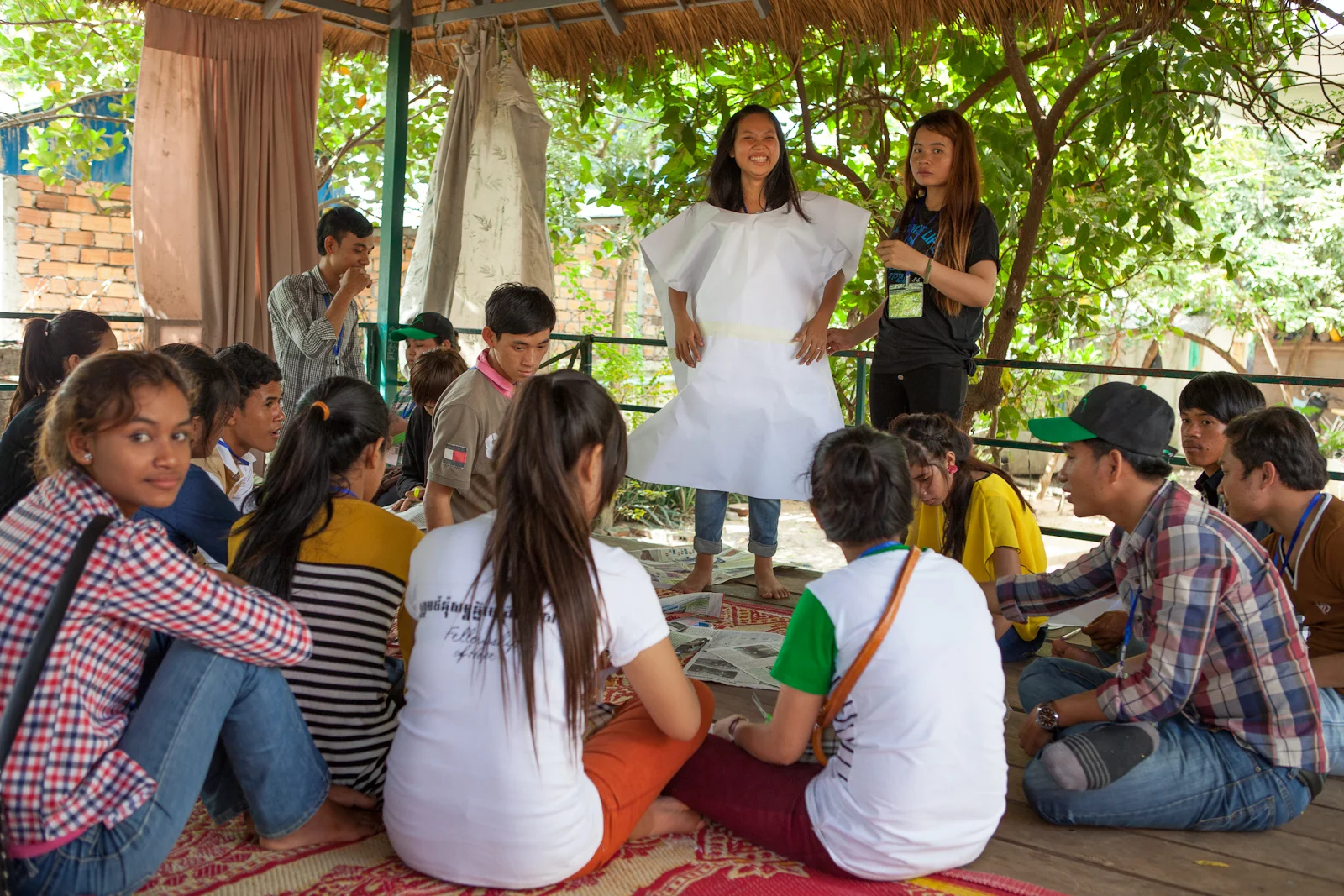
A unique home situation kept this boy coming back to camp 8 times in a row
Narith is slow to reveal the details of his story, especially the challenges in his life, as though they are commonplace and hardly worth mentioning.
Narith is slow to reveal the details of his story, especially the challenges in his life, as though they are commonplace and hardly worth mentioning. He has a calm, quiet presence. He's the sort of person you might overlook in a gathering of nearly 300 excited children and youth.
That was the scene last week at the Alongsiders Cambodia annual camp for mentors and their little brothers and sisters.
Narith was there attending for the eighth consecutive year. He was chosen as a little brother at the age of nine. Now at seventeen years old he is one of the oldest "little" brothers. And he is a good example of why we have an annual camp.
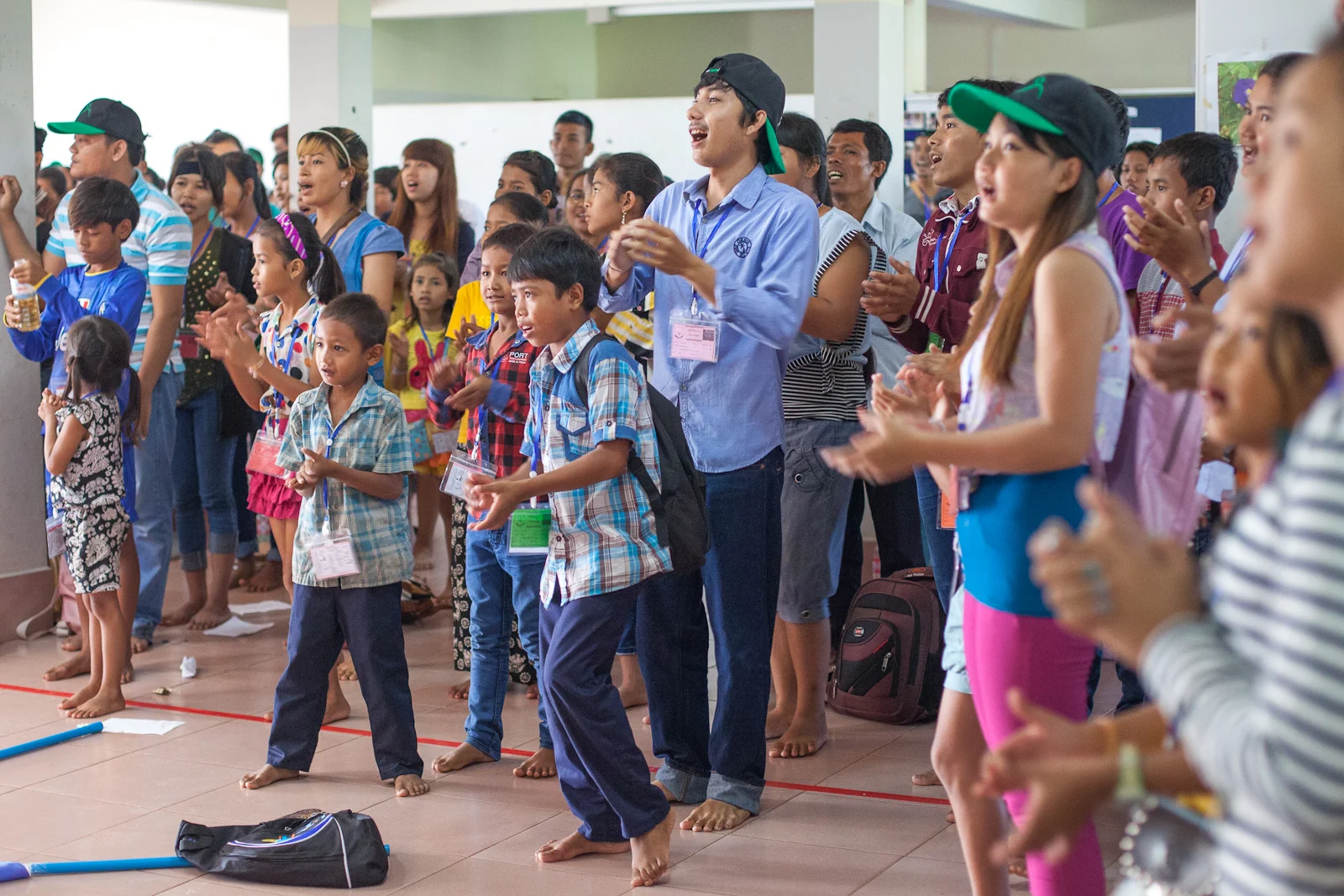
Worship, music and even dance are important parts of camp
What he enjoys about camp, he says, are the worship and teaching times. But most of all he loves being part of the community: the big gatherings, the shared energy, the group activities, and the sense of movement together.
As he keeps talking, it's clear why the community experience is so important to him.
He starts by saying his mother has been "low in energy" for as long as he can remember. His father, he adds, died when he was very young.
Narith's mother has worked for many years in a garment factory as a seamstress seven days a week. So she's away from home and Narith does many things for himself. Mostly he studies.
He's an only child, he says. His mother never remarried. She has worked hard all these years so that he can get an education, and now he is on track to graduate from high school, thanks to her sacrifices.
Being in the Alongsiders movement, not surprisingly, has had a significant impact on his life. After he was chosen as a little brother, his Alongsider mentor used to visit all the time to encourage and pray for him. They still meet frequently. Narith himself came to faith and joined a local church.
His mother also came to faith along the way. As he says this, Narith makes a curious gesture with his hands motioning toward his heart, as if he's trying to show his mother's faith because words aren't enough to describe it.
There is one more detail to the story.
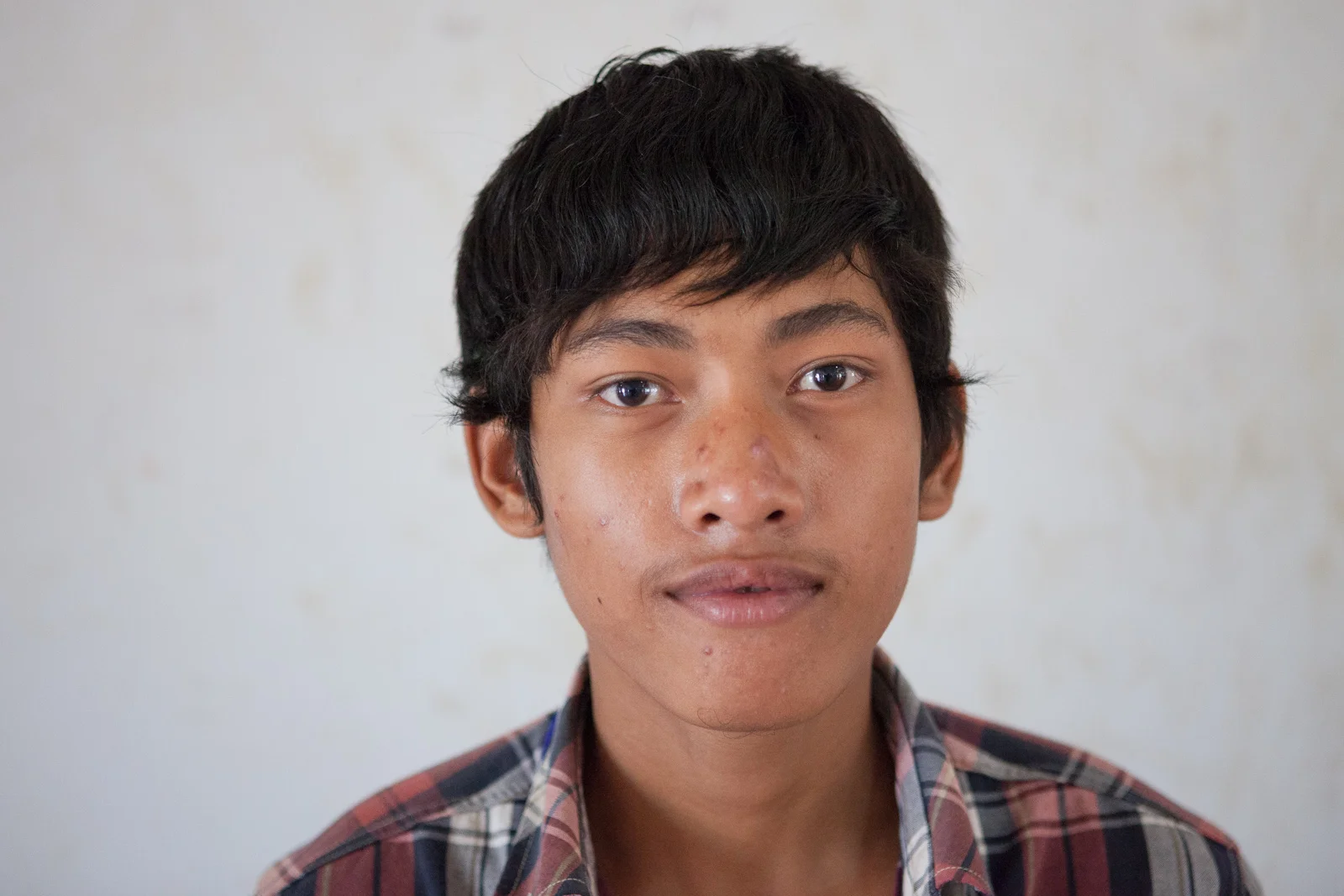
Narith has been a "little brother" since he was 9 years old.
Perhaps it's out of respect for her that he leaves this point until the end, because she has not let it define her. Narith's mother is deaf and she can't speak. They share a sign language they developed together over the years.
It's no wonder Narith loves the community life at camp! No wonder he is drawn to the volume and energy. No wonder he participates in every activity wholeheartedly, even craft projects designed for younger children. At home he is most often alone or, when his mother returns from a long day of work, in silence.
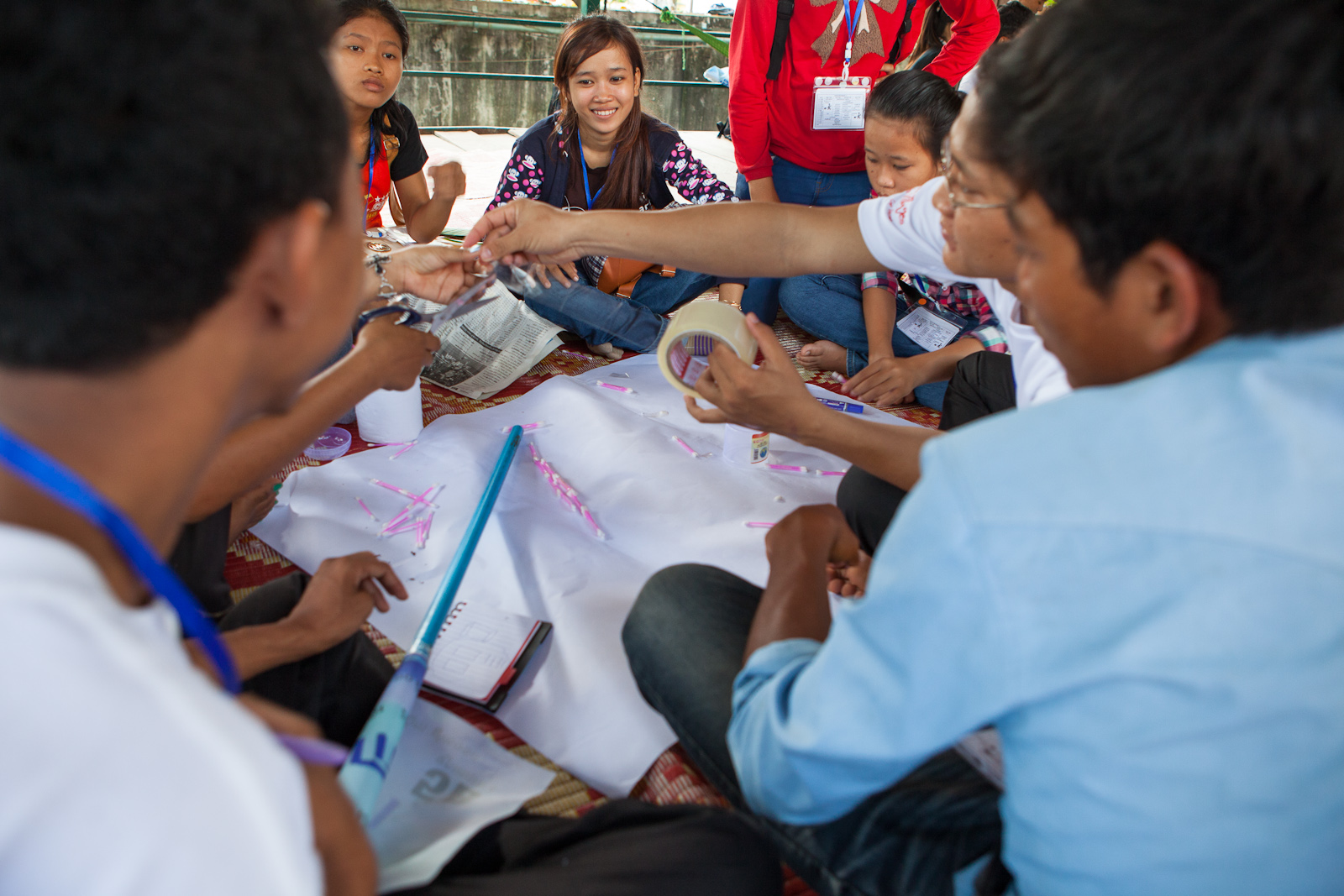
Workshop learning and fun
Isolation is the essence of poverty. Many of the little brothers and sisters have lost one or more parents, and many take care of themselves while their parents or guardians go to work. Alongsiders is overcoming isolation through relationships.
At the annual camp, little brothers and sisters see they are not alone. Mentors learn from each other. It's a time of renewing, recharging, and sharing vision. It's for everyone to recognize they are part of a movement, and that it's from God.
Next year Narith will likely return to camp for the ninth time as an Alongsider mentor himself.
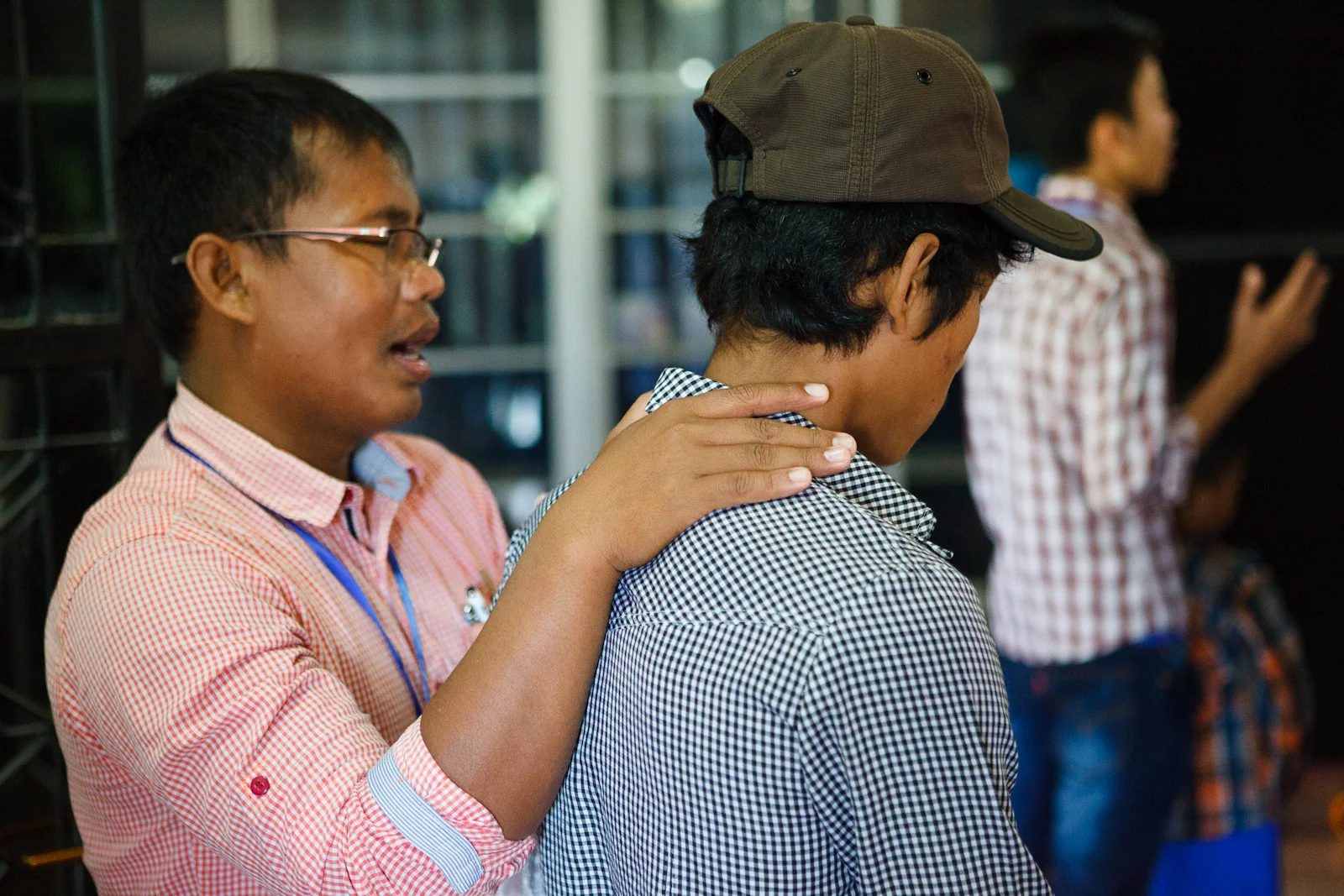
Narith's Alongsider mentor, Kimyan, praying for him at camp
"I know because of my own experience. My Alongsider mentor always showed me love. I want to give my love to another little brother like he did for me."
As Narith speaks, music is playing upstairs and a voice is peeling through a microphone calling everyone together. It's time to go and join the movement again.
Who REALLY connects with the poorest of the poor? You'll be surprised by the answer...
Here at Alongsiders we say, "It takes a spider to repair it's own web." Here's the secret.
Discarded himself. Phea knows the value of things others see fit to discard.
Every day he took to the streets with a rice sack slung over his shoulder looking for rubbish that he could sell: plastic bottles, cardboard, cans, scrap metal, or broken items that could be repaired.
Some called him names as he made his rounds. Others physically accosted him. They didn't see value of a kid in tattered clothes sifting through the garbage.
One day as he worked he came across a group of excited children and youth. They were Alongsider mentors with their little brothers and sisters waiting for transportation to the annual Alongsiders camp. Phea saw that some were neighbors, not unlike himself, and he asked if he could go with them. They said he had to have an Alongsider mentor, and it was too late for that. But someone invited him to the local church to learn more.
Phea went to the church. He says, "I never got my own Alongsider - I was too old. But instead I found faith." So, he kept attending the church, and when he turned 18 he applied to become an Alongsider mentor himself.
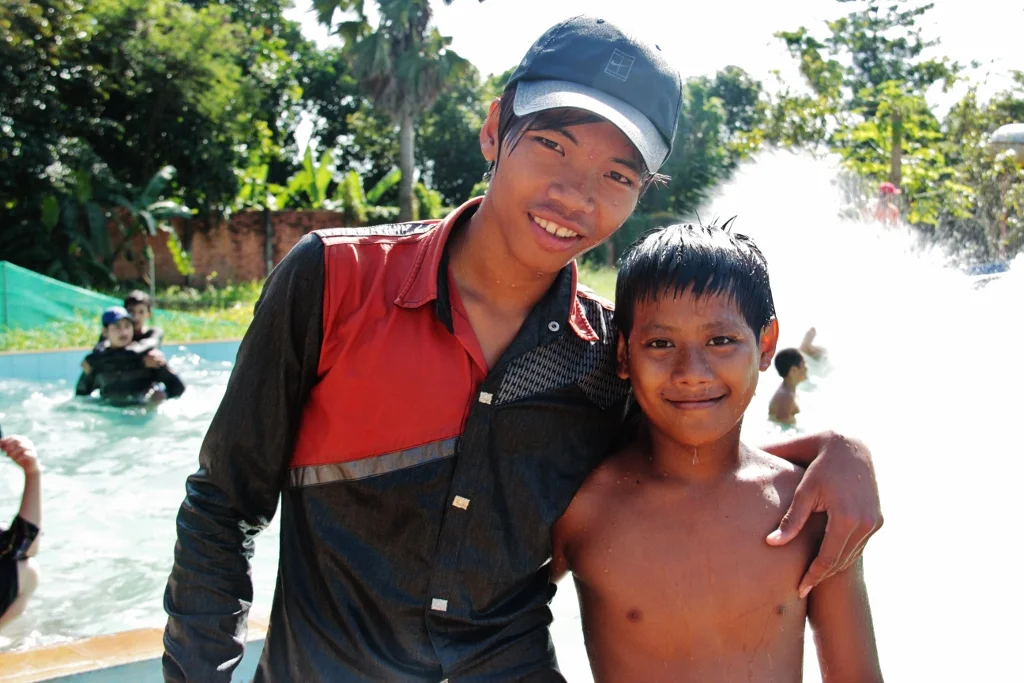
Phea and Virek swimming at a local water park.
As his little brother, Phea chose a boy named Virek who had sometimes accompanied him collecting rubbish to sell. Virek's father died years ago, and his mother is living with a terminal illness. In addition to being very poor, even compared to other families in the slum, her sickness casts a stigma over her and her children. They stay with Virek's grandmother just up the alley from where Phea lives.
Having faced rejection, Phea knew Virek needed encouragement. Just around the corner from Virek's home is an Internet cafe where some boys gather who have dropped out of school. They work the streets a few hours each day and spend what money they earn or steal on video games, alcohol, and other diversions.
Life is hard in the slum, but it's most dangerous when youth lose hope and stop trying.
Through Phea's friendship and support, Virek returned to school. Now he is studying in the eighth grade. Though it's uncomfortable for him to talk about the future, he thinks about becoming a teacher.
So who really connects with the poorest of the poor?
Foreign workers, volunteers, and organizations are almost always on the outside looking in. Even local organizations are located, funded, and led from outside the places where the poorest of the poor live.
Virek is sensitive and reserved. His emotions are hidden. He's vulnerable and knows it. His story comes out slowly in two or three word phrases. I can imagine a foreign worker or volunteer being drawn to Virek, trying to unearth his mysteries, and coaxing out a smile or two.
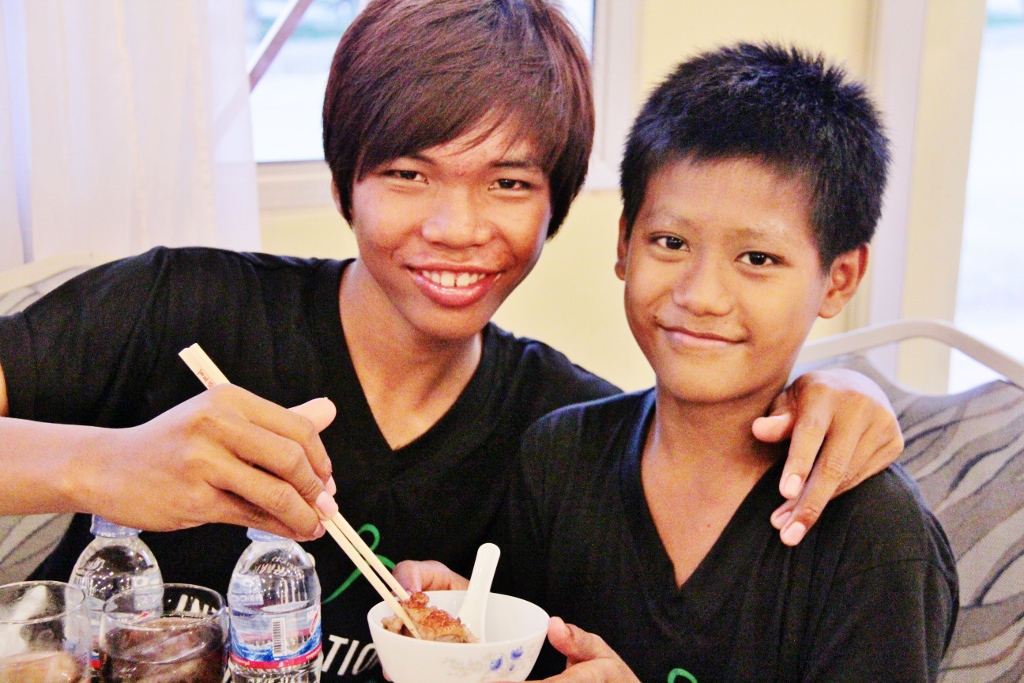
Phea knows what goes on behind the smile. He knows the hurt. He connects deeply with Virek because he is alongside of Virek in every way.
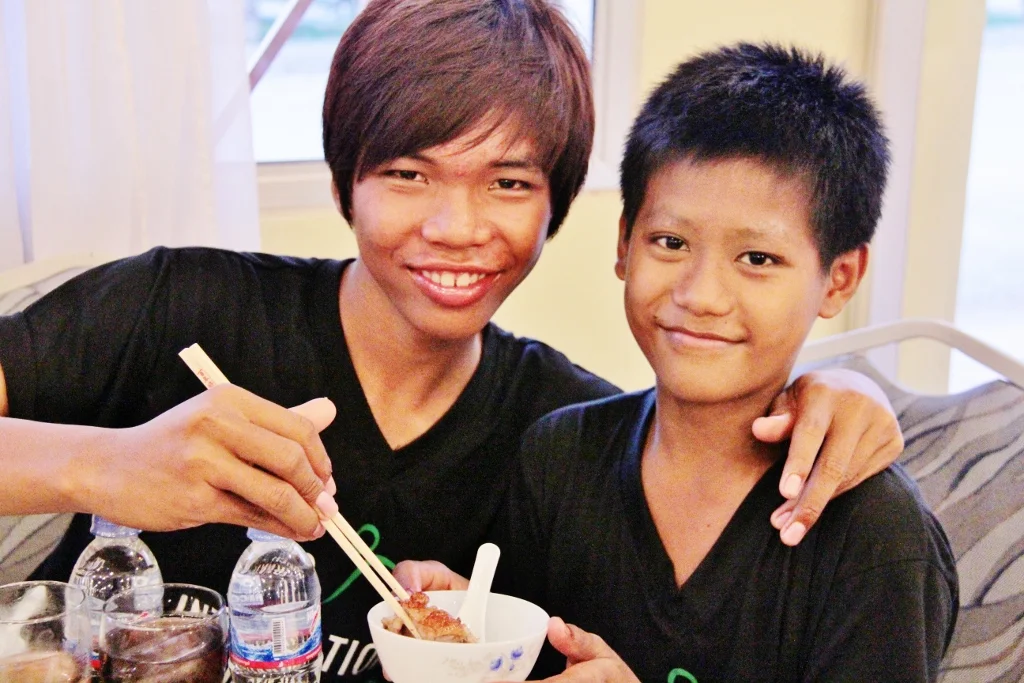
Phea and Virek enjoying a meal together.
Here at Alongsiders we say, "It takes a spider to repair it's own web."
The poorest of the poor are uniquely situated to connect with and support each other. They "get it" where others don't.
Sadly, there are divisions among the poor themselves: fault lines of mistrust, power, and fear. So the poor often feel alone and isolated even in their own communities.
Alongsider mentors like Phea are crossing those lines.
They connect with the poorest of the poor.
And they are not just connecting with their little brothers and sisters. They are connecting with families and building bridges of trust within their communities so that others can follow.
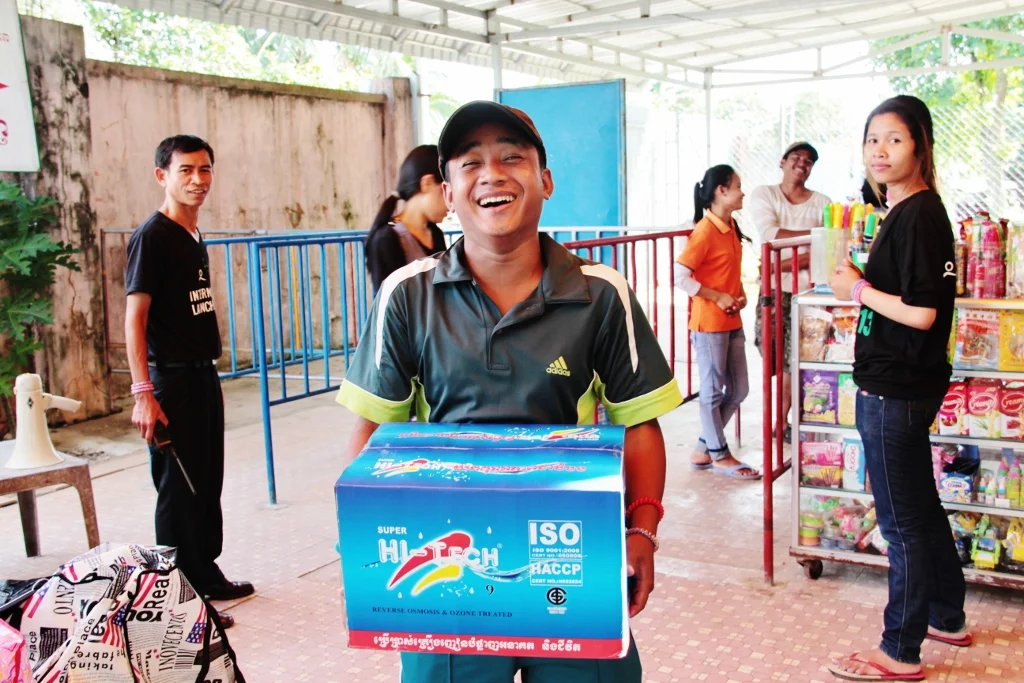
Now a youth leader - Theara's Story
We first met Teara and his siblings when their mother was dying. The last few months of her life were hard and they struggled to survive in a tiny shack that had a broken roof and walls.
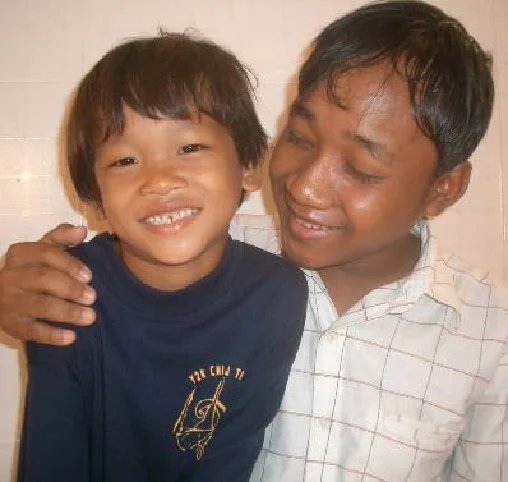
Teara and his "little brother"
We first met Teara and his siblings when their mother was dying. The last few months of her life were hard and they struggled to survive in a tiny shack that had a broken roof and walls.
Together with neighbors their home was rebuilt. Teara was so proud of the simple structure. Finally they had a home they could call their own.
But tragedy struck the first night they slept in their new home. A huge fire swept through the slum and they lost everything, including the only photos of their mother who had died a month before.
Eventually, Teara
and his siblings moved in with a Christian lady who opened her home to them and provided
guidance and love. They were matched up with mentors from Alongsiders Cambodia. Things finally were beginning to look up.
Over the years Teara became a keen member of the local church, eventually being entrusted with leadership amongst the youth.
Now, at 21 years old, Teara has officially become an mentor himself to an orphaned boy in the community, through the Alongsiders movement. He shared with us how he spent three months praying that God would show him which boy to choose out of his village.
When I visited Teara recently, I sat on the floor of his tiny home, eating rice and fish with Teara and his "little brother". They talked and laughed and I could see how much joy Teara's mentoring brought to this little boy.
Teara spoke of how he understood the challenges of beig orphaned, and how it was time to pass on some of the love he has received by being welcomed into the church family.
The second generation - Sros' Story
“I grew up without a father and we were very poor and it was difficult to get by. One day, a young man, Lee, who was older than me, asked me if I wanted to become his little brother…
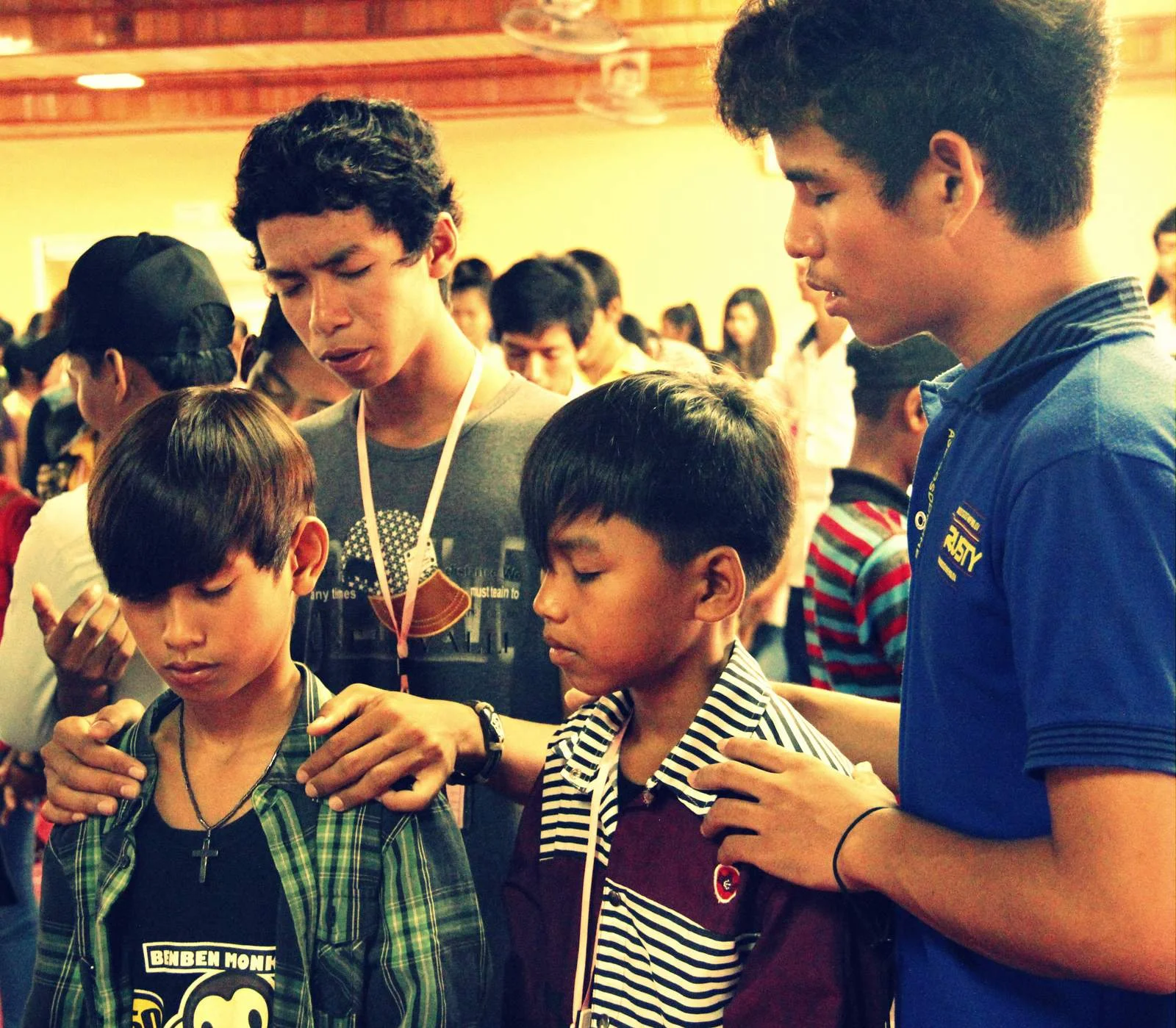
Sros (in blue) and Piset at an Alongsiders camp prayer time.
“I grew up without a father and we were very poor and it was difficult to get by. One day, a young man, Lee, who was older than me, asked me if I wanted to become his little brother…
Lee encouraged me to study hard, not to lose hope, and listen to my mom. He was always warm and friendly to me, just like my dad used to be. He invited me to attend church with him and when I believed in Jesus, my whole life changed. My studies at school, character, and obedience to my mom all improved.
Now I have my own little brother, Piset who is 12 years old. I believe this is the plan of God that God had me take on this boy as my little brother. I plan to fulfil my duties as a mentor to the best of my abilities and encourage, visit, and spend time with him, and follow up on his studies.
I really want to express my thanks for Alongsiders where I first received love, especially the love of Jesus.”